Where They Sit in the Nepali EV Market
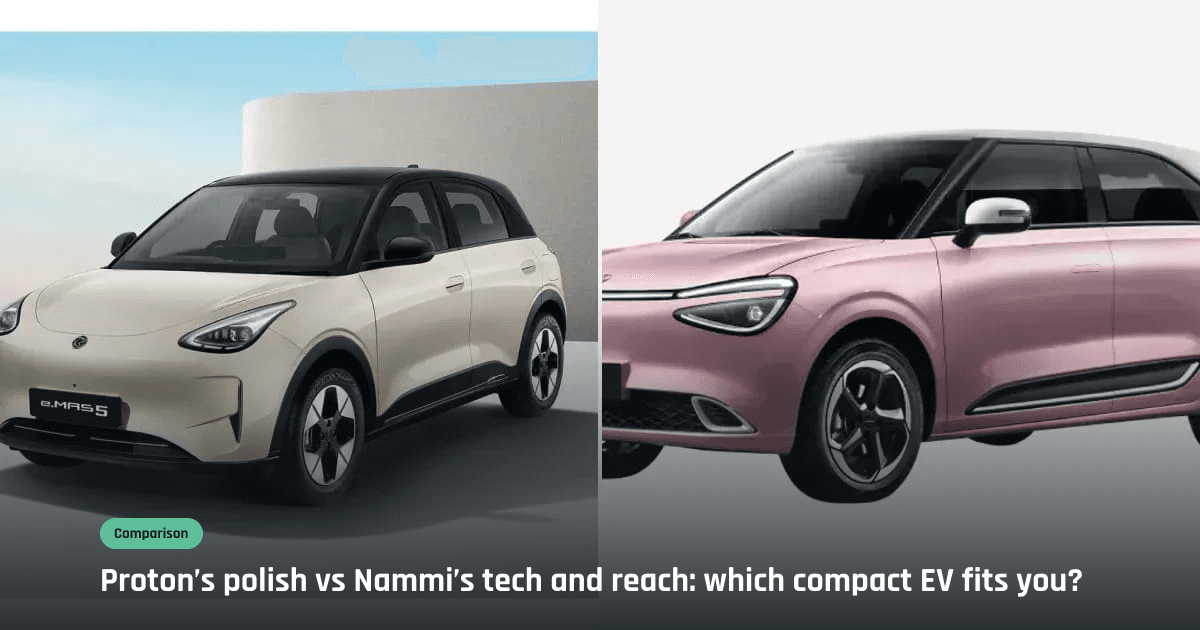
Proton e.MAS 5 and Dongfeng Nammi Box both sit in Nepal’s hottest EV band: compact, urban‑oriented electric hatchbacks priced roughly between Rs 30–37 lakh.
- **Proton e.MAS 5**: Distributed by Jagdamba Motors, with an ex‑showroom range of Rs 32.84–36.84 lakh across Prime and Premium variants. It has 17 showrooms and 3 service centres, and has recently drawn strong attention at events like NAIMA Expo.
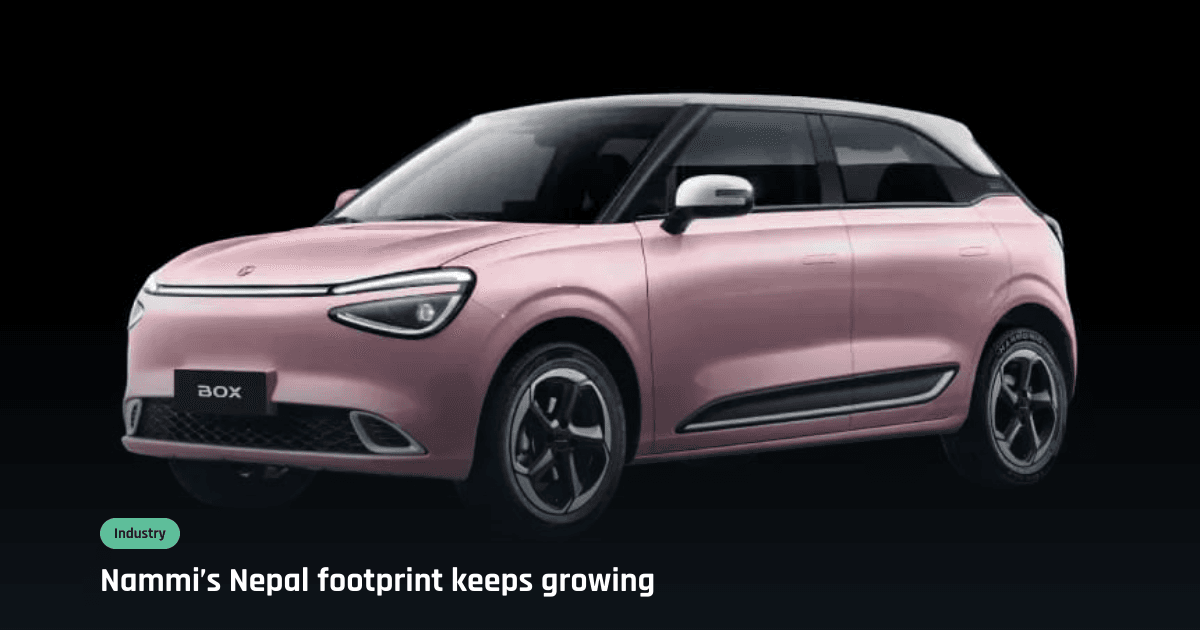
- **Dongfeng Nammi Box**: Distributed by MAW Vriddhi, priced at Rs 30.24–36.75 lakh across six variants (E1, E2 Single Tone, E2 Dual Tone, E3 70 kW, E3 Single Tone 50 kW, E3 Dual Tone 50 kW). It is supported by 44 showrooms but, notably, no listed dedicated service centres.
In simple terms, Proton brings a more focused two‑variant lineup and a smaller but defined service footprint, while Nammi Box offers far more choice, broader showroom reach and stronger safety tech, but relies heavily on the underlying group’s infrastructure rather than dedicated EV service locations in the data.
Design and Road Presence
Both cars follow the compact hatchback formula, but they project very different personalities.
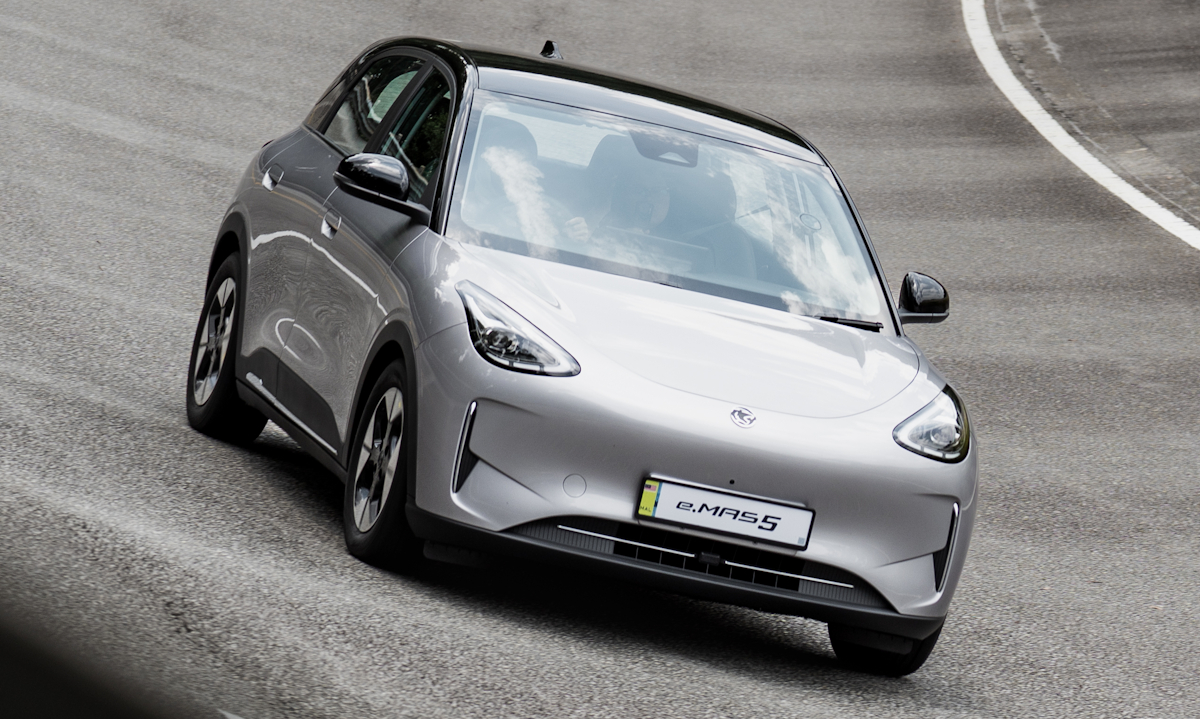
- Proton e.MAS 5: At 4135 × 1805 × 1580 mm on a 2650 mm wheelbase, it is slightly longer than the Nammi Box, with a squat, almost mini‑crossover stance. The Prime gets 15‑inch wheels with 205/65 R15 tyres and halogen headlamps, plus Follow‑Me‑Home lights and a neatly executed LED‑lit frunk. Exterior colours such as Jade Green, Marble Cream, Quartz Rose, Moonstone White, Graphite Silver and Slate Grey give it a more mature, pastel‑heavy palette. The Premium pushes the design upmarket with 16‑inch alloy rims and LED aerodynamic headlights, which noticeably sharpen its showroom presence.
- Dongfeng Nammi Box: At 4030 × 1810 × 1570 mm and a 2660 mm wheelbase, it’s slightly shorter but marginally wider. The design wears a more playful, upright hatchback look with a strong focus on colour and dual‑tone combinations. LED headlamps, DRLs and, in higher trims, a signature light bar and dual‑tone roof options deliver a more youthful aesthetic. Colour surcharges for dual‑tone or silver paints add some cost but clearly target buyers who want something visually distinct.
If you want a more grown‑up, slightly crossover‑like presence, the e.MAS 5 Premium feels the richer, more cohesive design. If you prefer a fun, colourful, city‑friendly hatchback vibe, the Nammi Box range – especially dual‑tone E2 and E3 variants – has more visual character.
Cabin, Features and Equipment
Proton e.MAS 5
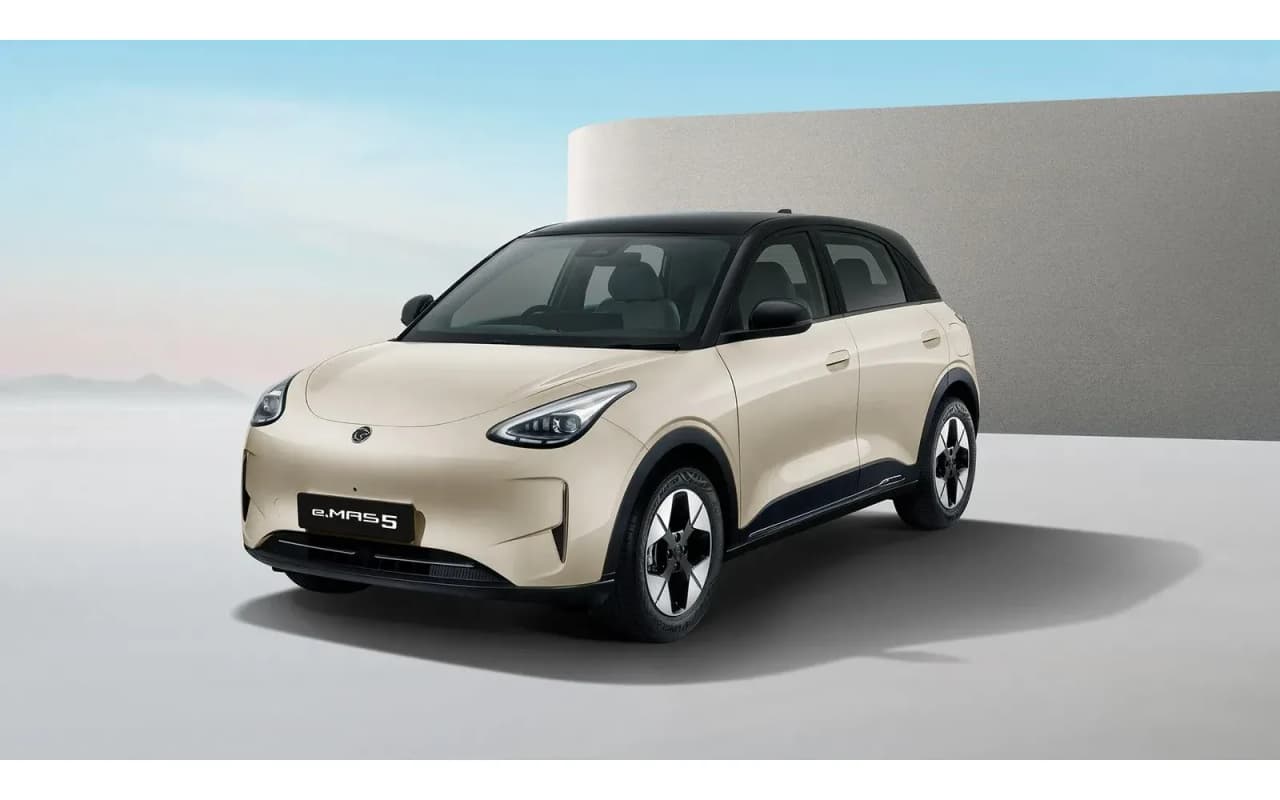
Proton has kept the e.MAS 5 range tight but relatively premium inside.
- Prime:
- Leatherette seats as standard, giving the cabin a more upmarket feel than many entry EVs.
- A large 14.6‑inch FHD central display, which immediately makes the interior look modern.
- 70L frunk, useful for small luggage or charging cables, and enhancing day‑to‑day practicality.
- Six airbags, which is an impressive baseline for safety in this price band.
- Premium:
- Leatherette seats plus a two‑tone leatherette steering wheel, boosting perceived quality.
- Intelligent keyless entry and start, adding convenience for daily use.
- 8.8‑inch LCD instrument cluster, six speakers, and 2 Type‑A + 1 Type‑C USB ports.
- Apple CarPlay / Android Auto, 4G and Wi‑Fi connectivity, and online navigation on the 14.6‑inch FHD display.
- 28L rear under‑seat storage compartments and a powered tailgate, rare touches in the compact EV segment.
- Safety kit upgraded with a 360‑degree camera and intelligent driver assist functions.
The overall impression is that even the Prime feels well‑appointed for the price, while the Premium edges into a more premium, tech‑rich experience with thoughtful storage and connectivity.
Dongfeng Nammi Box
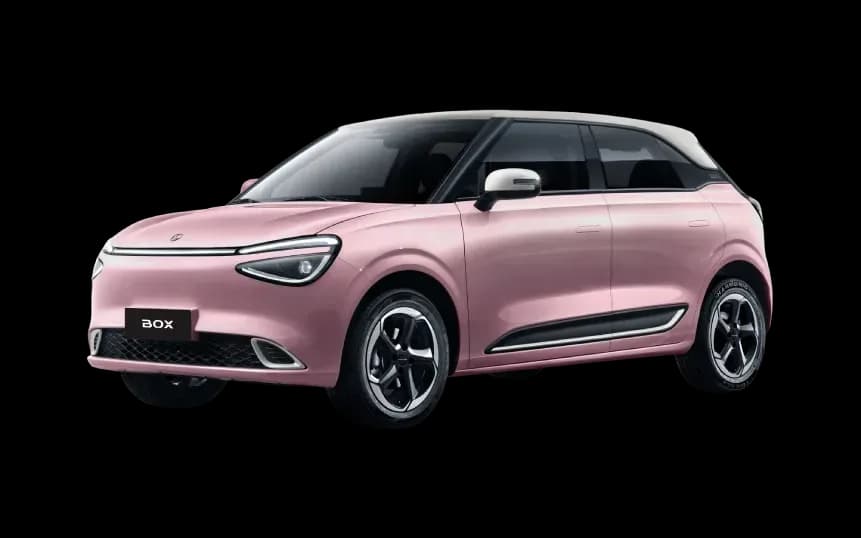
The Nammi Box counters with breadth of features across multiple variants, especially in comfort and safety.
- E1 (entry):
- Automatic AC with PM2.5 filter – valuable in urban pollution.
- Heated and ventilated driver seat with memory, something almost unheard of at this price.
- 10.25‑inch touchscreen infotainment plus a 7‑inch digital instrument cluster.
- Wireless phone charging pad and rear seats with 60:40 split‑folding.
- E2 Single Tone / Dual Tone:
- Multifunction steering wheel, keyless entry and electric air conditioning.
- Wireless charging and Bluetooth audio/phone support.
- Ambient lighting and heated/folding mirrors in the broader E2/E3 feature set.
- E3 (70 kW) and E3 Single Tone 50 kW:
- Heated and ventilated driver seat with memory remains standard.
- Ambient interior lighting package, premium upholstery and added soft‑touch panels.
- 10.25‑inch infotainment with more connected features, wireless charging, and advanced keyless entry.
While the Proton leans on one big central screen and neat storage, the Nammi Box packs surprisingly luxurious touches like ventilated seats and ambient lighting into even lower variants, and spreads tech across the lineup rather than reserving it for the very top.
Safety and Driver Assistance
This is where the Dongfeng Nammi Box decisively separates itself.
- Proton e.MAS 5:
- Prime: 6 airbags, a strong foundation for passive safety.
- Premium: adds a 360‑degree camera and intelligent driver assist functions, but the data does not detail a full ADAS suite (adaptive cruise, lane keep, etc.).
- Dongfeng Nammi Box:
- E1: 6 airbags, ABS, EBD, ESC standard, plus Level 2 ADAS including AEB and lane keep, and TPMS.
- E2: Auto Hold, ISOFIX, ABS/EBD/HAC/ESC/Brake Assist/TCS, AEB, cruise control and adaptive cruise control, plus TPMS.
- E3: 6 airbags, full Level 2 ADAS, ESC, traction control, hill‑hold, and 360‑degree camera on higher spec.
Across the range, Nammi Box consistently offers advanced safety technology as a core selling point, not just as a top‑spec add‑on. For families and safety‑focused buyers, this is a major advantage over the Proton, whose highlight is more conventional – solid airbag count and a 360‑degree camera on Premium, but less documented ADAS depth.
Motor, Performance and Driving Character
Proton e.MAS 5
- Prime:
- Rear‑wheel drive, which is unusual in this price band.
- Rear multi‑link suspension, a layout usually reserved for more expensive cars.
- Combined with the compact footprint, this should give the e.MAS 5 a more engaging, rear‑biased driving feel.
- Premium:
- Data highlights 0–50 km/h in 3.9 seconds, pointing to brisk city acceleration.
- Uses a more powerful 85 kW rear motor (mentioned in the pros summary), which should translate into stronger pull than the Prime and most Nammi Box variants.
The rear‑wheel‑drive layout, plus multi‑link rear suspension, gives the Proton a unique enthusiast angle in this price segment — particularly noticeable in quick urban acceleration and potential handling balance, even though full performance figures are not fully disclosed.
Dongfeng Nammi Box
All Nammi Box variants use a front‑wheel‑drive layout with permanent magnet synchronous motors.
- E1 and E2:
- 49.5 kW motor.
- E2 is described as the stronger 70 kW motor at the same price as E1 in value assessments, but core spec lists 49.5 kW; the key takeaway is that E2 is tuned for brisker performance than E1 for urban use.
- Front McPherson independent suspension and rear torsion beam non‑independent, a conventional setup in compact EVs.
- E3 variants:
- Motor outputs differ, with one E3 noted as 70 kW and another 50 kW, but both remain front‑drive.
- The larger battery emphasises range and usability over outright punch.
In short, the Nammi Box focuses on balanced, predictable front‑drive performance, with enough power for city and peri‑urban work but less emphasis on driver excitement. Proton, particularly e.MAS 5 Premium, is the one that feels engineered for a bit of fun as well as commuting.
Range, Battery and Usability
Range anxiety is still a major buying factor; this is a central comparison.
Proton e.MAS 5
- Prime:
- 30.12 kWh CATL LFP battery.
- WLTP range of 225 km.
- Premium:
- 40.16 kWh CATL LFP battery.
- WLTP range of 325 km.
The Prime offers a usable daily range for urban and short peri‑urban trips, while the Premium is clearly targeted at drivers who need more flexibility for intercity runs and hill routes, with a healthy WLTP figure.
Dongfeng Nammi Box
- E1 and E2:
- 31.4 kWh LFP battery.
- WLTP range 237 km, CLTC claimed 330 km for E2.
- E3 variants:
- 42.3 kWh LFP battery.
- WLTP range 317 km, with CLTC figures around 430 km.
On paper, Nammi Box E1/E2 broadly match or slightly exceed the e.MAS 5 Prime in range, while E3 variants sit just below the e.MAS 5 Premium WLTP figure but above it in CLTC claims.
Practically, for mixed city‑highway use:
- e.MAS 5 Prime vs Nammi E1/E2: Similar class of range, with Nammi slightly ahead in WLTP on paper.
- e.MAS 5 Premium vs Nammi E3: Proton offers a marginally higher WLTP range, while Nammi counters with strong claimed CLTC, suggesting more buffer in gentle driving or ideal conditions.
Both use LFP chemistry, which is well suited to Nepal’s climate and typical charging patterns.
Practicality, Space and Daily Use
Proton e.MAS 5
- Slightly longer body and the same 2650 mm wheelbase, suggesting good cabin space for a compact EV.
- 70L frunk adds unique flexibility for small luggage, groceries or charging gear.
- Powered tailgate on Premium improves convenience when loading.
- 28L rear under‑seat storage on Premium makes clever use of space.
While full boot capacity figures aren’t disclosed, everything points to a smartly packaged cabin with extra storage touches that make everyday life easier.
Dongfeng Nammi Box
- All variants share the 4030 mm length and 2660 mm wheelbase, with a compact 5‑door hatchback profile.
- Boot space:
- E1/E2/E3 (some specs): 350 L with rear seats up.
- E3 Single Tone 50 kW: 326 L, expandable to 945 L with rear seats folded.
- Rear 60:40 split‑folding seats on E1 and higher make it easy to balance passenger and cargo.
The Nammi Box is very transparent about boot figures and shows strong utility: decent luggage space with seats up, and very usable volume when folded. It lacks a frunk, but its rear boot and fold‑flat flexibility compensate well.
For a typical Nepali family, Nammi Box will feel slightly more straightforward for luggage planning, while Proton trades that for a frunk‑plus‑boot approach and extra convenience like a powered tailgate on Premium.
Price and Variants: Side‑by‑Side
Below is a simplified comparison of the core value band, focusing on roughly similar price points.
| Model / Variant | Price (ex‑showroom) | Battery (kWh) | WLTP Range (km) | Key Highlights |
|---|---|---|---|---|
| Proton e.MAS 5 Prime | Rs 32.84 lakh (around) | 30.12 | 225 | RWD, leatherette seats, 14.6" display, 6 airbags |
| Proton e.MAS 5 Premium | Rs 36.84 lakh (around) | 40.16 | 325 | 85 kW motor, 360° camera, CarPlay/Android Auto |
| Nammi Box E1 | Rs 30.24 lakh | 31.4 | 237 | Level 2 ADAS, ventilated seat, 10.25" screen |
| Nammi Box E2 Single Tone | Rs 32.49 lakh | 31.4 | 237 | Ambient lighting, ADAS, wireless charging |
| Nammi Box E3 Single Tone 50 kW | Rs 36.25 lakh | 42.3 | 317 | Larger battery, full ADAS, 945 L max boot |
| Nammi Box E3 Dual Tone 50 kW | Rs 36.75 lakh | 42.3 | 317 | Dual‑tone style, advanced safety, compact hatch |
Proton also ran introductory offers (Rs 29.99 lakh for Prime and Rs 34.99 lakh for Premium), softening entry pricing for early buyers, but regular pricing places it directly against Nammi Box E2 and E3.
Nammi Box, meanwhile, often bundles home and portable chargers in campaigns, adding hidden value on the infrastructure side and reducing initial home‑charging setup hassle.
Service Network, Ownership Confidence and Brand Perception
- Proton e.MAS 5: 17 showrooms and 3 service centres show a defined, though not massive, network. Proton is newer as an EV brand in Nepal, but backed by an established local group in Jagdamba Motors.
- Dongfeng Nammi Box: 44 showrooms give it much wider physical reach, particularly outside the Kathmandu valley. However, the dataset lists 0 dedicated service centres, implying that EV servicing may rely on broader MAW Vriddhi facilities rather than clearly flagged Nammi‑specific outlets.
Nammi has already passed 2,000 EVs on Nepali roads, which helps build real‑world buyer confidence and a growing community. Proton’s e.MAS 5, while drawing positive attention and strong initial buzz, is still early in its Nepal EV lifecycle.
For buyers in smaller cities or who prioritise sheer network reach, Nammi Box currently holds the advantage. For those who prefer a more defined service footprint, even if smaller, Proton’s clearly listed service centres appeal.
Which Wins for Which Kind of Buyer?
Buy Proton e.MAS 5 if:
- You value driving feel as well as commuting. Rear‑wheel drive and multi‑link rear suspension make the e.MAS 5, especially Premium, more engaging than most rivals in this price band.
- You want a polished cabin with big‑screen tech. The 14.6‑inch display, leatherette seats and thoughtful storage solutions shine in daily use.
- You prioritise straightforward variant choice. Two trims simplify decision‑making: Prime for value, Premium for range and performance.
- Your driving mix includes longer intercity runs, where the Premium’s 325 km WLTP range offers healthy confidence.
Buy Dongfeng Nammi Box if:
- Safety tech is non‑negotiable. Level 2 ADAS, adaptive cruise, AEB and rich assist systems are standard across key Nammi variants, making it ideal for family buyers.
- You want maximum showroom reach and a brand with visible EV sales traction – Nammi’s nationwide presence and 2,000+ EVs on the road signal growing ecosystem support.
- You enjoy comfort luxuries like a heated and ventilated driver seat, ambient lighting and wireless charging in relatively affordable variants.
- You need flexible boot space and hatchback practicality, especially the E3’s ability to open up to 945 L with seats folded.
Variant‑Level Suggestions
- Budget urban buyer (around Rs 30–33 lakh): Nammi Box E2 Single Tone offers more safety tech and features than e.MAS 5 Prime, with similar range and slightly lower price. Proton Prime counters with RWD character and a big central screen, but feels lighter on advanced safety.
- City‑plus‑highway mixed user (around Rs 36–37 lakh): Proton e.MAS 5 Premium and Nammi Box E3 Single Tone 50 kW are the natural rivals. Proton wins on WLTP range and rear‑drive performance, Nammi wins on ADAS depth, boot flexibility and broader network. If you drive spiritedly or care about chassis feel, pick Proton; if you carry family often and want maximum safety tech, pick Nammi.
- Style‑conscious buyer: Nammi’s dual‑tone E2 and E3 trims stand out visually, while Proton Premium offers a more understated, mature look with larger alloys and LED headlights.
Verdict
For Nepali buyers under Rs 40 lakh, this is not a simple better/worse choice – it is a clear trade‑off between driving character and safety‑tech‑plus‑network.
- Proton e.MAS 5 is the more driver‑focused, premium‑feeling EV, especially in Premium form. Its rear‑wheel‑drive layout, multi‑link rear suspension, strong WLTP range and polished cabin make it an excellent first EV for owners who still care about how a car feels to drive.
- Dongfeng Nammi Box is the more family‑oriented, tech‑heavy and widely accessible option. Across E1, E2 and E3, it delivers rich safety and ADAS, comfort extras, practical boot space and a showroom footprint that stretches far beyond the valley.
If your priority is engaging driving and a premium cabin in a compact footprint, the Proton e.MAS 5 – ideally the Premium – is the stronger choice. If your priority is advanced safety assistance, feature density and nationwide accessibility, the Dongfeng Nammi Box range, anchored by E2 and E3, is the smarter buy.
Compare Proton e.MAS 5 vs Dongfeng Nammi Box variant by variant
Writes on vehicle pricing, taxation and the Nepali auto market from ongoing tracking of distributor price lists. Every price in this piece is read live from the Nepal AutoMart catalog — how we verify prices.