Where each sits in the Nepali market
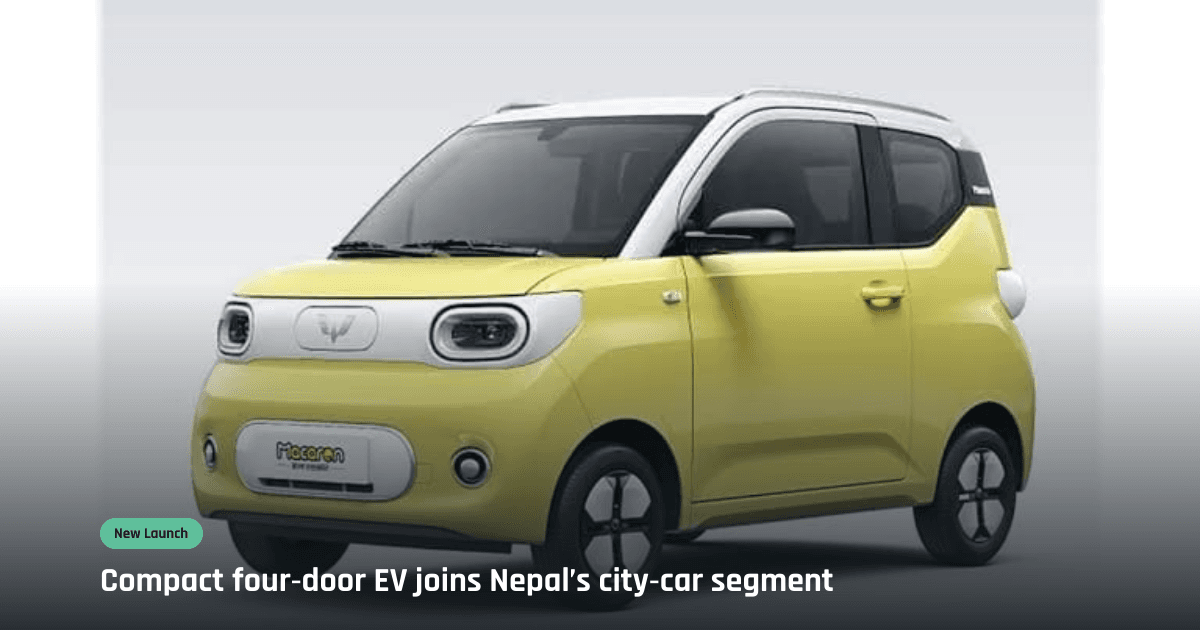
The Wuling Binguo is already on sale in Nepal through Paramount Motors Pvt. Ltd., with a listed ex-showroom price of Rs 31.99 lakh for the 31.9 kWh variant. It sits as a compact, city-focused EV hatchback. Nepal also lists 4 showrooms and 2 service centers for it.
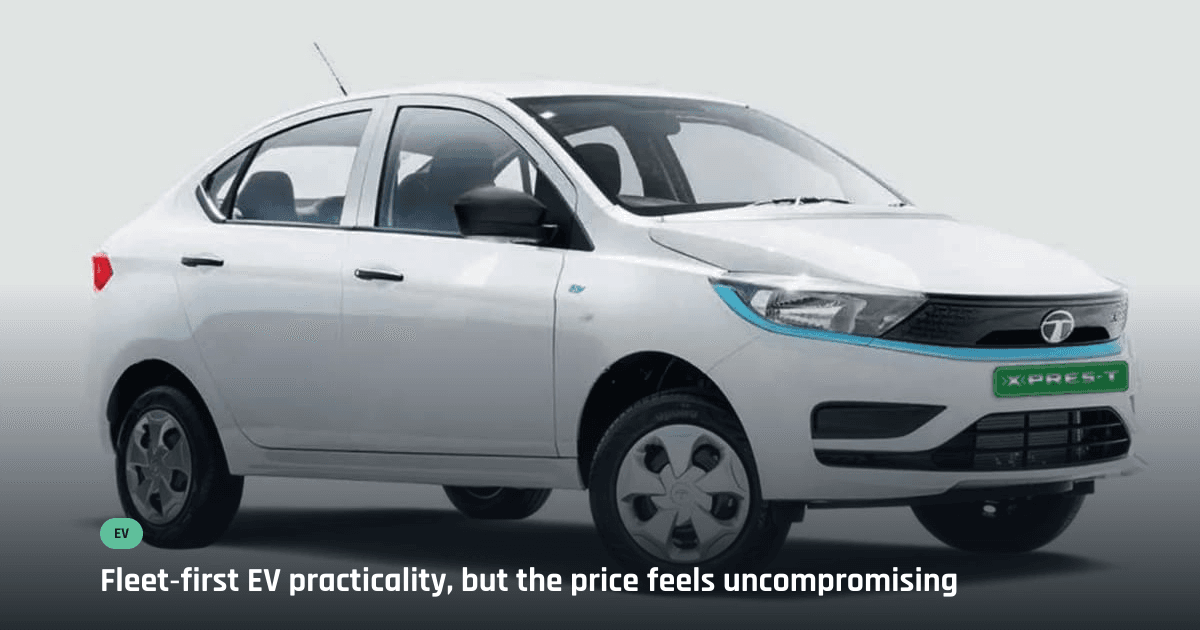
The Tata XPRES-T is not yet on sale in Nepal. For Nepali buyers, that matters as much as the spec sheet. There is no distributor-quoted price, no confirmed local variant lineup, and no settled availability. It remains an upcoming option for buyers who can wait for more clarity on price, trim, and positioning.
That market gap shapes the comparison. The Binguo is a decision you can make now. The XPRES-T is a future possibility if you are willing to trade certainty for possible value or a different equipment mix.
Looks and design differences
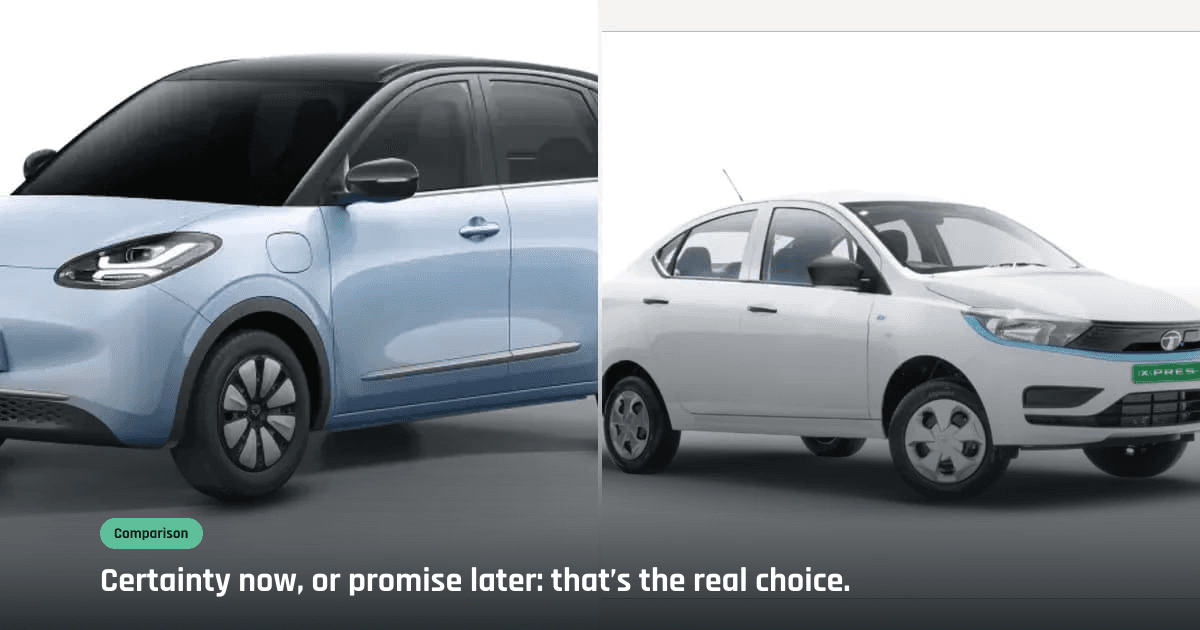
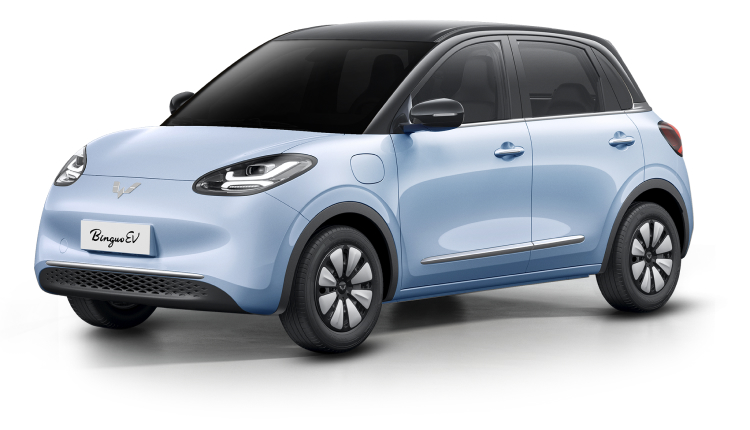
The Wuling Binguo leans into a retro-modern hatchback look. It has more character here, with a softer and more rounded design that feels urban rather than formal. In Nepal, that gives it a visible identity. It does not try to disappear into traffic.
By the verified dimensions, the Binguo measures 3950 mm long, 1708 mm wide, and 1580 mm tall, with a 2560 mm wheelbase. Those proportions fit its role as a small city car. It is also a compact 4-seater. That is unusual in a segment where many buyers still expect five seats.
The Tata XPRES-T takes a more practical, fleet-oriented shape. At 3993 mm long, 1677 mm wide, and 1532 mm tall, it is slightly longer, narrower, and lower than the Binguo. Its 2450 mm wheelbase is shorter, and its 5-seater layout points to a different use case. It is built for passenger carry, not style.

Visually, the Binguo has more personality. The XPRES-T looks more conventional, which may suit buyers who want a straightforward electric sedan.
Features and equipment differences
This is one area where the comparison is not level yet. The Wuling Binguo’s Nepal-specific feature disclosure is still limited. The officially communicated details available to us do not clearly list the infotainment screen size, safety equipment, airbag count, ESC, or ADAS content. That makes it harder to judge the car beyond the basics already confirmed.
What is clear is that the Binguo is sold as a single-variant proposition: the 31.9 kWh model. It offers three drive modes — Eco, Medium, and Sport. That is useful in a small EV in a market where buyers want one car for dense city driving and occasional faster stretches.
The Tata XPRES-T has a more clearly documented core equipment set in the data we have. It is expected to use a 48.64 kW PMSM motor, a 24 kWh battery, dual airbags, hill assist, ABS + EBD, and a 293-litre boot. The cabin is a 5-seater. That matters for families and duty use.
Here the trade-off is between clarity and character. The XPRES-T is better documented on basic safety and utility items, while the Binguo feels more like a style-first EV with incomplete local feature disclosure. For informed buyers, that transparency gap matters as much as the equipment itself.
Motor and performance differences
The Wuling Binguo uses a 50 kW permanent-magnet synchronous motor, front-wheel drive, and a single reduction gear setup. Its claimed top speed is 120 km/h, which is respectable for a city EV and adequate for typical Nepali highway use when driven sensibly. The battery is a 31.9 kWh LFP pack, and the claimed range is around 330–333 km per charge.
Charging is one of the Binguo’s strongest practical points. The verified figures say DC fast charging from 30–80% takes about 35 minutes, while AC charging from 0–100% takes about 5.5 hours. That suits home charging and occasional fast top-ups.
The Tata XPRES-T is expected to be the more torque-rich car. The data points to a 48.64 kW PMSM motor with 170 Nm of torque, versus the Binguo’s more modestly disclosed performance character. Its 24 kWh battery and 260 km claimed range place it behind the Binguo on outright range, at least on paper. Charging is slower in the quoted figures: 0–80% AC in 8.45 hours on a 3.3 kW AC charger, and DC charging to 80% in 65 minutes on a 25 kW charger.
By range and charging convenience, the Binguo wins clearly. The XPRES-T may still appeal for stronger low-end shove and a more fleet-like powertrain tune. That stays on paper until a Nepali launch specification is fixed.
Ride, handling and comfort differences
There is not enough verified Nepal-market data to make sweeping claims about ride quality, but the architecture of each car points to different priorities.
The Binguo’s 2560 mm wheelbase is longer than the XPRES-T’s 2450 mm. That usually helps straight-line composure and gives a slightly calmer ride over broken surfaces. Its compact hatchback format should also make it easier to place in tight Kathmandu streets, narrow parking spaces, and crowded urban lanes. The 4-seat layout is a limitation if you regularly carry three passengers in the rear.
The XPRES-T’s shorter wheelbase and sedan-like footprint likely suit a more utilitarian ride and a more traditional seating experience for five occupants. It also has a verified 172 mm ground clearance, which matters on Nepal’s rougher approach ramps, speed humps, and patched roads. That is one area where the XPRES-T has a measurable advantage over the Binguo, whose ground clearance is not officially disclosed in the Nepal data.
The comfort verdict depends on use case. The Binguo should feel more compact and easier in urban ownership. The XPRES-T looks better suited to buyers who care about clearance, five-seat practicality, and routine cabin use over charm.
Practicality and running costs
The Binguo lines up as the more attractive urban ownership package. Its size makes it easy to park, and its 330–333 km claimed range gives it a usable buffer for weekly commuting, errands, and occasional out-of-town runs without constant charging anxiety. The LFP battery also fits the profile of a low-stress daily EV, especially for buyers who want durability and predictable charging behavior.
The biggest practical concern with the Binguo is not the drivetrain but the ownership ecosystem. With only 2 service centers and a still-limited footprint in Nepal, a buyer must be comfortable with a smaller support network than more established brands offer. The officially disclosed lack of boot capacity and safety detail also makes the car harder to assess as a family tool.

The XPRES-T is likely to be the more practical people-mover. The 5-seat layout, 293-litre boot, 172 mm ground clearance, and conventional sedan body make it better suited to taxi-like duty, shared use, or a family that regularly needs real rear-seat accommodation. But running-cost judgment has to stay conditional: because it is not yet on sale in Nepal, local ownership experience, spare-part pricing, and actual dealer support remain unknown.
On certainty of running costs, the Binguo has the advantage because it is already here and its ownership proposition is visible. On utility, the XPRES-T could be the more versatile machine if its eventual Nepal specification stays close to the expected one.
Price and variants side by side
| Model | Nepal status | Variant / battery | Price in Nepal | Range | Charging | Key practical note | |---|---|---:|---:|---:|---:|---| | Wuling Binguo | On sale | 31.9 kWh | Rs 31.99 lakh | 330–333 km | 35 min DC, 5.5 hr AC | Single-variant, 4-seat hatchback | | Tata XPRES-T | Upcoming, not yet on sale | Expected 24 kWh | Expected around Rs 31.9–32.4 lakh | Around 260 km | 65 min DC, 8.45 hr AC | 5-seat sedan, estimate only |
The pricing picture is interesting because the Binguo is not obviously cheap for its class, yet it does carry a real, quoted price. The XPRES-T’s expected range is close enough to the Binguo’s list price to make the wait tempting, but the estimate is still just that: an estimate, not a confirmed Nepal market price.
Which wins for which kind of buyer
- If you want a buy-now EV, the Wuling Binguo is the safer choice. - If you want more seat count and boot utility, the Tata XPRES-T looks more practical. - If you value range and charging speed, the Wuling Binguo is stronger. - If you care most about ground clearance and conventional family use, the Tata XPRES-T has the edge. - If you dislike uncertainty, waiting for the XPRES-T is a risk; buying the Binguo ends the debate.
The hardest part of this comparison is that the Binguo is the car you can actually evaluate as a Nepal buy, while the XPRES-T is still an educated projection. That makes the Binguo the better decision for buyers who need to replace a car now, and the XPRES-T the better gamble for buyers who can wait and want to see whether Tata brings a sharper value proposition to Nepal.

Verdict
The Wuling Binguo wins the practical “buy now” contest because it is on sale, clearly priced, more generous on range, and faster to recharge. It is also the more distinctive product, with a stronger identity and a more compact urban footprint.
The Tata XPRES-T is the more interesting wait-and-see proposition because it looks more useful as a five-seat, ground-clearance-friendly, family-oriented EV, but only if Tata’s eventual Nepal pricing and specification stay competitive. For Nepali buyers deciding under real-world conditions, the verdict is simple: buy the Binguo now if certainty matters; wait for the XPRES-T only if you can tolerate uncertainty in exchange for potentially better utility.
Writes on vehicle pricing, taxation and the Nepali auto market from ongoing tracking of distributor price lists. Every price in this piece is read live from the Nepal AutoMart catalog — how we verify prices.