Where each sits in the Nepali market
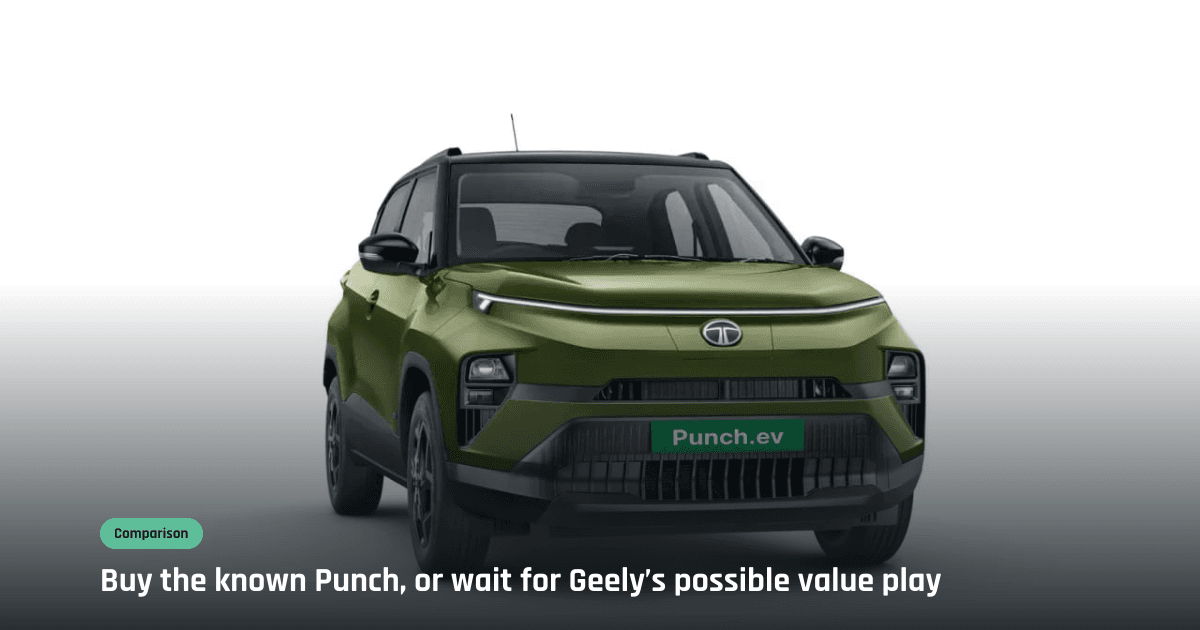
The Tata Punch EV is already a defined, retail-ready proposition in Nepal. It is sold through Sipradi Trading Pvt. Ltd., listed at Rs 37.99 lakh for the Empowered LR and Rs 39.99 lakh for the Empowered+S LR, with a nationwide footprint of 58 showrooms and 37 service centers. That makes it the more established choice for buyers who want to see the car, book the car, and know where to service the car without waiting for a future market rollout.
The Geely E2 sits in a different category entirely: it is not yet on sale in Nepal, has no confirmed distributor price, and no verified local variant lineup. The expected Nepal price is only an estimate, not a commitment, and it spans a wide Rs 30.2 lakh to Rs 44.4 lakh because it is built on assumptions rather than a distributor announcement. For Nepali buyers, that means the E2 is not a direct purchase alternative yet; it is a possible future option whose real value will depend on how Geely positions it, what equipment lands here, and how the final customs value is declared.
This is why the comparison is really a timing decision. The Punch EV gives you certainty now. The E2 offers the possibility of a better spec-to-price story later, but with real risk that the final Nepali price or equipment mix lands less attractively than expected.
Looks and design differences
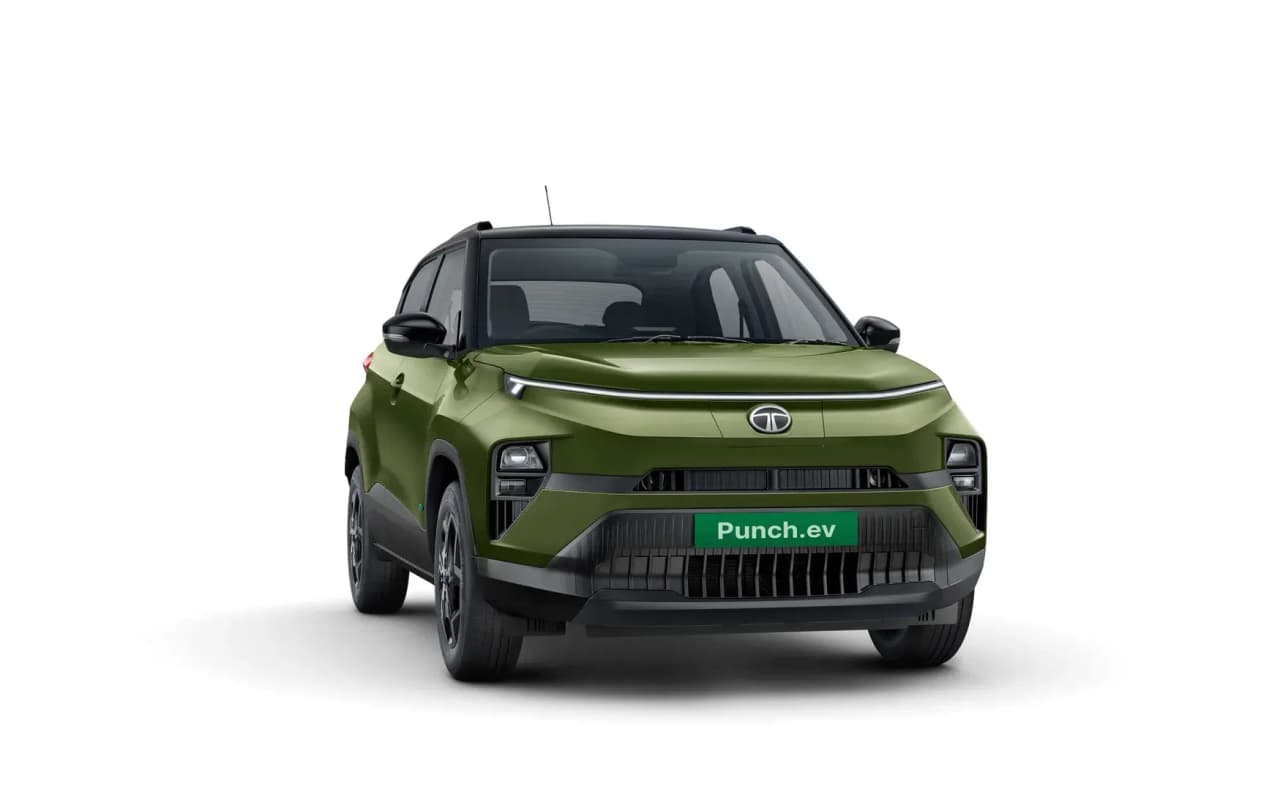
The Punch EV’s design advantage in Nepal is familiarity with a twist: it keeps the chunky, upright micro-SUV stance buyers already understand from the Punch nameplate, but wraps it in EV-specific styling. In a market that still values a tall driving position, visible ground clearance and compact proportions for city use, that shape makes sense. It looks like a small SUV first and an EV second, which is useful for buyers moving up from hatchbacks or compact petrol crossovers.
The Geely E2, by contrast, is likely to appeal more to buyers looking for a cleaner, more modern EV aesthetic. Even without a confirmed Nepali showroom presence, the E2’s positioning suggests a more conventional electric-hatchback or compact EV personality than the Punch’s SUV-like stance. That could make it feel more city-friendly and more contemporary on paper, but until it arrives locally, the design debate is mostly about style preference rather than ownership reality.
For Nepali roads, the Punch EV’s visual promise aligns more closely with the way many buyers actually use their cars: mixed urban traffic, broken stretches, speed breakers and occasional out-of-town runs. The E2 may well look sleeker, but the Punch EV looks more obviously suited to the local road environment.
Features and equipment differences
The Punch EV in the two long-range variants is clearly tiered. The Empowered LR is the better-value entry into the LR lineup, while the Empowered+S LR is the feature-rich flagship with the most equipment, the most convenience tech and the most polished cabin presentation in the Punch EV range. That matters because the price gap between the two is only Rs 2 lakh, so buyers are not choosing between vastly different products; they are choosing how much they want the extra comfort and convenience uplift.
The limitation is transparency. Nepal-focused materials do not fully disclose the exact airbag count, ADAS content, dimension figures or boot volume, so the Punch EV’s equipment story is strongest in broad terms rather than by exhaustive local spec-sheet detail. Still, the positioning is clear enough: the Empowered LR is the sensible long-range pick, while the Empowered+S LR is the nicer one to live with.
The Geely E2, because it is not yet officially on sale in Nepal, cannot be judged on local feature delivery with the same confidence. It may well arrive with a more modern feature list, especially if Geely wants to challenge established EV brands on value. But that remains a future expectation, not a verified Nepali-market reality. For a buyer deciding now, the Punch EV’s known feature set is more useful than the E2’s imagined one.
Motor, battery and performance differences
This is where the Punch EV makes its strongest case. The long-range variants use a 35 kWh battery, a front-mounted single motor and a 90 kW output with 190 Nm of torque. Tata’s claimed 421 km figure is the headline number, but the more useful figure for Nepali buyers is the estimated real-world range of about 270-290 km, which is the number that matters on daily use, intercity planning and charging habits.
The claimed 0-100 km/h time of 9.5 seconds puts the Punch EV firmly in the brisk-not-hot category. That is exactly where a compact EV SUV should be. It feels strong enough for urban overtakes and highway merging without inviting unrealistic expectations. The reported top speed of around 140 km/h is also enough for the kind of driving most Nepali owners will actually do.
The Geely E2 has no confirmed Nepal-spec motor, battery or performance figures to compare against here. That leaves two possibilities: either it arrives with a more efficient drivetrain that undercuts the Punch EV on price, or it comes in less aggressively spec’d than the market hopes. Until those details are known, the Punch EV wins the performance comparison by default because its real output, real battery size and real range expectations are already known.
If the E2 eventually comes in with a lower price and similar usable range, it could become a serious value threat. But as things stand, the Punch EV is the only car in this comparison with a proven and locally relevant long-range EV package.
Ride, handling and comfort differences
The Punch EV’s biggest practical strength is how its package fits Nepali conditions. A 195 mm ground clearance figure is a real advantage in a market where speed breakers, potholes, angled ramps and rough urban surfaces are part of daily ownership. The car’s compact footprint should also help in tight parking spots and crowded city roads.
The long-range Punch EV’s 90 kW motor and smooth EV torque suit stop-go traffic very well, and the car’s ride is expected to be genuinely comfortable over broken surfaces. That is one of the reasons the Punch EV makes sense as a daily family EV: it combines compact dimensions with the sort of road absorption Nepali buyers care about more than abstract handling brilliance.
There are also caveats. Rear headroom is tight for taller passengers, especially those over 5'8", and there is no spare wheel under the boot floor. That last detail matters more in Nepal than in some larger markets, because it reduces peace of mind on longer trips and in areas where puncture support is less immediate.
The Geely E2 may ultimately prove more urban-efficient or more refined if its chassis tuning is designed for smooth-city driving, but that is speculation until local cars are available. On known Nepali-road fit, the Punch EV is the safer bet.
Practicality and running costs
For practicality, the Punch EV’s numbers are enough to explain its appeal. A real-world range of roughly 270-290 km from the LR pack is sufficient for most city-to-city usage patterns in Nepal, especially for buyers who can charge at home or at work. The long-range battery also reduces the anxiety that comes with relying on public charging too often.
The main practical weakness is the state of the charging ecosystem outside major urban areas. Even a good-range EV becomes less relaxing when fast charging is sparse, and that remains a real ownership factor in Nepal. The Punch EV’s range makes it workable; it does not eliminate infrastructure limitations.
Running costs should still favor the Punch EV over petrol crossovers in routine use, but the real-world ownership value depends on how often the owner can plug in at home and how much long-distance travel they plan. For urban families, the Punch EV is well matched to the way Nepalis actually use a compact second car or a primary city EV.
The Geely E2 could be compelling if it comes in with a lower purchase price and efficient consumption, because that would improve the total cost of ownership picture. But until the car is officially in market, that remains an assumption rather than a buying case.
Price and variants side by side
| Model | Variant | Nepal status | Price | Battery | Motor | Range |
|---|---|---|---|---|---|---|
| Tata Punch EV | Empowered LR | On sale | Rs 37.99 lakh | 35 kWh | 90 kW | 421 km claimed, 270-290 km real-world estimated |
| Tata Punch EV | Empowered+S LR | On sale | Rs 39.99 lakh | 35 kWh | 90 kW | 421 km claimed, 270-290 km real-world estimated |
| Geely E2 | Variant lineup not confirmed | Not yet on sale | Expected around Rs 30.2 lakh to Rs 44.4 lakh | Not confirmed | Not confirmed | Not confirmed |
The Punch EV’s pricing is easy to interpret: Rs 37.99 lakh gets you the long-range entry point, and Rs 39.99 lakh gets you the fully loaded long-range version. That is a tight, understandable ladder.
The Geely E2’s pricing is much more uncertain. The estimated range is wide because it is not based on a confirmed local launch or a known Nepal distributor spec. It may end up undercutting the Punch EV in a meaningful way, or it may be positioned close to the higher end of the Punch’s range depending on trim mix and import assumptions. That uncertainty is not a footnote; it is the core issue.
Which wins for which kind of buyer
- Choose the Tata Punch EV Empowered LR if you want the best balance of range, price certainty and everyday usability.
- Choose the Tata Punch EV Empowered+S LR if you want the most complete Punch EV and will pay for comfort and equipment.
- Wait for the Geely E2 if your priority is getting the most possible value per rupee and you can delay purchase.
- Avoid waiting for the E2 if you need a car now, want known dealer backing, or do not want launch uncertainty.
- The Punch EV is better for buyers who prioritize road presence, ground clearance and an established service network.
- The E2 could be better for buyers who are willing to trade certainty for the possibility of a sharper price-to-spec package.
Verdict

For Nepali buyers making a decision now, the Tata Punch EV is the stronger purchase because it is real, available, priced and supported. The Empowered LR is the smartest buy in the range, while the Empowered+S LR is the feel-good choice for buyers who want the fullest Punch EV experience without moving into a much larger vehicle class.
The Geely E2 remains the more interesting *future* story, not the better current answer. If it arrives with a strong official price and a sensible variant mix, it could put real pressure on the Punch EV. But until that happens, the Punch EV wins the actual market test: it is the better buy for anyone who needs certainty, service coverage and a proven long-range compact EV today. It only loses if a buyer is comfortable waiting for a car that is still, in Nepal, more promise than product.
Writes on vehicle pricing, taxation and the Nepali auto market from ongoing tracking of distributor price lists. Editorial policy.