Where Each EV Sits in the Nepali Market
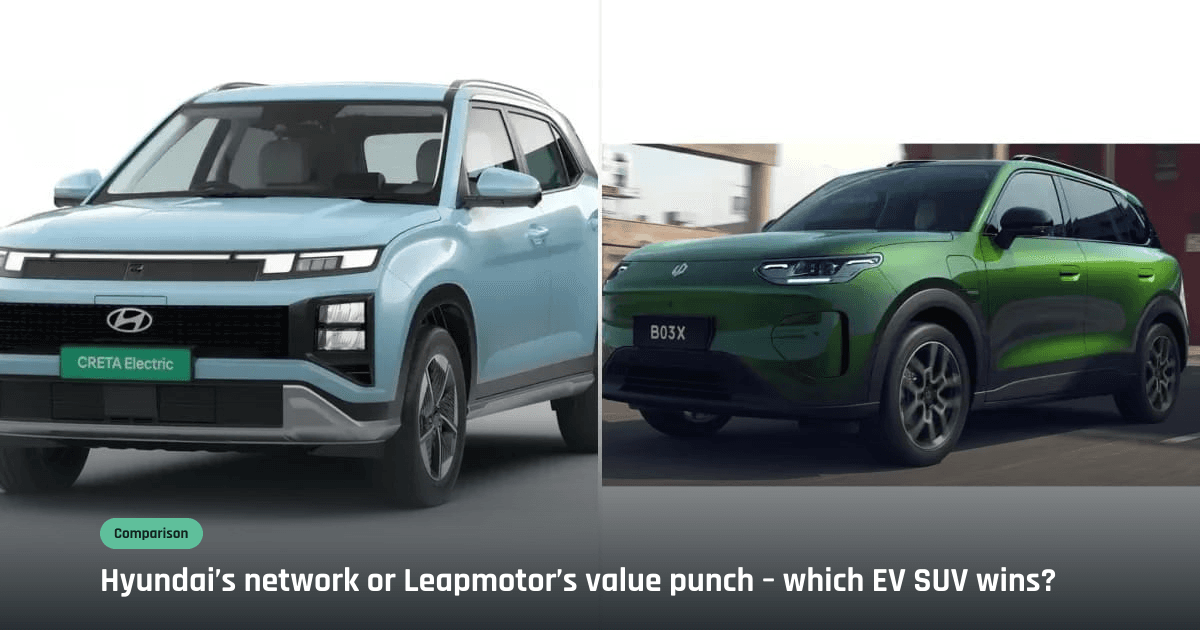
Hyundai’s Creta EV and Leapmotor’s B03X occupy similar territory on paper: compact-to-midsize electric SUVs aimed at families who want an everyday EV that can also handle intercity trips.
In reality, they represent two very different bets.
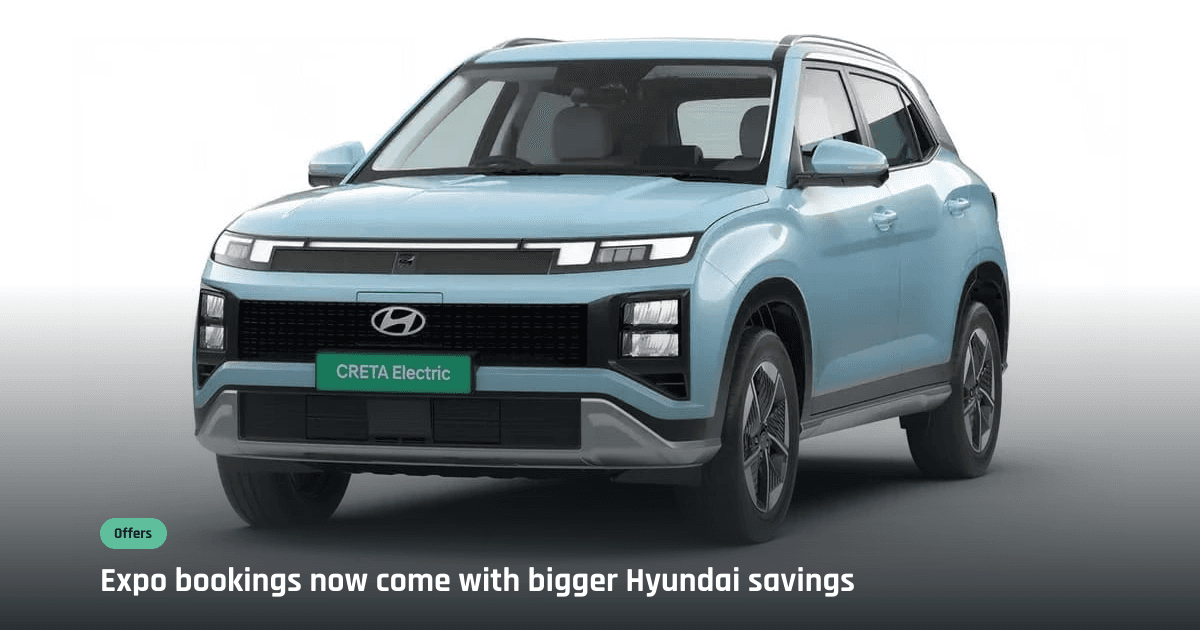
- **Hyundai Creta EV: A mainstream, familiar brand with a long track record in Nepal, sold by Laxmi Intercontinental with 57 showrooms and 42 service centers across the country. It is offered in six variants from Rs 51.96 lakh to Rs 76.96 lakh**, giving buyers a clear feature and price ladder.
- **Leapmotor B03X: A newer Chinese EV brand, represented by Shangrila Motors with 13 showrooms and 3 service centers. The B03X is positioned as a high-tech compact SUV with a long-range battery and strong performance, priced between Rs 44.99 lakh and Rs 46.99 lakh** across two variants.
From a market positioning angle, the Creta EV sells brand trust, reach and choice. The B03X leans on value, specs and technology at a lower price.
For buyers outside major cities or those who simply want a big-name brand, the Hyundai advantage is obvious. For buyers focused on the numbers – battery size, range, performance, safety tech – the Leapmotor looks deliberately aggressive.
Design, Size and Road Presence
On the road, these two feel different even before you talk about batteries.
- Creta EV: Based on the popular Creta SUV body, it carries a familiar midsize SUV stance with a length of 4,340 mm, width of 1,790 mm and height of 1,655 mm, on a 2,610 mm wheelbase. Ground clearance is 200 mm, which is reassuring for Nepali roads and light off‑tarmac stretches.
- B03X: Slightly smaller at 4,270 mm long, 1,810 mm wide and 1,635 mm high, with a 2,605 mm wheelbase and 190 mm ground clearance. It looks more like a modern compact crossover, but still with enough height and clearance for typical urban and highway use.
The Creta EV feels like a classic, upright SUV with familiar proportions. Buyers coming from ICE Cretas or other Korean compact SUVs will find the silhouette and cabin layout predictable.
The B03X is more overtly modern, with sharp detailing, LED lighting everywhere, and a color palette that includes Acorn Brown, Berry Blue, Tundra Grey, Galaxy Silver and Seaweed Green. The ProMax variant stacks in features like metallic roof cover, roof racks, rain‑sensing wipers, automatic headlights, adaptive high/low beam and extensive mirror functions (heating, power folding, blind spot lights).
If road presence and known styling matter, the Creta EV wins simply because it looks like the EV version of a mainstream SUV you already know. If you want an EV that looks more futuristic and high‑tech, the B03X has that edge.
Features and Equipment: Traditional Comfort vs Tech-Heavy Cabin
Hyundai Creta EV
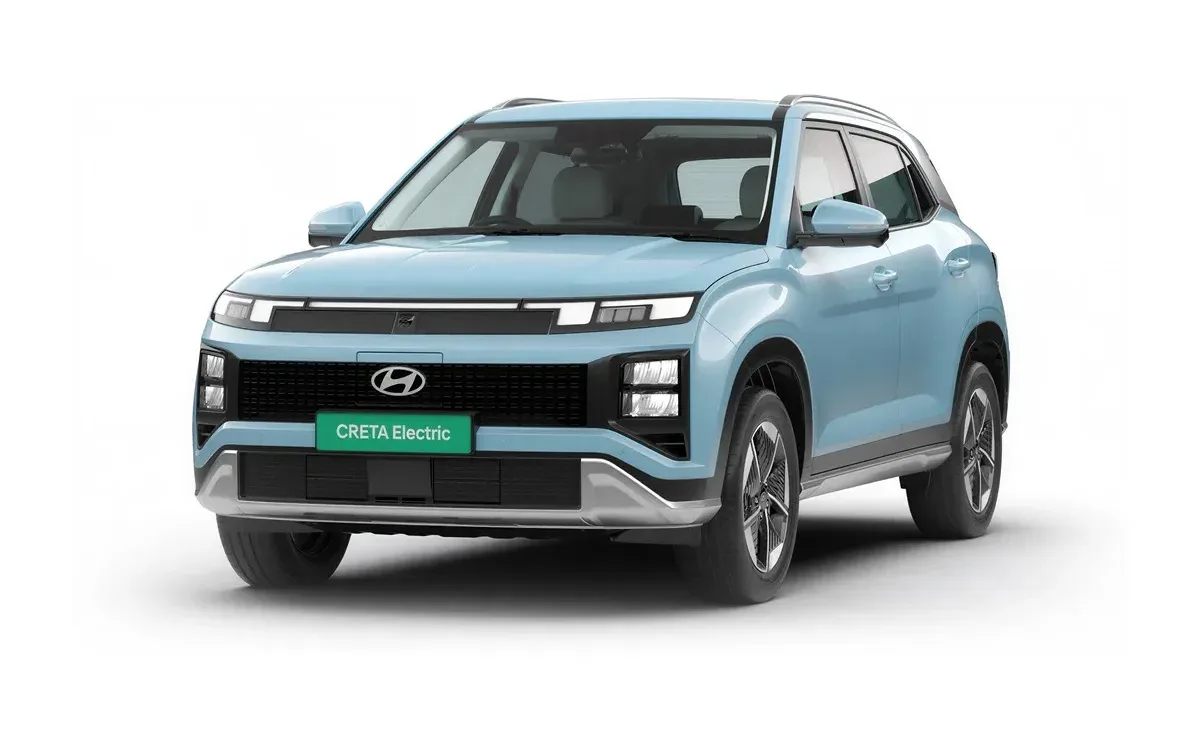
The Creta EV’s equipment varies by variant, but the general pattern is clear:
- Executive (Rs 51.96 lakh): The base EV keeps core safety – 6 airbags, ABS with EBD, ESC/VSM/HAC/HDC, TPMS highline, ISOFIX and front/rear disc brakes. Comfort and convenience are more modest, with manual height adjustment for the driver and dual‑zone automatic climate control. It is the entry route into a midsize Hyundai EV, not a tech showcase.
- Smart (O) (Rs 56.96 lakh): Adds useful convenience like electric 6‑way driver seat, rear window sunshade, floating console ambient lighting, and keeps dual‑zone climate. It also introduces V2L inside, allowing you to power devices from the car.
- Premium + (Rs 59.96 lakh): The comfort and tech sweet spot in the launch range. It offers electric 6‑way driver seat with memory, front ventilated seats, Bose 8‑speaker system, dual‑zone climate, rear sunshade, ambient lighting and – importantly – Level 2 ADAS with 19 features. This is where the Creta EV stops feeling like a basic EV conversion and becomes a premium family EV.
- Executive Tech (AT) (Rs 60.96 lakh): Priced slightly above Premium +, with the same core dimensions and powertrain. It is part of the ladder where buyers can mix transmission and equipment preferences, but detailed feature breakdown is not fully disclosed.
- Smart (O) LR (Rs 69.96 lakh) and Premium+ LR 126 kW (Rs 76.96 lakh): The long‑range trims, pairing a 51.4 kWh battery and 126 kW motor to the more fully loaded feature sets. Exact equipment details aren’t fully listed, but the logic is clear: you pay more for range and power, building on the Smart (O) and Premium + comfort/tech packages.
Across the range, the Creta EV feels traditionally comfortable: dual‑zone climate, ventilated seats at the top, sunroof on mid and top trims, and a familiar Hyundai interior layout. The tech is solid but conservative, with V2L inside on higher trims and ADAS primarily on Premium + and likely the long‑range top variant.
Leapmotor B03X
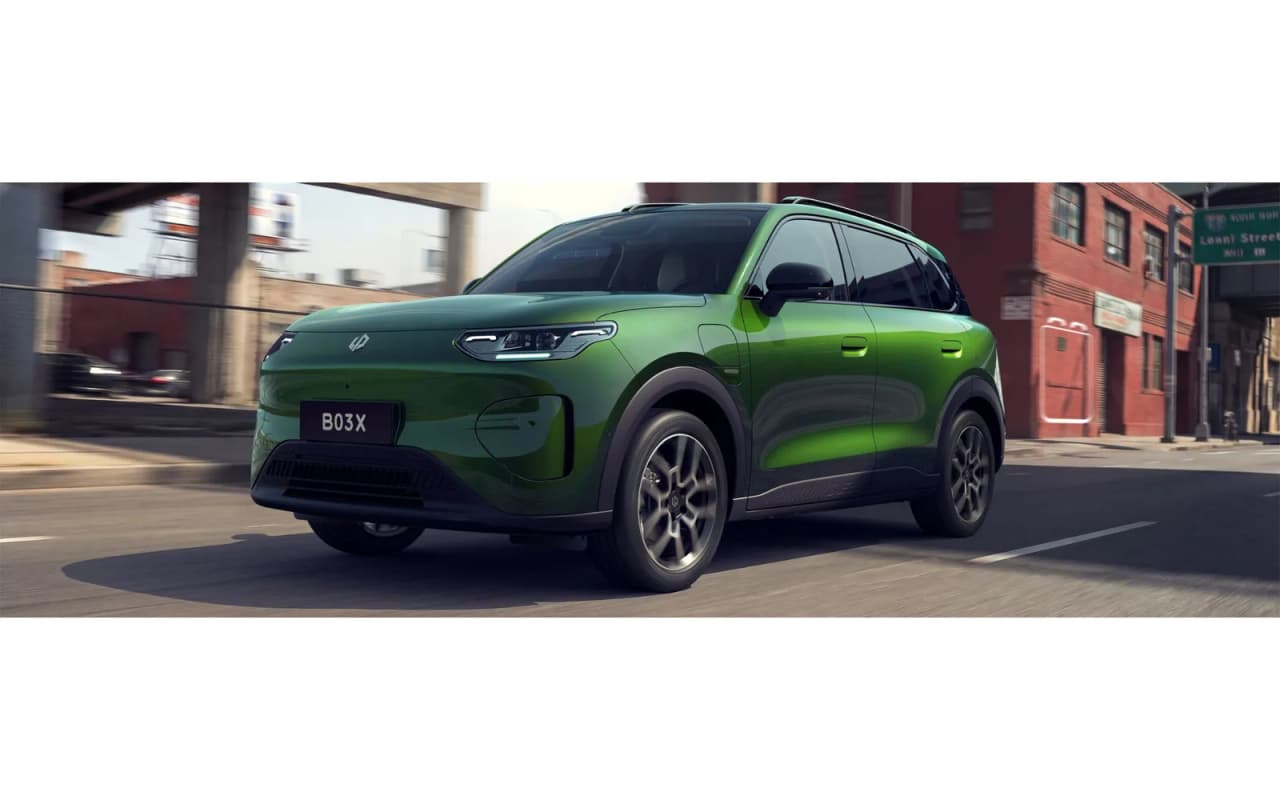
The B03X, especially in ProMax, throws a lot more technology at the buyer in fewer variants:
- Cabin and comfort: Eco‑leather steering wheel and seats, heated steering wheel, heated front seats, 6‑way powered driver seat, manual 4‑way front passenger seat, ambient and dynamic lighting, centre armrest with storage, and an automatic single‑zone climate control system. The Design ProMax adds practical touches like rear seat cushions that lift up easily to create tall storage space inside.
- Infotainment and connectivity: A dedicated intelligent chip (SD 8155), 8.8‑inch LCD instrument cluster plus a 14.65‑inch central touchscreen (2.5K HD in Design ProMax), Android Auto and Apple CarPlay, multiple Type‑A and Type‑C ports front and rear, 15W wireless phone charging, a 12‑speaker audio system, and extensive voice interaction and driver monitoring features.
- Safety tech: A long list of active safety systems and ADAS, including adaptive cruise control, lane centering, automatic lane change, forward and rear cross‑traffic alerts with braking, emergency braking, lane keeping and emergency lane keeping, blind spot detection, 360° surround view, transparent chassis view, narrow road assist image and various radar setups front and rear.
In short, where the Creta EV climbs gradually from basic to feature‑rich as you pay more, the B03X packs almost everything into the ProMax and Design ProMax, starting under Rs 47 lakh. For buyers who value screens, connectivity, and a comprehensive ADAS suite, the B03X feels like the more tech‑forward product.
Motors, Battery and Performance
Hyundai Creta EV
The Creta EV offers two powertrains:
- Standard battery variants (Executive, Smart (O), Premium +, Executive Tech):
- Battery: 42 kWh liquid‑cooled lithium‑ion
- Claimed range: 390 km (MIDC)
- Motor: 99 kW IPMSM
- Charging standard: CCS2
- Long‑range variants (Smart (O) LR, Premium+ LR 126 kW):
- Battery: 51.4 kWh (liquid‑cooled)
- Claimed range: about 473 km (based on coverage summaries)
- Motor: 126 kW electric
The 99 kW versions are adequate for city and highway use, in line with typical compact EV SUVs. The long‑range 126 kW versions should feel noticeably stronger in acceleration and overtakes, making them better suited for frequent hill driving and fully loaded highway trips.
However, charging details in Nepali documentation are sparse. CCS2 is confirmed, and the Creta EV offers V2L inside on certain trims, but official Nepali information on DC peak power and 30–80% charge times is not clearly laid out.
Leapmotor B03X
The B03X keeps things simpler – one battery and one motor tuned for strong everyday performance:
- Battery: 53 kWh LFP
- Range: 505 km CLTC and 382 km WLTP, which gives a more realistic global benchmark
- Motor: 145 kW, 200 Nm
- Drivetrain: FWD, single‑speed transmission
- Performance: 0–100 km/h in 8.6 seconds, top speed 160 km/h, 100–0 km/h braking distance 38.5 m
- Charging: 11 kW onboard charger, AC 30–80% in 3.1 hours, DC 30–80% in 16 minutes, with maximum DC power of 133 kW
Compared with the 42 kWh Creta EV, the B03X clearly offers more battery capacity, stronger motor output and much faster DC charging. Against the Creta EV long‑range trims, the B03X is still competitive: the Creta LR battery is slightly smaller, and DC charging specs are less clearly communicated, while the B03X publishes its rapid charging figures confidently.
Real-World Implications
For daily commuting in the valley or other urban centers, both cars offer more than enough range. The difference emerges for buyers who:
- Regularly drive intercity (Kathmandu–Pokhara, East–West Highway)
- Need fast repeated DC charges on long runs
- Carry full family plus luggage frequently
In those scenarios, the Leapmotor B03X holds a performance and flexibility edge, especially on DC fast charging and the stronger 145 kW motor. The Creta EV Smart (O) LR and Premium+ LR 126 kW narrow the gap, but at much higher prices.
Ride, Handling and Comfort: What We Can Infer
Neither car has been widely test‑driven in instrumented back‑to‑back Nepali reviews yet, so the ride and handling assessment relies on layout and equipment rather than subjective scores.
- Creta EV: Uses the established Creta platform with a 2,610 mm wheelbase and 200 mm ground clearance. This typically translates to a stable highway ride and decent bad‑road capability. Dual‑zone climate, ventilated seats (Premium + and above), and panoramic sunroof on mid/top variants indicate a focus on family comfort. For many buyers stepping up from smaller EVs, it will feel like a familiar, comfortable SUV.
- B03X: With a slightly shorter wheelbase and 190 mm ground clearance, it is still well within the practical zone for Nepali roads. Suspension setup combines front independent and rear torsion beam, which is common in this segment. Comfort highlights include heated seats and steering, ambient lighting, and a very tech‑centric cabin with large screens and voice interaction. This leans more toward a modern, connected‑car experience than a traditional SUV feel.
Given the strong ADAS and driver assistance stack on the B03X, long highway drives should feel less tiring once a buyer gets used to the systems. The Creta EV counters with a more familiar, possibly easier‑to‑learn interface and Hyundai’s evolving ADAS suite on the Premium + and long‑range top trims.
Practicality and Running Costs
Space and Cargo
- Creta EV: Uses the Creta body, which in ICE form is known for good cabin space. A 22 L frunk on Executive, Smart (O) and Premium + adds a bit of front storage. Boot capacity for Nepali Creta EV variants is not clearly specified, but the mid‑size footprint suggests adequate luggage space for family use.
- B03X: Provides clear numbers: 510 L of luggage capacity with seats up and 1,605 L with seats folded, plus 4/6 folding functionality in the second row. The Design ProMax variant’s lifting rear seat cushions create a tall interior space that is very handy for bulky items.
From a pure practicality standpoint, the B03X publishes and delivers excellent cargo space for its size. The Creta EV likely matches or comes close in everyday usability, but without transparent boot figures it is harder for buyers to compare on paper.
Running Costs, Warranty and Ownership Confidence
- Creta EV:
- Benefits from Hyundai’s extensive network: 57 showrooms and 42 service centers.
- Nepali documentation does not fully spell out battery warranty or detailed charging curve information yet.
- As a mainstream brand, long‑term parts availability and resale confidence are naturally stronger.
- B03X:
- Offers 8‑year / 160,000 km battery warranty and 4‑year / 100,000 km overall vehicle warranty, including the e‑powertrain.
- The brand’s network is smaller, at 13 showrooms and 3 service centers, and long‑term resale is still an open question.
In terms of immediate cost of ownership, the B03X’s lower price, bigger battery and strong warranty offer good value, especially for higher‑mileage users. The Creta EV emphasizes peace of mind through brand familiarity and network depth rather than lower upfront cost.
Price and Variants: Side-by-Side
Below is a simplified comparison of key trims that Nepali buyers are likely to cross‑shop.
| Model / Variant | Battery & Motor | Claimed Range | Key Features Focus | Ex-showroom Price |
|---|---|---|---|---|
| Creta EV Executive | 42 kWh, 99 kW | 390 km MIDC | Core safety, basic comfort | Rs 51.96 lakh |
| Creta EV Smart (O) | 42 kWh, 99 kW | 390 km MIDC | Electric driver seat, V2L, more convenience | Rs 56.96 lakh |
| Creta EV Premium + | 42 kWh, 99 kW | 390 km MIDC | Ventilated seats, Bose audio, Level 2 ADAS | Rs 59.96 lakh |
| Creta EV Smart (O) LR | 51.4 kWh, 126 kW | ~473 km claimed | Long range, stronger motor, mid‑high equipment | Rs 69.96 lakh |
| Creta EV Premium+ LR 126 kW | 51.4 kWh, 126 kW | ~473 km claimed | Long range plus full comfort/ADAS | Rs 76.96 lakh |
| Leapmotor B03X ProMax | 53 kWh, 145 kW | 505 km CLTC / 382 km WLTP | Long range, strong performance, rich tech/ADAS | Rs 44.99–46.99 lakh |
The core price story is stark:
- B03X ProMax undercuts the Creta EV Executive by roughly Rs 5–7 lakh, while offering a larger battery, more performance and more tech.
- Even the top Creta EV Premium + at Rs 59.96 lakh still falls short of the B03X’s battery size and performance, although it gives you Hyundai’s badge, ventilated seats, Bose audio and a more established network.
- The long‑range Creta EV trims stretch into Rs 70–77 lakh territory. At those prices, you are paying a clear premium for Hyundai branding, network and the 51.4 kWh battery paired with 126 kW motor, but the B03X’s 53 kWh / 145 kW package still costs significantly less.
Which EV Wins for Which Kind of Nepali Buyer?
Choose the Hyundai Creta EV if:
- You live outside the main urban centers and want the widest sales and service coverage available.
- You value brand familiarity and resale confidence over spec‑sheet wins.
- You prefer a traditional midsize SUV feel, with increasingly premium comfort and ADAS as you climb the variant ladder.
- You are willing to pay extra for ventilated seats, Bose audio, panoramic sunroof and Hyundai’s interior quality.
- Range anxiety is an issue but you want a mainstream brand: in that case, Smart (O) LR or Premium+ LR 126 kW are the logical picks despite their higher price.
Choose the Leapmotor B03X if:
- You want the maximum battery size and usable range for the money in this segment.
- Fast DC charging and transparent charging specs matter for frequent long‑distance runs.
- You care more about tech features – big central screen, rich connectivity, strong ADAS and safety equipment – than a big-name badge.
- You mostly operate in or near cities where 13 showrooms and 3 service centers are practical enough.
- You are comfortable being an early adopter with a newer brand in Nepal, backed by clear warranty terms.
Editorial Verdict
If you strip the badges off and focus only on numbers, the Leapmotor B03X ProMax is the more compelling electric SUV for most value‑driven Nepali buyers: bigger 53 kWh battery, longer WLTP‑rated range, stronger 145 kW motor, faster DC charging, extensive ADAS and a rich comfort/infotainment suite, all for under Rs 47 lakh.
However, cars are not bought on numbers alone. The Hyundai Creta EV earns its place by offering a familiar midsize SUV format, a breadth of six variants to match different budgets and feature expectations, and the comfort of Hyundai’s extensive national network. For buyers in smaller towns, or those who are simply more comfortable with a long‑standing brand and its perceived resale strength, this matters as much as battery capacity.
So our verdict is this:
- For urban and intercity users who prioritise value, range and tech, and are comfortable with a newer Chinese EV brand, the Leapmotor B03X ProMax is the better buy.
- For risk‑averse buyers, those living far from major city hubs, or shoppers who want a mainstream badge and traditional SUV feel, the Hyundai Creta EV Smart (O) and Premium + / Premium+ LR trim levels remain the safer, more confidence‑inspiring choice.
In other words, the B03X wins the spec‑sheet and value battle, while the Creta EV wins on network strength and brand comfort. The right answer depends less on the brochure and more on where you live, how far you drive, and how much you trust newer EV brands.
Compare Hyundai Creta EV vs Leapmotor B03X variant by variant
Writes on vehicle pricing, taxation and the Nepali auto market from ongoing tracking of distributor price lists. Every price in this piece is read live from the Nepal AutoMart catalog — how we verify prices.