Where each sits in the Nepali market
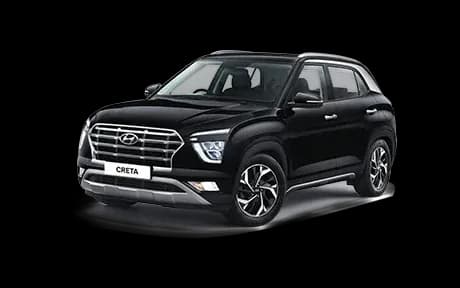
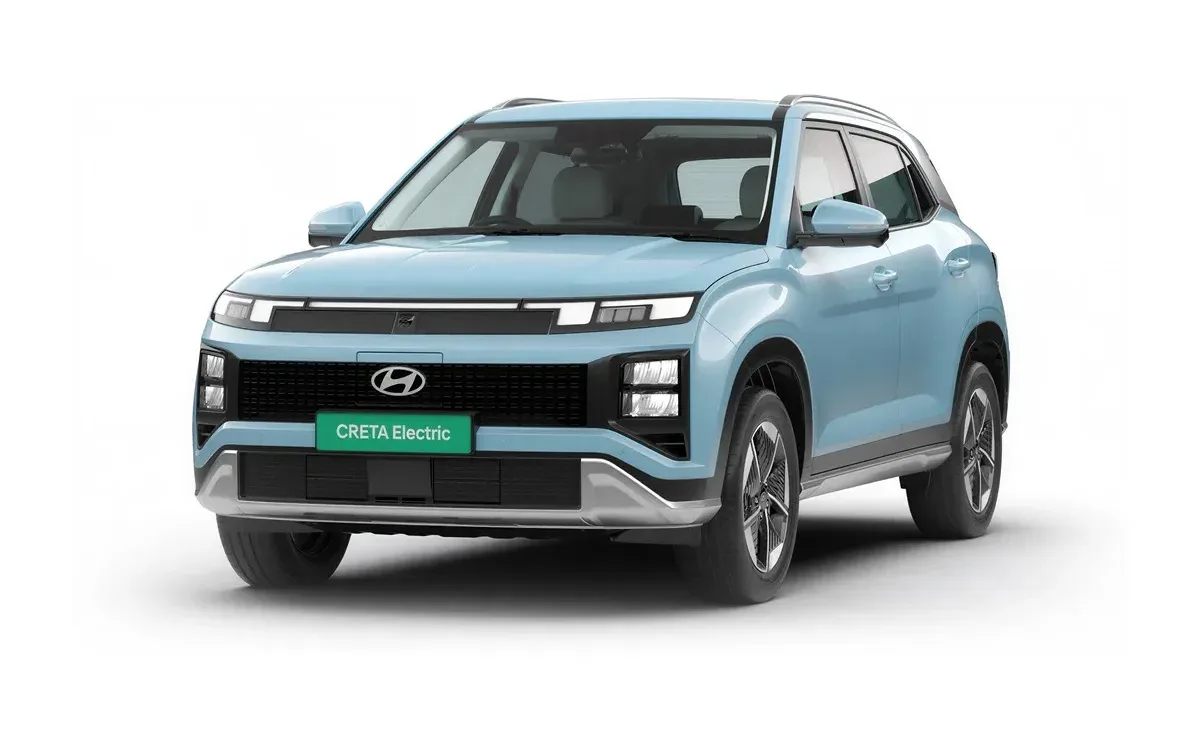
The **Hyundai Creta EV lands as the mainstream, higher-trust choice in this pairing. It is sold by Laxmi Intercontinental Pvt. Ltd., spans Rs 51.96 lakh to Rs 76.96 lakh across 6 variants, and is backed by 38 showrooms and 42 service centers** in Nepal. That makes ownership easier for buyers who want an EV SUV without taking on a thin retail network.
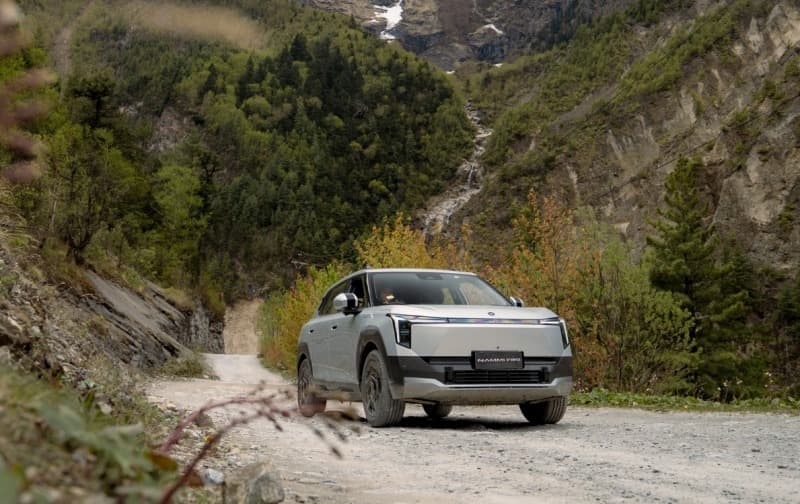
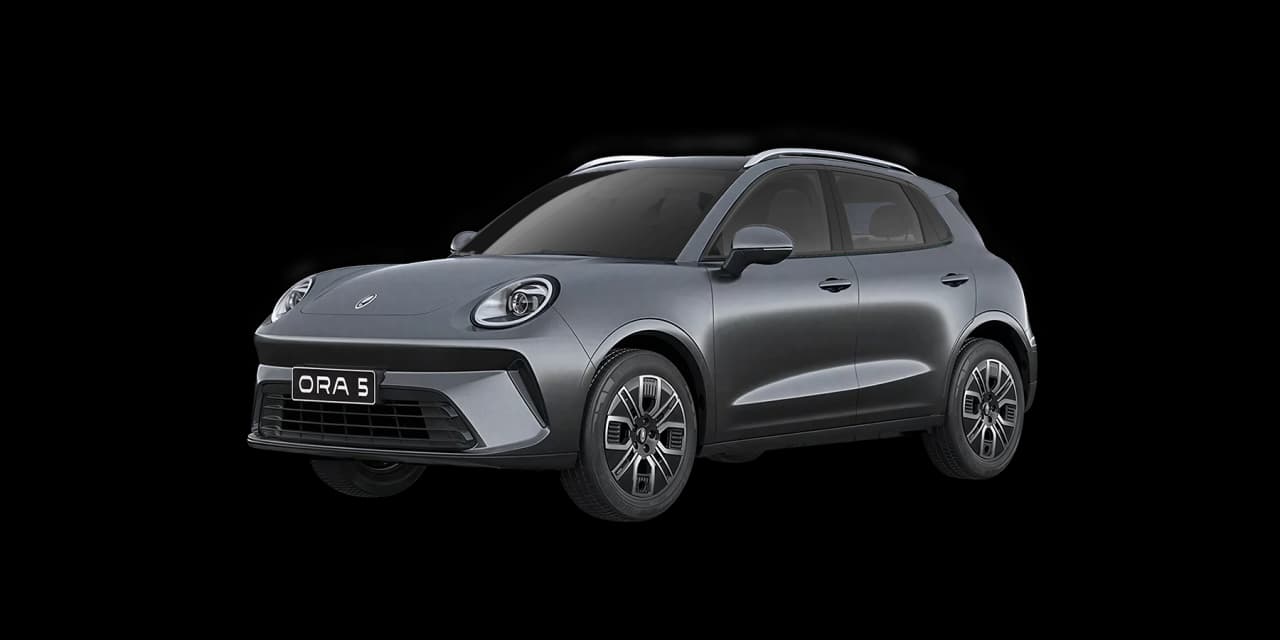
The **GWM Ora 5 EV comes in as the sharper price play. It is imported by VG Impex Pvt. Ltd., is offered in just 2 variants, and sits at Rs 46.99 lakh to Rs 52 lakh, with only 1 showroom and 0 service centers** listed in Nepal. The showroom price is lower. The ownership setup is narrower.
Price and variants side by side
| Model | Variant | Price in Nepal | Battery | Range | Motor |
|---|---|---|---|---|---|
| Hyundai Creta EV | Executive | Rs 51.96 lakh | 42 kWh | 390 km MIDC | 99 kW |
| Hyundai Creta EV | Smart (O) | Rs 56.96 lakh | 42 kWh | 390 km MIDC | 99 kW |
| Hyundai Creta EV | Premium + | Rs 59.96 lakh | 42 kWh | 390 km MIDC | 99 kW |
| Hyundai Creta EV | Smart (O) LR | Rs 69.96 lakh | 51.4 kWh planned | around 400 km expected | 126 kW expected |
| GWM Ora 5 EV | Mid | Rs 46.99 lakh | 58.3 kWh | 520 km claimed, with 435 km also reported in Nepali coverage | 100 kW |
| GWM Ora 5 EV | High | Rs 51.99 lakh | 58.3 kWh | 520 km claimed, with 435 km also reported in Nepali coverage | 100 kW |
On entry pricing, the Ora 5 EV Mid undercuts the Creta EV Executive and brings a larger battery on paper. The Creta answers with a broader variant ladder, clearer dealer support, and a more familiar step-up path for buyers who want to move from a base trim to a better-equipped car within the same nameplate.
Looks and design
The Creta EV keeps the familiar Creta silhouette and adds EV-specific treatment: a closed front grille, aero-focused bumper, and standard LED headlamps and LED DRLs. It reads like a conventional compact SUV first and an EV second. That will suit buyers who want an electric car to blend into everyday parking lots.
The Ora 5 EV takes the opposite route. It is a compact electric SUV with modern, more EV-forward styling, and it will likely stand out more in traffic and at charging stops. In market terms, the Ora 5 feels more design-led and slightly more fashion-forward, while the Creta EV feels more familiar and easier to live with for conservative buyers.
Features and equipment
This is where the Creta EV starts to spread out across trims. Even the Executive includes 6 airbags, ABS with EBD, ESC/VSM/HAC/HDC, TPMS, front and rear disc brakes, ISOFIX, and dual-zone automatic climate control. The Smart (O) adds an electric 6-way driver seat, rear window sunshade, and floating console ambient lighting. The Premium + adds a powered driver memory seat, front ventilated seats, and a Bose 8-speaker system. The Premium + is also the only listed Creta EV trim here with Level 2 ADAS with 19 features.
The Ora 5 EV is more restrained in what is officially disclosed for Nepal. The Mid and High trims are clearly differentiated, but the local spec picture is still not fully itemized. What is clear is that the High is the more complete car, while the Mid is the value entry point. In showroom terms, the Creta EV gives Nepali buyers a more transparent ladder of equipment. The Ora 5 asks buyers to trust the trim hierarchy without the same level of public detail.
For feature-hungry buyers, the Creta EV Premium + is the stronger product because its equipment list is more explicit and more complete.
Motor, performance, and driving feel
The standard-range Creta EV variants use a 99 kW IPMSM motor with a 42 kWh liquid-cooled lithium-ion battery. That setup is tuned for smooth, usable everyday performance rather than headline-grabbing pace. It should feel adequate in city traffic and familiar on the highway. It is not the spec that will excite drivers looking for a stronger shove.
The planned Smart (O) LR changes the equation. With a 51.4 kWh long-range battery and an expected 126 kW motor, it should feel substantially stronger than the 42 kWh versions, while retaining a rear-wheel-drive layout. If the final Nepal spec follows this direction, it becomes the most interesting Creta EV for enthusiastic buyers, though the higher price pushes it into a different value bracket.
The Ora 5 EV uses a 100 kW motor and a 58.3 kWh battery. On paper, that gives it the edge over the standard-range Creta EV in both battery size and output, even if the power difference is small. The Ora 5’s stronger battery-first pitch should matter more to buyers who drive farther and want fewer charging stops, while the Creta’s main appeal remains balanced everyday usability and a better support ecosystem.
Range and charging reality
This is the cleanest numerical advantage for the Ora 5 EV. Its 58.3 kWh battery is far larger than the Creta EV’s 42 kWh pack, and the claimed range is also stronger. The Nepali market has seen 520 km claimed range attached to the Ora 5, while another commonly cited figure is 435 km, which is the more restrained and believable number to use when comparing ownership expectations.
The Creta EV’s standard variants claim 390 km MIDC, which is not weak, but it is clearly behind the Ora 5 on paper. The long-range Creta EV should move closer to around 400 km, but even there it is still not the range leader in this pair.
For fast charging, the Creta EV’s standard-range setup is better documented: CCS2 charging is listed, and the launch data ties it to a 10–80% time of 39 minutes. For the Ora 5 EV, the Nepal materials are less fully disclosed, so the charging comparison is not as tidy. That is one reason the Creta feels easier to evaluate, even when the Ora 5 looks better on battery capacity.
Ride, handling, and comfort
Neither car is trying to be a sports EV, but their personalities differ. The Creta EV should feel more settled and predictable to Nepali buyers because the chassis packaging is familiar and the brand has spent years building a compact-SUV ownership formula in the market. The 2,610 mm wheelbase and 200 mm ground clearance on the standard-range car also suggest a practical setup for broken roads, speed breakers, and urban rough patches.
The Ora 5 EV is the more unknown quantity here because official Nepal data does not fully disclose its wheelbase or ground clearance. That makes it harder to judge with the same confidence, even though the larger battery should support a more relaxed long-distance ownership rhythm. The stronger comfort bet on the Ora 5 is not chassis clarity. It is the fact that its bigger battery should reduce the frequency of charging stops.
Inside, the Creta EV again looks more convincing for Nepali buyers who want a premium-feeling cabin with clear trim stepping. The Smart (O) already brings meaningful comfort upgrades, and the Premium + pushes into richer territory. The Ora 5 likely feels stylish and modern, but the locally disclosed equipment story is less complete, which weakens its case for buyers who compare cars by visible specification.
Practicality and running costs
The Creta EV offers a 22-litre frunk, and the standard body shape should make it easier to live with as a family car. It is also supported by a much larger dealer and service footprint, which matters more in an EV than in a petrol car because ownership confidence is tied to where you can get diagnostics, warranty support, and scheduled maintenance.
The Ora 5 EV’s biggest practical advantage is its battery. If your use case includes longer intercity trips or a heavier reliance on public charging, the larger pack should be a real advantage. But the practical downside is obvious: 1 showroom and 0 service centers make it a much narrower bet for buyers outside the capital-focused or specialist-customer audience.
Running-cost logic also leans in the Creta’s favor for peace of mind, even if the Ora 5 may be cheaper to buy at the start. The reason is simple. A wider support network usually reduces the friction and uncertainty that can quietly make an EV ownership experience expensive, even when the energy cost per kilometre stays low.
Which one wins for which buyer
- The Hyundai Creta EV Executive is the safer choice for buyers who want the lowest-risk Hyundai EV entry.
- The Creta EV Smart (O) is the best standard-range sweet spot if you want features without overreaching.
- The Creta EV Premium + is the best pick for buyers who want the most complete Creta EV, especially with ADAS.
- The Creta EV Smart (O) LR is the one to watch if range and stronger performance matter most.
- The Ora 5 EV Mid is the value pick for buyers who want the biggest battery at the sharpest starting price.
- The Ora 5 EV High is the better Ora 5 if you want the more complete version and can accept the limited support network.
Verdict
The Hyundai Creta EV is the better overall choice for most Nepali buyers because it combines a much stronger dealer-and-service footprint, more variant choice, and a better-documented ownership experience. The GWM Ora 5 EV is the more tempting spec-sheet bargain, especially for buyers focused on battery size and entry price, but it is also the riskier buy because its support network in Nepal is still tiny.
If you want the more confident long-term purchase, choose the Creta EV. If you want the most battery for the money and are comfortable taking a narrower ownership path, the Ora 5 EV deserves a serious look.
Compare Hyundai Creta EV vs GWM Ora Ora 5 EV variant by variant
Writes on vehicle pricing, taxation and the Nepali auto market from ongoing tracking of distributor price lists. Every price in this piece is read live from the Nepal AutoMart catalog — how we verify prices.