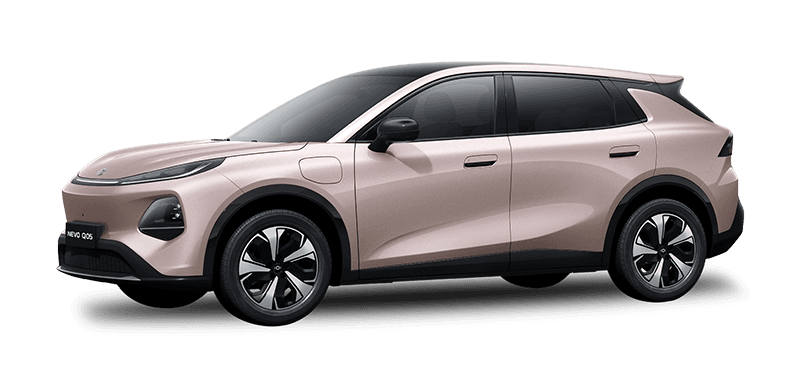
Nepal gets two national auto shows three weeks apart this August, and the first one is the launch show. NAIMA Nepal Mobility Expo 2026 runs 11–16 August 2026 (Shrawan 26–31, 2083) at Bhrikutimandap Exhibition Hall, Kathmandu — 51 stalls, more than 55 brands and, by the organiser's count, over 40 new product launches. Full dates, venue and organiser details are on our NAIMA Nepal Mobility Expo 2026 event page.
This is the second edition of the expo, run by the Nepal Automobile Importers and Manufacturers Association — an association barely a year old that has grown from 21 founding members to 36 importers and manufacturers. Stalls were allotted by lottery: 26 to four-wheeler brands, 23 to two-wheeler and commercial-vehicle brands.
One caution before the list. The "40+ launches" figure counts batteries, chargers, spare parts and accessories alongside vehicles. It is not 40 new cars and bikes. As of the end of July, NAIMA had not published a model-by-model schedule, so what follows separates what a distributor has actually confirmed from what trade reporting expects.
Which brands have four-wheeler stalls
ARCFOX, BAIC, BYD, Citroën, Denza, Forthing, Great Wall Motors (Haval and ORA), Henrey Volts, Honri Boma, Hyundai, iCAUR, Kaiyi, Kia, Leapmotor, Mahindra, Maxus, MG (through both GO Automobiles and Paramount Motors), Nissan, Omoda and Jaecoo, Peugeot, Proton, Tata, Toyota, Wuling and Zeekr.
Two-wheelers: Ather, Bajaj, CFMOTO/ZEEHO, Garrow, Honda, Keren, KTM, Moto Morini, NIU, Peugeot and BGAUSS, Royal Enfield, Suzuki, Triumph, TVS, Ultraviolette, Yadea and ZX MOTO/CX Motorcycles. Commercial vehicles: Chery Wanda, Karry, Keyton and Skyworth.
The brand split between the two shows matters. Honda, Bajaj and TVS go to NAIMA; Yamaha and Hero go to NADA. Royal Enfield is expected at both. So a shopping list built around one show will miss half the market.
About the prices in this article
Where we already sell a vehicle, the figure below is the real current Nepal ex-showroom price from our own catalog, and the model name links to its price page.
Where a model is not yet on sale here, there is no honest Nepal price to quote — so we ran each one through the Nepal AutoMart price predictor, which estimates a Nepal band from the model's home-market price anchored on how that brand actually prices its existing Nepal line-up. Those figures are labelled estimate. They are wide on purpose, and a distributor's launch announcement overrides every one of them.
Four brand-new marques, all Chinese
Laxmi Group alone is introducing three new brands, which is the single biggest story of the expo.
BAIC BJ30e — a strong hybrid, not a plug-in, and the only new entrant with genuine off-road hardware. A 1.5-litre turbo petrol works through a dedicated hybrid transmission with a small 1.67 kWh buffer battery, so it never needs charging. 4,730 mm long, 215 mm ground clearance, 25-degree approach and 30-degree departure angles, seven drive modes including Snow, Mud, Sand and Wading, eight airbags, a 360-degree camera, a 14.6-inch screen and a claimed 1,000-plus km on a 51-litre tank. AWD is expected for Nepal.

For a Nepali buyer who drives hill roads weekly and does not trust the charging network, this sidesteps the EV objection entirely. Our predictor puts it at an estimated Rs 85 lakh to Rs 1.15 crore — high against its ¥99,900–136,900 China price, but consistent with what Nepal's duty structure does to petrol hybrids. For comparison, a Suzuki Grand Vitara e-CVT hybrid sells here at Rs 96.49–102.29 lakh from an Indian price near ₹20 lakh. Combined-output figures for the BJ30 range from 402 to 409 hp and 680 to 685 Nm depending on the source, so wait for the Nepal-spec number.
**ARCFOX T1 — and this one has already happened: the T1 was reported as reaching Nepal ahead of the expo, so treat it as a display car at NAIMA, not a first launch. No official Nepal price has been published yet.** Laxmi e-Mobility has no live website to check a figure against, and every number in circulation is an estimate — one pre-launch trail put the T1 at roughly Rs 37–45 lakh, another at Rs 45–50 lakh. Two things to settle on the stand: the official price, and whether Nepal gets one trim or both the Pro and Max.
The car itself is a premium small EV with a 2,770 mm wheelbase — cabin space of a class above — 70 kW and 95 kW motor options in China, roughly 33.4 kWh and 42.3 kWh batteries, up to 425 km CLTC, a 30–80% fast charge in about 17 minutes, Level 2 ADAS, a 540-degree camera system and automatic parking. Two things to ask on the stand: whether Nepal gets the original T1 or the refreshed Beta T1 (the batteries and ranges differ), and to ignore any 55.6 kWh figure — that number could not be verified in any market.
JETOUR — Chery Holding's "Travel+" brand, arriving through Laxmi Group. The global range is X50, X70, X90 and the rugged T2, and the T2 is the widely expected debut, with the T1 plug-in hybrid also named in reporting. The T2 is 4,785 mm long with a 2,800 mm wheelbase, a 580-litre boot, a 15.6-inch centre screen, 12-speaker Sony audio on higher trims, a 360-degree camera with a transparent-chassis underbody view, and a plug-in hybrid option — a boxy, properly off-road-engineered midsize SUV combination nothing currently sold in Nepal offers at this size. The T2 i-DM took over 1,000 bookings within days of its Pakistan launch, which is the closest read we have on South Asian appetite.
Our predictor estimates the plug-in T2 at Rs 68–82 lakh. Two numbers circulating elsewhere — a Rs 63.4 lakh "Nepal equivalent" and an NPR 37,44,800 aggregator listing — are neither official nor reliable.
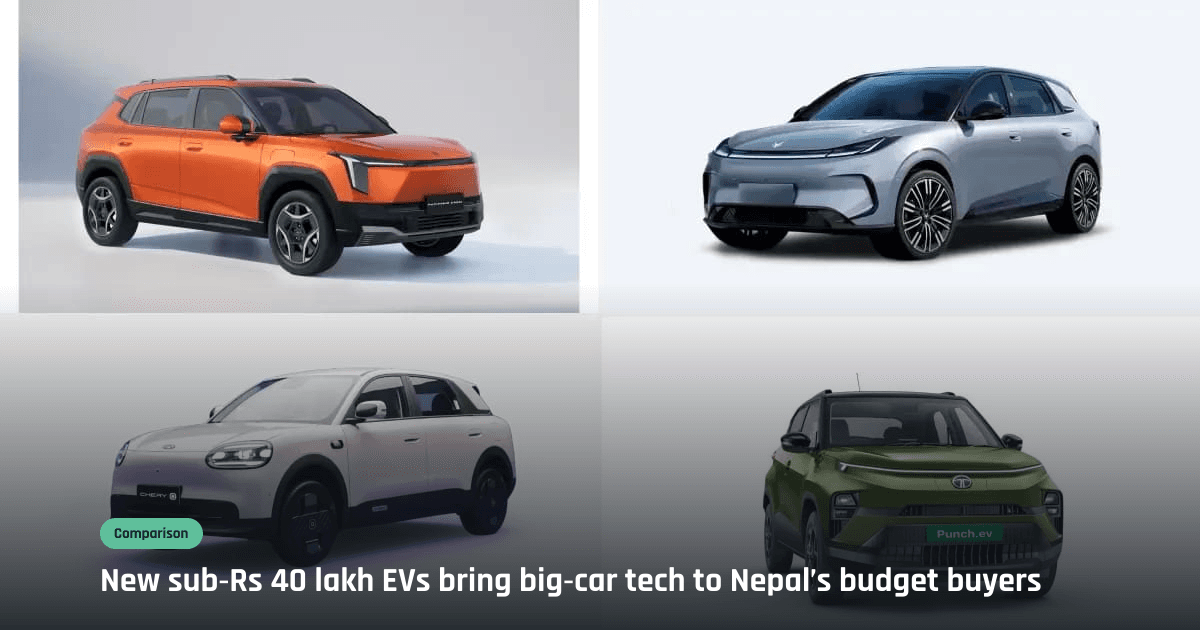
Chery QQ 3 EV — the QQ nameplate returns through SPG Automobiles, and Nepali buyers over 35 will remember the original from around 2008. The Nepal-bound car is built to Australian specification: 4,195 mm long on a 2,700 mm wheelbase with up to 977 mm of second-row legroom, rear-wheel drive, a 41.28 kWh LFP pack for 420 km CLTC, a 30–80% DC charge in under 16.5 minutes, 6.6 kW vehicle-to-load, a 15.6-inch Snapdragon 8155 screen and Chery's Falcon 500 driver assistance on an 80 TOPS chip. It took 56,879 orders shortly after its China launch.
Predictor estimate: Rs 22–29 lakh, stable across repeat runs. That would undercut the BYD Atto 1 at Rs 28.95–32.99 lakh and land near the MG Comet.
Wuling: four launches, the biggest single push
Paramount Motors has the broadest programme at the expo, and all four carry an 8-year battery warranty.
Wuling Mini EV 4-door — 3,256 mm long, rear-wheel drive, a 30 kW motor, 16.2 kWh and 25.1 kWh batteries for up to 301 km. Estimated at Rs 18–23 lakh, which would make it one of the cheapest four-wheelers on sale in Nepal, in the territory of the Seres Mini EV at Rs 16.49–17.99 lakh. The fifth-generation update specifically fixed the two historic weaknesses — range and charging speed.
Wuling Binguo EV (updated) — worth being precise about: the Binguo is already on sale here at Rs 31.99 lakh. What comes to NAIMA is the updated car, with 31.9 kWh and 37.9 kWh batteries, up to 410 km, dual 10.25-inch screens and up to six airbags. That 410 km figure would make it the range leader among sub-Rs 40 lakh hatchbacks this season.
Wuling Eksion EV — a seven-seat flagship SUV, 69.2 kWh, 150 kW and 310 Nm, up to 530 km, flexible third-row seating, ADAS and a 360-degree camera. This fills a real gap: Nepali families wanting a long-range seven-seat electric SUV currently have almost nothing to choose from. Trade reporting expects Rs 50–70 lakh; our predictor came in lower at an estimated Rs 38–46 lakh, working from its Indonesian on-road price. That spread is unusually wide, and the Eksion's price is the single number most worth waiting for at this expo.
Wuling Darion EV — seven seats, powered sliding doors, 69.2 kWh and up to 540 km. A premium sliding-door people-mover is a format Nepal's hotel, corporate-shuttle and tourism fleets buy but can currently only get with a petrol or diesel engine.

The Japanese, Korean and Indian launches
Nissan Tekton — the headline non-Chinese launch, confirmed by Nissan for its Nepal debut here. Built on the Renault Duster platform with Patrol-inspired styling: a full-width LED light bar, 18-inch alloys, a 10.25-inch cluster and 10.1-inch touchscreen, a panoramic sunroof, a powered tailgate, six-way ventilated front seats, six airbags, a 360-degree camera and Level 2 ADAS. India gets a 1.0-litre three-cylinder turbo petrol at 99 bhp and 166 Nm, with a second turbo-petrol option; a 1.3-litre turbo around 161 bhp and 280 Nm is also expected.
India pricing is ₹10.49–18.59 lakh ex-showroom, and Indian deliveries began on 20 July. Because the Nepali rupee is pegged to the Indian rupee at 1.60, that is exactly NPR 16.78–29.74 lakh before a single rupee of Nepali duty — which makes the Tekton one of the few launches where you can calculate the tax load precisely once the local price appears. Predictor estimate: Rs 34–43 lakh, which puts it alongside the Nissan Magnite ladder at Rs 34.74–53.99 lakh. Our estimates for this car varied noticeably between runs, so treat the band as loose.
Nissan Gravity — a sub-4-metre SUV on the CMF-A Plus platform in five- and seven-seat forms, with an 8-inch screen, a 7-inch semi-digital cluster, a wireless charger, hill-start assist and TPMS. A seven-seater under four metres sits in the lowest Nepali excise band, which is a genuinely rare combination for a taxi operator or a large family on a budget. Be aware that the model name itself is inferred from reporting rather than confirmed by Nissan Nepal.
Hyundai Venue, second generation — and this is quietly the most important launch at the expo, because it is assembled in Nepal at Laxmi Motor Corporation in Ramgram, Nawalparasi. It has completed technical testing and entered commercial production. Local assembly dodges the CBU duty structure every other launch here is carrying, which is why comparing it on sticker price against imported Chinese EVs flatters Hyundai unfairly.
The new car gets an H-shaped dashboard layout, dual 12.3-inch panoramic displays on the top variant, leatherette upholstery, ventilated front seats, a 375-litre boot and a longer wheelbase, with ADAS carrying 16 features on the 1.0-litre turbo petrol. In India it holds a 5-star Bharat NCAP rating. The current Venue sells in Nepal at Rs 41.96–59.96 lakh — the closest anchor until Hyundai announces.
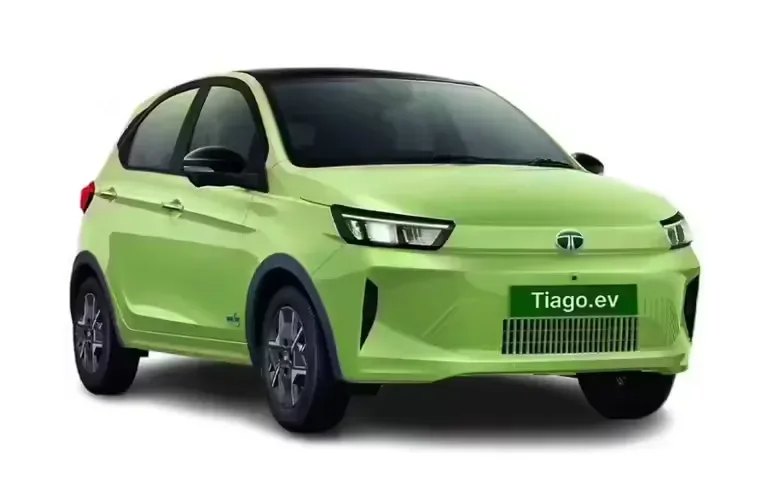
Tata Punch EV and Tiago EV — updated versions of both are expected. The Punch EV is on sale at Rs 33.99–39.99 lakh and the Tiago EV at Rs 27.49–29.99 lakh. The facelifted Punch.ev is reported with a 40 kWh battery, 129 hp, 154 Nm, a claimed 468 km ARAI range, 65 kW DC charging, 195 mm ground clearance and six airbags. Tata's warranty remains the strongest argument at the price — 8 years or 160,000 km on battery and motor, from the distributor with the deepest service network in the country.
The Chinese EVs from established distributors
Haval Jolion Max EV — Great Wall's first pure EV in Nepal, and the strongest commercial proposition among the Chinese launches for one reason: it wears a nameplate Nepali buyers already know, with a service network that already exists. New Chinese EV brands lose deals on after-sales doubt; Haval does not have that problem. Expect a 150 kW front motor, a 58.3 kWh battery, roughly 400 km, and 120 kW DC charging for a 30–80% top-up in about 20 minutes. It is larger than the petrol Jolion — 120 mm longer on a 10 mm longer wheelbase.
For a price anchor, ignore the petrol Jolion. The Max EV is expected to share its platform and powertrain with the ORA 5, and the ORA 5 EV is already listed here at Rs 48.30–51.99 lakh. That is the number to hold in mind.
Leapmotor B03 — the first shipment is already en route from China. Built on Leapmotor's next-generation platform, sold in China as the A10, with two battery and feature packages. Nepal preview information mentions 100 kW, 200 Nm, a 14.6-inch display, Level 2 ADAS and 510 litres of luggage space, while current Chinese versions list a 90 kW motor, a 53 kWh battery and up to 505 km CLTC — so the final Nepal specification needs confirming. Predictor estimate: Rs 32–37 lakh, which would place it between the T03 at Rs 28.99–34 lakh and the B10 at Rs 55 lakh. Shangri-La Motors has form on expo pricing — the T03 went out at Rs 27.99 lakh under a NAIMA 2025 special.
Omoda O4 — a compact electric crossover positioned below the E5. SPG has published no battery, motor or range figures, and no home-market price exists to estimate from, so our predictor correctly declined to guess. The Omoda E5 Pro at Rs 51.59–51.99 lakh is the ceiling it has to come in under.
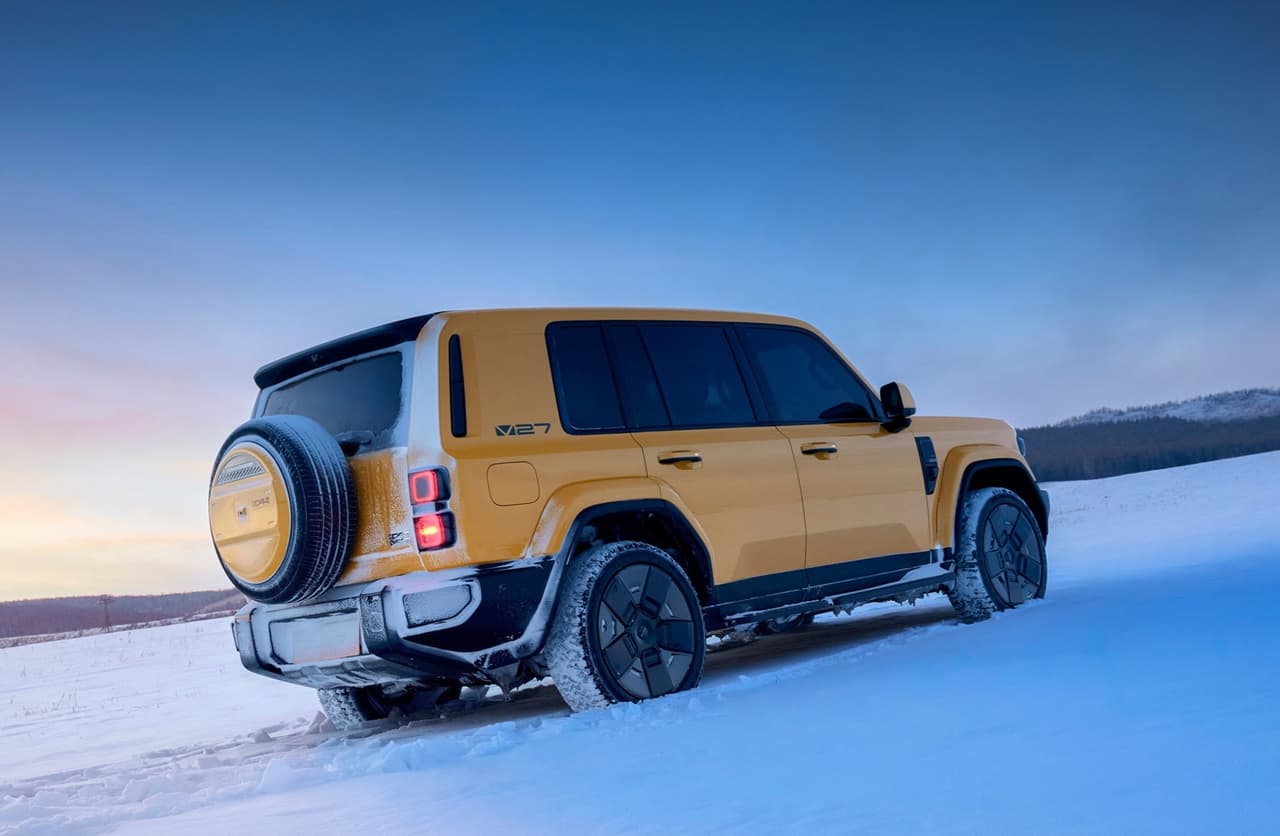
iCAUR V27 — a rugged extended-range off-roader, where a 1.5-litre turbo petrol acts as a generator rather than driving the wheels. EREV is the most under-represented powertrain in Nepal and arguably better suited to long hill runs than a pure battery car. It is positioned above Rs 70 lakh; the iCAUR V23 at Rs 53.99 lakh is the brand's current entry point. SPG has not confirmed whether the V27 goes on sale or is display-only, so treat it as a showcase until pricing appears. We would not publish a Nepal estimate for this one — the only home-market figure we could find was a UAE price, and estimating a Nepali number off it produced results we do not trust.

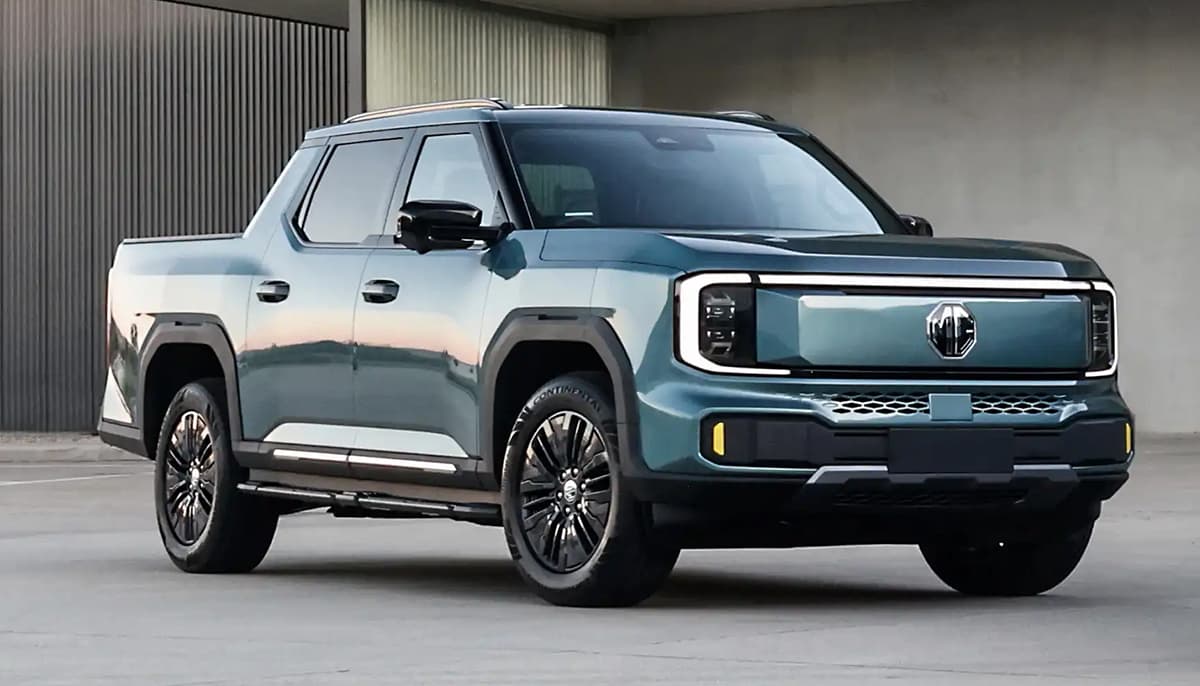
MG HS PHEV and MG U9 — Paramount brings a 1.5-litre turbo plug-in hybrid HS with a 21.4 kWh battery, roughly 272 PS combined, about 100 km of WLTP electric range, 0–100 km/h in 6.8 seconds, seven airbags and 13 ADAS functions. The petrol MG HS sells here at Rs 86 lakh, so the PHEV lands above that. The U9 is an electric lifestyle pickup with dual motors making 325 kW and 700 Nm, a 102.2 kWh battery, around 430 km WLTP, 3,500 kg of towing and 685 kg of payload.
Maxus eDeliver 5 — expected in Nepal as a 16-seat passenger conversion, with a 64 kWh battery, a 120 kW motor and up to 436 km of claimed urban WLTP range. It is already listed on our catalog at Rs 68 lakh.
Also holding stalls without a named launch model: BYD, Citroën, Denza, Forthing, Henrey Volts, Honri Boma, Kaiyi, Kia, Mahindra, Peugeot, Toyota and Zeekr. Participation is not a launch — several will use the expo for display cars, new colours, bookings or finance offers.
Two-wheelers
Yatri P2 — the biggest story on two wheels, and the only vehicle at either show that pays no import duty at all, because it is designed and built in Nepal. Developed by Yatri Motorcycles with Sipradi Trading, now in pre-production after thousands of test kilometres including road testing in Jiri, with a "Made in Nepal" badge on the hub. A mid-mounted motor, an aluminium swingarm, dual rear spring suspension, a wide bench seat, a flat floorboard and disc brakes at both ends. Wheel size is unresolved — 12-inch in the latest teaser, 14-inch in earlier sightings — and battery, range, top speed and price have not been released.
Reports genuinely conflict over which show gets the debut. Some place the P2 at NAIMA; others report its first public appearance at NADA in Bhadra. Sipradi is a NADA anchor brand and Yatri's partner, so either is plausible. On price: older reporting suggested a Rs 4 lakh target, but Yatri has said explicitly that P0 and P1 were not mass-market products and P2 is — and Nepal's e-scooter volume sits under Rs 2 lakh.
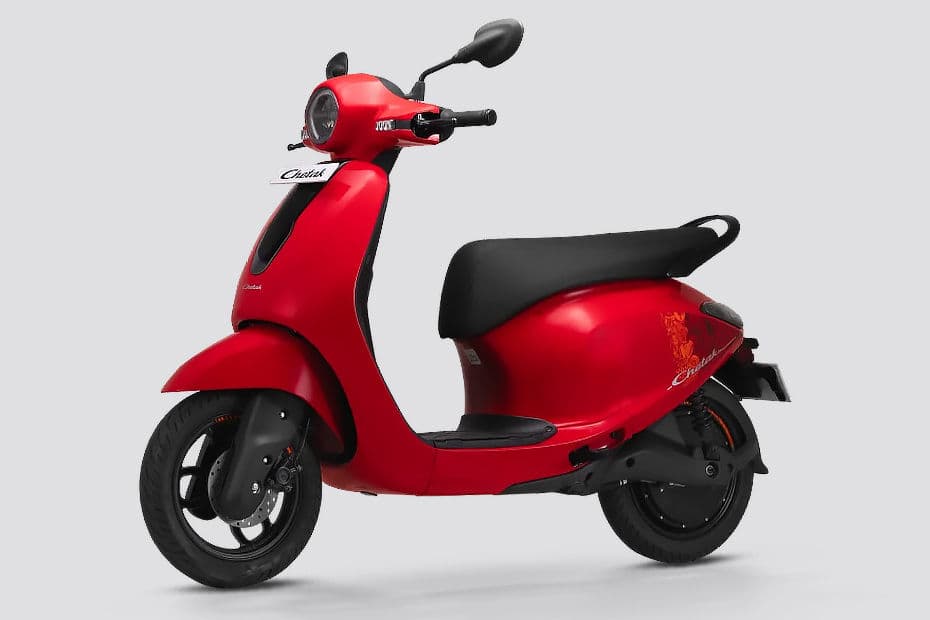
Bajaj Chetak C2501 and 3503 — Hansraj Hulaschand expands the electric range. The 2501 gets a 2.5 kWh battery, a claimed 113 km, a 60 km/h top speed, 25 litres of storage, a front disc brake and a full-metal body; the 3503 gets 3.5 kWh, a claimed 151–153 km, 70 km/h and a 35-litre boot. Estimates: Rs 2.10–2.50 lakh for the 2501 and Rs 3.00–3.65 lakh for the 3503. Two honest cautions — Indian owners report the 3503 delivering 90–95 km against a claim near 130 km, and Chetak prices in Nepal rose Rs 40,000 in two months earlier this year, so any August price should be treated as provisional.
TVS Apache RTX 300 — TVS's first adventure motorcycle, a 299.1 cc liquid-cooled single making roughly 36 PS and 28.5 Nm at about 180 kg kerb, from ₹1.99 lakh in India. Estimated at Rs 6.50–7.50 lakh, our highest-confidence two-wheeler estimate, which would put it between the Bajaj Dominar 400 at Rs 6.23–6.35 lakh and KTM's adventure range. Nepal's ADV segment is growing on Mustang, Manang and Upper Dolpo touring, and this is a mainstream brand entering it with a nationwide service network.
Ultraviolette X47 Crossover — the most technologically advanced two-wheeler at either show. 7.1 kWh and 10.3 kWh batteries for roughly 211 km and 323 km IDC, up to 145 km/h, rear-facing radar, dynamic stability control and an 8 lakh km warranty. Indian owners single out the suspension and low centre of gravity on broken roads, which is directly relevant here. India pricing spans ₹2.49–4.59 lakh across 16 variants; our estimate is a very wide Rs 5.50–9.50 lakh and low confidence — the variant Nepal gets will decide almost everything.
River Indie — a 4 kWh electric scooter with up to 160 km IDC, 90 km/h, 177 mm ground clearance, 14-inch wheels and 55 litres of storage. Its announced Nepal price is around Rs 3.70 lakh, against ₹1,45,999 in India.
Already launched, so display cars rather than debuts: the TVS Orbiter at Rs 2.81 lakh went on sale 23 July, and Hero's Vida VX2 landed on 26 July — Hero's EV brand arrives through CG Motors, with the Vida V1 already listed at Rs 3.45–3.95 lakh. Moto Morini is confirmed for one of the two shows, though the model name needs settling: local reporting says "Alltrhike 250" while Moto Morini's production bike is the Alltrhike 450, a 449 cc parallel twin making about 44.8 bhp.
What this means if you are buying
The Rs 30–40 lakh electric hatchback is now the most contested part of the Nepali market. The Proton e.MAS 5 at Rs 29.84–34.84 lakh — Proton Nepal advertises it at a launch price of Rs 29,99,999 to Rs 34,99,999 on the road, insurance excluded — the updated Binguo, the Chery QQ 3, the Leapmotor B03, the Tiago EV and the Dongfeng Nammi Box at Rs 32.49–36.49 lakh all sit within a few lakh of each other. When six cars are that close, design, feature count and after-sales decide the sale rather than price.

Buyers are deliberately waiting, and distributors know it. Trade reporting has customers holding decisions across both shows for discounts, exchange offers and finance schemes that will run through to Dashain–Tihar. An importer quoted in the trade press said competition will be intense from Rs 20 lakh to Rs 70 lakh and that companies are prepared to accept thinner margins for market share — with the honest caveat that after-sales capacity is what breaks first.
Which brings up the question worth asking at every stall. Nepal imported EVs from 33 brands last fiscal year, but the volume sits with a handful of names. Kia, Audi, Avatr, Jaguar, BAW, Wuling, LEVC and JMEV each brought in fewer than 10 units; Hyundai brought 26. Several brands launching flagship products this August have effectively no installed base and no service depth here. Ask about the nearest service centre and spare-parts lead time before you ask about range.
Vehicle financing is at an eight-year high on low interest rates, an 80% loan facility is now available for public EV purchases, and government employees can access interest-free vehicle loans up to Rs 60 lakh. That, more than any spec sheet, is the engine behind two auto shows and 40-plus launches landing in the same month.
Frequently asked questions
When and where is NAIMA Nepal Mobility Expo 2026?
11–16 August 2026 (Shrawan 26–31, 2083) at Bhrikutimandap Exhibition Hall, Kathmandu, organised by the Nepal Automobile Importers and Manufacturers Association. Announced practical details include a 50% discount on entry tickets, parking at Nepal Police Club, Pathao as ride partner, a food court, and free learning sessions at the Blue Pavilion auditorium.
How many new vehicles are actually launching at NAIMA 2026?
NAIMA says more than 40 new product launches, but that count includes batteries, chargers, spare parts and accessories as well as vehicles. Roughly 15 to 20 genuinely new four-wheelers and around 8 new two-wheelers have been publicly named or credibly reported so far.
Which brand-new car brands are entering Nepal at NAIMA 2026?
BAIC and ARCFOX through Laxmi e-Mobility, JETOUR through Laxmi Group, and the Chery QQ line through SPG Automobiles. All four are Chinese. Lepas and Hongqi distributor rights were still unresolved at the end of July, so expect announcements rather than products from those two.
Should I go to NAIMA or NADA?
NAIMA has more four-wheeler brands and more headline debuts. NADA, which follows from 25–30 August, has 17 light-commercial-vehicle stalls, 45 component companies, banks and insurers. If you want to see the newest Chinese EVs, go to NAIMA. If you are comparing EMI offers or specifying a pickup or a fleet, go to NADA.
Are the Nepal prices in this article confirmed?
Only the ones that link to a price page on our site — those are real current ex-showroom prices from our catalog. Every figure labelled "estimate" comes from our price predictor and is a modelled band, not a quote. Nepal prices for imported vehicles swing on customs duty, excise, VAT, the road infrastructure charge, the exchange rate, homologation and dealer margin, and the FY 2083/84 budget revised EV taxation. Re-check every number against the distributor's own price list on launch day.
Writes on vehicle pricing, taxation and the Nepali auto market from ongoing tracking of distributor price lists. Every price in this piece is read live from the Nepal AutoMart catalog — how we verify prices.