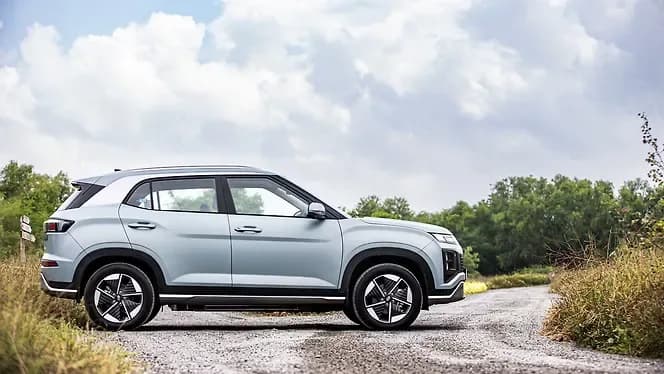
Overview: Creta familiarity, now as an EV
The Hyundai Creta EV is Hyundai’s electric take on its popular compact SUV, aimed at buyers who want to move to electric without sacrificing space, comfort and the familiarity of the Creta nameplate.
It is sold in Nepal by Laxmi Intercontinental Pvt. Ltd., Hyundai’s authorized distributor, with 15 showrooms and 12 service centers supporting sales and after‑sales across the country.
For Nepali buyers, the Creta EV sits in the growing compact/midsize electric SUV segment, targeting families and professionals who need a practical 5‑seater but also want lower running costs and a more refined EV driving experience.
Price & variants in Nepal
The Hyundai Creta EV is offered across a price band of roughly Rs 51.96 lakh – Rs 69.96 lakh (ex‑showroom), depending on variant and battery.
Current variants:
- Executive — Rs 51.96 lakh
- Smart (O) — Rs 56.96 lakh
- Premium + — Rs 59.96 lakh
- Smart (O) LR — Rs 69.96 lakh
Key points:
- Executive: Entry point to the Creta EV range, positioned below Hyundai’s Kona EV in pricing.
- Smart (O): Mid variant with additional comfort and tech, often seen as the feature "sweet spot" among standard‑range trims.
- Premium +: Top trim of the 42 kWh line‑up, focused on buyers who want the full feature set and a premium feel.
- Smart (O) LR: Higher‑priced long‑range variant with a larger battery and more powerful motor, aimed at highway and intercity users.
Launch/introductory offers:
- Executive: Introductory launch pricing, no official cash discount disclosed.
- Smart (O): Launch‑phase pricing; extra schemes not officially detailed.
- Premium +: Launch prices are known; other offers not officially disclosed.
- Smart (O) LR: No LR‑specific discount officially communicated.
Key specs: battery, range and performance
Battery and range
The Creta EV offers two battery options globally, but Nepal currently focuses on the standard pack, with the long‑range battery planned for specific variants.
- Executive
- 42 kWh lithium‑ion battery
- Claimed range: around 300–320 km per charge (reference based on India‑spec claims)
- Smart (O)
- 42 kWh lithium‑ion battery
- Real‑world range expectation: near 300 km (India‑spec reference)
- Premium +
- 42 kWh lithium‑ion battery in the current Nepal‑spec Premium+
- A 51.4 kWh long‑range battery has been announced globally but is not yet on sale in this trim in Nepal.
- Smart (O) LR
- Planned 51.4 kWh "Long Range" battery
- Claimed range expected around 400 km per charge (India‑spec reference)
This means:
- Standard‑range variants (42 kWh) are better suited to city and peri‑urban use, with occasional highway trips.
- The LR variant will appeal to drivers doing frequent intercity runs or those who simply want less range anxiety.
Motor and drivetrain
All Creta EV variants sold or planned for Nepal use a single‑motor, rear‑wheel‑drive (RWD) layout.
- Executive / Smart (O) / Premium +
- Rear‑wheel drive
- Approx 99 kW peak power (India‑spec based output for 42 kWh models)
- Smart (O) LR
- Rear‑wheel drive retained
- Higher output motor of around 126 kW (India‑spec reference for LR variants)
In practice, the standard‑range variants should feel brisk and refined for everyday city use, while the LR variant will offer stronger performance, especially on highways and steep gradients.
Size, space and practicality
Dimensions & ground clearance
Across variants, the Creta EV maintains the familiar Creta footprint:
- Length: about 4325 mm
- Width: around 1790 mm
- Height: roughly 1630 mm
- Wheelbase: approx 2670 mm
- Ground clearance: around 190 mm
This places it firmly in the compact/midsize SUV class and makes it well‑suited to urban roads, speed bumps and mild rough patches common in Nepali cities.
Seating and cabin
All variants are 5‑seater SUVs with cabin space comparable to the ICE Creta.
- Executive
- Fabric upholstery
- Manual seat adjustment
- Automatic climate control from base (India‑spec reference)
- Smart (O)
- Upgraded upholstery versus lower trims
- Likely rear AC vents and driver seat height adjustment (India‑spec feature mapping)
- Premium +
- Top‑spec interior with more premium materials
- Likely features such as ventilated front seats and premium dashboard trims (based on India‑spec Premium feature set)
- Smart (O) LR
- Same comfort features as Smart (O) standard‑range
- Adds the higher‑capacity battery for more range
Boot space
Thanks to EV‑specific packaging, the Creta EV preserves boot volume similar to the ICE Creta.
- Rear boot space: around 400–430 litres across all variants
- 60:40 split‑folding rear seats allow the cargo area to be expanded when needed
For a typical Nepali household, this is enough for weekly shopping, luggage for family trips, or equipment for outdoor hobbies.
Features: infotainment, convenience and safety
Infotainment & convenience
Even the base Executive is well equipped in terms of tech.
- Executive
- 10.25‑inch touchscreen infotainment with navigation
- Digital instrument cluster with EV‑specific displays, such as range and energy use
- Smart (O)
- Adds advanced connected car tech with remote monitoring features (India‑spec reference)
- Likely supports a more premium audio system and richer display setup
- Premium +
- Largest feature set among the 42 kWh variants
- Advanced connectivity, panoramic sunroof and powered driver seat are likely (India‑spec mapping)
- Smart (O) LR
- Connected car features with range and charging information tuned to the LR battery
- Infotainment features mirror the regular Smart (O) trim
Safety
Safety equipment is a strong point of the Creta EV line‑up.
- Multiple airbags (front, side, curtain) across the range
- ABS with EBD and ESC standard on all EV variants
- Higher trims (Smart (O), Premium +, Smart (O) LR) likely offer ADAS features such as driver assistance systems, based on India‑spec equipment levels
For families and frequent highway users, these features add confidence, particularly when combined with the Creta’s stable chassis and EV‑specific braking/traction calibration.
Design & road presence
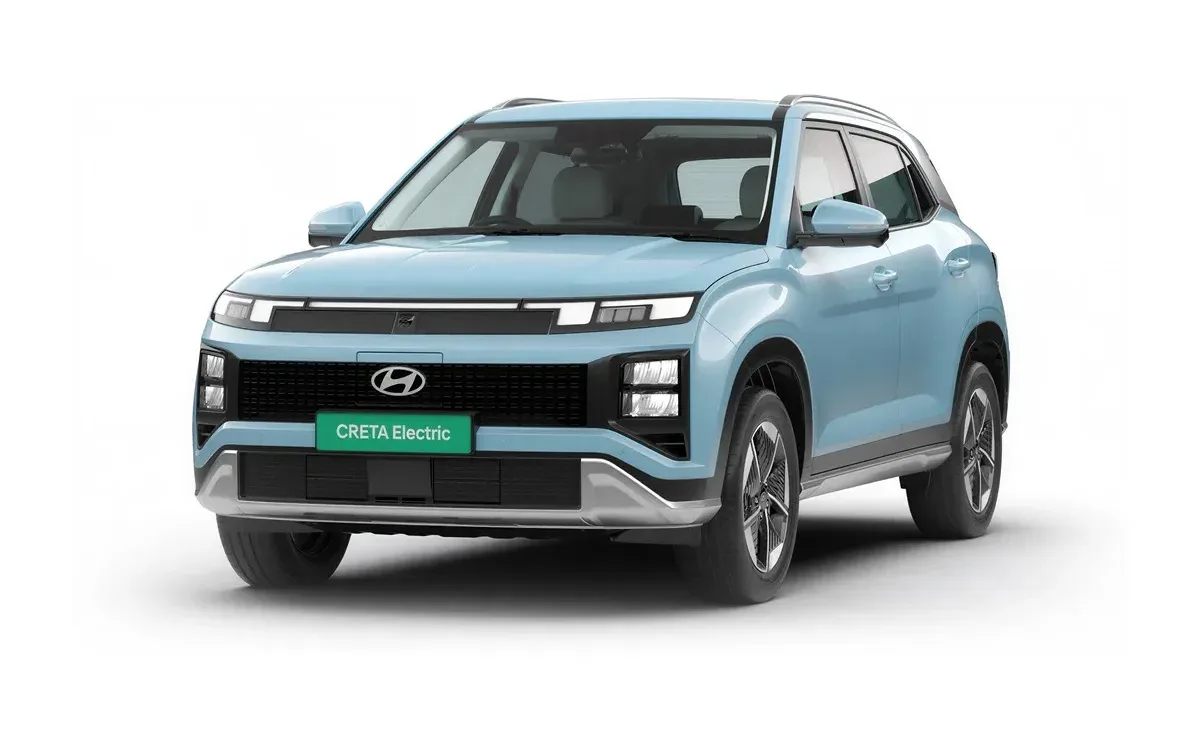
All Creta EV variants feature EV‑specific styling that distinguishes them from the ICE Creta.
- Closed front grille and aero‑focused bumper
- LED headlamps and LED DRLs as standard
- Distinct EV badging and aero‑optimized wheel designs
Trim differences:
- Executive: Clean EV look with core LED lighting
- Smart (O): More premium exterior elements such as chrome accents and EV badging
- Premium +: Most premium exterior trim, with more chrome, larger alloys and full LED treatment
- Smart (O) LR: LR badging and same EV fascia/alloys as Smart (O)
Overall, road presence is comparable to the ICE Creta, with the additional appeal of EV‑specific design touches.
Ownership in Nepal: service, ecosystem and value
Network and support
With 15 showrooms and 12 service centers, Hyundai and Laxmi Intercontinental offer one of the strongest networks among EV brands in Nepal.
That matters because:
- EVs are still relatively new, and buyers often worry about battery and service support.
- Hyundai’s established EV ecosystem and service backing are considered a key advantage for long‑term ownership.
Value for money by variant
- Executive
- Pros: Lowest entry price into Hyundai’s EV SUV range; familiar Creta package; competitive versus other midsize EV SUVs.
- Cons: Only the standard‑range battery; fewer features than higher trims.
- Suits: Budget‑conscious buyers and those upgrading from small ICE cars to their first EV SUV.
- Smart (O)
- Pros: Often viewed as the best mix of price and features among 42 kWh variants.
- Cons: Still standard‑range only; the price jump over Executive may deter strict budget buyers.
- Suits: Tech‑focused buyers who want more features without going all the way to Premium+.
- Premium +
- Pros: Rich feature list, premium feel, strong road presence and comfort.
- Cons: Price overlaps with some larger EVs and SUVs; long‑range battery, when introduced for this trim, will likely cost more.
- Suits: Buyers prioritising comfort, features and a more upmarket cabin over maximum range.
- Smart (O) LR
- Pros: Significantly better driving range than 42 kWh variants; feature‑rich cabin with long‑range practicality.
- Cons: Substantial price jump; larger battery may mean longer charging times in some scenarios.
- Suits: Highway and intercity users, or any buyer who values extended range above all else.
Who is the Hyundai Creta EV for?
The Creta EV is best suited to:
- Urban families wanting a spacious 5‑seater EV with familiar SUV practicality.
- Professionals who commute daily within or between cities and want lower running costs and a more refined drive.
- Existing Hyundai Creta owners considering a switch to electric without changing the core size/feel of their vehicle.
If your daily usage is mostly within city limits, one of the 42 kWh variants (Executive, Smart (O), Premium +) should be adequate. If you regularly drive from Kathmandu to cities like Pokhara, Chitwan, or beyond, the Smart (O) LR and its longer range will be more reassuring.
Verdict: Is the Creta EV worth buying in Nepal?
The Hyundai Creta EV offers a compelling mix of space, comfort, strong safety features and established brand/service support, packaged in a familiar SUV body.
The Executive makes EV SUV ownership more accessible, Smart (O) and Premium + cater to buyers wanting more tech and comfort, and the Smart (O) LR targets those who need extended range and stronger performance.
For many Nepali buyers who want to move to electric without compromise on practicality – and who value Hyundai’s network and experience with EVs – the Creta EV stands out as one of the most balanced choices in the compact/midsize electric SUV segment.
Current prices on Nepal AutoMart
- Hyundai Creta price in Nepal: Rs 65.96 lakh – Rs 69.96 lakh ex-showroom, 2 variants
- Hyundai Creta EV: laxmihyundai.com — checked 2026-10-24
- Hyundai Creta: laxmihyundai.com — checked 2026-10-24
Writes on vehicle pricing, taxation and the Nepali auto market from ongoing tracking of distributor price lists. Every price in this piece is read live from the Nepal AutoMart catalog — how we verify prices.