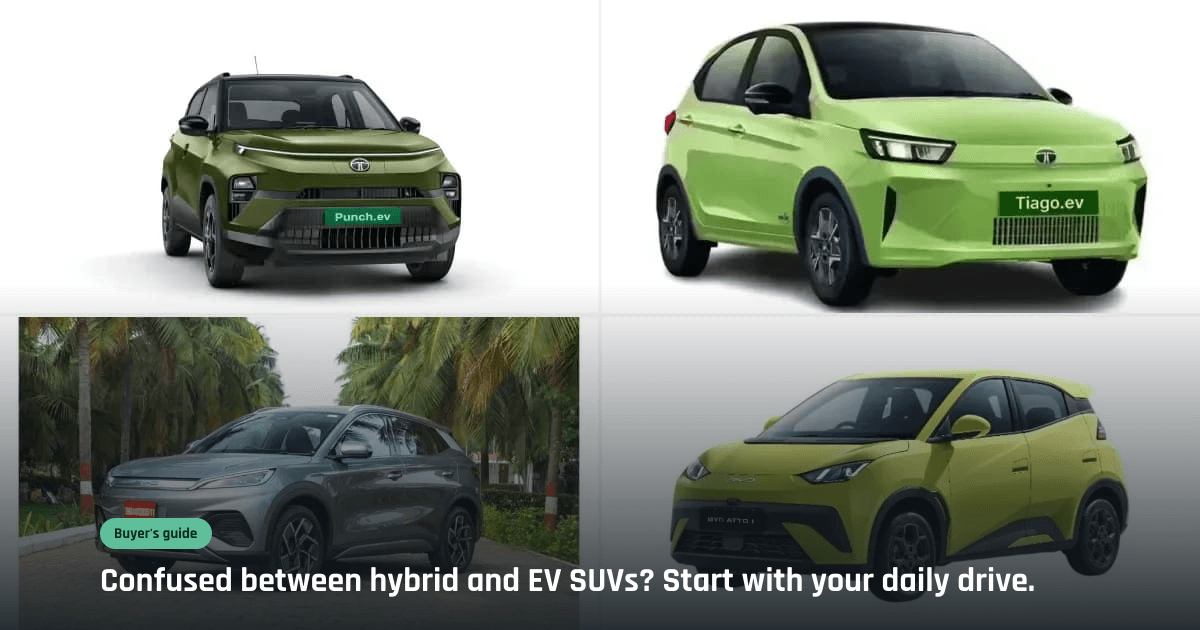
If you are searching for “hybrid vs electric SUV Nepal”, you are most likely stuck at the same crossroads as many Nepali buyers: play it safe with a petrol–electric hybrid or commit to a full battery electric SUV.
Right now, Nepal’s market is tilting hard toward full EV crossovers and SUVs, especially between Rs 30 lakh and Rs 80 lakh. This guide focuses on that space and helps you decide whether you still need a hybrid at all – and which electric models currently make the most sense.
Hybrid vs Electric SUV: What’s the Real Difference?
In simple terms:
- Hybrid SUV
- Combines a petrol engine with a small electric motor and battery.
- Cannot usually be driven very far on electric power alone.
- You still visit petrol pumps regularly.
- No need to install a home charger.
- Electric SUV (EV)
- Runs only on electricity from a battery.
- You charge at home or public chargers, no engine oil or petrol.
- Far lower running cost per km if you have regular access to electricity.
- Higher dependence on charging infrastructure and home parking.
In Nepal, most buyers considering a “hybrid SUV” are actually comparing comfort and range confidence of a hybrid vs cheap running and incentives of an EV SUV. The key deciding factors are:
- Where you drive most (city vs highway)
- Whether you have dedicated parking with a plug
- Your budget bracket
- How often you travel outside main city corridors with charging
When a Hybrid SUV Still Makes Sense in Nepal
A hybrid SUV can still be the more practical choice if:
- You do not have secure parking at home or office to install a charger.
- You frequently drive to remote or rural areas where fast charging is limited.
- You want better fuel economy than a pure petrol SUV but are not ready to rely on EV charging.
However, hybrids usually:
- Cost more than their petrol equivalents.
- Do not get the same road tax and customs advantages that many EVs enjoy.
- Still require full engine servicing, oil, filters and more moving parts.
If your life is strongly tied to petrol stations and unpredictable power cuts, a hybrid can feel like a safe middle ground. But if most of your daily driving is urban and you can charge at home, a compact electric crossover/SUV is now the stronger long-term bet in Nepal.
When an Electric SUV Is the Better Choice
An EV SUV is usually the smarter move if:
- You mostly drive inside Kathmandu, Pokhara, Itahari, Biratnagar, Butwal, Chitwan or along major highways with growing charger coverage.
- You have fixed parking (home or office) where a charger can be installed.
- You prefer very low running cost over long-term ownership.
- You want the simplicity of fewer moving parts and no engine.
In that case, your decision is less “hybrid vs electric” and more “which electric crossover/SUV fits my budget and use case?”
Below, we break down the EV options from the verified catalog data that sit closest to the hybrid-SUV buyer’s budget and expectations.
Electric SUVs and Crossovers in Nepal by Budget Bracket
1. Around Rs 30–40 lakh: Entry-Level EV City Crossovers
These are the models that directly challenge smaller and mid-sized hybrid SUVs on price.
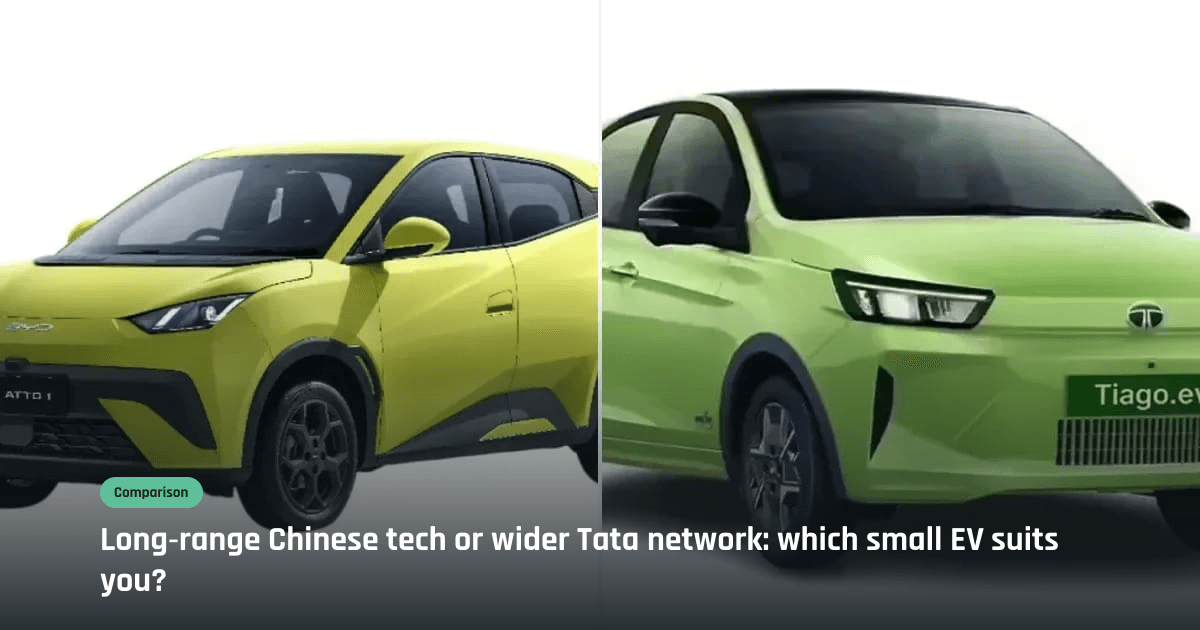
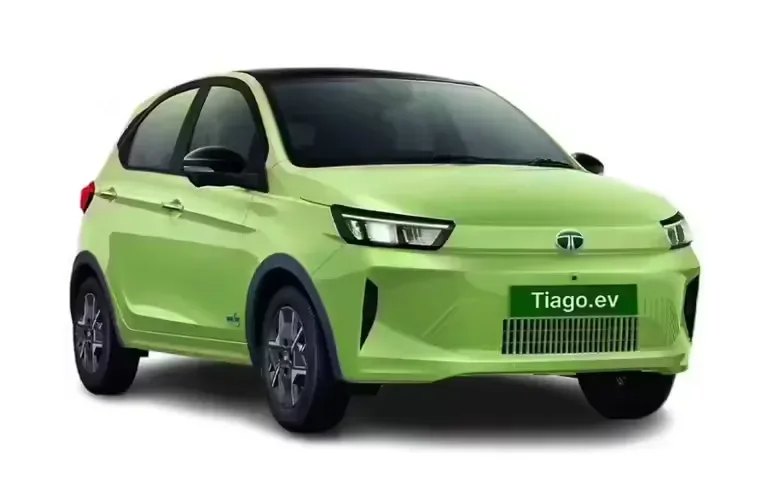
- **Tata Tiago EV**
- Price: Rs 28.99 lakh – Rs 29.99 lakh across 2 variants.
- Who it suits: Urban families upgrading from a small hatchback or compact sedan who want their first EV without stretching past the Rs 30 lakh mark.
- Why consider it over a hybrid: Extremely low running cost in city use, easy to park, and an ideal second car for households with another petrol vehicle for long trips.
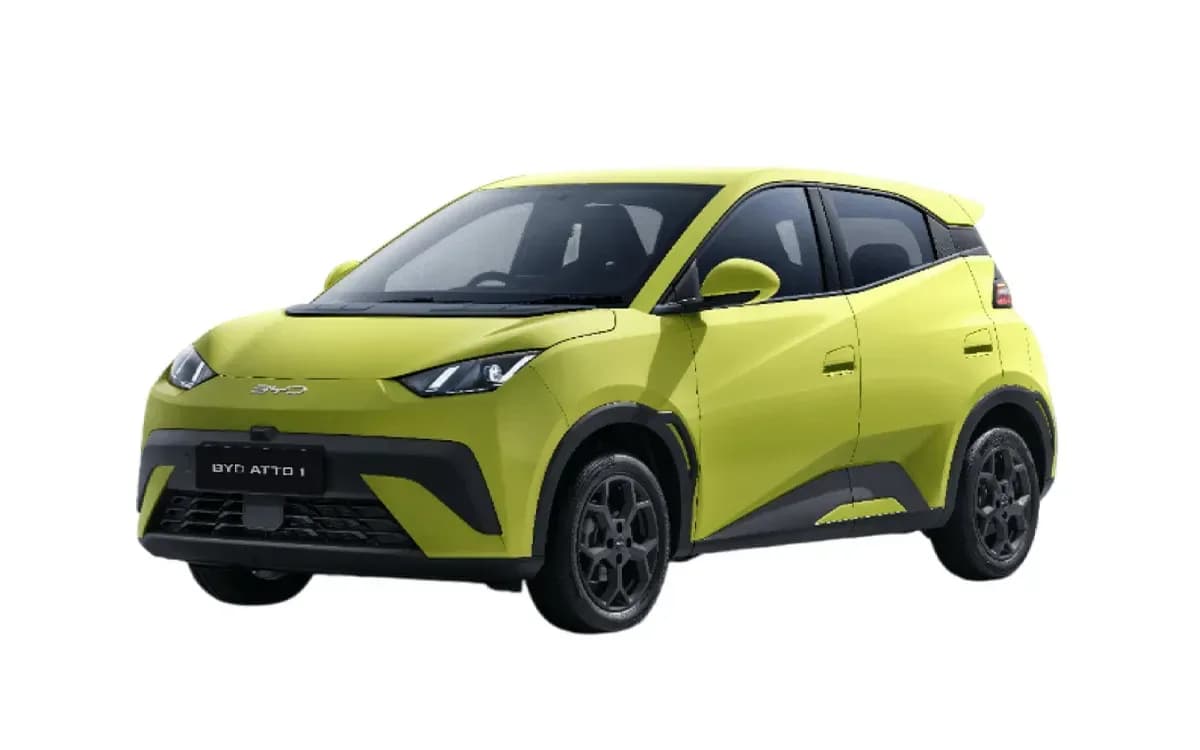
- **BYD ATTO 1**
- Price: Rs 29.75 lakh – Rs 34.8 lakh across 4 variants.
- Who it suits: Buyers who want a more crossover-like stance and a modern feel, but still close to the Rs 30 lakh band.
- Why consider it: Sits in the sweet spot for those debating an entry hybrid SUV vs a fully electric crossover; attractive for city and inner-highway runs.
- **Proton e.MAS 5**
- Price: Rs 32.84 lakh – Rs 36.84 lakh across 2 variants.
- Who it suits: Families that want a compact electric crossover with more presence than a hatchback while staying under Rs 40 lakh.
- Why consider it: Strong value for money in the under-40-lakh EV crossover segment, with a focus on practicality and modern features.
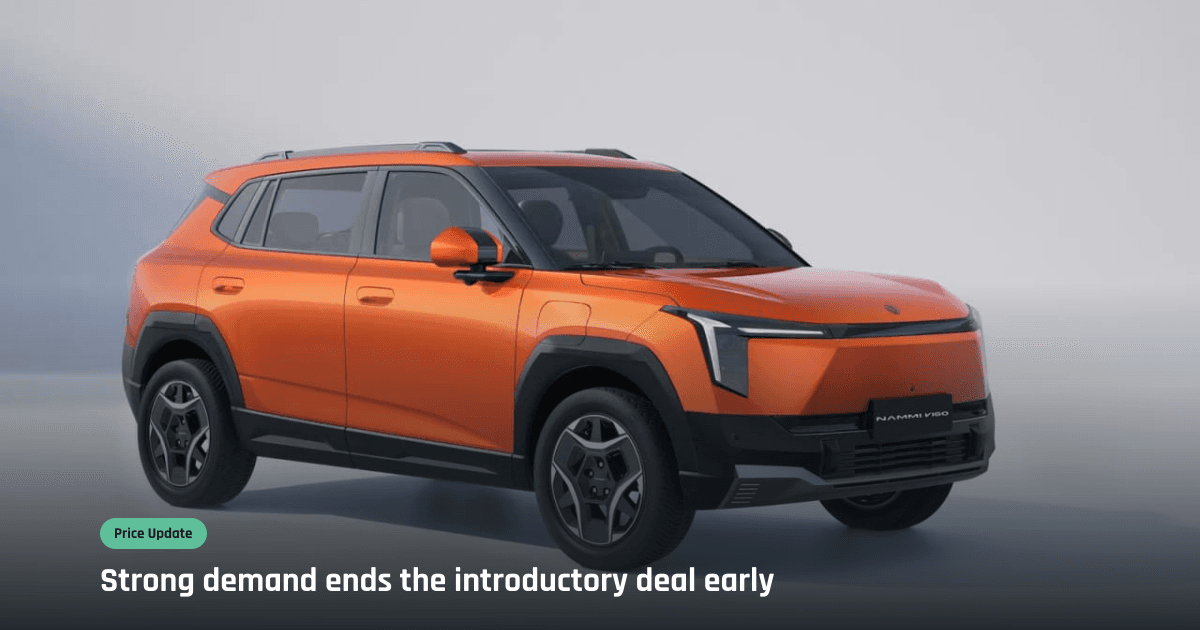
- **Dongfeng Nammi Vigo**
- Price: Rs 35.99 lakh – Rs 43.99 lakh across 2 variants.
- Who it suits: Buyers attracted to a distinctive design and emerging Chinese EV brands, looking for a city-friendly EV with the flexibility to occasionally travel.
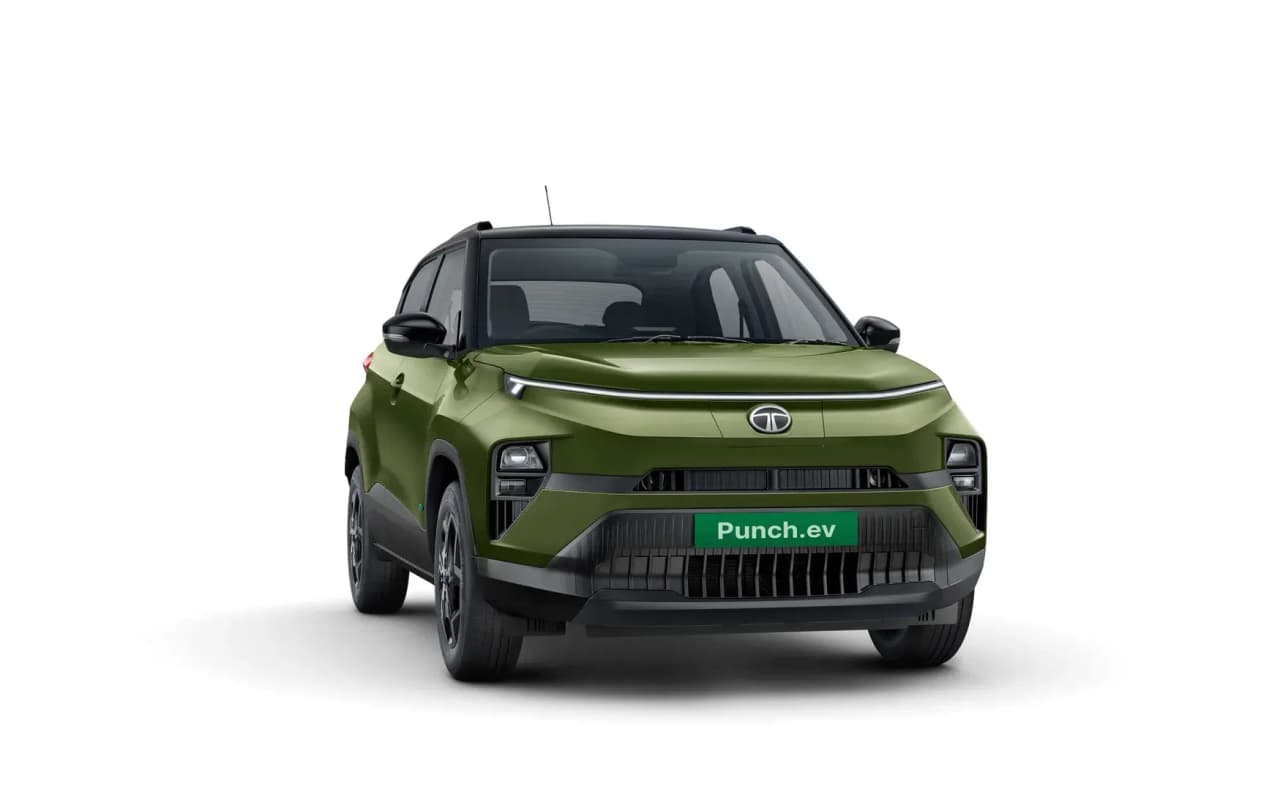
- **Tata Punch EV**
- Price: Rs 33.99 lakh – Rs 37.99 lakh across 3 variants.
- Who it suits: Those who want an upright, SUV-like stance in a compact footprint, ideal for crowded city roads and occasional highway trips.
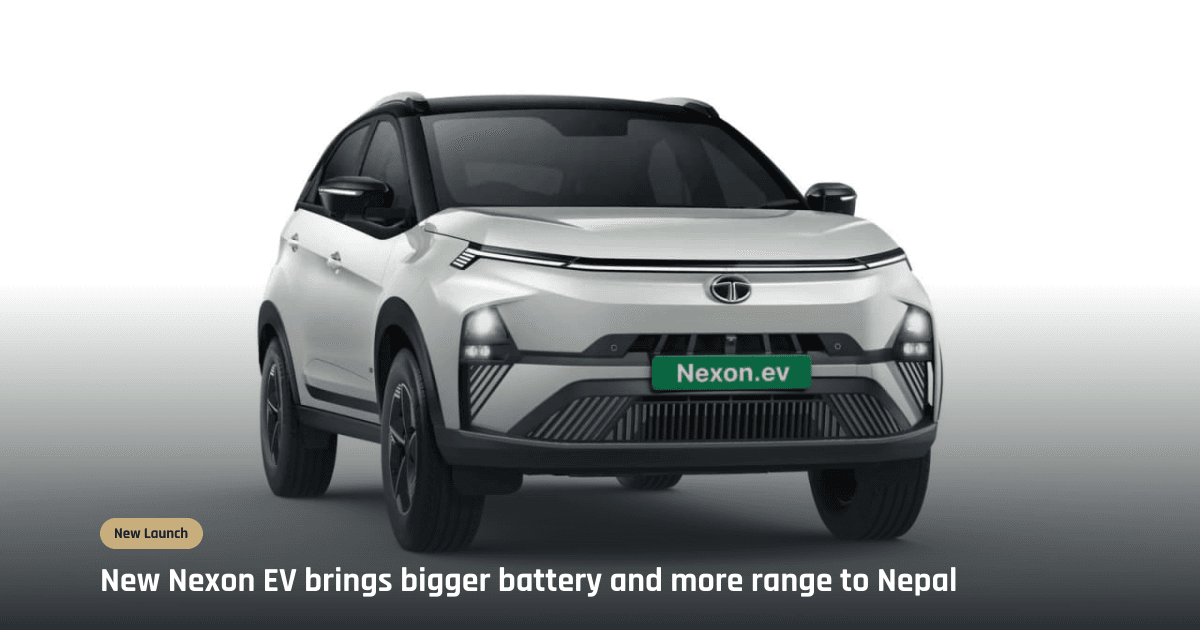
- **Tata Nexon EV**
- Price: Rs 38.99 lakh – Rs 50.99 lakh across 4 variants.
- Who it suits: Families cross-shopping with mainstream compact SUVs and considering hybrids in the same band.
- Why consider it: One of the most recognisable compact EV SUVs in Nepal, with multiple variants to align with different range and feature needs.
In this bracket, **Tiago EV, BYD ATTO 1, Proton e.MAS 5, Nammi Vigo, Punch EV and Nexon EV** together form a dense cluster. For a buyer comparing an entry or mid-hybrid SUV, these EVs offer similar or lower upfront cost with far cheaper per-kilometre running, especially if your daily drive is under 80–100 km and you can charge overnight.
2. Around Rs 50–70 lakh: Premium Compact and Mid-Size EV SUVs
If you are eyeing higher-end hybrid SUVs for highway comfort and features, the EV options start to look very compelling in this band.
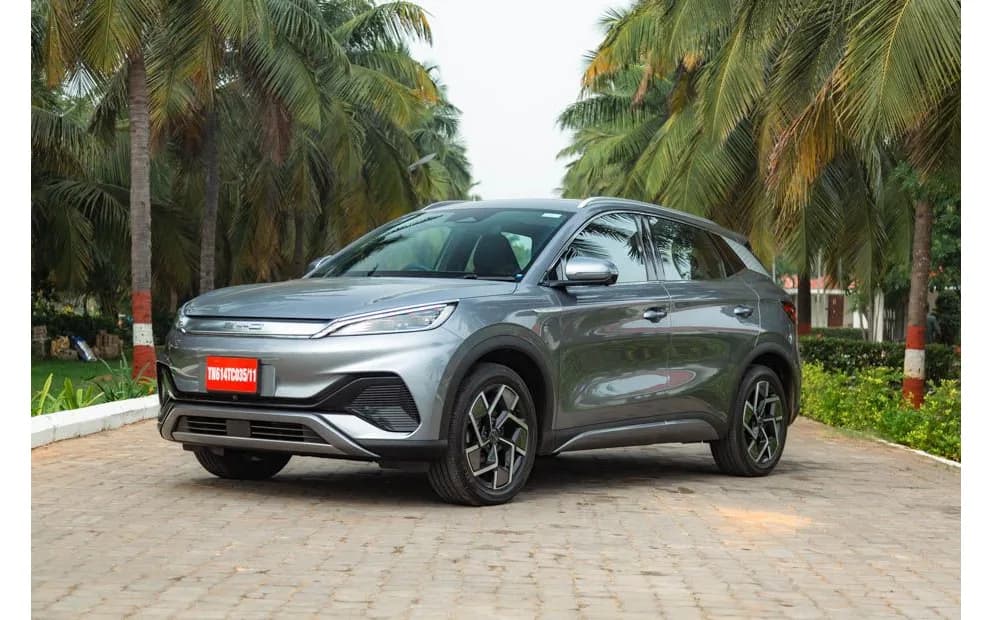
- **BYD Atto 3**
- Price: Rs 52.99 lakh – Rs 67.8 lakh across 5 variants.
- Who it suits: Buyers wanting a feature-rich, premium-feeling electric SUV with strong road presence and multiple variants for different budgets within the mid-range band.
- Why consider it over a hybrid: Known for tech-loaded cabins and long-range variants that make highway usage more realistic.
- **Hyundai Creta EV**
- Price: Rs 51.96 lakh – Rs 76.96 lakh across 6 variants.
- Who it suits: Families who want the familiarity of the Creta nameplate in electric form and are cross-shopping with upper-trim hybrid SUVs.
- Why consider it: Combines a widely recognised SUV silhouette with the running cost advantages and smoother drive of an EV.
These two models are very relevant to buyers who would usually default to a hybrid mid-size SUV for comfort and status. If you have predictable charging access and mainly travel on established routes, Atto 3 and Creta EV are strong candidates.
3. Around Rs 75–80 lakh: High-End Electric SUVs
- **BYD Sealion 7**
- Price: Rs 78 lakh – Rs 79.99 lakh across 3 variants.
- Who it suits: Buyers considering premium hybrid SUVs or entry-level luxury SUVs, but willing to shift budget into a high-spec electric SUV instead.
- Why consider it: Offers a feature and technology package that positions it as a serious flagship EV option on Nepali roads.
If your hybrid shortlist includes more expensive, tech-heavy SUVs, Sealion 7 brings a fully electric alternative with similar aspirational appeal.
4. BYD Dolphin: The Wildcard for Practical Families
- BYD Dolphin
- Price: Rs 30.75 lakh – Rs 58.9 lakh across 4 variants.
- Who it suits: Families that want a spacious, practical EV without needing SUV-level ground clearance, across a wide price spread that overlaps both entry and mid hybrid SUV budgets.
- Why consider it: Multiple price points let you move up in range and features as your budget allows, while retaining a family-friendly layout.
While Dolphin is not a tall SUV, many hybrid-SUV shoppers in Nepal end up cross-shopping it because of its mix of space, range and pricing.
Hybrid vs Electric SUV: Quick Comparison for Nepali Buyers
| Question | Hybrid SUV | Electric SUV (EV) |
|---|---|---|
| Fuel/energy | Petrol + small battery | Only electricity |
| Running cost per km | Lower than pure petrol, higher than EV | Usually lowest if home charging is available |
| Long-distance flexibility | Strong – petrol stations everywhere | Improving – depends on public chargers and route planning |
| Maintenance | More complex: engine + hybrid components | Simpler: no engine oil, fewer moving parts |
| Upfront price vs petrol | Higher | Often comparable to or higher, but falling in many segments |
| Best use case in Nepal | Frequent rural drives, no stable parking, heavy long-distance usage | Daily city use, predictable routes, home or office charging |
How to Decide: A Simple Checklist
Ask yourself these questions before choosing between a hybrid SUV and an EV SUV:
1. Where do I drive 80% of the time? - Mostly city and ring roads → Lean EV crossover/SUV. - Mostly highways to remote areas with sparse chargers → Hybrid still safer.
2. Do I have fixed parking with an electrical socket? - Yes → You are ready for an EV. - No → Hybrid or petrol may be less stressful.
3. What is my realistic budget band? - Around Rs 30–40 lakh → Consider Tiago EV, BYD ATTO 1, Proton e.MAS 5, Dongfeng Nammi Vigo, Tata Punch EV, lower Nexon EV and BYD Dolphin variants. - Around Rs 50–70 lakh → BYD Atto 3 and Hyundai Creta EV are prime options. - Around Rs 75–80 lakh → BYD Sealion 7 positions itself as a premium EV SUV alternative.
4. How often do I drive over 250–300 km in a single day? - Rarely → EV ownership becomes easier; you can plan occasional long trips around chargers. - Frequently → A hybrid or a combination of an EV plus another long-distance vehicle may work better.
Editorial Take: For Most Urban Nepali Buyers, EV SUV Wins
For a typical urban Nepali family with dedicated parking, a stable connection and mostly city or nearby-highway use, a compact or mid-size electric SUV now makes more long-term sense than a hybrid. Running costs are lower, maintenance is simpler, and the available models between Rs 30 lakh and Rs 80 lakh cover everything from first-time EV owners to premium buyers.
Hybrids still have a role if your life involves frequent unplanned long drives into areas with weak charging networks or if you simply cannot install a charger. But for the majority who are asking “hybrid vs electric SUV Nepal” while living in major cities, the better question has become: “Which electric SUV fits my budget and lifestyle best?”
Writes on vehicle pricing, taxation and the Nepali auto market from ongoing tracking of distributor price lists. Every price in this piece is read live from the Nepal AutoMart catalog — how we verify prices.