Where Each Sits in the Nepali Market
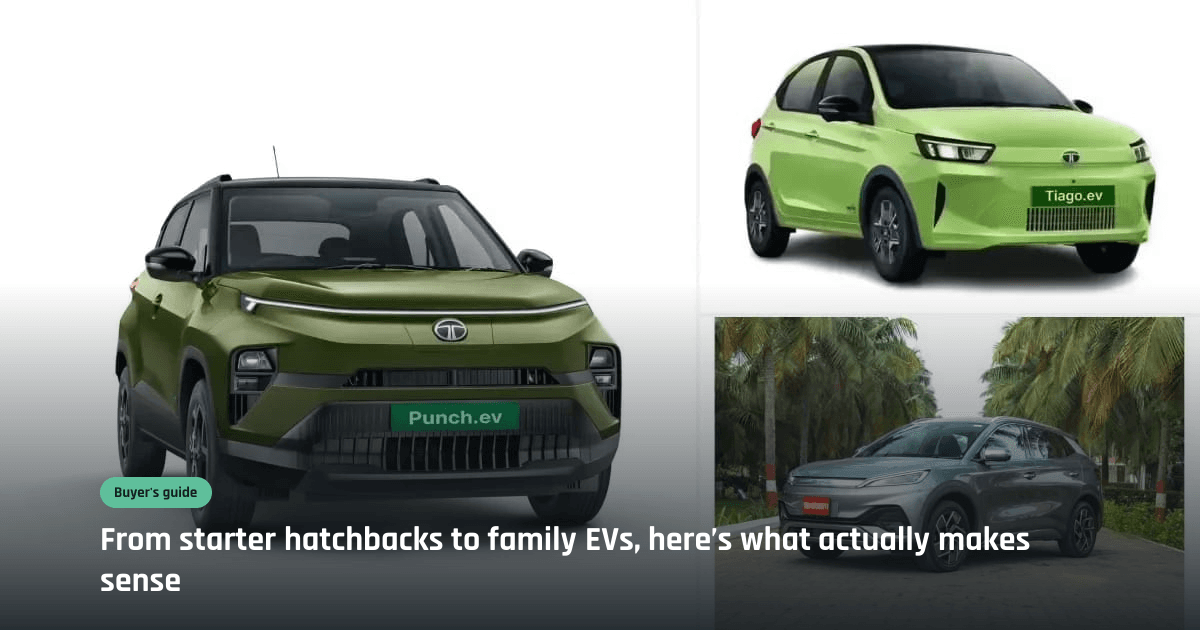
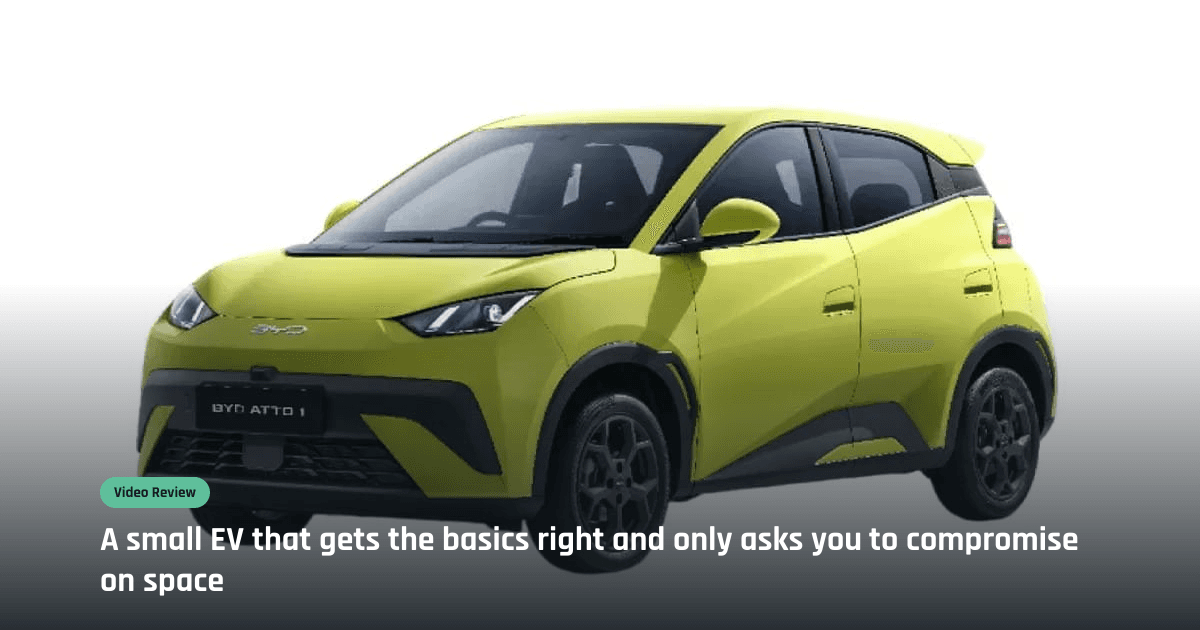
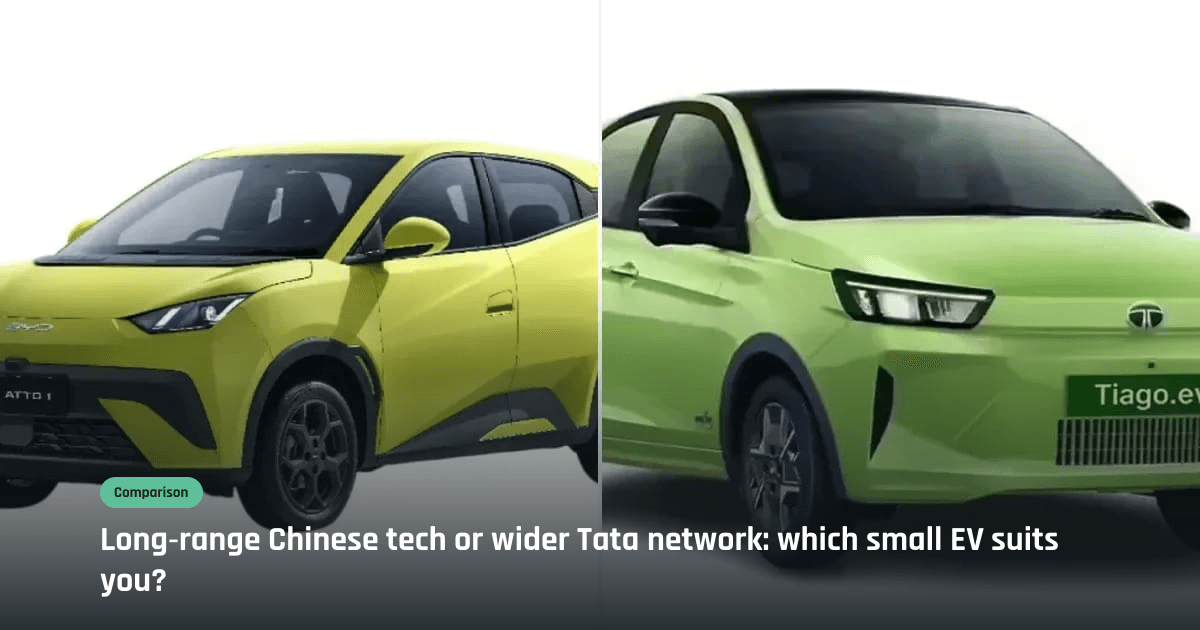
The **BYD Atto 1 and Tata Tiago EV** sit in the same broad price band but play different roles in Nepal’s EV story.
- The BYD Atto 1, distributed by Cimex Inc., is positioned as Nepal’s cheapest way into a new BYD EV while still offering Blade battery technology, rich safety equipment and a tech-heavy cabin. Ex-showroom pricing runs from Rs 30.75 lakh to Rs 34.8 lakh across three variants: Dynamic (Standard Range) 2026 Facelift, Premium, and Premium (Long Range) 2026 Facelift.
- The Tata Tiago EV, sold by Sipradi Trading, undercuts the Atto 1 on price and leans heavily on Tata’s much wider nationwide footprint. Its two variants, Pure +24 and Creative +24, sit at Rs 28.99 lakh and Rs 29.99 lakh respectively.
The network picture is stark: BYD Atto 1 has 62 showrooms and 15 service centres, while Tata Tiago EV rides on 124 showrooms and 49 service centres. For many buyers outside the Valley and big highways, that sheer network advantage is the Tiago EV’s single biggest trump card.
The other big differentiator is battery size and claimed range. The Atto 1’s 30.08 kWh and 38.88 kWh LFP Blade packs with 230 km and 300 km WLTP claimed range put it in a different league to the Tiago EV’s 24 kWh pack and roughly 205 km real-world / 293 km certified range. If range anxiety is your primary concern, the Atto 1 clearly aims higher, particularly in the Premium (Long Range) variant.
Looks and Design: Youthful Chinese Hatch vs Familiar Indian City Car
On the road, these two cars send very different signals.
- The BYD Atto 1 is the Nepal-specific name for what the global market knows as the Seagull. It has a sharp, youthful hatchback stance, compact proportions (length 3,925 mm, width 1,720 mm, height 1,590 mm) and modern lighting details including LED daytime running lights, LED taillight bar, shark fin antenna, and a more futuristic cabin layout. The 2026 facelift adds integration for the new 360-degree camera, subtly refreshing the exterior.
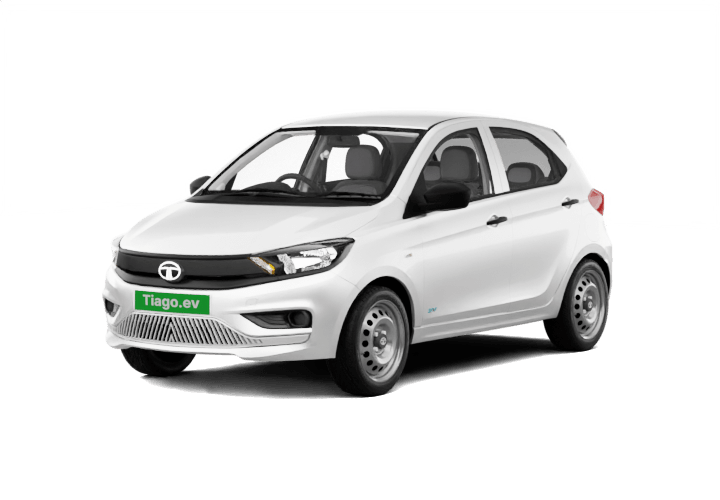
- The Tata Tiago EV builds on the familiar Tiago hatch design, with EV-specific accents and fresh colours like Chill Lime, Arizona Blue and Supernova Copper on the Creative +24 trim. At 3,781 mm long, 1,677 mm wide and 1,536 mm tall, it’s slightly smaller in every dimension but looks more traditional, especially in lower trim.
Buyers who prefer a futuristic, tech-forward look will gravitate to the Atto 1, particularly in the Premium and Premium (Long Range) variants with their alloys and LED signatures. Those who want something that blends into the familiar Tata family-car aesthetic, perhaps to avoid undue attention, may feel more comfortable with the Tiago EV’s design language.
Features and Equipment: BYD’s Tech Stack vs Tata’s Smart Value
Both cars bring strong equipment lists for their price, but their emphasis differs.
BYD Atto 1
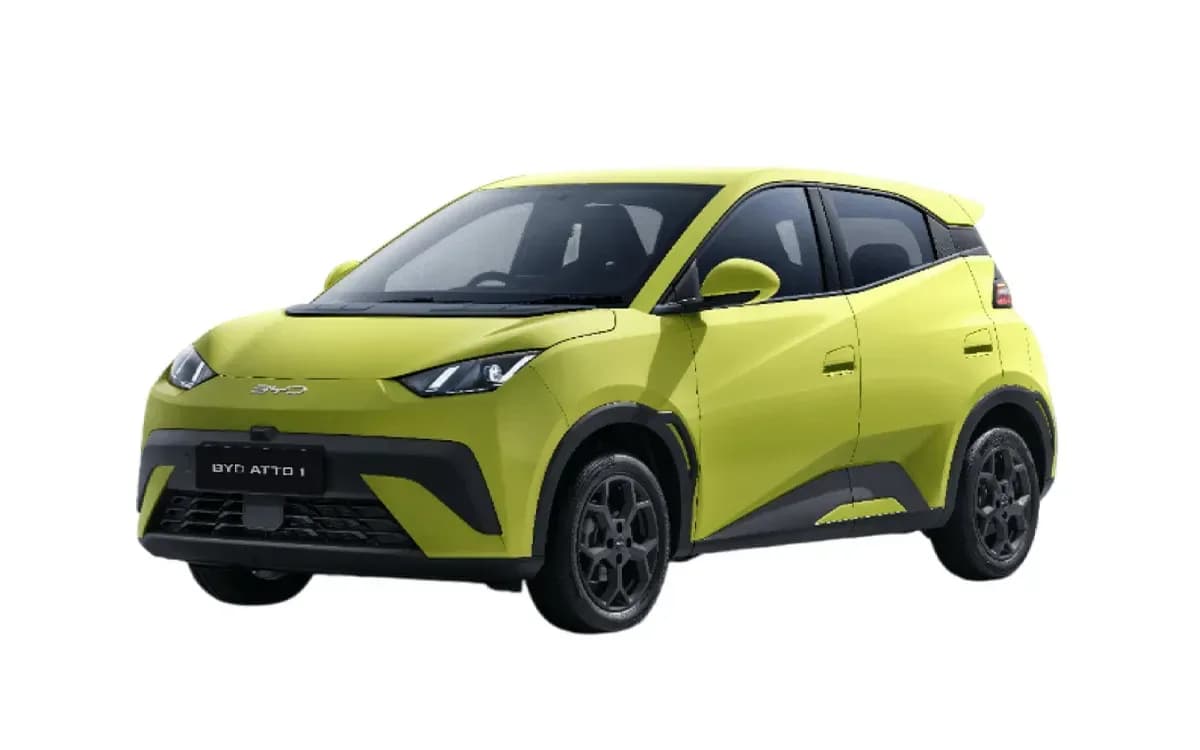
Across the range, the Atto 1 leans hard on technology and safety:
- The Dynamic (Standard Range) 2026 Facelift offers a compact 5-seat cabin with fabric seats, air conditioning, a central touchscreen infotainment unit, vehicle-to-load (V2L) up to 2.2 kW, and the key addition of a 360-degree camera and foldable ORVMs in the facelift.
- The Premium and Premium (Long Range) variants ramp up equipment: synthetic leather seats, 6-way power adjustment for the driver, multi-function steering controls, keyless entry and start, mobile Bluetooth car key, wireless phone charging and a 10.1-inch intelligent touch screen paired with a 7-inch digital instrument cluster.
- Connectivity is a highlight: wireless and USB Apple CarPlay and Android Auto, Bluetooth audio, OTA remote upgrades, and 4G cloud services. There’s even a karaoke app feature, pointing to a deliberately youthful tech vibe.
Safety equipment on the Premium range is impressive for this price bracket: front, side and curtain airbags, ISOFIX child seat anchors, TPMS, ESC, ABS, TCS, EBD, hill-start assist, auto hold and electric parking brake. Combined with the Blade battery’s strong safety reputation, the Atto 1 is pitched as a compact EV with near "big car" safety coverage.
Tata Tiago EV
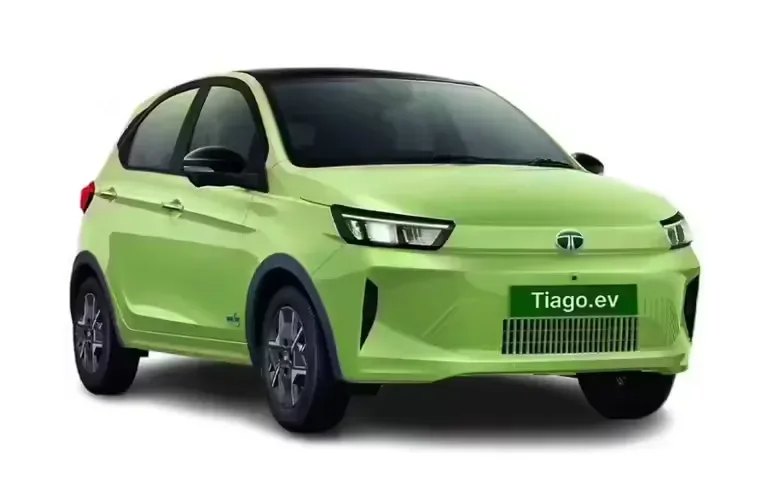
The Tiago EV’s equipment strategy is more tiered.
- The Pure +24 variant delivers the essentials: facelifted dashboard design, fabric seats, manual AC, a touchscreen infotainment unit (smaller and simpler than the BYD’s), steering-mounted controls and rear parking sensors. It is deliberately positioned as a sensible value play, not a tech showcase.
- The Creative +24 variant is the more aspirational trim. It adds a larger floating touchscreen, updated graphics, wireless Android Auto and Apple CarPlay, and in Nepal, reports of 360-degree camera and advanced parking aids on the top trim. Keyless entry, push-button start and extra convenience features are expected here.
Safety on the Tiago EV Creative +24 is upgraded versus the base car: dual airbags, ABS with EBD, ESP, hill-hold control, an IP67-rated battery and motor, long EV component warranty, and reports of six airbags on the top variant. That combination, plus Tata’s reputation in crash safety on other models, gives the Tiago EV a strong safety story even if the sheer feature count still trails the fully loaded Atto 1 Premium.
In feature terms, the Atto 1 Premium/Long Range is clearly richer than any Tiago EV variant; however, the Tiago EV Creative +24 draws closer with wireless phone mirroring and 360° camera on a slightly lower sticker price. The decision becomes: pay more for global-brand tech and a bigger battery, or save a little and accept a more modest spec but broader support.
Motor and Performance: More Power vs More Range
Under the skin, the performance philosophies diverge.
BYD Atto 1
All three Atto 1 variants share a 45 kW permanent magnet synchronous motor producing 61 PS and 135 Nm, driving the front wheels through a single-speed automatic transmission. The claimed 0–50 km/h time of 5.5 seconds and top speed of 130 km/h are consistent across Premium trims and representative of the car’s brisk city manners.
The Dynamic (Standard Range) uses a 30.08 kWh LFP Blade battery with 230 km WLTP claimed range, while the Premium (Long Range) steps up to a 38.88 kWh Blade battery and 300 km WLTP claimed range. The mid Premium trim focuses more on equipment than range, but still uses the Blade pack and 6.6 kW AC charging plus coordinated regenerative braking.
This makes the Atto 1 fundamentally a range-first product, with performance tuned for city and peri-urban use rather than outright acceleration. For highway work, that 300 km WLTP figure on the Premium (Long Range) is the real draw.
Tata Tiago EV
Both Pure +24 and Creative +24 use a 55 kW motor driving the front wheels, with City and Sport modes and multiple regenerative braking levels. On paper, that is more power than the Atto 1’s 45 kW rating, though the cars’ real-world acceleration will depend on weight and tuning.
The 24 kWh battery yields a claimed range of about 205 km in real-world usage, with an ARAI/MIDC-certified figure of 293 km. In practice, that is adequate for daily city use and short highway runs between neighbouring towns, but less comfortable for long intercity journeys without careful charging planning.
In simple terms: Tiago EV offers a bit more motor output, the Atto 1 offers much more usable range. If your daily driving includes frequent hills and overtakes, you may appreciate the Tiago’s stronger motor. If your priority is reducing charging stops on longer routes, the Atto 1 Premium (Long Range) becomes a clear favourite.
Ride, Handling and Comfort
Direct back-to-back test data is limited, but the hardware and packaging still tell us a useful story.
BYD Atto 1
The Atto 1 uses MacPherson struts in front and a torsion beam rear, with ventilated front discs and rear discs, and an electric power-assisted steering system. Ground clearance is a healthy 175 mm unladen, and the 2,500 mm wheelbase supports decent stability for a compact car.
The cabin prioritises front-seat comfort. Premium variants bring synthetic leather upholstery, power-adjustable driver seat, overall-reclined rear seats, multiple storage points and a tech-heavy dashboard with the 10.1-inch screen and digital cluster. Rear legroom and boot space (230 litres, expanding to 930 litres with rear seats folded) is adequate for everyday use but modest for long family road trips.
Tata Tiago EV
The Tiago EV rides on a slightly shorter 2,400 mm wheelbase and rests lower, with 166 mm ground clearance. The suspension is tuned for Indian and Nepali mass-market conditions, aiming for a balanced ride in city traffic and over mixed road surfaces.
Comfort equipment differs more by variant. The Pure +24’s manual AC and fabric seats are perfectly serviceable but basic. The Creative +24 adds automatic climate control, more premium touches in the cabin, and a larger, more visually appealing infotainment screen.
Boot space stands at 240 litres, slightly more than the Atto 1 on paper, with folding rear seats to expand cargo capacity. For many buyers, the Tiago EV will feel familiar: a comfortable small hatch ride, acceptable rear space, and solid urban usability.
Overall, the Atto 1 feels like the more upmarket and tech-fluent cabin experience, especially in Premium trims, while the Tiago EV focuses on straightforward comfort and familiarity. If you often have taller passengers in the back or load luggage for family road trips, neither car is ideal; you may want to look at larger EV crossovers instead.
Practicality and Running Costs
From a practicality and cost-of-ownership viewpoint, the key questions are range, charging, service access and space.
- Range & Battery: Atto 1’s 230–300 km WLTP claims make it more suitable for valley-to-intercity runs without mid-route charging, especially the Premium (Long Range) variant. The Tiago EV’s 24 kWh pack suits daily urban use and frequent shorter trips but demands a more conservative approach on longer drives.
- Charging: The Atto 1 Premium supports 6.6 kW AC charging, and DC charging capability on the Seagull/Atto platform is known to be adequate but not class-leading. Tiago EV charging speeds are competitive for its price, and the IP67 rating on the battery/motor adds peace of mind. In both cases, home or office AC charging is likely to be your primary solution.
- Service & Support: Tata’s 124 showrooms and 49 service centres significantly outnumber BYD’s 62/15. For buyers living far from Kathmandu or Pokhara, the ability to get the car checked or repaired at a nearby Tata outlet is a major advantage. Atto 1’s network is growing but still thinner, meaning more careful planning for those in smaller towns.
- Space & Use Case: Boot space is 240 litres for Tiago EV vs 230 litres for Atto 1, both expanding when you fold the rear seats. Both are five-seat hatchbacks, but neither offers the stretched rear-seat comfort of larger EVs. For a small nuclear family or young couple, either will do; for regular long trips with four adults and luggage, you will feel the constraints.
Running costs for both will be low compared with petrol hatchbacks, but battery size matters: charging a 38.88 kWh Atto 1 pack costs more per full charge than a 24 kWh Tiago EV pack, though you also travel further on that charge. In practical ownership, the question becomes whether you value range enough to accept slightly higher energy bills and upfront cost.
Price and Variants Side by Side
To crystallise the choice, here is how the key variants line up.
| Model & Variant | Battery | Claimed / Certified Range | Motor Power | Ex-showroom Price (NPR) |
|---|---|---|---|---|
| BYD Atto 1 Dynamic (Standard Range) 2026 Facelift | 30.08 kWh LFP Blade | 230 km WLTP | 45 kW, 61 PS, 135 Nm | Rs 30.75 lakh |
| BYD Atto 1 Premium | BYD Blade Battery | Longer real-world flexibility, AC 6.6 kW, V2L, tech-heavy | 45 kW, 135 Nm | Rs 33.80 lakh |
| BYD Atto 1 Premium (Long Range) 2026 Facelift | 38.88 kWh LFP Blade | 300 km WLTP | 45 kW, 135 Nm | Rs 34.80 lakh |
| Tata Tiago EV Pure +24 | 24 kWh | ~205 km claimed real-world, 293 km certified | 55 kW | Rs 28.99 lakh |
| Tata Tiago EV Creative +24 | 24 kWh | ~205 km claimed real-world, 293 km certified | 55 kW | Rs 29.99 lakh |
The Tiago EV Pure +24 is the price leader, followed by Creative +24. The Atto 1 Dynamic starts just above Rs 30 lakh, with Premium (Long Range) stretching into the mid–Rs 34 lakh band where it overlaps larger, more powerful EVs.
Which Wins for Which Kind of Buyer?
The reality is that neither car is universally better; each makes sense for a specific buyer profile.
Choose BYD Atto 1 if:
- Range is your top priority. You regularly drive beyond Kathmandu Valley or need extra buffer for unexpected detours, especially with the Premium (Long Range) variant’s 300 km WLTP claim.
- You want advanced safety and tech, including multiple airbags, ESC, TPMS, 360° camera, wireless CarPlay/Android Auto, OTA updates and V2L functionality.
- You value Blade battery technology and the peace of mind of long EV warranties.
- You are comfortable with a slightly higher upfront price and a smaller nationwide network, perhaps because you live near BYD showrooms/service centres.
Choose Tata Tiago EV if:
- Network and support matter most. You live outside the main urban hubs and want Tata’s wide spread of showrooms and service centres.
- You prefer a lower entry price and are fine with a 24 kWh pack and ~205 km real-world range.
- You like familiar hatchback styling and don’t need a very tech-heavy cabin, or you opt for Creative +24 to get a good blend of features and price.
- Your usage is primarily urban and short peri-urban trips, with occasional longer journeys where you can plan charging.
Editorial Verdict
For Nepali buyers, the head-to-head judgement comes down to range and tech versus network and price.
- As an all-round compact EV for those who drive beyond the Valley frequently, the BYD Atto 1 Premium (Long Range) 2026 Facelift is the stronger product. Its 38.88 kWh Blade battery, 300 km WLTP claimed range, extensive safety kit and tech-rich interior make it a more future-proof choice if you can afford the Rs 34.8 lakh price and are near a BYD service hub.
- As a value-focused city EV with strong after-sales reach, the Tata Tiago EV Creative +24 is arguably the smarter buy. It offers a pleasant blend of design, features and safety at under Rs 30 lakh, backed by Tata/Sipradi’s wide network and EV ecosystem.
Our clear editorial steer:
- If you are a range-sensitive, tech-oriented buyer willing to spend into the mid–Rs 30 lakh bracket, the BYD Atto 1 Premium (Long Range) is the better pick.
- If you are a budget-conscious, network-sensitive buyer whose usage is primarily urban and who values easy access to service across Nepal, the Tata Tiago EV Creative +24 edges ahead.
Both are credible ways into EV ownership; the right one is the one that matches your roads, your routes, and how long you want to stay away from a charger.
Writes on vehicle pricing, taxation and the Nepali auto market from ongoing tracking of distributor price lists. Every price in this piece is read live from the Nepal AutoMart catalog — how we verify prices.