Where Each Sits in the Nepali EV Market
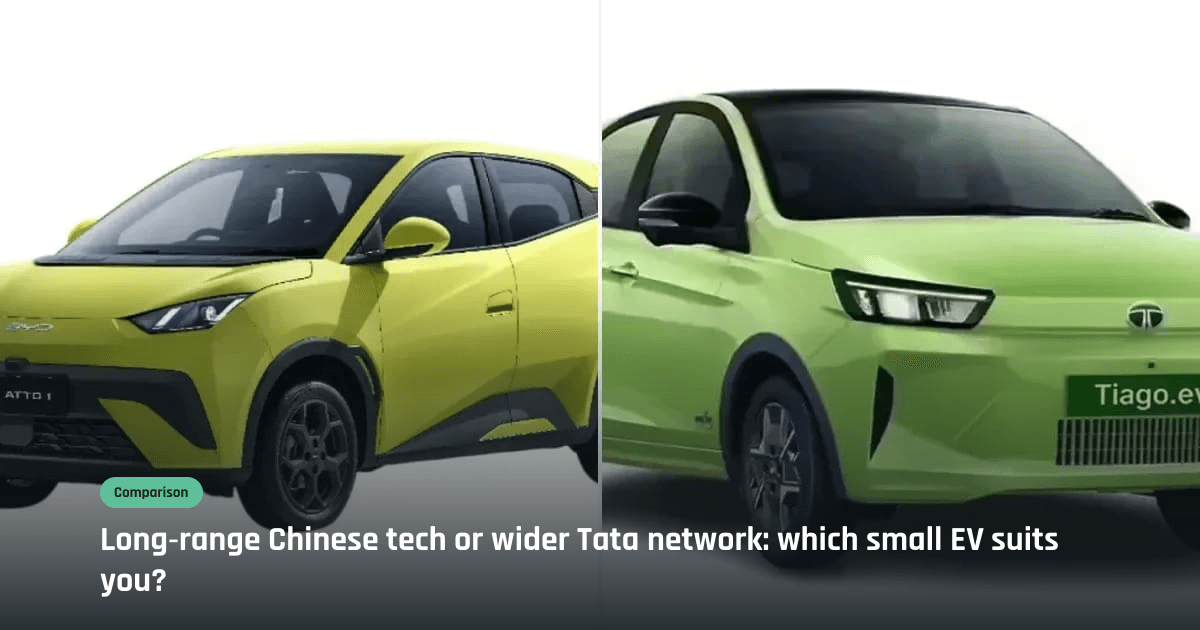
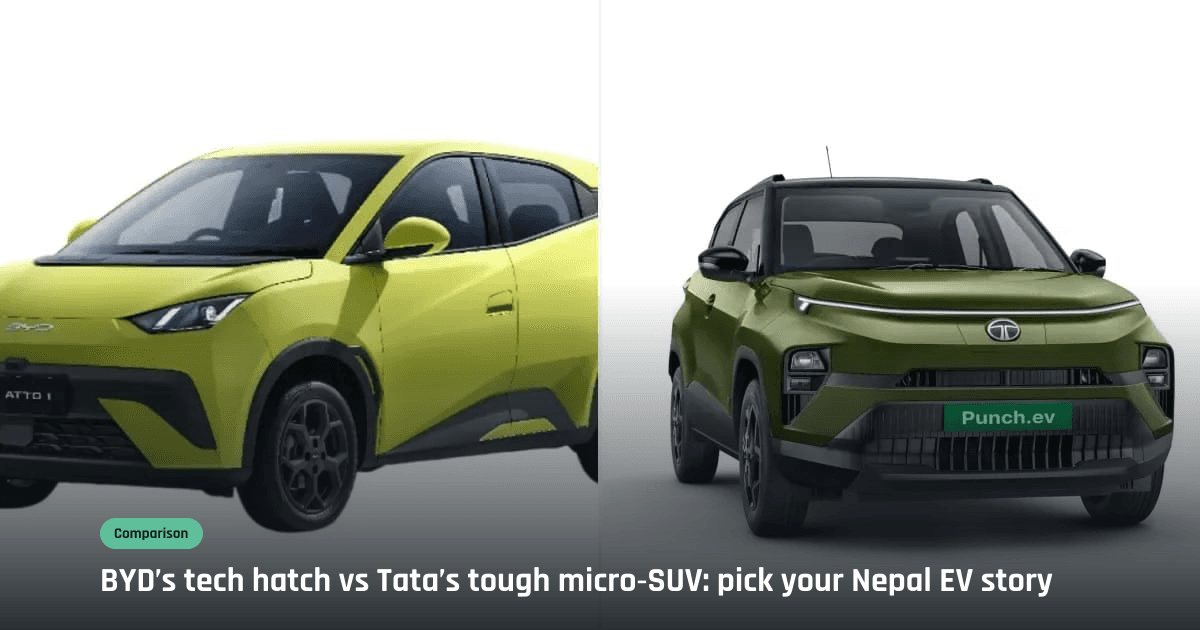
In Nepal’s Rs 3 lakh to Rs 4 lakh EV bracket, the **BYD Atto 1 and Tata Punch EV** are direct alternatives that appeal to very different instincts.
- The **BYD Atto 1** (sold by Cimex Inc.) is a compact, Seagull-based hatchback positioned as a tech-forward urban EV with Blade battery safety and strong equipment for the price.
- The **Tata Punch EV** (sold by Sipradi Trading) is a micro-SUV with higher ground clearance, familiar Tata branding, and the advantage of a far larger national sales and service footprint.
On pricing: - BYD Atto 1 range: Rs 29.75 lakh – Rs 34.8 lakh across Dynamic, Dynamic (Standard Range) 2026 Facelift, Premium, and Premium (Long Range) 2026 Facelift. - Tata Punch EV range: Rs 33.99 lakh – Rs 37.99 lakh across 2026 30 kWh, 2026 40 kWh, and Empowered+ S 40.
So the Atto 1 undercuts the Punch EV at entry level and tops out slightly below the Punch’s most expensive trim, but the Tata counters with more ground clearance and a bigger network.
Design and Road Presence: Hatchback vs Micro-SUV
The design difference is one of the clearest dividing lines.
BYD Atto 1
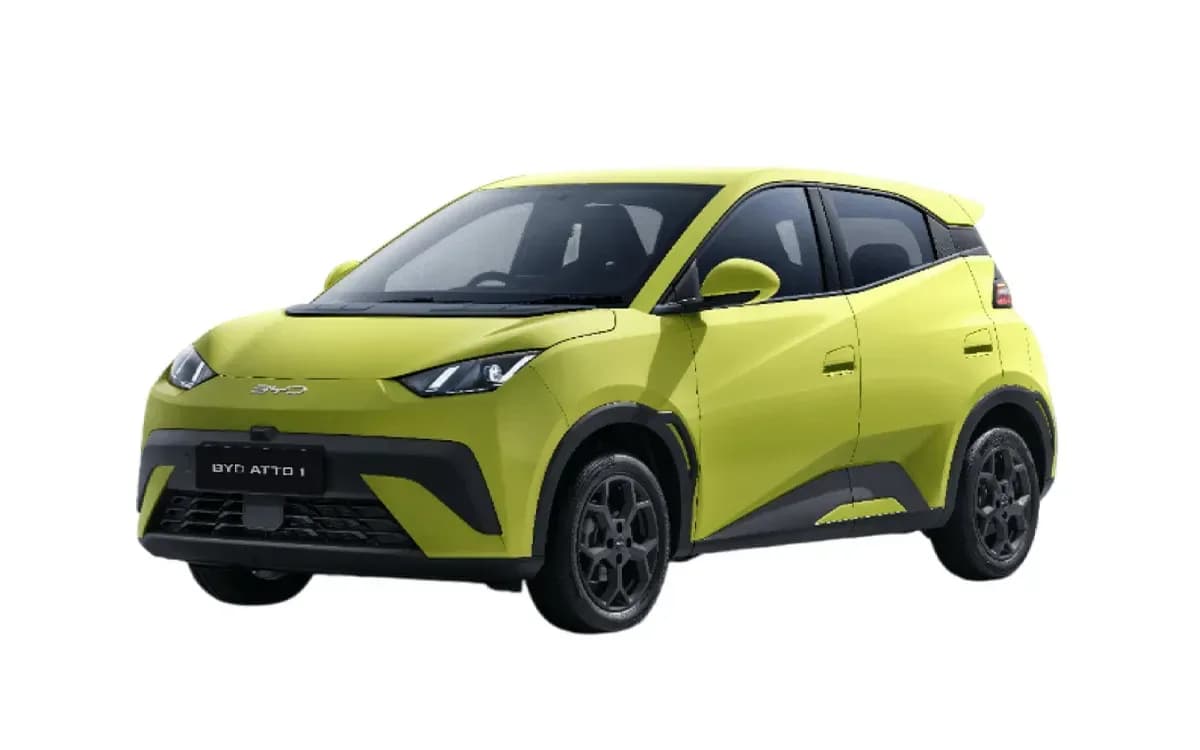
The Atto 1 is a compact 5-door hatchback based on the global Seagull, with: - Length 3,925 mm, width 1,720 mm, height 1,590 mm - Wheelbase 2,500 mm - Ground clearance around 175 mm on the Nepal-spec facelift - 16-inch alloy wheels on the Premium-type variants
The styling is youthful and slightly futuristic, with LED daytime running lights, LED taillight bar, shark-fin antenna and a compact stance that suits tight urban spaces. The facelift brings subtle exterior tweaks and integrates the new 360-degree camera on higher variants.
Tata Punch EV
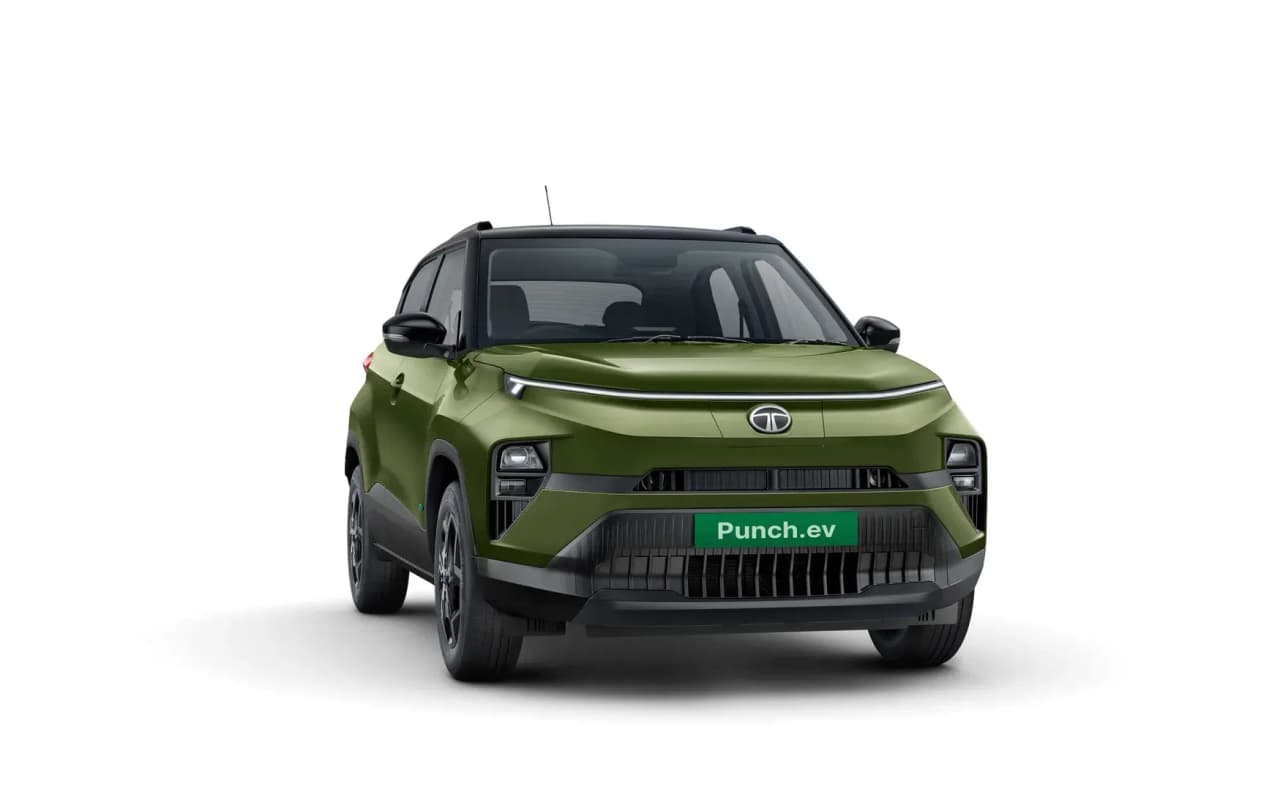
The Punch EV takes the micro-SUV route: - Sub-4m compact SUV-style body - Ground clearance listed around 190–195 mm across the range - EV-specific closed grille, split headlamps and roof rails on most variants
Its taller stance, chunkier proportions and higher ride height give it more presence on rough roads and a more "SUV" feel that many Nepali buyers prefer. It looks more at home on broken city roads and rural tracks than the lower-slung Atto 1.
Verdict on design: - Choose Atto 1 if you like modern hatchback styling and a lower, more car-like feel. - Choose Punch EV if you want SUV-style stance, higher ground clearance and a tougher visual presence.
Features and Equipment: Tech-Rich BYD vs Gradual Tata Ladder
BYD Atto 1
The Atto 1 leans heavily on tech and cabin features, especially in the Premium trims: - Infotainment & cluster: 10.1-inch intelligent touchscreen, 7-inch digital instrument panel on Premium. - Smart connectivity: Wireless + USB Apple CarPlay and Android Auto, Bluetooth phone and audio, OTA remote upgrade, 4G cloud services, mobile phone wireless charging, mobile Bluetooth car key. - Voice and entertainment: Dual-zone intelligent voice control and even a Karaoke app. - Comfort: Synthetic leather seats, 6-way power driver seat, multiple manual adjustments, keyless entry and start, four power windows with anti-pinch on the driver’s window, electric air conditioner. - Convenience: Centre console storage, file pouches, reclined rear seats, 12V socket, portable car keys (2 key fobs + 1 NFC card). - 2026 facelift enhancements: 360-degree camera and foldable ORVMs on the Dynamic (Standard Range) and Premium (Long Range) facelift, plus Vehicle-to-Load (V2L) functionality up to 2.2 kW.
Lower trims like Dynamic keep a simpler interior, fabric seats and more basic AC, but still provide a 10.1-inch screen and multi-function steering.
Tata Punch EV
The Punch EV equipment stack is more tiered: - Infotainment: Touchscreen infotainment and digital instrument cluster on the range; higher trims likely offer better screens and connectivity. - Connectivity: Connected-car and remote features are offered on higher trims but are more limited on the base 30 kWh. - Comfort: Automatic climate control is available across the Punch EV lineup, which is a plus, even on lower trims. - Trim level differences: The 40 kWh and Empowered+ S 40 variants add nicer interior trim and better feature content versus the 30 kWh base.
Overall, the Atto 1’s Premium variants feel like they have been spec’d to impress tech-focused buyers, while the Punch EV’s base variants feel more modest but practical, with the Empowered+ S 40 likely closing the gap.
Verdict on features: - Atto 1 Premium / Premium Long Range clearly win on pure tech, connectivity and convenience. - Punch EV counters with automatic climate control across the range and a more familiar Tata feature ladder that some buyers trust, but it does not match the BYD’s tech depth.
Motor, Battery and Performance: Range and Power Compared
BYD Atto 1
Motor and drivetrain (shared on most variants): - 45 kW permanent magnet synchronous motor (around 61 PS) - Maximum torque 135 Nm - Front-wheel drive - Single-speed automatic transmission - 0–50 km/h in 5.5 seconds - Top speed 130 km/h
Battery and range: - Dynamic / Dynamic (Standard Range) 2026 Facelift: - 30.08 kWh LFP Blade battery - Claimed 230 km WLTP range - DC fast charging power around 30 kW on base Dynamic - Premium (Long Range) 2026 Facelift: - 38.88 kWh LFP Blade battery - Claimed 300 km WLTP range - DC fast charging up to around 40 kW
So, Atto 1 offers a clear choice: 30 kWh / 230 km for city-focused buyers, or nearly 39 kWh / 300 km for those who value range. The Blade battery and temperature control system on Premium variants are a strong safety and longevity story.
Tata Punch EV
Motor and drivetrain: - 2026 30 kWh: - Front-mounted permanent magnet motor - Output in the roughly 48–60 kW band - Front-wheel drive, single-speed automatic - 2026 40 kWh and Empowered+ S 40: - Higher output, around 60–70 kW - Front-wheel drive, single-speed automatic
Battery and range: - 2026 30 kWh: 30 kWh battery, claimed 275 km range. - 2026 40 kWh / Empowered+ S 40: 40 kWh battery, claimed 355 km range.
The Punch EV offers more claimed range for similar or slightly larger battery capacities than the Atto 1, and likely stronger motor output, especially on the 40 kWh variants. That should translate into more confident performance on hills and with full loads.
Performance verdict: - For pure range, Punch EV’s 30 kWh (275 km) and 40 kWh (355 km) undercut and exceed the Atto 1’s 230 km and 300 km claims. - For motor power, Punch EV likely has a performance edge, especially in the 40 kWh/Empowered+ S band. - The Atto 1 counters with well-tuned city performance, but its modest 45 kW motor is more about efficiency than punch.
Ride, Handling and Comfort
BYD Atto 1
Chassis and suspension: - Front MacPherson strut, rear torsion beam - Ventilated front discs and rear discs - Electric power-assisted steering (C-EPS)
The Atto 1’s hatchback layout, 2,500 mm wheelbase and lower centre of gravity should feel stable and predictable in the city. The Blade battery adds weight, but the tuning is clearly aimed at urban comfort with adequate highway stability rather than sporty handling.
Comfort: - Premium variants with synthetic leather, power-adjustable driver seat and reclined rear seats provide a more upmarket experience. - Rear space and legroom are decent but not generous; it prioritises front occupants.
Tata Punch EV
While detailed suspension specs are not itemised in the dataset, a few characteristics are clear: - Higher ground clearance (190–195 mm) - Micro-SUV stance and sub-4m footprint
This combination usually leads to a slightly firmer, more utilitarian ride than a hatch, but one that copes better with deep potholes, high speed-breakers and unpaved stretches. The Punch EV cabin uses basic fabric on base trims and nicer materials higher up; automatic climate control across the range is a plus for comfort.
Ride and comfort verdict: - Atto 1: More car-like, likely more comfortable on smoother urban roads, better tech and seating on Premium. - Punch EV: More forgiving over rough surfaces thanks to extra ground clearance and SUV stance, but base trims feel simpler inside.
Practicality, Space and Running Costs
BYD Atto 1
Practicality: - Boot capacity 230 litres, expandable to 930 litres with rear seats folded. - Compact hatch makes parking easy, but rear seat and boot are modest for family touring.
Running costs and ownership: - LFP Blade battery noted for safety and long life. - BYD’s EV ecosystem and tech-rich package give a strong long-term efficiency story. - Network: 62 showrooms and 15 service centres for BYD in Nepal, which is good but still thinner beyond major cities.
Tata Punch EV
Practicality: - Boot volume is not officially disclosed in the dataset. - Five-seat micro-SUV body likely offers taller seating and better headroom; typical Punch packaging from other markets suggests a usable boot, but we stick to what’s confirmed: it is a sub-4m, five-door, five-seat micro-SUV.
Running costs and ownership: - Claimed ranges of 275 km (30 kWh) and 355 km (40 kWh) should help reduce charging stops, especially outside urban centres. - Network: around 124 showrooms and 49 service centres for Tata/Sipradi in Nepal, significantly wider than BYD’s footprint. - Brand familiarity and existing Tata ICE/EV ownership base help for resale and day-to-day service confidence.
Practicality and ownership verdict: - Atto 1 is easier to park, offers clever folding-seat practicality, but limited rear room and a smaller network. - Punch EV gives extra ground clearance, SUV ergonomics and far better nationwide support, with stronger range for highway and hill usage.
Price and Variants Side by Side
BYD Atto 1 Pricing
- Dynamic: Rs 29.75 lakh - Dynamic (Standard Range) 2026 Facelift: Rs 30.75 lakh - Premium: Rs 33.80 lakh - Premium (Long Range) 2026 Facelift: Rs 34.80 lakh
Tata Punch EV Pricing
- 2026 30 kWh: Rs 33.99 lakh - 2026 40 kWh: Rs 36.99 lakh - Empowered+ S 40: Rs 37.99 lakh
Comparison Table (Key Variants)
| Model & Variant | Battery (kWh) | Claimed range (km) | Type | Ex-showroom price (NPR) |
|---|---|---|---|---|
| BYD Atto 1 Dynamic (SR Facelift) | 30.08 | 230 WLTP | Hatchback | Rs 30.75 lakh |
| BYD Atto 1 Premium (Long Range Facelift) | 38.88 | 300 WLTP | Hatchback | Rs 34.80 lakh |
| Tata Punch EV 2026 30 kWh | 30 | 275 claimed | Micro-SUV | Rs 33.99 lakh |
| Tata Punch EV 2026 40 kWh | 40 | 355 claimed | Micro-SUV | Rs 36.99 lakh |
| Tata Punch EV Empowered+ S 40 | 40 | 355 claimed | Micro-SUV | Rs 37.99 lakh |
In simple terms: - The Atto 1 Dynamic and Dynamic (Standard Range) offer a lower entry ticket to EV ownership, with 230 km WLTP range. - The Atto 1 Premium (Long Range) sits around Rs 34.8 lakh with 300 km WLTP range. - The Punch EV 30 kWh starts at Rs 33.99 lakh with 275 km claimed range, while the 40 kWh and Empowered+ S 40 push range into the mid-300 km bracket at higher prices.
Offers are fluid: Atto 1 has seen occasional expo-time booking discounts and complimentary home chargers at launch phases; Punch EV typically gets festive or showroom schemes but without fixed, permanently published cash discounts. Buyers should always check in-person for current deals.
Which Wins for Which Kind of Buyer?
BYD Atto 1 – Best For
- Tech-focused urban professionals and small families who value a modern cabin, wireless smartphone integration, OTA updates and V2L.
- Range-conscious buyers under Rs 35 lakh who want about 300 km WLTP in a compact footprint via the Premium (Long Range).
- Safety-conscious EV adopters who like the idea of Blade battery tech and six airbags on higher trims.
Tata Punch EV – Best For
- Buyers outside major cities who need strong nationwide sales and service coverage and want the confidence of Tata/Sipradi’s footprint.
- Drivers frequently tackling hills and rough roads, who will appreciate higher ground clearance (190–195 mm) and stronger claimed ranges of 275–355 km.
- SUV-style preference: Those who want the micro-SUV feel, seating height and presence rather than a hatchback.
Editorial Verdict
Framed simply, the BYD Atto 1 is the better urban, tech-first EV for buyers who mostly drive within or around major cities and value features, connectivity and a compact footprint. The Tata Punch EV is the stronger all-rounder for mixed terrain and broader Nepal usage, trading some cabin tech glamour for higher ground clearance, more range and a much bigger support network.
- Pick BYD Atto 1 Dynamic (Standard Range) 2026 Facelift if you want an affordable first EV with solid safety, Blade battery and enough range for daily Kathmandu–peri-urban duties.
- Stretch to Atto 1 Premium (Long Range) 2026 Facelift if you want compact-hatch practicality plus 300 km WLTP range and richer equipment, without crossing Rs 35 lakh.
- Choose Punch EV 2026 30 kWh if you’re budget-sensitive but value SUV stance, 275 km claimed range and Tata/Sipradi support.
- Step up to Punch EV 2026 40 kWh or Empowered+ S 40 if your life involves regular hill drives, longer intercity trips and you want 355 km claimed range with better performance and features.
For a typical Kathmandu-based owner who rarely leaves the Valley and cares about tech, the BYD Atto 1 Premium (Long Range) feels like the sweet spot. For a buyer in Pokhara, Dharan or the mid-hills, regularly dealing with variable roads and long distances, the Tata Punch EV 40 kWh or Empowered+ S 40 is the safer, more flexible bet.
Writes on vehicle pricing, taxation and the Nepali auto market from ongoing tracking of distributor price lists. Every price in this piece is read live from the Nepal AutoMart catalog — how we verify prices.