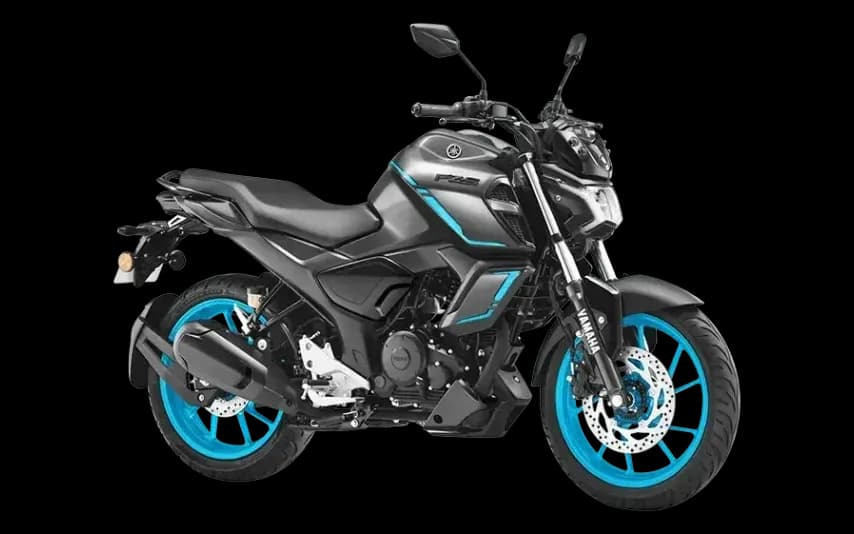
Start with the numbers
The model, at a glance
Available variants, with prices in Nepalese rupees.
| Vehicle | Ex-showroom price | Fuel | Selected variant |
|---|---|---|---|
| 01Yamaha FZ FI V2 | Rs 3.67 lakh | Petrol | FZ FI V2 Front Disc |
Ex-showroom prices exclude registration, road tax and insurance. Specifications can vary by trim. See individual source-check dates ↓
Where This Bike Sits In Nepal's Crowded 150cc Shelf
Owners describe the Yamaha FZ FI V2 as the bike that quietly does its job while flashier 150cc machines come and go around it. It's priced at Rs 3.67 lakh ex-showroom for the only variant sold here, the FZ FI V2 Front Disc, and it competes on paper with bikes carrying more power, sharper looks and sportier badges. Riders who've owned it for years say it was never built to win that fight on numbers. Instead, it has built a quiet, durable reputation among Nepali buyers who want a bike that does not ask much of them. That's a narrower pitch than most 150cc machines make, and owner feedback suggests it's exactly why this model keeps selling years after its generation would normally have faded.
MAW Rides Pvt. Ltd. imports and distributes Yamaha's range in Nepal, and the FZ FI V2 has been part of that line-up since 2018. Owners who've stuck with it for several years now say it isn't the newest or the most talked-about Yamaha on the floor, but it has proven itself one of the steadiest.
A Design Built For The Office Car Park, Not The Drag Strip
Owners consistently bring up good looks as one of the bike's strongest points, and the reasoning is simple: the FZ FI V2 doesn't try to look fast. Its muscular tank shrouds and upright stance were striking when Yamaha first introduced the FZ line, and riders who've kept the V2 for years say that silhouette still holds up without chasing the sharper, more aggressive fairings that rivals have since adopted. The body panels are straightforward, the lines are clean, and owners say there's nothing on this bike that shouts for attention at a signal.
That restraint has an audience. Job holders and family riders who don't want a bike that looks like it belongs to a teenager tend to gravitate toward exactly this kind of understated shape, and owners in this group say it does the job well. One rider summed it up by noting the hidden chassis frame already looks good and wished Yamaha would simply cover it rather than redesign it. It photographs less well than a fully-faired sports commuter, and anyone cross-shopping on looks alone will likely walk past it. But parked outside a government office or a bank in Kathmandu, owners say it doesn't stand out for the wrong reasons, and that's precisely the job it's built to do.
Quality and comfort come up together in owner feedback, and at 135 kg kerb weight, riders say the FZ FI V2 feels substantial without being heavy to manage in traffic. The fit and finish across the tank, seat and bodywork is something long-term owners describe as holding up to daily use rather than chasing showroom flash.
Read next: FZ FI V2 vs Apache RTR 160 4V
What's On The Clocks, And What Owners Wish Was There
Equipment on the FZ FI V2 is kept deliberately simple, and this is where owner patience runs thinnest. The digital instrument cluster shows speed, RPM, trip details and a clock, and there's an ECO indicator that nudges riders toward gentler throttle habits. A side-stand engine cut-off switch is standard, a small but genuinely useful safety feature that cuts the engine if the bike is ridden off with the stand down.
But owners are blunt about what's missing. The single most repeated complaint is that the bike hasn't been updated with the features customers now expect, and several owners specifically ask for a fully digital meter with a gear position indicator, alongside the retained kick-start option. The lack of an LED headlight is another sore point raised directly by owners, who pair it in the same breath with the absence of a BS6 engine and the lack of ABS on this variant. For a bike pitched at commuters who want reliability over gadgetry, that absence of connectivity or a richer display is tolerated by some, but owners buying today increasingly weigh "latest features" as a top factor, and on that count the FZ FI V2 falls short by their own account.
The 149cc Engine Owners Call Strong, Not Fast
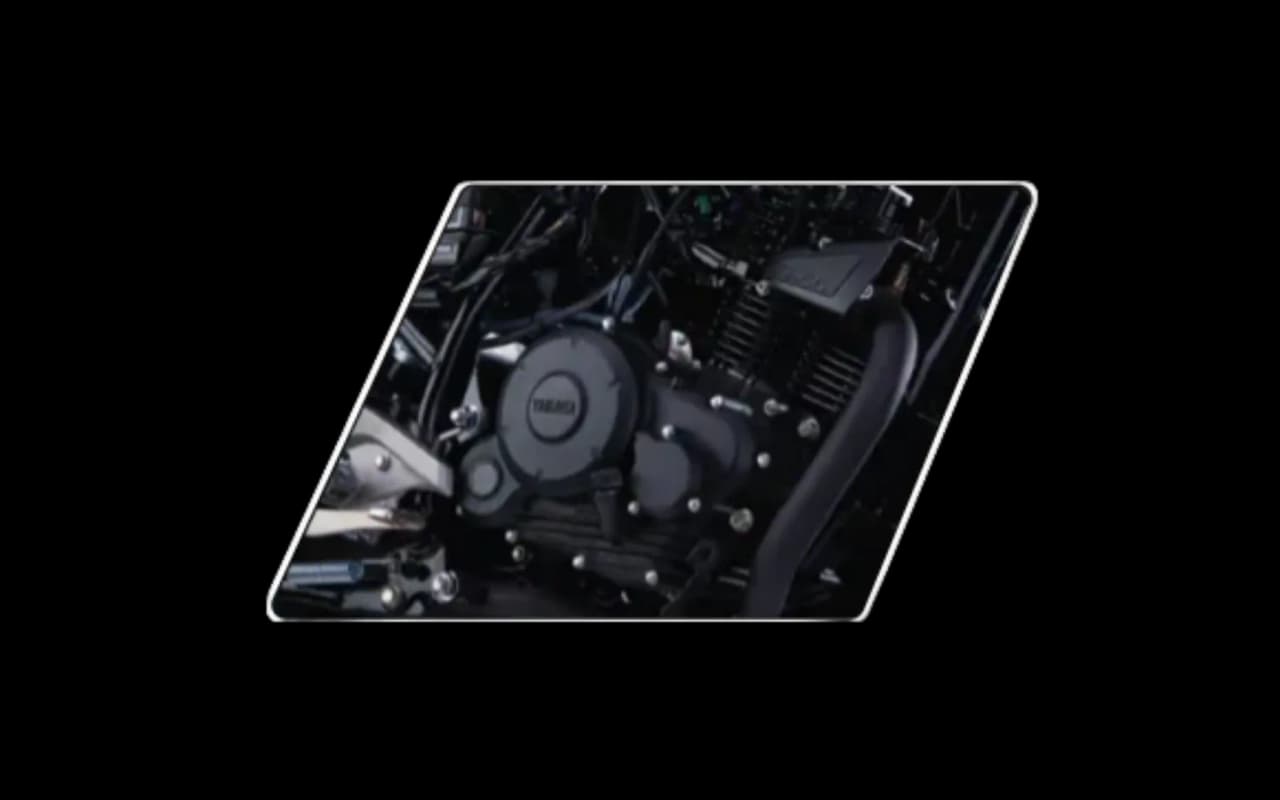
This is where owner opinion splits most sharply, and it's worth stating plainly: Nepali owners call it the best in mileage and describe the engine as strong, even while acknowledging it isn't quick. The air-cooled, 149cc, SOHC 2-valve engine produces 12.4 PS at 7,250 rpm and 12.8 Nm of torque, figures that sit at the lower end of the 150-160cc segment in Nepal. Riders coming off sportier commuters feel the shortfall the moment they need a quick overtake on the Prithvi Highway or a burst of acceleration pulling away from a signal in Kathmandu traffic. The power delivery is linear and unhurried, and owners in India riding the same mechanical package describe the engine as refined at city speeds, with smooth revs and good throttle response, but lacking punch for highway overtakes or with a pillion aboard.
Fuel injection, a 9.5:1 compression ratio and E20 fuel compatibility keep the engine running cleanly, and the five-speed constant-mesh gearbox shifts without drama. The 13-litre tank is generous for the segment, which matters more than outright power for riders doing long daily commutes between Bhaktapur and central Kathmandu, or weekend runs out toward Pokhara. One recurring mechanical gripe among Nepali owners is the front sprocket shaft, flagged as a weak point even by riders who otherwise rate the bike highly on mileage and strength. Owners in India separately report common issues over long ownership, including spark plug fouling, fuel pump or tank gunk, chain and sprocket wear, and occasional stalling or power loss when the tank runs low or in heavy traffic, with some noting that service centres can be slow to diagnose fuel-injection or ECU problems.
None of this makes the FZ FI V2 quick. Owners make clear it makes the bike predictable, and for a very large slice of Nepali buyers, predictable beats quick.
Stable In Traffic, Unbothered On The Highway
The flip side of modest power is a chassis that owners say never feels like it's working against the rider. The FZ FI V2 is composed at low speeds, holds its line through Kathmandu's lane-splitting traffic without nervousness, and the telescopic front fork paired with a 7-step adjustable monocross rear suspension gives it a ride that stays settled over broken tarmac without feeling soft or wallowy. A 1,330 mm wheelbase and 165 mm ground clearance help it clear Nepal's inconsistent road surfaces and the odd speed bump without scraping. Owners in India riding the same suspension setup note that the rear shock can feel bouncy under load and the front can turn stiff over potholes, with vibrations creeping in at higher rpm or as the bike ages.
Handling is tuned for calm, confident commuting rather than aggressive cornering, and owners say that shows in how unflustered the bike feels when ridden gently, which is how most of them ride it anyway. It isn't a bike that rewards pushing hard into bends, and owners don't expect it to.
A Seat Praised By Riders, Until There's A Pillion Or A Downhill
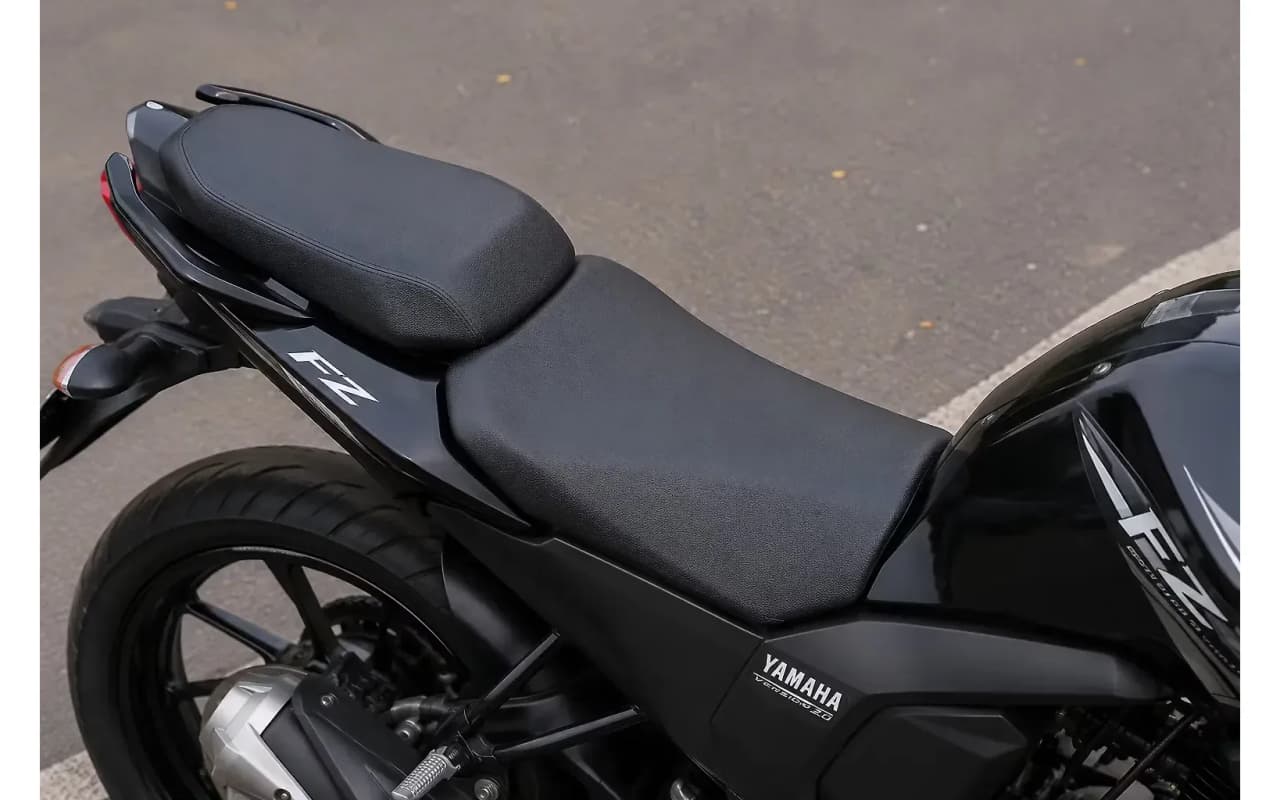
Comfort is repeatedly named by owners as one of the FZ FI V2's strongest cards, and quality and comfort together top the list of what owners like about this bike. The riding position is upright and relaxed, with a seat height around 790 mm that suits most rider heights without feeling cramped. Long commutes between home and office, or longer weekend rides out of the valley, don't leave the fatigue that sportier, more committed riding postures tend to induce.
But the seat draws a sharper complaint too. Owners describe it as genuinely uncomfortable with a double load, or on downhill roads, a frustration that comes up often enough to count as one of the bike's clearest weak points in daily use. Owners in India, riding the same split or two-level seat design, describe acceptable comfort for the rider but note the passenger perch can feel cramped or angled upward on longer rides. Put together, the pillion seat is wider and better positioned than many direct rivals offer, and for couples or families who ride two-up around town, that difference is felt immediately. But anyone regularly carrying a passenger on hill descents should weigh this complaint seriously before buying.
Braking That Does More Work Than The Engine
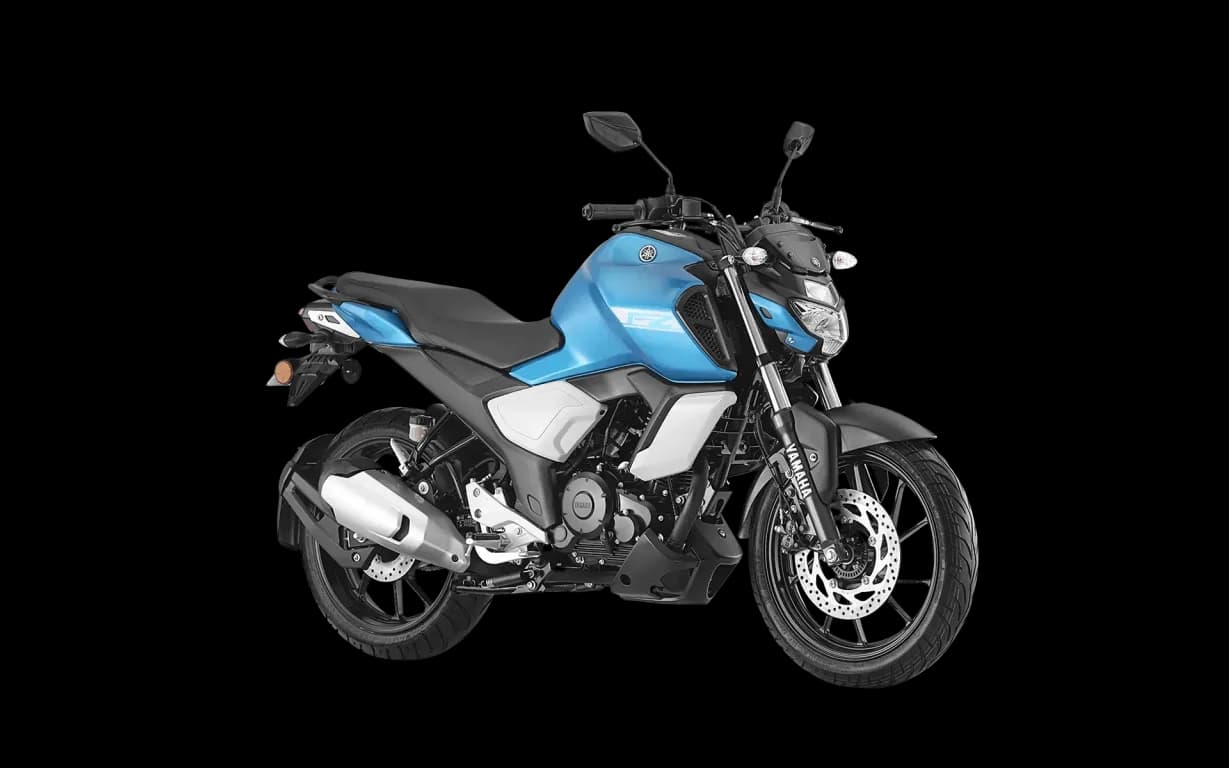
Braking is where the FZ FI V2 earns back some of the respect it loses on power. The front gets a 282 mm disc brake, and this variant pairs it with a 220 mm rear disc. Owners describe stopping power as strong and progressive on Nepal's mixed road surfaces, from the smooth tarmac of the Ring Road to the gravel-strewn stretches further out of the valley. It's worth noting plainly here that owners flag the lack of ABS on this variant as one of their complaints, alongside the missing LED headlight and BS6 engine — features they feel should be standard by now.
The broader safety case for this bike rests on a simple idea that owners seem to intuitively back with how they ride it: modest power plus strong brakes equals fewer moments where a rider is caught out. A bike that can't accelerate into trouble as easily, and can stop confidently when it needs to, tends to have a gentler accident profile than its sportier, harder-to-control rivals.
Living With It Day To Day
Practicality is where owners say the FZ FI V2 quietly wins back ground. It's an easy bike to start, ride, park and forget about, which is exactly what a commuter needs from a daily machine. The 13-litre tank, comfortable ergonomics and manageable weight make it just as suited to occasional highway runs toward Chitwan or Pokhara as it is to weekday trips across Kathmandu.
Reliability is widely regarded by owners as one of its strongest traits, with few mechanical surprises reported outside the sprocket shaft concern already noted. Owners in India report that long-lived examples running 50,000-60,000 km or more are achievable with regular maintenance, which lines up with how Nepali owners talk about the bike's durability and its effect on resale value.
What It Actually Costs To Keep Running
Running costs on the FZ FI V2 are low by owner accounts, and mileage is the single most praised attribute in Nepali feedback, with owners repeatedly calling it the best in its class for fuel economy. Owners in India, riding the same engine, report real-world fuel economy of about 45 km/L in mixed city and hilly riding, against an official ARAI figure of around 58 km/L on that cycle; with a 12-13 litre tank, that points to a practical range of roughly 500-600 km depending on riding style, though these are figures from Indian ownership rather than Nepali testing.
Where owner patience wears thin is cost of parts. Nepali owners describe spares as sarai mahango — very expensive — compared to rival brands, and this is flagged as one of the clearest downsides of ownership here, especially for a bike several owners feel is now an older platform being sold at a price that doesn't reflect its age. Maintenance intervals stay structured regardless: the warranty includes 6 free services and 5 paid service coupons, with each service due within 100 days of the previous one to keep the 2-year/30,000 km manufacturing warranty intact.
It's worth being clear about what that warranty doesn't cover. Tyres, battery, spark plug and similar wear items are covered by their own manufacturers, not Yamaha, and the battery itself carries only a 1-year/10,000 km warranty. Consumables like brake shoes, cables, clutch plates and bearings fall outside warranty cover entirely, as does any damage from non-genuine parts or unauthorised modification. Given how often owners mention the cost of replacement parts, this is one area worth budgeting for carefully rather than assuming full coverage.
One Variant, One Clear Price
Nepal gets a single variant of the FZ FI V2: the FZ FI V2 Front Disc, priced at Rs 3,66,900 ex-showroom. There's no base trim to trade down to and no higher trim to step up into, which simplifies the buying decision considerably. What you see on the price list is what MAW Rides Pvt. Ltd. sells, with the 149cc engine, digital cluster and dual disc front/rear brake setup all included as standard.
Because there's only one configuration, the real decision for a buyer isn't which FZ FI V2 to choose. It's whether owners' verdict on this bike, strong on comfort and mileage, weak on features and parts cost, matches what that buyer actually needs.
Against The Bajaj Pulsar 150, It Wins On Comfort And Loses On Price Certainty
The Bajaj Pulsar 150 is one of Nepal's longest-running 150cc nameplates and shares an almost identical displacement at 149.5cc. Pricing comparisons aren't possible here since current confirmed figures for the Pulsar 150 aren't available, but on specification alone the two bikes sit close in displacement while taking different approaches to character: the Pulsar leans sportier in styling and has historically had a reputation for slightly livelier low-end response, while the FZ FI V2 counters with its wider pillion seat and calmer, more planted ride, the comfort edge owners keep bringing up unprompted. Buyers who want the badge recognition and sportier street presence of the Pulsar 150 will find it a reasonable cross-shop, but the FZ FI V2's comfort edge for two-up riding remains its clearest point of difference.
Against The Benelli TNT 150i, It Wins On Reputation And Dealer Reach
The Benelli TNT 150i, at 150cc, is near enough in displacement to be a direct rival, and it brings a more aggressive, streetfighter-styled design that the FZ FI V2 deliberately avoids. Price comparison again isn't possible with current confirmed figures unavailable for the TNT 150i. Where the FZ FI V2 pulls ahead is dealer and service reach: Yamaha's network across Nepal, spanning 179 showrooms and 86 service centres, gives owners an easier path to parts and servicing than a newer, smaller-volume brand can typically match in Nepal's more remote districts, even if owners grumble about what those parts cost once they get there.
Against The Hero Xpulse 200T, It Wins On City Comfort And Loses On Versatility
The Hero Xpulse 200T takes a completely different approach, built with a touring and light off-road bias rather than a pure commuter brief. Price comparison isn't possible here either with current confirmed figures unavailable. For a buyer whose riding is strictly city streets and highway commuting, the FZ FI V2's lower seat height, lighter kerb weight and smoother low-speed manners make it the easier daily companion, by owner accounts. Anyone wanting to tackle rougher terrain or unpaved stretches regularly would find the Xpulse 200T's more rugged setup better suited to that brief, at the cost of the FZ FI V2's refined on-road comfort.
What Owners Like
- Quality and comfort, named repeatedly as the bike's core strength
- Best-in-class mileage, by owners' own description
- Good looks, including the styling of the hidden chassis frame
What Owners Complain About
- Not updated with features that today's buyers expect, particularly a fully digital meter and gear position indicator
- An uncomfortable seat when carrying a double load or riding downhill
- No LED headlight, no BS6 engine, and no ABS on this variant
- Spare parts priced noticeably higher than rival brands
Verdict
The Yamaha FZ FI V2 is not the bike to buy if horsepower numbers matter to you, and owners themselves don't pretend it will win any traffic-light races against better-powered 150-160cc rivals. What it offers instead, in owners' own telling, is a settled, comfortable, easy-to-live-with ride backed by strong braking, a largely well-liked pillion seat, and a reputation for mileage and reliability that few rivals in this price band can match, alongside real frustrations over missing features, parts cost and seat comfort under load. Our own used-market estimate puts a well-kept, one-owner example at around three years old holding roughly Rs 2.22 lakh to Rs 2.71 lakh, a useful indicator of how little this bike typically loses in value, though it's a modelled estimate rather than a guaranteed figure.
It suits commuters, job holders and couples who want a dependable, economical daily bike without drama, and who can live with a basic features list. It does not suit riders chasing outright speed, the latest tech, or segment-topping power, and anyone shopping primarily on those terms, or unwilling to budget for pricier parts, should look elsewhere in the 150-160cc shelf.
Real buyers, real ownership
What owners are saying
Compiled owner and buyer discussion for this vehicle — likes, complaints and the questions buyers ask.
Explore full specifications, variants & ownership context
Know the product
Key specifications, features & ownership context
Choose a variant to see its recorded specifications and features. Equipment and prices can change across trims.
Latest catalog and directory records supplement the original analysis. Figures may have changed since publication; individual specification and price-check dates appear below.
Rs 3.67 lakh ex-showroom · source checked 28 Nov 2026
Engine & performance
| Specification / feature | FZ FI V2 Front Disc |
|---|---|
| Engine displacement | 149 ccVerified specification · 21 Aug 2026 |
| Max power | 12.4 PSVerified specification · 21 Aug 2026 |
Brakes, tyres & suspension
| Specification / feature | FZ FI V2 Front Disc |
|---|---|
| ABS | ABSVerified specification · 21 Aug 2026 |
Dimensions & weight
| Specification / feature | FZ FI V2 Front Disc |
|---|---|
| Ground clearance | 165 mmVerified specification · 21 Aug 2026 |
Showroom & service support
Distributor: MAW Rides Pvt. Ltd. (Yamaha Nepal)
Yamaha showrooms in Kathmandu (179 showrooms nationwide) · Yamaha service centers in Kathmandu (86 service locations nationwide)
Listed cities include Aanbu Khaireni, Attariya, Baglung, Banepa, Bankasiya, Bardaghat and 95 more.
Brand-wide directory coverage. Confirm that your nearest workshop supports this exact model, powertrain and warranty work; ask about parts availability and booking time.
Market buzz & buyer priorities
Compiled discussion, including buyer reactions and ownership reports; this is not a verified owner survey or a reliability score. Research dated 8 Nov 2026.
Concerns to investigate
- Lacks LED headlight, no BS6 engine, no ABS
- Parts are very expensive compared to competitors
Use these facts alongside the article’s full analysis. Check the final quotation, warranty terms and exact equipment before booking.
Evidence & next steps
Check the details before you buy
Use this guide to build a shortlist. Ask for a written quotation for your chosen variant, including registration, taxes, insurance and finance charges. Confirm the nearest authorised workshop supports that model.
Price sources and dates
These are the recorded distributor-source checks for the selected overview trims. They are separate from the article update and catalog read dates; they do not mean every trim was rechecked today. Confirm the final price with the distributor.
Overview photos come from the corresponding model records; additional article photos carry their own credits. Running costs depend on usage, energy prices, maintenance, insurance and resale value.