Start with the numbers
The model, at a glance
Top available variants, with prices in Nepalese rupees. Expand details to choose another variant.
| Vehicle | Ex-showroom price | Fuel | Selected variant |
|---|---|---|---|
| 01Toyota Fortuner | Rs 283 lakh | Diesel | Fortuner Automatic Transmission |
Ex-showroom prices exclude registration, road tax and insurance. Specifications can vary by trim. See individual source-check dates ↓
- 500 Nm torque from the 2.8L 1GD-FTV diesel
- 225 mm ground clearance for hill and off-road terrain
- Part-time 4WD with low-range for serious trail use
- Ex-showroom price runs Rs 2.70-2.83 crore, among Nepal's priciest SUVs
- Third-row seats fold sideways, eating into usable boot width
- Cabin equipment trails rivals despite the asking price
Where The Fortuner Sits In Nepal's SUV Market
Ask anyone shopping for a seven-seat 4WD in Nepal and the Fortuner name comes up before most others do. Distributed exclusively by United Traders Syndicate Pvt. Ltd., it launches here in 2026 as a diesel-only proposition, priced from Rs 2,70,00,000 for the manual to Rs 2,83,00,000 for the automatic. That is a genuinely high entry point for the Nepali market, driven largely by import duty on a 2.8-litre diesel engine of this size. Owners who have paid it tend to frame the price not as a complaint about value but as a fact of life: if you want this badge and this capability in Nepal, this is what it costs.
What buyers are really paying for, based on what owners consistently report, is less about equipment and more about trust. The phrase that comes up again and again among Nepali owners is some version of "king of the Nepali road" — not a comment on features, but on how the Fortuner is perceived to hold up over years of use on terrain that punishes lesser vehicles. For executive buyers who need to arrive looking the part in Kathmandu and then drive the same vehicle up a gravel track in the hills the following week, the Fortuner continues to be the default answer.
A Shape That Has Not Needed To Change Much
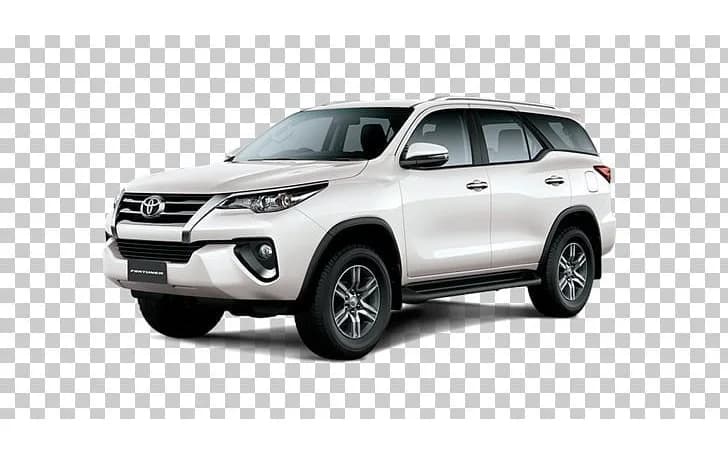
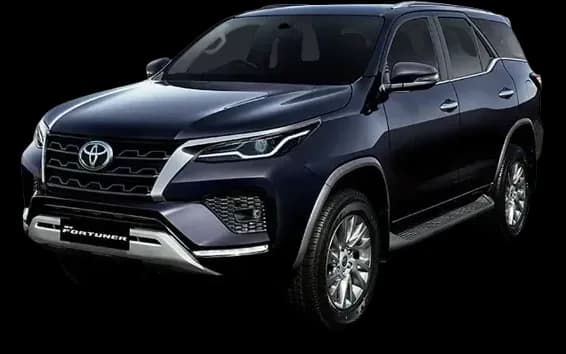
The Fortuner's exterior design has aged unusually well for a vehicle that has been around in broadly similar form for years. The front end still reads as purposeful rather than dated, and that aging-gracefully quality matters in a market where resale value is a genuine financial consideration, not an afterthought. Fortuner owners bank on the car still looking current when they come to sell it.
Genuine Toyota accessories change the car's character more than anything from the factory does. A full-hoop steel bullbar with an integrated LED light bar sharpens the front-on stance considerably, and swapping the standard alloys for 17-inch black Toyota accessory wheels gives the vehicle a noticeably tougher, more modern look than the standard silver rims manage on their own. These are the kind of additions Nepali buyers in rural and semi-rural markets tend to specify early, since the vehicle's working life often includes genuine off-road use rather than just the school run.
Build quality is where the reputation is actually earned. Owners describe the Fortuner's durability on rugged Nepali terrain as exceptional, and that is not a marginal compliment — it is the single biggest reason buyers here tolerate the price. A vehicle that keeps running on hill roads that eat lesser 4WDs year after year earns its keep slowly, through the absence of problems rather than through any one standout feature.
Read next: Fortuner vs RAV4
Colour Options
Nepal Automart's research shows the Fortuner has been seen in Silver metallic, a clean, conservative finish that suits both the executive and the rural-use buyer. A previously reviewed Crusader-grade variant has also been shown in Red, a bolder choice that tends to suit buyers who want the SUV to double as a style statement rather than purely a workhorse.
What's On Board, And What Isn't
The cabin runs an 8-inch touchscreen with an 11-speaker JBL audio system, Apple CarPlay integration, ventilated leather front seats, and automatic climate control with roof-mounted rear vents and a dedicated fan speed switch for rear passengers. Front parking sensors are fitted. The instrument cluster is analog with blue backlighting and a central digital readout — simple, legible, and easy to read at a glance on a dusty mountain road where a cluttered digital dash would be a distraction.
Physical air-conditioning knobs are a small thing that owners notice disproportionately: in a vehicle this size, being able to adjust cabin temperature without hunting through a touchscreen menu while driving matters more than it sounds. A double glove box and dashboard cup holders positioned directly in front of the AC vents are small, practical touches — the latter actually keeps drinks cold, which is the sort of detail that only shows up after months of ownership rather than on a showroom test drive.
Where the Fortuner loses ground against newer rivals is in exactly the areas Nepali owners flag most directly: it lacks features compared to competitors priced similarly or even lower. There is no sunroof, and the cabin plastics, while durable, read as basic rather than premium for a vehicle costing upward of Rs 2.7 crore. Buyers coming from more feature-dense rivals notice this immediately in the showroom, even if owners who have lived with the car for a while say they stop minding it.
The 2.8-Litre Diesel That Nepali Owners Build Their Case Around
The engine is the Fortuner's strongest argument. The 2.8-litre 1GD-FTV turbo-diesel, a 4-cylinder common-rail unit, makes 204 PS and 500 Nm of torque between 1600-2800 rpm in the automatic variant, paired with a 6-speed transmission. The manual variant is specified with the 2755 cc engine as well, though its torque figure on official paperwork is listed at 420 Nm between 1400-3400 rpm — buyers should confirm which output applies to the exact unit they are buying, since Toyota's own Nepal documentation shows both figures. Top speed across the model line is rated at 180 km/h.
Nepali owners single out engine power and reliability as one of the top things they weigh before buying, and it shows in how they talk about ownership: the 2.8-litre engine's strong, dependable delivery is treated as close to guaranteed rather than a pleasant surprise. Early-generation DPF clogging problems that affected this engine family years ago have been resolved in current production, and the unit is now considered one of the most dependable diesel engines sold in this class, a reputation that carries weight with buyers who plan to keep a vehicle for a decade rather than trade it in after three years.
The 6-speed Aisin automatic is older technology next to the 10-speed gearboxes some rivals now offer, but it shifts cleanly and has not developed a reputation for hesitation or jerkiness. For buyers who prioritise mechanical simplicity and long-term serviceability over the newest transmission tech, this is treated as a feature rather than a shortcoming.
Gearbox Feel And Low-Speed Driving
Independent coverage of the Fortuner has raised mixed views on gearbox and clutch behaviour, and on how the car handles at low speed in traffic. The heavier steering that comes with a vehicle this size and weight — kerb weight sits at 2180 kg — makes tight manoeuvring in dense traffic more physical work than in a compact SUV, and this lines up directly with what Nepali owners report: large dimensions make urban maneuvering in Kathmandu genuinely difficult. A length of 4795 mm and width up to 1885 mm (Toyota's Nepal brochure separately lists 1855 mm) is a lot of metal to place precisely in the narrow lanes around Ason or Patan.
Ride Quality On Hill Roads And Broken Tarmac
Ride quality on rough and broken surfaces is one of the more divided talking points around this vehicle, and the division makes sense given what it is built on. The rear suspension, rooted in the same ladder-frame chassis as Toyota's pickup platform, feels notably firm when the vehicle is lightly loaded, which is a function of the heavy-duty tuning needed to carry a full complement of passengers, luggage, and off-road hardware. Loaded up for a family trip or with genuine accessories fitted, the ride settles considerably; empty, over Kathmandu's patchier side streets, it can feel busier than a monocoque-chassis SUV.
Where the Fortuner earns its keep is exactly where that firm suspension pays off: ground clearance of 225 mm and a proper part-time 4WD system with low-range gearing make it genuinely capable on the kind of broken, unsealed hill roads that define large parts of rural Nepal. This is the trade-off buyers are explicitly signing up for — a firmer ride in the city in exchange for confidence on terrain that would stop most car-based SUVs.
Handling and cornering behaviour draws a similarly split verdict. The Fortuner is not tuned for playful direction changes; it is tuned for stability, and on the highway that stability shows up as composed, planted cruising at speed. Through tighter corners or hill switchbacks, its height and weight are more apparent, and drivers accustomed to lower, lighter SUVs will feel the difference.
Seats, Space, And Where The Third Row Falls Short
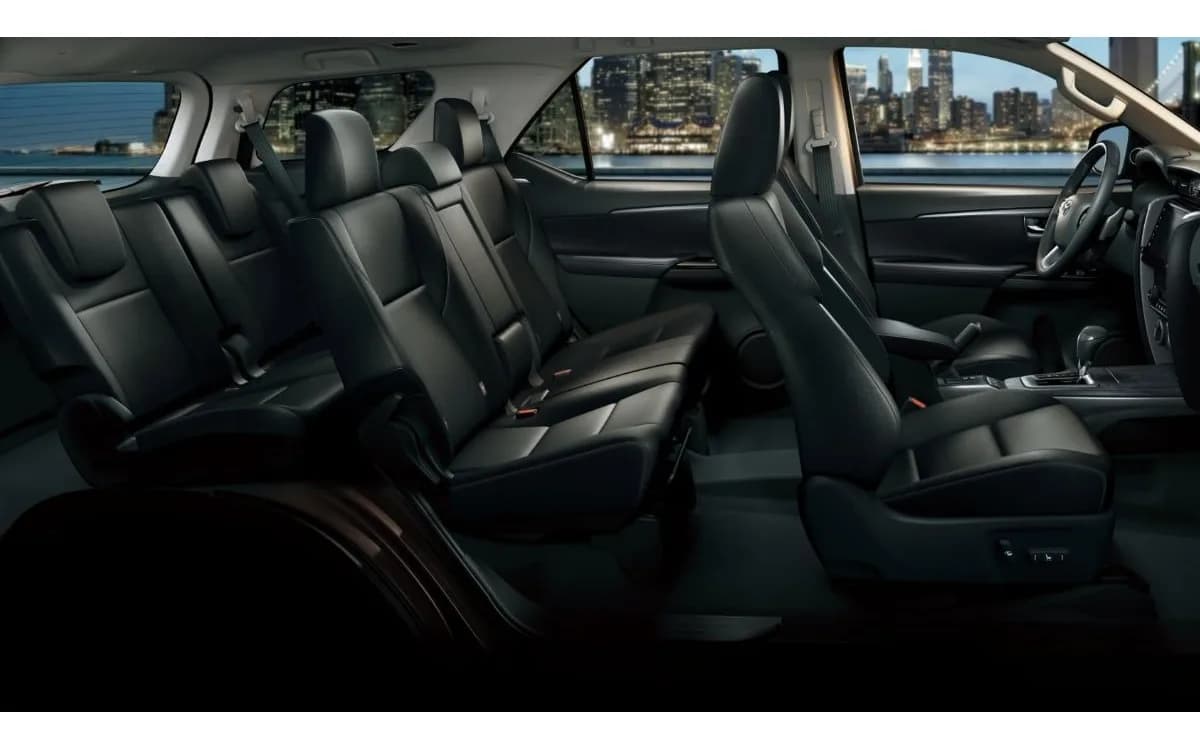
Front and second-row comfort is a genuine strength. Base-level cloth seats, where fitted, have earned a reputation for being far more comfortable on long drives than their plain appearance suggests, and the top variant's ventilated leather front seats add a further layer of comfort that matters on long Tarai-to-hills drives in summer heat. Rear-seat space and comfort is another point where opinion splits across reviews — second-row space is generally considered good, but the third row is where the Fortuner shows its limits most clearly.
Seating capacity across the range is rated at 7, but practical boot space with all three rows in use is limited, exactly as Nepali owners describe. The mechanism is the specific problem: third-row seats fold up and latch sideways against the cargo walls rather than folding flat into the floor, which eats into usable width rather than freeing it. For a family that genuinely uses all seven seats on a regular basis, this is worth test-sitting before committing, not assuming away.
Vibration and refinement inside the cabin is a mixed bag by most accounts — composed and quiet at highway speed, with slightly more road and engine noise making its way into the cabin at low speed in traffic than rivals with better sound insulation manage.
Braking, Safety Kit, And Driver Assistance
Braking feel is one of the more consistently praised characteristics of this vehicle, with pedal response described as predictable and confidence-inspiring even when the vehicle is carrying a full load. Safety provision runs to 7 airbags, Vehicle Stability Control, hill-start assist and downhill assist as standard across the line, and 265/60 R18 alloy-mounted tyres. This is solid kit for the segment in Nepal, even though adaptive driver-assistance features common on newer rivals are absent here.
Living With It Day To Day
Air-conditioning performance in genuine Nepali summer heat is one area that has drawn criticism, particularly around how quickly the cabin cools from a hot start and how it copes with a full load of seven occupants in Tarai temperatures. The physical controls and roof-mounted rear vents are well liked; raw cooling output in peak heat is the part that gets flagged.
Day-to-day practicality leans heavily on small, well-thought-out touches: the double glove box, large door bins that take big water bottles without fuss, and those AC-adjacent cup holders. Where it struggles is the third-row storage problem already noted, and the simple physical reality that a vehicle this size needs a driveway or a proper parking bay, not a Kathmandu curb.
Running Costs And What They Actually Mean
Fuel efficiency is officially rated at 10.3 km/l for the model. On a vehicle of this size and weight, running on a 2.8-litre diesel with 4WD hardware, that is a reasonable figure rather than a remarkable one, and buyers coming from smaller SUVs should recalibrate their fuel budget accordingly. The 80-litre fuel tank at least means long trips into the hills do not require constant refuelling stops in areas where pumps can be sparse.
The Fortuner carries a 3-year or 100,000 km warranty, with service and spare parts handled through the official UTS network. Nepali owners rank reliability and engine durability among the top things they weigh before buying, ahead of equipment lists or badge prestige, and that calculation is explicitly built around keeping this vehicle for the long haul rather than trading it in after a lease cycle.
Variants: Manual, Automatic, And Which One To Buy
Toyota's Nepal lineup lists four points of entry. The Fortuner Manual Transmission is priced at Rs 2,70,00,000 with the 2800 cc engine, and the Fortuner Automatic Transmission at Rs 2,83,00,000, also 2800 cc. Separately, Manual and Automatic trims built around the 2755 cc engine appear in the lineup without confirmed pricing at this stage; buyers interested in either should treat them as unconfirmed on price until UTS publishes a figure, rather than assume they sit cheaper than the two confirmed trims.
Our recommendation for most Nepali buyers is the Fortuner Automatic Transmission at Rs 2,83,00,000. The roughly Rs 13 lakh step up from the manual buys a genuinely easier daily driving experience in Kathmandu traffic, where a 6-speed torque-converter automatic removes a layer of fatigue that a manual clutch adds in stop-start conditions — directly relevant given how often owners flag low-speed manoeuvring as a chore in this vehicle. The automatic also comes with the full specification: 204 PS, 500 Nm torque, 7 airbags, the 8-inch JBL touchscreen setup, ventilated leather seats, and the complete safety suite.
The Ford Everest Undercuts It On Transmission Tech
The Ford Everest is the most direct cross-shop for buyers comparing seven-seat 4WD SUVs at this level in Nepal, built around a smaller 1996 cc engine against the Fortuner's 2800 cc unit. Price comparison between the two is not confirmed in our data, but on specification the Everest typically brings a more modern automatic transmission and a more contemporary cabin to the fight. What it cannot bring, on the weight of owner and press consensus around the Fortuner, is the same multi-year track record of mechanical toughness on genuinely rough Nepali roads — a track record that takes years to establish and that the Fortuner has simply had longer to build.
The Ford Ranger Raptor Is A Different Kind Of Vehicle Entirely
The Ford Ranger Raptor, built on a 2996 cc engine against the Fortuner's 2800 cc, is less a direct rival than a performance-oriented alternative for buyers who want off-road capability with a harder, more athletic edge and don't need three rows of seats. Price comparison is unconfirmed in our data. Buyers cross-shopping the two are usually choosing between a family-first SUV and a performance-first double-cab, and the decision tends to come down to whether a third row is a requirement or a nice-to-have.
The Jeep Wrangler Trades Practicality For Character
The Jeep Wrangler, at 2000 cc against the Fortuner's 2800 cc, sits in a different bracket again — a genuine off-road icon with real enthusiast appeal but without the Fortuner's seven-seat practicality or its established Nepali service and parts network through UTS. Price comparison is not confirmed in our data. For buyers who want off-road credibility as a lifestyle statement first and family-hauling capability second, the Wrangler is worth a look; for anyone who needs to move a family of seven on a regular basis, it isn't really in the same conversation.
Verdict
The Toyota Fortuner in Nepal is not a hard car to understand once the Rs 2.70-2.83 crore price is on the table: buyers are paying for a 2.8-litre diesel engine with a long reliability record, genuine 4WD off-road ability with 225 mm of ground clearance, and a resale reputation strong enough that owners treat the purchase as closer to an investment than an expense. What they are not paying for is a feature-rich cabin, a plush ride on broken city tarmac, or a third row that works well for adults on long trips.
Our pick within the range is the Fortuner Automatic Transmission at Rs 2,83,00,000, for buyers who split their time between Kathmandu traffic and rural or hill-road use and who plan to keep the vehicle for the better part of a decade. Buyers chasing the latest cabin tech, a smoother ride on rough city streets, or a more usable boot with all seven seats occupied should look closely at the Ford Everest before committing. For anyone who has already decided reliability matters more than equipment, the Fortuner remains exactly what Nepali owners keep calling it: the vehicle you buy once and stop thinking about.
Real buyers, real ownership
What owners are saying
Compiled owner and buyer discussion for this vehicle — likes, complaints and the questions buyers ask.
Explore full specifications, variants & ownership context
Know the product
Key specifications, features & ownership context
Choose a variant to see its recorded specifications and features. Equipment and prices can change across trims.
Latest catalog and directory records supplement the original analysis. Figures may have changed since publication; individual specification and price-check dates appear below.
Rs 283 lakh ex-showroom · source checked 28 Nov 2026
Engine & performance
| Specification / feature | Fortuner Automatic Transmission |
|---|---|
| Engine displacement | 2755 ccResearched · confirm · 14 Nov 2026 |
Safety & driver assistance
| Specification / feature | Fortuner Automatic Transmission |
|---|---|
| Airbags | 7 airbagsResearched · confirm · 4 Nov 2026 |
Dimensions & weight
| Specification / feature | Fortuner Automatic Transmission |
|---|---|
| Ground clearance | 225 mmResearched · confirm · 14 Nov 2026 |
| Boot space | 253–296 LResearched · confirm · 23 Nov 2026 |
Showroom & service support
Distributor: United Traders Syndicate Pvt. Ltd.
Toyota showrooms in Kathmandu (41 showrooms nationwide) · Toyota service centers in Kathmandu (43 service locations nationwide)
Listed cities include Bharatpur, Biratnagar, Birgunj, Birtamode, Butwal, Dhangadhi and 17 more.
Brand-wide directory coverage. Confirm that your nearest workshop supports this exact model, powertrain and warranty work; ask about parts availability and booking time.
Market buzz & buyer priorities
Compiled discussion, including buyer reactions and ownership reports; this is not a verified owner survey or a reliability score. Research dated 27 Nov 2026.
What people like
- Toyota is a king of the Nepali road
- Exceptional durability and reliability on rugged Nepali terrain
- High ground clearance suitable for mountain roads
More feedback
- Strong resale value in the local market
Concerns to investigate
- Fortuner lacks features compared to competitors
- Very high purchase price due to import taxes
- Large dimensions make urban maneuvering in Kathmandu difficult
More feedback
- Limited boot space when all three rows of seats are in use
Nepal ownership context
- Distributed exclusively by United Traders Syndicate Pvt. Ltd. (UTS).
- Widely regarded as a preferred choice for both executive presence and off-road capability in rural areas.
- Service and spare parts support are managed through the official UTS network.
Use these facts alongside the article’s full analysis. Check the final quotation, warranty terms and exact equipment before booking.
Evidence & next steps
Check the details before you buy
Use this guide to build a shortlist. Ask for a written quotation for your chosen variant, including registration, taxes, insurance and finance charges. Confirm the nearest authorised workshop supports that model.
Price sources and dates
These are the recorded distributor-source checks for the selected overview trims. They are separate from the article update and catalog read dates; they do not mean every trim was rechecked today. Confirm the final price with the distributor.
Overview photos come from the corresponding model records; additional article photos carry their own credits. Running costs depend on usage, energy prices, maintenance, insurance and resale value.