Start with the numbers
The model, at a glance
Available variants, with prices in Nepalese rupees.
| Vehicle | Ex-showroom price | Fuel | Selected variant |
|---|---|---|---|
| 01Royal Enfield Himalayan 440 | Upcoming | Petrol | Himalayan 440 |
Ex-showroom prices exclude registration, road tax and insurance. Specifications can vary by trim. See individual source-check dates ↓
First, The Part Nepali Riders Need To Know
The Himalayan 440 is not on sale in Nepal. Royal Enfield launched it in India on 4 September 2026 at ₹2.29 lakh ex-showroom (Chennai), in a single variant and three colours. Alpha Automotive Pvt. Ltd., the official Royal Enfield channel here, has not announced a Nepal launch date or a Nepal price, and until it does there is no rupee figure for this bike that means anything to a Kathmandu buyer. Anyone quoting a Nepal price for the Himalayan 440 today is quoting the Indian one.
What we can say is where it will sit if it comes. Its engine and frame come from the Royal Enfield Scram 440, which sells here at Rs 6.90 to 7.00 lakh, and it slots below the newer Royal Enfield Himalayan 450 at Rs 9.9 to 10.4 lakh. In India the Himalayan 440 costs a little more than the Scram 440, so a Nepal price a step above the Scram and well below the 450 is the reasonable expectation, not a fact. We will update this page the day Alpha Automotive speaks.
Where This Fits In Nepal's Adventure Bike Conversation
For years, the Himalayan name has meant one thing to Nepali riders: a go-anywhere machine built for the terrain the country is named after. The Himalayan 440 does not try to reinvent that idea. It keeps the shape and character riders already trust from the old 411 and puts a stronger, six-speed engine underneath it. That is a deliberate, conservative move, and in a market where resale value and parts familiarity matter as much as outright spec sheets, it is probably the right one. This is not the most modern adventure bike Royal Enfield makes, that is the Himalayan 450, but it is the one built to feel like the original, only better resolved.
Design That Has Not Forgotten What Made It Popular
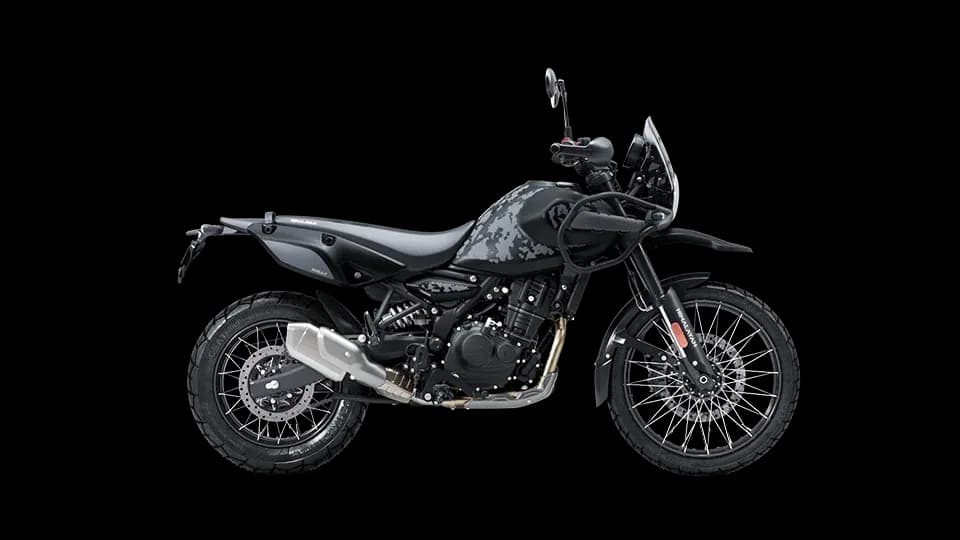
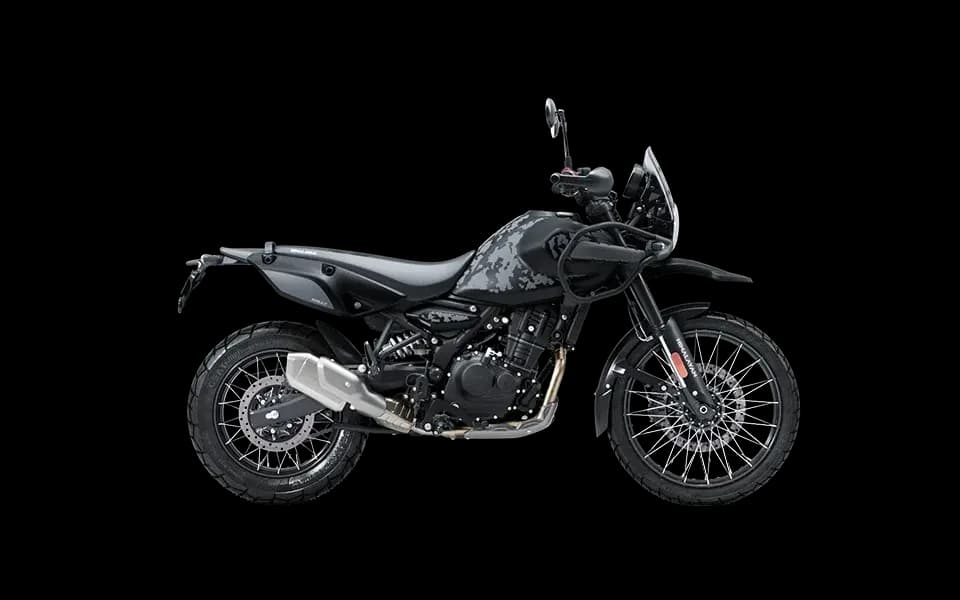
The Himalayan 440 keeps the rugged, upright silhouette that made the original such a familiar sight on Nepali highways and mountain roads. The changes are incremental rather than dramatic: a tank finish that mixes matte and gloss sections, '01' graphics on the fuel tank as a nod to the model's original numbering, and Himalayan branding running along the side panels. Wire-spoke wheels with tubed tyres remain standard, reinforcing the go-anywhere intent rather than chasing a road-focused, alloy-wheeled look.
Underneath the familiar bodywork, the half-duplex split-cradle frame has been reinforced, which matters more than it sounds. Adventure bikes take a beating on unpaved district roads, on loaded touring duty and in the odd drop on loose gravel, and a stiffer frame is the kind of unglamorous upgrade that pays off two or three years into ownership rather than on day one. It will not show up in a showroom walkaround, but anyone who rides one to Mustang or Manang and back will feel it.
Three Colours, Each Aimed At A Different Kind Of Buyer
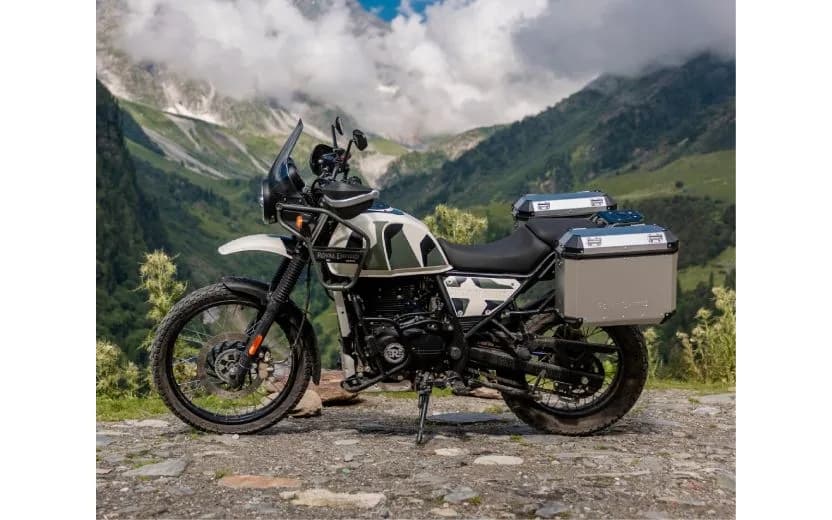
The launch line-up has three colours and no price difference between them. Sela Black is the understated choice, letting the matte-and-gloss tank treatment do the talking. Mustang Brown leans into the touring identity outright; it is the one most naturally paired with a top box and knuckle guards, easy to picture loaded up for a multi-day trip. Nela White is the boldest of the three, with an adventure-style pattern that signals off-road intent before the bike has left the showroom floor.
Buyers picking between them are really choosing between quiet and classic, touring-ready, and look-at-me-on-the-trail. It is worth deciding which of those matches your actual riding before falling for the paint.
A Cockpit That Trades Some Character For Navigation
The instrument cluster is the one area where the Himalayan 440 has drawn genuine pushback, and the criticism is fair. It is a smaller digital-analogue unit shared with other Royal Enfields, and next to the original Himalayan's oversized cockpit it reads as a downgrade in character even though the tech is more current. Royal Enfield offsets this with the Tripper navigation pod mounted beside the main cluster, which gives turn-by-turn routing that is genuinely useful on unfamiliar mountain roads where signage cannot always be trusted. A USB-C charging port and an LED headlamp round out the kit, though the headlamp's throw has been called a step down from the old halogen unit.
The switchgear is unchanged from what long-time Royal Enfield owners already know, so no relearning is required. The standout functional detail is a dedicated switch to disable the rear ABS, letting the rider lock the back wheel deliberately on loose gravel or steep dirt descents, a feature genuinely relevant given how much of Nepal's road network is still not paved.
The 443cc Engine Is The Whole Point Of This Update
The headline change is the engine: the 443cc single-cylinder, air-and-oil-cooled unit from the Scram 440, tuned for the Himalayan's adventure-touring brief. It makes about 25.4 hp and 34 Nm, a clear step up from the old 411cc motor, and the improvement is felt less at the top of the rev range and more in how cleanly it pulls from low revs, which is exactly what matters when you are grinding up a loaded switchback rather than chasing top speed on flat tarmac. This is not the liquid-cooled, 40 hp Sherpa engine of the Himalayan 450; it is the simpler, cheaper-to-run motor of the Scram, and that is the point of the bike.
A six-speed gearbox, with ratios chosen for relaxed highway cruising, is the other major mechanical upgrade over the five-speed 411, and it is the reason this bike feels more capable as a long-distance tool than its predecessor. A slip-and-assist clutch takes the effort out of stop-start riding in Kathmandu traffic before the open road begins, and the exhaust note keeps the deep, familiar grunt Royal Enfield owners expect.
Suspension Carried Over, Which Is Both Reassuring And A Missed Opportunity
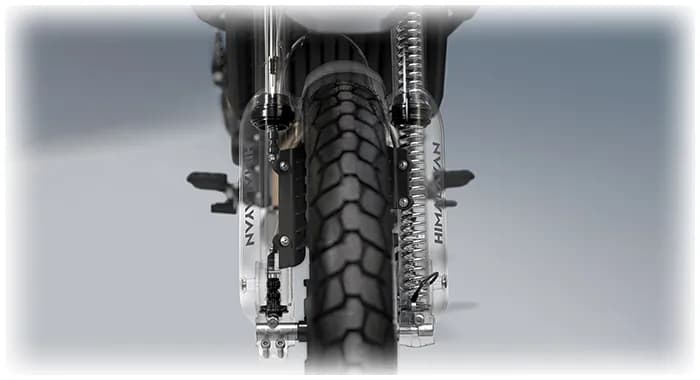
The suspension is conventional rather than exotic: a 41mm telescopic fork with 200mm of travel up front and a linkage-type monoshock with 180mm at the rear. There is no upside-down fork here, which is one of the things that separates it from the Himalayan 450. Given how well-regarded the original bike's ride was on Nepal's mixed surfaces, carrying that character over is a safe call rather than a lazy one; this is capable suspension for broken tarmac, gravel and everything in between.
The bike rolls on a 21-inch front and 17-inch rear wheel, a combination that favours off-road stability and obstacle clearance over cornering sharpness on smooth sweepers, and the 220mm of ground clearance backs that up. Kerb weight is a substantial 199 kg, so it is no lightweight trail bike, but the weight sits low and the bike is built to carry luggage.
An Ergonomic Package That Suits Most Riders
This is where the Himalayan 440 quietly does its best work. The seat height is around 800mm, low for an adventure bike and lower than the Himalayan 450's, which means a rider around 5'6" can flat-foot with real confidence. That matters enormously for beginner-to-intermediate riders navigating Nepal's uneven roadside stops and steep-camber parking.
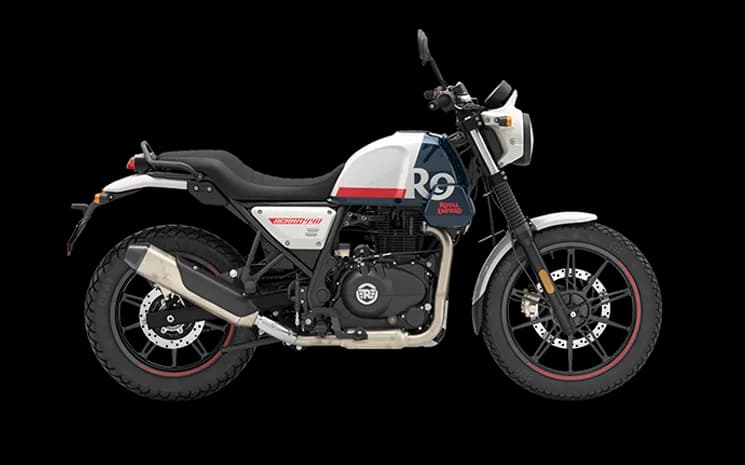
The rider triangle is comfortable for long hours in the saddle, with handlebars within easy reach without being uncomfortably wide for narrow lanes and mountain switchbacks. Footpegs carry removable rubber inserts that expose grippy metal teeth underneath, a small but thoughtful touch for riders who switch between paved commuting and off-road sections on the same trip.
Braking Hardware That Finally Matches The Bike's Ambitions
Braking is a 300mm front disc with a twin-piston floating caliper and a 240mm rear disc with a single-piston caliper, with dual-channel ABS standard. The rear channel can be switched off for off-road riding, and it is a feature worth using deliberately rather than ignoring: on loose gravel a fully locked ABS intervention can work against the rider when trail braking.
Built To Carry Luggage, Not Just Look The Part
Practicality has had real thought put into it. A new flat rear luggage plate replaces the old grill-style mount and supports up to 7 kg, so a top box is a straightforward fit rather than a fiddly aftermarket job. Side panniers mount on a dedicated bracket that relocates the indicators out of the way, a detail that shows this bike was engineered around real touring rather than treating luggage as an afterthought. The 15-litre fuel tank is smaller than the 450's, but paired with the frugal 443cc engine it should still give a long range between fuel stops, a meaningful consideration on remote Himalayan routes where the next pump can be a long way off. One small gripe from early riders: the mudguard design still lets dirt splash upward onto the bike.
₹2.29 Lakh In India, And Where It Sits Against Its Own Stablemate
At ₹2.29 lakh ex-showroom in India, the Himalayan 440 sits a few thousand rupees above the Scram 440 in that market. That is a small premium for a meaningfully different bike in intent: the Scram leans towards everyday, road-biased riding with a smaller front wheel, while the Himalayan 440 keeps the 21-inch front, longer travel and touring-ready luggage mounts that make it the more serious choice for anyone who plans to leave the tarmac. Expect the same relationship in Nepal if and when it arrives: a modest step above the Scram 440's Rs 6.90 to 7.00 lakh, not a figure anywhere near the Indian sticker.
The Himalayan 450 Is The More Modern Alternative, And It Is Already Here
Nepali buyers interested in this bike can, today, walk into a showroom and buy the Royal Enfield Himalayan 450, the brand's contemporary take on the same brief with a liquid-cooled 40 hp engine, an upside-down fork, a TFT dash and a newer platform underneath it. The Himalayan 440 is not trying to compete on that ground. It is positioned for buyers who specifically want the classic Himalayan look, feel and simplicity at a lower price. Choosing between the two comes down to whether you are buying for familiarity and value or for the latest engineering, and neither answer is wrong.
Who Should Actually Wait For This One
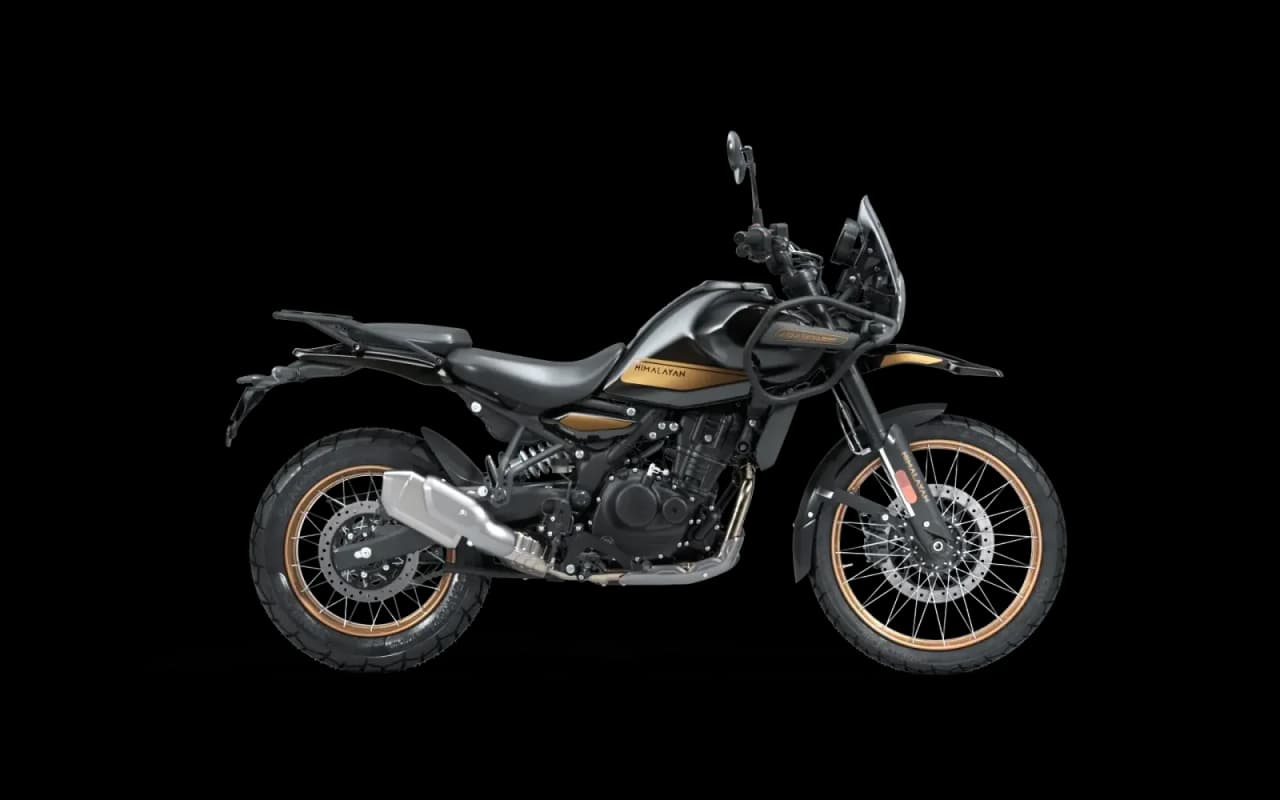
The Himalayan 440 is built for riders who loved what the original Himalayan represented but wanted more muscle for highway stretches and loaded touring, without changing what the bike looks or feels like. It rewards a shorter rider with an accessible seat height, rewards a touring rider with genuine luggage capability, and rewards anyone heading off-road with switchable ABS and rugged wheel sizing. The smaller instrument cluster and the weaker headlamp throw are real compromises worth knowing about. For Nepali riders who want the Himalayan identity with an engine that finally keeps pace with it, this is the one to watch, and the moment Alpha Automotive announces a Nepal price, this page will carry it.
Explore full specifications, variants & ownership context
Know the product
Key specifications, features & ownership context
Choose a variant to see its recorded specifications and features. Equipment and prices can change across trims.
Latest catalog and directory records supplement the original analysis. Figures may have changed since publication; individual specification and price-check dates appear below.
Price not confirmed ex-showroom · source-check date not recorded
Brakes, tyres & suspension
| Specification / feature | Himalayan 440 |
|---|---|
| ABS | Dual-channel ABSResearched · confirm · 18 Sept 2026 |
| Front brake | DiscResearched · confirm · 18 Sept 2026 |
Engine & performance
| Specification / feature | Himalayan 440 |
|---|---|
| Max power | 25.4 PSResearched · confirm · 18 Sept 2026 |
| Max torque | 34 NmResearched · confirm · 18 Sept 2026 |
Showroom & service support
Distributor: Alpha Automotive Pvt. Ltd. (Royal Enfield Nepal)
131 listed brand showrooms · 22 listed brand service locations
Listed cities include Baglung, Bardibas, Bhairahawa, Bhaktapur, Bharatpur, Biratnagar and 19 more.
Brand-wide directory coverage. Confirm that your nearest workshop supports this exact model, powertrain and warranty work; ask about parts availability and booking time.
Market buzz & buyer priorities
Compiled discussion, including buyer reactions and ownership reports; this is not a verified owner survey or a reliability score. Research dated 21 Oct 2026.
What people like
- Anticipation for a simpler, air-oil cooled engine that might be easier to maintain than the liquid-cooled 450
- Interest in the potential for better low-end torque for steep Himalayan climbs
- Brand loyalty toward Royal Enfield's adventure lineup in the Nepali market
Concerns to investigate
- Confusion regarding the naming and whether it is a replacement for the Scram 411 or a separate model
- Concerns about high taxation in Nepal for motorcycles exceeding the 400cc displacement bracket
- Skepticism about whether this model will actually launch in Nepal given the arrival of the Himalayan 450
What buyers ask for
- Ground clearance for navigating monsoon-damaged roads and landslides
- Fuel efficiency (mileage) considering the high cost of petrol in Nepal
- Affordability of spare parts and availability of specialized Royal Enfield service centers outside Kathmandu
More feedback
- Weight of the motorcycle for maneuverability on narrow mountain trails
Nepal ownership context
- Nepal's luxury tax on high-displacement bikes makes the price-to-performance ratio a major talking point in local forums
- Riders are debating if the 440cc platform will handle high-altitude performance better than the older 411cc engine
- There is a preference for simple mechanical setups among Nepali tourers who frequent remote areas with limited service centers
More feedback
- The Royal Enfield Himalayan 440 is not on sale in Nepal, so no official Nepal price, showroom availability, service schedule, spare-parts pricing, or local resale history is published for this model.
- Nepali buyer discussion is mainly about whether to wait for a Himalayan 440 or choose the Himalayan 450 or Scram 440 already listed in Nepal.
- Nepal-specific owner feedback on Himalayan 440 mileage, tubeless tyres, maintenance, ground clearance, and long-term reliability has not yet developed.
Use these facts alongside the article’s full analysis. Check the final quotation, warranty terms and exact equipment before booking.
Evidence & next steps
Check the details before you buy
Use this guide to build a shortlist. Ask for a written quotation for your chosen variant, including registration, taxes, insurance and finance charges. Confirm the nearest authorised workshop supports that model.
Price sources and dates
These are the recorded distributor-source checks for the selected overview trims. They are separate from the article update and catalog read dates; they do not mean every trim was rechecked today. Confirm the final price with the distributor.
Overview photos come from the corresponding model records; additional article photos carry their own credits. Running costs depend on usage, energy prices, maintenance, insurance and resale value.