Start with the numbers
The model, at a glance
Top available variants, with prices in Nepalese rupees. Expand details to choose another variant.
| Vehicle | Ex-showroom price | Fuel | Selected variant |
|---|---|---|---|
| 01Royal Enfield Bullet 350 | Upcoming | Petrol | Bullet 350 Twinspark |
Ex-showroom prices exclude registration, road tax and insurance. Specifications can vary by trim. See individual source-check dates ↓
Where This Bike Sits For Nepali Buyers
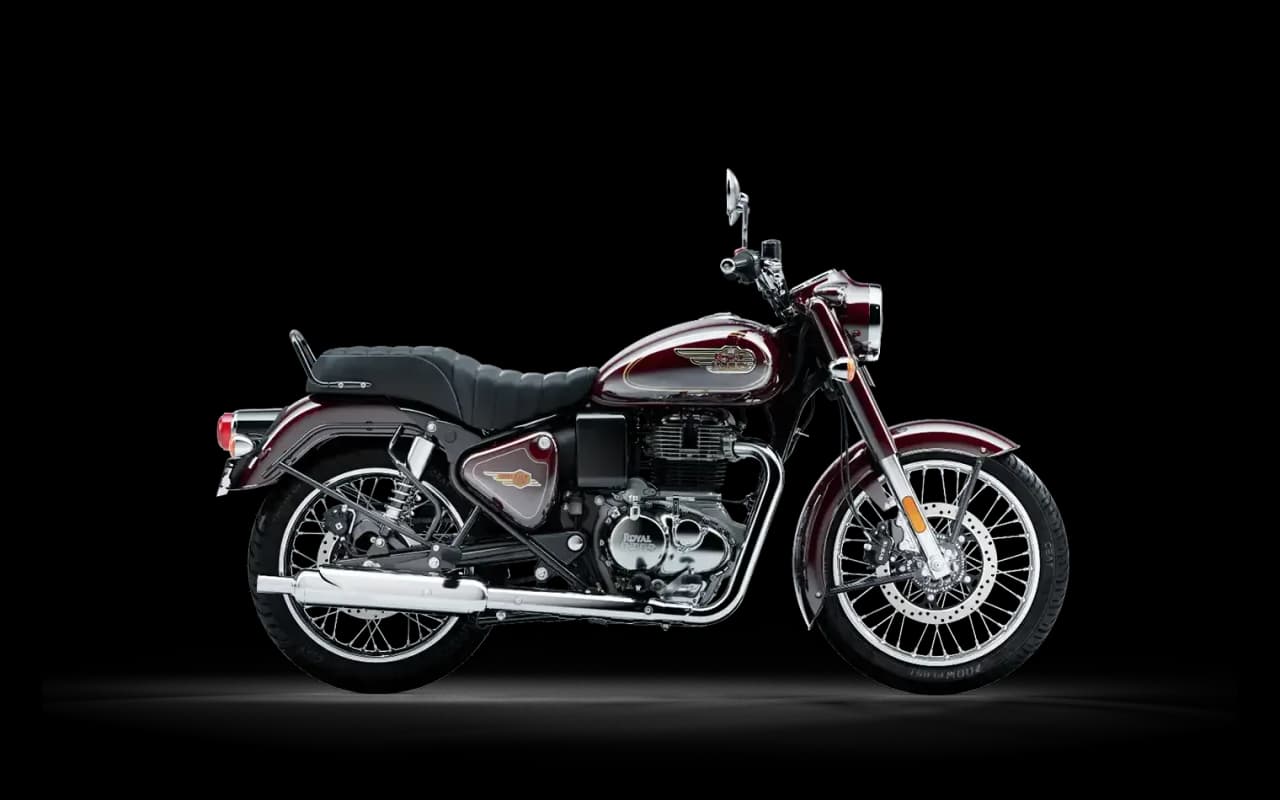
The Royal Enfield Bullet 350 occupies a specific and deliberate spot in Nepal's mid-capacity motorcycling market. Priced at Rs 4,67,500 ex-showroom for the single Standard variant, and brought in through Alpha Automotive Pvt. Ltd. since the model's 2023 launch here, it isn't chasing buyers who want the newest gadgets on two wheels. It's chasing the buyer who wants the motorcycle that started the whole retro-cruiser conversation in the first place, and wants it in its most unfiltered form. That positioning matters in a market where the Bullet name still carries weight with professionals, government and security personnel, and family riders who've grown up seeing this shape on Nepali roads for decades.
Unlike some Royal Enfield models sold with a spread of trims and price points, Nepal gets the Bullet 350 as one clean offering. There's no menu of engine options or feature packages to puzzle over — just one motorcycle, one price, one specification sheet. For buyers who find shopping for a bike stressful, that simplicity is itself a selling point.
A Shape That Hasn't Needed To Apologise For Itself
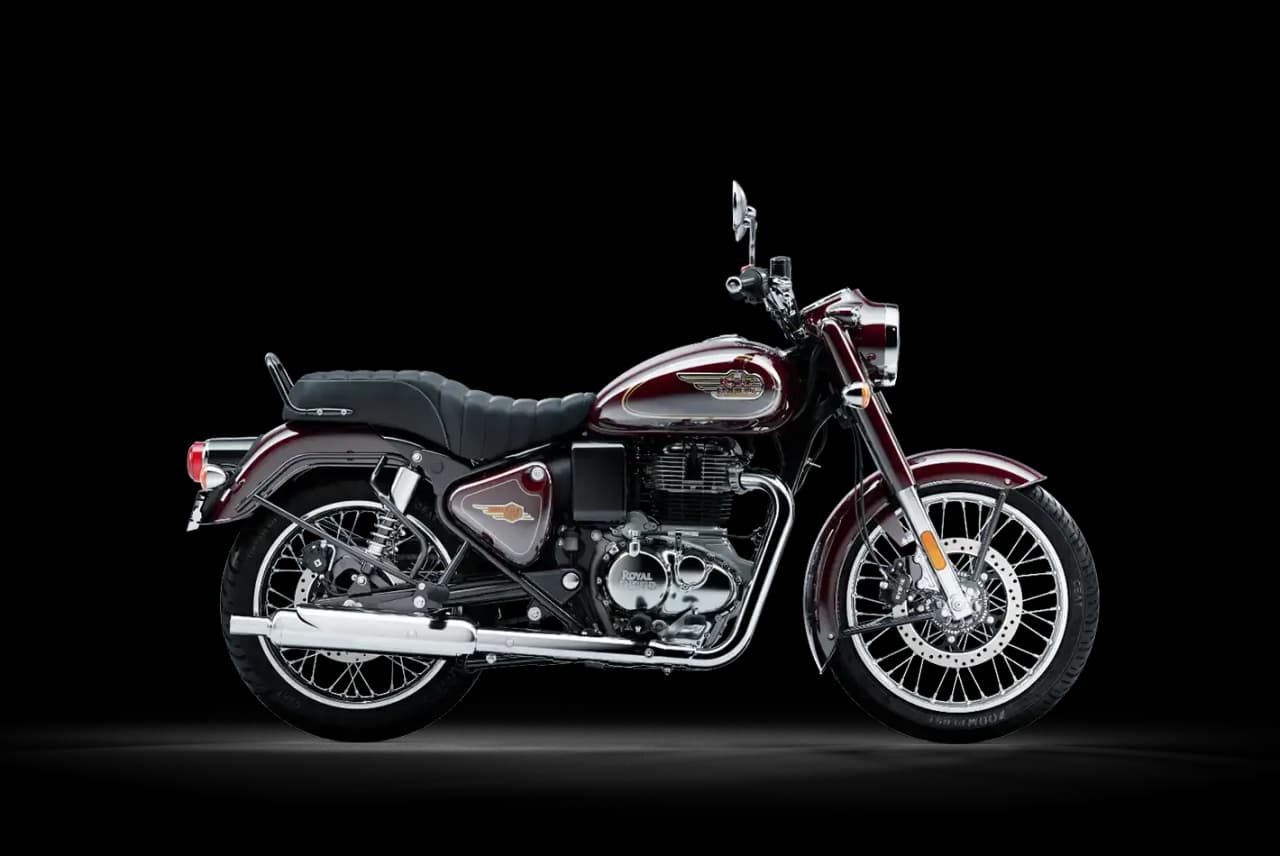
The Bullet 350's design language is unapologetically old-school, and that's precisely the point. It runs a straight, non-tapering fuel tank rather than the teardrop shape found on its Classic 350 sibling, paired with a single-piece seat that runs the length of the bike. Nothing about the silhouette pretends to be modern, and that's exactly why it continues to sell. This is the oldest continuously produced motorcycle model in the country of origin, and that heritage is visible in every panel line and every rivet on the frame.
Build quality centres around the Twin Downtube Spine Frame, a mechanical layout Royal Enfield has refined over generations rather than reinvented. Spoke wheels come as standard rather than an option, reinforcing the rugged, working-motorcycle character rather than pushing it toward alloy-wheeled modernity. Kerb weight sits at 195kg, which is substantial for the segment but consistent with the planted, unshakeable feel the Bullet is known for at speed and while stationary at a signal.
The One Colourway, Done Properly
Our showroom checks in Nepal show the Bullet 350 offered in a classic black finish with gold pinstriping along the tank — a colour treatment that leans hard into the bike's heritage image rather than trying to look contemporary. It's a conservative palette by design, and for a motorcycle whose entire appeal rests on tradition, that restraint feels appropriate rather than limiting. Buyers wanting brighter colourways or dual-tone chrome finishes will need to look toward the Classic 350 range instead.
What You Get, And What You Consciously Give Up
This is where the Bullet 350 draws its clearest line against its own showroom neighbour. Lighting across the board — headlamp, tail lamp, indicators — is halogen, not LED. The instrument console is a simple, no-frills unit, and the Tripper navigation pod that's become a signature Royal Enfield feature elsewhere is available only as an optional fitment here, not standard. There's no USB charging port built in either.
None of this makes the Bullet 350 feel unfinished, but it does mean buyers are paying for mechanical character rather than equipment. Everything the bike gives you goes into how it rides and how it holds up, not into what lights up on the dashboard. For riders who see instrument clusters and connectivity features as unnecessary distraction on a motorcycle that's meant to be ridden and not fiddled with, this is a feature list that gets out of the way rather than one that falls short.
The J-Series Engine, Tuned For Feel Rather Than Numbers
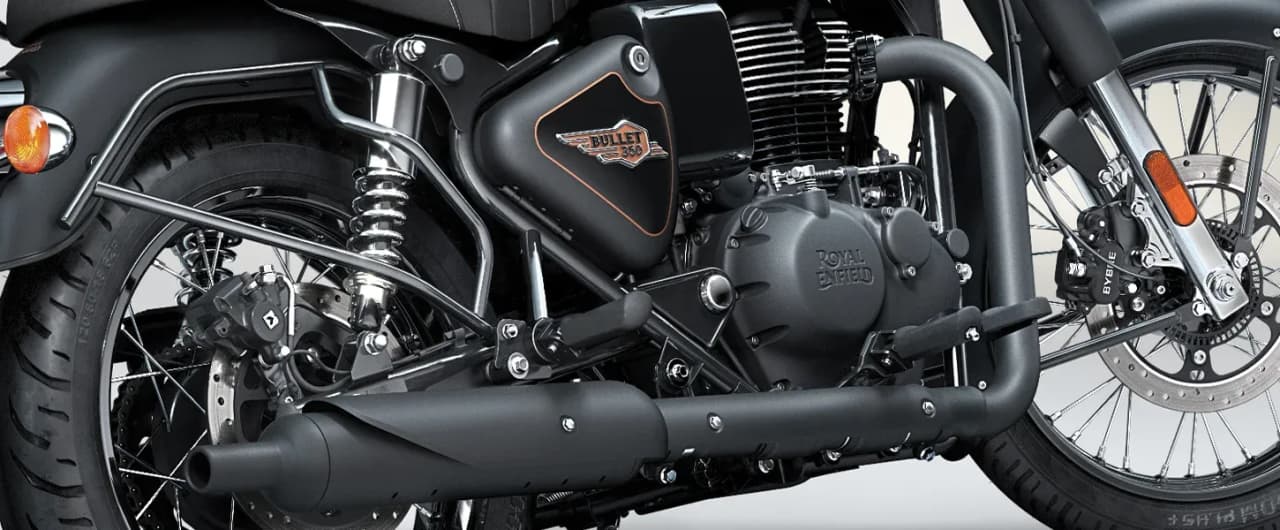
Powering the Bullet 350 is the 349cc single-cylinder, air-oil cooled J-series engine, producing 20.2 BHP at 6,100 rpm and 27 Nm of torque at 4,000 rpm. Bore and stroke measure 72mm by 85.8mm, running a 9.5:1 compression ratio and fed through electronic fuel injection. On paper these aren't dramatic numbers, and they're not meant to be — this engine has always been tuned to deliver a satisfying pull through the mid-range rather than to chase top-end speed.
The 5-speed constant-mesh gearbox, run through a wet multi-plate clutch, shifts with the smoothness this platform has become known for across Royal Enfield's current lineup. Lubrication is handled via wet sump forced lubrication, using SAE 15W-50 semi-synthetic oil, and the whole unit is built to be low-maintenance rather than high-strung. One point buyers coming from older Royal Enfield models should know going in: the BS6-compliant exhaust note is noticeably softer and less thumpy than the pre-BS6 Bullets that built this bike's reputation. It's still recognisably a single-cylinder thump, just a quieter, more emissions-conscious version of it.
Suspension That Reads The Road Rather Than Fights It
Up front, the Bullet 350 runs 41mm telescopic forks with 130mm of travel, while the rear uses twin-tube emulsion shock absorbers with 6-step adjustable preload. This is a setup tuned for a balance rather than sportiness — neither too plush nor too firm — and it copes well with the kind of broken tarmac, speed breakers and light unpaved stretches that define a large share of Nepali riding, from Kathmandu's ring road to district headquarters town streets.
Ground clearance of 170mm and a 1,390mm wheelbase give the bike a stable, unhurried feel rather than agility, which suits its intended use as a cruiser rather than a corner-carver. Tyres are 100/90-19 up front and 120/80-18 at the rear, both spoke-wheel, tube-type fitments that reinforce the bike's traditional character — a narrower front contact patch than some rivals, but consistent with the classic Bullet stance riders specifically seek out.
A Seat And Handlebar Built For Long, Upright Days
Comfort is genuinely one of the Bullet 350's strongest cards. The single-piece seat uses generous foam cushioning with real under-thigh support, and the wider, taller handlebar pulls the rider into an open-chested, commanding posture rather than a hunched one. At a seat height of 805mm, most riders will find the reach comfortable rather than a stretch, and the riding triangle overall favours long, relaxed stints over aggressive positioning.
The trade-off shows up for pillions. Because the seat is a single continuous unit rather than a split design, rear passengers get less dedicated cushioning and support than they would on the Classic 350's two-piece setup, and this becomes more noticeable on longer highway runs rather than short city hops. For solo riders or those who mostly carry a pillion for short distances, this won't register as an issue. For families regularly two-up on longer trips, it's worth test-sitting before committing.
Stopping Power That Matches The Bike's Weight
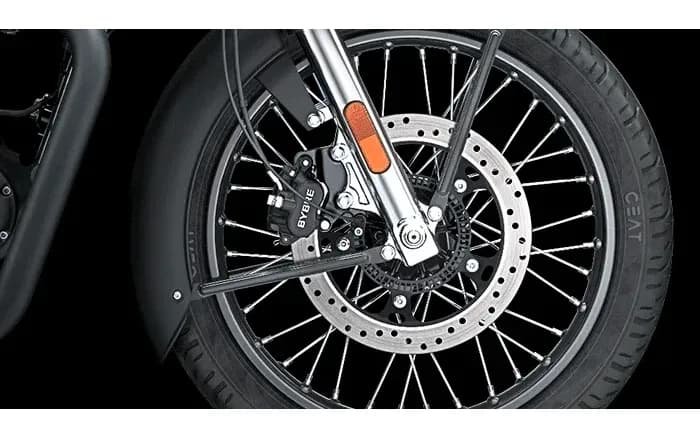
Braking duties fall to a 300mm front disc with a twin-piston floating caliper and a 270mm rear disc with a single-piston floating caliper, backed by dual-channel ABS. Given the Bullet's 195kg kerb weight, this setup provides confident, well-modulated stopping power without feeling under-specified — a genuine safety plus at this price point, and one that puts the Nepal-spec Bullet 350 on equal footing with pricier variants of the same platform sold elsewhere.
Living With It Day To Day
As a daily proposition, the Bullet 350 handles commuting duty, occasional highway stretches and family use without drama. Its low-stress ergonomics mean it doesn't punish riders who spend long hours in the saddle, whether that's a daily office commute or a weekend ride out of the valley. The 13-litre fuel tank is modest rather than generous, meaning slightly more frequent fuel stops on long-distance runs compared to bikes with larger tanks, though this is balanced out by the engine's efficiency.
What It Costs To Keep Running
Royal Enfield's own quoted fuel efficiency figure for the Bullet 350 is 2.63 litres per 100km, which works out to roughly 38 km per litre — comfortably in line with what this engine has always delivered and enough to make it an affordable daily runner rather than an expensive weekend toy. With a 13-litre tank, that translates to a real-world range approaching 490km per fill in ideal conditions, though city traffic and shorter, stop-start commutes will bring that down somewhat. Maintenance costs benefit from the mechanical simplicity of the platform and Alpha Automotive's established service network in Nepal.
One Price, One Variant, No Guesswork
With only the Standard variant on sale in Nepal at Rs 4,67,500 ex-showroom, there's no variant-picking exercise to walk through — the decision is simply whether the Bullet 350 as specified suits you, or whether you'd rather step across to its stablemate for a different set of priorities.
The Royal Enfield Classic 350 Is The Real Choice Buyers Face
The only meaningful cross-shop for a Bullet 350 buyer in Nepal is the Royal Enfield Classic 350, and the two share their entire mechanical foundation — the same 349cc J-series engine, the same power and torque figures, the same 5-speed gearbox, even the same front suspension travel. What separates them is entirely about character and equipment. The Classic 350 dresses its teardrop tank in chrome accents, runs a split seat with a removable pillion pad for a solo bobber look, offers LED headlamp and tail lamp illumination, and pairs its instrument cluster with the Tripper navigation screen as standard along with a USB charging port.
The Bullet 350 answers with a lower price, a more upright and commanding riding position thanks to its taller, wider handlebar, and an unmistakably rugged, traditional stance that the Classic's polish deliberately softens. Buyers wanting modern features, premium finishing and better pillion comfort should look at the Classic 350. Buyers wanting the purest, most traditional expression of what a Royal Enfield single-cylinder motorcycle has always been should stay with the Bullet.
Our Verdict: Who This Bike Is Actually For
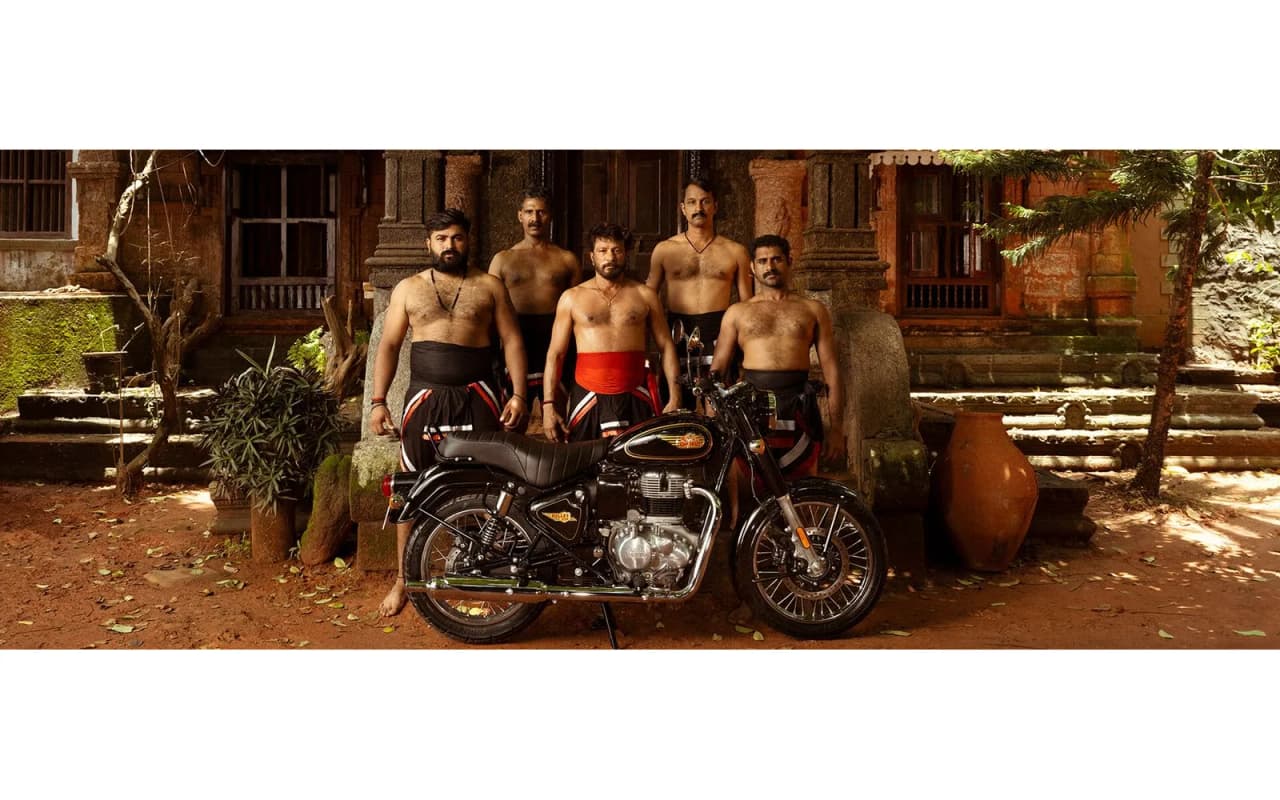
The Royal Enfield Bullet 350 isn't trying to win a features contest, and it doesn't need to. It's built for riders who want a mechanically honest, comfortable, commanding motorcycle without paying for lighting upgrades or navigation screens they may never use. Professionals commuting daily, families who value stability and comfort over sportiness, and riders who simply want the most traditional Bullet experience available will find exactly what they're looking for here.
Where it falls short is for buyers who prioritise equipment and pillion comfort above heritage and stance — for them, the extra spend on a Classic 350 buys real, tangible upgrades. But for the rider who wants the original recipe, at a lower price than its more dressed-up sibling, the Bullet 350 remains one of the most honest motorcycling propositions on sale in Nepal today.
Explore full specifications, variants & ownership context
Know the product
Key specifications, features & ownership context
Choose a variant to see its recorded specifications and features. Equipment and prices can change across trims.
Latest catalog and directory records supplement the original analysis. Figures may have changed since publication; individual specification and price-check dates appear below.
Price not confirmed ex-showroom · source-check date not recorded
Engine & performance
| Specification / feature | Bullet 350 Twinspark |
|---|---|
| Engine displacement | 349 ccResearched · confirm · 21 Sept 2026 |
| Max power | 20.5 PSResearched · confirm · 21 Sept 2026 |
| Max torque | 27 NmResearched · confirm · 21 Sept 2026 |
Brakes, tyres & suspension
| Specification / feature | Bullet 350 Twinspark |
|---|---|
| ABS | Dual-channel ABSVerified specification · 21 Sept 2026 |
Showroom & service support
Distributor: Alpha Automotive Pvt. Ltd. (Royal Enfield Nepal)
131 listed brand showrooms · 22 listed brand service locations
Listed cities include Baglung, Bardibas, Bhairahawa, Bhaktapur, Bharatpur, Biratnagar and 19 more.
Brand-wide directory coverage. Confirm that your nearest workshop supports this exact model, powertrain and warranty work; ask about parts availability and booking time.
Market buzz & buyer priorities
Compiled discussion, including buyer reactions and ownership reports; this is not a verified owner survey or a reliability score.
No substantive market-feedback summary is recorded yet. Ask recent owners about their usage, service experience and recurring costs.
Explore Royal Enfield Bullet 350 market buzz ↗Use these facts alongside the article’s full analysis. Check the final quotation, warranty terms and exact equipment before booking.
Evidence & next steps
Check the details before you buy
Use this guide to build a shortlist. Ask for a written quotation for your chosen variant, including registration, taxes, insurance and finance charges. Confirm the nearest authorised workshop supports that model.
Price sources and dates
These are the recorded distributor-source checks for the selected overview trims. They are separate from the article update and catalog read dates; they do not mean every trim was rechecked today. Confirm the final price with the distributor.
Overview photos come from the corresponding model records; additional article photos carry their own credits. Running costs depend on usage, energy prices, maintenance, insurance and resale value.