Where This Fits In Nepal's Growing 450cc Conversation
Royal Enfield's Guerrilla 450 lands in Nepal in 2026 through Alpha Automotive Pvt. Ltd., priced from Rs 8.99 lakh to Rs 9.99 lakh ex-showroom across three variants. That puts it squarely in the premium mid-size roadster bracket, sharing its Sherpa 450 platform and underpinnings with the Himalayan 450, but wearing a completely different personality: lower, more street-focused, and pitched at riders who want a Royal Enfield that feels sharp rather than steady. For a market that has largely known Royal Enfield through cruiser-style singles, the Guerrilla is a genuine departure, and it needs to be judged on those terms rather than against the brand's older 350cc-class machines.
The bigger question for a Nepali buyer isn't whether the engine is good — it clearly has moments that are very good — but whether the daily reality of riding it here, on city roads, in traffic, over patchy tarmac, matches the promise of that engine. That tension runs through almost everything else in this review.
A Sharp Front End On A Long, Slightly Awkward Body
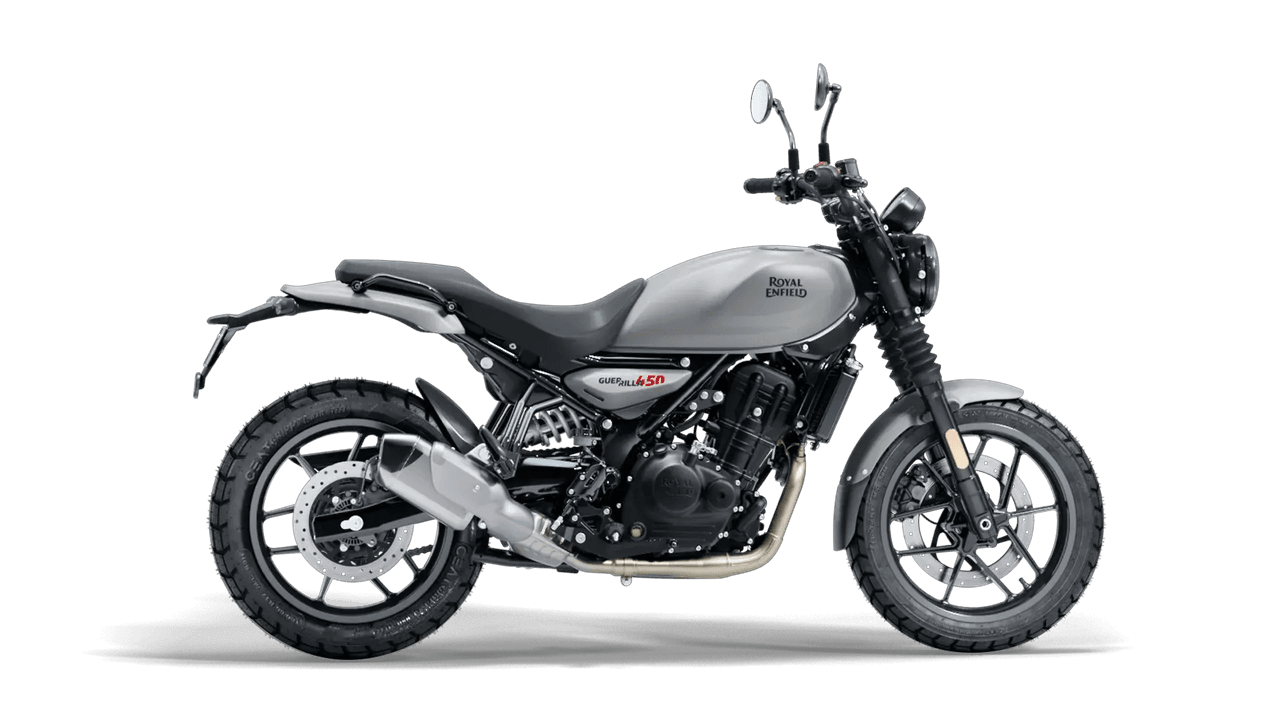
The Guerrilla's design brief was clearly style first. It has a short, sharp front end — round headlamp, minimal bodywork, exposed frame — sitting atop a chassis that stretches out longer than the front end visually promises. From certain angles, particularly a three-quarter front view, it reads as a proper sporty roadster. The tail section carries turn indicators with integrated tail lights, a neat detailing touch that keeps the rear end visually tidy.
Where it disappoints is in the sense of finish. Despite Royal Enfield's own Himalayan 450 having visibly messier welds in places, the Guerrilla somehow feels the cheaper motorcycle of the two once you're up close and start looking at panel gaps, switchgear feel and overall material quality. For a bike priced at Rs 8.99 lakh and above, that's a real point buyers should walk around and check for themselves at the showroom before signing off.
Two Colour Treatments Worth Seeing In Person
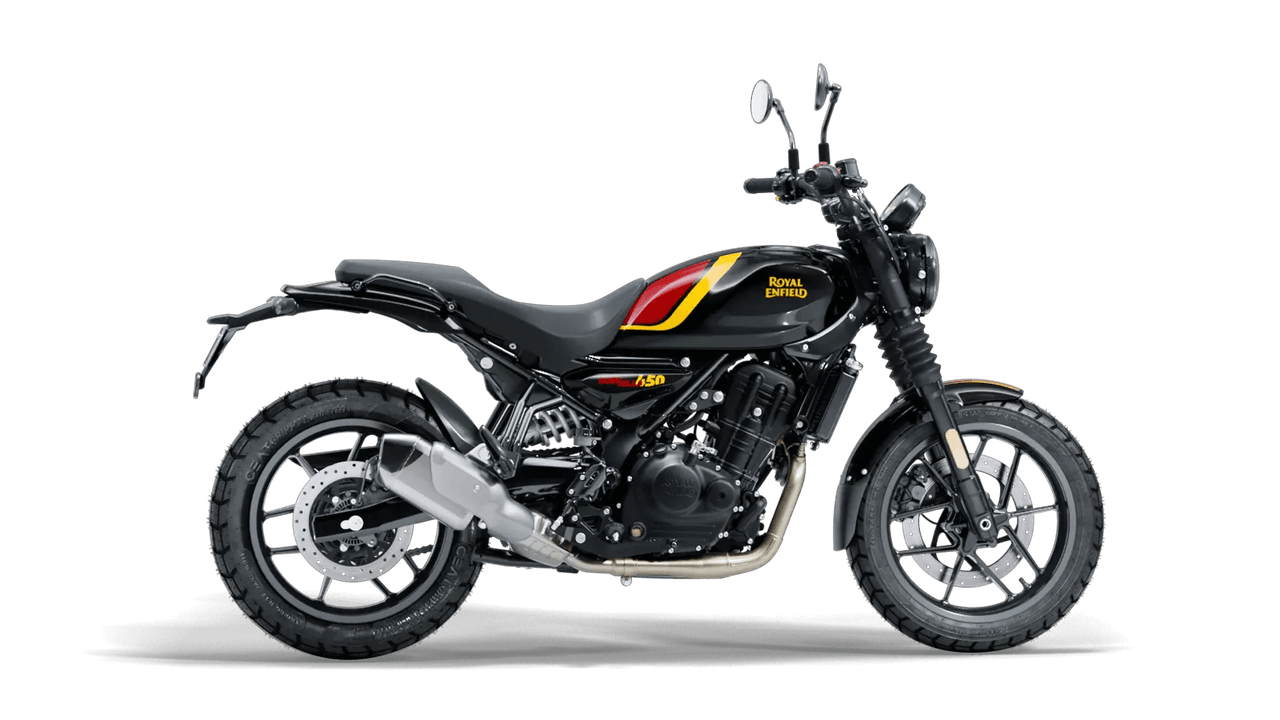
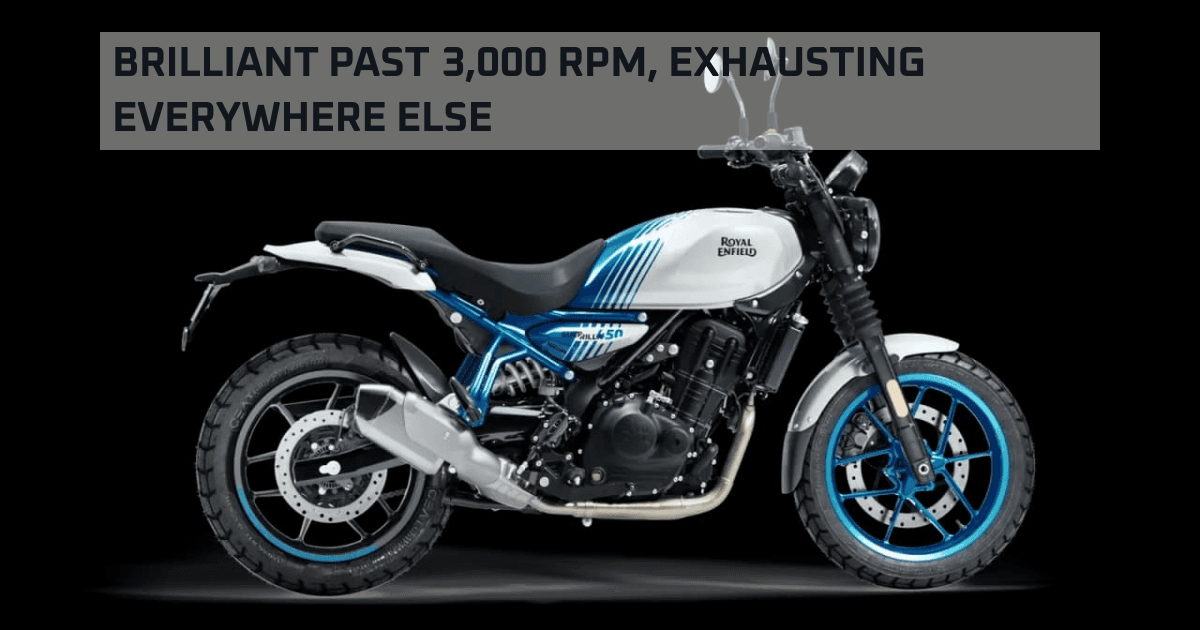
The version most associated with this bike carries a black paint scheme lifted by yellow and red stripes across the tank — a deliberately retro-scrambler look that photographs well and suits the roadster stance. A white and blue treatment with blue-finished wheels is also part of the range, and it's arguably the more striking of the two, giving the bike a cleaner, sportier read. Royal Enfield has clearly put thought into the colour options here, and it's worth seeing both in daylight at a dealership rather than deciding from a brochure image, since the tank graphics and wheel colour changes shift the character of the bike quite noticeably.
The TFT Cluster Looks Great And Then Frustrates You
Every Guerrilla above the base trim gets a 4-inch round TFT display with phone connectivity, full turn-by-turn navigation powered by Google Maps, and media controls, operated through a joystick on the left handlebar. As a piece of hardware, the screen itself is genuinely sharp and legible, and having proper mapped navigation built into an Enfield is a first for a lot of Nepali buyers who've only known the simpler Tripper pod.
The interface built around that screen is where things fall apart. The button-press sequences on the joystick don't follow any logic that becomes intuitive even after extended use — scrolling through menus feels like trial and error rather than a learned habit. The screen's automatic day/night switching is aggressive enough that riding under a tree-lined stretch of road causes the display to flicker between modes repeatedly, which is distracting rather than helpful. The fuel range readout is similarly inconsistent, throwing up greater-than and less-than symbols instead of a clean number, leaving the rider guessing rather than informed. None of this is a dealbreaker on its own, but together it adds friction to something that should be effortless.
Two riding modes — Performance and Eco — are on offer, but the difference between them is subtle enough that most riders won't feel a strong reason to toggle between them. More frustrating is that switching modes requires bringing the motorcycle to a complete stop, which feels like an oversight on a machine launched with this much digital sophistication elsewhere in the cluster.
The Sherpa 450 Engine: Flat Below, Ferocious Above
The mechanical heart of the Guerrilla is a liquid-cooled, single-cylinder, DOHC, 4-valve 452cc unit, with a bore and stroke of 84mm x 81.5mm and an 11.5:1 compression ratio. It makes 39.48 hp (29.44 kW) at 8,000 rpm and 40 Nm of torque at 5,500 rpm, fed through electronic fuel injection with a 42mm throttle body and ride-by-wire, and routed through a 6-speed gearbox via a wet, multiplate slip-and-assist clutch.
On paper those numbers look modest next to some rivals, but the way the engine delivers them is the real story. Below 3,000 rpm there's a distinct lack of enthusiasm — the engine feels flat, almost reluctant. Push past that threshold, though, and the character changes completely: the motor turns powerful, dramatic and genuinely bombastic, with overtakes arriving in a blur and a level of vocal, energetic delivery that no previous Royal Enfield has offered. It's smoother than the Himalayan's version of this same engine at cruising speed, even though it feels more vocal and more urgent doing it.
The catch is everything that happens before 3,000 rpm. Throttle response at low speed is jerky and unpredictable, with surges and lurches that make crawling through Kathmandu traffic, or navigating a narrow lane at walking pace, a genuine chore. Riders will need to work the clutch and throttle constantly and attentively at low speeds — this is not an engine that lets you relax in first or second gear. There's also an underlying coarseness to the unit that a future refinement could smooth out; it's not a deal-breaking flaw, but it's noticeable enough that Royal Enfield has room to improve it.
Sharp Steering, Stiff Ride, And A Question About What It's For
The Guerrilla's steering is sharper and more responsive than anything else currently wearing a Royal Enfield badge, and on a smooth, winding road that responsiveness translates into genuine enjoyment for a confident rider. But it's a bluntly reactive kind of sharpness rather than a delicately balanced one — the 17-inch front wheel combined with the long wheelbase means direction changes feel like a longer lean than the size of the correction actually warrants.
The suspension setup — 43mm telescopic forks up front with 140mm of travel, and a linkage-type mono-shock at the rear with 150mm of travel — starts out competent, absorbing small road imperfections reasonably well. Where it struggles is with larger hits: potholes, expansion joints, the kind of broken surface common on Nepali roads outside the main highways come through stiffly and uncomfortably. It's hard to identify what handling benefit that stiffness is buying the rider, because mid-corner bumps easily upset the bike's line rather than settling it. The tyres — 120/70 R17 front and 160/60 R17 rear — feel decent in the dry but noticeably sketchier in the wet, worth remembering through Nepal's monsoon months.
Comfort Takes A Back Seat To Styling
This is the section that will matter most to anyone planning to ride the Guerrilla daily rather than occasionally. The rider's seat is shaped and cushioned for looks rather than long-distance comfort, and aches set in quickly even on moderate rides. The pillion seat is worse — it's more of a perch than a seat, with only 8 to 10cm of bodywork behind the passenger's rear, leaving very little room and making two-up riding genuinely uncomfortable for the passenger. Riders will also feel cramped themselves, running out of space repeatedly during two-up trips. At a seat height of 780mm and a wet weight of 184kg, the bike itself is manageable in terms of reach and heft — it's the padding and shape of the seats, not the geometry, that let it down.
Braking Hardware Is Sound, Even If The Rest Isn't
The Guerrilla's braking package is a genuine strength on paper: a 310mm ventilated front disc with a double-piston caliper, a 270mm ventilated rear disc with a single-piston caliper, and dual-channel ABS as standard across the range. ByBre calipers handle the stopping duties, and the ABS system displays clearly on the instrument cluster during mode selection. There's nothing to fault here — this is a well-specified braking setup for the class and one of the more straightforwardly positive parts of the package.
An 11-Litre Tank That Limits Its Own Ambitions
With an 11-litre fuel tank, the Guerrilla is fine for city commuting and weekend rides but not built for serious touring. Estimated fuel consumption from Royal Enfield sits at around 3.39 L/100km, translating to real-world figures typically in the 25-28 km/l range, though aggressive use of the engine's higher-rev character can drop that below 20 km/l fairly quickly. Combined with the small tank, that means genuinely long-distance range is limited compared to what Nepali riders doing highway stretches to Pokhara or further afield would want. City running and weekend loops are where this bike is happiest; anything more ambitious will mean more frequent fuel stops than owners might expect.
Three Variants, But The Cheapest Is The Smart Buy
The range runs from the Analogue at Rs 8.99 lakh, through the Dash at Rs 9.49 lakh, up to the Flash at Rs 9.99 lakh. Our assessment, in line with broader buyer sentiment, is that the base Analogue variant is actually the pick of the range. It swaps out the TFT cluster's frustrating interface for simpler analogue-digital instrumentation, with the option to add the Tripper navigation pod separately — sidestepping the joystick menus and flickering day/night transitions entirely while still giving access to turn-by-turn directions if wanted. Given that the higher trims' main draw is that TFT screen, and given how much friction that screen introduces in daily use, spending less to get less digital complexity looks like the shrewder choice here rather than a compromise.
The Royal Enfield Himalayan 450 Shares The Engine But Wins On Comfort
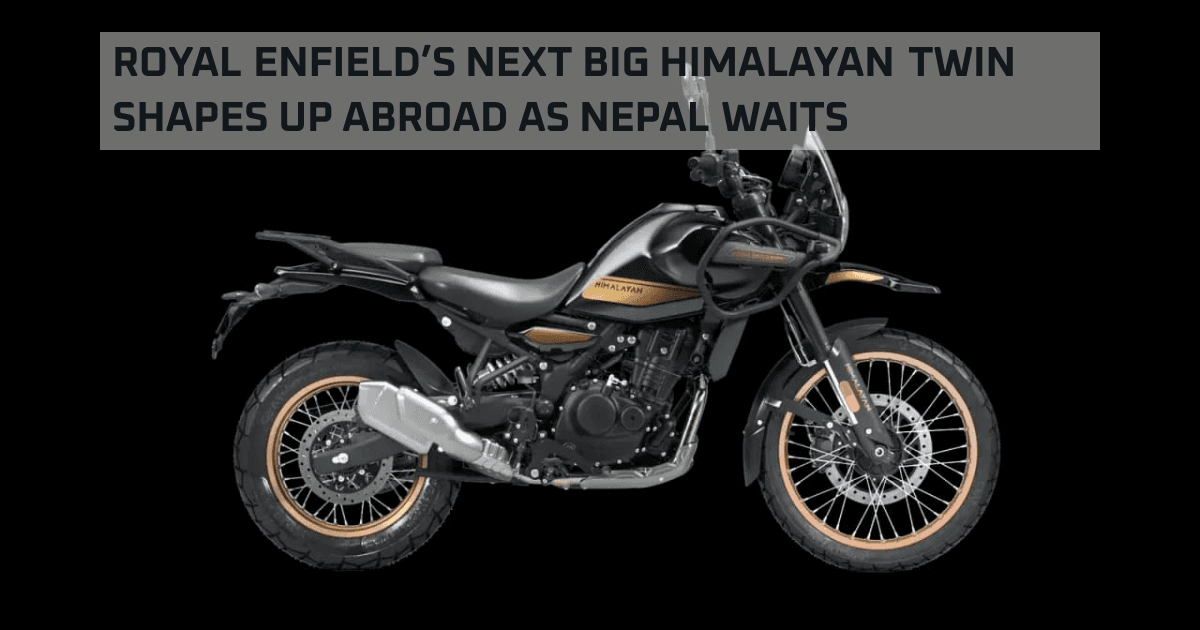
The most obvious comparison sits within Royal Enfield's own lineup. The Himalayan 450 uses a related version of this same Sherpa platform but tunes it for comfort and long-distance capability rather than outright sportiness. The Guerrilla counters with a sportier, more aggressive engine map and sharper steering, but gives up the Himalayan's supreme ride quality and suspension composure to get there. For anyone who has to choose between the two and values comfort on Nepali roads, the Himalayan remains the easier motorcycle to live with day after day.
The Triumph Speed 400 Undercuts It On Comfort And Refinement
The Triumph Speed 400, sold in Nepal and priced competitively against the Guerrilla, offers similar performance in a noticeably more comfortable, better-resolved package across almost every riding situation — from low-speed throttle manners to seat comfort to overall finish quality. Buyers cross-shopping this segment purely on riding experience rather than badge should give the Speed 400 serious consideration before committing to the Guerrilla.
The KTM 390 Duke Brings Sharper Performance For Similar Money
The KTM 390 Duke is the other name that inevitably comes up in this conversation, offering strong performance credentials and a more refined ride than the Guerrilla while sitting in a broadly similar price bracket in Nepal. It doesn't carry the same retro-roadster styling appeal, but for a buyer prioritising all-round usability and comfort over character, it's a genuine alternative worth a test sit and ride before deciding.
Verdict: Exciting In Bursts, Tiring Over A Full Day
The Guerrilla 450 is a motorcycle of real highs and real lows, and both are pronounced enough that they'll shape how satisfied an owner feels within the first few weeks of ownership. Above 3,000 rpm, it's genuinely one of the more exciting things Royal Enfield has built — dramatic, vocal, quick, and sharper-steering than the brand's other offerings. Below that threshold, in the traffic and low-speed situations that make up most riding in Nepali cities, it's jerky and demanding in a way that wears riders down.
Add in a stiff ride that struggles with rough surfaces, seats that prioritise looks over comfort for both rider and pillion, a small tank that limits touring ambitions, and an instrument interface that remains confusing well beyond the first few rides, and the Guerrilla becomes a motorcycle that rewards committed, skilled riders on smooth winding roads far more than it rewards anyone looking for a comfortable daily companion. It suits a buyer who wants a distinctive, sharp-edged Royal Enfield and is willing to trade comfort for character. It is a harder recommendation for anyone wanting a comfortable commuter, a touring machine, or a forgiving first big bike — for those buyers, the Himalayan 450 or one of its non-Enfield rivals will serve better.
Writes on vehicle pricing, taxation and the Nepali auto market from ongoing tracking of distributor price lists. Editorial policy.