Where The Orbiter Fits Into Nepal's Crowded Electric Scooter Shelf
Jagdamba Motors has brought the TVS Orbiter into Nepal in 2026 as the most affordable electric two-wheeler in the TVS lineup, priced at Rs 2.81,900 lakh across both its variants. That positions it as an entry point into electric mobility rather than a flagship, sitting below the TVS iQube in the brand's own range while still carrying a feature list that would be unusual at this price bracket even a couple of years ago. For Nepali buyers weighing their first electric scooter purchase against a growing field of budget EVs, the Orbiter's pitch is straightforward: don't sacrifice quality or features just because you're spending less.
The scooter's arrival also reflects how quickly the EV scooter segment in Nepal has matured. Where early entrants competed purely on price, the Orbiter is trying to compete on substance — a wider front wheel, boot space, and rider aids like cruise control that were previously reserved for costlier models. That's the framing worth keeping in mind through the rest of this review.
A Boxy, Angular Design That Doesn't Try To Blend In
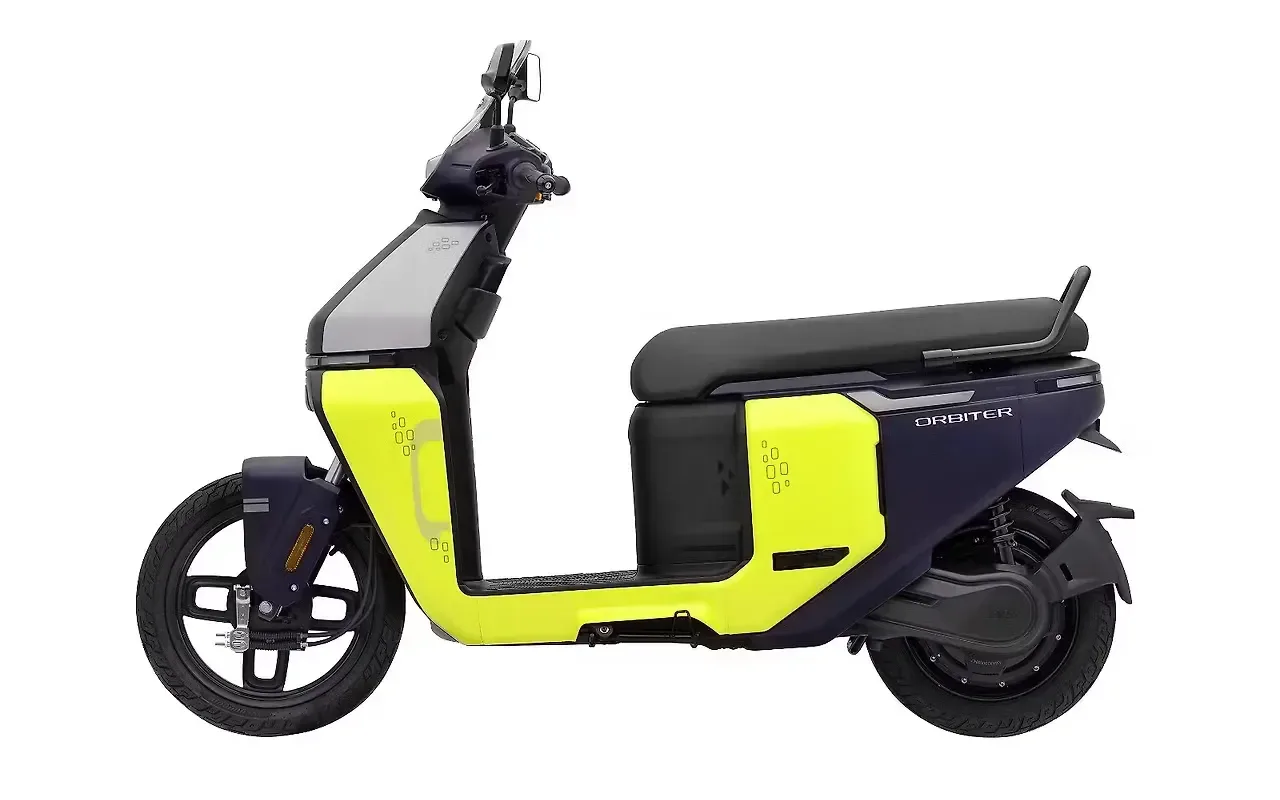
The Orbiter wears a bold, boxy silhouette with sharp creases and edges rather than the rounded, safe styling many budget scooters default to. It's a design that draws attention, and buyers seem split on it — some find it refreshingly different, others find it a bit much next to the more universally liked styling of the iQube. Either way, it doesn't look like a scooter built purely to a cost.
Build quality is where the Orbiter quietly impresses. The plastics used across the body feel dense and well-finished rather than brittle, and panel gaps are tight and consistent — something that isn't guaranteed even on scooters priced well above it. A chrome TVS horse logo sits prominently on the front apron, a small styling touch that adds a bit of visual weight to what is otherwise a fairly minimalist front end. Nothing about the way it's assembled feels like it was done in a hurry.
The Purple And Lime Green Scheme Suits It Best
The Orbiter is available in colour options that lean into its bold design rather than away from it, and the dual-tone purple and lime green combination in particular shows off the scooter's sharp lines far better than a plain single colour would. Brighter, contrasting colour schemes genuinely suit this design language — the angularity of the panels reads better with two tones playing off each other than it would in a flat, single-colour finish. Buyers picking a colour purely to make a statement in traffic should lean toward the louder end of the palette.
Cruise Control And Hill Hold Are Not Common At This Price
For a scooter priced at Rs 2.82 lakh, the equipment list is generous. There's an LCD display relaying speed, battery status and range, paired with the SmartXonnect app that puts vehicle details on the rider's phone, alongside navigation, call alerts and geofencing. TVS also states the LCD itself is rain-resistant, a small but useful detail for anyone commuting through Kathmandu's monsoon downpours.
What stands out most, though, is cruise control and hill hold control — features rarely seen on scooters at this end of the market. Both operate smoothly and are simple to engage, and hill hold in particular will be genuinely useful on Nepal's slopes, whether that's a steep driveway in Kathmandu or a graded street in the hills. Switchgear feels tactile and durable rather than loose or hollow, and even small touches like the pillion footpegs clicking firmly into the bodywork when folded away point to attention paid to details that usually go unnoticed on affordable EVs.
A 2.5 kW Hub Motor That's Tuned For The City, Not The Highway
The Orbiter runs a 2.5 kW peak BLDC rear hub motor, delivering 0–40 km/h in 6.8 seconds according to TVS's own figures — brisk enough for weaving through city traffic without feeling like it's straining. Eco and City riding modes are on offer, with Eco capping speeds around 40–45 km/h to stretch range, and City mode unlocking the scooter's full 68 km/h top speed.
Throttle response is smooth and predictable, without the sudden snatchiness some hub-motor EVs suffer from at low speed. It's not a scooter built to feel quick in a straight line — acceleration is adequate rather than exciting — but for the daily grind of Nepali city commuting, that's exactly the right calibration. It gets up to speed confidently, holds a cruising pace without fuss, and never feels like it's working hard to keep up with traffic.
The 14-Inch Front Wheel Is The Standout Engineering Decision
The single biggest functional advantage the Orbiter has over cheaper rivals is its 14-inch front wheel, larger than what most budget electric scooters run. It makes a real difference over potholes and speed bumps, soaking up impacts that would upset a smaller wheel and keeping the front end settled on Nepal's frequently broken road surfaces. Combined with 165mm of ground clearance, the Orbiter handles rougher stretches of tarmac with a composure that belies its price.
Suspension is tuned deliberately on the softer side, prioritising comfort over sharpness. That makes for a plush, absorbent ride most of the time, but push the Orbiter into quick direction changes or ride it with any urgency and the suspension can feel a bit wallowy, sinking into its travel rather than staying flat. This isn't a scooter designed for enthusiastic riding — it's designed to be comfortable, and in traffic it feels light and manageable, handling much like a familiar petrol scooter rather than something unusual to learn.
Built For Riders Who Want To Plant Both Feet Flat
A 763mm seat height keeps the Orbiter accessible to a wide range of riders; shorter riders in particular will find it easy to get both feet flat at a stop. The riding position is upright and roomy, with generous knee room that should suit taller riders too — a genuine plus in a market where scooter ergonomics often compromise for one body type over another.
The handlebar is noticeably wider than typical scooter units, giving the Orbiter a slightly motorcycle-like feel at the grips. That width also means it clears the knees of taller riders even in tight, low-speed turns, which is a small but genuinely useful ergonomic touch rather than an afterthought.
Drum Brakes Front And Rear Are The One Corner Cut
The Orbiter uses drum brakes on both wheels rather than a front disc, and this is the clearest area where cost has been managed. Stopping power is adequate for city speeds and the way most owners will actually ride this scooter, but the lever feel lacks the sharp bite and stopping confidence a disc brake provides, particularly in an emergency stop scenario. A front disc would have rounded off the package nicely, and its absence is the most legitimate criticism levelled at the Orbiter.
On the safety side, TVS notes that all key components below the floorboard carry an IP67 rating, and the scooter is rated to be ridden through stagnant water up to six inches (150mm) deep — both genuinely relevant claims for Nepal's monsoon flooding on city streets. TVS also cites over 600 internal safety tests conducted during development.
Storage That's Generous In Volume But Shallow In Depth
Practicality is one of the Orbiter's stronger suits. The front apron has a deep, open cubby that swallows a large smartphone easily, useful for quick access on the move. The underseat boot measures a genuinely useful 34 litres and comfortably fits two half-face helmets side by side.
The catch is depth rather than volume: the boot floor is shallow, which makes it difficult to squeeze in a full-face helmet, something riders who prefer maximum head protection will want to check before assuming it'll fit. The charging port is also positioned on the front apron rather than tucked under the seat, a sensible placement that makes plugging in at home or at a charging point simpler than fishing around under the saddle.
What The Range Computer Shows Versus What TVS Claims
TVS's official figures put the Orbiter's range at 158km on the V2 variant with its 3.1kWh battery, while the smaller V1 variant carries a 1.8kWh pack. Real-world range on a full charge will naturally sit below the claimed figure, as is standard across the EV segment, and riders should budget accordingly depending on riding mode, load and terrain — Eco mode will stretch usable range further than City mode's higher top speed.
Running costs beyond the initial purchase are where electric scooters like the Orbiter make their case in Nepal, given the price gap between electricity and petrol on a per-kilometre basis. Combined with TVS's IP67 component rating and monsoon-readiness, the Orbiter looks built for sustained daily use rather than occasional weekend riding.
Two Variants, Barely Rs 1 Apart, So Pick On Range Alone
The Orbiter comes in two variants: the V1 with a 1.8kWh battery and the V2 with a 3.1kWh battery, both priced identically at Rs 2,81,900 and both using the same 2.5kW motor. With pricing this close, the decision comes down almost entirely to battery size and expected range — the V2's larger 3.1kWh pack and 158km rated range makes it the sensible pick for most buyers, since there's no price penalty for the added capacity. Unless a buyer has a specific reason to prefer the smaller pack, the V2 is the variant we'd point most Nepali buyers toward.
The TVS iQube Costs More But Feels Like The Senior Sibling
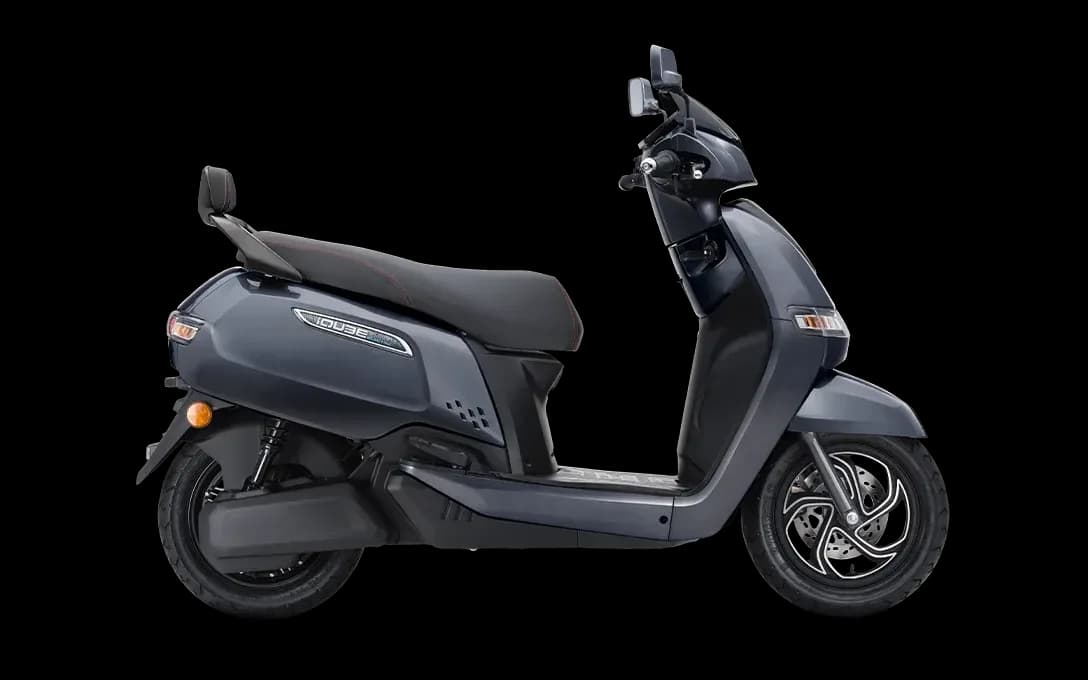
Within TVS's own range, the iQube sits above the Orbiter and makes that positioning clear through its pricing, smaller front wheel on base variants, less boot space, and a shorter equipment list than what the Orbiter offers. That makes the Orbiter something of an anomaly in TVS's own lineup — the cheaper model outdoes the pricier one on certain hard practicality metrics like wheel size and storage. For buyers who don't need the extra badge cachet or top-end iQube variants' additional features, the Orbiter makes a strong case as the smarter buy.
The Ather 450 Trades Comfort For A Firmer, Sportier Feel
The Ather 450 is a familiar name in Nepal's EV scooter conversation, and it takes a noticeably different approach to ride quality than the Orbiter. Where the Ather 450 leans stiff and sporty, communicating road texture more directly to the rider, the Orbiter is tuned for comfort first, soaking up bumps and rough patches with a much softer, more forgiving ride. Riders who want outright sharpness and a more connected feel will prefer the Ather, but anyone prioritising day-to-day comfort over Nepal's uneven roads will likely find the Orbiter easier to live with.
Our Verdict: A Sensible First Electric Scooter That Doesn't Cut Visible Corners
The TVS Orbiter succeeds at the one thing that matters most for an entry-level EV: it doesn't feel like it was built to hit a price point at the expense of quality. The build, the 14-inch front wheel, the boot space and features like cruise control and hill hold control are all things buyers would reasonably expect to have to pay considerably more for. The drum brakes and shallow boot depth are real, legitimate compromises, but they're the kind of trade-offs that make sense given where the Orbiter sits in the market rather than signs of corner-cutting throughout.
For a first-time EV buyer in Nepal looking for a comfortable, practical, easy-to-live-with city commuter — someone who values a plush ride, generous ergonomics and genuine feature value over outright sportiness — the Orbiter is a strong and honest recommendation. It's the rare entry-level EV that feels like it was engineered properly rather than assembled to a spreadsheet.
Current prices on Nepal AutoMart
- TVS Orbiter price in Nepal: Rs 2.82 lakh ex-showroom
- TVS iQube EV price in Nepal: Rs 2.8 lakh – Rs 3.4 lakh ex-showroom, 3 variants
Writes on vehicle pricing, taxation and the Nepali auto market from ongoing tracking of distributor price lists. Editorial policy.