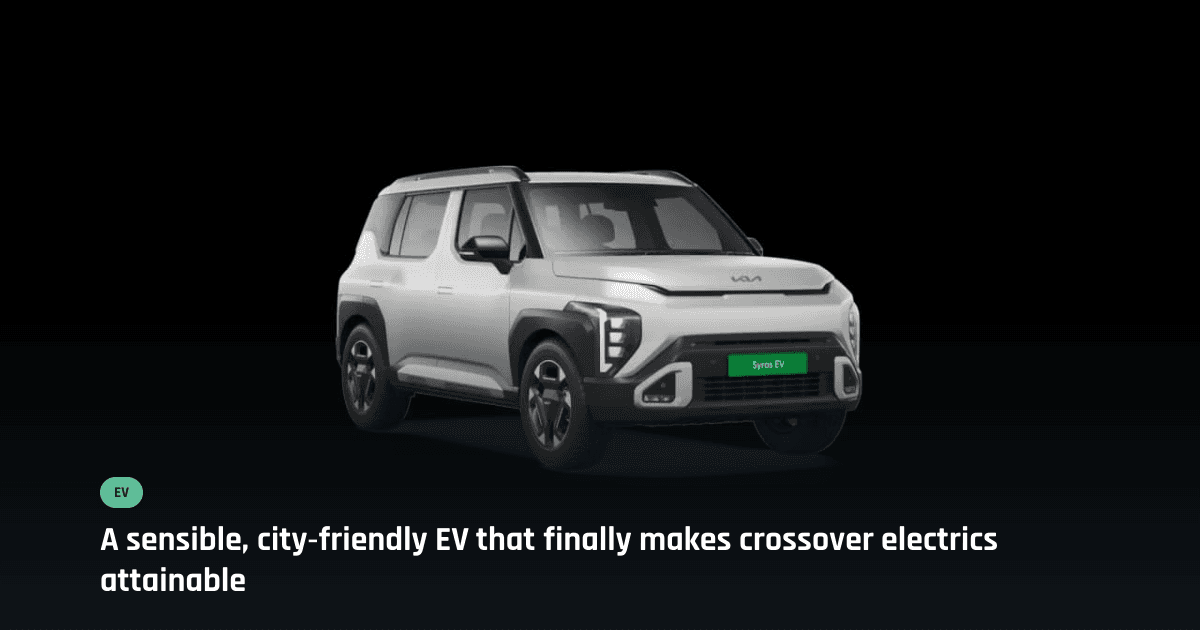
Where the Kia Syros EV sits in the Nepali market
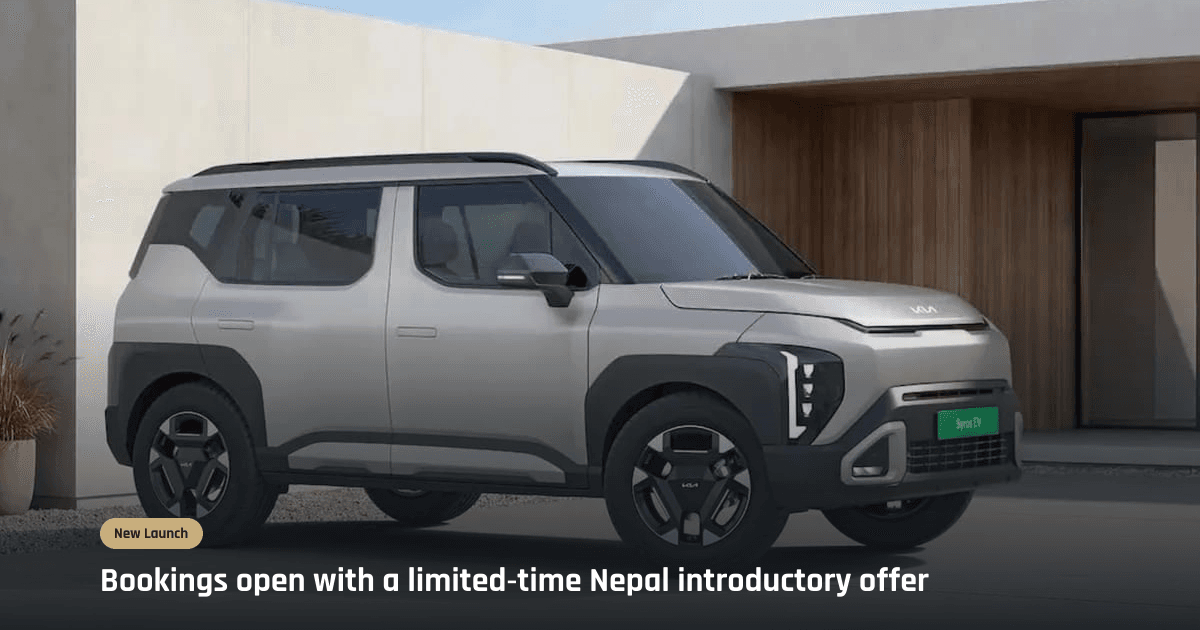
The **Kia Syros EV arrives at a time when Nepal’s EV market is shifting from niche, high-priced imports to more attainable, regionally produced electric cars. Priced at an ex-showroom tag of Rs 37.9 lakh**, it sits in the emerging band of compact electric crossovers that try to balance practicality, modern features and reasonable ownership costs.
Early bookings crossing the 700 mark at launch underline how strongly Nepali buyers have responded to the idea of an India-made Kia EV at this price point. That level of interest suggests the Syros EV is hitting a sweet spot between older, smaller Chinese city EVs and significantly more expensive Korean or European imports.
In positioning terms, the Syros EV is likely to be cross-shopped with: - Compact electric crossovers and hatchbacks from Chinese brands in the Rs 30–45 lakh range - Entry EV offerings from established international brands that are priced higher but compete on brand trust and service
Rather than chasing maximum range or performance, the Syros EV is built as a mainstream urban family EV, appealing to buyers upgrading from small petrol hatchbacks and sub-4m SUVs.
Looks, design and build
Kia has leaned into a crossover-SUV stance for the Syros EV, which is a smart choice for Nepal. The taller profile, more upright nose and defined wheel-arches give it more presence on the road than a typical hatchback-based EV. This helps the car appeal to SUV-first buyers who still want electric.
The front-end design follows Kia’s current EV family language, with a closed grille area, clean surfaces and EV-specific detailing in the bumper. Expect: - Distinctive LED daytime running lights giving it a modern signature - A largely smooth front fascia with subtle sculpting rather than aggressive cuts - Blue or EV-themed accents on some variants to visually differentiate it from combustion models
Along the sides, the Syros EV should carry: - Compact proportions ideal for urban routes and narrow Nepali streets - Slightly raised ride height compared with a typical hatchback - Aerodynamic wheel designs tuned for efficiency rather than outright sportiness
At the rear, the tail-lamp treatment and integrated spoiler will likely continue the EV-family theme, aiming for a cohesive, modern look instead of flashy ornamentation.
Build quality is where Kia generally scores well in this price band, and showroom observations support that impression for the Syros EV. Panel gaps appear consistent, paint finish is good for the segment, and the cabin materials look more refined than those in many similarly priced Chinese EVs. It feels like a car meant to be used daily, not an experimental product.
Features and equipment
Despite its positioning as an attainable EV, the Syros EV aims to feel up-to-date inside, which is critical for buyers considering the shift from petrol.
You can reasonably expect the feature mix to include: - A large touchscreen infotainment system with smartphone connectivity - Digital or semi-digital instrument cluster with EV range and energy flow displays - Automatic climate control - Keyless entry and push-button start - Rear parking sensors and a reversing camera
On the comfort side, the cabin should offer: - Height-adjustable driver’s seat on higher variants - Rear seat usable for two adults plus a child over medium distances - Practical storage spaces, including bottle holders and a usable centre console
Safety equipment in this segment typically comprises: - Dual front airbags at minimum, with side airbags likely on top variants - ABS with EBD and stability control - ISOFIX child-seat mounts on the rear bench
The exact variant-wise equipment list for Nepal is not officially disclosed yet, but the overall positioning suggests Kia will avoid stripping out key comfort and safety features just to hit a lower sticker price.
Motor, battery and performance
Detailed motor and battery specifications for the Syros EV in Nepal are not yet officially disclosed, which means we have to infer its positioning from price, size and region of origin.
In this band and form factor, the Syros EV is likely to use: - A single front-mounted electric motor, tuned for everyday city performance - A battery pack sized to deliver a realistic urban-plus-suburban range rather than long-distance touring numbers
Performance will therefore be aimed at: - Quick enough response off the line for city traffic - Smooth, quiet acceleration rather than sporty character - Sufficient power to handle inclines and highway merges with a full family on board
Buyers should treat it as a city-first EV: ideal for commuting, school runs and typical urban use, with occasional highway trips possible but not the primary design priority.
Ride, handling and comfort
Crossover EVs in this class usually chase a balance: higher stance and comfort-oriented suspension tuning, without becoming wallowy or nervous at speed. That seems to be the Syros EV’s direction.
On Nepal’s mixed road surfaces, the Syros EV’s likely strengths will be: - Compliant low-speed ride, absorbing common urban imperfections reasonably well - The calmness of electric drive in stop-go traffic, reducing fatigue
Handling is expected to be predictable and neutral rather than overtly sporty: - Light steering for easy manoeuvrability and parking - Stable behaviour at typical highway speeds when driven sensibly
Cabin comfort benefits from the EV format: - Reduced noise compared with many similarly priced combustion cars - Smooth power delivery, especially appreciated by passengers in the rear
The car will not magically overcome deep ruts or unpaved tracks, but the slightly raised stance and crossover orientation make it more forgiving than low-slung EV hatchbacks.
Practicality and running costs
For Nepali buyers, practicality is often more important than performance. The Syros EV’s compact footprint and crossover body work strongly in its favour.
Day-to-day practicality points include: - Compact exterior size for narrow city lanes and tight parking spots - A usable boot that should handle grocery runs, luggage for short trips, and family-use cargo - Rear seat space adequate for typical nuclear families, though tall adults may find long journeys less ideal
Running costs are where EVs in this band can shine: - Electricity is generally cheaper than petrol per kilometre for urban use - Fewer consumables and moving parts than combustion engines typically translate to lower routine maintenance
Exact real-world range and energy consumption figures for the Syros EV in Nepal are not officially published yet. Buyers should plan usage around regular home or office charging where possible, using public charging more as a backup or for occasional longer trips.
Taken together, the Syros EV looks like an EV that can genuinely replace a small petrol crossover for many urban households, provided their daily distances stay within the likely range band and they have some form of reliable charging.
Price, variants and which one to pick
The confirmed ex-showroom price in Nepal is Rs 37.9 lakh. This places the Syros EV above the smallest entry-level EV hatchbacks but usually below larger, globally imported EV SUVs.
At the time of writing, detailed variant names and their specific pricing for Nepal are not officially disclosed. However, given Kia’s typical strategy and the booking momentum, it is reasonable to expect at least: - A base variant focused on essential features and value - A mid variant balancing features and price - A top variant with more creature comforts and possibly additional safety tech
For most buyers, the sweet spot is likely to be the mid variant: - Enough features to feel modern (touchscreen, rear camera, key comfort items) - Safety kit not compromised - Price still noticeably below what a fully loaded top variant would cost
If a base variant undercuts the Rs 37.9 lakh mark after offers, it could suit fleet or budget-focused buyers who prioritise the EV powertrain and low running costs over tech features.
Rivals and competitive positioning in Nepal
In Nepal, the Syros EV’s competition is not just other Kia products, but a mix of: - Compact Chinese EV hatchbacks and crossovers around Rs 30–40 lakh - Entry offerings from other international brands priced from the mid-30s to mid-40s lakh
Compared with typical Chinese EV rivals in this price range, the Syros EV aims to offer: - Stronger perceived brand trust and longer-term parts support - More polished cabin and better fit-and-finish - A more mature, less experimental product feel
Against more expensive global EVs, its pitch is: - Lower entry price, making a branded EV more attainable - Enough real-world range and practicality for urban use, even if it does not match premium EV specifications
This dual competitive positioning—better-finished than many budget EVs, more attainable than most premium imports—is exactly why early booking numbers are so strong.
Verdict: who the Kia Syros EV suits
The Kia Syros EV is best seen as a practical, brand-backed gateway into electric crossovers for urban Nepali families.
It suits buyers who: - Want to shift from petrol to EV without jumping straight to premium prices - Prefer the feel and image of a compact SUV over a small hatchback - Value brand support, showroom presence and perceived reliability alongside modern features
It will not be the right car for everyone: - Enthusiasts chasing high performance or very long highway range will likely look elsewhere - Large families needing three-row space will find it too small
But for the growing group of buyers who mainly drive in and around cities, care about running costs, and want an EV that feels like a proper, well-finished car rather than an experiment, the Syros EV makes a compelling case at Rs 37.9 lakh. The strong booking response suggests it is not just theoretically attractive on paper; it is hitting the practical needs of a new wave of Nepali EV buyers very directly.
Writes on vehicle pricing, taxation and the Nepali auto market from ongoing tracking of distributor price lists. Editorial policy.