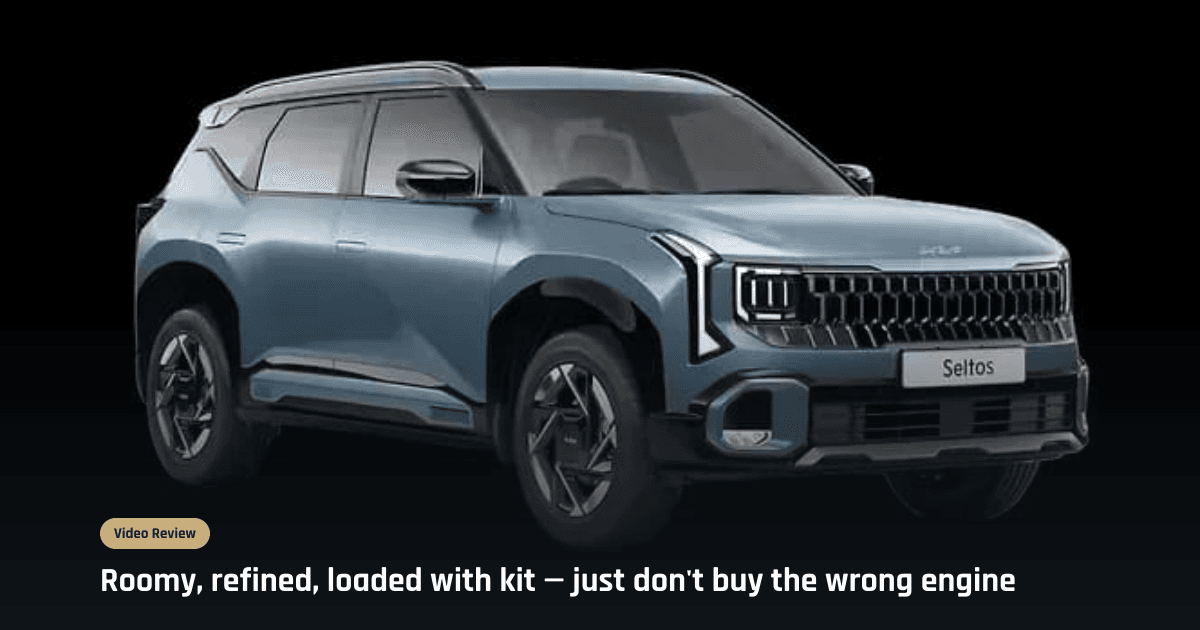
Where The Seltos Sits In Nepal's Crowded SUV Race
Since its 2023 launch here, Kia's Seltos has become the car most Nepali SUV shoppers cross-shop against everything else in the segment, and it's easy to see why. Continental Trading Enterprises has spread the range wide — 19 variants from the Rs 49.9 lakh HTK petrol manual right up to the Rs 95.9 lakh K3 X-Line (O), meaning there's a Seltos for the buyer who just wants a well-built family SUV and one for the buyer who wants the works. That spread also means the badge alone tells you little; the experience you get depends entirely on which of those 19 trims you sign for, something we'll come back to.
In a market where the Hyundai Creta and Tata Sierra are constant cross-shop targets, the Seltos carves its space out through cabin size, equipment, and Kia's now well-established reputation for loading even mid-tier trims generously. It isn't the cheapest way into this segment, but buyers consistently walk away rating the interior and features ahead of most rivals in the same bracket.
Road Presence Without Overreaching
The Seltos wears a confident, modern SUV face — a wide, upright grille and a sharp LED lighting signature that reads as premium from either side of the road. At the rear, connected LED taillights and a clean, uncluttered tailgate give it a tidy, resolved look rather than the busy detailing some rivals lean on. The GT Line trims sharpen this further with sportier bumpers, dedicated alloy wheel designs, and GT Line badging on the tailgate that quietly signals the higher-spec cars apart from the regular lineup.
Underneath, the Seltos rides on Kia's updated K3 platform, and the extra structural mass shows up in small but telling ways — the bonnet, for instance, feels noticeably heavier to lift than before, and Kia has fitted gas struts to make that a one-hand job rather than a wrestling match. Overall build quality feels dense and reassuring rather than tinny, which matters on Nepali roads where potholes and speed breakers test a car's panel gaps and squeak-resistance daily.
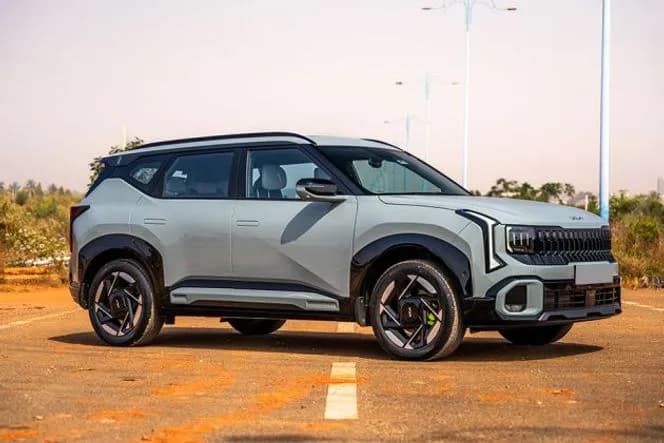
The Only Colour We've Seen Doing The Rounds
Showroom stock in Nepal understandably varies by shipment, but the shade that keeps turning up on demonstrator cars and in dealer yards is a deep red-burgundy metallic — a genuinely flattering colour on the Seltos's creases and one that photographs particularly well against the chrome grille surround. Buyers wanting a specific alternative shade should confirm current stock with Continental Trading Enterprises directly, since allocation on lower-volume colours can be tight.
What's Actually On The Options Sheet
This is where the Seltos earns its keep. Higher trims bring a genuinely premium cabin experience: a Command-Centric Trinity Panoramic Display spanning the instrument cluster and infotainment, an Immersive Bose Premium Sound System with 8 speakers, and a Boundless Dual Pane Panoramic Sunroof that transforms the sense of space inside. There's a 64-colour ambient lighting system, dual-zone automatic climate control, wireless phone charging in the console, and a memory function covering the driver's seat and door mirrors — genuinely useful when a household shares one car between two drivers.
The dual-screen setup — instrument cluster paired with the touchscreen — is sharp, quick to respond, and doesn't lag when swiping between menus, which is more than can be said for some rivals at this price point. Drive mode selection between Eco, Normal and Sport doesn't just remap the throttle; it changes the cluster's colour theme and ambient lighting too, a small touch that buyers notice and appreciate. The advanced driver assistance suite works cleanly in real-world conditions, throwing up clear, well-timed collision warnings on the cluster rather than the vague chimes some systems settle for.
Front seats get ventilation — a genuine comfort feature during Terai summers — along with a 10-way power driver's seat with lumbar adjustment. The one adaptive touchscreen for climate control, however, is a smaller unit than the main infotainment display, and it sits low on the dash where a thick-rimmed steering wheel can partially block the driver's view of it — a small ergonomic miss on an otherwise thoughtfully laid-out cabin.
A Petrol Engine That's Happiest Below 60 KM/H
The Seltos petrol range centres on a 1.5-litre Smartstream naturally aspirated unit producing around 115 PS, paired with either a 6-speed manual or an Intelligent Variable Transmission (IVT, Kia's CVT). Diesel buyers get a 1.5-litre CRDi VGT engine of similar output, offered with 6-speed manual or 6-speed automatic depending on trim — the diesel is the one to lean toward if regular highway running is on the cards, since oil-burners like this typically carry their torque lower down the rev range, which suits overtaking far better than a naturally aspirated petrol does.
And that's the honest caveat with the NA petrol: it's genuinely smooth, quiet and free of turbo lag at low speeds, making it a pleasant, stress-free city companion. Push it hard, though — trying to overtake a truck on the Prithvi Highway, say — and it runs out of urge quickly, becoming loud and vocal past the 4000 RPM mark without a corresponding surge in speed. Paired with the IVT, this produces the classic "rubber-band" sensation, where the engine note rises well ahead of actual road speed. It's not a dealbreaker for someone who mostly drives within town, but anyone doing serious highway mileage should look hard at the turbo-petrol iMT or the diesel variants instead.
Comfortable Over Nepal's Broken Tarmac, Composed In Corners
One of the clearest improvements buyers and reviewers alike keep flagging is the ride. Kia has deliberately softened the suspension tune, and it shows the moment you hit a pothole-strewn stretch — the Seltos absorbs sharp bumps far more gently than its reputation for firmer old-generation setups might suggest, without turning floaty. Body control through corners remains genuinely good, with minimal roll for a car this size, which speaks well of the underlying K3 platform's rigidity.
Steering weight is on the heavier side but stays easy to manage at parking speeds. Flick the drive mode into Sport, though, and the artificial extra heft added to the steering doesn't always feel natural — it's a mode best reserved for open, well-surfaced roads rather than everyday commuting.
Space That Rivals Struggle To Match
Cabin space is arguably the Seltos's single strongest card. It's the longest car in its class, and that translates directly into one of the most generous rear seats in the segment, helped by a wheelbase of 2690mm — the second-longest among direct rivals. Rear passengers get genuinely good leg and headroom, rare in this bracket, plus integrated door-mounted sunblinds for hot-weather comfort.
Where it falls short of the very best in class is rear-seat pampering — there are no rear ventilated seats, and unlike some rivals, there's no powered "boss mode" adjustment for the front passenger seat, meaning anyone wanting extra rear legroom has to lean forward and adjust it manually. Front occupants fare much better, with ventilated seats and a memory-equipped driver's chair that most rivals at this price simply don't offer.
Reassuring Stops, A Platform Built For Safety Ratings
Braking performance across the range feels strong and confidence-inspiring under hard stops, backed by an electric parking brake with auto-hold — a genuine convenience in Kathmandu's stop-start traffic. On loose or dusty surfaces, the ABS system does its job but can produce a noticeable judder through the pedal under hard braking, worth being aware of on Nepal's many unsealed rural stretches.
The heavier body structure that comes with the K3 platform underpins a car that feels solidly screwed together, and while we don't have an official Nepal-specific crash rating to quote, the structural mass and standard safety kit put it in a strong position within its segment.
A Boot That Works, Even If The Tailgate Doesn't Power Itself
Practicality is a quiet strength. The boot is large and usable for family trips and weekend loads, though the tailgate has to be lifted by hand rather than powered — a small omission at this price. Combined with the spacious cabin and generally good outward visibility, the Seltos remains an easy, low-stress car to live with day to day, whether that's a school run or a longer trip out of the valley.
What It Actually Costs To Keep Running
Real-world efficiency on the petrol variants tends to sit around 9-10 km/l in heavy city traffic, improving to roughly 13-14 km/l on the open highway with a light foot — figures that shift dramatically once you start driving aggressively, with fuel range dropping off fast under hard acceleration. With a 47-litre tank, that translates to a reasonably long stretch between fill-ups for measured city driving, though enthusiastic drivers will find themselves at the pump more often than the highway figure suggests.
Nineteen Variants — Which One Actually Makes Sense
This is the Seltos's real complexity in the Nepali market: 19 variants stretching from the Rs 49.9 lakh base HTK petrol to the Rs 95.9 lakh K3 X-Line (O), with petrol, diesel, manual, iMT, IVT and 6-speed automatic gearboxes all mixed into the range. For buyers who want the core Seltos experience — the space, the ride comfort, the feature set — without stretching to the very top, trims like the HTK+ Petrol at Rs 53.4 lakh or the HTK GSL 1.5L Petrol at Rs 52.9 lakh represent sensible entry points that still bring reasonable equipment.
Where we'd urge caution is at the very top of the naturally aspirated petrol tree, in something like the GTX(O)+ GSL at Rs 73.9 lakh. At that price, buyers are paying GT Line money for an engine that struggles on the highway, when the diesel automatic options — the HTX IVT 1.5L Petrol Automatic at Rs 69.9 lakh or HTX+ DSL 1.5L Diesel at Rs 71.9 lakh — offer meaningfully more usable performance for a similar outlay. If your driving is mostly urban, the lower petrol trims make complete sense; if you're regularly on the highway, we'd steer you toward the diesel or a higher-torque option rather than stretching for the top-spec NA petrol GT Line.
The Hyundai Creta Remains The Benchmark To Beat
No conversation about the Seltos in Nepal is complete without the Hyundai Creta, which continues to be regarded as the segment leader here. The Creta, particularly in its N Line manual guise, is widely praised for a more engaging drive than the Seltos's NA petrol IVT combination, and it enjoys a stronger, more established resale ecosystem in Nepal. The Seltos counters with a roomier cabin and a longer feature list at comparable trim levels, so the choice often comes down to whether outright driving engagement or outright interior space and kit matters more to the buyer.
The Tata Sierra Undercuts It On Rear-Seat Comfort
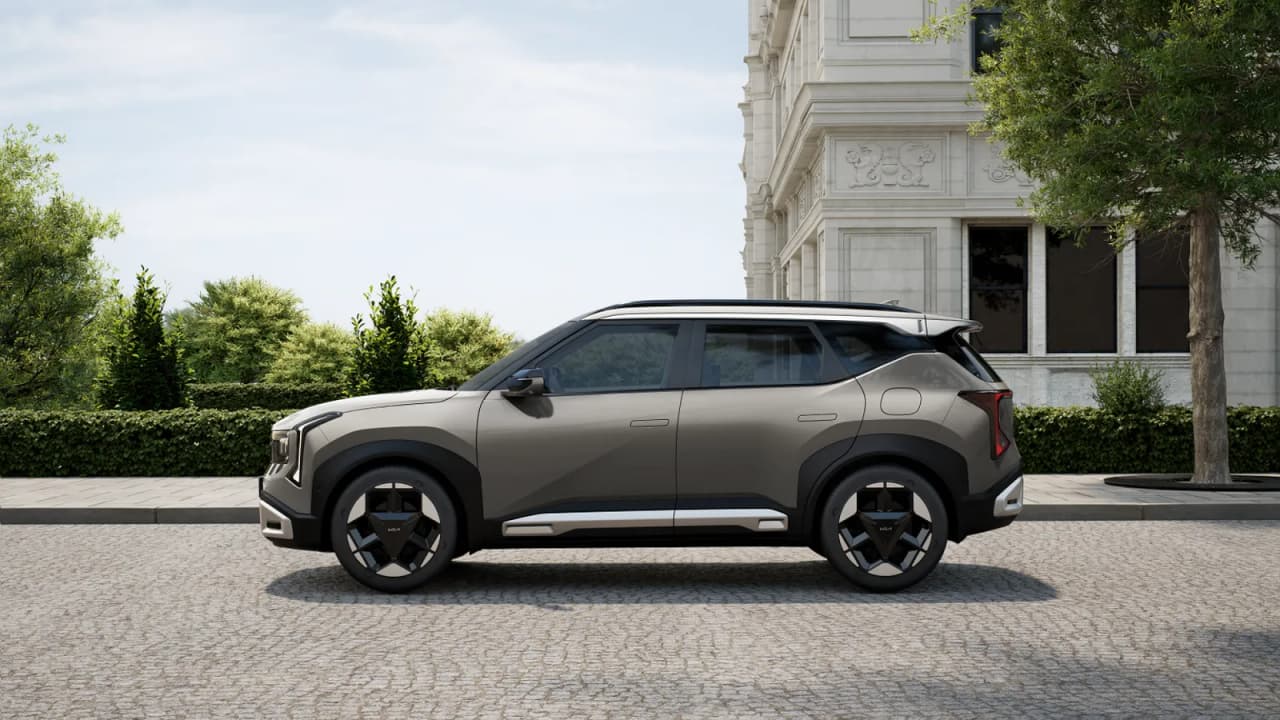
The Tata Sierra is a newer, less common sight on Nepali roads but worth cross-shopping for buyers focused specifically on rear-seat experience — it offers a longer wheelbase than the Seltos and rear-seat features like a powered boss mode that the Kia simply doesn't have. The Sierra's brand presence and service network in Nepal remain less established than Kia's, though, which matters for long-term ownership peace of mind.
Our Verdict: Buy It For The Cabin, Choose The Engine Carefully
The Seltos remains one of the most convincing packages in Nepal's mid-size SUV segment provided you shop it with a clear head. The cabin space, the sunroof, the Bose audio, the ventilated seats and the genuinely improved ride quality are all real, tangible strengths that hold up against anything else at this price. The naturally aspirated petrol with the IVT gearbox is a smooth, easy city companion in the lower and mid trims, but it becomes a harder sell the further up the price list you climb, especially once diesel and higher-output options enter the same bracket.
It suits buyers who want a spacious, comfortable, richly equipped SUV primarily for city and short out-of-valley use, and who are shopping sensibly within the lower-to-mid trims. Buyers who regularly hit the highway, tow, or simply want a more engaging drive should look at the diesel variants or cross-shop the Hyundai Creta before committing to the top-spec petrol Seltos.
Writes on vehicle pricing, taxation and the Nepali auto market from ongoing tracking of distributor price lists. Editorial policy.