Where This Rs 72 Lakh SUV Sits In Nepal's Electric Line-Up
Nepal's EV market has, until now, been split fairly neatly between affordable Chinese and Korean crossovers under Rs 50 lakh and a small handful of premium electric SUVs well north of Rs 1 crore. The Leapmotor C10, brought in by Shangrila Motors Pvt. Ltd. since 2023, sits in the gap between those two worlds. At Rs 72 lakh ex-showroom for its single BEV variant, it asks buyers to spend more than a compact electric hatchback or small SUV. It still costs far less than a Tesla Model Y or any European electric SUV that might eventually make it to Kathmandu showrooms.
That positioning only works if the car gives buyers more for the extra money, and on paper it largely does. A 69.9 kWh LFP battery, 160 kW of combined power, 320 Nm of torque and a claimed WLTP range of 420 km (530 km on the more optimistic CLTC cycle) are figures that would look competitive even against cars priced above it. For Nepali buyers, the key question is the driving experience and everyday livability once the car is used on Kathmandu's ring road or the Prithvi Highway.
Handsome But Familiar, With Flush Handles And Deliberately Big Wheels
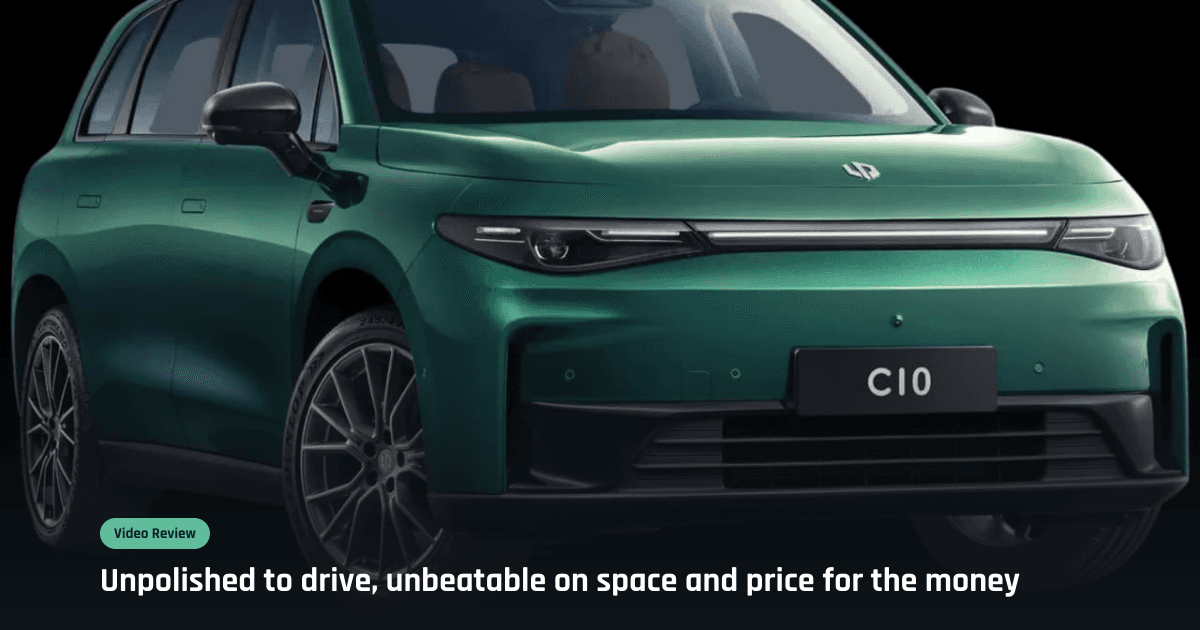
The C10's exterior design will not turn heads the way some EVs are designed to. It wears a clean, contemporary SUV silhouette with visual cues borrowed from current global EV design — smooth surfacing, minimal creases, a coupe-like roofline. It does not try to stand out, and in a market where buyers spending Rs 72 lakh often want their car to look the part, that is worth knowing from the start.
Two details do lift the design above generic. The full-width LED light strip across the rear tailgate gives the car a distinctive night-time signature, and the flush-fitting door handles, which need to be manually pulled out rather than popping automatically, add a touch of theatre that buyers in this segment have come to expect from premium EVs. Our showroom units ride on large 20-inch multi-spoke alloy wheels. They fill the wheel arches well and reinforce the SUV stance. Bigger wheels usually mean a firmer ride over Kathmandu's patchier stretches of tarmac, and that shows up in the suspension behaviour discussed below.
Metallic Black Is What You'll See On The Floor
The demonstration and showroom stock seen in Nepal has consistently been finished in a deep metallic black. It suits the C10's smooth, unfussy body surfacing and hides the door seams effectively. Shangrila Motors has not published a wider colour palette for the Nepali market at this stage, so buyers wanting a specific shade should confirm availability and any special-order timelines directly with the distributor before booking.
A Tesla-Style Cabin, Right Down To The Scroll Wheels
Step inside and the influence of Tesla's interior philosophy is obvious. The large central touchscreen runs a clean, uncluttered interface that handles most vehicle functions, and the digital instrument cluster ahead of the driver keeps essential speed and consumption data legible at a glance. The steering wheel carries scroll wheels similar in operation to Tesla's, and the gear selector is a column-mounted stalk in the style popularised by Mercedes-Benz and Tesla alike. That layout frees up console space. It also takes some adjustment for buyers used to a traditional shifter.
The one significant equipment gap is the absence of Apple CarPlay and Android Auto, and there is no indication this is coming via a future update either. For a market where smartphone mirroring has become close to non-negotiable for navigation and music, buyers will need to rely entirely on the C10's native infotainment for those tasks. Elsewhere the equipment list reads well for the price: a 360-degree camera system with a dedicated wheel-view mode useful for tight Kathmandu parking, a wireless charging pad that can be toggled on from the screen, and a steering wheel shortcut that mutes warning chimes with a double press. That is a small but useful feature on roads full of speed-camera and lane-departure alerts. The wireless pad itself lacks active ventilation, so phones left charging on longer drives can run noticeably warm.
160 kW, 320 Nm, And A Cabin That Stays Hushed At Speed
The C10's self-developed permanent magnet synchronous motor sends 160 kW and 320 Nm to the rear wheels through a single-speed transmission. That is good for a 0-100 km/h time of 7.5 seconds and a top speed of 170 km/h. Those are not hypercar numbers, but they are comfortably brisk for a mid-size electric SUV, and the delivery is smooth rather than snatchy, especially with one of the four drive modes dialled toward Sport for a livelier throttle response.
What stands out more than outright pace is refinement. The powertrain itself is exceptionally quiet at all speeds, and that hushed character extends to the cabin as a whole, which stays impressively insulated from wind and road noise even at highway speeds. That matters on stretches like the Kathmandu-Bhaktapur corridor, where road noise usually creeps in past 80 km/h.
The Suspension Is The Weak Link On Rough Tarmac
This is where the C10 shows its rougher edges. The suspension setup — MacPherson struts up front, a multi-link/five-link independent arrangement at the rear — is tuned adequately for smooth roads but feels distinctly unrefined over potholes and broken surfaces. It transmits more of the impact into the cabin than we'd like at this price. Given how much of Nepal's road network outside the core highway corridors still qualifies as "broken surface," this is not a minor footnote.
Cornering at any pace reveals noticeable body roll, a consequence of the car's substantial 1980 kg kerb weight sitting on a relatively soft, comfort-biased set-up. Steering is light, almost disconcertingly so at parking speeds, and short on feedback. It improves only marginally when Sport mode is engaged through the car's three available steering modes. None of this makes the C10 unpleasant to drive, but it does mean buyers who enjoy a car that responds sharply to inputs should test drive before committing.
Ventilated Seats And Genuine Space For Six-Footers
Where the C10 recovers ground decisively is comfort. The seats are exceptionally soft and supportive, with effective ventilation that will matter through Terai summers, and the steering wheel is wrapped in a synthetic material soft enough to feel genuinely premium in the hand. It also has a heated function for winter mornings in the hills.
Rear legroom of 1050mm and headroom of 1015mm translate into real comfort for occupants up to roughly 6'2" in both rows, with a rear seat that reclines to a genuinely relaxed angle across its two-position adjustment. Families doing long highway runs to Pokhara or Chitwan will appreciate that detail.
The interior materials deserve a specific mention: Nepal AutoMart understands the seat fabrics are animal-free and carry Oeko-Tex Standard 100 certification, meaning they've been tested for harmful substances. That is a useful family-friendly detail for buyers with young children who spend a lot of time in car seats. The instrument desk uses a soft-touch finish rather than hard plastic, and combined with the anti-dazzling manual rearview mirror and hidden power vents, the cabin feels more expensive than the badge might suggest.
The Brake Pedal Needs A Gentler Touch Than It Gets
Safety equipment includes disc brakes front and rear, electronic parking brake, auto hold, and three stages of regenerative braking, but the way the brake pedal has been tuned is a real point of friction in daily use. It is overly sensitive and grabby in low-speed city driving, which makes smooth, progressive stops harder to judge than they should be. New owners will need a week or two to fully adapt to it.
The driver assistance suite brings similar mixed feelings. Lane-keeping assist intervenes more insistently than most drivers will want on Nepal's inconsistently marked roads, and the active lane centering system requires deliberate steering input rather than simply detecting hands on the wheel. That can feel like a nag on longer drives. Blind-spot monitoring also triggers a touch later than ideal. None of this compromises the car's fundamental safety credentials, but buyers should expect to spend time in the settings menu finding a configuration that is not constantly beeping at them. That double-press steering wheel mute shortcut helps.
A 435-Litre Boot, A Frunk For The Charging Cable, And A Flat Floor
Practicality is a strong suit. The boot offers 435 litres with a wide opening, though the release button's placement within the rear light strip is genuinely awkward to locate by feel. A small front trunk with gas struts adds separate storage for the charging cable, keeping it out of the main boot. Inside, the floating centre console leaves a large open storage area beneath it, and folding the rear seats creates a flat load floor stretching to 1.83 metres. That is enough for genuinely large cargo runs, whether that's a Kathmandu furniture haul or a hill-station camping trip.
What The C10 Actually Costs To Run Day-To-Day
With a 69.9 kWh LFP battery, the C10's efficiency and real-world usability will matter more to most Nepali buyers than headline range figures. The battery uses liquid cooling and PTC heating, and a heat pump is included as standard. That is a valuable inclusion for winter driving in the hills, where heat pumps materially protect range that resistive heating would otherwise drain.
Charging is a real strength. DC fast charging from 30-80% takes just 30 minutes, a figure that has reportedly been matched or bettered in real-world conditions rather than falling short of the claim. That is rare among EVs. AC charging from 30-80% takes a more leisurely 6.1 hours via the 6.6 kW onboard charger, which suits overnight home charging. The car also supports V2L (Vehicle-to-Load), letting owners power external devices or appliances directly from the battery. That is useful during Nepal's periodic power cuts.
One Variant, Fully Loaded, No Decisions To Make
Nepal gets the C10 in a single configuration: the BEV variant at Rs 72 lakh ex-showroom, paired with the 69.9 kWh battery and rear-wheel-drive layout. There is no trim ladder to climb and no options list to second-guess. What you see on the showroom floor is what you get. That simplifies the buying decision compared with markets offering multiple battery and drivetrain choices.
For Nepali buyers, the only real decision is whether the C10's space, equipment and charging speed justify Rs 72 lakh against the alternatives available at similar or adjacent price points.
The Tesla Model Y Costs More And Doesn't Feel As Premium Inside
The most relevant comparison for buyers with Rs 72 lakh to spend on an EV is the Tesla Model Y, which typically commands a higher price in the Nepali market once landed and taxed. Against it, the C10's interior actually feels more premium in places. The soft-touch materials, ventilated seats and certified fabrics give it a warmer, more considered cabin than the Model Y's starker, more minimalist approach.
The C10 does not match the Model Y's brand cachet or its charging network advantages. For buyers prioritising cabin comfort and space per rupee spent, it makes a strong counter-argument.
Who Should Actually Buy One
The Leapmotor C10 is built for a specific kind of buyer: a family that wants genuine interior space, strong comfort, fast charging and a lot of standard equipment, and is willing to trade away sharp handling and fully polished driver-assistance software to get all of that for Rs 72 lakh. It suits buyers cross-shopping against pricier premium EVs who'd rather redirect that money toward space and features than badge prestige.
It is a harder sell for anyone who genuinely enjoys driving. The light steering, body roll and grabby brakes will frustrate drivers who care about how a car feels through a corner, not just how quickly it gets there. But judged as a spacious, quiet, comfortable, fast-charging family EV, the C10 makes a case that is difficult for buyers at this price point in Nepal to ignore.
Writes on vehicle pricing, taxation and the Nepali auto market from ongoing tracking of distributor price lists. Editorial policy.