Where The Punch Fits In Kathmandu's Crowded Compact-SUV Race
Nepal's compact SUV shelf filled up fast, and the Tata Punch arrived early in 2021 through Sipradi Trading Pvt. Ltd. It sits in a strange but useful spot: styled like a baby SUV, priced like a well-equipped hatchback, and backed by the safety reputation Tata has built in this segment. At Rs 39.99 lakh ex-showroom for the sole Pure variant sold here, it is aimed at first-time SUV buyers and small families who want a tougher-looking option for Kathmandu's streets without moving into compact-SUV pricing territory. That is the pitch.
What makes the Nepali market conversation around the Punch different from broader coverage is variant availability. Internationally, and in India, the Punch is sold in Pure, Adventure, Accomplished and Creative trims, with equipment building up along the range, right up to a well-loaded Pure Plus AMT that gets a touchscreen, rear AC vents and a fast-charging port. In Nepal, only the base Pure trim is currently listed by the distributor. That single fact should shape how you read every feature claim about this car. The reputation for a feature-rich cabin comes from trims that are not officially on sale here.
A Muscular Face That Doesn't Need The Top Trim To Work
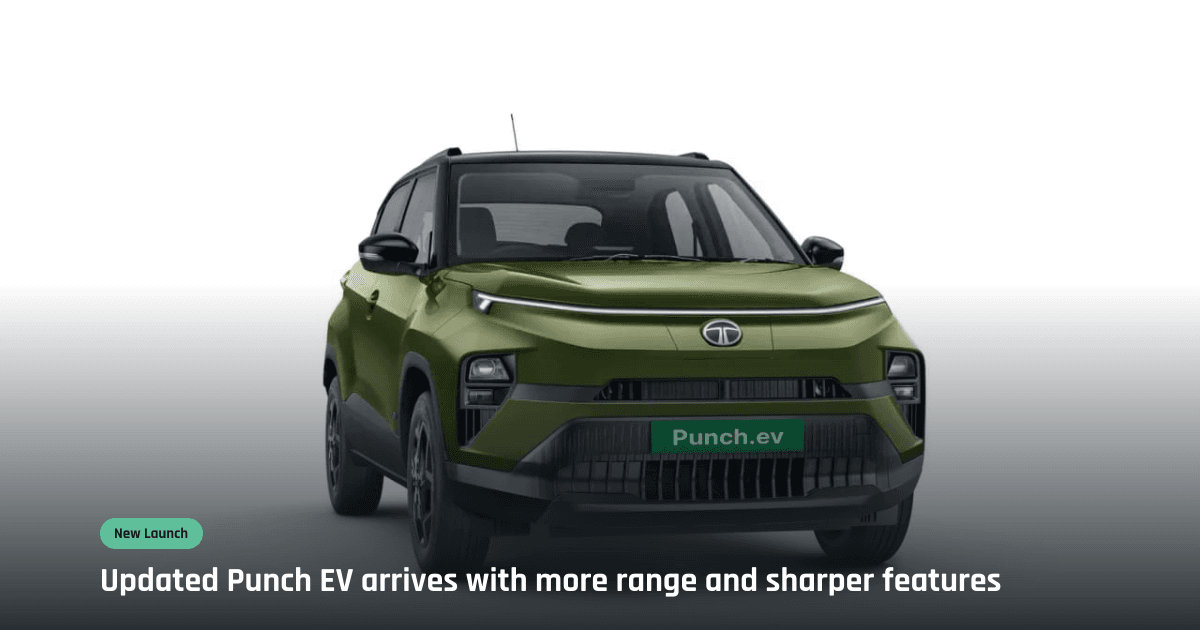
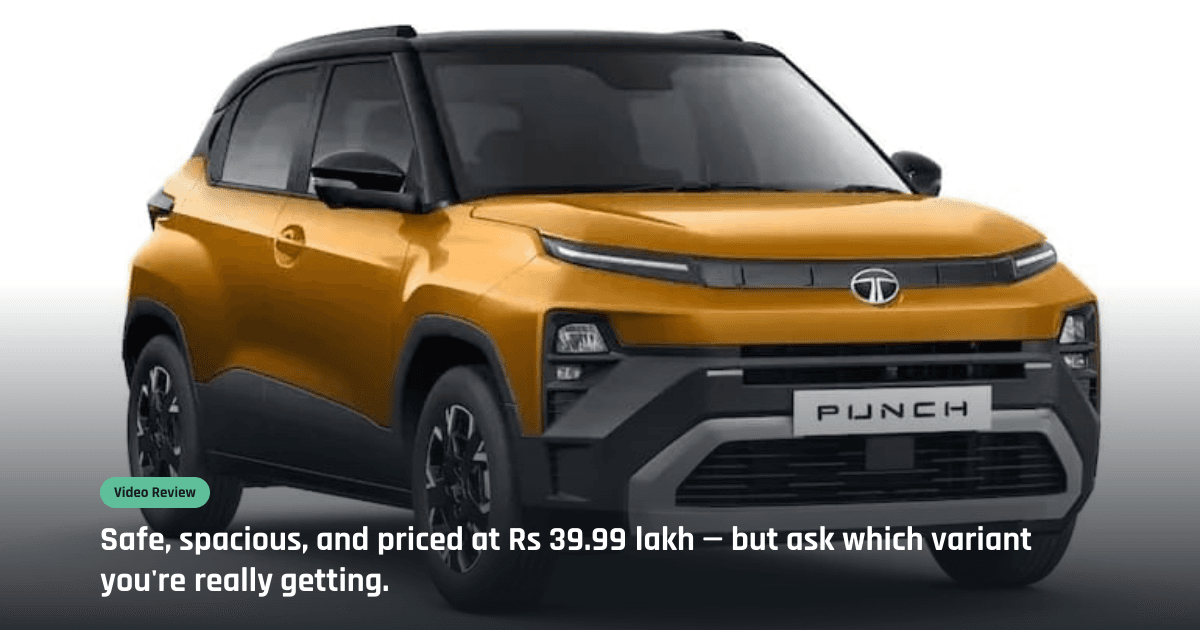
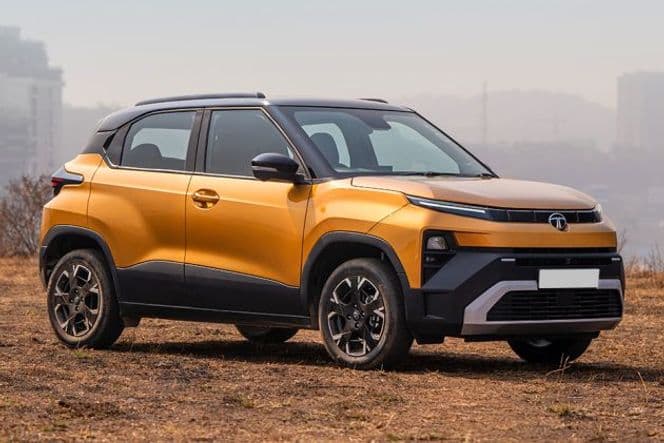
Where the Punch does deliver, regardless of trim, is road presence. The front end is bold and boxy, built around a glossy black grille with a centrally mounted Tata logo. LED headlights sit low in the bumper, while the halogen parking lights and indicators are pushed higher into the fascia. That two-tier lighting layout gives the front a layered, purposeful look rather than a flat one. It works in the showroom and reads as more expensive than the price tag suggests.
The sides carry that theme further. Thick black body cladding runs along the doors and wheel arches, doing the visual work SUV buyers expect by breaking up the sheet metal and adding perceived ruggedness. The 15-inch wheels wear styled black wheel covers that suit the cladding instead of looking like an afterthought. At the back, a dual-tone bumper and a high-mounted stop lamp finish a design that is genuinely compact at 3827 mm long, 1742 mm wide and 1615 mm tall. It does not always look that small from most angles. Build quality at showroom level feels appropriately solid for the segment, with panel gaps and paint finish in line with a Tata product at this price.
The Colour Question Nepali Buyers Should Ask Before Booking
Show units doing the rounds in dual-tone white with a blacked-out roof and pillars show how effective the Punch's design language can be with the right paint job. The contrasting roof draws attention to the SUV-like stance and hides the car's short length. Whether that specific dual-tone treatment, or other colour options, are actually stocked against the Pure variant in Nepal is worth confirming directly at a Sipradi showroom. Colour and trim availability do not always move together once a single-variant strategy is in play.
Equipment: Where The Nepali Pure Trim Feels Noticeably Bare
This is the section where buyers need to manage expectations carefully. The wider Punch story, the one that has made the car a talking point in its class, revolves around an 8-inch touchscreen with Android Auto and Apple CarPlay, a semi-digital instrument cluster with a proper digital speedometer, steering-mounted controls for media and cruise, rear AC vents and a 65W Type-C fast-charging port strong enough to run a laptop. That equipment list belongs to higher trims such as Pure Plus, not to the base Pure specification confirmed as the one sold in Nepal.
The Pure trim here comes with manual air-conditioning and a basic cabin trim, and there is no touchscreen fitted. Cabin controls are manual rather than screen-based. For a buyer cross-shopping on the strength of Punch reviews showing a touchscreen and connected instrument cluster, this is the single most important thing to clarify before booking. The car you test in a Nepali showroom is unlikely to have the tech-forward cabin that has driven much of the Punch's popularity elsewhere. That is not a flaw in the Punch as a design. It is the gap between what the nameplate can offer and what has landed in Nepal.
A 1.2-Litre Petrol Engine Built For Traffic, Not Speed
The Punch runs Tata's 1.2-litre Revotron three-cylinder petrol engine, a 1199 cc unit producing 87.8 PS at 6000 rpm and 115 Nm of torque at around 3250 rpm. It is paired with a 5-speed manual gearbox, with a 5-speed AMT also part of the wider lineup. Tata also builds a CNG version of this same engine, delivering 73.5 PS and 103 Nm in gas mode, with a 60-litre water-capacity CNG tank alongside the standard 37-litre petrol tank. That is a useful option for buyers thinking about running costs, where officially confirmed for the Nepali market.
Numbers aside, the real-world character of this engine is what buyers should focus on. A naturally aspirated three-cylinder in this displacement range is built for stop-start city driving and short highway stints, not sustained overtaking or steep, loaded climbs. That suits Kathmandu Valley traffic and short hill runs better than long Mahendra Highway hauls with a full car. It will not feel quick. It is not meant to.
Ground Clearance Does More Work Here Than The Suspension Tune
At 187 mm, the Punch's ground clearance is a real asset on Nepali roads. It is enough to shrug off speed bumps, broken tarmac edges and moderate potholes that would have a regular hatchback scraping its underbody. The 2445 mm wheelbase is short, which helps manoeuvrability in tight Kathmandu lanes and parking situations, but it also means the ride can feel busier over successive bumps than in a longer-wheelbase rival.
Underneath, the front uses an independent McPherson strut setup with lower wishbones and coil springs, while the rear runs a simpler semi-independent twist-beam arrangement with coil springs and shock absorbers. This is a conventional, cost-effective layout, not a sophisticated one. It shows on rougher stretches. The Punch is composed enough for daily driving, but it is not the last word in ride refinement. Braking uses front discs paired with rear drums rather than four-wheel discs. That is standard fare at this price point, but it is worth knowing if you are cross-shopping against rivals that offer all-disc setups.
Cabin Space That Outperforms The Car's Footprint
Despite its short overall length, the Punch's cabin is one of its genuine strong points, and that holds regardless of which trim is fitted. Rear seat space — knee room, legroom and headroom — is unusually generous for the car's footprint, with enough room that even taller passengers are not cramped on the bench. The rear seat comfortably takes two adults plus a child. That matters for Nepali families who often need a car that can switch between school runs and longer family trips.
Front seat ergonomics are straightforward rather than plush. Expect manual height adjustment on the driver's seat, fabric upholstery and a cushioned front centre armrest that helps on longer drives. It is a cabin built for function over flash. That suits the Pure trim's basic positioning.
Six Airbags As Standard Is The Number That Matters Most
The Punch's biggest single selling point in Nepal is its safety rating. It carries a 5-star Global NCAP crash rating, and comes with 6 airbags as standard, along with ABS with EBD, brake assist and ISOFIX child seat mounts. For buyers who have seen cheaper compact cars struggle to offer even two airbags as standard, this is a meaningful differentiator. It is the strongest reason to put the Punch on a shortlist regardless of which trim you end up buying.
Wide-Opening Doors And A Boot That Folds Flat
Practical touches carry through nicely. The rear doors open to a full 90 degrees, which makes loading child seats or helping elderly passengers in and out easier than the narrower door swings common in this segment. The boot, while not enormous on paper, benefits from a rear seat that folds completely flat, and Tata houses a full-sized spare wheel under the boot floor rather than a space-saver. That matters on Nepali roads where puncture repair shops are not always nearby. Door panels include bottle holders and storage pockets, rounding out a cabin that has been thought through for family use even where the equipment list runs thin.
What Running One Actually Costs Month To Month
The 1.2-litre petrol engine is rated for roughly 16-17 kmpl in city driving and up to 18 kmpl on the highway. Those figures sit in reasonable territory for a naturally aspirated engine of this size and weight. Where the CNG variant is available, running costs drop further, given CNG's typically lower per-kilometre fuel cost compared with petrol. That is worth investigating locally if fuel economy is the deciding factor in your budget.
The Rs 39.99 Lakh Question: Is Pure Enough?
With only the Pure variant officially listed at Rs 39.99 lakh ex-showroom in Nepal, the buying question is simpler than usual. There is no variant ladder to climb. The real question is whether this specification, at this price, offers good value against what else is available in the segment. Buyers should walk into a Sipradi showroom with a clear checklist. Confirm whether a touchscreen is fitted, check the AC controls, and physically inspect the rear brakes and seat trim before signing. The Pure trim's actual specification can differ meaningfully from marketing imagery built around higher trims.
The Hyundai Exter Undercuts It On Cabin Tech
The Hyundai Exter is the most direct rival the Punch faces in Nepal's micro-SUV space, and it tends to offer a more consistently tech-forward cabin across its range, including touchscreen infotainment at accessible trim levels. Buyers who have prioritised the connected-cabin experience the Punch is famous for elsewhere may find the Hyundai Exter delivers more of that expectation for similar money, even if the Punch counters with stronger crash-test credentials.
The Maruti Suzuki Fronx Brings A Turbo Option To The Fight
The Maruti Suzuki Fronx pulls buyers from a slightly different angle, leaning on Maruti's dealer and service network strength alongside turbocharged engine options not currently available on the Punch's spec sheet in Nepal. It is a more style-led, crossover-flavoured proposition than a bump-friendly high-clearance SUV like the Punch. For buyers cross-shopping on space, tech and everyday usability, the Maruti Suzuki Fronx is worth a showroom visit before committing.
Our Verdict: Buy It For The Safety Rating, Not The Spec Sheet
The Tata Punch's case in Nepal rests on two pillars: genuinely class-leading crash safety with 6 airbags and a 5-star GNCAP rating, and a cabin that feels larger than the car's compact dimensions suggest. Both are real and both matter enormously to a family buyer. Where the Punch struggles, in the form it is actually sold here, is equipment. The touchscreen, connected instrument cluster and rear AC vents that headline most Punch coverage belong to trims not currently listed by the Nepali distributor.
This is a car worth buying for what it protects you from and how comfortably it carries your family, not for how loaded the cabin feels. If that trade-off — safety and space over screens and gadgets — sounds right for Rs 39.99 lakh, the Punch earns its place on the shortlist. If a touchscreen and rear climate vents are non-negotiable, it is worth cross-checking exactly what is fitted before you commit to the booking.
Writes on vehicle pricing, taxation and the Nepali auto market from ongoing tracking of distributor price lists. Editorial policy.