Where Each SUV Sits in the Nepali Market
The **Kia Seltos and Hyundai Creta** are effectively the two pillars of Nepal’s compact/mid‑size SUV segment. Both offer 1.5‑litre petrol engines, similar overall size and a variant spread aimed at everyone from first‑time SUV buyers to image‑driven urban families.
- Kia Seltos: Rs 49.9 lakh – Rs 95.9 lakh across 19 variants, distributed by Continental Trading Enterprises (Kia Nepal). It has 34 showrooms and 29 service centers nationwide.
- Hyundai Creta: Rs 53.96 lakh – Rs 87.96 lakh across 9 variants, distributed by Laxmi Intercontinental. Hyundai currently leads on reach with 38 showrooms and 42 service centers.
In practice, Seltos gives you a wider spread of trims, engines and feature levels, including multiple diesels and higher‑end GT‑Line/X‑Line variants. Creta counters with fewer but carefully curated petrol IVT/manual trims, backed by a stronger service footprint and locally assembled "Made in Nepal" variants.
If you want maximum choice and a more aggressive feature story, Seltos leans in your direction. If you care more about a refined petrol powertrain, a simpler line‑up and the comfort of Hyundai’s larger network, Creta remains the safe, benchmark pick.
Design and Road Presence
Kia Seltos: Sharper, more tech‑forward
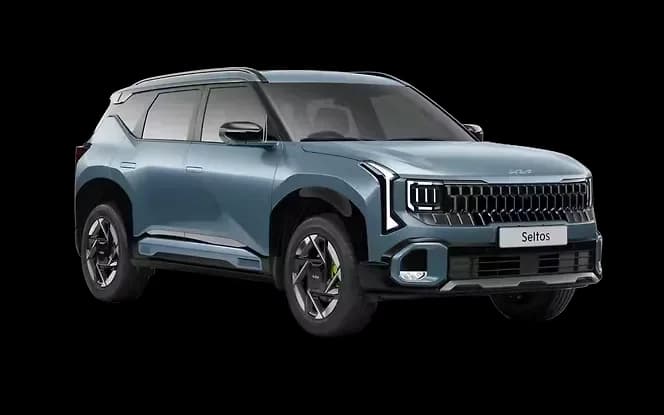
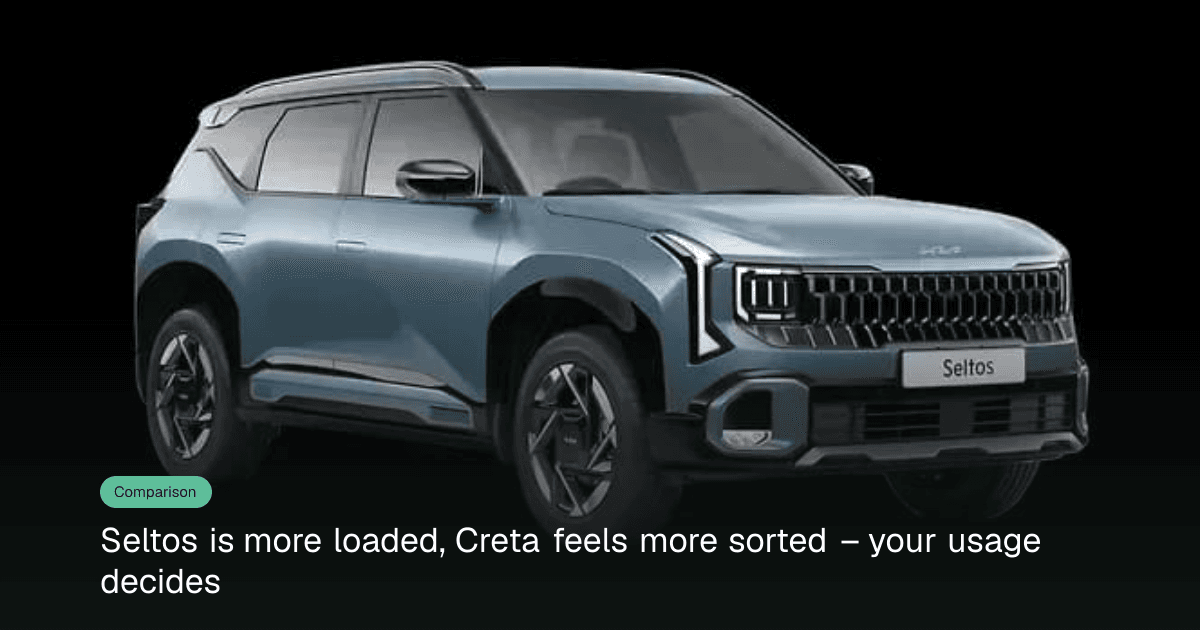
Seltos presents itself as the more distinctive, tech‑lifestyle SUV.
- Dimensions: 4460 x 1830 x 1630 mm across almost all variants, with a 2690 mm wheelbase.
- Exterior highlights (broadly across trims): panoramic sunroof, 64‑colour ambient lighting, prominent LED lighting signatures, and a palette including Glacier White Pearl, Magma Red, Pewter Olive, multiple matte finishes and Aurora Black Pearl.
- Upper trims like GTX(O)+ GSL 1.5L Petrol (GT‑Line) and K3 X‑Line(O) are marketed as style‑heavy halo variants with sporty detailing, matte paints and extra chrome/blackout elements.
The overall impression is a longer, slightly more planted SUV with aggressive styling. For buyers who want the car to look and feel obviously "new generation", the Seltos has the edge.
Hyundai Creta: Mature, family‑friendly
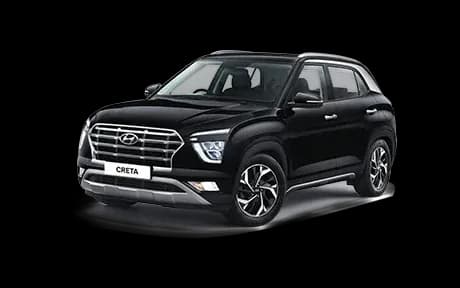
Creta leans into a more upright, family‑SUV look.
- Dimensions: 4300 x 1790 x 1635 mm, with a 2610 mm wheelbase and 190 mm ground clearance.
- SX 2023 and similar trims offer 215/60 R17 alloy wheels, standard fog lamps, puddle lamps with welcome function, and a set of five body colours.
On the road, Creta is a little shorter and narrower, but the shape and surfacing feel more mature and less aggressive. Many Nepali family buyers see it as the "safe" design choice that will age well.
Verdict on design: If you want flash, matte paints and a more aggressive stance, Seltos wins. If you prefer understated, classic SUV proportions, Creta feels more grown‑up.
Features and Equipment
Seltos: More toys, more spread
Seltos’ biggest selling point is how much kit Kia packs in across the range.
Common highlights across a huge number of trims (HTK upwards) include:
- Panoramic sunroof
- Front ventilated seats
- Dual‑zone automatic climate control
- Bose 8‑speaker audio system
- EPB (electronic parking brake) with Auto Hold
- Blind View Monitor / 360‑degree camera
Upper variants add Level 2 ADAS with 21 features (notably on K3 X‑Line(O)) and richer exterior/interior styling, while GT‑Line and X‑Line build an almost premium‑SUV feature set in this size.
The key point for a Nepali buyer: you can get several "big car" features at prices where rivals still feel basic. That’s why variants like HTX MT 1.5 Petrol, HTX IVT 1.5L Petrol Automatic and HTX+ DSL 1.5L Diesel are seen as value sweet spots for features‑per‑rupee.
Creta: Strong safety and comfort, but less flamboyant
Creta’s story is more balanced: a refined, well‑equipped cabin with a strong safety base, but not the same level of feature overkill.
Highlights (SX 2023 and higher):
- Six airbags standard on SX 2023 and higher
- ABS with EBD, ESC, VSM, HAC, Emergency Stop Signal, TPMS
- Rear disc brakes, ISOFIX child seat mounts
- Rear parking sensors and camera with guidelines; Driver Rear View Monitor
- Automatic headlamps, speed‑sensing auto door lock
- Height‑adjustable front seatbelts with pretensioners
- Plush, premium‑feeling cabin with lighter tones and metallic finishes
Upper petrol IVT trims also offer panoramic sunroof, Bose audio and a 360‑degree camera, but these are concentrated in fewer top variants rather than spread widely.
A common criticism is the lack of wireless Apple CarPlay/Android Auto despite the large screen, and harder dashboard plastics than some expect at this price. Still, as a total package, Creta feels cohesive and very family‑friendly.
Verdict on features: Seltos is the feature king, especially in mid and upper trims. Creta counters with excellent safety and a well‑judged feature set, but if you want ventilated seats, ambient lighting and Bose at relatively lower price bands, Seltos is more generous.
Engines, Performance and Driving Character
Both SUVs share the same 1.5‑litre naturally‑aspirated petrol architecture in Nepal, and both offer front‑wheel drive only.
Kia Seltos powertrains
Key petrol and diesel configurations:
- 1.5L NA petrol, 6‑MT: HTK, HTK GSL 1.5L, HTK+ Petrol, HTX MT 1.5 Petrol, HTX(O) etc. The HTX MT makes about 115 PS and is tuned for a balance of city driveability and highway cruising.
- 1.5L petrol IVT automatic: HTX IVT 1.5L Petrol Automatic – the "core" automatic petrol choice for Nepali city users.
- 1.5L CRDi VGT diesel, 6‑MT: HTK+ Diesel MT, HTX+, HTX+ DSL 1.5L Diesel – strong torque and highway performance, aimed at high‑mileage buyers.
- 1.5L CRDi VGT diesel, 6‑AT: HTK+ Diesel AT, GTX+ AT DSL 1.5L Diesel (GT‑Line) – diesel automatic for comfort‑focused family and business users.
- 1.5T petrol with iMT / 7‑DCT: HTK Plus (iMT) 1.5T Petrol iMT, K3 X‑Line(O) 7‑DCT – this adds performance and image, though turbo details for Nepal are not fully disclosed.
Editorially, the 1.5 diesel is the highway hero, while the 1.5 petrol IVT is the sensible urban choice. The IVT is smooth but not sporty, and the turbo petrol DCT is more niche given pricing.
Hyundai Creta powertrains
All listed Nepali Creta variants currently run the same 1.497 cc petrol engine:
- Configuration: 4‑cylinder, DOHC, 16 valves
- Output: 115 PS @ 6,300 rpm, 14.7 kg‑m torque @ 4,500 rpm
- Transmission: 6‑speed manual or IVT (CVT‑type), depending on variant (E, S(O), S+, SX, SX(O) etc.).
Across coverage and showroom feedback, this powertrain is consistently described as refined, quiet and well‑matched to the IVT gearbox.
There is currently no diesel Creta listed in the verified Nepal dataset, which is a major differentiator versus Seltos. If you want diesel for long‑distance running or for rural use, Seltos is the obvious choice.
Driving character verdict:
- In petrol manual form, both feel very similar on paper: same power, very close torque, similar gearing. Choice here is more about features and price.
- In petrol automatic/IVT form, Creta is widely regarded as slightly more refined and smoother, while Seltos trades a bit of that polish for a more feature‑loaded cabin.
- In diesel, Seltos simply wins in Nepal because Creta doesn’t currently offer one.
Ride, Handling and Comfort
Because both cars share platform roots and similar suspension hardware, the differences are nuanced rather than night‑and‑day.
Seltos
- Longer wheelbase (2690 mm) helps give good straight‑line stability.
- Feature‑rich cabins with dual‑zone climate, ventilated seats and ambient lighting lift perceived comfort, especially in hotter urban use.
- Manual gearbox variants (HTK, HTK+, HTX, HTX+) offer more control on steep terrain but can be tiring in heavy Kathmandu or Pokhara traffic.
- Diesel NVH (noise, vibration, harshness) is higher than petrol, especially on cold starts and at lower speeds.
Creta
- Slightly shorter wheelbase but very absorbent low‑speed ride, particularly appreciated on broken city roads.
- Cabin feels spacious and premium, with the seating and suspension tuned for comfort rather than sportiness.
- IVT gearbox and petrol refinement make it an easy car to drive long distances without fatigue.
Overall, Creta edges ahead on ride comfort and refinement, especially for buyers prioritising a relaxed drive and rear‑seat comfort. Seltos feels a bit firmer and more "connected", which some drivers like, but it’s the features rather than the ride that really differentiate it.
Practicality and Running Costs
Space and practicality
- Boot space: Seltos offers 447 L, Creta 433 L. Seltos has a small but real advantage in luggage capacity – useful for families who travel with full suitcases.
- Fuel tank: Seltos 47 L, Creta 50 L. Creta can theoretically go slightly longer between fills, but real‑world economy depends more on engine and driving pattern.
- Ground clearance: Creta’s verified 190 mm clearance is solid for Nepali roads. Seltos’ exact clearance figure for Nepal isn’t in the dataset, but in practice it is positioned as a proper compact SUV and handles typical city and highway conditions well.
Running costs
- Petrol running: Both 1.5 petrol engines are tuned for efficiency. Creta tends to enjoy a reputation for slightly better mileage and lower ownership cost, partly due to local assembly and Hyundai’s extensive network.
- Diesel running (Seltos only): For high‑mileage users (construction, rural business, frequent inter‑city travel), Seltos diesels like HTX+ DSL 1.5L and GTX+ AT DSL make sense. Diesel fuel economy is significantly better on highways, offsetting the higher purchase price.
Service coverage matters: Hyundai’s 42 service centers give it an edge if you prioritize easy access to workshops and potentially lower routine maintenance costs. Kia’s 29 service centers are still strong, but in more remote districts Hyundai has usually arrived first.
Price and Variants: Side‑by‑Side
Below is a simplified comparison at popular bands, focusing on mainstream petrol variants Nepali buyers commonly cross‑shop.
| Price band (approx) | Kia Seltos variants (ex‑showroom) | Hyundai Creta variants (ex‑showroom) |
|---|---|---|
| Rs 50–55 lakh | HTK – Rs 49.9 lakh; HTK GSL 1.5L Petrol – Rs 52.9 lakh; HTK+ Petrol – Rs 53.4 lakh | E MT Made in Nepal – Rs 53.96 lakh |
| Rs 60–70 lakh | HTK+ Diesel MT – Rs 57.9 lakh; HTK+ Diesel AT – Rs 60.9 lakh; HTX MT 1.5 Petrol – Rs 65.9 lakh; HTX+ – Rs 66.9 lakh | S(O) MT Made in Nepal – Rs 63.96 lakh; S+ 2023 – Rs 65.96 lakh; SX MT Made in Nepal – Rs 66.96 lakh |
| Rs 70–80 lakh | HTX+ 1.5 Diesel – Rs 68.9 lakh; HTK(O) / K3 GTX(O) – Rs 68.9 lakh; HTX IVT 1.5L Petrol AT – Rs 69.9 lakh; HTX+ DSL 1.5L – Rs 71.9 lakh; GTX(O)+ GSL GT‑Line – Rs 73.9 lakh; GTX+ AT – Rs 76.9 lakh | SX 2023 – Rs 70.56 lakh; SX MT – Rs 73.96 lakh; S(O) CVT – Rs 75.96 lakh; SX(O) IVT Made in Nepal – Rs 78.96 lakh |
| Rs 80–90+ lakh | GTX+ AT DSL 1.5L GT‑Line – Rs 82.9 lakh; K3 X‑Line(O) – Rs 95.9 lakh | SX(O) CVT – Rs 87.96 lakh |
Broadly:
- Seltos starts cheaper (Rs 49.9 lakh vs Creta’s Rs 53.96 lakh base) and then extends higher, all the way to Rs 95.9 lakh.
- Creta’s band is narrower (Rs 53.96–87.96 lakh), with fewer extremes.
At like‑for‑like price points, Seltos tends to offer more features and sometimes diesel options, while Creta focuses on refined petrol and a slightly lower top‑end price.
Which SUV Suits Which Buyer?
Choose Seltos if:
- You want maximum features per rupee: ventilated seats, panoramic sunroof, ambient lighting, Bose audio, 360‑degree camera available in many trims.
- You need or strongly prefer a diesel: HTK+ Diesel MT/AT, HTX+ DSL and GTX+ AT DSL cater specifically to high‑mileage users.
- You like sharper styling and halo variants: GT‑Line and X‑Line trims give you a "mini‑premium‑SUV" feel.
- You’re comfortable with manual gearboxes or want a feature‑rich IVT SUV and can accept slightly lower efficiency than Creta.
Good examples:
- Budget petrol family SUV: HTK GSL 1.5L Petrol (Rs 52.9 lakh) – cheapest proper Seltos that still looks and feels like a real SUV.
- Feature‑rich manual petrol: HTX MT 1.5 Petrol (Rs 65.9 lakh) – strong kit without auto premium.
- High‑mileage diesel manual: HTX+ DSL 1.5L Diesel (Rs 71.9 lakh) – loaded yet efficient.
- Luxury diesel automatic: GTX+ AT DSL 1.5L (Rs 82.9 lakh) – flagship feel for buyers who want comfort and status.
Choose Creta if:
- You prioritize refinement, comfort and a relaxed driving experience, especially with the IVT.
- You want a simple petrol line‑up without dealing with diesel regulatory uncertainty or turbo complexity.
- You value service reach and long‑term ownership support: Hyundai’s bigger network is reassuring, especially outside major cities.
- You put safety first: six airbags, ESC, ISOFIX, rear disc brakes and ADAS‑style aids are well integrated in SX 2023 and above.
Good examples:
- Entry family SUV with network comfort: E MT Made in Nepal (Rs 53.96 lakh) – basic but backed by Hyundai’s reach.
- Balanced manual petrol: SX 2023 (around Rs 70.56 lakh) – 17‑inch alloys, comprehensive safety, good features.
- Refined petrol automatic family car: SX(O) IVT (Rs 78.96 lakh) – IVT comfort with rich equipment.
Editorial Verdict
For most Nepali family buyers staying in or around major cities and driving mainly petrol, the Hyundai Creta remains the safer, more refined, more comfortable choice. Its 1.5 petrol plus IVT combination, strong safety kit and nationwide service reach make it an excellent long‑term family SUV, even if the features sheet is less flashy.
For buyers who want more features, more visual drama or a diesel, the Kia Seltos is the more compelling package. It gives you a wider price ladder starting lower, serious equipment (panoramic sunroof, ventilated seats, Bose, ADAS in top trims), and multiple diesel options that the Creta range currently lacks.
Put simply:
- If your priorities are comfort, refinement, service network and straightforward petrol ownership, go Creta.
- If your priorities are features, styling, diesel options and segment‑topping tech, go Seltos.
Both are strong choices. The better one for you depends less on the brochure and more on where you drive, how far you travel, and how much you value creature comforts versus quiet composure.
Current prices on Nepal AutoMart
- Kia Seltos price in Nepal: Rs 49.9 lakh – Rs 95.9 lakh ex-showroom, 19 variants
- Hyundai Creta price in Nepal: Rs 53.96 lakh – Rs 87.96 lakh ex-showroom, 9 variants
Writes on vehicle pricing, taxation and the Nepali auto market from ongoing tracking of distributor price lists. Every price in this piece is read live from the Nepal AutoMart catalog — how we verify prices.