Where The Pulsar N160 Sits In Nepal's Crowded 160cc Class
Nepal's 160cc motorcycle segment is arguably the most contested band in the entire two-wheeler market, and the Pulsar N160, brought in by HH Bajaj since its 2022 launch, has quietly built itself into one of the more sensible choices in that fight. It isn't selling on outright excitement. It's selling on the promise that a 160cc commuter can be genuinely refined, reasonably equipped, and priced across a wide enough spread — seven variants running from Rs 3,39,900 to Rs 4,35,900 ex-showroom — that almost any buyer can find their exact spec without overpaying for features they won't use.
That price ladder is worth pausing on before anything else, because it tells you how Bajaj is positioning this bike. At the bottom sits a Single Channel Single Seat TD variant for Rs 3,39,900, a straightforward, no-frills commuter. At the top sits the Pulsar N160 ABS at Rs 4,35,900, with a genuine feature-rich variant in between — the Dual ABS with USD Fork and Digital Console at Rs 4,14,900 — doing most of the heavy lifting for buyers who want the good stuff without going all the way to the flagship trim. This isn't a one-spec-fits-all motorcycle. It's a family of them, and picking the right rung on that ladder matters more here than with most rivals.
Familiar Bodywork, Sharper Details, A Fatter Front End
The N160 hasn't been reinvented visually, and it doesn't need to be — the core bodywork carries over from the earlier version, but it reads fresher in person than the spec sheet suggests. The biggest visual shift is up front: variants fitted with the 33 mm and 37 mm upside-down forks, finished in a gold tone, give the bike a noticeably muscular, front-heavy stance that most 160cc commuters in this price bracket simply don't have. It's the kind of detail that photographs well on a showroom floor and continues to look purposeful once the bike is actually parked next to rivals.
The lighting hardware backs that up. A sharp LED projector headlamp with signature daytime running lights sits at the front, while the rear carries a split LED tail-lamp design that's become something of a Pulsar signature at this point. Build quality across the range feels consistent with what buyers expect from Bajaj at this price — nothing exotic, but nothing that feels cut-price either, and the panel gaps and switchgear on showroom units we've seen line up with what a Rs 4 lakh-class motorcycle ought to deliver.
Three Colour Options, One With Gold Forks And Red Wheels
Buyers get three colour schemes to choose from, and the spread is more interesting than a routine red-black-white rotation. One scheme leans into black with red wheels and gold USD forks, which is the version that shows off the front-end hardware best and is likely to be the one that moves fastest off dealer floors purely on looks. The more familiar white, red and black combination is also on offer, giving buyers a choice between a bike that looks understated in daylight and one that's clearly built to be noticed.
The Top Trims Bring A 5-Inch TFT Display And Ride Modes
This is where the variant ladder really earns its keep. The higher trims — particularly the Dual ABS versions with the digital console — step up to a 5-inch TFT display that, while it carries noticeably large bezels around the screen, gives a genuinely clear, legible readout with multiple colour schemes to pick from. It's a proper attempt at a modern dash rather than a token digital speedometer bolted onto an otherwise analogue bike.
Bundled with that display is a ride-by-wire throttle enabling Sport, Road and Rain riding modes, plus Bluetooth connectivity that handles music, calls and turn-by-turn navigation, and the ability to store documents like your registration certificate, licence and insurance directly on the dash — a genuinely useful feature given how often Nepali riders get stopped for paperwork checks. Google Maps casting works well, though Apple users should know it needs the phone screen kept on to keep working, unlike the more seamless experience Android users get. Lower trims in the range trade these features away in exchange for a simpler LCD display and single-channel ABS, which is exactly why the spread in price across variants is so wide.
An Engine Built For Smoothness Rather Than a Fight
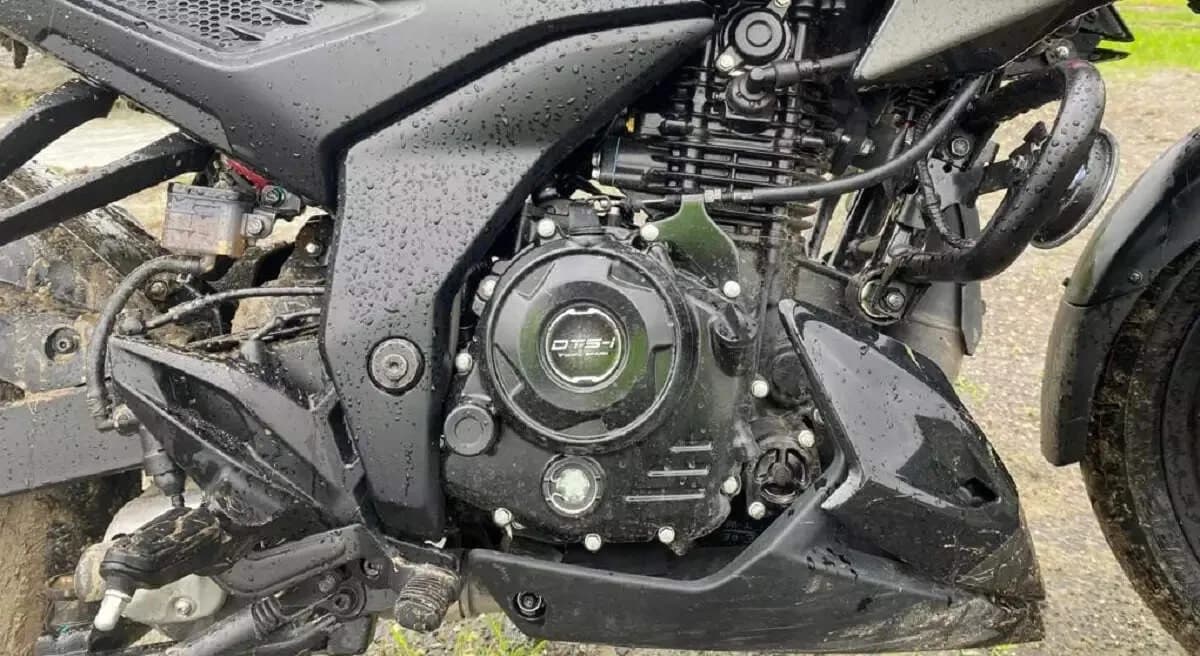
The heart of the N160 sold in Nepal is Bajaj's own 164.82cc, 2-valve, air-cooled, fuel-injected single, producing 16 PS at 8,750 rpm and 14.65 Nm of torque at 6,750 rpm, run through a 5-speed constant-mesh gearbox and chain final drive. On paper those numbers sit squarely mid-pack for the segment, and in practice that's exactly how the bike feels — not a bike built to win traffic-light drag races, but one engineered to be pleasant every single time you twist the throttle.
That's the real character of this motor. It's smooth in a way few 160cc commuters manage, with minimal vibration through the bars and pegs, and the clutch action carries a light, commuter-friendly bite point that makes stop-start Kathmandu traffic genuinely less tiring to ride through. Where it particularly shines is low-speed tractability — pulling away from a standstill or rolling through slow traffic doesn't require constant gear-shuffling the way some peakier engines in this class demand. The trade-off, and it's a real one, is that riders coming from or cross-shopping against liquid-cooled 150–160cc rivals will notice the N160 doesn't have the same punch when you actually want to hustle. It's a bike engineered for everyday competence, not outright pace.
Firm Enough To Feel Planted, Taut Enough To Notice On Bad Tarmac
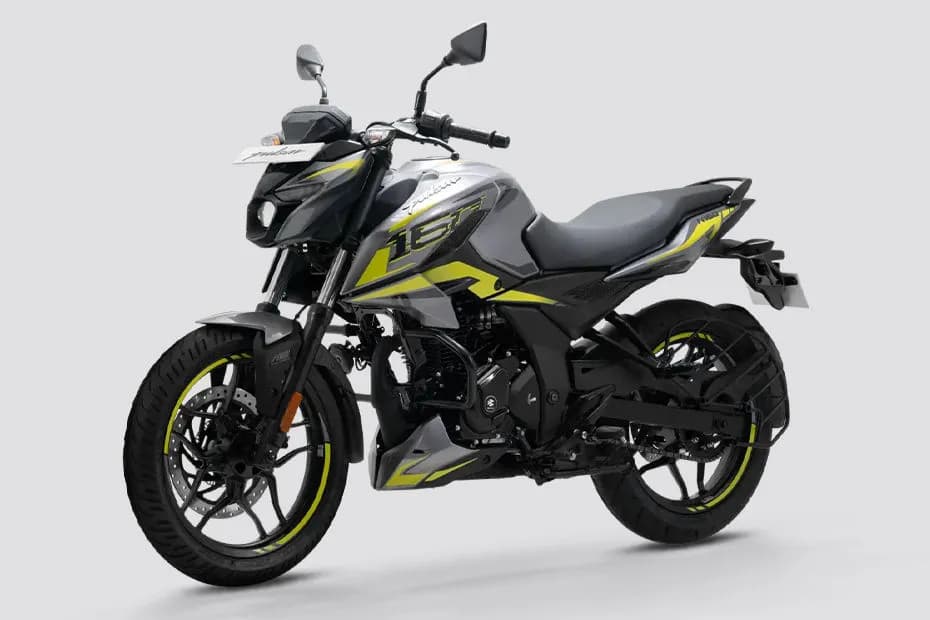
Suspension duties are handled by telescopic front forks (37 mm on most variants, stepping up to 33 mm gold-finished USD units on the higher trims) and a monoshock rear with 120 mm of stroke. The overall tune leans firm and taut rather than plush, which pays off in handling confidence — the bike feels stable and doesn't wallow through direction changes — but that firmness is noticeable over Nepal's rougher municipal roads and unrepaired patches, where it transmits more than a softly sprung commuter would.
It still absorbs potholes competently, and the wider 130-section rear tyre does real work here, providing dependable grip both in the corners and under harder braking. The USD-fork variants in particular give the front end a confident, stable feel that's genuinely a step up from a standard telescopic setup, and it's one of the more convincing reasons to stretch the budget toward the higher trims if handling feel matters to you more than saving the extra rupees.
A Revised Handlebar Helps, But Tall Riders Should Sit On It First
Ergonomics have had real attention paid to them. The handlebar angle has been revised to remove the sharper, more uncomfortable bend that older Pulsars were known for, and the seat height of 795 mm keeps the bike accessible to a wide range of rider heights — a genuine plus in a market where showroom staff routinely see buyers under 5'6" struggling with taller adventure-styled commuters.
Where it gets more mixed is seat shape. The re-profiled seat, while comfortable for shorter stints, has a tendency to nudge taller riders forward rather than letting them settle back into the seat properly, and riders on the taller side may find the seating position feels slightly cramped when trying to sit back and relax. It's not a dealbreaker, and in fact the N160 still comes out ahead of some direct rivals for taller riders, but it's worth sitting on the actual variant you're buying before committing, particularly if you're above average height.
Dual-Channel ABS And Traction Control Where It Matters
Braking hardware across the higher trims consists of a 300 mm front disc and 230 mm rear disc, with dual-channel ABS fitted to the top-spec variants — a genuine safety upgrade over the single-channel ABS units lower down the range. The addition of a traction control system on the flagship trims is a notable step for this price bracket in Nepal, where electronic rider aids at this level are still relatively uncommon on 160cc commuters. Buyers who ride two-up regularly, or who commute through Kathmandu's wetter monsoon months, will find these features genuinely useful rather than just brochure decoration — though it's worth remembering these features are reserved for the pricier variants, not the entry-level TD trims.
Built For Traffic, Not For Touring
The N160's real strength shows up in exactly the conditions most Nepali owners will actually ride in: dense, stop-start city traffic. The light clutch, smooth bite point, and strong low-speed pull make it an easy bike to live with during a commute, and that low-rev tractability means fewer gear changes and less physical effort riding through Kathmandu, Pokhara or any of the country's congested urban cores. With a 14-litre fuel tank and company-claimed mileage figures around 42 km/l, and real-world expectations hovering in the 40–45 km/l range, running costs sit comfortably within what buyers expect from this class.
Picking The Right Variant For Your Budget
With seven variants on offer, the sensible approach is to work backward from what features you actually need. If you just want a reliable 160cc commuter and don't care about a TFT dash or riding modes, the Dual Channel Single Seat USD TD at Rs 3,84,900 gets you the upside-down forks and dual-channel ABS without paying for the digital console. If you want the full package — TFT display, ride modes, Bluetooth, traction control — the Dual ABS with USD Fork and Digital Console at Rs 4,14,900 is the one to budget for, sitting a full Rs 21,000 below the range-topping Pulsar N160 ABS at Rs 4,35,900. For most buyers, that mid-to-upper trim represents the strongest value in the range.
The TVS Apache RTR 160 4V Rewards Higher Revs, The N160 Rewards Low-Speed Riding
The most natural comparison in Nepal's showrooms is the TVS Apache RTR 160 4V, and the two bikes genuinely reward different riding styles. The Apache comes alive higher in the rev range and rewards riders who like to work the gearbox and chase the tachometer, while the N160 is tuned the opposite way, with its strength concentrated in smooth, low-speed drivability that suits stop-start traffic far better. The N160 also edges ahead for taller riders, offering a marginally more comfortable seating position than the Apache manages. Pricing between the two is closely matched at the top end, which makes this genuinely a choice about riding style rather than one bike being clearly superior.
The Yamaha MT-15 Simply Has More Punch
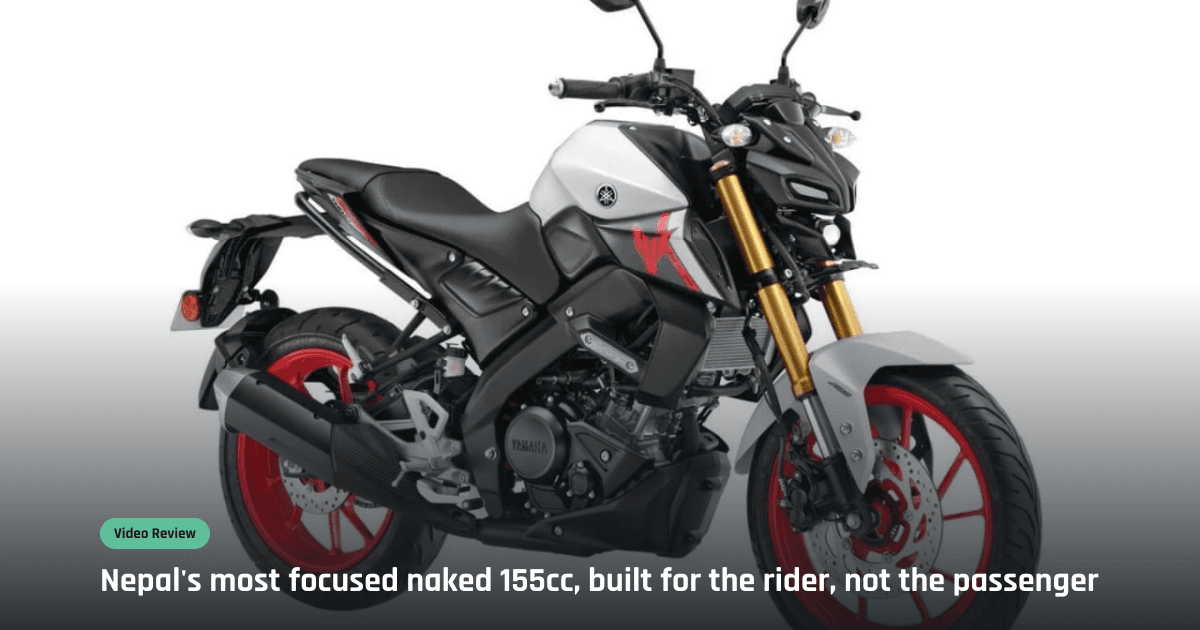
Against the Yamaha MT-15, the comparison is more straightforward: Yamaha's liquid-cooled engine punches above its weight and gives a noticeably quicker, more urgent feel than the N160 can match. Riders who prioritise outright acceleration and a sportier character will lean toward the MT-15. What the N160 offers in return is a smoother, more refined everyday experience, a wider variant spread to match different budgets, and features like the TFT display and document storage that the MT-15 doesn't match at this price point.
Our Verdict: A Sensible, Refined Choice For City Riders
The Bajaj Pulsar N160 isn't trying to be the fastest bike in Nepal's 160cc class, and buyers shopping for outright thrills should look elsewhere. What it does deliver is genuine day-to-day refinement: a smooth engine, a light clutch, low-speed tractability that makes traffic less exhausting, and — on the higher trims — a genuinely useful feature set that punches well above what this price bracket has traditionally offered. The seat shape and Rain-mode throttle response are the two honest gripes worth knowing about before you buy, but neither undoes what is otherwise a well-rounded, sensibly priced commuter. For riders who commute daily and want reliability and comfort over bragging rights at the traffic light, the N160 earns its place near the top of the shopping list.
Writes on vehicle pricing, taxation and the Nepali auto market from ongoing tracking of distributor price lists. Editorial policy.