Where The Dolphin Fits In Nepal's Growing EV Shelf
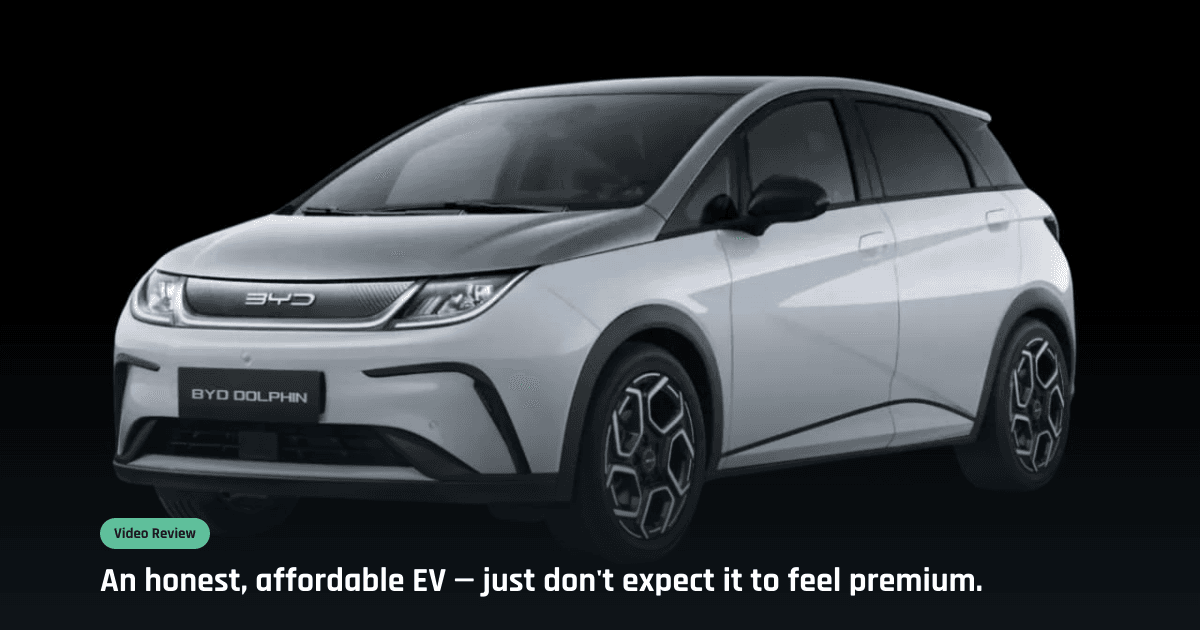
Nepal's electric vehicle market has moved fast in the last two years, and the BYD Dolphin, brought in by Cimex Inc. Pvt. Ltd. since 2023, sits right in the thick of that shift. Priced from Rs 30.75 lakh for the Dynamic 2026 Facelift up to Rs 58.9 lakh for the top Standard variant, it spans a wide bracket — wide enough that the base and top trims almost feel like different cars in terms of what you get for your money. This is not a car chasing premium buyers. It's aimed squarely at people who want a genuine, no-compromise EV badge without paying Tesla or premium-SUV money, and for that audience, the Dolphin makes a real case.
What's notable is that BYD hasn't cut corners on the fundamentals to hit that price. There's a 44.9 kWh Blade Battery rated for 340 km WLTP range, a 70 kW front motor producing 180 Nm, and safety kit — 6 airbags, ADAS, a 360-degree camera, and a 5-star Euro NCAP rating — that few rivals at this price point in Nepal can match on paper. The question buyers need to answer isn't whether the Dolphin is a "real" EV. It clearly is. The question is whether the way it's built and finished matches what you'd expect for the money, and that's where this review gets more interesting.
A Design That Divides Opinion In The Parking Lot
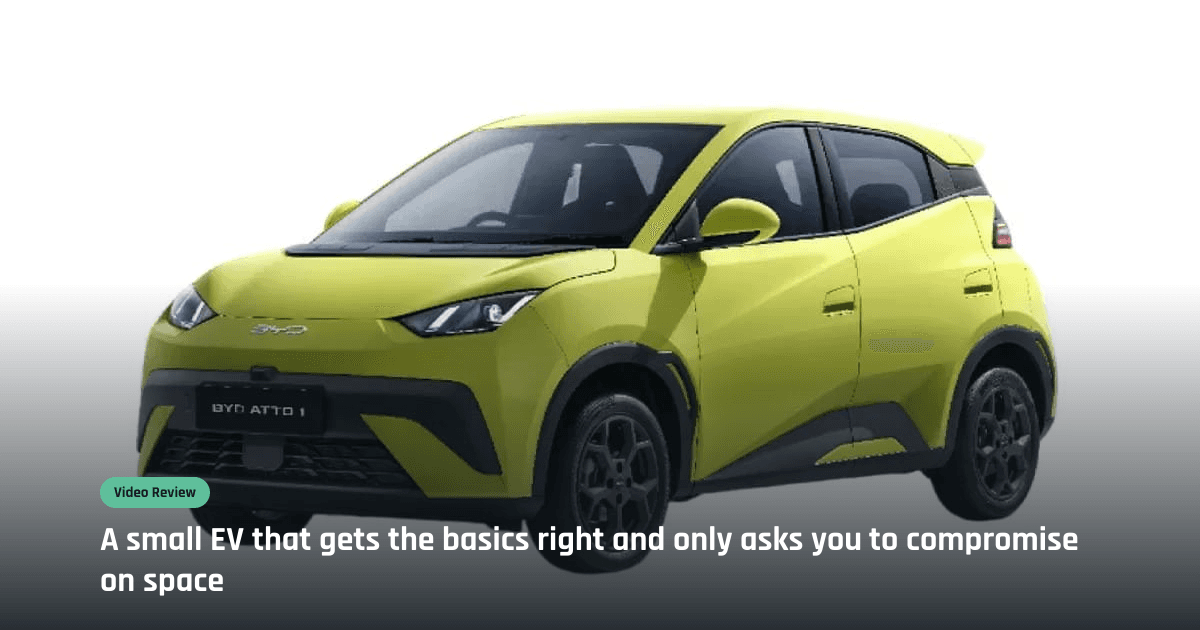
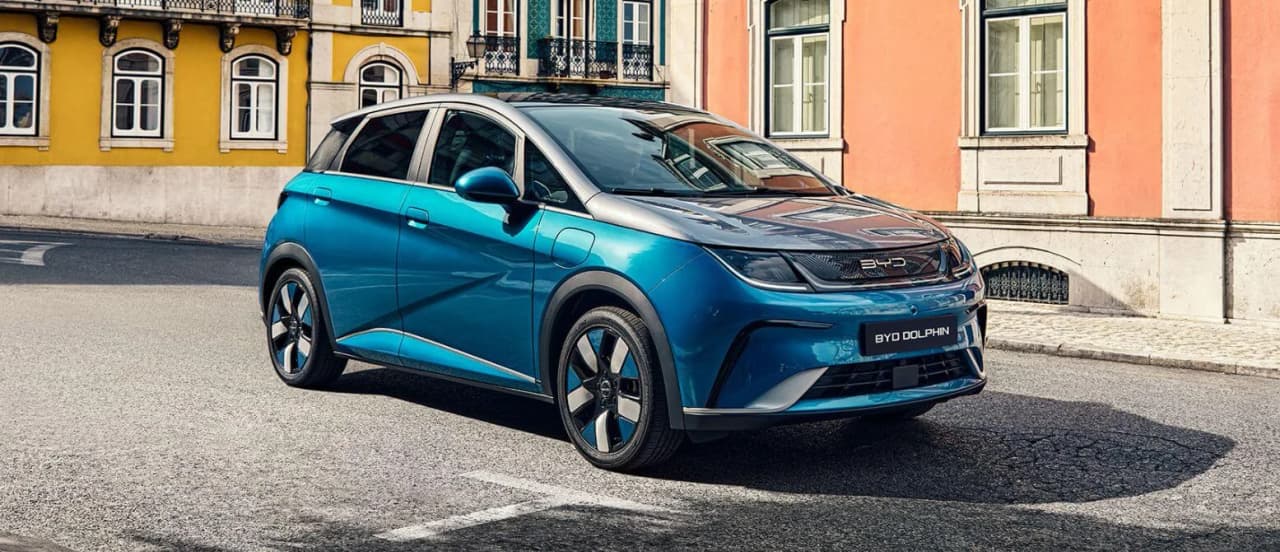
The Dolphin's styling is unmistakably quirky — a tall, top-heavy hatchback silhouette that some in the market have compared to a Chevrolet Spark more than anything typically electric. It's not a shape that blends in, and that's clearly deliberate. Flush door handles help with aerodynamics and give the car a cleaner side profile, while a full-length rear light bar across the tailgate is the car's strongest visual signature — it's the detail that makes the Dolphin recognisable at night from fifty metres away. The rear bumper has a slightly protruding design that adds visual interest but also means reversing sensors and parking awareness matter more than they might on a plainer shape.
Build quality assessments have to be trim-specific here. The lower trims, particularly the Dynamic 2026 Facelift, run halogen headlights that look distinctly budget next to the LED setups on pricier variants, and that gap in perceived quality is one of the first things showroom visitors notice. Move up to the Standard Range or Standard trims and the lighting, alloy wheels, and camera system lift the car's presence considerably. For a buyer cross-shopping variants in the same showroom, this jump in visual quality across the range is worth walking through carefully before deciding which one to sign for.
Only One Colour Comes Free
BYD Nepal's colour strategy on the Dolphin is straightforward but limiting: a bright yellow-green shade is the only standard paint that doesn't carry an extra charge. If you want white, blue, or black — arguably the safer, more resaleable choices for the Nepali market, where muted colours tend to hold value better — you'll be paying an optional-colour premium. Buyers who want the car to blend into daily traffic rather than stand out should budget for that extra cost upfront rather than being surprised at the booking desk.
The Cabin Tech Impresses, The Climate Switches Don't
The signature feature inside the Dolphin is its 12.8-inch rotating touchscreen, which flips between portrait and landscape orientation — a party trick that's genuinely useful when running Apple CarPlay or Android Auto in landscape and switching to portrait for navigation. Apple CarPlay and Android Auto are both supported, there's a 6-speaker sound system, and a voice assistant handles basic commands reasonably well. Keyless entry and start, automatic air-conditioning with a heat pump, and a PM2.5 air filter round out a features list that's genuinely competitive for the price.
Where the experience sours is in daily operation. The digital speedometer display is small and easy to miss at a glance, and climate control is handled through rocker-style switches that are unintuitive to use without looking away from the road — exactly the kind of ergonomic compromise that annoys owners after the novelty of the rotating screen wears off. The driver monitoring system is also overly sensitive in the way it chimes, to the point where it becomes a background irritation on longer drives rather than a helpful safety nudge. Wireless charging is present, but smartphone pairing and screen response can lag, which undercuts some of the goodwill the rotating display earns.
Power That Feels Different Depending On The Mode
Both the Standard Range and Standard variants use the 70 kW front motor producing 180 Nm of torque through a front-wheel-drive layout. In Sport mode, the Dolphin is genuinely punchy off the line — the instant torque delivery typical of EVs makes it feel quicker than its modest power figure suggests, and it's a strong point for buyers wanting an EV that feels lively in short bursts around town. Switch back to normal driving modes, however, and the throttle response goes noticeably soft and unresponsive, which can be frustrating when trying to merge or overtake confidently on Nepali highways.
This split personality is worth test-driving before you buy, because it changes how the car feels depending entirely on which mode you leave it in. Buyers who plan to drive mostly in Sport will find the performance satisfying for city and highway use; those who default to Eco or Normal modes for range reasons will find the car noticeably duller to drive.
Suspension That Bobs, Steering That Wakes Up Late
Ride quality on the Dolphin has a distinct bouncy, nodding character over uneven surfaces — a soft suspension tune that absorbs bumps but doesn't fully settle afterward, giving a slightly nodding-dog sensation on rougher Nepali roads. Despite that, the car handles twisty roads with more composure than its styling suggests it should, holding a line through corners reasonably well for a tall hatchback.
Steering feel is vague and light in Normal mode, which suits low-speed manoeuvring but doesn't inspire confidence at speed. Switching to Sport sharpens things up noticeably, adding welcome weight and precision. The standout dynamic strength, though, is the turning circle — genuinely excellent, and it makes the Dolphin one of the easier EVs to thread through Kathmandu's narrow lanes and tight parking bays.
Roomy In The Back, Compromised At The Windows
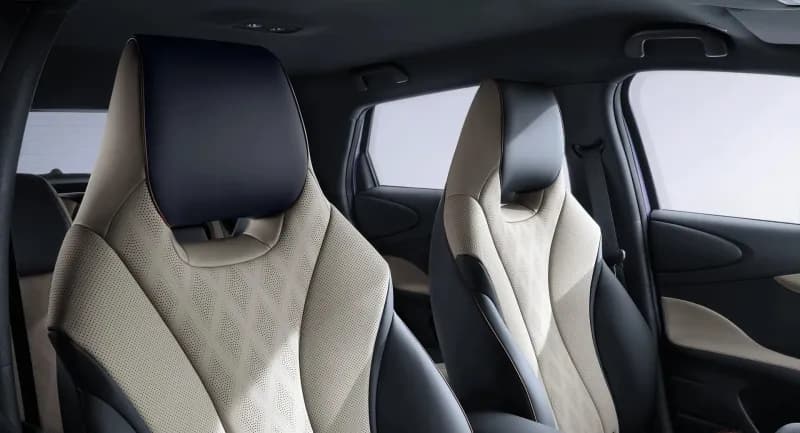
Front seat comfort is a strong point across the range — supportive and well-cushioned regardless of trim. Rear seat space is arguably the Dolphin's best practical feature: headroom and knee room are both generous for the car's footprint, helped by a genuinely flat rear floor that gives the middle passenger proper foot space rather than straddling a transmission hump.
The one ergonomic letdown in the back is that the rear windows don't roll down completely, leaving a noticeable gap at the top that can be irritating for rear passengers wanting full airflow on a hot day. It's a small thing, but it's the kind of detail families test-driving with kids in the back will notice immediately.
Safety Kit That Outperforms Its Price Tag — With One Caveat
On paper, the Dolphin's safety credentials are strong for its segment: a 5-star Euro NCAP rating, 6 airbags, adaptive cruise control, lane-keep assist, and a 360-degree camera with hill assist control (HAC). For a car starting around Rs 30.75 lakh, this is a genuinely competitive safety package that few rivals match feature-for-feature.
The caveat is brake pedal feel, which comes across as unnatural and inconsistent, particularly under harder or emergency braking, where the car's behaviour can feel unstable and sketchy rather than planted. Firm braking also automatically triggers the hazard lights, which is a useful safety cue for following traffic but can startle drivers unfamiliar with the feature the first few times it activates. We'd flag this as the one area of the car's safety story that doesn't fully live up to the rest of the package, and it's worth specifically testing hard stops during a test drive.
Practical For People, Less So For Their Luggage
The Dolphin's dimensions — 4,290mm long, 1,770mm wide, 1,570mm tall, on a 2,700mm wheelbase — translate into a cabin that prioritises passenger space over cargo room. Boot capacity is tight, realistically fitting around three carry-on suitcases, and there's a high load lip to clear when loading heavier items. There's no adjustable boot floor either, which leaves an awkward, large step when the rear seats are folded flat — not ideal for anyone regularly carrying longer or bulkier items.
Rear door design compounds the practicality question somewhat: the doors themselves are long, which helps entry angle in wider parking spots, but the actual door opening is relatively small, making entry and exit trickier in the tight parking common in Nepali cities and housing societies. Even smaller details like the cupholders show a lack of attention — they're wide but lack any grip texture, so bottles can tip over on rougher roads. None of this is a dealbreaker, but families cross-shopping for a do-everything car should weigh it against more boot-friendly alternatives.
What Ownership Actually Costs Beyond The Sticker Price
The Dolphin's core appeal for Nepali buyers is running cost. With a 44.9 kWh battery delivering a claimed 340 km WLTP range, real-world efficiency has been consistently reported as strong, translating into genuinely low per-kilometre costs compared to petrol equivalents — a major draw given Nepal's fuel prices and EV-friendly tax structure. The manufacturer backs the car with a six-year warranty, which is a genuine point of reassurance for first-time EV buyers wary of battery degradation or long-term reliability concerns.
Ground clearance of 175mm is a relevant, practical figure for Nepali roads and monsoon-affected surfaces, giving the Dolphin slightly more real-world usability than some sedans in the same price bracket.
Four Variants, And The Value Case Gets Complicated Fast
The Dolphin's four-variant spread — Dynamic 2026 Facelift at Rs 30.75 lakh, Premium 2026 Facelift at Rs 34.80 lakh, Standard Range at Rs 41.15 lakh, and Standard at Rs 58.9 lakh — covers a genuinely broad price range for what is nominally one model. The base Dynamic trim is the value pick for buyers focused purely on getting into an EV cheaply, but expect cheaper steel wheels and those halogen headlights that look dated next to the rest of the range.
The Standard Range and Standard variants, both running the 70 kW motor, bring the alloy wheels, LED lighting, and the full 360-degree camera system into play — genuine upgrades that materially change how the car feels to live with day to day. Given the significant price jump to the top Standard trim at Rs 58.9 lakh, we'd suggest the Premium 2026 Facelift or Standard Range as the sweet spot for most buyers: enough equipment to feel current, without paying close to double the entry price.
The MG4 Is The Sharper Drive For Similar Money
The MG4 is the Dolphin's most direct dynamic rival in the Nepali EV hatchback space, and it's the one that consistently comes out ahead when the conversation turns to how the car actually drives. It handles with more composure and feels more engaging on a twisty road, which matters for buyers who want their EV to be fun rather than just efficient. If driving enjoyment is high on your list, the MG4 deserves a serious look before you commit to the Dolphin.
The Hyundai Inster Counters With Sharper Design And Braking
The Hyundai Inster is a newer entrant that competes on a different strength: design appeal and braking confidence. Where the Dolphin's styling is polarising and its brake feel inconsistent under hard stops, the Inster presents a cooler, more resolved design language and reportedly more reassuring braking behaviour — a meaningful factor for buyers who prioritise everyday confidence behind the wheel over outright cabin space.
The Renault 5 Sets The Bar On Range And Boot Space
The Renault 5 is arguably the toughest comparison for the Dolphin, offering more usable range, a genuinely bigger boot, and reportedly more competitive lease and finance terms in markets where both are sold. For Nepali buyers specifically comparing on practicality — how much luggage fits, how far you can go on a charge — the Renault 5 is the rival most worth cross-shopping before signing for a Dolphin, particularly if boot space was a concern reading the practicality section above.
Our Verdict: A Sensible Choice, Not An Exciting One
The BYD Dolphin does what it needs to do: it gets Nepali buyers into a genuine, well-specified EV at a price that undercuts much of the competition, backed by a reassuring six-year warranty and safety credentials that punch above its price bracket. The spacious, flat-floored rear seat and tight turning circle make it a genuinely likeable city companion, and the rotating touchscreen is a feature buyers will show off to passengers.
But it's not a car without friction. The interior plastics feel unmistakably budget, the climate controls are needlessly fiddly, boot space is tight, and brake feel under hard stops is the one safety-adjacent issue we'd want addressed before recommending it without reservation. Buyers who want the EV badge and the running-cost savings, and who value rear-seat space over boot space or driving thrills, will find the Dolphin a sensible, honest choice. Those wanting a more polished cabin or a sharper drive should put the MG4, Hyundai Inster, and Renault 5 on the test-drive list before deciding.
Writes on vehicle pricing, taxation and the Nepali auto market from ongoing tracking of distributor price lists. Editorial policy.