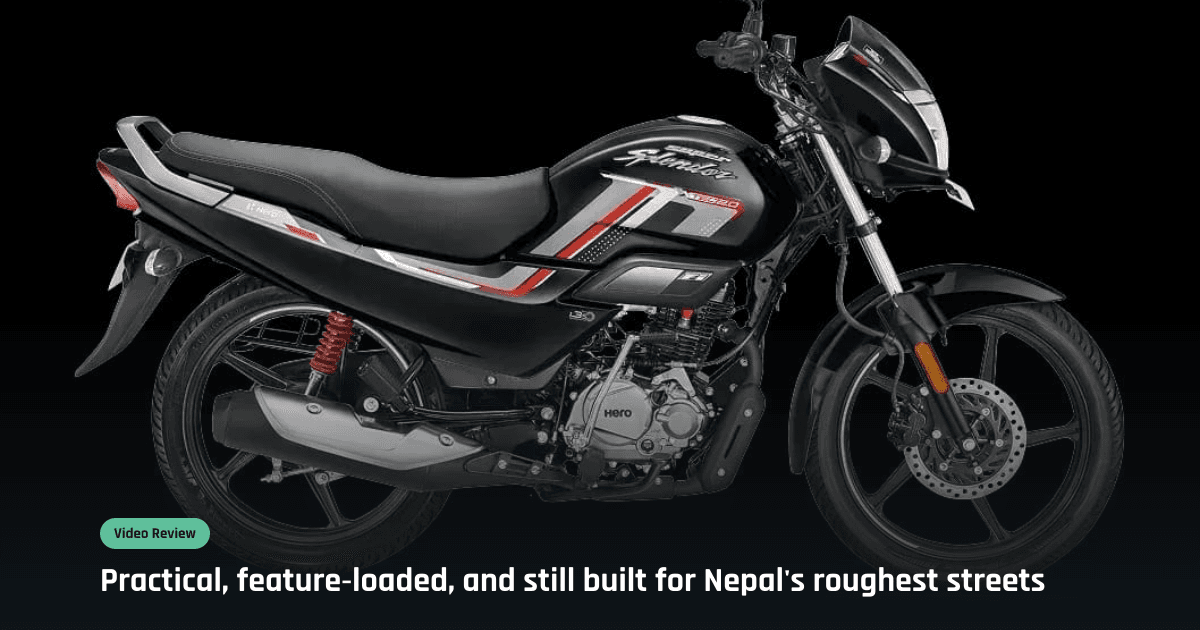
Where The Super Splendor Sits In Nepal's Commuter Pecking Order
The Hero Super Splendor occupies a familiar spot in the Nepali market: it's the practical, no-nonsense 125cc commuter that buyers reach for when they want reliability over flash, but don't want to feel like they've been shortchanged on features either. Distributed in Nepal by CG Motors Pvt. Ltd. since 2019, the bike has built a reputation on Hero's long-standing service network and parts availability, which matters enormously in a market where owning a motorcycle for eight or ten years is still the norm rather than the exception.
With ex-showroom prices spanning Rs 2.31 lakh for the base carburetted BS4 IBS variant to Rs 2.66 lakh for the fuel-injected BS6 model, the Super Splendor positions itself as a step above entry-level 100cc-125cc runabouts, aimed at buyers who want a bit more engine, a bit more equipment, and a bike that can double as a daily commuter and an occasional highway tourer. It's not chasing the premium end of the 125cc segment on price, but it isn't the cheapest option in its class either — and that middle-ground positioning is really the story of this bike.
A Split-LED Face That Finally Looks Modern
The styling update on the newer Super Splendor is the first thing anyone notices at a CG Motors showroom. The split headlight design at the front, finished with chrome accents, gives the bike a considerably more contemporary face than the rounded, generic look older Super Splendor buyers will remember. Sporty graphics run across the fuel tank and side panels, lifting what used to be a fairly plain-looking commuter into something buyers are less embarrassed to park outside.
The rear stays sensible — a simple grab rail and taillight assembly with no unnecessary flourishes — which is exactly what a bike in this segment should do. Nepali buyers in this price band tend to want a motorcycle that looks current without looking like it's trying too hard, and the Super Splendor's design brief clearly understood that brief. Build quality at showroom level feels consistent with what Hero has offered in this segment for years: it isn't going to win any design awards, but panel fit and finish match buyer expectations at this price point.
Four Colours, All Aimed At Different Buyers
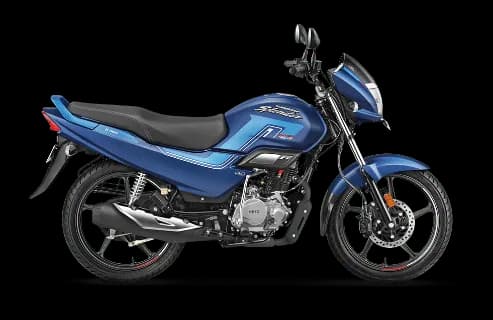
The Super Splendor XTEC is available in four colour options: Matt Nexus Blue, Gloss Black, Candy Blazing Red, and Matte Axis Grey. It's a sensible spread — the matte finishes appeal to buyers wanting a slightly premium, understated look, while Candy Blazing Red and Gloss Black cater to those who want their commuter to stand out a little more in traffic. There's no shortage of choice here relative to what rivals typically offer at this price.
The Instrument Cluster Does More Than It Needs To
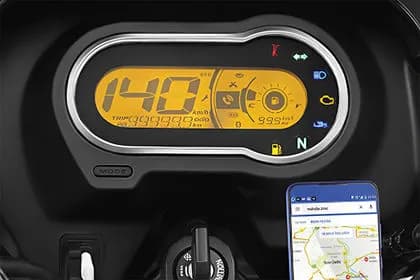
For a bike at this price point, the features list is genuinely surprising. The fully digital instrument cluster displays speed, fuel level, odometer, trip meter and real-time mileage, and it pairs with a smartphone over Bluetooth to flash call and SMS alerts on screen — a feature more commonly associated with bikes a rung or two higher up the price ladder. Sitting right next to the cluster is a USB Type-A charging port, genuinely useful for riders who rely on their phones for navigation or payment apps during the day.
Hero has also fitted a dedicated hazard light switch on the right handlebar that fires all four indicators at once — a small but meaningful safety addition on Nepali roads where sudden stops in traffic or breakdowns on the shoulder are common. Under the skin, the i3S technology automatically cuts the engine at idle to save fuel, a feature that's becoming more common across the segment but is still worth flagging given the bike's commuter-first audience. The one gap in an otherwise well-specified cluster is the absence of a gear position indicator — a small omission, but one that riders coming from more feature-complete rivals do notice and mention.
The Engine Prioritises Torque Over Top-End Manners
Under the tank sits a 124.7cc air-cooled, four-stroke single-cylinder OHC engine, offered across the range in two distinct states of tune. The base carburetted and SPL variants use a version producing 9 BHP at 7500 rpm and 10.35 Nm of torque at 4000 rpm, running through a 4-speed gearbox with a wet multi-plate clutch. The FI BS6 variant steps this up meaningfully — a fuel-injected setup with Advanced Programmed Fuel Injection producing 10.7 BHP at 7500 rpm and 10.6 Nm at 6000 rpm, mated to a 5-speed constant mesh gearbox.
That extra ratio and the added top-end power make the FI variant the noticeably more relaxed motorcycle at highway speeds, and it's the one we'd point most buyers toward if the budget stretches to it. That said, the engine's character is tuned for low and mid-range pull rather than outright refinement — it does its best work ferrying riders through city traffic and moderate inclines, and it starts to feel strained the harder you push it. Vibrations become noticeable once you're cruising past 90 km/h, and the general feeling is one of a motor engineered for durability and torque delivery first, refinement a distant second. For the kind of stop-start, load-carrying use this bike sees across Nepal, that's a reasonable trade-off, but highway-heavy riders should go in with the right expectations.
A Chassis Tuned For Bad Roads, Not Fast Ones
The Super Splendor rides on a tubular frame — double cradle on the carburetted models, diamond-type on the FI variant — paired with telescopic forks up front and a 5-step adjustable hydraulic shock absorber setup at the rear. That adjustability is a genuine practical touch, letting owners dial in preload depending on whether they're riding solo or two-up, which is common practice on Nepali roads where pillion riding is the rule rather than the exception.
Tyres are tubeless at both ends — 80/100-18 front and 90/90-18 rear — which is a meaningful safety upgrade over tube-type rubber still found on some rivals, reducing the risk of sudden deflation on Nepal's pothole-strewn back roads. Ride quality over broken surfaces is comfortable, and the suspension does a good job soaking up the kind of bumps and ruts that define much of the road network outside major cities. Where the chassis shows its limits is at sustained higher speeds, where stability starts to feel less planted — this is a motorcycle that's happiest kept under 90 km/h, which aligns comfortably with how most owners actually use it.
A Seat Built For Two, All Day
Ergonomics on the Super Splendor are shaped entirely around commuting comfort. The single-piece seat is long and well-padded, designed with both rider and pillion in mind, and it shows in how the bike is actually used across Nepal — ferrying families, groceries, and often a second or third passenger over longer distances than the segment typically sees elsewhere. Seat height sits around 785-793mm depending on variant, which keeps the bike accessible to a wide range of rider heights without feeling low-slung or toy-like.
Braking Comes With A Safety Net, Just Not ABS
Braking hardware varies by variant: a 240mm front disc on the higher trims, or a 130mm front drum on the entry-level bike, paired with a 130mm rear drum throughout. What lifts the setup above a basic drum-drum commuter is Hero's Integrated Braking System, which applies both front and rear brakes simultaneously when the rear brake lever is pressed — a genuinely useful safety net for riders who instinctively reach for the rear brake first in a panic stop, which describes a large share of commuter riders.
What's missing, and worth being upfront about, is ABS — it isn't offered on any Super Splendor variant. For a bike that's otherwise reasonably well equipped for its price, this is the clearest compromise Hero has made to keep costs down, and buyers cross-shopping with rivals that do offer ABS at a similar price should weigh that carefully.
Ground Clearance And Tank Size Built For Nepali Roads
Two practicality figures stand out on the spec sheet, and both matter enormously in Nepal. Ground clearance of 180mm is genuinely excellent for the segment, letting the Super Splendor clear speed breakers, waterlogged monsoon roads, and rutted gravel stretches without the scraping and hesitation smaller-clearance commuters suffer. The 12-litre fuel tank (13 litres is quoted on some official specification sheets, with 12 litres on others depending on variant) is also on the larger side for a 125cc commuter, meaningfully reducing how often owners need to hunt for a petrol pump on longer rides between towns.
Add in the USB charging port for keeping a phone topped up on the move, and the overall practicality package is one of the stronger arguments for this bike over cheaper, more basic alternatives.
What Real-World Mileage Actually Looks Like
Hero does not officially disclose a claimed mileage figure for the current lineup, so we won't repeat inflated numbers that occasionally circulate. What we can say with more confidence, based on the bike's tune and the broad pattern of feedback across the commuter segment, is that real-world mileage in the mid-to-high 50s to low 60s kmpl is a realistic expectation for careful city and highway riding — squarely competitive for a 125cc commuter, though buyers should treat any specific claimed figure with caution until Hero publishes one officially.
Picking A Variant: Where The Extra Money Actually Goes
Three variants make up the Nepali lineup. The Super Splendor IBS Carb BS4 is the entry point at Rs 2.31 lakh, running the carburetted engine with Hero's IBS braking as standard. The SPL BS4 sits in the middle at Rs 2,55,900, and the range-topping Super Splendor FI BS6 comes in at Rs 2,66,000, bringing fuel injection, the more powerful state of tune, and the 5-speed gearbox.
For most buyers, the FI BS6 variant is the one to stretch for if the budget allows — the fuel-injected engine's extra power and gear ratio genuinely change how the bike feels on the highway, and BS6 compliance future-proofs the purchase against emissions-related restrictions down the line. Buyers on a tighter budget who mostly ride within city limits will find the base carburetted variant perfectly adequate, but the jump to FI is where the Super Splendor feels like a meaningfully better motorcycle rather than just a cheaper one.
The Honda Shine 125 Is The Obvious Cross-Shop
The natural rival to weigh against the Super Splendor is the Honda Shine 125, and the comparison is close enough that the decision often comes down to priorities rather than one bike being clearly superior. The Shine is lighter, carries a reputation for a more refined engine, and includes a gear position indicator the Super Splendor's cluster lacks — while typically pricing in a little below the Hero.
Against that, the Super Splendor answers with a considerably more modern features list: the split LED headlight, the fully digital Bluetooth-enabled cluster, the hazard switch, and superior ground clearance all give it an edge for buyers who value technology and rough-road capability over outright refinement. Neither bike is the wrong choice; it genuinely depends on whether a buyer weighs a smoother engine and lower weight more heavily than a richer features list and higher ground clearance.
The Verdict: A Sensible, Well-Equipped Commuter With One Notable Gap
The Hero Super Splendor earns its place in Nepal's 125cc commuter segment through a combination of practicality and features that punch above its price. Class-leading ground clearance, a generous fuel tank, IBS braking, and a genuinely useful digital console with Bluetooth and USB charging make it one of the better-equipped options available at this price point. The lack of ABS and the engine's tendency to vibrate at sustained higher speeds are real compromises, but they're compromises most buyers in this segment will find easy to accept given what they're getting in return.
This is a motorcycle built for daily commuters who want smartphone connectivity and modern styling without stepping outside a familiar, well-supported brand — riders who'll spend most of their time navigating city traffic and broken roads rather than chasing highway top speed. For that buyer, and backed by CG Motors' distribution network across Nepal, the Super Splendor remains a thoroughly sensible choice.
Writes on vehicle pricing, taxation and the Nepali auto market from ongoing tracking of distributor price lists. Editorial policy.