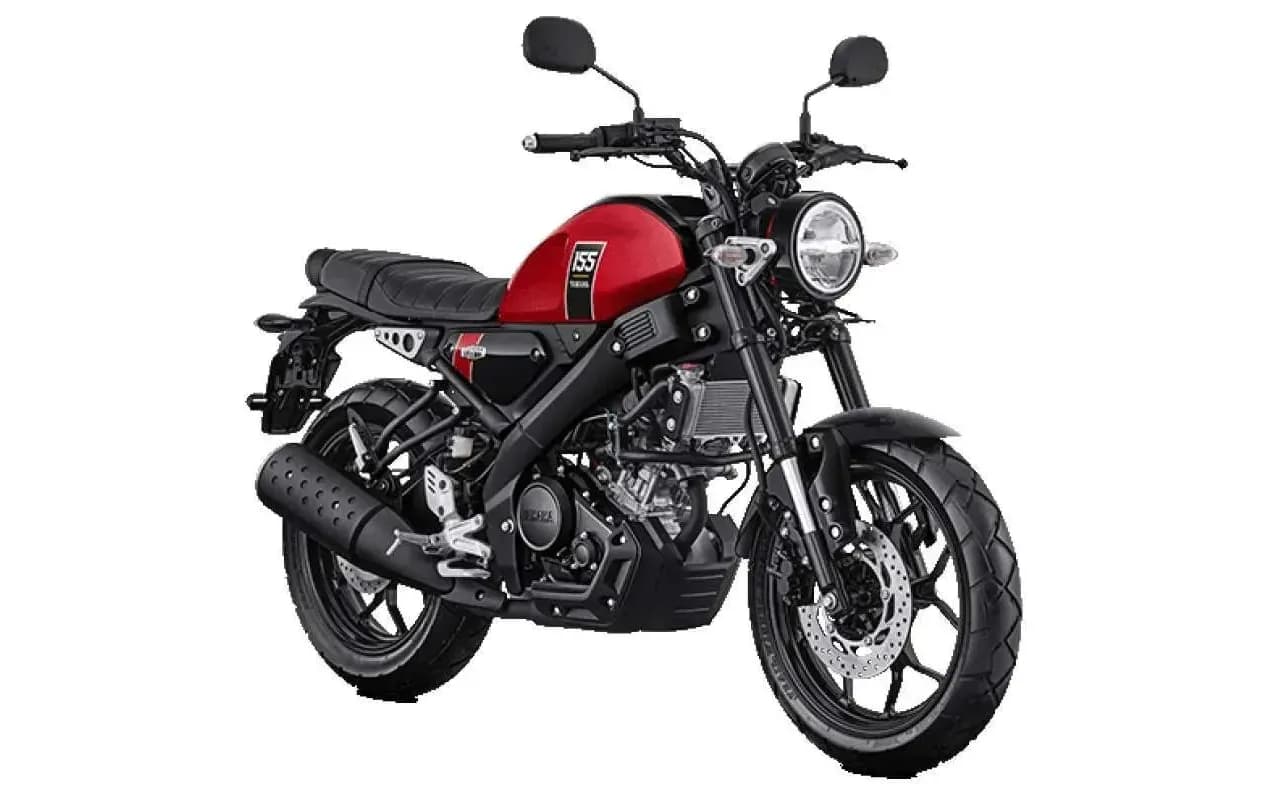
Start with the numbers
The model, at a glance
Top available variants, with prices in Nepalese rupees. Expand details to choose another variant.
| Vehicle | Ex-showroom price | Fuel | Selected variant |
|---|---|---|---|
| 01Yamaha XSR155 | Rs 5.65 lakh | Petrol | Standard |
Ex-showroom prices exclude registration, road tax and insurance. Specifications can vary by trim. See individual source-check dates ↓
Where The XSR155 Actually Fits In Nepal's Crowded 150cc Class
Yamaha Nepal, through authorised distributor MAW Rides Pvt. Ltd., has positioned the XSR155 as something quite different from the usual commuter fare that dominates Nepali showrooms. At an ex-showroom price band of Rs 5.3 lakh to Rs 5.6 lakh across its four variants — BMC, VRC1, WMC and SMX — this is not a bike competing on price. It's competing on identity. Buyers shopping in this bracket are not cross-shopping with entry-level 125s or basic commuters; they're weighing the XSR155 against retro-styled and mid-capacity motorcycles that cost similarly or even more, which tells you exactly who Yamaha is chasing here: riders who want a motorcycle that looks and feels special every time they throw a leg over it, not just one that gets them to work.
That positioning matters because it sets expectations. This is a 155cc motorcycle priced closer to 350cc territory, and the value proposition rests entirely on refinement, styling and the strength of the Yamaha badge rather than outright displacement or highway comfort.
Neo-Retro Styling That Doesn't Cut Corners On The Details
The XSR155's design language is unmistakably neo-retro — a round headlight, a classically shaped fuel tank, and proportions that echo Yamaha's heritage XSR line from other markets. It's a design that photographs well and holds up on the showroom floor too, with details like the round LED tail light giving the rear end a clean, distinctive finish that doesn't look like an afterthought.
Where the build quality gets more mixed is in the materials. The front fender and side panels are entirely plastic rather than metal, which keeps weight down but also means the premium feel some buyers expect at this price point doesn't extend all the way through. The blacked-out upside-down front forks look genuinely premium and lend the front end a purposeful, performance-bike stance, but the exhaust muffler's heat shield is a simple plastic cover that feels like a cost-saving measure on an otherwise style-focused motorcycle. It's a bike that nails the big design strokes but occasionally reminds you where the budget was allocated.
The Colour Question: Black Forks Or Gold Forks
Yamaha offers the XSR155 in colour options that go beyond simple paint choices — they change the character of the front end. A matte green scheme with orange and white decal work gives the bike a distinctly military-inspired, purposeful look, paired with the blacked-out USD forks that suit the tone well. Other colour variants swap in gold-finished front forks instead of black, which shifts the visual weight of the bike toward a more classic, heritage-styled appearance rather than the moddish look the black-fork version carries.
For Nepali buyers, this is worth an actual showroom visit before deciding, since the fork finish changes how the whole front fascia reads far more than most colour choices typically do on a motorcycle.
A Digital Dash And Connectivity That Mostly Goes Unused
The circular digital instrument cluster is one of the XSR155's genuine highlights, and it suits the retro theme far better than a rectangular TFT screen would. It packs in speed, RPM, gear position indicator, fuel level and trip details in a legible round layout, with a digital speedometer, tachometer and fuel gauge all present.
Yamaha's Y-Connect smartphone connectivity works through an under-seat Bluetooth dongle, though in practice this is a feature many owners will set up once and rarely revisit — it's a nice-to-have rather than something that changes daily riding. More relevant for everyday use is that hazard lights only function when the ignition key is turned to the on position, a small but real inconvenience if you need to flash hazards while parked with the key removed. The motorcycle also ships without a centre stand, which has to be bought as an accessory — an odd omission on a bike positioned as a lifestyle purchase where owners are likely to want one for maintenance and display parking alike.
An Engine That Shares Its DNA With The R15, And It Shows
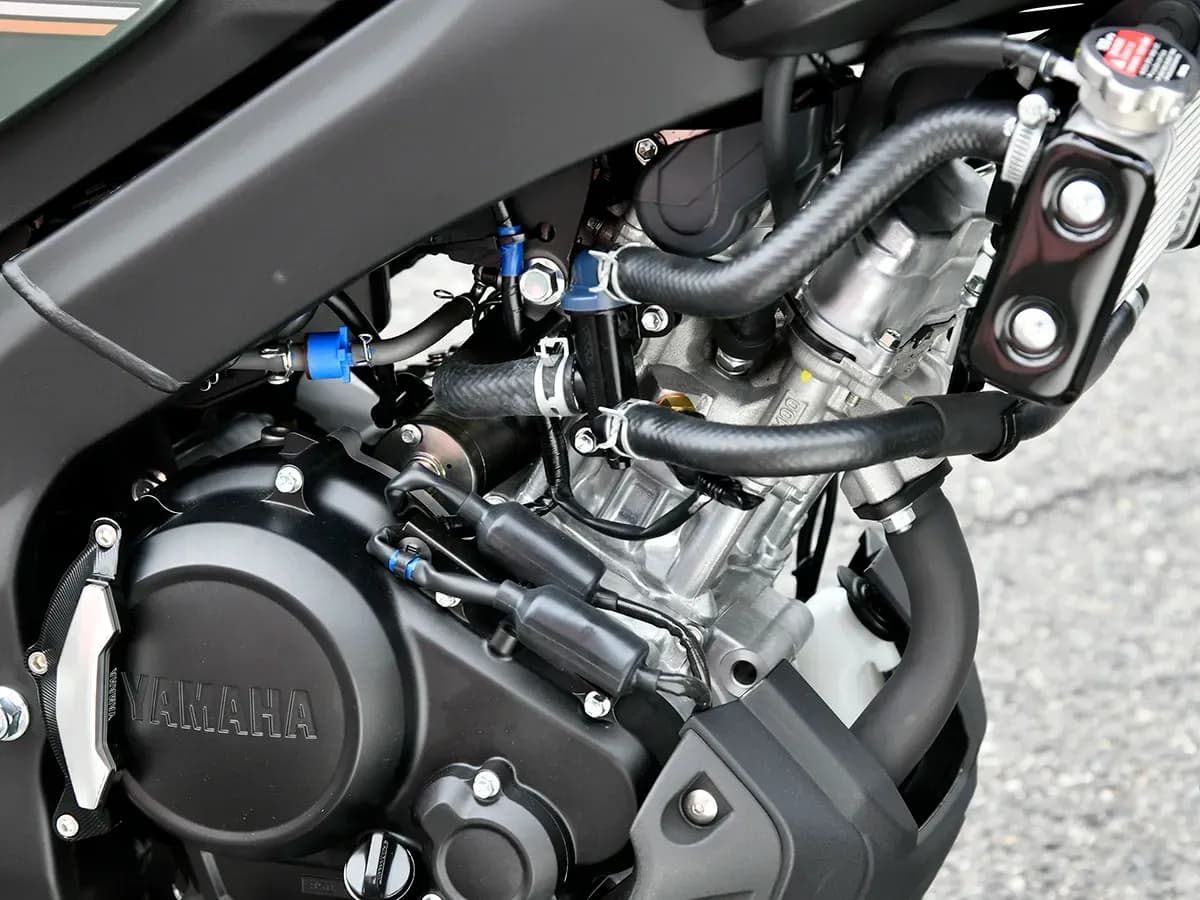
At the heart of the XSR155 is a 155cc, liquid-cooled, SOHC, 4-valve engine producing 13.5kW (18.4PS) at 10,000rpm and 14.2Nm of torque at 7,500rpm — figures that put it solidly in Yamaha's performance-commuter bracket. The engine is built with Variable Valve Actuation (VVA), the same technology found on the R15 V4, which alters valve timing to broaden the power delivery across the rev range rather than making the bike feel peaky.
That shared DNA is obvious the moment you ride it — this is a genuinely refined, smooth-running engine that behaves the way Japanese-engineered 150s typically do, without the coarseness some rivals exhibit at low revs. Power delivery is linear through most of the rev range, though the engine does get noticeably buzzier and harsher once you push past 7,000-8,000rpm, which is worth knowing if you plan to ride it hard rather than short-shift through traffic. The 6-speed gearbox shifts precisely, and the assist-and-slipper clutch keeps the lever action light, though there's no span adjustability on the lever itself — a small ergonomic gap for riders with smaller hands. The E20 fuel compatibility is also a practical plus given Nepal's evolving fuel blend standards.
Sharp In The City, Firm Everywhere Else
At just 137kg kerb weight, the XSR155 is genuinely light for its class, and that translates directly into how it handles. Direction changes are quick and effortless, filtering through slow traffic feels natural, and the Deltabox chassis — a proper piece of engineering pedigree rather than a marketing term — gives the bike a planted, confident feel when you do get to lean it into a corner.
The trade-off is ride comfort. The suspension setup, built around telescopic upside-down front forks and a rear swingarm with link suspension, is tuned on the firmer side, and it transmits sharp bumps rather than absorbing them — something Nepali roads, with their patchwork of potholes and uneven surfaces, will expose regularly. The stock tyres — a 100/80-17 front and a wide 140/70-17 radial rear — grip well on clean tarmac but turn noticeably nervous on the gravel-strewn, dusty stretches common on Kathmandu Valley roads and highway shoulders alike. This is a bike that rewards good roads and demands caution on bad ones.
A Riding Position Built For The City, Not The Highway
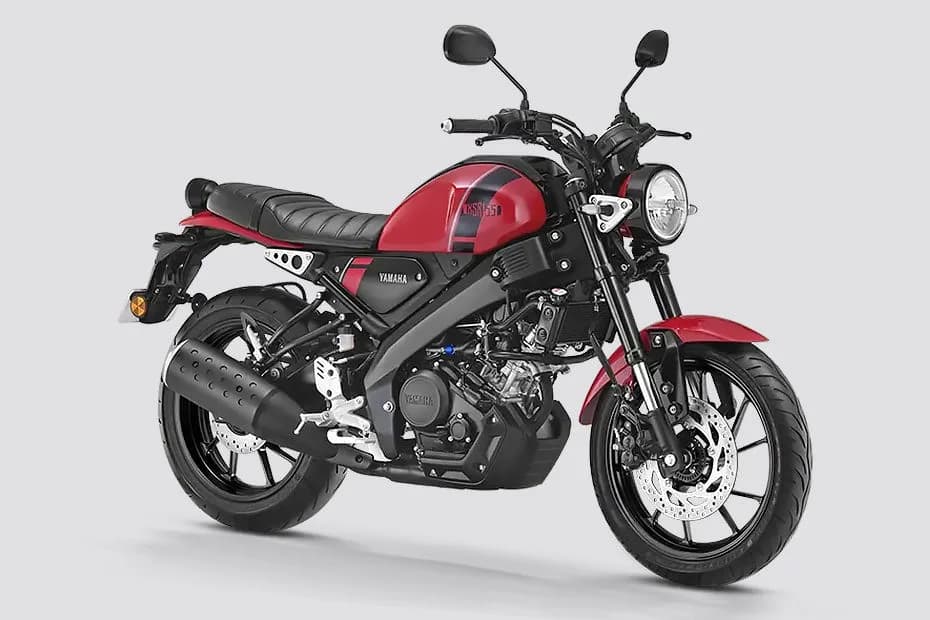
Ergonomically, the XSR155 strikes a deliberately more relaxed pose than Yamaha's own MT-15, with an upright seating position that suits stop-start city commuting well. The seat height of 810mm and a flat, reasonably padded seat work fine for short hops around town.
Push it onto the highway, though, and the comfort story changes. The seat cushioning that felt adequate in the city starts to cause real fatigue on longer runs, and above 100km/h the complete lack of wind protection means wind blast becomes a serious factor, tiring out the rider well before fuel range does. Pillion comfort is also a genuine afterthought here — there's no grab rail or handle provided for a passenger, which is a notable omission for a motorcycle priced where it is.
Strong Front Stopping Power, A Rear Brake That Undersells Itself
The XSR155 is well equipped on paper for safety, with a 282mm front disc and a 220mm rear disc, both backed by dual-channel ABS and — notably for this segment — a traction control system, which is not something every rival offers. The front brake, using ByBre calipers, delivers strong, confident stopping power with good initial bite, and it's one of the more reassuring elements of the whole package.
The rear brake doesn't match that confidence. It feels comparatively weak and lacks meaningful bite, functioning more as a stabiliser during braking than a genuine stopping force on its own. The traction control system, meanwhile, earns its keep on sandy or dusty surfaces, cutting in effectively to prevent rear-wheel slip — a genuinely useful safety net given how often Nepali roads throw up exactly those conditions.
Storage Space That Barely Qualifies As Storage
Practicality is not where the XSR155 shines, and buyers should go in with realistic expectations. The under-seat area is genuinely cramped, with room for little beyond the battery, the Bluetooth dongle, and a basic screwdriver-style tool — there's no meaningful space for a rain jacket, documents, or anything beyond the essentials. Combined with the missing centre stand, this is a motorcycle that asks owners to carry a small tail bag or tank bag if they need to transport anything at all.
Where it does score on practicality is manoeuvring and parking. That 137kg kerb weight makes it trivially easy to push around, park in tight gaps, and manage at low speed — a real advantage in dense Kathmandu Valley traffic and parking conditions.
Fuel Economy That Genuinely Backs Up The Spec Sheet
With a 10-litre fuel tank and Yamaha's fuel-injected engine tuned for efficiency, the XSR155 delivers genuinely strong running costs. City riding returns figures around 50kmpl, which is excellent for a 155cc motorcycle of this performance level, while sustained highway riding under harder use settles closer to 40kmpl. For a bike that isn't marketed primarily as an economy commuter, this is a strong secondary selling point — owners get style and refinement without paying a heavy fuel penalty for it.
Which Of The Four Variants Actually Makes Sense
The XSR155 range in Nepal runs from the BMC at Rs 5,29,900 through the VRC1 at Rs 5,39,900 and WMC at Rs 5,44,900, up to the range-topping SMX at Rs 5,59,900 — all sharing the identical 155cc engine and core mechanical package. Since the powertrain, chassis, brakes and safety equipment are common across the range, the differences between variants come down largely to colour and cosmetic treatment, including that fork-finish distinction between black and gold USD units.
For most Nepali buyers, this means the decision is really about which colour and finish speaks to you rather than chasing a higher trim for extra hardware. Given the spread between the base and top variant is under Rs 30,000, we'd suggest spending time at the showroom comparing the actual colour and fork-finish combinations in person before defaulting to the top-spec SMX — the mechanical experience will be identical regardless of which variant badge is on the tank.
The Royal Enfield Hunter 350 Offers More Muscle, Less Refinement
The Royal Enfield Hunter 350 is a natural cross-shop for buyers browsing this price band, and it represents almost the opposite philosophy. The Hunter 350 brings more outright displacement and Royal Enfield's thumping character, along with a lower, more accessible price point in its base trims. What it doesn't match is the XSR155's engine refinement — the Yamaha's liquid-cooled, VVA-equipped motor is smoother and revs with far less mechanical harshness than the Hunter 350's air-cooled single. Buyers who prioritise a premium, refined riding feel over outright torque and retro thump will lean Yamaha; those who want classic single-cylinder character at a friendlier price will lean Royal Enfield.
The TVS Ronin Undercuts It On Price And Practicality
The TVS Ronin is arguably the closest philosophical rival, chasing a similar neo-retro, lifestyle-oriented buyer with a more accessible starting price. The Ronin offers more configurability through its variant lineup and generally better everyday practicality. Against that, the XSR155 counters with a noticeably more refined engine and the credibility of sharing core technology with Yamaha's R15 sports bike lineage — a talking point the Ronin simply can't match. If outright engine smoothness and brand cachet matter more than price and configuration flexibility, the XSR155 justifies its premium.
The Bajaj Pulsar N160 Is The Value Counterargument
The Bajaj Pulsar N160 takes a completely different approach, prioritising value and feature-loaded practicality over retro styling. It's not trying to be a design statement the way the XSR155 is, and buyers cross-shopping the two are really choosing between two different motorcycle philosophies — the Pulsar N160 for those who want maximum equipment per rupee, and the XSR155 for those willing to pay a real premium for styling, refinement and badge appeal. On pure running costs and feature count per lakh spent, the N160 will look like the smarter buy on paper; the XSR155's case rests entirely on how much the retro design and engine polish are worth to you personally.
Our Verdict: A Style Purchase First, A Commuter Second
The Yamaha XSR155 is not trying to win a spec-sheet argument, and buyers who approach it that way will come away disappointed at the price relative to displacement. What it offers instead is a genuinely refined, R15-derived engine, class-leading light weight, sharp handling, strong front braking, and a traction control system that few rivals in this bracket can match — wrapped in styling that stands out in any parking lot in Kathmandu.
The compromises are real and worth weighing seriously: a firm ride that Nepali road surfaces will test constantly, a cramped storage area, no standard centre stand, a rear brake that underperforms relative to the front, and comfort that drops off noticeably once you're past city speeds and onto the highway. This is, fundamentally, a city motorcycle wearing highway-capable badges. For the rider who wants a lightweight, efficient, distinctive-looking machine for daily commuting and weekend rides around the valley, and who values engine refinement and safety tech over raw practicality, the XSR155 delivers convincingly. For anyone planning frequent long-distance highway touring or needing serious carrying capacity, it's worth test-sitting extensively before c
Explore full specifications, variants & ownership context
Know the product
Key specifications, features & ownership context
Choose a variant to see its recorded specifications and features. Equipment and prices can change across trims.
Latest catalog and directory records supplement the original analysis. Figures may have changed since publication; individual specification and price-check dates appear below.
Rs 5.65 lakh ex-showroom · source checked 18 Oct 2026
Engine & performance
| Specification / feature | Standard |
|---|---|
| Engine displacement | 155 ccVerified specification · 27 Aug 2026 |
| Max power | 18.4 PSVerified specification · 27 Aug 2026 |
Brakes, tyres & suspension
| Specification / feature | Standard |
|---|---|
| ABS | Dual-channel ABSVerified specification · 27 Aug 2026 |
Dimensions & weight
| Specification / feature | Standard |
|---|---|
| Ground clearance | 170 mmVerified specification · 27 Aug 2026 |
Showroom & service support
Distributor: MAW Rides Pvt. Ltd. (Yamaha Nepal)
247 listed brand showrooms · 90 listed brand service locations
Listed cities include [unknown city], [Unknown], Aanbu Khaireni, Attariya, Baglung, Baletaksar and 102 more.
Brand-wide directory coverage. Confirm that your nearest workshop supports this exact model, powertrain and warranty work; ask about parts availability and booking time.
Market buzz & buyer priorities
Compiled discussion, including buyer reactions and ownership reports; this is not a verified owner survey or a reliability score. Research dated 11 Oct 2026.
What people like
- good mileage in city and highway
Concerns to investigate
- maintenance can be expensive compared to others
- build quality not preferred over other models
Use these facts alongside the article’s full analysis. Check the final quotation, warranty terms and exact equipment before booking.
Evidence & next steps
Check the details before you buy
Use this guide to build a shortlist. Ask for a written quotation for your chosen variant, including registration, taxes, insurance and finance charges. Confirm the nearest authorised workshop supports that model.
Price sources and dates
These are the recorded distributor-source checks for the selected overview trims. They are separate from the article update and catalog read dates; they do not mean every trim was rechecked today. Confirm the final price with the distributor.
Overview photos come from the corresponding model records; additional article photos carry their own credits. Running costs depend on usage, energy prices, maintenance, insurance and resale value.