A Genre-Bending Motorcycle Nepali Buyers Keep Overlooking
Walk into a Jagdamba Motors showroom looking for something in the Rs 4.5-4.7 lakh bracket and the sales conversation almost always defaults to Royal Enfield. That's a shame, because the TVS Ronin sitting quietly in the corner is arguably the more thoughtfully engineered motorcycle of the two. Launched in Nepal in 2023, the Ronin occupies an unusual space in our market — it isn't a pure retro cruiser, isn't a naked streetfighter, and isn't a scrambler either. It borrows a bit from all three, and the result is a bike that looks and rides like nothing else currently on sale here. Its biggest problem in Nepal has never been the product itself; it's that far too few riders even know it exists.
Scrambler Cues, Cruiser Stance, And Fit-Finish That Doesn't Feel Rs 4.5 Lakh
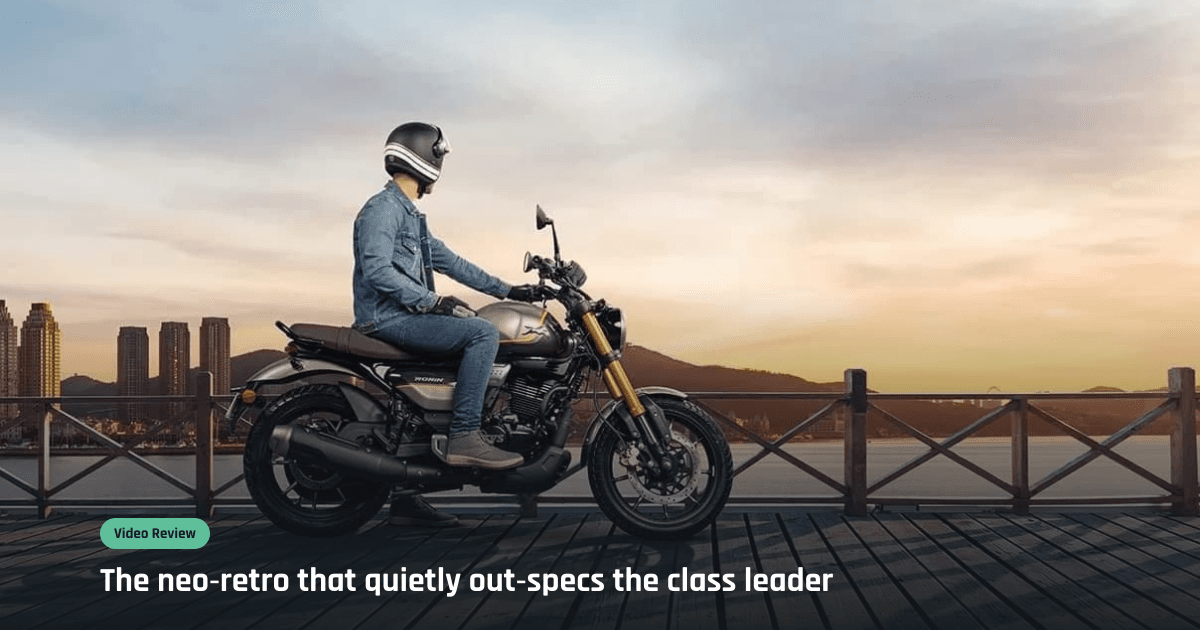
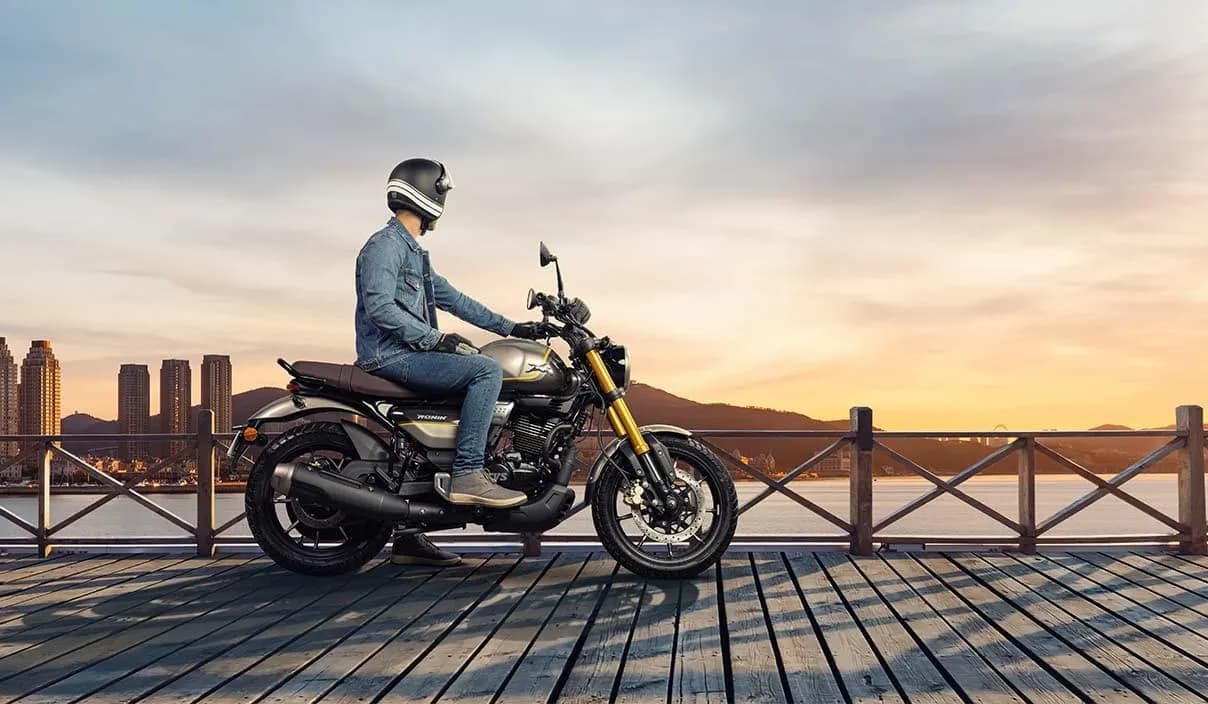
The Ronin's design is its calling card. It mixes scrambler-style wheel proportions, a roadster's exposed mechanicals, and a cruiser's relaxed stance into a single silhouette that photographs differently depending on the angle you catch it from. The round LED headlamp with its T-shaped LED daytime running light is the signature element up front, and it's genuinely distinctive on Nepali roads where round headlamps almost always mean a Royal Enfield.
Build quality and fit-and-finish stand out as well above what the price tag suggests. Panel gaps, weld quality, and switchgear feel don't have the slightly agricultural edge you sometimes find on affordable neo-retro bikes. The rear-view mirrors deserve a specific mention — they're stalk-mounted and can be rotated into multiple positions, including flipped downward for a café-racer look, which is the kind of small customisation touch buyers usually only get on far pricier motorcycles. The tail section carries a neat, integrated LED tail lamp that keeps the rear end visually clean rather than cluttered.
The Dark Edition Black Suits It Best; Gold Forks Mark Out The Higher Trim
TVS offers the Ronin in Nepal as a Single Tone and a Triple Tone variant, and the finish that tends to draw the most attention in showrooms is the stealthy all-black scheme — badged as the Dark Edition in TVS's own line-up — which gives the bike a genuinely premium, understated look. It's the kind of colour that ages well and doesn't shout for attention, which suits the Ronin's slightly rebellious design brief.
One visual giveaway separates the trims at a glance: the base bike runs black-finished front forks, while the higher variant swaps in gold-anodized units. It's a small detail, but it's an easy way to spot which Ronin you're looking at from across a parking lot, and it does lend the pricier bike a slightly sportier read.
A Digital Cluster And LED Package That Shame Costlier Rivals
For a bike starting at Rs 4,49,900, the equipment list is unusually generous. The fully digital, offset circular instrument cluster looks genuinely upmarket and breaks away from the twin-pod analogue layouts most retro-styled bikes in this bracket still use. Full LED lighting — headlamp, DRL, turn indicators and tail lamp — is standard even on the entry Single Tone variant, not held back as a top-trim exclusive, which is not something every rival in this price band can claim.
TVS has also thrown in a premium wave-style key on the base bike, a detail that usually gets reserved for higher trims elsewhere. Step up to the mid and top variants and you add Bluetooth connectivity, adjustable levers, and a USB charging port — genuinely useful upgrades for anyone using the bike for longer rides or daily commuting where phone charging matters.
The 225cc Engine Is Smoother Than Its Segment Suggests
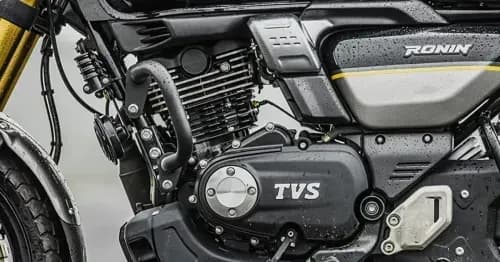
Powering the Ronin is a 225cc oil-cooled engine putting out 20.4 PS and 19.93 Nm of torque. On paper those numbers look modest against a 350cc rival, but in real-world riding the engine's character is what stands out — it pulls cleanly through the gears, crossing 85 km/h comfortably in third and reaching 100 km/h in fourth, which is more than adequate for both city use and highway stretches.
What impresses more than outright speed is refinement. The engine stays composed cruising at 90-100 km/h with very few vibrations reaching the rider through the seat, tank or bars — a trait that matters enormously on Nepal's longer highway runs where sustained speed, not top speed, is what riders actually use. Tractability is another strength: the bike can be lugged along in fourth gear from low speeds without knocking or hunting for a downshift, which makes it forgiving in stop-start traffic. The slipper and assist clutch is light at the lever and does its job convincingly, preventing rear-wheel hop even under aggressive downshifts into corners.
Showa USD Forks Give It A Handling Edge Few Rivals Match At This Price
The front end runs Showa upside-down forks, a component rarely seen at this price point in Nepal, and they show their worth over broken tarmac and gravel, damping sharp hits well without transmitting harshness to the rider. The rear monoshock is equally composed over bumps, and together the setup gives the Ronin a planted, confident feel when leaning into corners — this is a motorcycle that rewards a rider pushing it a little, rather than one that gets nervous.
Helping that confidence is tyre width: the Ronin runs a 110-section front and 130-section rear, the widest combination in its segment, and the extra contact patch is noticeable in how securely the bike holds a line through corners. Around town, the turning radius is tight enough to make three-point turns and tight parking manoeuvres genuinely easy, which matters more in Kathmandu traffic than most spec sheets let on.
An Accessible Seat Height Wrapped In A Cruiser-Style Riding Position
At 795mm, the seat height is low enough that riders around 5'5" can plant both feet flat at a stop, which broadens the Ronin's appeal considerably in a market where rider height varies widely and confidence at a standstill matters as much as performance does. The riding posture is upright and relaxed, echoing a cruiser stance rather than the forward lean of a naked streetfighter, and it works well for both short commutes and longer weekend rides.
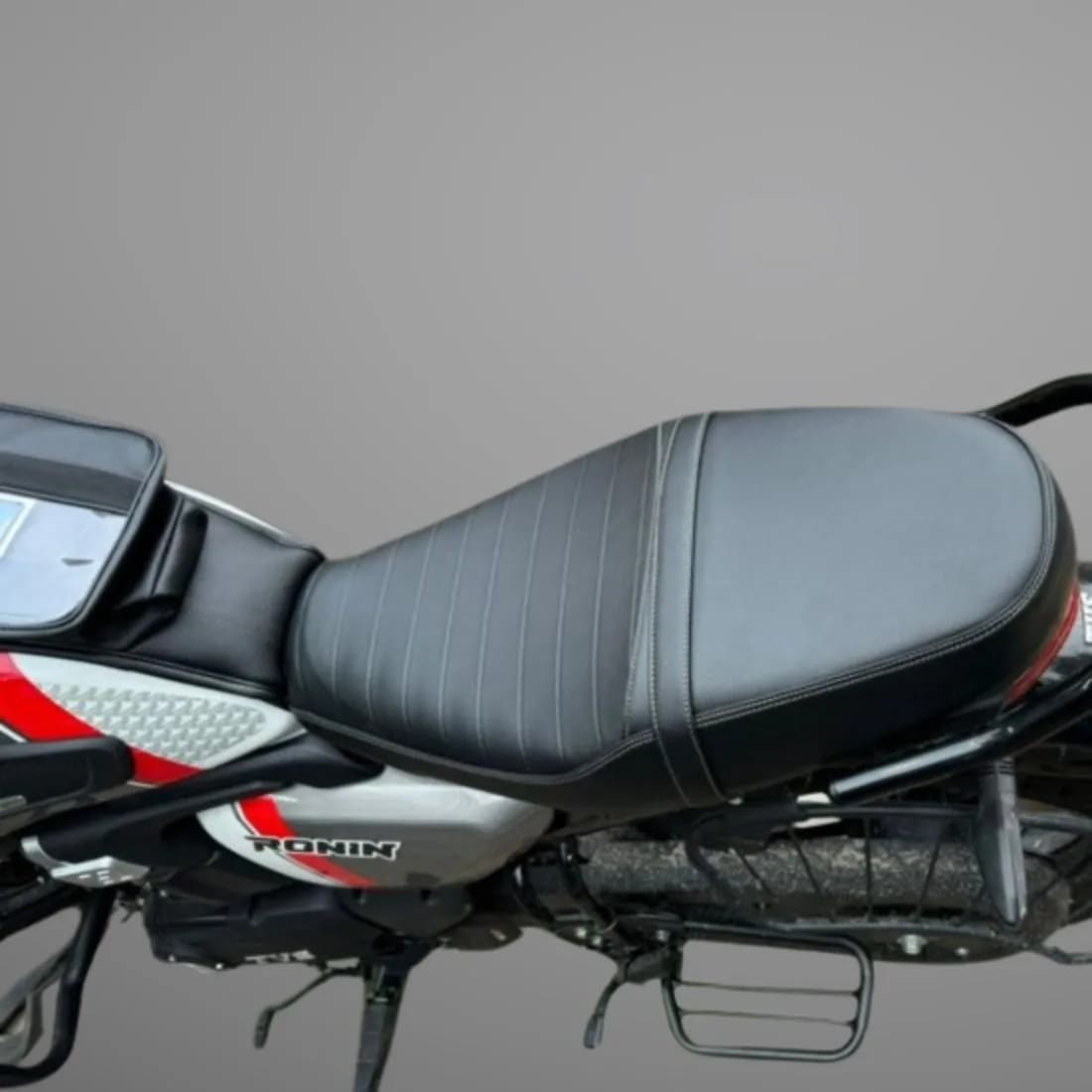
The seat itself is wide and well-cushioned for both rider and pillion, which is worth flagging for buyers who regularly carry a passenger — plenty of bikes in this segment treat the pillion perch as an afterthought, and the Ronin doesn't.
Front Brake Bite Is Strong; The Rear Is Only Adequate
The front brake uses a large 300mm disc that delivers strong bite and good feedback at the lever, giving riders real confidence when hauling the bike down from speed. The rear brake is the one area where the Ronin doesn't quite match its front-end performance — it works, but the bite is only decent rather than sharp, and more demanding riders will notice the difference in outright stopping power between the two ends.
On the safety-tech side, the base variant comes with single-channel ABS, while the higher trim upgrades to dual-channel ABS — a meaningful difference for anyone who rides in the monsoon or on loose surfaces regularly, and worth weighing against the roughly Rs 20,000 price gap between variants.
Ground Clearance That Actually Matters On Nepali Roads
At 159 kg kerb weight, the Ronin is genuinely easy to manage — filtering through traffic, holding it upright at a signal, or wheeling it into a tight parking spot all feel less effortful than on heavier rivals. That lightness doesn't come at the cost of clearance: 180mm of ground clearance means the underbelly shrugs off large speed breakers and potholes that would have a lower-slung motorcycle scraping its exhaust or bash plate. For a country where road surfaces vary wildly within the same city block, this combination of light weight and generous clearance is one of the Ronin's most practically valuable traits.
Spare Parts Pricing That Should Keep Ownership Costs Down
TVS parts pricing in Nepal has a reputation for being noticeably more affordable than premium rivals, and that should carry through to the Ronin's servicing bills over time. Combined with a smaller-capacity, oil-cooled engine that has fewer complex components to maintain than a bigger single, the expectation is that running costs will sit comfortably below what Royal Enfield ownership typically demands — an important consideration for buyers weighing total cost of ownership, not just the sticker price.
Which Variant Actually Makes Sense: Single Tone Or Triple Tone
The Ronin comes to Nepal in two variants: the Single Tone at Rs 4,49,900 ex-showroom, and the Triple Tone at Rs 4,69,900. The roughly Rs 20,000 gap buys the gold-anodized front forks, the Triple Tone paint treatment, and — where applicable — the upgraded feature set including dual-channel ABS, Bluetooth connectivity, adjustable levers and a USB charging port.
For most buyers, the base Single Tone variant is the one to have. It already comes with full LED lighting, the digital instrument cluster, the premium wave key, and the excellent chassis and suspension package — none of that is held back to upsell buyers into a pricier trim. The main trade-off is single-channel rather than dual-channel ABS and the absence of Bluetooth and USB charging, which matter more to some riders than others. Anyone who rides regularly in wet or loose conditions, or who wants the extra reassurance of dual-channel ABS, should stretch to the Triple Tone; everyone else will find the base bike delivers the vast majority of the Ronin experience for the lower outlay.
The Royal Enfield Hunter 350 Is The Bike Everyone Compares It To
The Royal Enfield Hunter 350 is the Ronin's most obvious rival in Nepal, and the comparison flatters the TVS. The Ronin is 20 kg lighter, carries 20mm more ground clearance at 180mm against the Hunter 350's 160mm, and pairs USD front forks with full LED lighting — none of which the Hunter 350 offers at a comparable price. For buyers who want the retro-adjacent look without inheriting the Hunter 350's heavier, more old-school underpinnings, the Ronin makes a genuinely strong case, and it does so while undercutting the Hunter 350 on price.
The Honda CB350 Sits A Notch Above On Price And Positioning
The Honda CB350 competes in the same broad neo-retro space but trades on Honda's brand reputation and a more premium positioning, typically commanding a higher price than the Ronin. For buyers whose priority is outright value and a lighter, more agile motorcycle, the Ronin's pricing and equipment list make it the more accessible choice, though the CB350's badge appeal will matter to some.
The Yamaha FZ-X Offers A More Mainstream Alternative
The Yamaha FZ-X is a softer, more mainstream take on the scrambler-inspired look, built around Yamaha's more commuter-friendly platform rather than the Ronin's more distinctive scrambler-roadster-cruiser blend. It's a sensible cross-shop for buyers who want some of the rugged styling cues without committing to the Ronin's more unconventional design, though it doesn't match the Ronin's ground clearance or its USD-fork-equipped chassis.
Our Take: A Genuinely Excellent Motorcycle Nepal Hasn't Noticed Yet
The TVS Ronin's biggest weakness has nothing to do with engineering — it's visibility. TVS has marketed this bike lightly in Nepal, and as a result plenty of buyers shopping in the Rs 4.5-4.7 lakh bracket never even cross-shop it against the Royal Enfield Hunter 350, which is a genuine loss for them. On substance, the Ronin delivers a lighter, more agile, better-equipped motorcycle with more ground clearance and a more distinctive design, at a lower ex-showroom price.
We'd recommend the base Single Tone variant to most buyers as the sensible pick, reserving the Triple Tone for anyone who specifically wants dual-channel ABS or the connected features. This is a motorcycle built for riders who want a daily commuter capable of handling light touring and the occasional gravel detour, without inheriting the bulk or running costs of a bigger-capacity rival — and, just as importantly, for riders who'd rather not show up looking like everyone else at the tea stall.
Writes on vehicle pricing, taxation and the Nepali auto market from ongoing tracking of distributor price lists. Editorial policy.