Where The Sealion 7 Sits In Nepal's Electric Crossover Race
Cimex Inc. Pvt. Ltd. has priced the Sealion 7 between Rs 78 lakh and Rs 79.99 lakh across three variants, placing it firmly in the upper-middle tier of Nepal's growing EV market — above mainstream electric crossovers but below the flagship seven-seat BYD Tang. This is a car aimed at buyers who have already decided they want an EV and are now choosing between comfort-loaded mid-size options and something with more outright presence. At this price, the Sealion 7 is competing less on badge prestige and more on what's actually inside the cabin and under the floor, and BYD has clearly loaded both.
It's worth being upfront that Nepal gets the 100 kW version of the Sealion 7 across all three trims, not the higher-output dual-motor configuration that international markets sometimes see. That doesn't make it a lesser car for Nepali roads — 170 kW peak motor output and 380 Nm of torque are still comfortably adequate for city and highway use — but buyers should walk in knowing this is the single-motor Nepal-spec car, not whatever figure they may have seen floating around global motoring coverage.
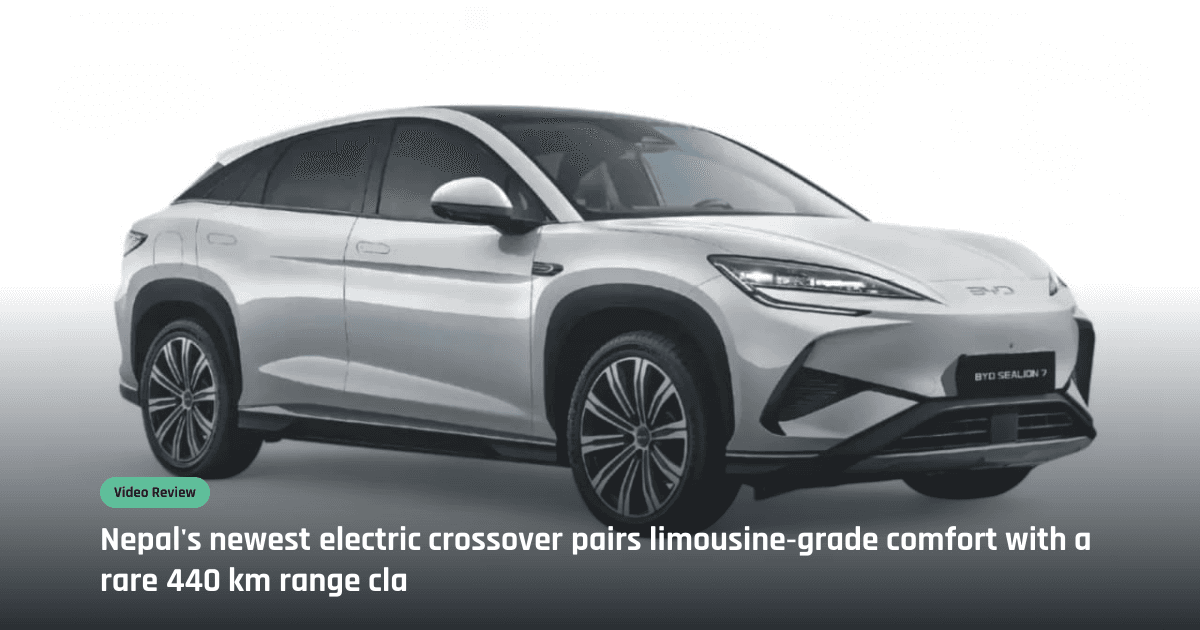
Ocean Aesthetics Styling Gives It Real Road Presence
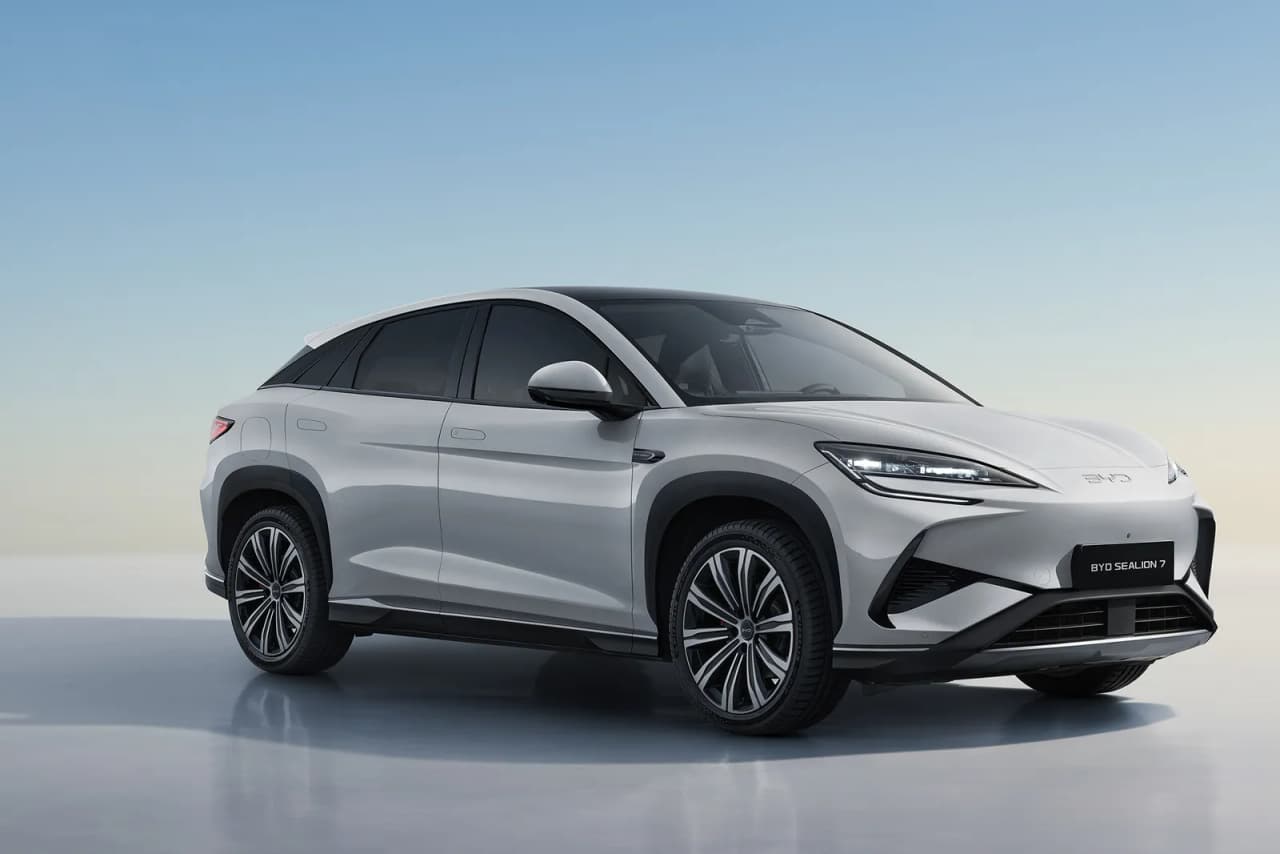
The Sealion 7's design language, described by BYD as "Ocean Aesthetics" and shaped under design chief Wolfgang Egger, translates into a genuinely distinctive-looking crossover rather than another anonymous electric box. The U-shaped LED headlights and the light strip running across the front are the first thing you notice at a showroom floor, and they give the car a face that's recognisable even at a glance in traffic. The fastback roofline sweeps back sportily, aided by flush door handles that keep the side profile clean.
At 4,830 mm long, 1,925 mm wide and 1,620 mm tall on a 2,930 mm wheelbase, this is a substantial crossover — closer in footprint to a mid-size SUV than a compact one — and the proportions read as low and wide rather than tall and boxy. The 20-inch multi-spoke alloy wheels fill the arches well and reinforce the sporty intent that the roofline suggests. Build quality on showroom units feels tight, with even panel gaps and a solidity to the doors that buyers moving up from typical Nepali EVs will notice immediately.
The Satin Grey-Blue Finish Suits The Car Best
Nepal-market units we've seen have arrived in a satin grey-blue metallic, a finish that plays well with the car's sculpted surfaces and doesn't show dust and road grime as readily as darker paint would on Kathmandu Valley roads. The matte-leaning satin texture also helps the Sealion 7 look less like a generic silver-grey EV and more like a car with a specific design identity, which matters at this price point when buyers are cross-shopping on showroom appeal as much as spec sheets.
A Cabin Built Around Comfort, Not Just Screens
The equipment list here reads like it belongs to a car costing considerably more. Ventilated front seats with a massage function, trimmed in Nappa leather, are the standout — these are still rare even among premium ICE cars in Nepal, let alone EVs at this price. The four-spoke flat-bottom steering wheel and 128-colour ambient lighting round out a cabin that's clearly been designed to feel special rather than merely functional.
The 15.6-inch intelligent rotating touchscreen dominates the dashboard and runs wireless Apple CarPlay and Android Auto, paired with a 10-inch digital instrument cluster and a head-up display for the driver. The 12-speaker audio system carries genuine bass weight, noticeably stronger than what buyers typically get in this bracket. A 50-watt wireless charging pad with built-in cooling vents solves the real-world problem of phones overheating during fast wireless charging — a small detail, but one that shows attention to how these features are actually used, not just listed on a brochure. NFC keyless entry, automatic dual-zone air-conditioning and a 220-volt power outlet inside the cabin round out a feature set that's unusually complete for the price.
170 kW And 380 Nm Make It Comfortably, Not Violently, Quick
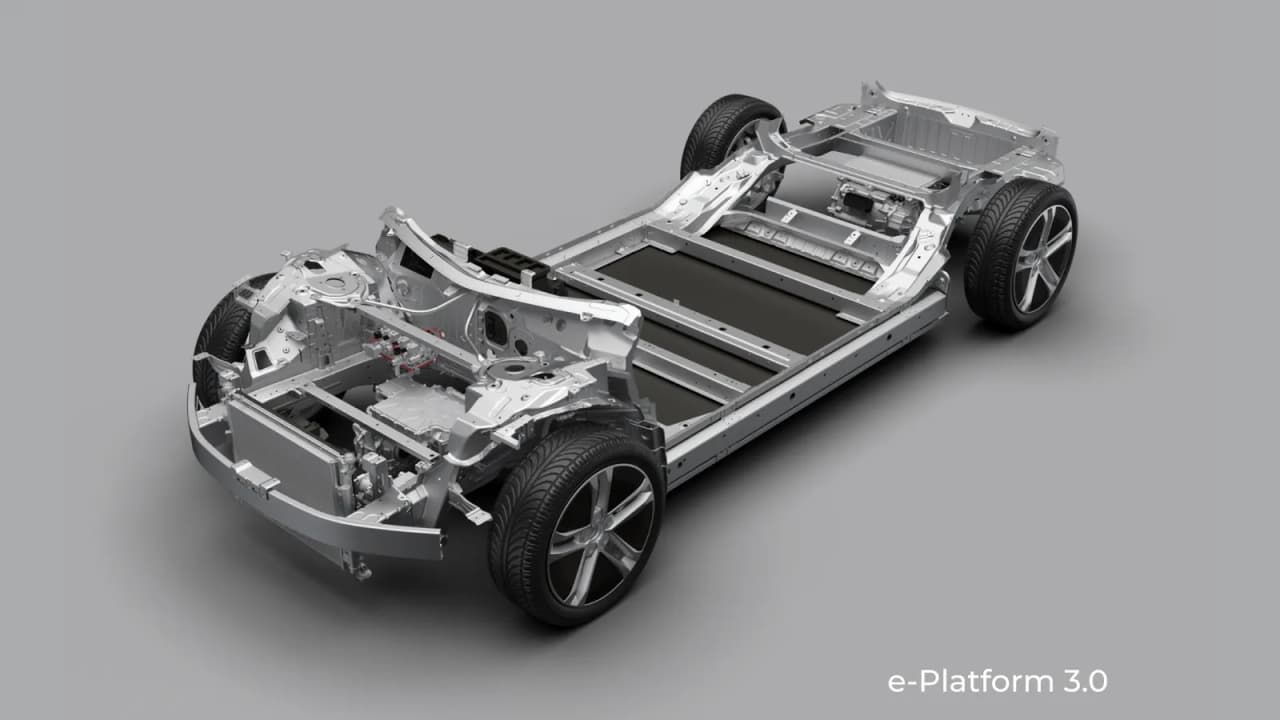
The Nepal-spec Sealion 7 runs a single 170 kW electric motor producing 380 Nm of torque, built on BYD's e-Platform 3.0 Evo architecture with Cell-to-Body construction integrating the battery into the structure itself. This isn't the neck-snapping dual-motor performance variant that international markets sometimes get — it's a car tuned for confident, effortless acceleration rather than outright drag-strip numbers, which suits how most Nepali buyers actually drive: overtaking on the highway, pulling away from Valley traffic lights, climbing into the hills without drama.
The instant torque delivery that all EVs offer is present here too, and combined with the low centre of gravity from the underfloor 71.8 kWh battery pack, the Sealion 7 should feel settled and planted rather than nervous, particularly at highway speeds on the Kathmandu-Pokhara or Kathmandu-Chitwan routes where sustained cruising matters more than sprint numbers.
Space In The Back Seat Is The Car's Quiet Strength
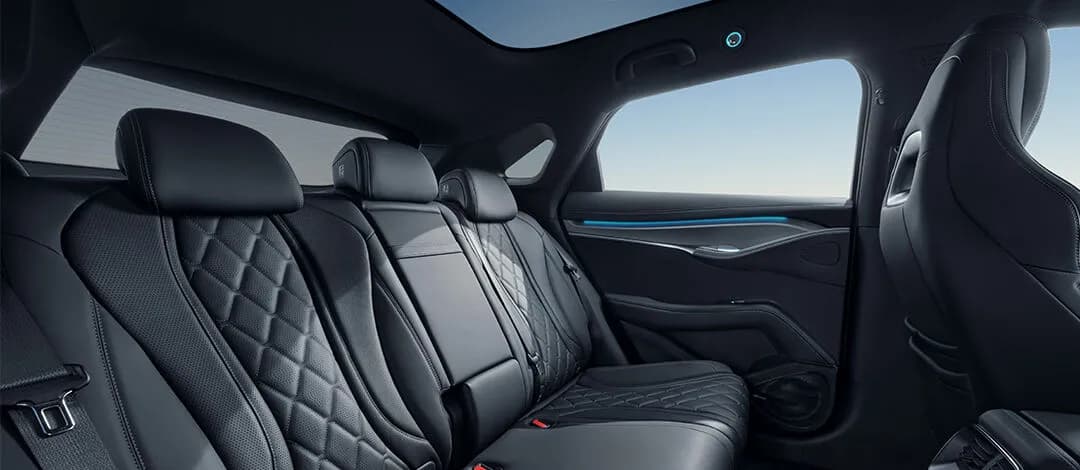
Rear seat comfort is where the Sealion 7 has been consistently praised, and it's easy to see why on the showroom floor. Legroom, knee room and headroom are all generous, and the thigh support under longer-distance seating is noticeably better than what BYD offers in its own larger Tang — a detail that matters for families who'll use the rear seats on real trips, not just school runs. Front seats carry the same power-adjustable, ventilated treatment as the massage-equipped driver's chair, so comfort isn't a front-row-only feature here.
A Genuinely Comprehensive Safety Package
Safety provision on the Sealion 7 goes well beyond what's typical in this segment locally. Eleven airbags, a 360-degree camera system, and Level 2 ADAS built around BYD's DiPilot 100 (marketed globally as "God's Eye") give it a driver-assistance suite that's unusually thorough for Nepal's roads. That system draws on 12 ultrasonic sensors, 5 mm-wave radar units and 11 cameras working together, alongside tyre pressure monitoring and front and rear parking sensors for the everyday business of squeezing into tight Kathmandu parking. For buyers nervous about EVs and safety, this is one of the more reassuring spec sheets available in Nepal today.
Boot, Underfloor Storage And A Frunk You'll Actually Use
Practicality is handled sensibly. Boot capacity runs to 500 litres, expanding to 1,700 litres with the rear seats folded — enough for a genuine family holiday's luggage or a Dashain shopping run. Additional under-floor storage in the boot area adds a place to stash charging cables out of sight, and the front trunk under the bonnet gives extra room for soft bags or gym gear, a feature that continues to be one of the most underrated practical advantages of dedicated EV platforms.
What 440 Km Of Claimed Range Means Day To Day
BYD claims up to 440 km on a full charge from the 71.8 kWh pack for the Nepal-spec Sealion 7. In real-world Nepali use — hill climbs, traffic idling, air-conditioning running most of the year — expect a meaningful discount on that figure, as with any EV claim, but even a conservative real-world number should comfortably cover a Kathmandu-to-Pokhara run or a full week of city driving without needing to charge daily. Running costs on electricity remain far below petrol equivalents, and with Cimex as the official distributor, buyers get a clearer service and warranty path than grey-market EV imports have historically offered in Nepal.
Picking Between The Three Variants On Offer
The lineup in Nepal comprises three trims: a base 100 kW version at Rs 78 lakh, a Premium at Rs 79,85,000, and a top 100 kW/Premium variant at Rs 79,99,000. With barely under Rs 2 lakh separating the base car from the range-topper, and features like the massage seats, ambient lighting and full ADAS suite likely concentrated in the Premium trims, the sensible advice for most buyers is to stretch to the top variant — the price gap across the range is small relative to the total outlay, and the equipment difference is where this car earns its price tag.
The BYD Tang Is The Obvious Step-Up Within BYD's Own Range
BYD's own Tang sits above the Sealion 7 in Nepal as a larger, seven-seat electric SUV, and it's a natural cross-shop for buyers deciding how much space they actually need. The trade-off is telling: the Tang's third row adds family flexibility, but the Sealion 7's rear seat thigh support and knee room are genuinely better resolved for the five-seat use case most buyers actually have. For a couple or small family who won't regularly fill a third row, the Sealion 7 is the more comfortable everyday car, and it undercuts the Tang meaningfully on price.
The Hyundai Ioniq 5 Offers A Different Kind Of Premium
The Hyundai Ioniq 5 is the other name Nepali buyers in this bracket will inevitably cross-shop, and it makes for a genuinely different proposition. Where the Sealion 7 leans into leather, massage seats and a sprawling touchscreen, the Ioniq 5 trades on its retro-futurist design identity and Hyundai's more established Nepal service network. Buyers who prioritise brand familiarity and dealer footprint may lean Hyundai; those chasing the richer feature list and rear-seat comfort at a similar price point will find the Sealion 7 hard to argue against on spec alone.
Our Verdict: Who The Sealion 7 Actually Suits
The BYD Sealion 7 is one of the most convincingly equipped EVs to arrive in Nepal at this price, and it earns that reputation honestly — the massage seats, the rotating 15.6-inch display, the 11-airbag safety package and the genuinely spacious rear cabin aren't marketing flourishes, they're features buyers will use every day. The 440 km claimed range and 71.8 kWh pack make it a realistic single-charge companion for Nepal's popular intercity routes, not just a city runabout.
This is the car for a buyer who wants an EV that feels indulgent rather than merely efficient — someone cross-shopping premium comfort against the Hyundai Ioniq 5 or considering whether they really need the extra row in BYD's own Tang. Families who value rear-seat comfort over third-row flexibility, and buyers who'll actually use features like ventilated massage seats and wireless charging with cooling vents, are exactly who Cimex Inc. should be targeting with this car. What Nepali buyers are still owed is time — a longer track record of service support and real-world range figures from local roads — before this becomes an easy, unreserved recommendation rather than a highly promising one.
Writes on vehicle pricing, taxation and the Nepali auto market from ongoing tracking of distributor price lists. Editorial policy.