Where This Apache Sits On Kathmandu's Roads
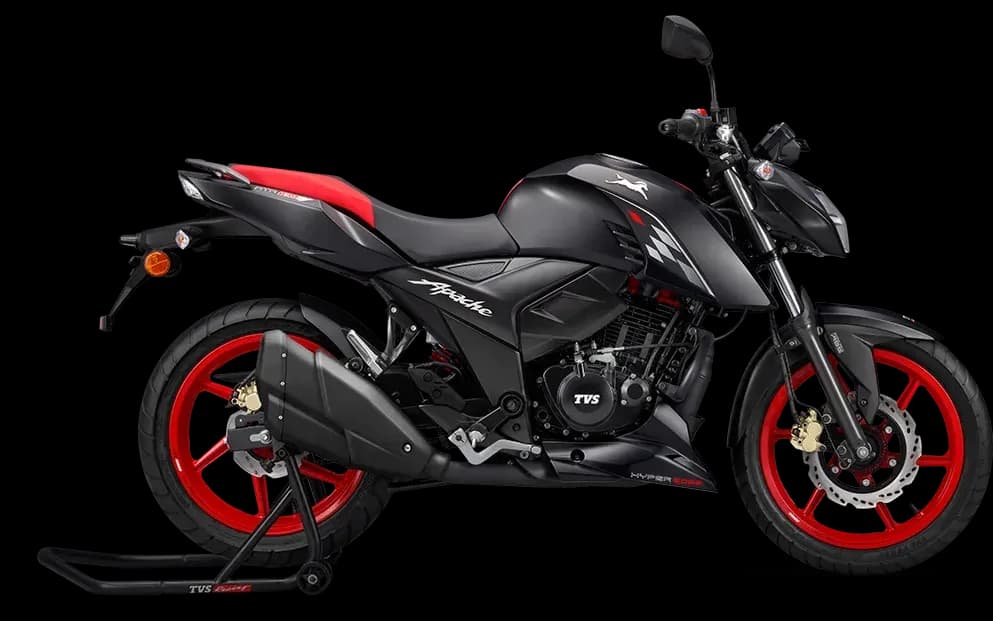
TVS has been selling the Apache RTR 160 4V in Nepal since 2020 through Jagdamba Motors, and it still occupies a distinct spot in the 160cc commuter-sport bracket. Priced from Rs 3.39 lakh for the base FI variant up to Rs 3.94 lakh for the RTFI Special Edition, it sits squarely against other performance-oriented 160s rather than pure commuters. This is not a bike aimed at buyers who just want the cheapest way to get to office. It's built for riders who want some attitude in their daily ride, and who are willing to trade a bit of comfort for handling sharpness.
The 4V badge refers to the four-valve head, TVS's way of signalling that this is the performance-focused end of the Apache range rather than a soft commuter tune. That positioning carries through every part of the bike, from the styling to the throttle response, and it's worth understanding before comparing prices with more comfort-oriented 160s in the market.
Aggressive Styling That Still Carries An Old Tail
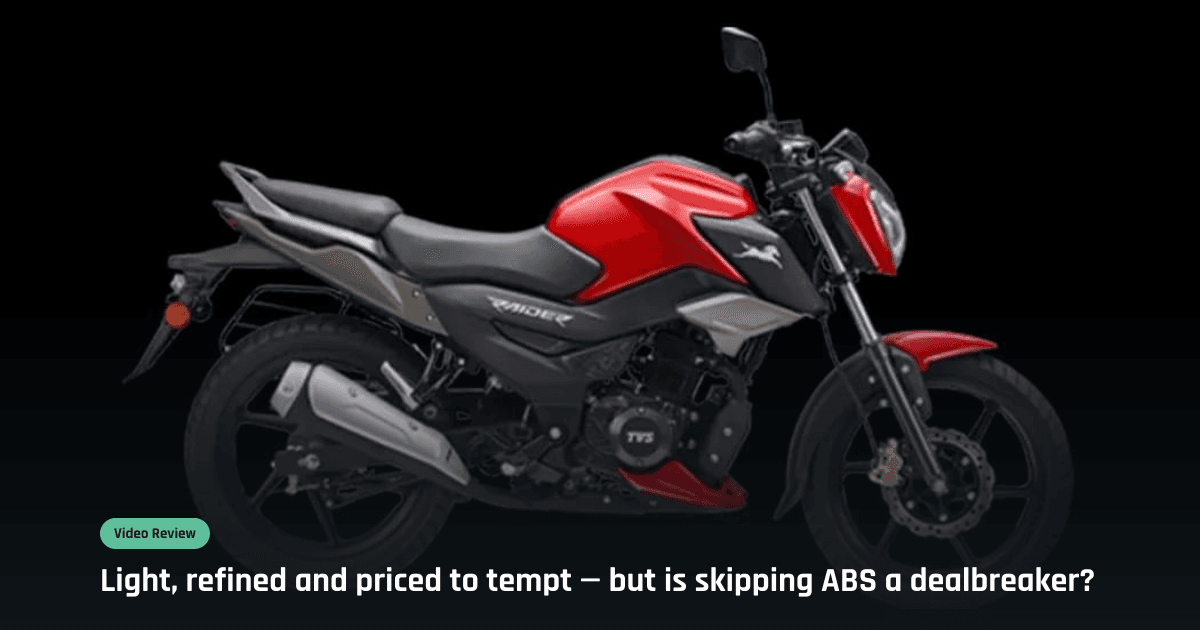
The front end is where this bike makes its strongest first impression. An LED projector headlamp sits beneath sharp position lamps, giving the face a properly aggressive look that holds up well against newer rivals. The fuel tank is wide and muscular, and from the rider's seat it looks genuinely imposing, with tank shrouds cut sharply and vented, finished off with a 3D TVS horse emblem that's become something of a signature touch on Apache models.
Where the design falls short is at the back. The tail section is shared almost unchanged with older Apache models, and it shows. Buyers cross-shopping this against newer 160s will notice the rear looks a generation behind the front, a common complaint that TVS has yet to properly address in Nepal. It doesn't ruin the bike, but it does mean the Apache ages unevenly when viewed from different angles.
Build quality on the whole is solid for the segment, with the double cradle Split Synchro Stiff Frame doing real work in keeping the chassis planted despite the bike's light weight.
Colours On Offer
Nepali showrooms have shown the Apache RTR 160 4V in a glossy red scheme with black graphics, which suits the aggressive tank and headlamp design well and is the shade most associated with the bike locally. Buyers should check current stock at Jagdamba Motors outlets, as colour availability can shift between variants and Dashain-season stock runs.
A TFT Screen And Three Riding Modes Worth Actually Using
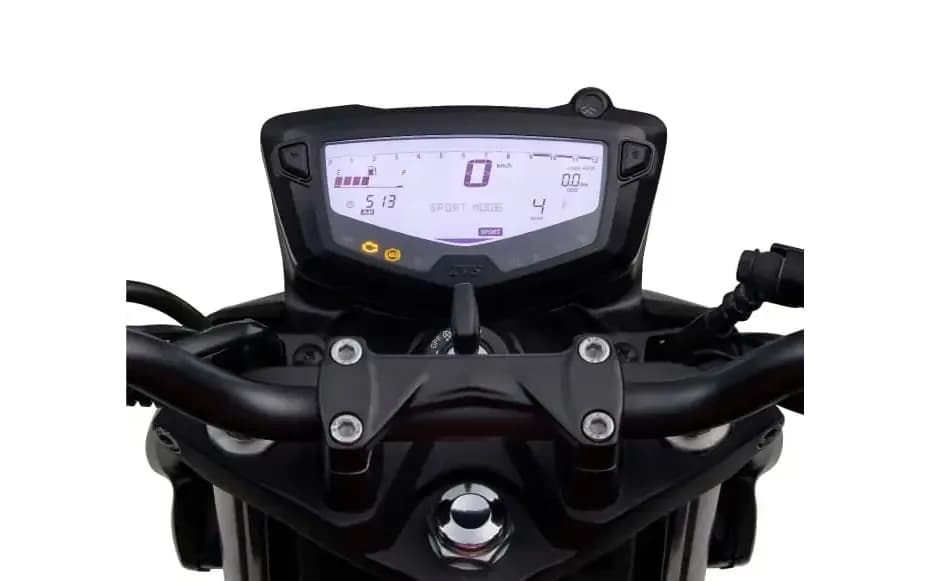
This is where the top-spec RTFI Special Edition earns its price premium. The TFT instrument console offers turn-by-turn navigation and smartphone connectivity, a feature set that's still not universal in this price bracket in Nepal. Alongside it sit three selectable riding modes — Sport, Urban and Rain — which recalibrate throttle response and ABS intervention rather than being a marketing gimmick with no real function.
Switchgear quality is where the finish drops a notch. It works fine but feels average to the touch, with rough edges noticeable if you're coming from a costlier bike. Adjustable clutch and brake levers are a genuinely useful inclusion though, letting riders of different hand sizes dial in reach, which matters more than it sounds on a bike this focused on control.
Peaky, Raw Power That Rewards Revving
The 159.7cc oil-cooled engine is tuned with a clear preference for the top end. In Sport mode it makes 12.91 kW (17.55 PS) at 9,250 rpm and 14.73 Nm at 7,500 rpm, dropping to 11.5 kW (15.64 PS) and 14.14 Nm in Urban or Rain modes. Top speed is quoted at 114 km/h in Sport and 103 km/h in the softer modes. Those aren't class-leading numbers on paper, but the character of the delivery is what defines this engine: it's happiest revving hard, and it pulls with real urgency as the tachometer climbs toward its high redline.
The trade-off is refinement. The engine note is raspy rather than smooth, and it lacks the calmer idle character of some rivals. Vibrations start creeping into the footpegs from around 6,000 rpm onward, which is squarely inside the rev range this engine wants to live in. For a rider who enjoys wringing out a small-capacity engine, this is part of the charm. For someone wanting a relaxed, buzz-free commute, it's the single biggest thing to test-sit and reconsider before buying.
Power is sent through a 5-speed gearbox, and the power-to-weight ratio of 0.088 kW/kg reflects how light this chassis is relative to what the engine produces — which brings us to how it actually rides.
Handling That Makes The Bike Feel Smaller Than It Is
This is the Apache's strongest card. The combination of a genuinely lightweight chassis (144 kg for the Standard-Drum variant, 146 kg for Standard-Disc and Standard Top-End) and a stiff, well-sorted frame makes it feel far more flickable than its numbers suggest. Weaving through Kathmandu traffic or taking a series of tight hill corners, the bike changes direction with very little effort, and that agility is consistently the first thing riders notice.
Suspension is a telescopic fork up front and a mono-shock at the rear, tuned firmly and clearly biased toward sporty control rather than plush comfort. On smooth tarmac this pays off with sharp, confident cornering. On Nepal's more broken stretches, the stiffness translates into a firmer ride than commuter-focused rivals, and the narrower 90/90-17 front tyre doesn't help matters on gravel or patchy surfaces, where the front end can feel slightly nervous compared to bikes running wider rubber.
A Seating Position Built For Control, Not All-Day Comfort
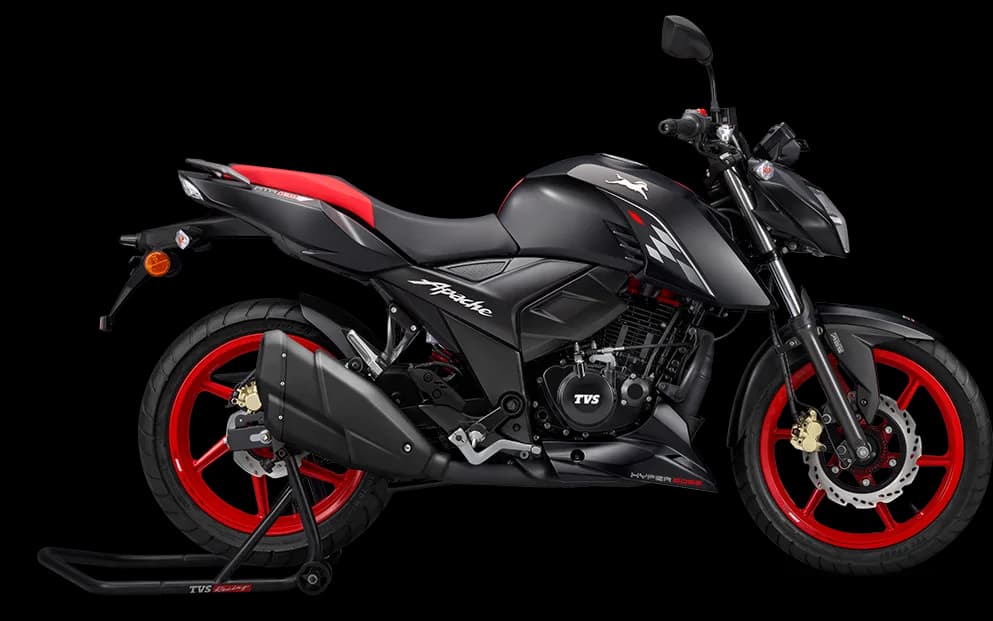
The riding triangle is upright and relaxed, with center-set footpegs and a wide handlebar that gives a commanding, confident feel in traffic. Combined with a low seat height and a tall tank, the rider gets a tucked-in, secure sense of control over the bike, which suits the sporty intent well.
The single-piece seat is on the firmer side but remains genuinely usable for daily commuting distances. Pillion comfort is a mixed story: the seat itself is adequate, but footrest placement forces the passenger's foot close to the hot exhaust guard, an ergonomic oversight that matters more on longer two-up rides than short hops around town.
Brakes That Split Opinion Front To Rear
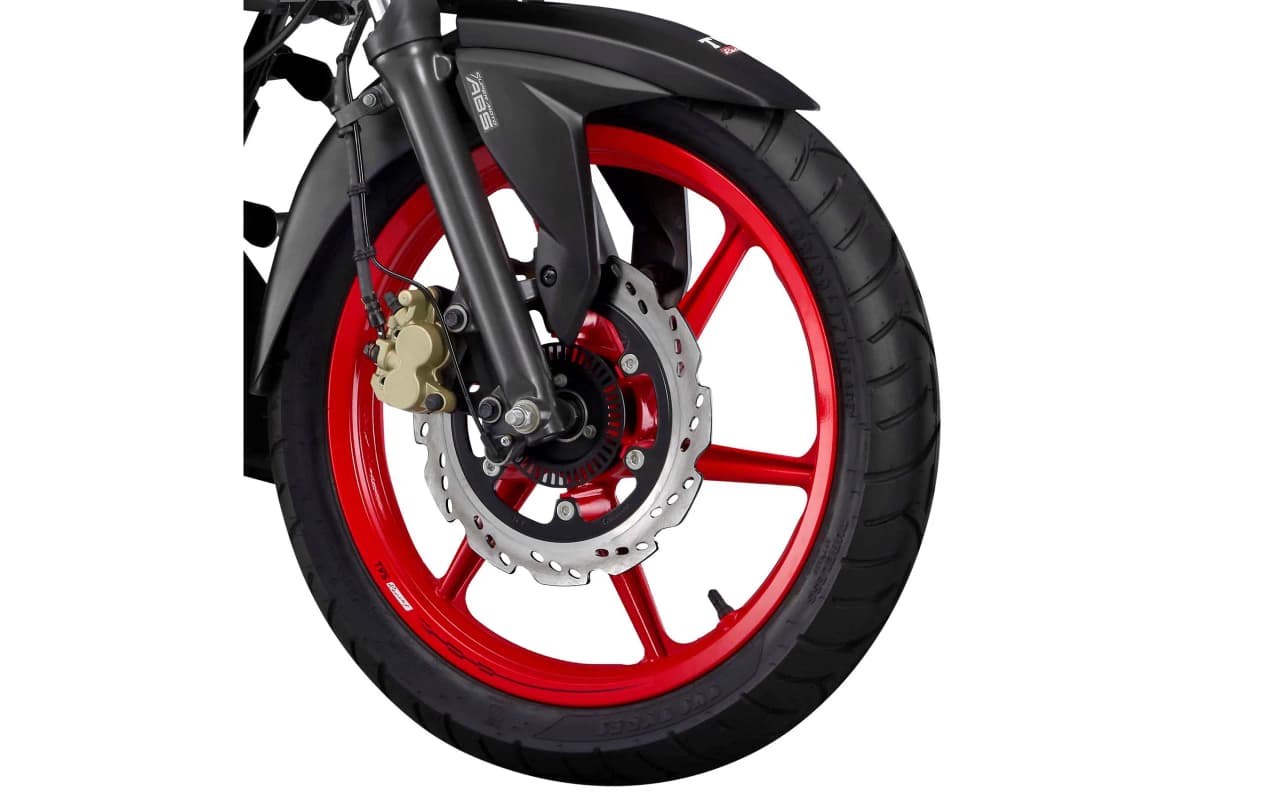
The top-spec Apache runs dual-channel ABS, badged as Single Channel Super-Moto ABS across the lineup depending on variant, giving riders a real safety net on wet or loose surfaces. The front disc brake offers progressive, controlled stopping power, but it lacks a sharp initial bite, meaning riders used to grabbier front brakes will need to adjust their braking habits slightly.
The rear disc, by contrast, is one of the most responsive in its class. It bites hard and is easy to modulate, which is unusual for a rear brake in this segment and genuinely useful for quick, controlled stops in city traffic.
Ground Clearance That Actually Suits Nepali Roads
At 180 mm, ground clearance is generous for the class and clears speed bumps, broken pavement edges and rutted village roads with real ease. This is a practical strength that matters more in Nepal than in smoother markets, given how variable road surfaces still are outside main highways.
The light kerb weight also makes low-speed maneuvering and parking noticeably easier, whether that's squeezing into a tight Kathmandu parking spot or turning around on a narrow lane. A 12-litre fuel tank rounds out the practical package, giving a reasonable range between fill-ups for daily use.
What Owners Can Expect To Spend On Fuel
Real-world fuel economy is expected to average around 40 kmpl, a reasonable figure for a 160cc engine tuned this heavily toward top-end performance rather than outright efficiency. Riders who spend more time in Sport mode and closer to redline should expect that number to drop somewhat, while sticking to Urban or Rain modes for daily commuting will help protect it.
Picking A Variant: Where The Extra Money Actually Goes
Four variants are on sale in Nepal:
- Apache RTR 160 4V FI — Rs 3,39,000
- Apache RTR 160 4V ABS — Rs 3,59,900 (159.7 cc)
- Apache RTR 160 4V FI Special Edition — Rs 3,89,000
- RTR 160 4V RTFI SE — Rs 3,94,900
The base FI variant is the value entry point but skips ABS, which is a meaningful safety trade-off given the dual-channel system's real-world benefits on wet roads. The ABS variant at Rs 3,59,900 is the sensible middle ground for most buyers, adding the safety net without stretching to the top trims. The Special Edition and RTFI SE variants bring the golden anodized 37mm USD forks, the TFT display with navigation, and the full riding-mode suite, which is where the Rs 55,000 jump over the ABS variant is actually spent. For riders who want the complete Apache experience, including the adjustable levers and mode-based throttle mapping, the RTFI SE at Rs 3,94,900 is the one to budget for.
The Bajaj Pulsar N160 Is The Smoother, More Stable Alternative
The most direct rival in this bracket is the Bajaj Pulsar N160, and the comparison exposes exactly where each bike's priorities lie. The Pulsar N160 runs a smoother, more refined engine with less of the raw buzziness that characterises the Apache at higher revs, and it also carries a wider 100/80 front tyre that gives noticeably better stability on rough patches than the Apache's 90/90 unit. Its switchgear and mirror design have also been praised for offering a fuller, clearer view than the Apache manages.
Where the Apache claws back ground is the rear brake. The Pulsar N160's rear brake is considerably weaker and harder to modulate, while the Apache's rear disc is genuinely one of the strongest in the class. For a rider who prioritises outright agility, top-end punch and a sharper rear brake, the Apache is the pick. For one who values a calmer engine character and steadier front-end manners on bad roads, the N160 pulls ahead.
The Final Word
The TVS Apache RTR 160 4V is not the most refined bike in its class, and it is not the easiest to keep pillion-friendly or entirely vibration-free at speed. What it offers instead is a genuinely light, agile chassis, strong top-end performance, a rear brake that outperforms most rivals, and a feature set — TFT display, riding modes, USD forks on the top trim — that punches above its price point in Nepal. Buyers need to accept the engine's rawness and the ongoing question marks around TVS parts availability as the cost of admission. For riders who want a sporty, flickable commuter that rewards spirited riding over long-haul smoothness, it remains one of the more compelling options at this price in the Nepali market.
Writes on vehicle pricing, taxation and the Nepali auto market from ongoing tracking of distributor price lists. Editorial policy.