Start with the numbers
The model, at a glance
Catalog prices in Nepalese rupees. Compare the exact variant before choosing.
| Vehicle | Ex-showroom price | Fuel | Engine / motor |
|---|---|---|---|
| 01Triumph Speed T4 | Rs 6.5 lakh | Petrol | 349 cc |
Ex-showroom prices exclude registration, road tax and insurance. Specifications can vary by trim. See individual source-check dates ↓
Know the product
Key specifications, features & ownership context
Choose a variant to see its recorded specifications and features. Equipment and prices can change across trims.
Latest catalog and directory records supplement the original analysis. Figures may have changed since publication; individual specification and price-check dates appear below.
Rs 6.5 lakh ex-showroom · source checked 15 Sept 2026
Engine & performance
| Specification / feature | Speed T4 |
|---|---|
| Engine displacement | 349 ccResearched · confirm · 7 Sept 2026 |
| Max power | 29.4 PSResearched · confirm · 7 Sept 2026 |
| Max torque | 31 NmResearched · confirm · 7 Sept 2026 |
Brakes, tyres & suspension
| Specification / feature | Speed T4 |
|---|---|
| ABS | Dual-channel ABSResearched · confirm · 7 Sept 2026 |
| Front brake | DiscResearched · confirm · 7 Sept 2026 |
| Rear brake | DiscResearched · confirm · 7 Sept 2026 |
Running & ownership
| Specification / feature | Speed T4 |
|---|---|
| Claimed mileage | 30 km/lResearched · confirm · 30 Aug 2026 |
Dimensions & weight
| Specification / feature | Speed T4 |
|---|---|
| Seat height | 806 mmVerified specification · 30 Aug 2026 |
Safety & driver assistance
| Specification / feature | Speed T4 |
|---|---|
| Traction control | YesResearched · confirm · 30 Aug 2026 |
Showroom & service support
Distributor: Hansraj Hulaschand & Co. Pvt. Ltd. (HH Bajaj – Triumph Motorcycles Nepal)
32 listed brand showrooms · 9 listed brand service locations
Listed cities include Bhaktapur, Bharatpur, Butwal, Dhangadhi, Ghorahi, Ghorahi Sub-Metropolitan-15 and 7 more.
Brand-wide directory coverage. Confirm that your nearest workshop supports this exact model, powertrain and warranty work; ask about parts availability and booking time.
Market buzz & buyer priorities
Compiled discussion, including buyer reactions and ownership reports; this is not a verified owner survey or a reliability score. Research dated 14 Sept 2026.
What people like
- Strong road presence and premium Triumph branding at a relatively accessible price for Nepal buyers
- Smooth and refined 350cc liquid‑cooled engine suitable for city and short highway runs
- Viewed as a more affordable alternative to the Speed 400 while still offering modern-classic styling
More feedback
- Perceived as the most affordable way to enter the Triumph lineup in Nepal
- Timely service network exists in Nepal for Triumph motorcycles
- Strong low-end torque and relaxed cruising behaviour praised
- Modern classic styling and premium build still appreciated
Concerns to investigate
- price 6lakh samma bhako bhaye best hunthyo
- Higher price than popular 250–300cc commuter bikes, limiting mass-market appeal
- Concerns about limited Triumph service network outside Kathmandu and major cities
More feedback
- Some buyers note missing premium features compared to Speed 400, such as traction control and USD forks
- Missing features compared to Speed 400 (no USD forks, no traction control)
- Rear tyre splatter and mudguards criticised
- Seat comfort (especially for pillion) seen as lacking
What buyers ask for
- Price difference between Speed T4 and Speed 400 and whether the cost saving justifies fewer features
- Fuel efficiency and daily running cost for city commuting in Nepal
- Ground clearance and suspension comfort over broken urban roads and occasional highway trips
More feedback
- Service center reach, spare parts availability, and maintenance cost in Nepal
- Brand image and long‑term resale value versus more common brands like Honda, Yamaha, and KTM
Nepal ownership context
- Nepali riders discuss its suitability for Kathmandu and urban roads more than for extreme off‑road or rural use
- Service and spare parts availability are seen as acceptable in Kathmandu but uncertain for riders in far‑flung districts
- Resale value is expected to be decent among premium bike enthusiasts but weaker compared to mainstream Japanese brands
More feedback
- Low-end torque helps with steep inclines and stop-start traffic in Nepal’s hilly and urban roads
- Service costs seen reasonable by Nepali owners but concerns about maintenance and spare parts speed come up in community discussions
Use these facts alongside the article’s full analysis. Check the final quotation, warranty terms and exact equipment before booking.
Where The Speed T4 Fits In Nepal's Showrooms
Triumph's arrival in the sub-400cc space in Nepal changes the maths for buyers who wanted the badge but couldn't stretch to the Speed 400 or Scrambler 400X. At Rs 6,49,900 ex-showroom, the Speed T4 sits above popular 250-300cc commuters like the Royal Enfield Hunter 350 and below Triumph's own 400cc range, sold and serviced through Hansraj Hulaschand & Co. Pvt. Ltd. under the HH Bajaj-Triumph Motorcycles Nepal setup. It is a single-variant motorcycle for now: one engine, one spec sheet, no trim ladder to climb. That simplicity is itself part of the pitch: buyers aren't choosing between versions, they're choosing whether Rs 6.5 lakh for a 349cc Triumph makes sense against the alternatives at that price and below it.
Nepali buyer discussion around this bike keeps circling one number: many feel it would be a sharper proposition closer to Rs 6 lakh. That's a fair instinct. At its current price, the T4 is asking buyers to pay a premium for the Triumph name and finish quality on a bike that a chunk of the market will directly compare to 250-300cc commuters costing significantly less. Whether that premium is worth paying depends heavily on what the rest of this review lays out.
A Retro Roadster That Doesn't Look Or Feel Cut-Price
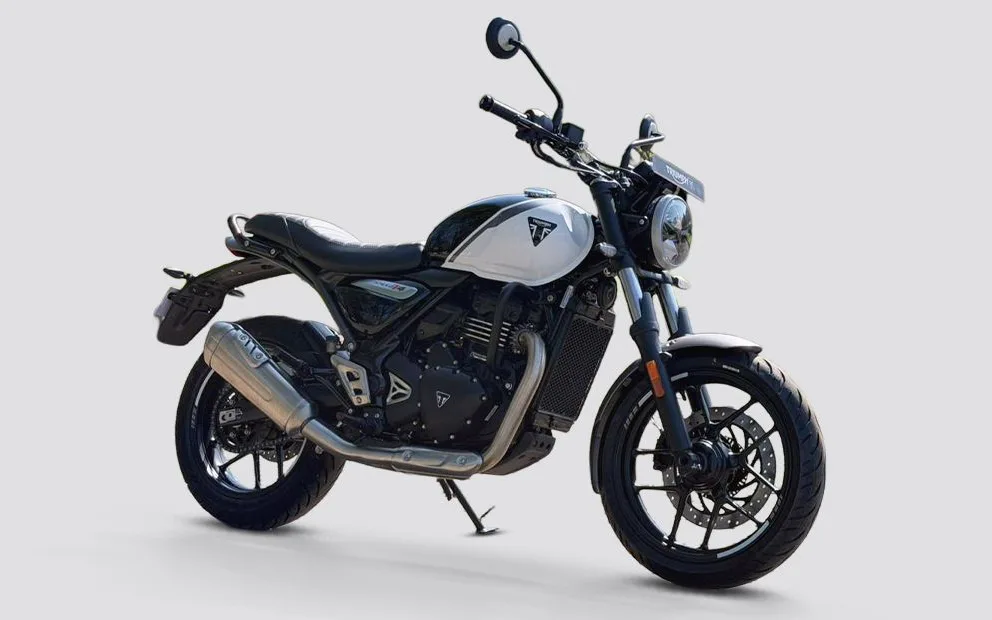
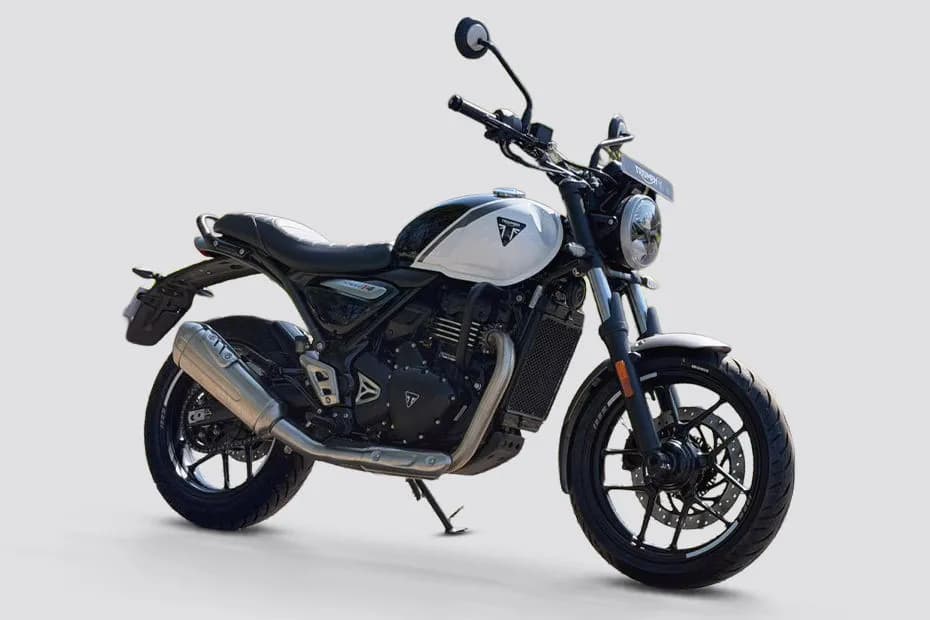
The Speed T4 wears a classic retro-modern roadster silhouette, and nothing about its fit and finish suggests a bike built down to a price. The test unit, finished in a dual-tone black and white fuel tank, looks sharp in person, with clean welds and materials that feel a notch above what's typical in this segment in Nepal. Side panel badging spells out 'Speed T4' clearly, so there's no mistaking it for its 400cc siblings at a glance. The exhaust pipe carries a brushed metal finish that adds a genuinely premium touch to what is otherwise a fairly minimal, unfussy design.
Build quality is one area where the bike's press coverage and dealer-floor impressions agree almost entirely: this doesn't feel like an entry-level motorcycle, even though that's exactly what it is within Triumph's own range. Switchgear feels tactile rather than plasticky, panel gaps are tight, and the paint finish holds up to close inspection. For a market where buyers moving up from commuter bikes are often chasing exactly this kind of tactile upgrade, it's a real selling point.
Only Two Colour Directions, But Both Work
The dual-tone black and white scheme is the one most commonly seen on the bike, and it suits the roadster styling well without looking loud. A yellow option also exists within the range and carries genuine visual appeal, giving buyers who want a bit more presence on the road something to consider. Beyond that, Triumph hasn't given the T4 a wide palette to choose from, so colour choice here is a quick decision rather than a lengthy one.
Equipment That Borrows From The 400, For Better And Worse
The instrument cluster is lifted straight from the Speed 400: a dual-format display combining an analogue speedometer with a digital screen. That screen covers trip 1, trip 2, average mileage, instant fuel economy, and distance to empty, which is a reasonable amount of information for a bike at this price point. The RPM readout tops out at 10,000rpm rather than the 12,000rpm ceiling on the 400cc bikes, a small but telling reminder of where the T4 sits in the family.
The catch is that this cluster design isn't new. It's the same setup Triumph has been using on its Speed 400 for a while now, and the common criticism across the motorcycling press is that it feels basic for a brand with Triumph's positioning, lacking a full-colour TFT screen that rivals at similar or lower prices increasingly offer. Switchgear fares better: buttons for the horn, indicators, starter, hazard lights, and kill switch all feel properly damped and premium to use, with a dedicated hazard switch that's a small but genuinely useful inclusion for Nepali traffic conditions.
The 349cc Engine: Smooth, Torquey, And Happier At City Speeds
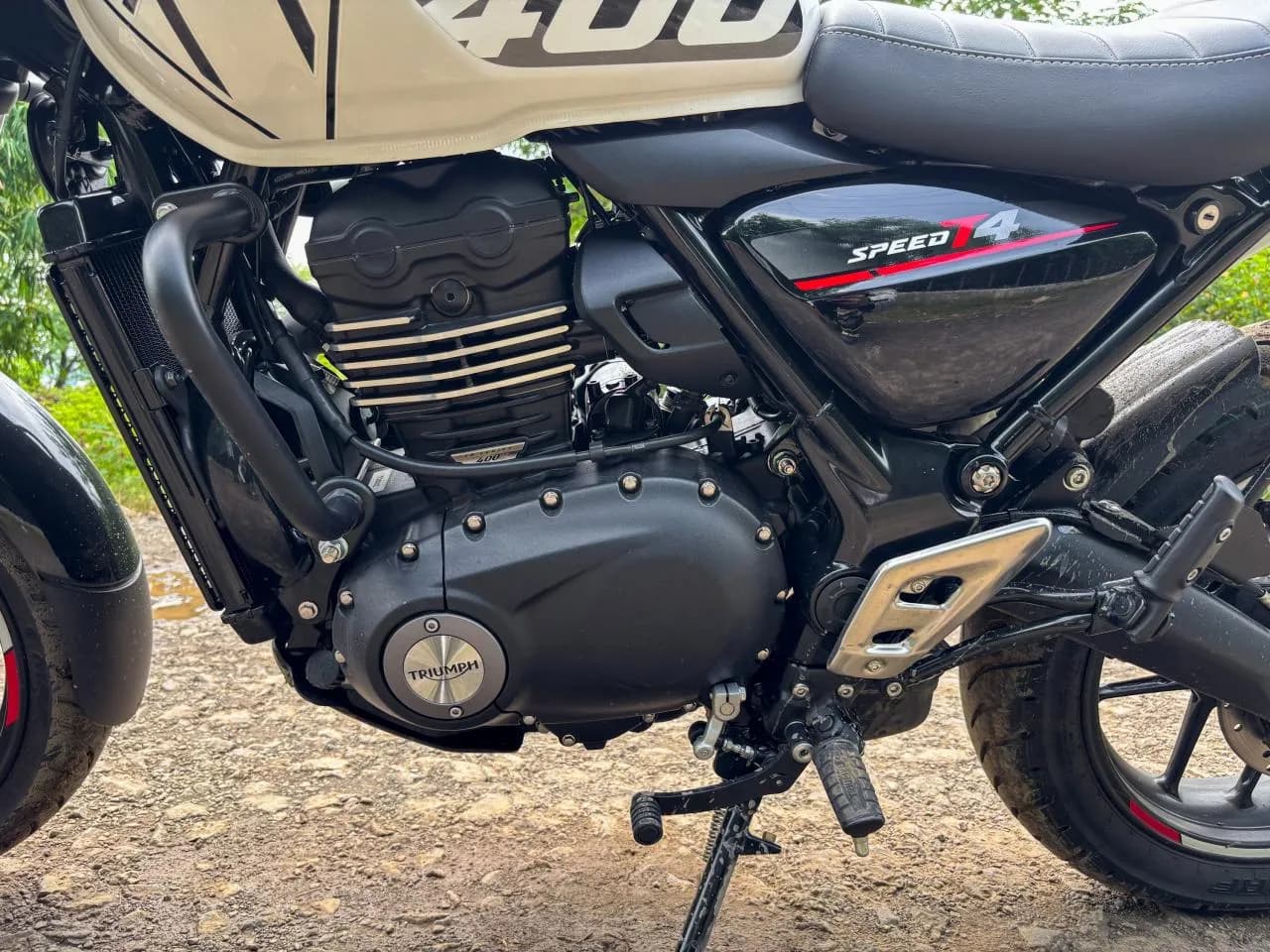
The heart of the T4 is a liquid-cooled, DOHC, four-valve single-cylinder engine displacing 349cc, with a bore of 89mm and stroke of 56.1mm, running a 12.1:1 compression ratio. It produces 29 PS (21.33 kW) at 7,500rpm and 31 Nm of torque at 5,500rpm, fed by Bosch electronic fuel injection with manual throttle control and cleared to BS6 OBD2B emission norms. Power reaches the rear wheel through a 6-speed gearbox and a wet, multi-plate assist-and-slipper clutch, driving a 102-link endless O-ring chain.
On the road, this engine's character is its strongest asset. It's notably smooth and refined for a single-cylinder motor, with vibrations kept well in check and power delivery that stays linear and predictable rather than surging or snatching. That predictability matters for buyers stepping up from smaller commuters, since it makes the bike far less intimidating to manage in daily traffic than raw numbers might suggest. Low-end torque is a genuine highlight: the bike can crawl at low speeds in third or even fourth gear without hunting for a lower ratio or threatening to stall, which is exactly the kind of trait that pays off in Kathmandu Valley traffic.
The exhaust note deserves its own mention. It's deeper and louder than what you get from the Speed 400 or the Scrambler 400X, which is an unusual result for the smaller-displacement engine in the range, but it works in the T4's favour, giving it an audible character that punches above its spec sheet. Engine braking is strong too, helping shed speed smoothly without heavy reliance on the brakes. The trade-off, and it's a real one, is that against the 400cc engines in Triumph's own lineup, there's a noticeable step down in outright power and excitement. This is a bike built for smooth, usable performance rather than thrills.
Ride Quality Leans Firm, Not Plush
Suspension duties are handled by a 43mm conventional telescopic fork offering 140mm of travel up front, and a gas-charged monoshock with external reservoir and preload adjustment offering 120mm of travel at the rear. On paper this is a conventional, sensible setup for the segment. In practice, it rides on the stiffer side, transmitting more road imperfections through to the rider than the plusher-tuned Speed 400. It's closer in character to Triumph's Tracker 400 than to its own direct 400cc roadster sibling.
At highway speeds the bike settles into genuinely stable, planted behaviour, which builds rider confidence on longer stretches. The wheelbase of 1,406mm (±10mm) and a 24.2-degree rake contribute to a chassis that doesn't get nervous at speed. Low-speed manageability is equally strong: the handlebars turn wide enough to make U-turns easy even on narrower Nepali roads, and the turning radius is a genuine practical asset in city traffic. Tyres are non-radial, and while they perform competently both in town and on the highway, they don't offer the cornering confidence that radial rubber brings on the Speed 400. For most daily riding in Nepal, that gap won't be felt often, but committed corner-carving riders will notice it.
Ergonomics Built Around An Upright, All-Day Posture
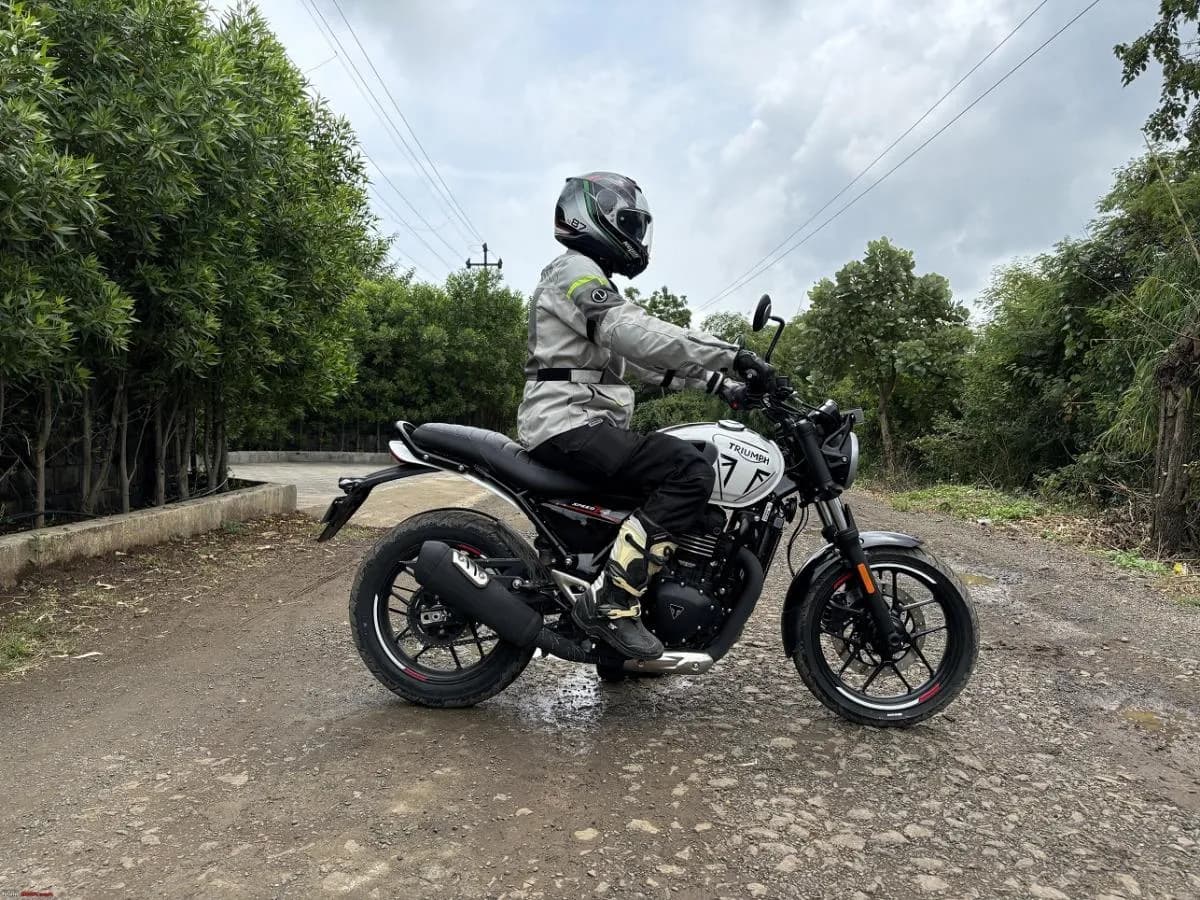
Seat height comes in at 806mm, low enough that a rider around 5'7" should manage roughly half their foot flat on the ground at a standstill, a reassuring figure for shorter riders common in the Nepali market. Handlebars sit slightly higher than on the Speed 400, producing a more upright stance that feels relaxed rather than sporty. Seat cushioning lands in a comfortable middle ground: softer than the firmer Tracker but not as plush as the Speed 400's perch.
The overall riding position feels commanding without being tiring, which makes the T4 a genuinely strong option for longer city commutes and even short highway hops. Wet weight is listed at 180kg, and combined with sensible weight distribution, that makes the bike easy to manoeuvre by hand, whether that's pushing it backward out of a tight parking spot or walking it into a showroom service bay.
Braking Feels More Capable Than The Spec Sheet Suggests
Braking comes from a single 300mm fixed disc up front, gripped by a ByBre two-piston floating caliper, paired with a 230mm rear disc on a ByBre single-piston floating caliper. Both ends get ABS as standard. Despite lacking the radial calipers fitted to the Speed 400, the front brake delivers excellent bite and stops the bike with real confidence, with progressive, predictable feel similar to what Triumph's own Scrambler 400X offers. For a motorcycle likely to spend most of its life navigating unpredictable Kathmandu traffic, that responsiveness is more valuable than a spec-sheet upgrade to radial hardware would be for most owners.
Living With It: Tank Size, Weight, And Day-To-Day Ease
The 13-litre fuel tank gives the T4 a reasonable range for both city errands and longer highway runs, though Triumph has not officially disclosed a fuel efficiency figure for Nepal beyond the tank size itself, and claims circulating for mileage should be treated as unconfirmed until the distributor publishes them. At 180kg, the bike is light enough to manage in tight parking, and the upright posture combined with light clutch and throttle action makes it an easy motorcycle to live with day to day, not just to ride occasionally.
What It Actually Costs To Run
Real-world fuel economy figures for this specific market haven't been officially published, but riding character suggests city mileage in the mid-20s per litre and noticeably better numbers on the highway, in line with what a smooth-revving, torque-friendly 349cc single typically returns. Buyers should treat any specific kmpl number they hear as an estimate rather than a confirmed figure until Triumph Nepal or the distributor states one directly. What is more certain is that the smaller-displacement engine should cost less to run than Triumph's own 400cc siblings, purely on the basis of reduced displacement and a lower power ceiling.
One Variant, One Price, No Real Decision To Make
There's only one version of the Speed T4 on sale in Nepal: the standard bike at Rs 6,49,900 ex-showroom, with the 349cc engine as its sole configuration. That removes any variant-picking dilemma buyers usually face elsewhere in the market. The real decision isn't which T4 to buy, it's whether the T4 is the right Triumph to buy at all, given the 400cc range sits just above it with more premium hardware attached.
The Royal Enfield Hunter 350 Costs Less But Feels A Generation Behind
The Royal Enfield Hunter 350 remains the default cross-shop for anyone considering the Speed T4, and the gap between them is not subtle. The T4 is smoother, noticeably more refined, and handles with more composure, while also offering better comfort for a pillion. Buyers stepping up from a Hunter 350 or similar commuter looking for a meaningful jump in refinement and finish will feel that difference within the first few minutes on the road. What the Hunter 350 offers in return is a significantly lower purchase price and a far larger, more established service network across Nepal.
The TVS Ronin Doesn't Match Its Premium Feel
Against the TVS Ronin, the Speed T4 is considered the clearly superior, more premium motorcycle across build quality, engine refinement, and overall ride experience. The Ronin's pricing advantage is real, but it doesn't close the gap in perceived quality or brand cachet that the Triumph badge brings, which matters to a specific type of buyer in this segment who is paying as much for the ownership experience as the spec sheet.
The Triumph Speed 400 Is Faster, But The T4 Is More Comfortable
The closest comparison of all sits within Triumph's own range: the Speed 400. The T4 gives up upside-down forks, radial tyres, and some outright engine power to its 400cc sibling. In exchange, it offers a more comfortable, upright riding posture and, somewhat surprisingly, a louder and deeper exhaust note. For buyers who prioritise a relaxed commuting posture over outright sportiness and cornering hardware, that trade works in the T4's favour. For riders who want the most engaging, feature-rich version of Triumph's small-displacement platform, the Speed 400 remains the one to stretch for if the budget allows it.
Verdict
The Triumph Speed T4 earns its place as the most accessible route into Triumph ownership in Nepal, built around a genuinely refined 349cc engine, strong low-end torque, confident front braking, and a comfortable, upright riding position with a manageable 806mm seat height. Build quality and switchgear feel properly premium rather than merely acceptable at this price. Set against that, the suspension rides firmer than its 400cc sibling, the instrument cluster is a carried-over, basic unit, and the bike misses out on radial tyres and upside-down forks. At Rs 6.5 lakh ex-showroom, it's also priced meaningfully above the 250-300cc commuters many Nepali buyers will be cross-shopping, and that gap needs to feel justified by the badge and finish alone. For riders upgrading from a Royal Enfield Hunter 350 or similar machine who want a smoother, more premium motorcycle without chasing outright performance, the Speed T4 is a genuinely sound choice. Riders who want the sharper, more capable version of this platform should look at the Speed 400 instead, budget allowing.
Evidence & next steps
Check the details before you buy
Use this guide to build a shortlist. Ask for a written quotation for your chosen variant, including registration, taxes, insurance, finance charges and any charger installation. Confirm the nearest authorised workshop supports that model.
Price sources and dates
These are the latest recorded distributor-source checks for a variant of each model. They are separate from the article update and catalog read dates; they do not mean every trim was rechecked today. Confirm the final price with the distributor.
Overview photos come from the corresponding model records; additional article photos carry their own credits. Running costs depend on usage, energy prices, maintenance, insurance and resale value. Read the article’s assumptions before making cost comparisons.