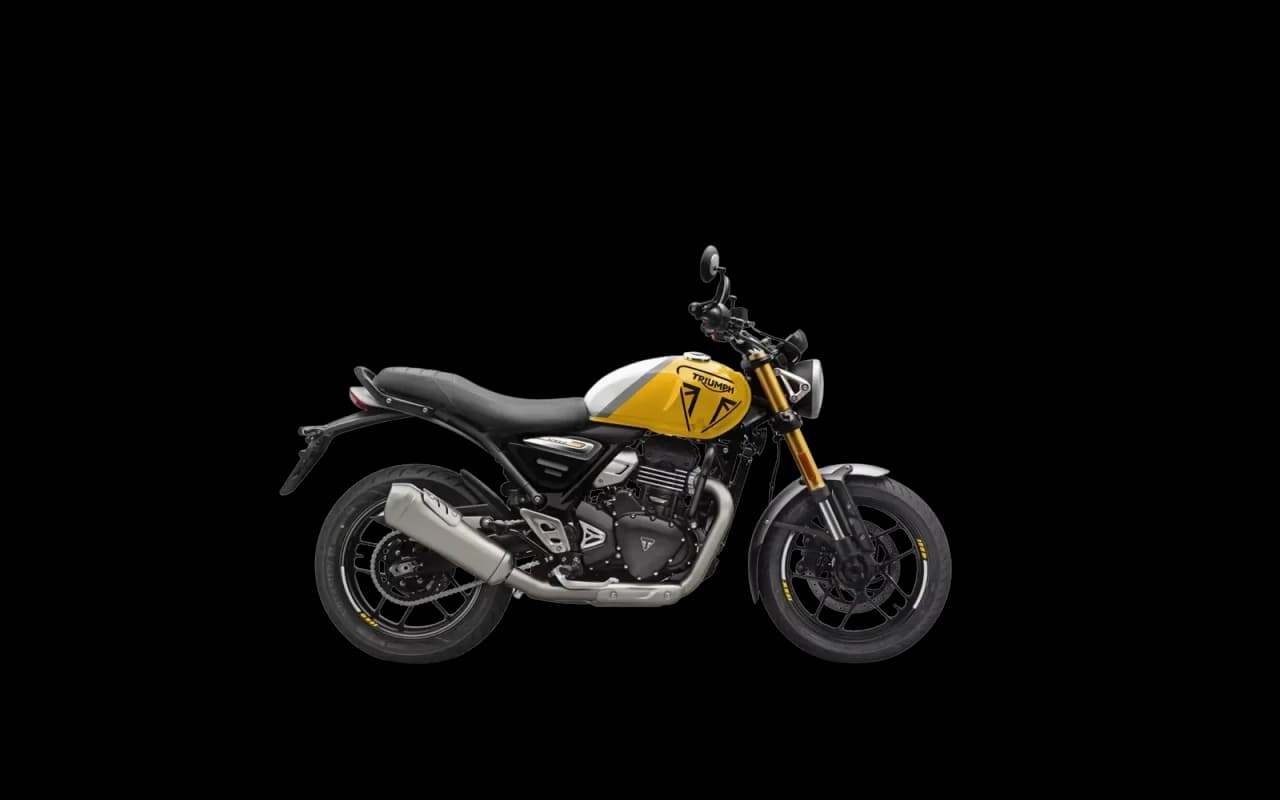
Start with the numbers
The model, at a glance
Available variants, with prices in Nepalese rupees.
| Vehicle | Ex-showroom price | Fuel | Selected variant |
|---|---|---|---|
| 01Triumph Speed 400 | Rs 7.2 lakh | Petrol | Speed 400 |
Ex-showroom prices exclude registration, road tax and insurance. Specifications can vary by trim. See individual source-check dates ↓
Where The Speed 400 Fits In Kathmandu's Showrooms
Triumph arrived in Nepal in 2023 through Hansraj Hulaschand & Co. Pvt. Ltd., trading as HH Bajaj - Triumph Motorcycles Nepal, and the Speed 400 is the bike doing the heavy lifting for that partnership. At Rs 7,19,900 ex-showroom, it sits in an odd but interesting spot: well above a Royal Enfield Classic 350, roughly in line with premium 390-400cc roadsters from other global brands, and priced like a motorcycle that wants to be judged on badge and engineering rather than on displacement-per-rupee. For many Nepali buyers this is the first Triumph they can actually afford, built in India under license but engineered with the brand's usual obsession over engine feel. That positioning alone makes it one of the more talked-about launches of the last two years, and search interest for the bike runs high even among people who will never walk into a showroom.
The brand's retail footprint in Nepal is still compact next to the established players. Triumph operates through 37 showrooms across cities including Kathmandu, Lalitpur, Itahari, Pokhara, Bhaktapur, Bharatpur, Butwal and Dhangadhi, backed by 13 service centres spread across a similar spread of towns. That is thin compared to Honda or Bajaj's own network, and it is a real consideration for buyers outside the main valleys who will need to plan service runs around it.
A Retro Roadster That Doesn't Look Like A Parts-Bin Special
The Speed 400 wears a dual-tone black and grey fuel tank that reads as properly premium rather than a cost-cut retro pastiche. The gold-finished upside-down front forks do a lot of visual work here — they're the first thing anyone notices walking up to the bike, and they signal a level of hardware you don't expect to see at this price in Nepal. The upswept exhaust canister with its dual-port end cap adds a mechanical, purposeful look rather than the slab-sided mufflers common on budget roadsters.
Panel gaps, switchgear quality and the fit of the cycle parts all feel considered rather than assembled to a cost target. This is a bike that photographs well and holds up under closer inspection in a showroom, which matters in a segment where buyers are paying a premium partly for the way the motorcycle makes them feel standing next to it.
One Colour, One Variant, No Decision Paralysis
Nepal gets the Speed 400 in a single dual-tone Black and Grey fuel tank scheme, and there is only one variant on sale: the Speed 400 at Rs 7,19,900 ex-showroom. There's no base-spec-versus-top-spec decision to make here, which simplifies the buying process but also means there's no cheaper entry point if the full price feels steep. Whatever the showroom bike has, that's what you're getting — there's no stripped-down version waiting in the wings with a smaller price tag.
What You Actually Get For The Money
The instrument cluster is a semi-digital unit — an analogue speedometer with an integrated multi-function LCD screen — which keeps the retro aesthetic intact while still showing trip data, fuel level and gear position digitally. It's a thoughtful compromise rather than a cost-cutting one. Round bar-end mirrors sit on wide handlebars and look the part, though their main job is function: wide enough to give a genuine shoulder-width view without being intrusive in tight traffic.
The assist and slipper clutch is standard equipment, not an optional extra, and it's one of the quieter strengths of this motorcycle. It makes aggressive downshifts into corners smooth and prevents rear-wheel hop under hard braking. The right-side switchgear carries an integrated kill switch, a small detail but one riders coming from cheaper commuters will notice and appreciate. Braking is handled by a 300mm front disc with a four-piston radial caliper and a 230mm rear disc with a floating caliper, both backed by ABS as standard — no stripped-out single-channel setup here.
The Engine Is The Real Argument For Buying One
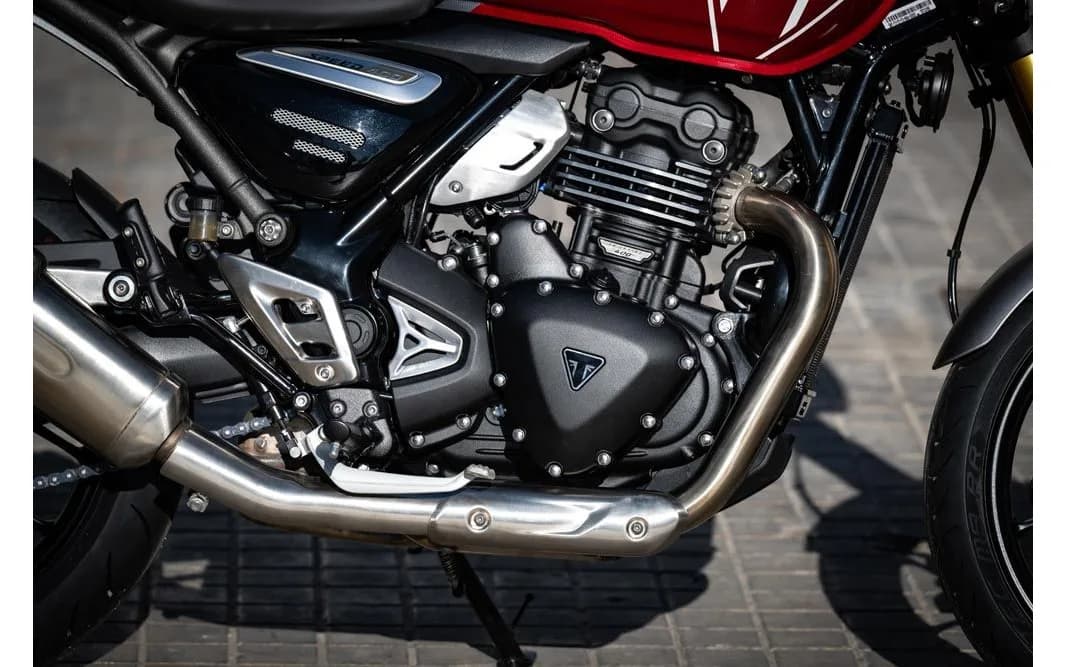
The 398.15cc liquid-cooled single, with its 89mm bore and 64mm stroke and 12:1 compression, makes 40 PS (39.5 bhp) at 8,000 rpm and 37.5 Nm at 6,500 rpm. On paper those numbers sit comfortably mid-pack for the segment. What sets the engine apart is how it delivers them. Riders who arrive expecting the usual single-cylinder buzz at the grips and footpegs are routinely surprised — this unit stays smooth right through the rev range, with none of the tingling vibration that plagues cheaper 350-400cc singles. Triumph's Bosch electronic fuel injection and electronic throttle control play a part here, but so does the overall engineering: this is a motor built with the brand's bigger bikes' refinement standards in mind, not a cut-down commuter unit.
The exhaust note deserves its own mention. The twin-skin stainless header and stainless silencer combination produces a deep, boomy, faintly bassy note under acceleration that adds genuine theatre to the riding experience without tipping into obnoxious. The six-speed gearbox shifts with precision, and the strongest part of the power delivery sits between 6,500 and 7,000 rpm, where the torque arrives in a noticeable, satisfying shove. Riders who worry that 398cc and 40 PS won't feel exciting enough on paper are usually won over once they've actually opened the throttle on an open stretch — this is a motorcycle that overdelivers on feel relative to its spec sheet.
Composed Through Corners, Less Forgiving Over Craters
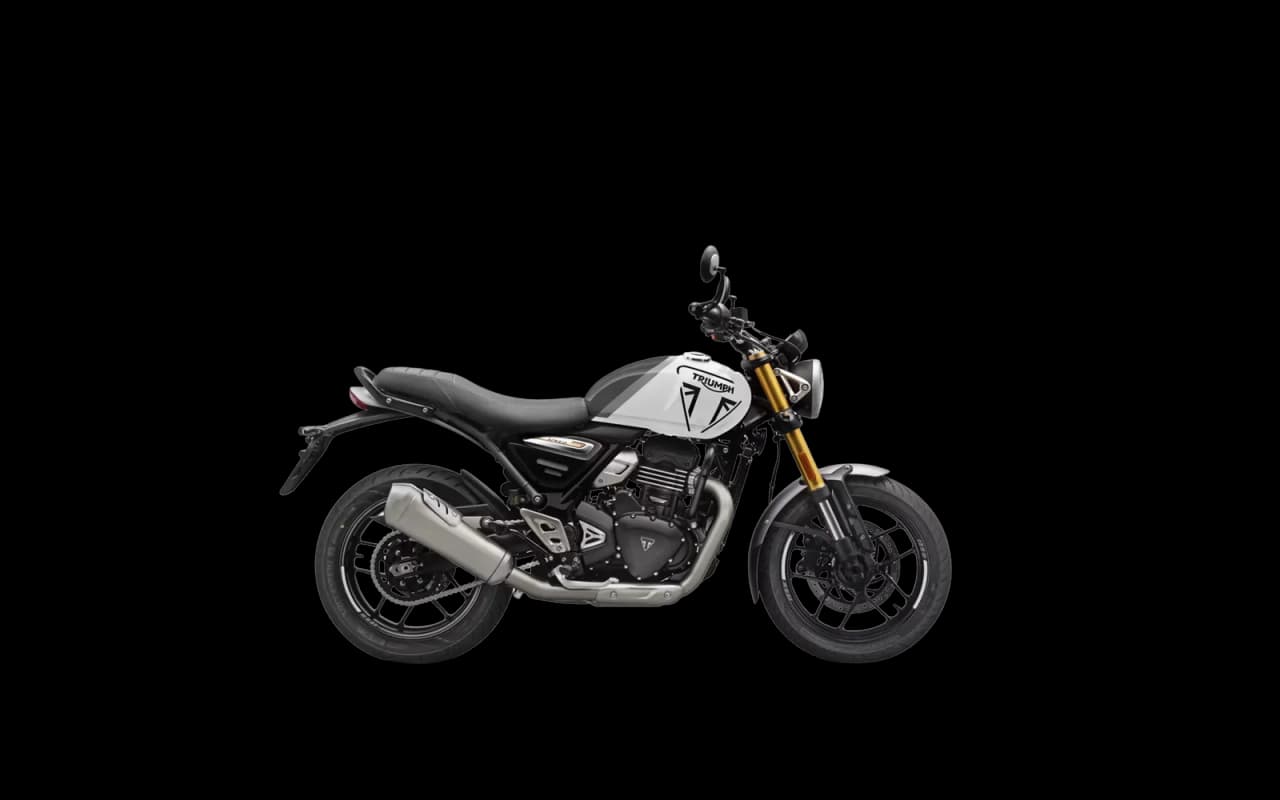
The chassis geometry — a 24.6-degree rake, 102mm trail and 1377mm wheelbase — gives the Speed 400 genuinely confident steering on tarmac twisties. It changes direction quickly and holds a line through corners with a precision that doesn't feel nervous or twitchy at speed. A lot of that confidence comes down to the standard-fit Vredestein tyres, which grip impressively well even on degraded or gravel-strewn surfaces and don't skid where cheaper rubber would. That's a genuinely significant point for Nepali roads, where broken tarmac and loose patches are the rule rather than the exception on most highway stretches outside the Kathmandu valley.
The suspension is where the compromise lives. The 43mm upside-down Big Piston forks (140mm travel) and the gas monoshock rear with external reservoir and preload adjustment (130mm travel) are tuned firm — firm enough that high-speed stability is excellent, but speed breakers, track diversions and broken sections of road transmit a noticeable jerk through the rider rather than being soaked up. This is the single most consistent criticism the motorcycle attracts, and it's a fair one. On fast, well-surfaced roads the firmness pays off in composure; on the kind of patchy urban roads common across the Tarai and valley towns, it asks the rider to absorb more than some will want to.
Riding Position Suits Longer Days Than Expected
At an 800mm seat height and 170kg wet weight, the Speed 400 strikes a reasonably accessible stance for most adult riders, and the reach to the wide handlebars creates an upright, natural posture rather than the committed lean of a sportier machine. That makes it genuinely comfortable for daily commuting and longer highway stretches, right up until the suspension firmness reasserts itself over rough patches, where the ride quality drops noticeably. It's a bike built more for a rider who values control and feedback over outright plushness.
Stopping Power That Inspires Confidence Corner After Corner
The braking setup — 300mm front disc with a four-piston radial caliper, 230mm rear disc with a floating caliper, ABS on both ends — delivers strong, consistent stopping power without fade, even under repeated hard braking into corners. Feedback through the lever is precise enough that riders trust the front brake fully rather than leaning on the rear, which matters a great deal on a bike this quick to turn in.
Running Costs And What Ownership Actually Looks Like
Triumph quotes fuel consumption at 3.5 L/100km (80.7 mpg), which works out to roughly 28.3 km/l on a more familiar local measure, and a 13-litre tank gives a reasonable touring range between fill-ups. CO2 is rated at 83.8 g/km under Euro 5. Service intervals are set at 16,000 km or 12 months — longer than most commuter motorcycles, which should keep servicing visits relatively infrequent for an owner doing normal annual mileage. The whole-vehicle warranty runs 2 years with unlimited kilometres, a genuinely strong cover period by Nepali motorcycle standards, though buyers should factor in that the service network is still limited to a handful of cities.
One recurring piece of buyer hesitation worth being upfront about: the Speed 400 is made in India by Bajaj under the Triumph-Bajaj partnership, and some buyers in Nepal remain uneasy about that origin story even though the engineering and quality control are Triumph-led. It's a perception issue more than a substance one, but it does show up in buyer conversations.
The Honda CBR 250R Repsol Trades Displacement For A Faired, Track-Leaning Identity
The Honda CBR 250R Repsol brings a 249.6cc engine, smaller and less powerful than the Speed 400's 398.15cc unit, wrapped in full fairing rather than a naked roadster silhouette. It appeals to a different buyer — one chasing sportbike looks and Honda's reliability reputation over outright torque or that distinctive Triumph exhaust note. Price comparisons aren't possible here since Honda CBR 250R Repsol pricing isn't confirmed in current listings, but the segment gap is clear: the Speed 400 offers nearly 150cc more displacement and a genuinely different riding character.
The Royal Enfield Meteor 350 Is The Comfort-First Alternative
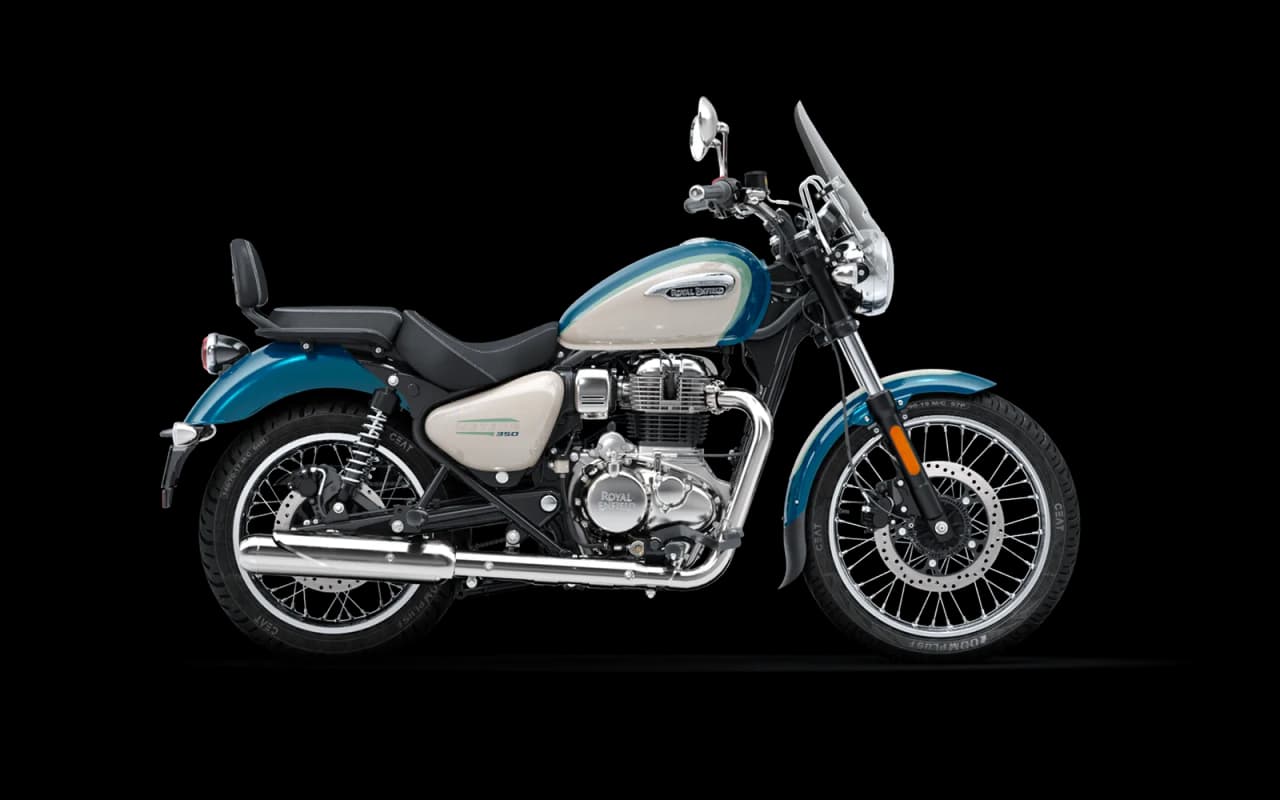
The Royal Enfield Meteor 350, at 334cc, is built around cruiser-style comfort and Royal Enfield's dense service network rather than outright performance. It's the more relaxed, more forgiving motorcycle over bad roads, lacking the Speed 400's punchy mid-range and sharp cornering manners but also lacking its firm-edged ride. Royal Enfield's sales and service reach in Nepal dwarfs Triumph's current footprint, which matters for buyers outside the main cities. Pricing between the two isn't directly comparable since the Meteor 350's current figure isn't confirmed in our listings, but it has historically undercut most 390-400cc roadsters by a meaningful margin.
The KTM RC 200 Is The Track-Focused, Smaller-Capacity Option
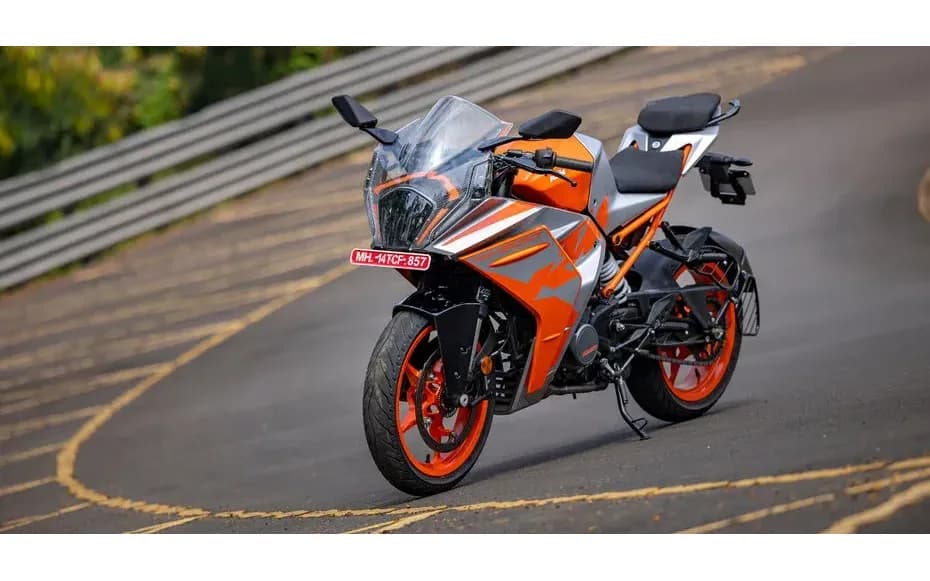
The KTM RC 200 comes in at 199.5cc, considerably smaller than the Speed 400's engine, and leans hard into sharp, aggressive, track-day handling rather than the Triumph's relaxed roadster stance. It's a legitimate cross-shop for buyers torn between outright cornering aggression and all-round usability, though the capacity gap means it's really a different kind of motorcycle experience. Price comparison again isn't possible with current unconfirmed KTM RC 200 figures, but historically the RC 200 has sat well under Rs 7 lakh, undercutting the Speed 400 by a wide margin while offering less engine and less outright comfort.
Verdict
The Triumph Speed 400 earns its asking price through an engine that feels genuinely special for the class — smooth, torquey in the midrange and backed by a gearbox and clutch that make every ride feel deliberate rather than workmanlike. Tyre grip, braking confidence and cornering composure back that up convincingly. The firm suspension tune is the one real concession buyers need to accept: it rewards good roads and punishes bad ones, and Nepal has plenty of both. Anyone riding mostly on reasonable tarmac, chasing mountain twisties or commuting on decent valley roads will find this one of the most satisfying motorcycles available at Rs 7.2 lakh. Buyers whose daily route is dominated by broken urban roads and speed breakers should test that suspension tolerance carefully before signing the booking form.
Explore full specifications, variants & ownership context
Know the product
Key specifications, features & ownership context
Choose a variant to see its recorded specifications and features. Equipment and prices can change across trims.
Latest catalog and directory records supplement the original analysis. Figures may have changed since publication; individual specification and price-check dates appear below.
Rs 7.2 lakh ex-showroom · source checked 24 Oct 2026
Engine & performance
| Specification / feature | Speed 400 |
|---|---|
| Engine displacement | 398.15 ccVerified specification · 31 Aug 2026 |
| Max power | 40 PSVerified specification · 12 Aug 2026 |
Brakes, tyres & suspension
| Specification / feature | Speed 400 |
|---|---|
| ABS | ABSVerified specification · 12 Aug 2026 |
Dimensions & weight
| Specification / feature | Speed 400 |
|---|---|
| Ground clearance | 164 mmResearched · confirm · 15 Sept 2026 |
Showroom & service support
Distributor: Hansraj Hulaschand & Co. Pvt. Ltd. (HH Bajaj – Triumph Motorcycles Nepal)
37 listed brand showrooms · 13 listed brand service locations
Listed cities include Bhaktapur, Bharatpur, Butwal, Dhangadhi, Ghorahi, Ghorahi Sub-Metropolitan-15 and 7 more.
Brand-wide directory coverage. Confirm that your nearest workshop supports this exact model, powertrain and warranty work; ask about parts availability and booking time.
Market buzz & buyer priorities
Compiled discussion, including buyer reactions and ownership reports; this is not a verified owner survey or a reliability score. Research dated 8 Oct 2026.
Concerns to investigate
- made in India by Bajaj may deter buyers
Use these facts alongside the article’s full analysis. Check the final quotation, warranty terms and exact equipment before booking.
Evidence & next steps
Check the details before you buy
Use this guide to build a shortlist. Ask for a written quotation for your chosen variant, including registration, taxes, insurance and finance charges. Confirm the nearest authorised workshop supports that model.
Price sources and dates
These are the recorded distributor-source checks for the selected overview trims. They are separate from the article update and catalog read dates; they do not mean every trim was rechecked today. Confirm the final price with the distributor.
Overview photos come from the corresponding model records; additional article photos carry their own credits. Running costs depend on usage, energy prices, maintenance, insurance and resale value.