Where This Car Actually Fits In Nepal's EV Market
The Tata XPRES-T EV is not trying to be somebody's second family car. It is built, priced and equipped for one job: ferrying passengers for a living. Sipradi Trading has brought it into Nepal for 2026 across two variants, priced from Rs 36.99 lakh to Rs 38.49 lakh ex-showroom, and that positioning tells you almost everything before you even open a door. This is not a mass-market private-buyer EV competing on badge appeal — it is a working tool aimed at taxi operators, ride-hailing fleets and corporate transport contracts who need predictable running costs and a manufacturer-backed warranty behind the battery.
That said, the price bracket puts it in interesting company. At Rs 37-38 lakh, private buyers shopping this budget in Nepal have real alternatives that aren't fleet-focused at all, and we'll get to those. But judged purely as a commercial EV sedan, the XPRES-T EV occupies a fairly unique slot here — there is little else sold through an authorised Nepali distributor that is this explicitly built around taxi duty rather than retrofitted for it.
Tigor Underneath, Fleet Spec On Top
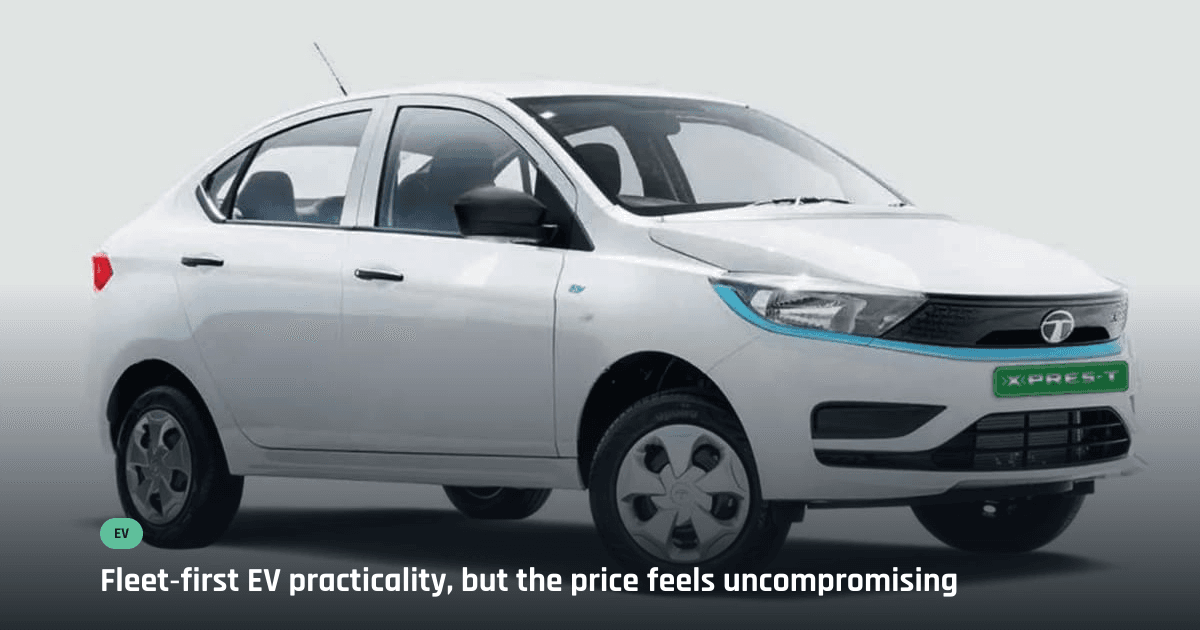
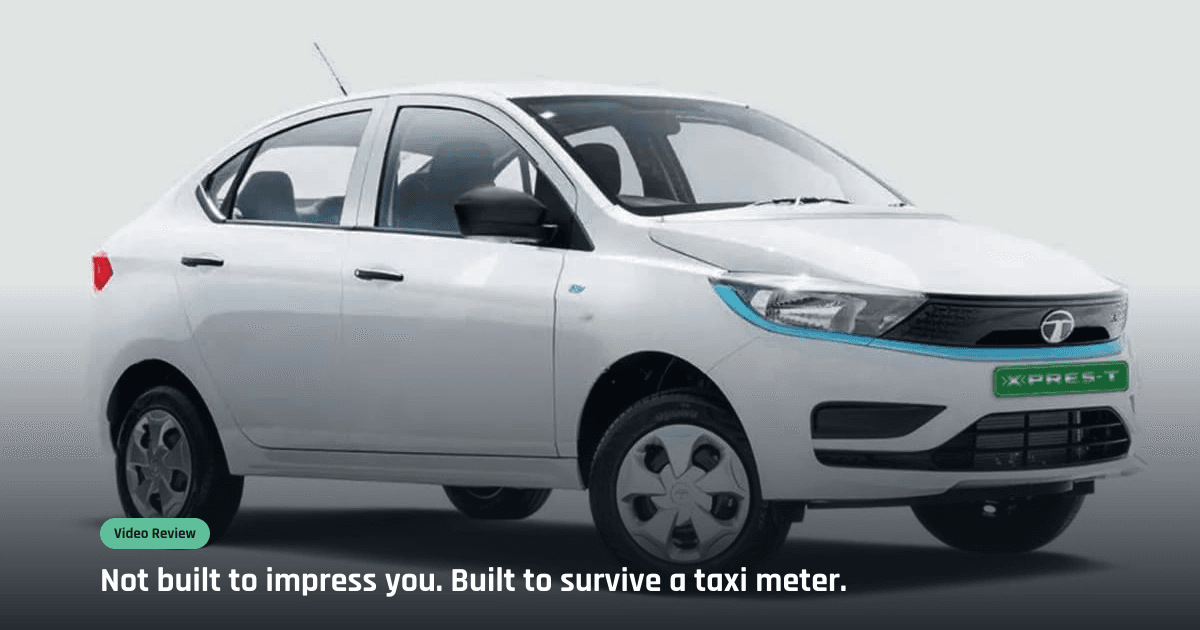
Look at the XPRES-T EV from any angle and the Tata Tigor is unmistakably the starting point. The nose carries halogen headlamps with a blue strip running beneath them — a small but deliberate signal that this is the electric version — while the front grille gets tri-arrow accents and EV badging to distinguish it further. It's a clean, inoffensive design rather than a bold one, which suits its intended buyer: fleet operators don't generally want a car that draws attention, they want one that looks presentable across three years of daily service.
The details give away its commercial brief immediately. Fourteen-inch steel wheels with silver wheel caps sit under the arches rather than alloys, matte black ORVMs and black door handles line the sides, and the rear gets a black bar connecting the tail lamps along with XPRES-T badging. None of this is unattractive, but none of it pretends to be premium either. Build quality on the Tigor platform underneath has always been reasonably solid for its segment, and Tata carries that structural base straight into this EV, which should reassure fleet buyers worried about durability under constant use.
One Colour, And That's Deliberate
Fleet-spec vehicles rarely bother with a colour palette, and the XPRES-T EV follows that logic — the car we've seen represented in white, which is the practical choice for a taxi that needs to look clean after a long shift and doesn't benefit from standing out in traffic. Buyers going in expecting the colour options of a private-market hatchback should recalibrate: this is a working vehicle first, and the finish reflects that.
A Cabin That's Smarter Than It Needs To Be
This is where the XPRES-T EV surprises a little. For a car built to shuttle fare-paying passengers, the cabin is better equipped than the fleet-vehicle stereotype suggests. A full digital instrument cluster displays range, battery percentage and drive mode clearly, with a startup animation that feels more private-car than taxi-spec. A Harman-sourced music system with touch-sensitive controls handles infotainment duties, and there's a 12V socket plus a USB port to keep phones charged — genuinely useful for drivers doing long shifts.
Climate control is automatic, operated through physical dials rather than a touchscreen menu, which we'd actually rate as the right call for a vehicle that will be used by multiple drivers who need to adjust it quickly without hunting through submenus. Regenerative braking is adjustable via buttons on the center console, letting drivers dial in how aggressively the car slows when they lift off the accelerator — a feature that matters more here than in a private EV, since taxi driving is stop-start by nature and stronger regen can meaningfully cut energy use and brake wear over a long shift.
Against that, the omissions are real and worth flagging plainly: there are no steering-mounted controls, so audio and trip functions have to be reached on the console instead. Neither sun visor gets a vanity mirror. The ORVMs and IRVM adjust manually rather than electrically. And there are no fog lamps in the front bumper, which matters more in Nepal's hill fog and monsoon conditions than it might elsewhere. None of these are dealbreakers for a taxi operator, but they're the kind of thing a private buyer at this price point would notice immediately.
A Motor Built For Traffic, Not For Highways
The XPRES-T EV runs a permanent magnet synchronous motor putting out approximately 48-55 kW and 170 Nm of torque, driving the front wheels through a single-speed automatic. Power delivery is managed through a rotary gear selector dial offering Drive, Sport, Neutral and Reverse — a control layout that feels modern and removes any confusion around gear shifting for drivers switching between fleet vehicles. Sport mode sharpens throttle response for overtaking, while Drive mode is the default for the bulk of city running.
This is not a car built to be quick. It's built to be tractable in the stop-start crawl of Kathmandu traffic, where an EV's instant low-speed torque is actually a genuine advantage over an equivalent petrol taxi that has to work a clutch or torque converter through the same grind all day. The 55 kW output tops out modest, and highway overtaking will feel unhurried rather than urgent, but that's an acceptable trade for a vehicle whose real habitat is urban and short-hop.
Handling That Prioritises Predictability Over Fun
Ground clearance sits at 170-172 mm unladen, which should comfortably clear Nepal's uneven urban roads and speed bumps without the car needing to slow to a crawl every few hundred metres — a genuinely important number for a vehicle that will be doing this dozens of times a day. The suspension setup is conventional for this class: independent McPherson struts at the front and a twist beam at the rear, tuned here more for composure with passengers aboard than outright cornering sharpness.
The 14-inch wheels and a turning circle radius of 5.1 metres make the car easy to place in tight city lanes and easier still to manoeuvre in and out of taxi stands and narrow driveways — something Kathmandu's older neighbourhoods in particular reward. This isn't a car that invites spirited driving, nor should it; the electric motor's linear power delivery combined with a soft, absorbent ride makes it a calm, unfussy companion for the kind of stop-start, pothole-dodging duty it's designed for.
Comfortable Enough For A Full Shift Behind The Wheel
Fabric seats with adjustable headrests are fitted up front, and the driver's seat gets height adjustment — a small but meaningful feature for a car that different drivers may use across different shifts. A dead pedal beside the accelerator and brake gives the driver's left foot somewhere to rest on longer runs, a detail that matters more than it sounds once you've spent several hours in one seat. At the back, the bench is designed to accommodate three passengers without feeling unreasonably cramped, which is exactly the brief for a taxi that needs to maximise fares per trip.
Overall cabin ergonomics favour function over flourish: everything a driver needs across a working day — climate dials, regen buttons, the gear dial, USB charging — sits within easy reach, and manual air conditioning as standard elsewhere in the range keeps things simple rather than adding failure points.
Safety Kit Matches Its Segment, No More
Braking duties are handled by discs at the front and drums at the rear, a combination that's standard fare in this price and vehicle class rather than anything special. Dual front airbags are fitted, and two rear parking sensors on the bumper help with reversing in tight taxi stands. This is a sensibly equipped safety package for a commercial sedan, built around the same structural base as the Tigor EV, though buyers shouldn't expect the multi-airbag counts or advanced driver assistance features that some newer private-market EVs are beginning to offer at similar money.
Boot Space That Actually Works For A Taxi
Practicality is where the XPRES-T EV earns its keep. Boot space comes in at 350 litres, genuinely generous for this class and enough to handle airport runs with proper luggage rather than just weekend bags — a detail that matters enormously for a vehicle whose entire business case is carrying fare-paying passengers and their belongings. Inside, two cup holders and a decently sized glove box round out the small-item storage.
Dual charging ports sit under the fuel-lid-style flap, supporting both AC slow charging for overnight top-ups at a depot and DC fast charging for quick turnarounds between fares. A fast DC charge from 0-80% takes roughly 58 to 65 minutes, which is workable for a fleet vehicle that can charge during a driver's meal break rather than needing hours off the road.
What Running One Actually Costs Over Time
The 26 kWh battery pack is certified for a range of about 260 km on the MIDC/ARAI test cycle, a figure that should be read as a best-case number rather than an everyday guarantee, particularly with the air conditioning running through Kathmandu Valley traffic. Real-world range for a taxi doing constant stop-start work with passengers and luggage aboard will sit meaningfully below that figure, but even accounting for that, the running cost per kilometre against a petrol or diesel taxi is where the electric argument wins comfortably over a multi-year ownership period.
Warranty cover is a genuine strength here and worth dwelling on: the battery and motor are covered for 5 years or 1,60,000 km, while the vehicle itself carries a 3-year or 1,25,000 km warranty. For a fleet buyer running high annual mileages, that battery and motor cover in particular removes much of the anxiety around EV ownership at commercial scale — 1,60,000 km is a serious distance for a taxi to cover before the drivetrain warranty runs out.
Two Variants, And The Decision Is Straightforward
Sipradi Trading offers the XPRES-T EV in Nepal across two trims: the base Xpres-T EV at Rs 36.99 lakh with its 55 kW motor, and a higher EV variant at Rs 38.49 lakh. The gap between them is roughly Rs 1.5 lakh, and for a fleet buyer purchasing in volume, that difference across a handful of vehicles adds up quickly. Given that the core mechanical package — the 26 kWh battery, the charging capability, the warranty terms — appears consistent across the range, most commercial buyers will find the base Xpres-T EV delivers the essentials without needing to stretch for the higher trim, unless a specific fleet contract demands the extra features the top variant carries.
The Citroen eC3 Undercuts It On Price
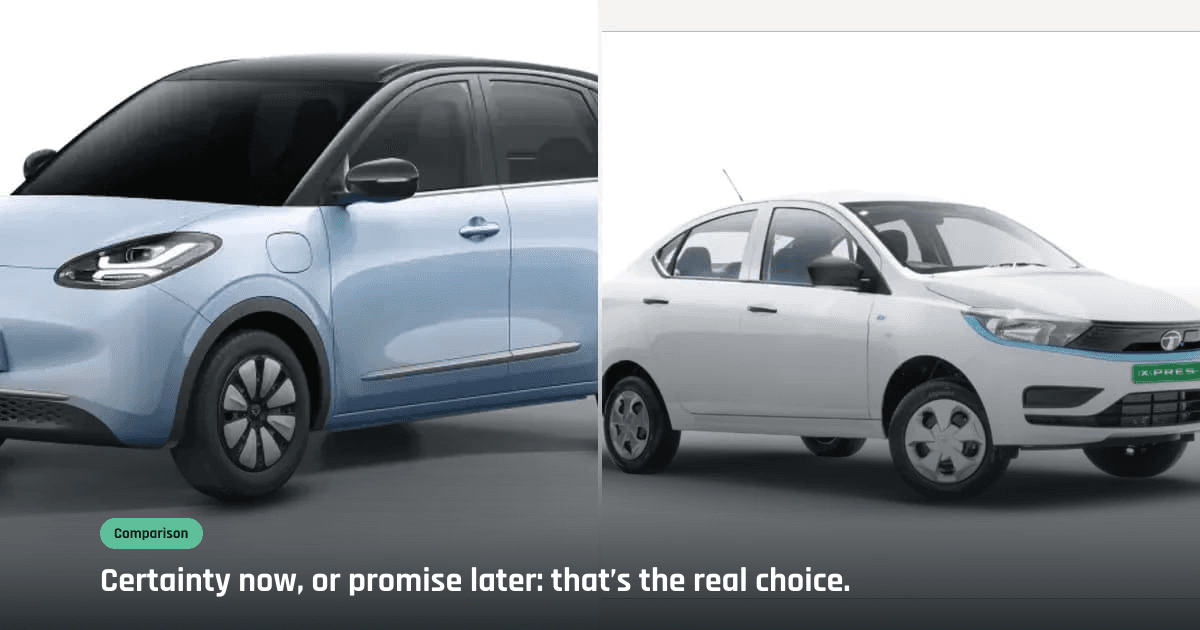
The Citroen eC3 is the more affordable proposition in Nepal's small EV space, and for private buyers weighing an entry-level electric car rather than a taxi-spec sedan, it's a genuine cross-shop. The eC3 leans into hatchback practicality and private-buyer appeal rather than fleet durability, which makes the two cars different answers to different questions — but any buyer comparing electric options purely on rupees per kilometre will end up looking at both.
The Hyundai Ioniq 5 Shows What Rs 38 Lakh Buys Elsewhere
At the top end of the XPRES-T EV's price bracket, buyers with private budgets rather than fleet contracts will inevitably glance toward something like the Hyundai Ioniq 5, which occupies a completely different tier of design, technology and range in Nepal's EV market. It's not a direct rival in mission — the Ioniq 5 isn't built for taxi duty and costs meaningfully more once you move up its range — but it's the car that quietly reminds private buyers why the XPRES-T EV is best understood as a commercial vehicle rather than a lifestyle purchase at this price point.
The Verdict: A Serious Tool For A Specific Job
The Tata XPRES-T EV does exactly what it sets out to do. It's a fleet-spec electric sedan with a genuinely useful boot, a strong battery and motor warranty, sensible charging speeds, and cabin tech — the digital cluster, the Harman system, the regen buttons — that feels more considered than the segment usually offers. The gaps in convenience features, from steering controls to fog lamps to auto-folding mirrors, will bother private buyers far more than they'll bother a taxi operator focused on cost per kilometre and uptime.
This is a car for fleet operators, ride-hailing companies and taxi drivers who want to go electric without gambling on an unproven platform, and for that buyer, the case is compelling. Private buyers with Rs 37-38 lakh to spend and no commercial use case in mind will likely find better-suited electric options elsewhere in the market.
Writes on vehicle pricing, taxation and the Nepali auto market from ongoing tracking of distributor price lists. Editorial policy.