Yamaha R3 race bike shocks Indian grid
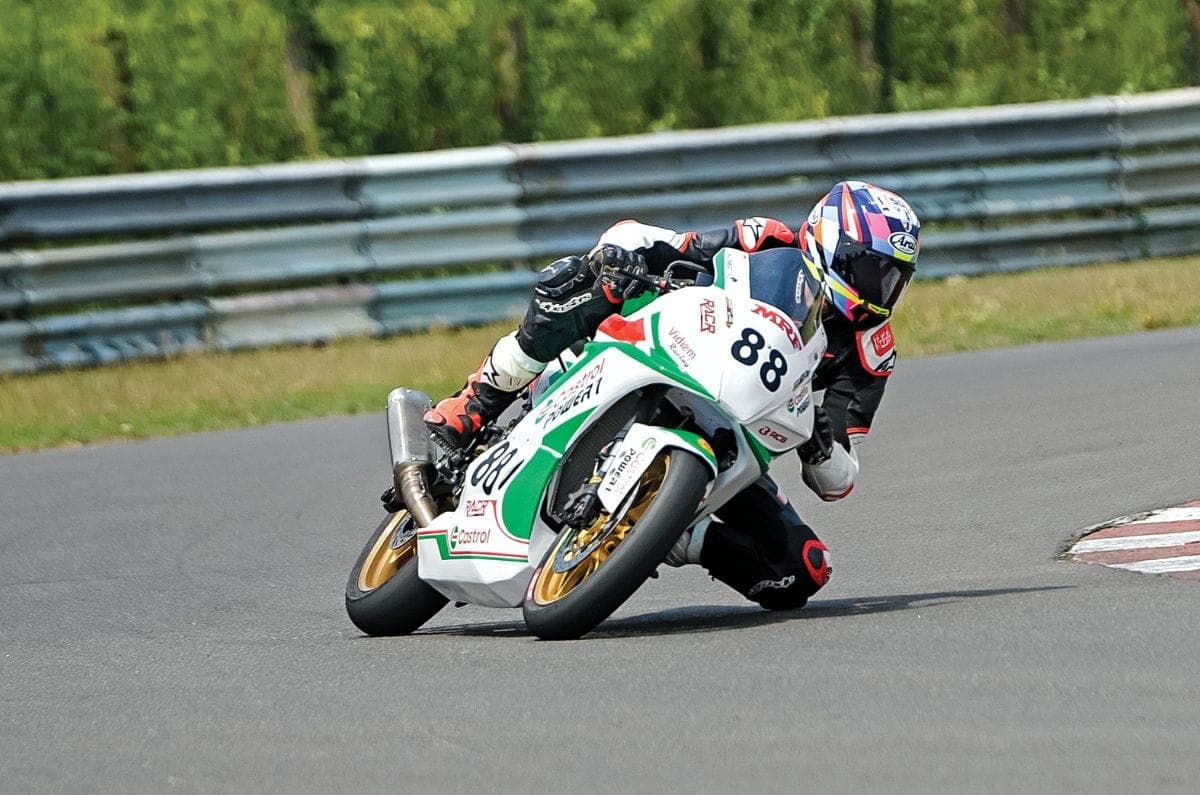
A Pro-Stock Yamaha R3 race bike has set a new lap record at the Madras International Circuit in India, with a time of 1:47.392 in the national championship’s 300–400cc class. Built by Team RACR, the machine is based on the road‑going R3 but has been extensively reworked within Pro-Stock regulations.
Under the rules, the main frame, wheel materials and basic braking hardware must remain stock, and exotic materials like carbon fibre or magnesium are banned. Yet the team has pushed the standard 321cc parallel‑twin as far as the category allows.
What’s changed on the race‑spec R3
According to the feature, the Pro‑Stock R3 gets:
- Race camshafts, larger throttle bodies, ported head and bigger valves, controlled by a programmable ECU with quickshifter.
- A large racing radiator to keep the 321cc twin cool in long races.
- Output lifted to around 55hp at the wheel, compared with roughly 42PS in stock form in the latest Indian‑spec R3.
- Weight cut to about 132kg with fuel, thanks to a lighter aluminium subframe and tank plus fibreglass race bodywork.
- Fully adjustable K-Tech/Öhlins suspension, while retaining FMSCI‑approved (stock‑type) brakes.
This combination lets the bike hit speeds near 190km/h on the straights while carrying exceptionally high corner speed.
Link to the street R3 – and why Nepal should care
The current showroom Yamaha R3 sold in India uses a 321cc, liquid‑cooled parallel‑twin producing about 42PS and 29.5Nm, with a 6‑speed gearbox and a kerb weight around 170kg. It is imported into India as a completely built unit (CBU) and has been priced around ₹3.6–4.6 lakh ex‑showroom, depending on period and revision.
Converted for Nepali buyers, that ex‑showroom band roughly equates to Rs 6–7.5 lakh before local duties, dealer margins and transport. After import taxes in Nepal, a fully built R3 could realistically sit in the Rs 12–18 lakh bracket, the same territory as premium 300–400cc sportbikes already seen on Nepali roads.
For now, Yamaha has not officially launched the latest R3 in Nepal, but most units here would have to come either via India or directly from Indonesia, mirroring the Indian CBU route. If and when Yamaha Nepal decides to bring it, the platform’s racing success in India suggests:
- Strong track potential for local riders at circuits like Pokhara or any future permanent track.
- A capable touring and sport bike for highways such as the East‑West Highway and Kathmandu–Pokhara, given the engine’s mid‑range and refinement.
- Higher pricing than single‑cylinder rivals (KTM RC 390, TVS Apache RR 310) because of twin‑cylinder hardware and CBU duties.
Takeaway for Nepali enthusiasts
For Nepali riders eyeing a mid‑capacity sportbike, the R3’s Pro‑Stock success in India confirms that the 321cc twin has far more headroom than its spec sheet suggests. If Yamaha Nepal adds it to the lineup, buyers would be paying a premium, but they would be getting a platform proven at the sharp end of Indian national racing – a rare combination in this segment.
Writes on vehicle pricing, taxation and the Nepali auto market from ongoing tracking of distributor price lists. Editorial policy.