Where This Chinese Newcomer Slots Into Nepal's Electric Line-Up
Nepal's EV market has moved fast over the last few years, and it has mostly been a contest between Korean, Chinese and homegrown Indian names fighting for the same buyer: someone with Rs 40-65 lakh to spend who wants to skip fuel altogether. The Omoda E5, brought in by SPG Automobiles Pvt. Ltd. under the Omoda Jaecoo Nepal banner, arrives in 2026 squarely inside that bracket, priced from Rs 51.59 lakh for the base Pro up to Rs 61.99 lakh for the fully loaded LUX. That places it right in the thick of the mid-size electric crossover fight, competing on looks and equipment rather than trying to undercut anyone on price.
What makes the E5 interesting for the Nepali market is that it isn't trying to be a value play. It positions itself as the aspirational, design-led choice — a car for buyers who want their EV to look like it belongs in a showroom lit by neon rather than something that quietly blends into a parking lot. That is a real shift in how Chinese brands are pitching themselves here, and the E5 is one of the clearer examples of it.
A Silhouette That Reads Like Sci-Fi, Not Spreadsheet
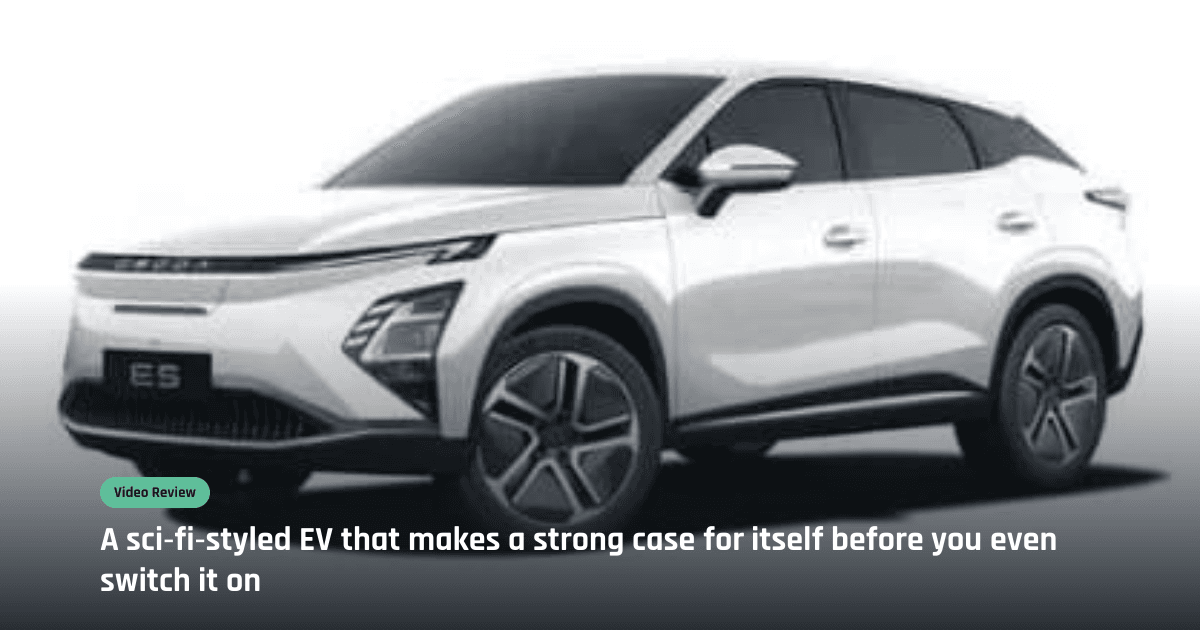
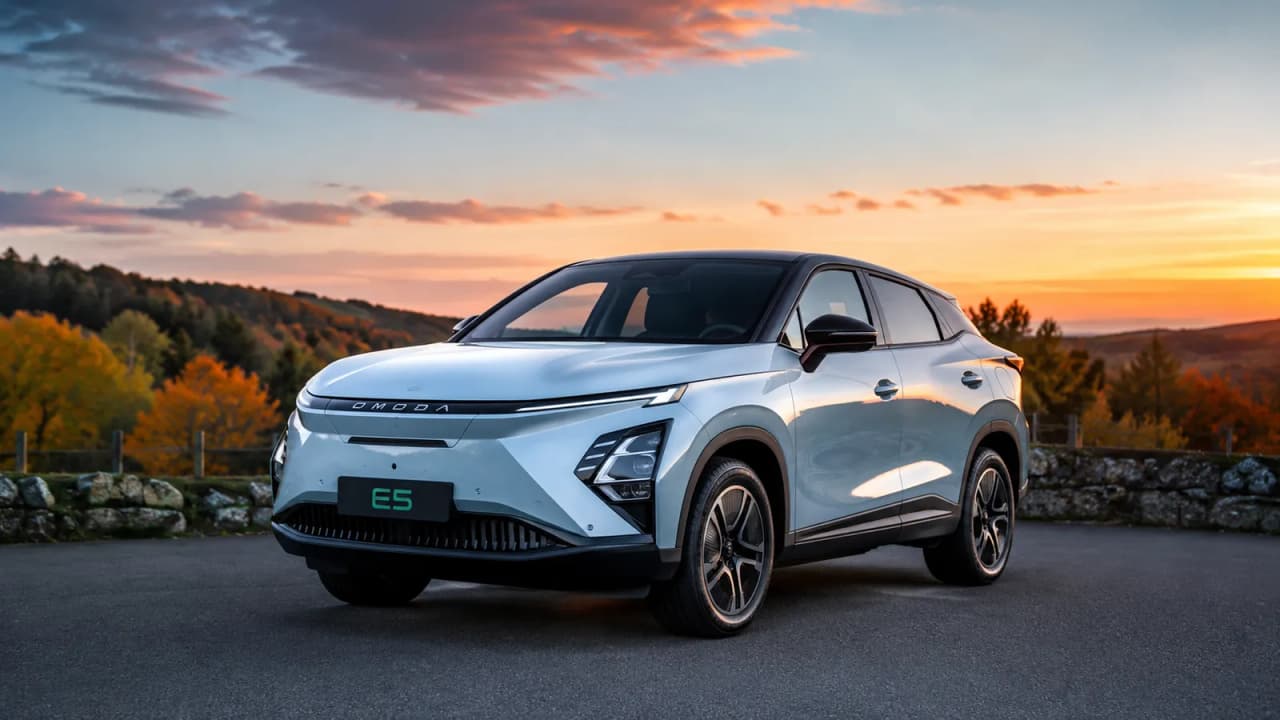
The E5's design is the first thing that will get it noticed on Kathmandu's streets, and deservedly so. The bodywork uses a sleek, sophisticated silhouette that borrows as much from concept-car sketches as it does from conventional SUV design — smooth, streamlined surfacing that isn't just for show but is tuned to cut down aerodynamic drag, which matters directly for real-world range. The front end carries a distinctive closed-off grille treatment with bold OMODA lettering stamped across it, immediately signalling this isn't a re-skinned combustion platform.
At 4,380mm long, 1,860mm wide and 1,650mm tall, riding on a 2,620mm wheelbase, the E5 sits in familiar compact-SUV proportions, but the detailing elevates it. The LED headlight and taillight graphics are genuinely modern, with light signatures that look properly current rather than borrowed from a five-year-old design language. Ground clearance is rated at 185mm, with a 20-degree approach angle and 29.8-degree departure angle — numbers that suggest a car built for city and highway use rather than serious rough-road ambition, which is exactly the kind of ownership Nepali EV buyers of this class actually intend.
What's In The Paint Shop: White, Grey, And A Standout Light Green
Buyers walking into an SPG Automobiles showroom will find the E5 available in a spread that includes a striking two-tone white body paired with a black roof, along with solid grey and dark grey options for those who want something more understated. There's also a light green shade on display that stands out precisely because so few electric SUVs in this segment offer anything beyond monochrome safety. For a car whose whole pitch rests on looking different, the colour palette backs that up — the two-tone white-and-black combination in particular does the most to show off the creased bodywork and roofline.
The Cabin Tech Nepali Buyers Have Been Asking For
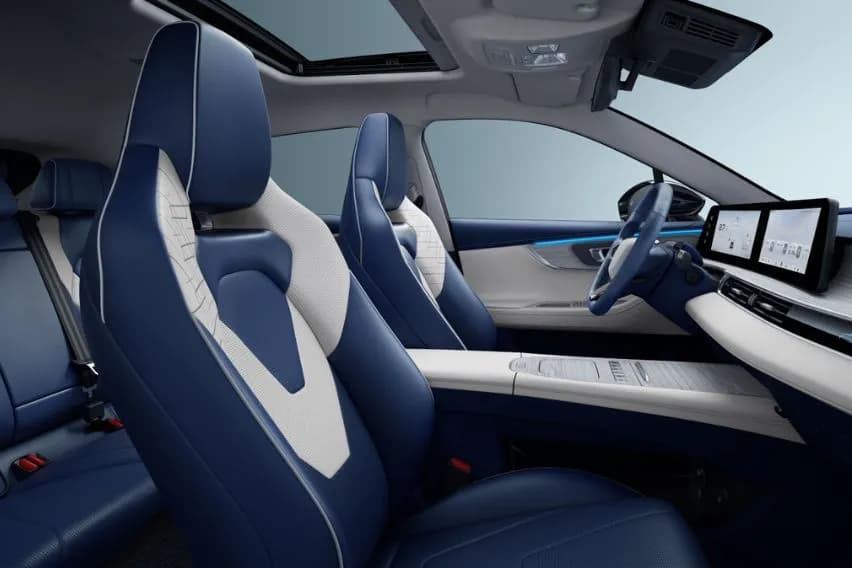
Step inside and the E5 makes its most convincing argument. The dashboard is dominated by dual curved displays — a digital instrument cluster paired with a matching infotainment screen — running on a Qualcomm Snapdragon processor, which shows in how quickly menus respond and how sharp the graphics render. Wireless phone charging is built in, and both Android Auto and Apple CarPlay are supported, so buyers aren't locked into whatever native mapping or music app ships with the car.
There's a voice control system triggered by saying "Hello Omoda," which handles climate, navigation and media prompts without needing to touch the screen — a feature that has become something of a signature for the brand and one that works well enough in daily use to be more than a gimmick. Audio comes from an 8-speaker Sony system, which is a genuine step up from the generic setups often found at this price point. A panoramic sunroof and a 360-degree camera system with a 3D surround view round out the equipment list, both useful in the tight lanes and multi-storey parking that define urban Nepali driving.
The soft-wrapped instrument panel, multi-colour ambient lighting spread across the first and second rows, and even trunk lighting all point to a cabin designed to feel premium at a glance, not just on a spec sheet.
One Motor, 155kW, And Enough Shove For City And Highway Alike
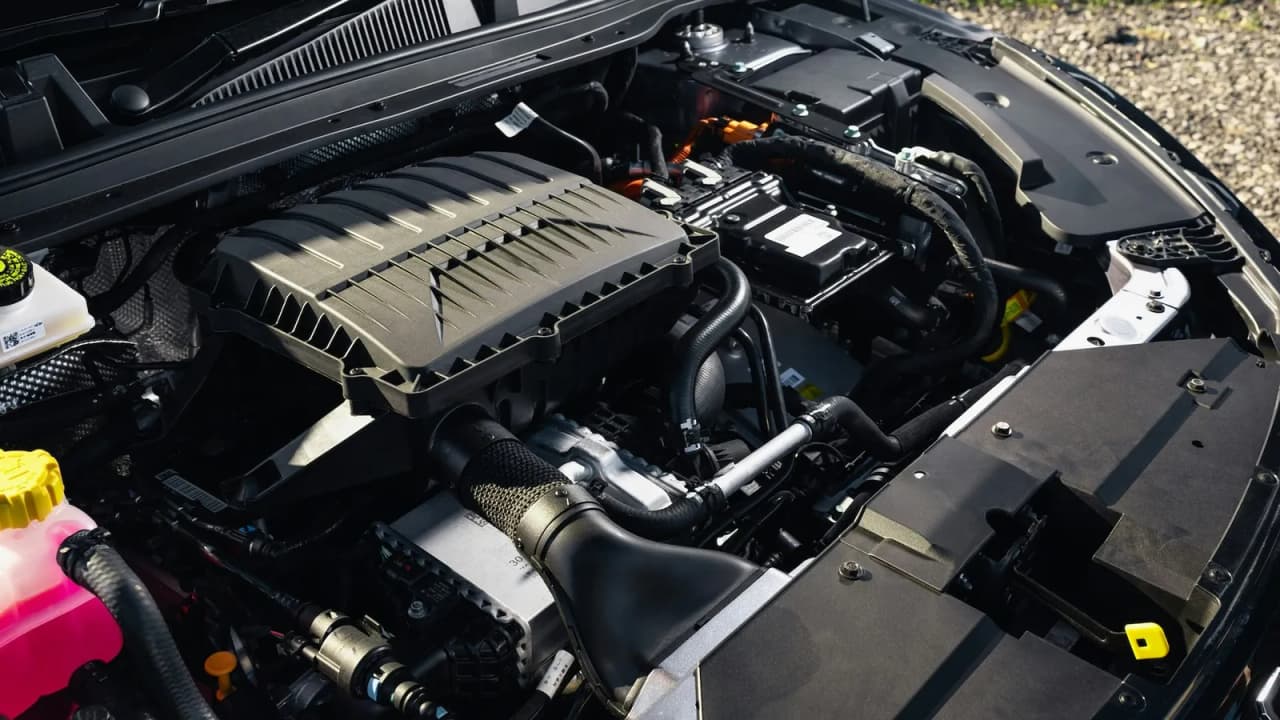
The E5 runs a single permanent magnet synchronous motor on the front axle, producing 155kW and 288 Nm of torque, with a 0-100 km/h time of 7.7 seconds. That's brisk rather than outright quick, but in the context of daily driving — overtaking on the Prithvi Highway, pulling away from traffic lights in Kathmandu — it delivers the instant, linear shove that electric motors are known for, without the lag or gear-hunting of a combustion equivalent. There's no all-wheel-drive variant on offer, which keeps things simpler mechanically but means buyers wanting a second motor for extra traction will need to look elsewhere.
Seats That Heat, Vent And Actually Fit The Segment's Best Features
Comfort in the E5 goes further than most rivals bother with at this price. The driver's seat gets 6-way power adjustment along with heating, and the front passenger seat is ventilated — a detail that matters more in Nepal's warmer Terai belt than most spec sheets acknowledge. Both front seats carry heating, a feature that will matter more in hill-station towns and winter mornings than in Kathmandu traffic, but it's a welcome inclusion regardless.
The second row gets a proper three-headrest bench with a flush-mounted armrest, integrated cupholders and map pockets, plus a 6/4 split-folding backrest for flexible load-carrying. Sun visors on both sides come with vanity mirrors and illumination, and even small ergonomic touches — a foldable, damped grab handle, a damped glove box — show a level of attention to tactile quality that's easy to overlook until you notice its absence in a rival. Rear passenger space benefits from that long 2,620mm wheelbase, and legroom in the back is genuinely generous for the car's footprint.
A Safety Suite That Doesn't Cut Corners
The E5 comes equipped with Autonomous Emergency Braking, Forward Collision Warning, Lane Keep Assist, Blind Spot Detection and Rear Cross Traffic Alert — a full driver-assistance suite that, until recently, was largely reserved for cars well above this price bracket in Nepal. Seven airbags are fitted as standard, along with rear ISOFIX mounts for child seats, both of which matter for family buyers cross-shopping this segment.
This is one of the areas where the E5 has been consistently praised, and it's easy to see why: the combination of active driver aids and passive protection puts it ahead of where most buyers would expect a newly launched brand to land on its first real safety push into the market.
A 380-Litre Boot And Charging That Plans Its Own Route
Practicality is solid rather than class-leading. The boot offers 380 litres of cargo space, enough for a family's weekend luggage or a reasonable grocery run, though buyers regularly hauling bulky gear may find it tighter than a traditional combustion SUV of similar size. Dual USB ports in the rear keep passengers' devices charged on longer trips, a small but appreciated detail on hill routes where phone battery doubles as your only map.
The navigation system is built to automatically plan routes with charging stops factored in — genuinely useful in a country where public charging infrastructure is still filling in gaps along highways, and range anxiety remains the biggest psychological hurdle for first-time EV buyers.
What Living With A 50.6kWh Battery Actually Costs
The E5 is built around a 50.6kWh Lithium Iron Phosphate (LFP) battery pack rated for 405km of driving range, with an energy density of 165 Wh/kg. LFP chemistry is the right call for Nepal's climate and usage patterns — it's more tolerant of frequent fast charging and degrades more slowly over repeated cycles than the nickel-based chemistries used in some rivals, which matters for owners planning to keep the car five-plus years.
Charging is a genuine strength: DC fast charging at up to 130kW brings a rapid top-up in as little as 28 minutes, while AC charging at 6.6kW covers overnight home charging comfortably. For context, that DC charging speed is well ahead of what most electric SUVs in this price bracket in Nepal currently offer, and it materially changes the calculation for anyone planning to drive the E5 between cities rather than keeping it strictly urban.
Picking Your Variant: Why The DLX Looks Like The Sweet Spot
The E5 comes in five trims: Pro at Rs 51,59,000, Pro Dual Tone at Rs 51,99,000, DLX at Rs 55,99,000, Dual Tone at Rs 57,39,000, and range-topping LUX at Rs 61,99,000. The Pro variants get you into E5 ownership at the lowest entry point, and the dual-tone paint option for an extra Rs 40,000 over the standard Pro is a reasonable ask for buyers who want that white-and-black look without stepping up a full trim.
The real decision point is the DLX at Rs 55,99,000. It sits close enough to the entry price to remain accessible while almost certainly carrying forward the equipment tier that unlocks the car's best features — the ambient lighting, heated and ventilated seating, and the full technology suite that make the E5 worth choosing over a plainer rival in the first place. Buyers stretching to the LUX at Rs 61,99,000 are paying a premium of roughly Rs 10 lakh over the base Pro, which only makes sense if every top-shelf feature genuinely matters to you — otherwise the DLX or Dual Tone deliver most of the ownership experience for meaningfully less.
The Hyundai Kona Electric Is The Safer, More Familiar Choice
The Hyundai Kona Electric remains the benchmark most Nepali buyers will cross-shop against the E5, largely on the strength of Hyundai's established service network and longer local track record. Where the E5 pulls ahead is in outright cabin technology and design boldness — the dual curved displays and voice control system feel a generation ahead of what the Kona Electric offers, and the E5's 405km range and 130kW charging are competitive on paper. The Kona Electric's advantage is reputational: buyers who prioritise a known brand with an established parts and service history over a newer entrant will still lean toward it, even at a similar spend.
The BYD Atto 3 Fights It On Price And Range Together
The BYD Atto 3 is the other obvious cross-shop, and it's arguably the E5's closest rival in spirit — both are Chinese-built electric SUVs pitching striking cabin design and strong equipment lists at similar money. The Atto 3 has built a reasonably solid reputation in Nepal already, giving it a trust advantage the newly launched E5 hasn't yet earned. What the E5 counters with is its charging speed and the flexibility of five distinct variants against the Atto 3's narrower trim spread, giving buyers more room to pick exactly the equipment level they want to pay for.
The Verdict: A Genuine Design-Led Alternative For EV Buyers Ready To Look Beyond The Familiar
The Omoda E5 is a confident first outing in Nepal — a car that leads with styling and cabin technology rather than apologising for being a newer name in the market. The 405km range, fast 130kW DC charging, and comprehensive driver-assistance suite give it the substance to back up the styling, while the LFP battery chemistry should reassure buyers thinking about long-term ownership costs rather than just the first year.
It won't suit everyone. Buyers who value a long local ownership track record and established resale value will still lean toward the Hyundai Kona Electric, and the ground clearance means this isn't the EV for regular rough-road running. But for buyers who want their electric SUV to look genuinely different, come loaded with tech most rivals reserve for higher trims, and are comfortable backing a serious new entrant into Nepal's EV space, the E5 — particularly in DLX trim — is one of the more compelling arguments currently sitting in a Nepali showroom.
Writes on vehicle pricing, taxation and the Nepali auto market from ongoing tracking of distributor price lists. Editorial policy.