Where Each Sits in the Nepali Market
The **Hyundai Ioniq 5 and Maxus eTerron 9** are both premium battery‑electric vehicles, but they occupy very different roles in Nepal.
- The Hyundai Ioniq 5 is a family‑oriented crossover positioned as a premium lifestyle EV.
- Authorized distributor: Laxmi Intercontinental Pvt. Ltd.
- Ex‑showroom price: Rs 92.96 lakh – Rs 1.04 crore across two variants.
- Network depth: 38 showrooms, 42 service centers nationwide.
- The Maxus eTerron 9 is a full electric double‑cab pickup, pitched as a work‑and‑recreation vehicle that can replace diesel 4x4s.
- Authorized distributor: Himalaya Motrox Pvt. Ltd. (Himalaya Organization).
- Ex‑showroom price: Rs 88 lakh – Rs 1.28 crore across five variants.
- Network depth: 15 showrooms, 5 service centers.
Editorially, the Ioniq 5 feels like the natural upgrade for urban and semi‑urban families moving from premium crossovers and compact SUVs. The eTerron 9, especially in Comfort and Premium, targets buyers who would otherwise consider Hilux‑class pickups or heavy‑duty SUVs but want to go fully electric.
Looks and Design: Crossover vs Pickup
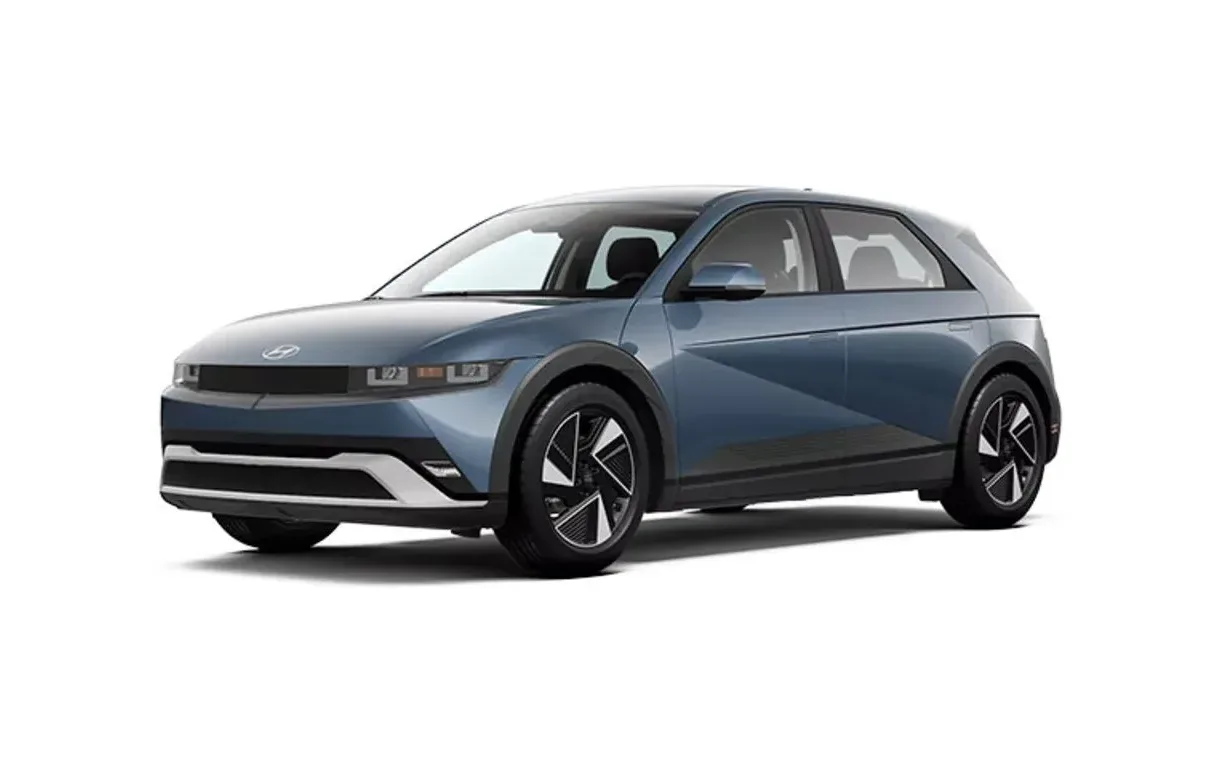
Hyundai Ioniq 5
The Ioniq 5 uses Hyundai’s dedicated E‑GMP EV platform with a short overhang, long wheelbase design. Even without full dimension data in local snippets, its stance is clearly that of a low‑slung crossover rather than a tall truck.
Key visual points: - Futuristic hatchback‑crossover silhouette with clean surfacing. - Distinctive pixel‑style lighting and modern EV detailing (based on broader global familiarity, even if not repeated in every Nepali spec sheet). - Both Nepal trims are GLS Vision Roof variants, signaling emphasis on the large glass roof and premium feel.
In showrooms, the Ioniq 5 presents as an eye‑catching urban EV with a strong design statement. It looks more like a European premium crossover than a traditional SUV, which appeals to design‑conscious buyers.
Maxus eTerron 9
The eTerron 9 is a full‑size double‑cab pickup:
- Rugged 4x4 truck body with prominent Maxus front fascia.
- High stance and ground clearance up to 260 mm, clearly signaling off‑road intent.
- Rear open cargo bed, with variants like Luxury quoted around 1250 L bed space.
Design emphasis is on toughness: big wheels, high ride height, and the visual language of a serious workhorse. Even the more premium Luxury, 4WD and Premium trims retain the core pickup identity, simply layering chrome, sunroof and richer details on top.
Verdict on design: - If you want a modern, premium family EV that looks like a designer crossover, the Ioniq 5 is the clear winner. - If your image is closer to a go‑anywhere electric truck that can haul, tow and work, the eTerron 9 wins easily.
Features and Equipment
Hyundai Ioniq 5 (GLS Vision Roof 100 kW & GLS Vision Roof)
Verified key equipment across both Nepal variants:
- Infotainment & convenience
- 12.25‑inch fully digital cluster.
- Apple CarPlay and Android Auto.
- Wireless phone charging.
- Sliding centre console enhancing cabin flexibility.
- Use of eco‑processed leather and recycled materials, which adds a sustainability angle.
- Comfort & interior
- Vision roof (panoramic‑style glass roof) on both trims.
- Flat floor and 60:40 foldable rear seats.
- Five‑seat cabin; detailed upholstery and seat features are not fully disclosed in Nepali snippets but positioning is clearly premium.
- Practicality
- Boot: 527 L, expandable to 1,587 L with rear seats folded.
- No published rear‑bed or payload numbers because it is not a pickup; it’s optimized for family luggage and urban use rather than heavy cargo.
- Safety
- Dedicated E‑GMP collision safety architecture.
- Battery safety structure is explicitly mentioned.
Overall, the Ioniq 5 offers a coherent premium tech package: big digital cluster, connected infotainment, EV‑specific conveniences, and strong safety engineering.
Maxus eTerron 9 (Comfort, Exclusive, Luxury, 4WD, Premium)
Because Maxus offers five trims, the feature spread is wider and not every detail is formally disclosed. The broad picture is:
- Comfort
- More accessible variant, deletes sunroof and higher‑end luxuries.
- Misses massage seats, air suspension, 360° camera compared with top trims.
- Still a 5‑seater double‑cab with a refined, flagship‑inspired interior.
- Exclusive
- Sits between Comfort and upper trims.
- Exact feature differentiation is not clearly listed, which weakens transparency.
- Luxury
- Launch trim with more premium kit than Comfort.
- Likely adds air suspension and multi‑link rear suspension.
- Better seats and richer materials.
- 4WD
- Positioned above Exclusive; core mechanicals already offer 4WD across the range.
- Interior spec vs Premium not clearly detailed.
- Premium
- Sunroof, massage seats, air suspension, and 360° camera.
- V2L 220V outlet in the 236 L frunk, highlighting utility for work and camping.
Infotainment specifics (screen size, audio) are not comprehensively documented for Nepal, but the upper trims clearly lean towards big screens and richer tech. The Comfort trim focuses more on keeping the hardware performance while trimming luxury.
Verdict on equipment: - The Ioniq 5 gives you a tighter, clearly defined premium spec: big digital cluster, smartphone integration, nice materials, and strong practicality for passengers. - The eTerron 9 Premium/Luxury can exceed it in sheer feature count (massage seats, air suspension, 360° camera, sunroof, V2L frunk outlet), but equipment clarity across trims is weaker and Comfort deliberately sacrifices some of that for price.
Motor, Battery and Performance
Hyundai Ioniq 5
Both Nepal GLS Vision Roof variants share the same core:
- Motor output: 100 kW is listed for the Nepal variant.
- 0–100 km/h: 8.5 seconds.
- Drive layout: global model often uses rear‑wheel drive in similar setups, but RWD is not explicitly confirmed in the Nepal snippets, so we treat it as unspecified.
- Battery & platform:
- E‑GMP dedicated EV platform.
- Supports 400 V and 800 V charging, which enables faster DC charging on suitable infrastructure.
- Vehicle‑to‑load (V2L) output up to 3.6 kW – useful for powering appliances.
- Range: up to 375 km claimed.
In performance terms, the Ioniq 5 is brisk but not aggressive: 8.5 s to 100 km/h is more than enough for Nepali highway use, but it is clearly tuned for smoothness and efficiency, not outright speed.
Maxus eTerron 9
Across the lineup, the eTerron 9 is on a different performance level altogether.
- Drivetrain
- All trims use dual‑motor 4WD, with combined torque of 700 Nm.
- Output around 325 kW and 0–100 km/h in about 5.8 seconds in Comfort and related trims.
- Battery & range
- Large 102.2 kWh LFP battery in Comfort and top variants.
- Claimed range: 560 km (NEDC) across trims.
- Independent WLTP and real‑world references tend to fall lower, but even then this is a long‑range truck.
This makes the eTerron 9 one of the most powerful EVs in the Nepali mainstream market: more torque than most diesel pickups, significantly quicker than the Ioniq 5, and far more battery capacity.
Verdict on performance: - For calm, efficient family driving, the Ioniq 5 is perfectly adequate. - For sheer power, towing and high‑speed performance, the eTerron 9 is in another league.
Ride, Handling and Comfort
Direct suspension tuning data is limited in the Nepal snippets, but the broad character is clear from body type and trim positioning.
Hyundai Ioniq 5
- Crossover stance and low centre of gravity should give a more car‑like, stable ride.
- Short overhangs and long wheelbase typically help comfort over broken roads.
- Emphasis on premium materials, quiet EV drivetrain and refined cabin.
For urban use, highways and typical hill roads, the Ioniq 5 will feel easier to place and more relaxing. It does not aim to be an off‑road vehicle.
Maxus eTerron 9
- High 230–260 mm ground clearance depending on variant.
- Dual‑motor 4WD and heavy EV platform offer strong traction and stability on rough terrain.
- Upper trims likely feature air suspension and multi‑link rear suspension, plus massage seats in Premium.
On rough trails, construction sites, or unpaved hill roads, the Maxus will simply go where the Ioniq 5 cannot. However, its large size can feel cumbersome in tight urban lanes and older city cores. Comfort trim’s deletion of air suspension and massaging seats makes the cabin less plush than Premium, but the underlying hardware is still serious.
Verdict on comfort and handling: - Ioniq 5: Better everyday comfort and manoeuvrability for city and family use. - eTerron 9: Better for rough‑road confidence and long‑distance hauling, especially in Premium/Luxury.
Practicality and Running Costs
Hyundai Ioniq 5
Practicality highlights:
- Boot: 527 L; 1,587 L with seats folded.
- Flat floor, five‑seat cabin and sliding centre console make it family‑friendly.
- V2L up to 3.6 kW, enough for camping gear or power cuts.
Running cost considerations:
- Smaller battery than the Maxus, but still ample range (375 km) for typical weekly usage.
- Hyundai’s 42 service centers and widespread parts pipeline reduce maintenance headaches.
- The E‑GMP platform, 800 V architecture and strong global support give comfort on long‑term battery durability and software updates.
Maxus eTerron 9
Practicality is the core appeal:
- 236 L front trunk (frunk).
- Rear bed volume around 1250 L in Luxury; payload around 1.5 tonnes where quoted.
- 3.5‑tonne towing capacity on Comfort, Premium and associated trims.
- V2L 220V outlet in the frunk on Premium, ideal for on‑site tools or outdoor use.
Running cost considerations:
- Huge 102.2 kWh LFP battery means long range but also longer charging times on AC.
- LFP chemistry is well‑suited to frequent charging and heavy use, which suits commercial or rural owners.
- Service and charging infrastructure for Maxus is still developing; only 5 service centers is modest for such a large truck.
Verdict on practicality: - For family luggage, urban parking and mixed personal use, the Ioniq 5 is more practical. - For payload, towing, off‑road use and work‑plus‑recreation, the eTerron 9 has a massive advantage.
Price and Variants Side by Side
Hyundai Ioniq 5 Nepal Pricing
- GLS Vision Roof 100 kW: Rs 92.96 lakh.
- GLS Vision Roof (higher trim): Rs 1,03.96 lakh (≈ Rs 1.04 crore).
The lower GLS Vision Roof 100 kW is already well‑equipped and offers the full Ioniq 5 design and EV experience. It is the better‑value choice for buyers who don’t need maximum equipment or power.
Maxus eTerron 9 Nepal Pricing
- Comfort: Rs 88 lakh (with an introductory offer for the first 50 buyers).
- Exclusive: Rs 99.99 lakh.
- Luxury: Rs 1.10 crore.
- 4WD: Rs 1.18 crore.
- Premium: Rs 1.28 crore.
Comfort stands out: it retains the full 102 kWh battery, 4WD, and 700 Nm torque at a much lower price, deleting luxuries like sunroof, air suspension and 360° camera. Premium is the full‑fat flagship with all the toys.
Direct Price Comparison Table
| Aspect | Hyundai Ioniq 5 GLS Vision Roof 100 kW | Hyundai Ioniq 5 GLS Vision Roof | Maxus eTerron 9 Comfort | Maxus eTerron 9 Premium |
|---|---|---|---|---|
| Body type | Crossover EV | Crossover EV | Double‑cab pickup EV | Double‑cab pickup EV |
| Ex‑showroom price (approx) | Rs 92.96 lakh | Rs 1.04 crore | Rs 88 lakh | Rs 1.28 crore |
| Power / drivetrain | 100 kW, EV drive (layout unconfirmed) | 100 kW | 325 kW, dual‑motor 4WD | 325 kW, dual‑motor 4WD |
| Claimed range | 375 km | 375 km | 560 km | 560 km |
| 0–100 km/h | 8.5 s | 8.5 s | 5.8 s | 5.8 s |
| Ground clearance | Not stated | Not stated | Up to 260 mm | 260 mm |
| Cargo | 527–1,587 L boot | 527–1,587 L boot | 236 L frunk + rear bed | 236 L frunk + rear bed |
| Key comfort features | Vision roof, sliding console | Vision roof, sliding console | No sunroof, no massage | Sunroof, massage seats |
| Key tech/safety | 12.25" cluster, V2L 3.6 kW, E‑GMP | Same | 5‑Star safety claim | 5‑Star safety claim + 360° camera |
This table highlights the core trade: the Ioniq 5 is cheaper than most eTerron 9 trims except Comfort and Exclusive, but the Maxus Comfort undercuts the premium Ioniq while offering much more hardware performance for those who can use it.
Which Wins for Which Kind of Buyer?
Choose the Hyundai Ioniq 5 if:
- Your primary use is family commuting, city driving and highway trips, not heavy work.
- You value easy manoeuvrability, refined cabin, and strong dealer/service coverage.
- You want a premium EV with clear, transparent features and a globally established brand.
- You do not need 4WD, extreme ground clearance or pickup‑bed practicality.
Within the Ioniq 5 range, the GLS Vision Roof 100 kW is the sweet spot for value: it offers the full EV experience and design at a lower price than the higher GLS Vision Roof trim.
Choose the Maxus eTerron 9 if:
- You genuinely need a pickup bed, towing capacity and rough‑road capability.
- Your driving includes tough terrain, work sites, rural roads or heavy loads.
- You want long range and are comfortable with a larger, heavier vehicle.
- You can live with a smaller and still‑growing dealer/service network.
Within the Maxus lineup:
- Comfort is the value hero: full performance and battery at Rs 88 lakh, sacrificing luxury extras.
- Premium suits buyers who want maximum comfort and tech, and can stretch to Rs 1.28 crore.
Overlapping Use Cases
For some buyers, both vehicles appear on the same shortlist: high‑income households in Kathmandu, Pokhara or major cities looking for an EV that can handle family duties and occasional off‑road trips.
In these cases:
- If the pickup bed will be used regularly (construction, agriculture, rafting, adventure tourism, towing), the eTerron 9 Comfort or Premium is more rational.
- If the vehicle is mainly a daily family car with occasional highway runs and no real need for a bed, the Ioniq 5 will be easier to live with and park.
Editorial Verdict
Viewed purely as EVs, the Maxus eTerron 9 Comfort gives more hardware per rupee than the base Ioniq 5: bigger battery, much more power, 4WD, and exceptional ground clearance at a slightly lower nominal price. For buyers who can truly exploit that hardware – commercial users, off‑road enthusiasts, rural families – the eTerron 9 is the better buy.
However, for most urban and suburban Nepali households, the Hyundai Ioniq 5 remains the more sensible choice. It offers refined design, strong safety engineering, a mature brand, and a far deeper nationwide service network. It is easier to park, more pleasant day‑to‑day, and better matched to how typical EV owners will actually drive.
In simple terms:
- Workhorse, off‑road and load‑focused buyers: choose Maxus eTerron 9, ideally Comfort for value or Premium for full luxury.
- Family, city and lifestyle‑focused buyers: choose Hyundai Ioniq 5, with GLS Vision Roof 100 kW as the value‑oriented variant.
Nepali buyers should start with a clear view of how often they will truly use a pickup’s capabilities. If the answer is "not much", the Ioniq 5’s calmer, more polished EV experience will feel like the better‑rounded choice over the long term.
Current prices on Nepal AutoMart
- Hyundai Ioniq 5 price in Nepal: Rs 92.96 lakh – Rs 1.04 crore ex-showroom, 2 variants
- Maxus eTerron 9 price in Nepal: Rs 88 lakh – Rs 1.28 crore ex-showroom, 5 variants
Compare Hyundai Ioniq 5 vs Maxus eTerron 9 variant by variant
Writes on vehicle pricing, taxation and the Nepali auto market from ongoing tracking of distributor price lists. Every price in this piece is read live from the Nepal AutoMart catalog — how we verify prices.