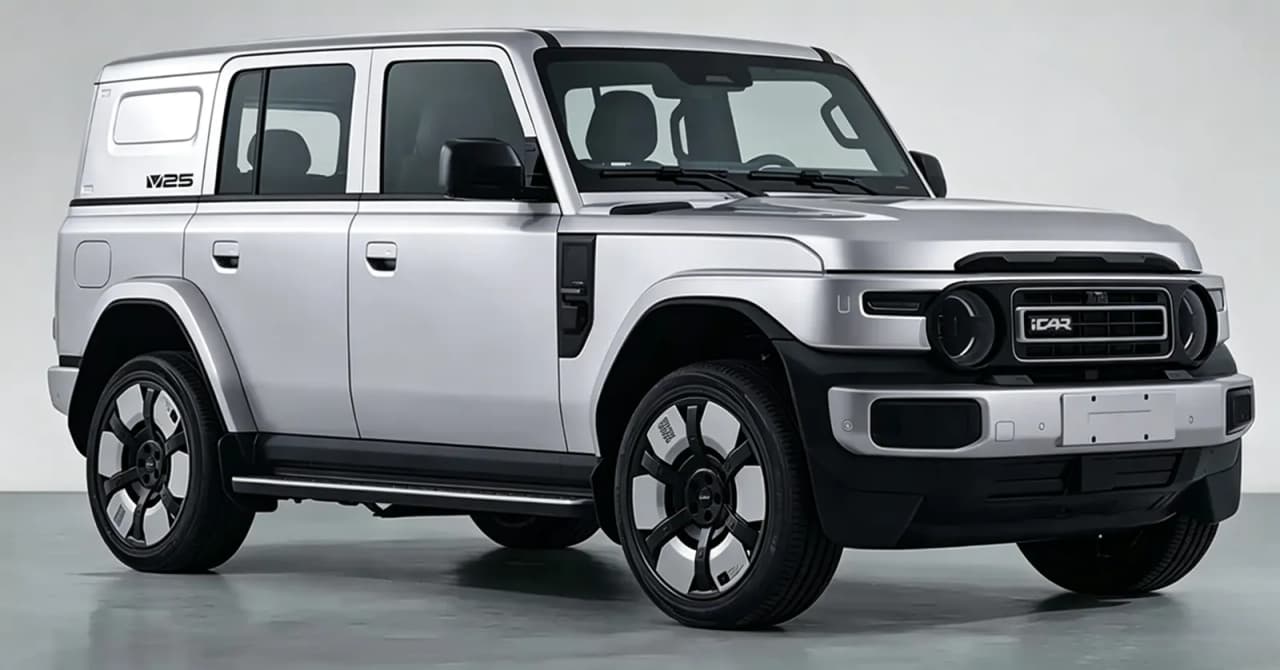
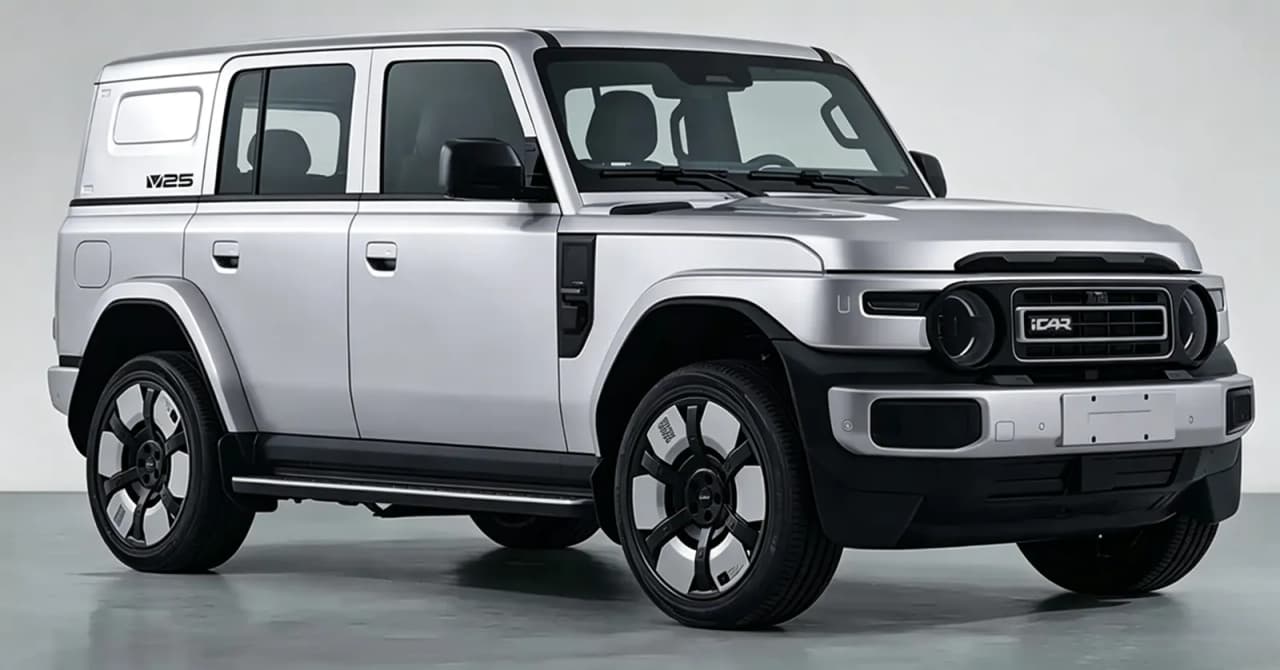
Chery has unveiled the interior and key details of the iCaur (iCar) V25 range‑extended SUV in China, ahead of its domestic launch. For Nepali buyers watching Chinese EV trends closely, the V25 hints at what the next generation of off‑road‑capable electrified SUVs could look like if Chery or its partners enter Nepal.
What is the iCaur V25?
- Boxy 4.6 m range‑extended SUV, roughly the size of a mid-size 5‑seater family SUV.
- Dimensions: 4636 x 1920 x 1855 mm, wheelbase 2820 mm, two‑row 2+3 seating.
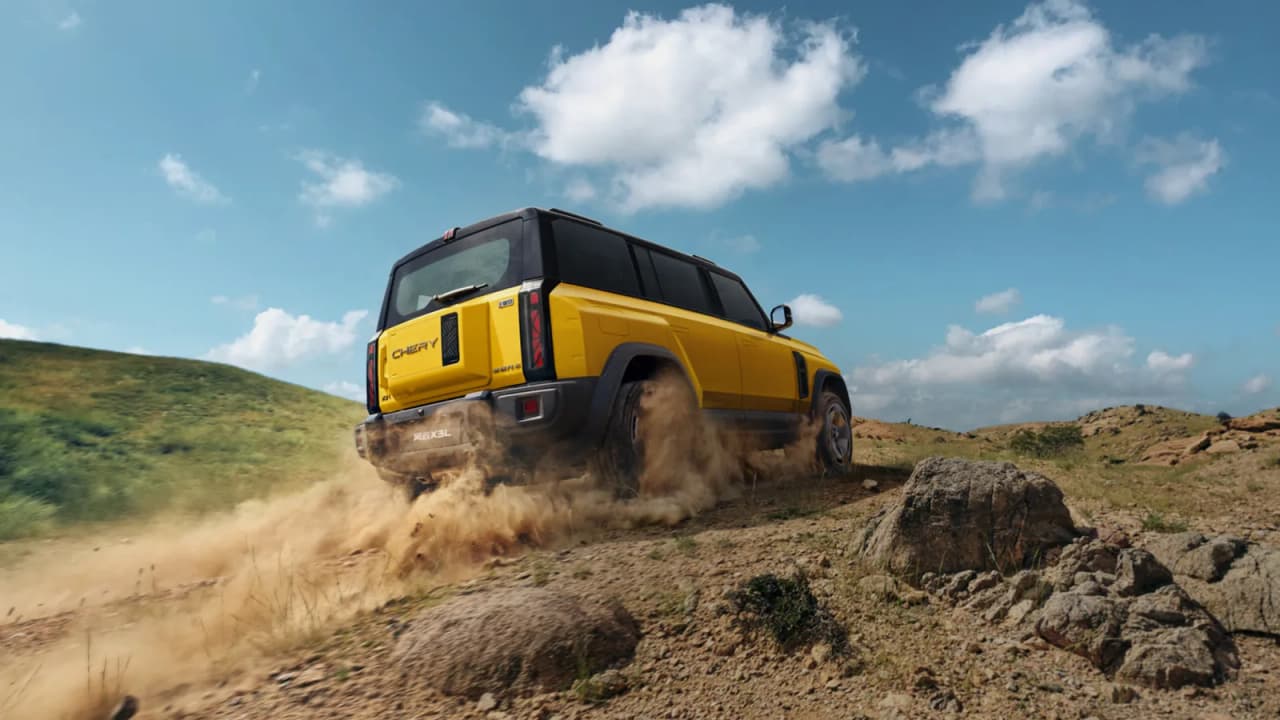
- Monocoque construction with off‑road touches: circular headlights, storage box on rear door, semi‑hidden door handles, and approach/departure angles of 28°/24°.
- Curb weight between 2,117–2,240 kg and towing capacity of 1,800 kg, indicating a robust chassis and powertrain.
Inside, the V25 follows a minimalist, tech‑heavy layout similar to other iCaur models. It gets a large central touchscreen, digital instrument cluster, physical climate controls, steering‑column gear selector, dual wireless phone chargers, and multiple charging ports under the center tunnel. Seats use leatherette upholstery and the cabin is designed to feel rugged rather than luxurious.
Powertrain: long range without range anxiety
The iCaur V25 uses a 1.5‑litre petrol engine as a generator, not to drive the wheels directly. The engine feeds power to:
- A 33.67 kWh LFP battery, with claimed pure‑EV range of 145–150 km, depending on drive type.
- Electric drive motors (specs not yet disclosed) that actually move the vehicle.
According to filings with Chinese regulators, the combined or "mixed" range is over 1,000 km on a full tank plus full charge. In practice, this kind of architecture is similar to range‑extended EVs or strong series hybrids: you get daily pure‑electric driving for city use, with a petrol backup for long trips.
Possible Nepal angle: why this matters
Chery does not yet sell the iCaur brand in Nepal, and there is no confirmed plan to launch the V25 here. However, Nepal’s SUV market increasingly looks to China for EVs and crossovers, and range‑extended EVs could suit local conditions:
- Many Nepali buyers worry about charging infrastructure outside major cities; a range‑extended EV can run as a normal petrol vehicle on highways while still offering electric commuting inside Kathmandu or Pokhara.
- A boxy, high‑clearance SUV with good approach/departure angles and 1,800 kg towing capacity is well‑aligned with rural roads, hill travel and occasional cargo or trailer use.
- If a model like the V25 were imported assembled from China, pricing could realistically land in the Rs 45–60 lakh bracket, depending on customs duty, battery size, and trim level — putting it up against mid‑size petrol SUVs and premium compact EVs. This is an indicative estimate based on current Chinese EV pricing and typical Nepal duty structure, not an official figure.
What Nepali buyers should watch
- Whether Chery or a local distributor announces an entry into Nepal with the iCaur sub‑brand or any range‑extended EVs.
- Final Chinese market pricing and detailed motor specs, which will determine how competitive the V25 could be against existing EVs and hybrids here.
- Policy developments: if Nepal offers stronger incentives for EVs and range‑extended EVs, models like the V25 become more commercially viable.
For now, the iCaur V25 remains a China‑market SUV, but its mix of over 1,000 km claimed range, 145–150 km pure‑EV capability, and off‑road‑friendly design makes it a relevant benchmark for what future Chinese imports to Nepal might look like.
Writes on vehicle pricing, taxation and the Nepali auto market from ongoing tracking of distributor price lists. Editorial policy.