Where This Sits In Nepal's Fast-Filling Electric Crossover Shelf
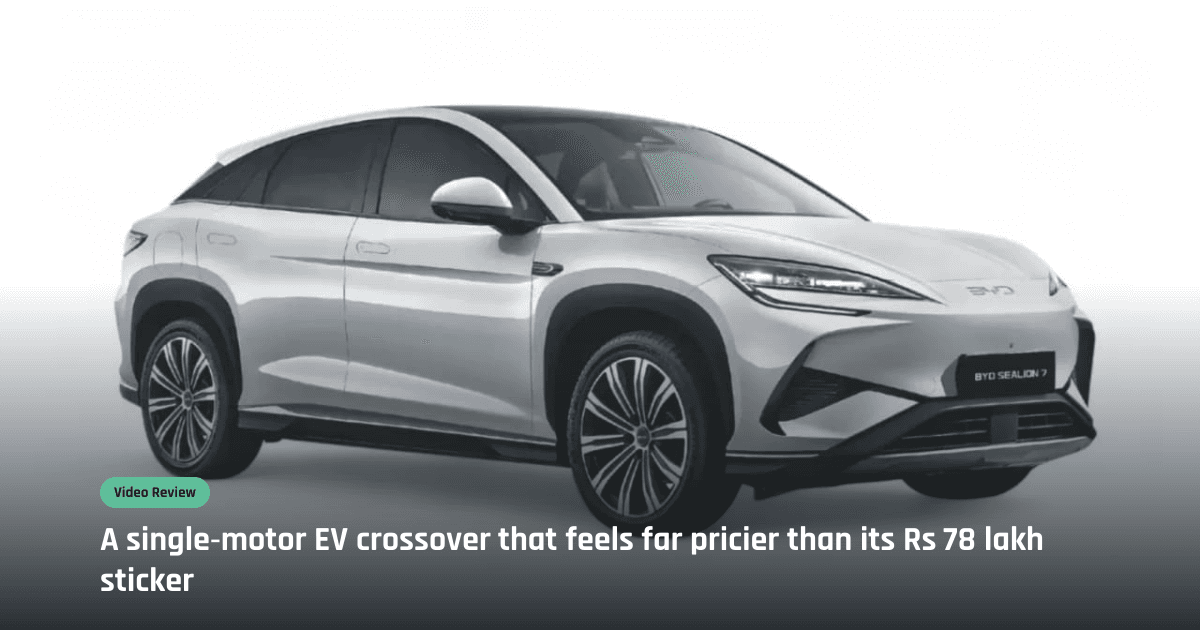
Nepal's EV market has moved past the point where a battery-powered car needed to justify its own existence. Buyers with Rs 75 lakh to spend now expect genuine competence, not just a tax break. The BYD Sealion 7, brought in by Cimex Inc. Pvt. Ltd. from 2025, arrives squarely in that bracket — priced between Rs 78 lakh and Rs 79.99 lakh across its three listed variants. That places it above BYD's own Atto 3 and directly alongside the established Korean electric crossovers that have quietly built a following in Kathmandu over the past couple of years. It's a crowded shelf, but the Sealion 7 doesn't feel like it's arrived to merely make up the numbers.
What's notable is that this isn't a stripped-down "EV for the sake of an EV" proposition. The specification sheet — massaging ventilated seats, a rotating 15.6-inch screen, Level 2 driver assistance, eleven airbags — reads like something from a segment above. For Nepali buyers who've watched EV pricing climb without always seeing equipment climb alongside it, that's the first thing worth noting.
Wolfgang Egger's Ocean Aesthetics Look Bigger In Person
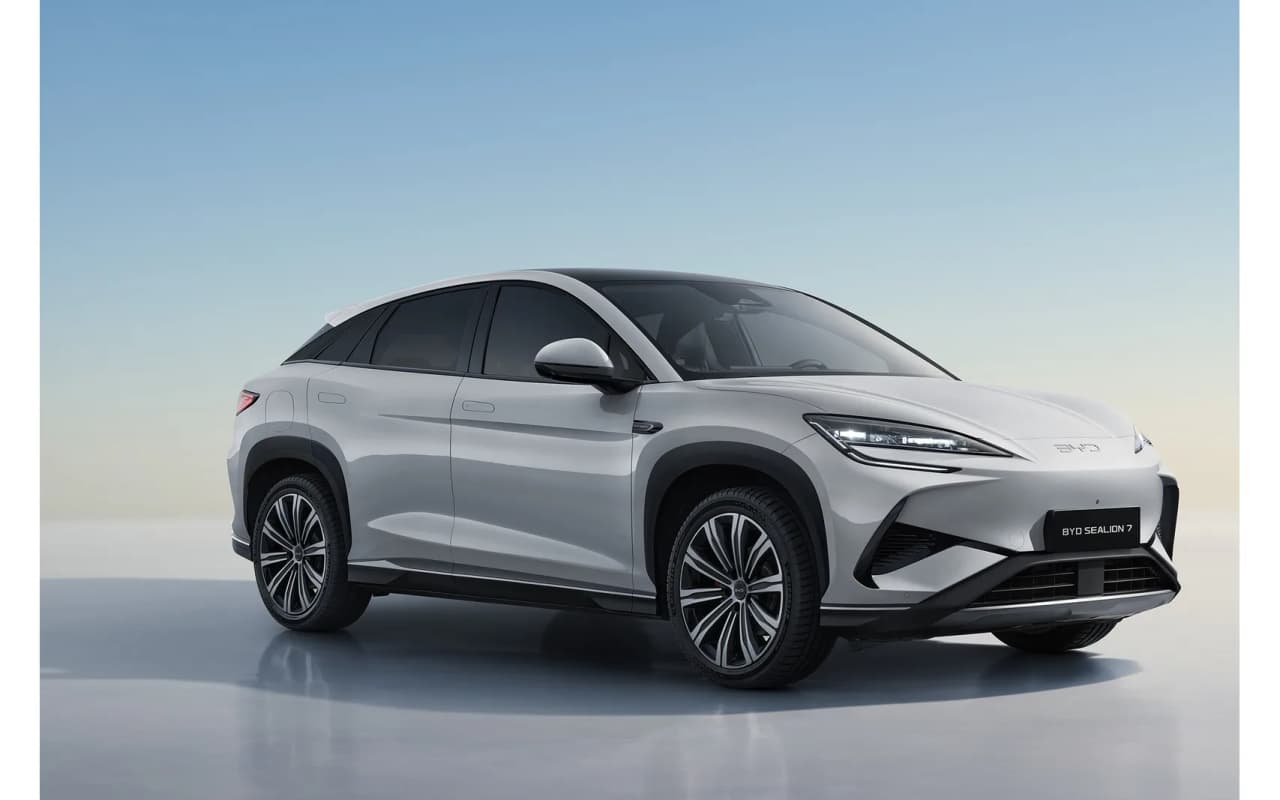
The Sealion 7's design comes from Wolfgang Egger, and it shows in a way that photographs don't always capture. BYD calls the language "Ocean Aesthetics," and the crossover reads as a muscular, wider evolution of the Seal sedan's silhouette rather than a generic SUV shape. The U-shaped LED headlight graphic and matching front light strips give the nose a distinct signature at night, something we've noticed draws a second look even from people who don't follow EVs closely.
Underneath the styling there's functional intent too: the front air intakes are active, opening and closing to help manage cooling for the motor and battery rather than existing purely for visual effect. The roofline tapers into a fastback profile, and flush door handles tidy up the sides and shave a little aerodynamic drag. At 4,830 mm long, 1,925 mm wide and 1,620 mm high on a 2,930 mm wheelbase, it's a properly sized crossover — longer and lower than most rivals in its bracket, which is part of why the proportions read as sporty rather than boxy in dealership forecourts.
The Only Colour We've Seen On Nepali Showroom Floors
Showroom stock so far has centred on a satin metallic grey-blue, and it's a genuinely flattering shade for this body style — it plays well with the fastback roofline and doesn't hide the character line running along the doors the way flatter greys sometimes do. It's the finish we'd point buyers toward if given the choice, precisely because it suits the design language rather than fighting it.
A Cabin Built Around A Rotating Screen And A Crystal Gear Selector
Step inside and the 15.6-inch rotating touchscreen is the obvious centrepiece, running wireless Apple CarPlay and wireless Android Auto so most buyers will rarely need to dig into BYD's native menus for daily use. It sits above a 10-inch digital instrument cluster and is paired with a head-up display that projects speed and navigation prompts onto the windshield — a feature still rare enough at this price in Nepal that it's worth calling out on its own.
The centre console gets a crystal-style electronic gear selector, a small design flourish that does a lot to lift the perceived quality of the cabin. Elsewhere, the details keep coming: 128-colour ambient lighting, a four-spoke flat-bottom steering wheel, NFC keyless entry that lets a phone or card unlock the car without fumbling for a key fob, and a 12-speaker audio system that's a genuine step up from the six-or-eight-speaker norm at this price point. A 50-watt wireless charging pad with its own cooling vents avoids the phone-overheating problem that plagues cheaper wireless chargers — a small thing until you're relying on it for navigation on a hot Terai afternoon. Automatic dual-zone air-conditioning and a 220-volt household power outlet inside the cabin round out a features list that feels genuinely thought through rather than assembled to fill a brochure page.
What Nepal's 100 kW Motor Actually Delivers
Here's where it's important to be precise about what Nepali buyers are actually getting. The Sealion 7 sold here through Cimex Inc. runs a single-motor, 100 kW electric crossover setup — model-level BYD figures for the platform reference a 170 kW peak motor output and 380 Nm of torque, built on the e-Platform 3.0 Evo architecture with Cell-to-Body construction that integrates the 71.8 kWh battery pack directly into the car's structure. That construction method is genuinely relevant to how the car feels: integrating the battery into the body increases torsional rigidity, which shows up as a noticeably solid, undramatic feel over uneven surfaces rather than the shudder some EV conversions display.
The claimed range is up to 440 km on a full charge, which comfortably covers a Kathmandu-to-Pokhara run with margin, and should handle most Nepali owners' weekly driving on a single charge with charging done at home overnight. We'd caution buyers against expecting the eyebrow-raising outright acceleration figures sometimes associated with dual-motor BYD Sealion 7 variants sold in other markets — Nepal's official spec is the single-motor 100 kW version, and that's the car being sold here, not a higher-output configuration.
Wheels, Weight And How It Settles On Uneven Roads
The Sealion 7 rides on 20-inch multi-spoke alloy wheels, which look the part against the car's wide stance but do mean tyre replacement costs sit at the premium end when the time comes — worth budgeting for as a running cost rather than a surprise. The Cell-to-Body battery integration mentioned earlier isn't just a manufacturing footnote; it lowers the centre of gravity and stiffens the body, and the practical result on Kathmandu's patchier roads is a crossover that feels planted rather than floaty, without the choppiness that afflicts some heavier EVs on badly surfaced stretches.
Ventilated, Massaging Front Seats That Suit Nepal's Climate
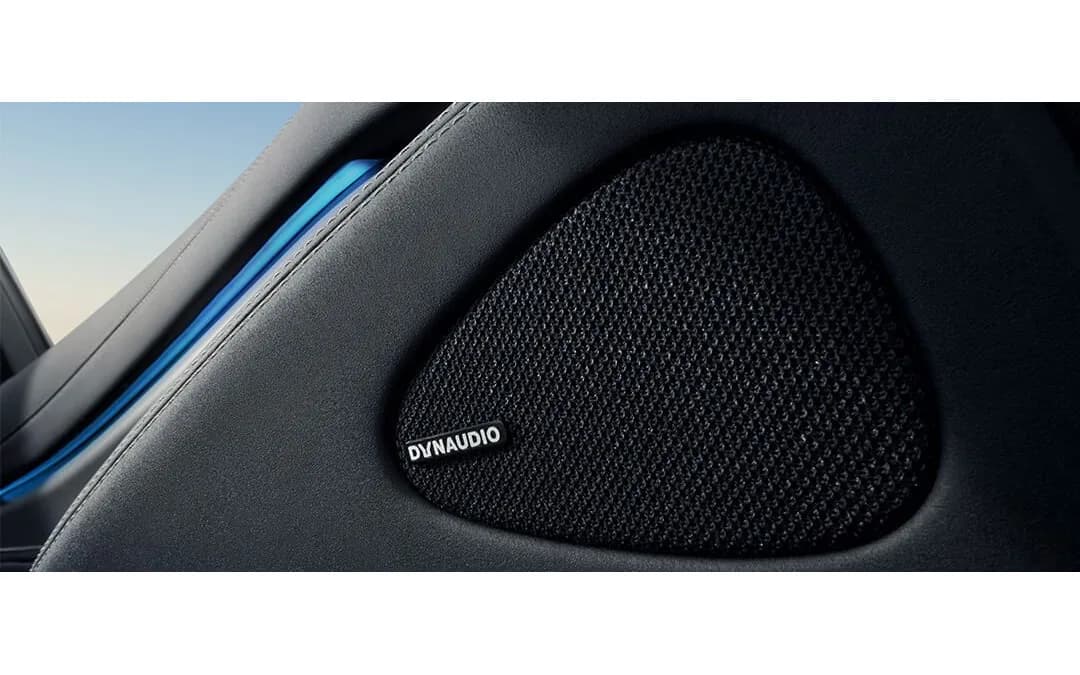
This is arguably where the Sealion 7 makes its strongest case. The front seats are power-adjustable, ventilated, and include a massage function — a genuinely useful feature during Terai summers and one rarely offered even on cars costing more. Nappa leather trims the seats throughout, giving the cabin a tactile quality that matches the sticker price rather than undercutting it.
Rear-seat space is generous, with the wheelbase translating directly into knee and headroom that few crossovers in this price bracket can match, and the seating angle is comfortable enough for longer journeys rather than just short city hops. Rear passengers aren't an afterthought either — dedicated air vents, USB charging ports and a folding armrest with cupholders are all present, details that matter on a five- or six-hour drive to the hills.
Eleven Airbags And A Full Sensor Suite For Nepali Roads
Safety provision is comprehensive for the segment: eleven airbags, a 360-degree camera system, front and rear parking sensors, and tyre pressure monitoring as standard. BYD's DiPilot 100 system — marketed globally as "God's Eye" — brings Level 2 driver assistance built on 12 ultrasonic sensors, 5 mm-wave radar units and 11 cameras working together. On Nepali roads, where lane markings and traffic behaviour don't always cooperate with assisted-driving systems designed for more disciplined markets, we'd treat this as a strong safety net for highway driving rather than a system to lean on in dense city traffic — but its mere presence at this price, with this sensor density, is well ahead of most rivals.
Boot Space, A Front Trunk, And Where The Small Bags Actually Go
Practicality is a genuine strength here. The cargo area is usable and family-friendly, helped by an underfloor storage compartment that swallows smaller bags, charging cables or a laptop bag without cluttering the main boot floor. A front trunk under the bonnet adds further storage — genuinely useful given there's no engine bay competing for the space, and a point of difference from combustion crossovers in this price range where the bonnet is dead space.
What Charging And Ownership Actually Cost Here
Running an EV in Nepal still comes down to home charging discipline, and the Sealion 7's 71.8 kWh pack and 440 km claimed range mean most owners will charge two or three times a week rather than daily. Electricity costs in Nepal remain dramatically lower than petrol per kilometre, and that gap is the entire financial argument for stepping into this segment rather than a comparably priced combustion SUV. The bigger variable for Nepali buyers remains public charging infrastructure outside the Kathmandu Valley and Pokhara corridor, which is improving but still requires trip planning on longer routes.
Picking Between The Three Listed Variants
Cimex Inc.'s three-variant spread — from Rs 78 lakh for the base 100 kW version through the Rs 79,85,000 Premium to the Rs 79,99,000 range-topper — is a narrower spread than it first appears; less than Rs 2 lakh separates the entry car from the most expensive one. Given how tightly bunched they are, and given that the equipment described above (ventilated massaging seats, the rotating screen, DiPilot 100 ADAS) reads as broadly consistent across BYD's Sealion 7 positioning, we'd steer most buyers toward the Premium or top variant rather than stretching their budget thin to save under two lakh on the base car. The gap simply isn't large enough to justify losing out on any comfort or safety feature that matters day to day.
The Hyundai Ioniq 5 Trades Some Cabin Tech For Design Cachet
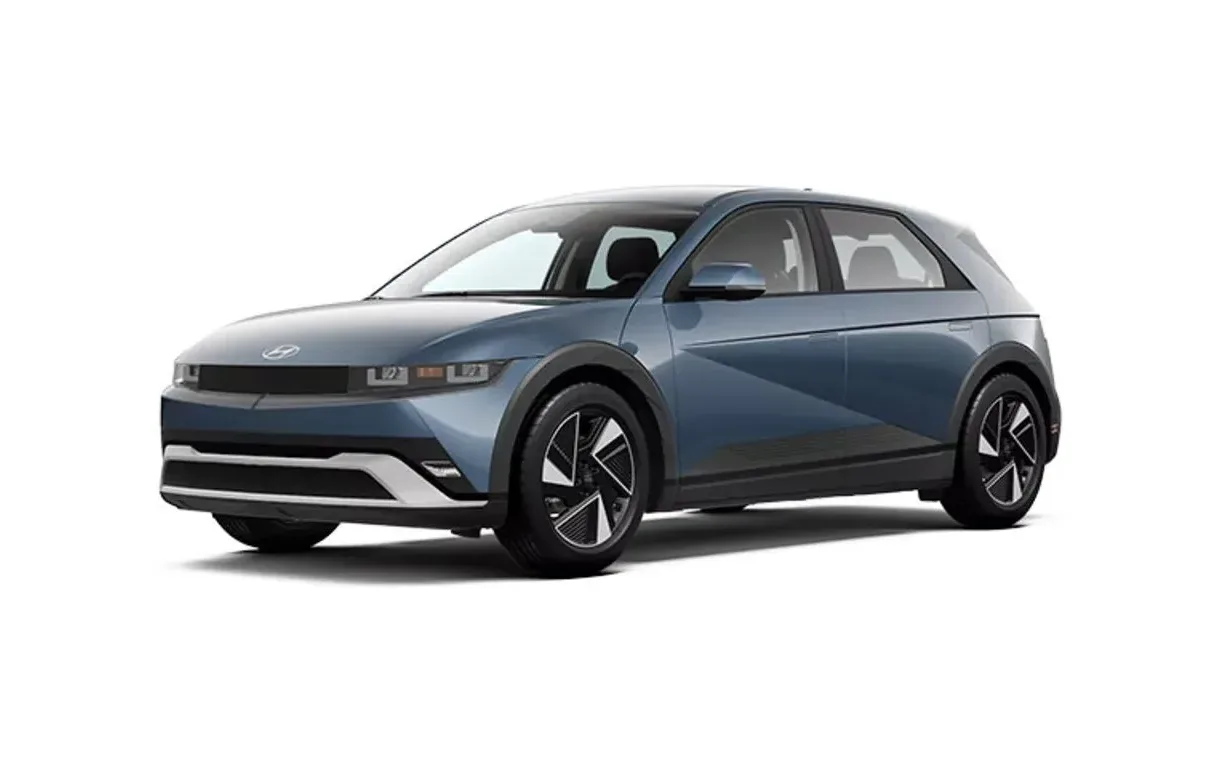
The Hyundai Ioniq 5 remains the most obvious cross-shop for buyers in this bracket, and it competes on design identity rather than outright spec sheet. Where the Sealion 7 leans on screen real estate and massaging seats, the Ioniq 5's retro-futurist design and flat-floor cabin appeal to buyers who want their EV to look unmistakably different from a combustion crossover. Buyers cross-shopping the two should sit in both — the Sealion 7 feels the more feature-dense of the pair, but the Ioniq 5 has built stronger brand equity among early EV adopters in Nepal.
The Kia EV6 Is The Sharper-Handling Alternative
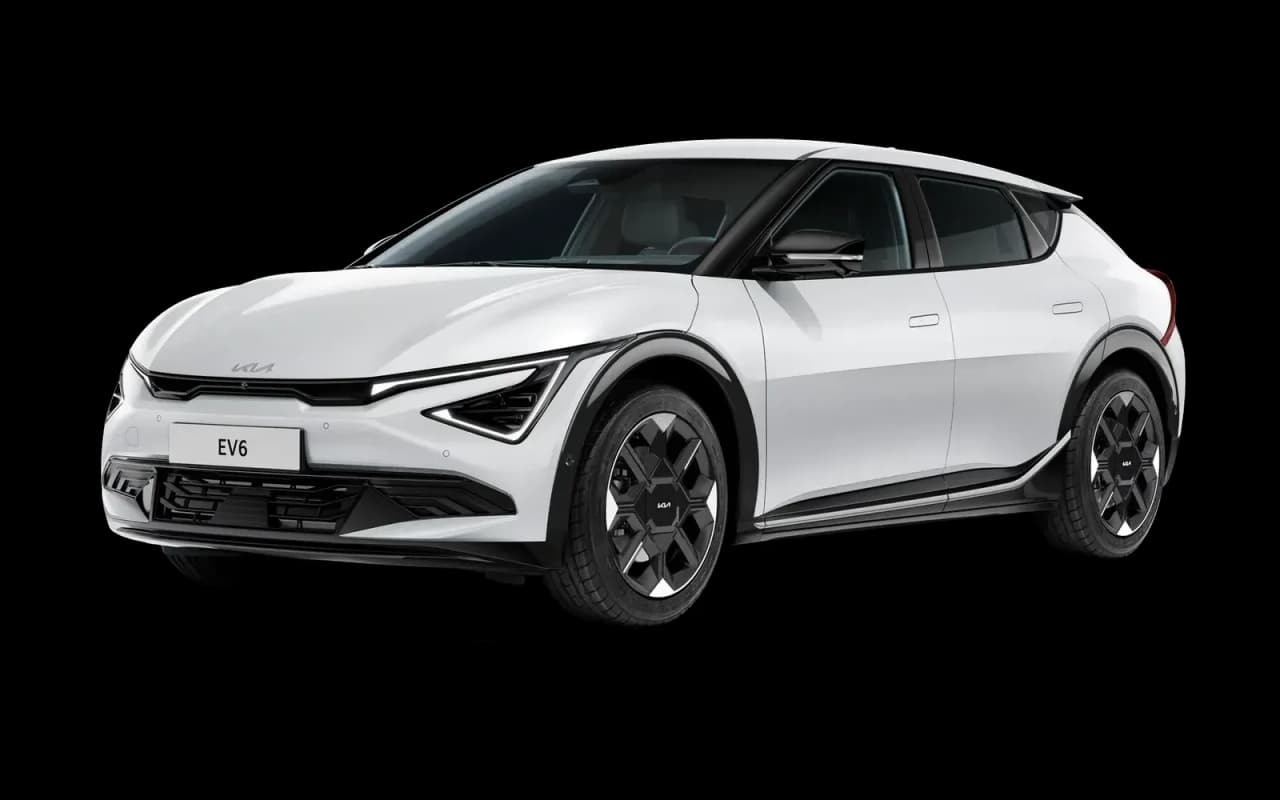
The Kia EV6 sits close in price and shares underlying E-GMP-style thinking, with a sportier on-road character that some buyers will prefer over the Sealion 7's more comfort-oriented tuning. Where the Sealion 7 wins back ground is cabin equipment — the ventilated massaging front seats and rotating touchscreen aren't matched by the EV6's more conventional interior layout. It comes down to whether a buyer prioritises driving engagement or in-cabin comfort and tech.
The BYD Atto 3 Is BYD's Own Cheaper Alternative
Buyers not fully committed to spending Rs 78 lakh should also cross-shop BYD's own Atto 3, which sits meaningfully lower in price within the brand's Nepal lineup. The Atto 3 won't match the Sealion 7's cabin massage function, rotating screen size or DiPilot 100 ADAS suite, but it proves the badge and charging network concerns are identical either way — the decision genuinely comes down to how much extra space and equipment a buyer wants to pay for.
Our Verdict: Who The Sealion 7 Actually Suits
The BYD Sealion 7 is a considered, well-equipped electric crossover that outperforms its badge's reputation in Nepal. It suits a buyer who wants genuine family-car space, a cabin that feels premium rather than merely adequate, and a comprehensive safety and driver-assistance package, without stretching into the Rs 90 lakh-plus bracket occupied by some rivals. The single 100 kW motor configuration sold here won't chase outright performance figures, but for the school run, the highway trip to Pokhara, and daily Kathmandu traffic, it's a genuinely compelling, well-rounded package — and one of the stronger arguments yet for stepping into an EV at this price in Nepal.
Writes on vehicle pricing, taxation and the Nepali auto market from ongoing tracking of distributor price lists. Editorial policy.