Where The Punch Fits In Kathmandu's Crowded Small-SUV Queue
The Tata Punch has been on Nepali roads since 2021, brought in by Sipradi Trading, and it occupies a specific slot: buyers who want SUV looks and a raised driving position but aren't ready to pay for a proper compact SUV like the Nexon. At an ex-showroom range of Rs 29.99 lakh to Rs 45.49 lakh across seven variants, it sits as an entry point into Tata's Nepal line-up rather than a flagship, and that's exactly how it should be judged. It isn't trying to be the most powerful or the most tech-laden thing in its price band — it's trying to be the safest and most sensibly built.
That positioning matters more in Nepal than in most markets. Roads here punish ground clearance shortfalls, parking spaces in Kathmandu and Pokhara punish anything too long, and resale value punishes cars without a strong safety reputation. The Punch was designed around exactly these pressures, and that shows up repeatedly through this review.
A Face That's Grown Sharper, A Silhouette That Hasn't Changed Much
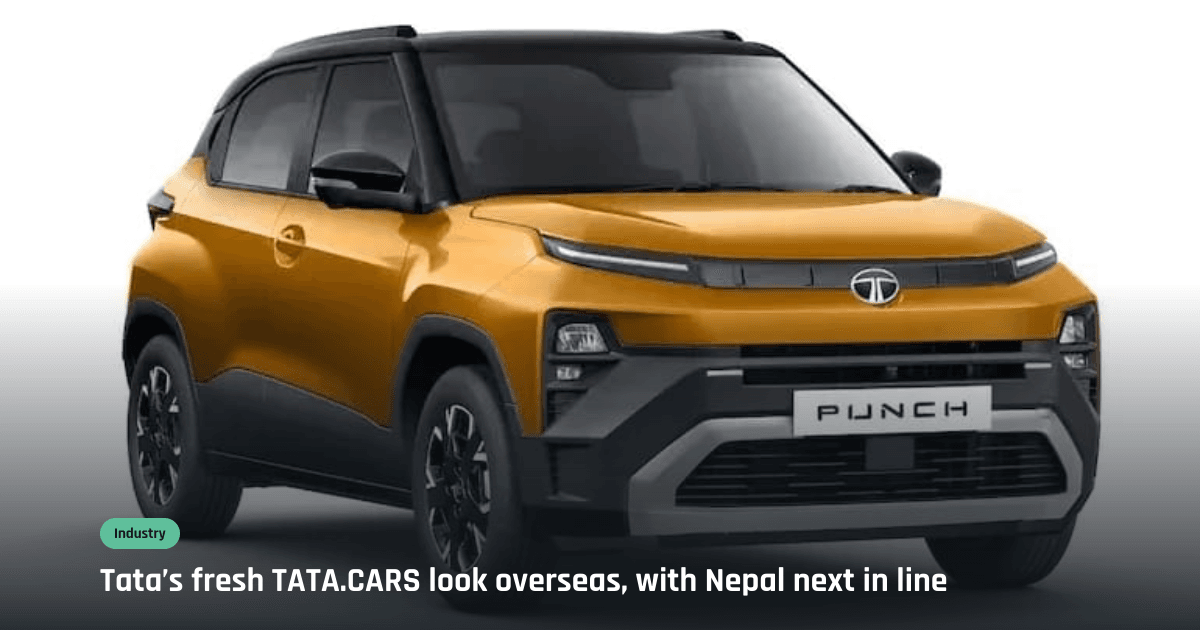
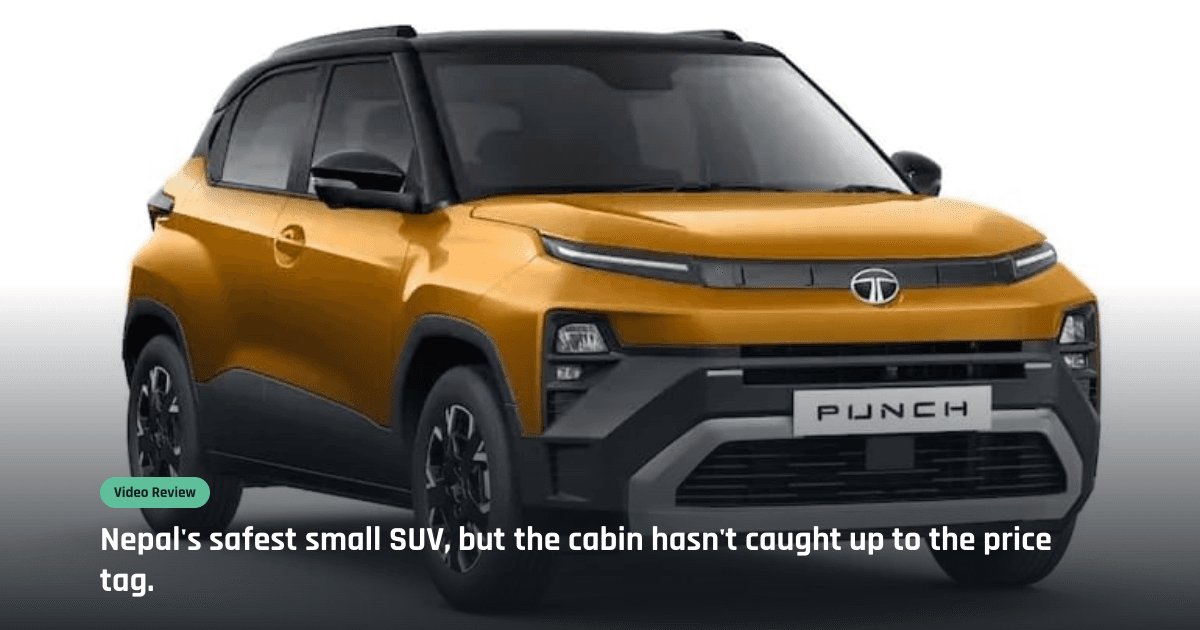
Up front, the Punch wears a smaller, slimmer grille flanked by distinct LED daytime running lights, giving it a family resemblance to Tata's Nexon. The headlamp cluster is fully LED, stacked vertically in a deliberately angular arrangement that looks more expensive than the price suggests. The bumpers have grown chunkier too, which is the main reason the car now measures 3827mm in length, 1742mm in width and 1615mm in height — dimensions that keep it compact enough for narrow lanes while still looking substantial parked next to a hatchback.
Side-on, little has changed, and that's fine, because the original formula worked. Black cladding runs along the lower doors, the wheel arches are squared off in the same design language Tata uses across its SUV range, and 16-inch alloy wheels wear a refreshed design. At the back, a connected LED light bar and LED tail-lamps replace the old model's tri-arrow signature — a change that gives the rear a more current, unified look, though we'd note it comes at the cost of some visual character; the tri-arrow motif was distinctive in a way the new bar isn't, since it's framed by a fair amount of black plastic trim that can look a little generic depending on the light.
The Colour Options Buyers Actually See On The Showroom Floor
Nepali showrooms typically display the Punch in a dual-tone silver body with a black roof, which is the safest, most popular choice and tends to hide road dust well through the monsoon months. A dual-tone light blue or teal shade with the same black-roof treatment is also part of the palette, and it's the one that photographs best against the car's boxy stance. A gold-orange shade rounds out the options seen on display units, giving buyers a genuine choice between a conservative look and something that stands out in a parking lot full of white and silver hatchbacks.
What's Actually On The Dashboard — And What Isn't
This is where Nepali buyers need to set expectations correctly. The units sold here do not get a touchscreen infotainment system — cabin controls are manual, not screen-based. What you do get is wired Android Auto and Apple CarPlay support, manual air-conditioning, fabric upholstery, and a cushioned front centre armrest. The driver's seat gets manual height adjustment, rear doors open to a full 90 degrees for easier entry and exit, and the door panels carry bottle holders and storage pockets that are genuinely useful on longer drives.
We'll say this plainly: at the top-trim price of Rs 45.49 lakh, the absence of a touchscreen is the single biggest thing prospective buyers ask about at the showroom, and rightly so. The equipment list here is built around durability and simplicity rather than gadgetry, and buyers should walk in knowing that upfront rather than discovering it on delivery day.
An Engine Built For Traffic, Not For Overtaking
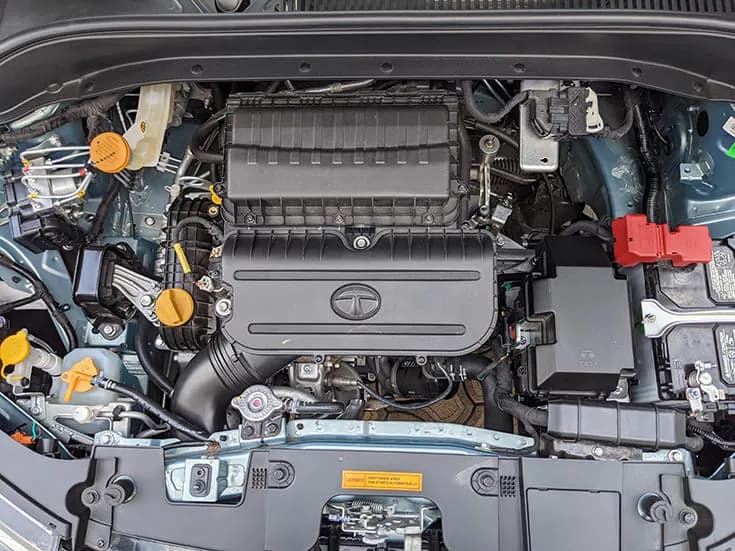
Every Nepal-spec Punch runs the same 1.2-litre Tata Revotron three-cylinder petrol engine, displacing 1199 cc, producing 87.8 PS at 6000 rpm and 115 Nm of torque at around 3250 rpm, paired with a 5-speed manual gearbox. There's no automatic or AMT option in the Nepali line-up, and no turbo-petrol variant either — this is the naturally aspirated unit, and it drives like one: adequate around town, willing enough in second and third gear, but requiring real commitment on the accelerator once you're carrying passengers up a hill climb.
The 37-litre fuel tank is generous for the class, and Tata's own figures put city fuel economy at roughly 16-17 kmpl with up to 18 kmpl achievable on the highway — numbers that hold up reasonably well against the car's segment, especially given the added weight of the SUV body style. What the engine won't do is feel quick. Buyers cross-shopping against turbo-petrol hatchbacks elsewhere in this price bracket will notice the difference the moment they need to merge onto the Ring Road at speed.
Ground Clearance Is The Real Selling Point Here
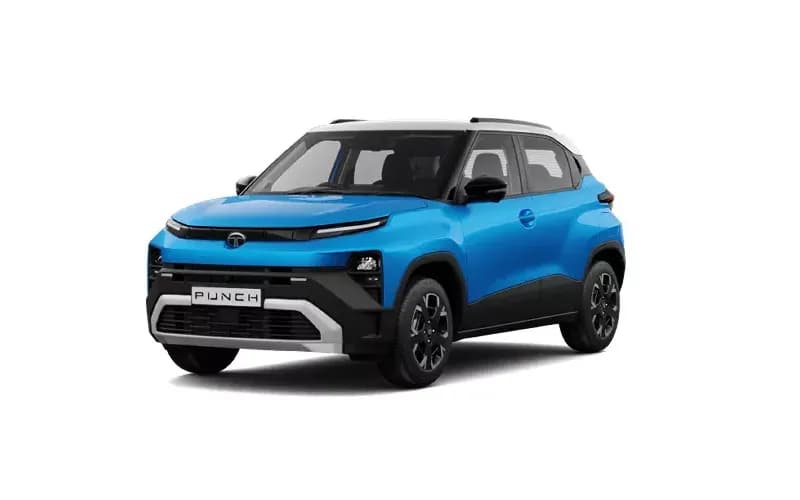
With 187mm of ground clearance, the Punch clears speed bumps, unpaved shoulders and monsoon-flooded intersections with a confidence that low-slung hatchbacks simply can't match. The wheelbase of 2445mm keeps the car manoeuvrable in city traffic without making it feel twitchy at higher speeds, and the suspension setup — independent McPherson struts up front, a semi-independent twist-beam with coil springs at the rear — is tuned more for comfort over rough surfaces than for cornering sharpness. This isn't a car that wants to be driven hard through the hills; it's a car that wants to survive Kathmandu's potholes without unsettling its occupants, and on that specific brief, it delivers.
Front Seats That Do More Than The Rest Of The Cabin Suggests
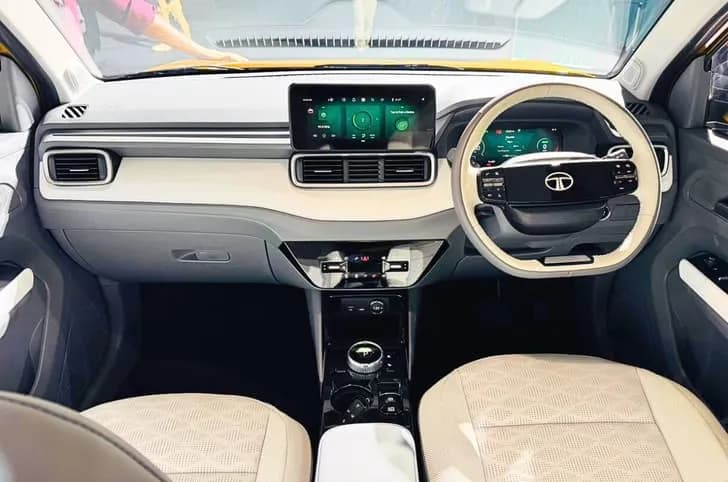
The front seats are a genuine highlight, with supportive cushioning and an under-thigh extender that most rivals at this price simply don't offer. Rear seat comfort is solid too, with decent thigh support, though taller passengers — anyone above roughly 5'8" — will find headroom noticeably tight. It's a trade-off that comes with the compact SUV format: Tata has clearly prioritised a commanding seating position and visibility over rear-cabin generosity, and the high seating position combined with large windows does make the cabin feel airier than its footprint suggests, front and back.
The Safety Numbers That Actually Justify The Price
This is where the Punch earns its keep. Every Nepal-spec variant comes with 6 airbags as standard, ABS with EBD, brake assist, and ISOFIX child seat mounts — a specification sheet that plenty of far more expensive SUVs in Nepal don't match. The car carries a 5-star Global NCAP crash rating, which remains one of the strongest credentials in this segment anywhere in the country.
The one honest caveat: braking hardware is front discs with rear drums across the range, including on the Rs 45.49 lakh top trim. It's not unusual at this price point in Nepal, but buyers used to all-disc setups on some rivals will notice it on paper, even if it doesn't materially affect everyday stopping performance.
Boot Space That Punches Above Its Footprint
Given its compact 3827mm length, the Punch's practicality is a pleasant surprise. The boot is deep and usefully shaped rather than merely wide, making it genuinely capable of swallowing weekly grocery runs or a family's weekend bags without the awkward Tetris-packing some rivals demand. Rear doors opening to 90 degrees make loading child seats or getting elderly passengers in and out considerably easier than the segment norm.
Running Costs That Favour The Patient Owner
The Revotron petrol engine's claimed 16-17 kmpl in the city and up to 18 kmpl on the highway make it a reasonably economical companion for daily use, and the 37-litre tank means fewer trips to the pump. Servicing runs through Sipradi Trading's established network, which matters in a market where parts availability and service turnaround genuinely affect ownership cost over a five-year period, not just the sticker price.
Picking A Variant Without Overpaying For Trim
The Nepali range runs from the Punch Adventure at Rs 29.99 lakh through the Accomplished at Rs 32.99 lakh and Creative at Rs 34.99 lakh, up to the Pure at Rs 39.99 lakh (which specifically carries the 1200cc engine designation in our data), the unlabelled base trim also at Rs 39.99 lakh, a mid trim at Rs 42.49 lakh, and the top trim at Rs 45.49 lakh. For most buyers, the sweet spot sits in the middle of that range — the Accomplished or Creative trims bring the safety essentials and the under-thigh seat support without stretching into top-trim pricing that, given the absence of a touchscreen across the board, doesn't buy meaningfully more cabin sophistication. Unless alloy wheel design or a specific colour is the deciding factor, we'd steer value-conscious buyers away from the top trim and toward the mid-pack.
The Hyundai Exter Undercuts It On Cabin Tech
The Hyundai Exter is the most direct rival on Nepali roads, competing squarely in the same tall-hatchback-meets-SUV format. Where the Exter tends to pull ahead is cabin technology — buyers cross-shopping the two consistently flag the Hyundai's more modern-feeling dashboard as the deciding factor when touchscreen presence matters to them. The Punch counters with its stronger crash-test pedigree and taller ground clearance, which matters more to buyers regularly driving outside paved city limits.
The Maruti Suzuki Fronx Offers More Polish For Similar Money
The Maruti Suzuki Fronx is the other name that comes up constantly in Nepali showroom conversations at this price point, and it's a tougher comparison for the Punch on refinement and interior fit-finish. The Fronx feels the more car-like of the two to drive, while the Punch answers back with genuine SUV proportions, higher ground clearance, and a safety data sheet that remains one of the strongest arguments in its segment.
Our Verdict: Buy It For The Safety Rating, Not The Cabin
The Tata Punch's case in Nepal has always rested on one pillar: it is one of the safest small SUVs money can buy here, full stop. Six airbags, ABS with EBD, ISOFIX mounts and a 5-star Global NCAP rating are not small things in a market where road conditions and mixed traffic make crash protection genuinely relevant rather than a marketing checkbox. Layer on 187mm of ground clearance and a compact footprint that's easy to live with in city traffic, and the practical argument writes itself.
Where it asks for compromise is inside the cabin — no touchscreen, manual air-conditioning, and an engine that's willing rather than exciting. This is a car for buyers who want their SUV to protect them and clear the next speed bump without fuss, and are happy to let the infotainment argument go to a rival. If that's the priority, the Punch remains one of the more sensible choices in Nepal's small-SUV segment; if cabin tech is non-negotiable, it's worth cross-shopping the Exter and Fronx before signing anything at the Sipradi showroom.
Writes on vehicle pricing, taxation and the Nepali auto market from ongoing tracking of distributor price lists. Editorial policy.