Start with the numbers
Compare at a glance
Top available variants, with prices in Nepalese rupees. Expand details to choose another variant.
| At a glance | BYD Atto 3 | Riddara RD6 |
|---|---|---|
| Ex-showroom price | Rs 78 lakh | Rs 89.99 lakh |
| Fuel | Electric | Electric |
| Selected variant | Superior | 4WD with Sunroof |
Ex-showroom prices exclude registration, road tax and insurance. Specifications can vary by trim. See individual source-check dates ↓
Where each sits in the Nepali market
The BYD Atto 3 and the Riddara RD6 get cross-shopped in showroom chats, but the similarity ends there. The Atto 3 is a compact electric crossover built for city and family life, with enough range, ground clearance and tech to work as a premium daily EV. The RD6 is an electric pickup with a genuine work brief. It's sized and engineered for buyers who want cargo-bed space, stronger towing and road presence.
That gap matters more in Nepal than it would elsewhere. The Atto 3 slots into a household easily because it drives like a normal five-seat SUV in traffic, in parking lots, on the school run. The RD6 runs on different math. You buy it because you need a pickup bed, real load capacity, towing ability or confidence on rough roads. It doesn't compete with crossovers. It answers a different question altogether.
Looks and design differences
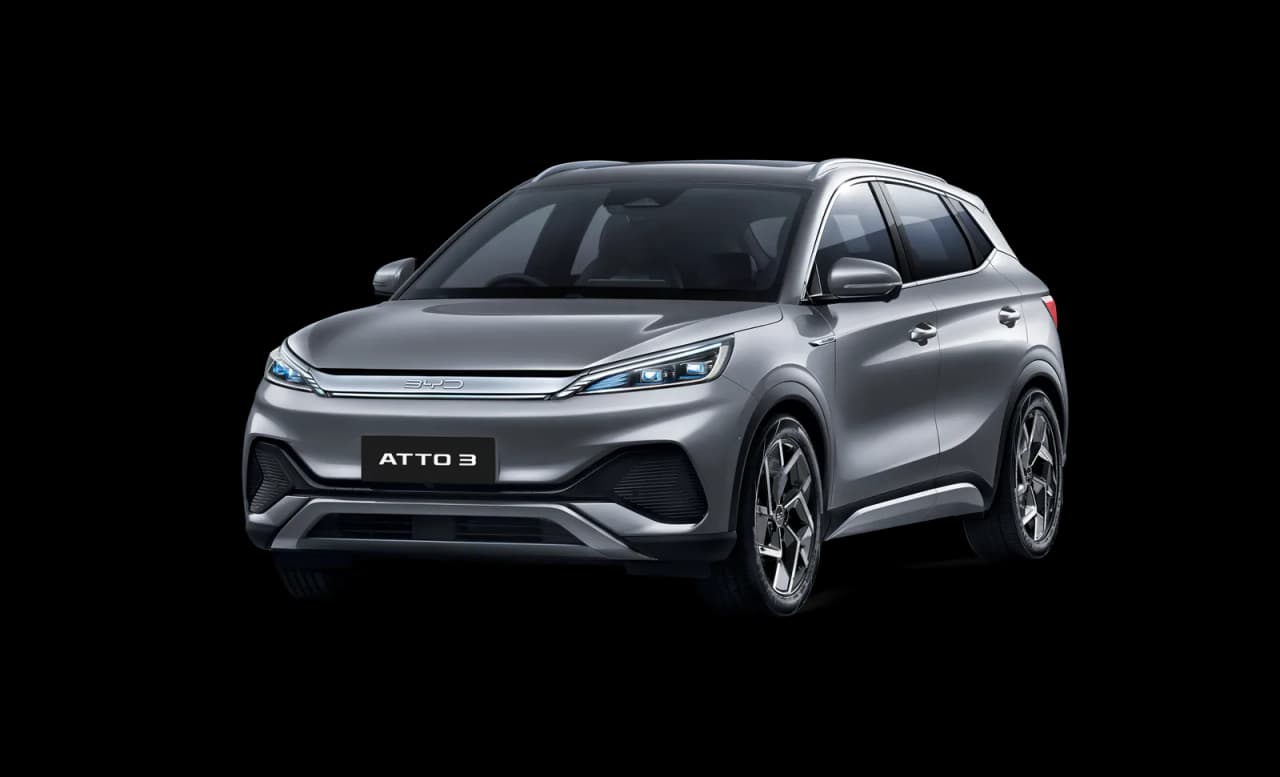
The Atto 3 leans on soft-edged crossover styling and a cabin built to feel playful rather than utilitarian. Its gym-themed interior, rotating 15.6-inch screen, flat rear floor and airy five-seat layout make it feel like a tech-forward family EV. It rides on 18-inch alloy wheels and comes in six exterior colours. All of that fits the lifestyle positioning BYD is going for.
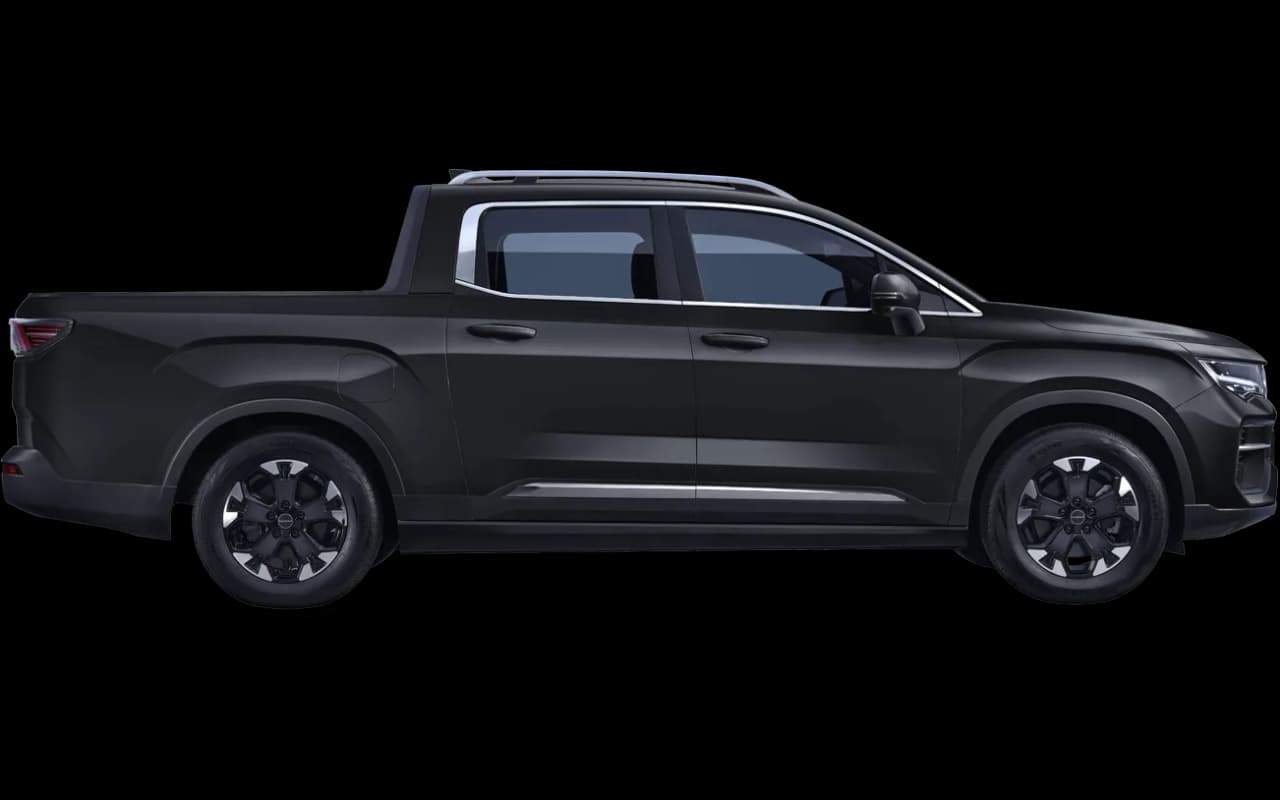
The RD6 goes the other way. It's a long, wide pickup: 5,260 mm body, 1,900 mm width, 1,880 mm height. The footprint is far larger and more imposing than the Atto 3's. A wide front face, racing-wing-style lighting and pickup proportions give it an industrial character. Even the cabin description reads thin next to the Atto 3's. Utility came first here. Cabin flourish came second.
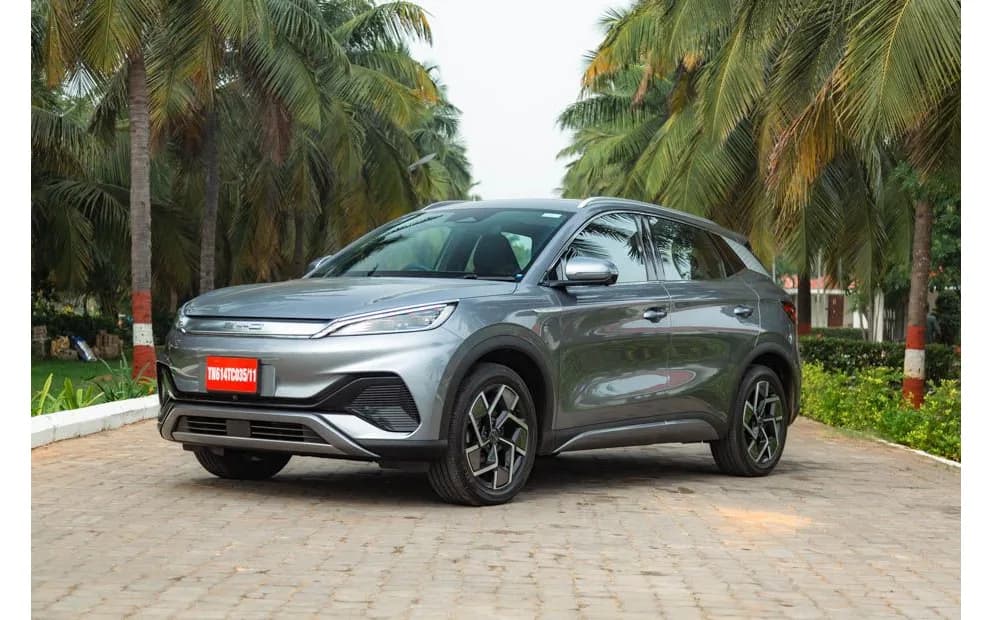
In design terms, the Atto 3 is the more polished, easier-to-live-with package. The RD6 looks more expensive and more capable visually. It was never trying to be delicate or city-friendly, and it doesn't pretend otherwise.
Features and equipment: a clear spread in philosophy
The Atto 3 carries the richer-feeling cabin spec. Both variants get the same core toolkit: panoramic sunroof, synthetic leather upholstery, a 15.6-inch rotating touchscreen, digital instrumentation, wireless Android Auto, Apple CarPlay via USB, V2L, auto hold, electronic parking brake, 7 airbags and a 360-degree camera. Advanced and Superior sit close on paper. That makes the entry variant especially attractive since most of the car's appeal is already there.
The RD6's equipment story depends more on variant, and it leans hard into work use. The base Rear-Wheel Drive version covers the essentials. The 4WD model is the one that matters if you want the truck's real hardware. Headline items include a dual-motor 4WD system, 7 drive modes, ventilated disc brakes on all four wheels, a 360-degree camera, a V2L-like discharge function rated at 6 kW/220V, and a pickup bed with 1,030 kg payload on the published RWD/4WD figures. The 4WD with Sunroof and 4WD with Sunroof Dual Tone add convenience or styling touches. They don't change what the RD6 fundamentally is.
Feature for feature, the Atto 3 feels richer in ways a family buyer notices every day. The RD6 feels better equipped in ways a truck buyer notices while loading, towing or crossing rough terrain.
Motor, battery, and performance differences
This is where the two cars pull apart hardest.
The Atto 3 uses a 100 kW front-wheel-drive setup with 310 Nm of torque. It claims 0-100 km/h in 10.1 seconds. That's adequate rather than exciting, but right for a family crossover. Battery capacity is 49.92 kWh in the Advanced trim and 60.48 kWh in the Superior trim, with WLTP range of 345 km and 420 km respectively. DC fast charging is rated at 80 kW, with 10-80% charging in 42 minutes for the smaller pack and 50 minutes for the larger one. Both trims keep the same motor output. The Superior buys range, not extra punch.
The RD6 sits in a different league on outright hardware. The Rear-Wheel Drive version already runs a 200 kW motor, 385 Nm, and claims 0-100 km/h in 7.3 seconds. The 4WD version is far more serious, with 315 kW, 595 Nm and a claimed 4.5 seconds to 100 km/h. Battery sizes are 63 kWh for the RWD and 73 kWh for the 4WD, with the 4WD claiming 424 km range and 30-minute DC charging from 30-80% at up to 110 kW. It's rated to tow 2,500 kg in RWD form and 3,000 kg in 4WD form.
On pure numbers, the RD6 is far faster and far more capable. In real buyer terms, though, the Atto 3's 100 kW output still suits urban commuting, school runs and daily family use better. The RD6's performance only earns its keep if you actually need the pickup format and the hardware behind it.
Ride, handling, comfort, and road use
The Atto 3 should be the easier car to drive every day. Its 2,720 mm wheelbase, 160 mm ground clearance, compact width, MacPherson front suspension, multi-link rear suspension and flat rear floor all point toward urban comfort. It weighs 1,750 kg, which keeps it from feeling oversized in traffic. The cabin is clearly built for passengers, not cargo.
The RD6 is more of a mixed-surface tool. A 3,120 mm wheelbase, 225 mm ground clearance, 500 mm wading depth on the RWD version and a much stronger ladder-style pickup presence suit broken roads, work sites and rural use. The 4WD version goes further still, with 815 mm wading depth and 95% gradeability, well beyond anything the Atto 3 is meant to handle. A pickup bed and larger footprint, though, make it less relaxed in dense city traffic and harder to park.
Comfort depends on what you mean by comfort. The Atto 3 is more comfortable for occupants in the usual sense: quieter-feeling family use, better cabin ambiance, a more car-like experience. The RD6 is more comfortable when the job is carrying loads, towing or covering difficult routes. Neither car is trying to win by the same yardstick.
Practicality and running costs
For day-to-day practicality, the Atto 3 is the better all-rounder. It has a 440-litre boot, 60/40 split-folding rear seats, a deep centre console, under-armrest storage, glovebox storage and a tyre repair kit rather than a full spare. It's a straightforward family EV with useful space and no unusual ownership learning curve.
The RD6 is practical in a different sense. It offers a proper cargo bed measuring 1,525 x 1,450 x 540 mm and a payload figure of 1,030 kg on the published RWD/4WD figures. There's also a 70-litre front storage compartment and 48 litres of rear under-seat storage. If your life involves tools, luggage, outdoor gear, trade use or bulky freight, this beats the Atto 3 easily.
Running costs are hard to compare directly since they depend on charging habits. Still, the Atto 3 should be the simpler and cheaper household EV to live with. Its lower price, smaller battery in the Advanced trim and lower daily energy demand make it the more economical choice for most owners. The RD6's larger battery, stronger motors and heavier truck format point to higher consumption and a pricier entry point, even if the EV format keeps routine energy costs below a fuel pickup's. Support network matters too. The Atto 3's much wider showroom and service footprint makes ownership less risky outside the capital.
Price and variants side by side
| Model | Variant | Price | Battery | Claimed range | Drivetrain | Fast charging | Support in Nepal | |---|---|---:|---:|---:|---|---|---| | BYD Atto 3 | Advanced | Rs 61.99 lakh | 49.92 kWh | 345 km WLTP | FWD | 80 kW DC | 62 showrooms, 26 service centers | | BYD Atto 3 | Superior | Rs 67.8 lakh | 60.48 kWh | 420 km WLTP | FWD | 80 kW DC | 62 showrooms, 26 service centers | | Riddara RD6 | Rear-Wheel Drive | Rs 65 lakh | 63 kWh | 424 km CLTC | RWD | 90 kW DC | 1 showroom, 1 service center | | Riddara RD6 | 4WD | Rs 71.99 lakh | 73 kWh | 424 km CLTC | 4WD | 110 kW DC | 1 showroom, 1 service center | | Riddara RD6 | 4WD with Sunroof | Rs 81.99 lakh | 73 kWh | 424 km CLTC | 4WD | Not officially disclosed | 1 showroom, 1 service center | | Riddara RD6 | 4WD with Sunroof Dual Tone | Rs 82.99 lakh | 73 kWh | 424 km CLTC | 4WD | Not officially disclosed | 1 showroom, 1 service center |
The price ladder tells its own story. The Atto 3 Advanced undercuts the RD6 RWD while giving buyers a more established ownership network and a more conventional family package. The Atto 3 Superior stays below the RD6 4WD and still feels like the more rational buy unless you specifically want a pickup. The RD6 4WD is the value point inside the RD6 family since it delivers the main mechanical reason to buy the truck in the first place. The Sunroof and Dual Tone versions are much harder to justify unless looks matter more than utility to you.
Which one wins for which buyer
- Choose the BYD Atto 3 Advanced if you want the most sensible entry into premium EV ownership.
- Choose the BYD Atto 3 Superior if range matters more than keeping the budget tight.
- Choose the Riddara RD6 4WD if you genuinely need pickup capability, towing and rough-road confidence.
- Choose the Riddara RD6 RWD only if you want the truck shape and can live without 4WD hardware.
- Avoid the RD6 Sunroof Dual Tone unless you specifically want style over value.
For most Nepali buyers, the Atto 3 wins. It's easier to own, easier to justify, and backed by a much stronger dealer and service network. It's the smarter family EV and the less risky premium buy. The RD6 wins only when the brief isn't a family crossover at all. It's an electric pickup with real load-hauling credentials, and it should be judged as one.
Verdict
If you're choosing with your head, the BYD Atto 3 is the better buy for most Nepali EV shoppers. The Advanced trim is the clearest value play. The Superior trim is the one to get if you want longer touring range without jumping into pickup pricing.
If you're choosing by use case, the Riddara RD6 is the stronger machine, but only for buyers who actually need a pickup. In that scenario, the 4WD version makes the most sense. That's where the RD6's extra cost turns into real hardware and real capability, not just a bigger sticker price.
Explore full specifications, variants & ownership context
Compare the exact variants
Specifications, features & ownership context
Choose a variant for each vehicle. The facts below follow that exact trim; the article explains the trade-offs.
Latest catalog and directory records supplement the original analysis. Figures may have changed since publication; individual specification and price-check dates appear below.
BYD Atto 3
Rs 78 lakh ex-showroom · source checked 24 Oct 2026
Riddara RD6
Rs 89.99 lakh ex-showroom · source checked 24 Oct 2026
Battery & charging
| Specification / feature | BYD Atto 3 | Riddara RD6 |
|---|---|---|
| Battery | 60.48 kWhResearched · confirm · 25 Sept 2026 | 73 kWhResearched · confirm · 29 Sept 2026 |
| Claimed range | 420 km (WLTP)Researched · confirm · 25 Sept 2026 | 424 km (NEDC)Researched · confirm · 24 Oct 2026 |
Safety & driver assistance
| Specification / feature | BYD Atto 3 | Riddara RD6 |
|---|---|---|
| Airbags | 7 airbagsResearched · confirm · 6 Sept 2026 | 6 airbagsResearched · confirm · 28 Sept 2026 |
Dimensions & weight
| Specification / feature | BYD Atto 3 | Riddara RD6 |
|---|---|---|
| Ground clearance | 175 mmResearched · confirm · 25 Sept 2026 | 225 mmVerified specification · 14 Sept 2026 |
Claimed range uses the stated test cycle. Different cycles are not a like-for-like range comparison; actual range depends on roads, load, speed and weather.
BYD Atto 3
Showroom & service support
Distributor: Cimex Inc. Pvt. Ltd.
72 listed brand showrooms · 43 listed brand service locations
Listed cities include Anamnagar, Banepa, Bhairahawa, Bhaktapur, Bharatpur, Biratnagar and 11 more.
Brand-wide directory coverage. Confirm that your nearest workshop supports this exact model, powertrain and warranty work; ask about parts availability and booking time.
Market buzz & buyer priorities
Compiled discussion, including buyer reactions and ownership reports; this is not a verified owner survey or a reliability score. Research dated 14 Oct 2026.
What people like
- best bang for the buck EV
- Premium interior quality and unique cabin design
Concerns to investigate
- high price compared to other markets
- Soft suspension causing body roll and underbody scraping on steep ramps
- ADAS features not well-calibrated for local road markings
What buyers ask for
- Real-world range for highway travel (e.g., Kathmandu-Pokhara)
- Ground clearance for local road conditions
- Availability of service centers and spare parts
Nepal ownership context
- The Atto 3 is widely considered a benchmark for EV reliability in Nepal, though newer competitors are challenging its value proposition.
- Service network is extensive compared to many other EV brands, though parts availability outside the Kathmandu valley remains a common point of friction.
- Resale value is relatively stable compared to other EVs, with depreciation tracking around 12-18% annually.
More feedback
- Ground clearance is a frequent concern for owners navigating steep ramps or rough terrain in hilly regions.
- Financing for the vehicle is widely supported by Nepali banks, making it accessible for middle-to-high income earners.
- Its 175 mm ground clearance is adequate for normal Nepali city roads, highways and moderate rough-road use, but it is not intended for serious off-roading.
- Nepal buyers pay close attention to authorised service access, spare-part availability outside Kathmandu and the effect of EV price changes on resale value.
Riddara RD6
Showroom & service support
Distributor: CG Motor Pvt. Ltd (CG Motors)
2 listed brand showrooms · 1 listed brand service locations
Listed cities include Kathmandu, Lalitpur.
Brand-wide directory coverage. Confirm that your nearest workshop supports this exact model, powertrain and warranty work; ask about parts availability and booking time.
Market buzz & buyer priorities
Compiled discussion, including buyer reactions and ownership reports; this is not a verified owner survey or a reliability score. Research dated 19 Oct 2026.
What people like
- Electric vehicle progress in the country
- Exceptional acceleration and power, reaching 0-100 km/h in under 6 seconds in top variants
- Superior ride comfort compared to traditional ladder-frame pickups due to the monocoque chassis
More feedback
- Innovative Vehicle-to-Load (V2L) capability allows users to power electrical appliances during camping or work
- High-tech and premium interior that feels more like a luxury SUV than a commercial truck
- Significant tax advantages and lower operating costs compared to diesel pickups like the Hilux
- Nepal-focused vehicle coverage highlights the RD6’s quiet and quick electric performance, SUV-like ride comfort, high ground clearance and practical pickup bed.
Concerns to investigate
- Range is low; minimum should be 450 km
- Concerns about after-sales service and repair costs
- Lack of off-road testing in reviews
More feedback
- Physical buttons missing in Nepal version compared to Chinese version
- Concerns regarding the monocoque chassis durability for heavy-duty off-roading in rugged Nepali terrain
- Skepticism about the Rear-Wheel Drive (RWD) performance on steep, muddy uphill climbs common in rural Nepal
- Limited availability of specialized spare parts and service centers outside of major urban hubs
What buyers ask for
- Ground clearance for potholed roads and high speed bumps
Nepal ownership context
- The 220mm ground clearance is frequently discussed as a necessity for navigating Nepal's monsoon-damaged roads
- CG Motors is the authorized distributor, providing a level of trust due to their established service network
- The vehicle is positioned as a 'lifestyle pickup' for urban entrepreneurs rather than a heavy-duty construction vehicle
More feedback
- CG Motors is the authorised distributor for Riddara in Nepal.
- Its 225 mm ground clearance is relevant to buyers dealing with broken roads, steep approaches and uneven rural routes.
- Home charging is practical for regular Nepal use, while highway trips depend on charger access, route planning and reduced range in hills.
Use these facts alongside the article’s full analysis. Check the final quotation, warranty terms and exact equipment before booking.
Evidence & next steps
Check the details before you buy
Use this guide to build a shortlist. Ask for a written quotation for your chosen variant, including registration, taxes, insurance, finance charges and any charger installation. Confirm the nearest authorised workshop supports that model.
Price sources and dates
These are the recorded distributor-source checks for the selected overview trims. They are separate from the article update and catalog read dates; they do not mean every trim was rechecked today. Confirm the final price with the distributor.
Overview photos come from the corresponding model records; additional article photos carry their own credits. Running costs depend on usage, energy prices, maintenance, insurance and resale value.