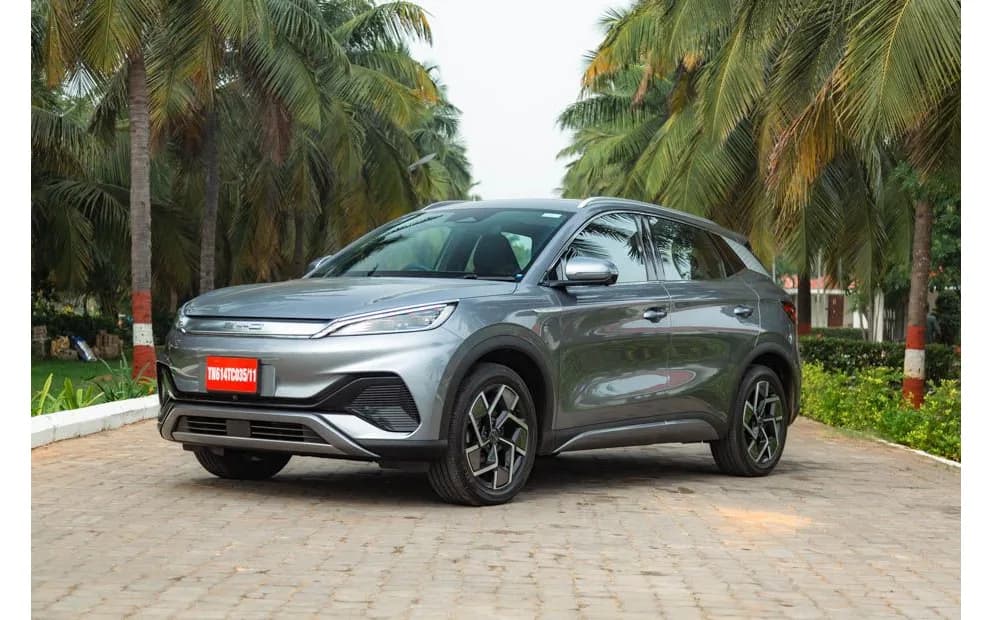
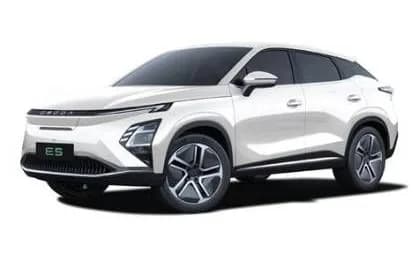
Start with the numbers
Compare at a glance
Top available variants, with prices in Nepalese rupees. Expand details to choose another variant.
| At a glance | BYD Atto 3 | Omoda E5 |
|---|---|---|
| Ex-showroom price | Rs 78 lakh | Rs 57.39 lakh |
| Fuel | Electric | Electric |
| Selected variant | Superior | Dual Tone |
Ex-showroom prices exclude registration, road tax and insurance. Specifications can vary by trim. See individual source-check dates ↓
Where each sits in the Nepali market
The BYD Atto 3 and the Omoda E5 both sit in the same broad family-EV space, but they target slightly different buyers. The Atto 3 asks for more money and leans on a broader showroom-and-service footprint, while the E5 pitches a lower entry price with stronger straight-line value.
That difference matters in Nepal. A buyer comparing these two is usually not choosing between a cheap city EV and a premium one. They are choosing between two well-equipped electric crossovers that both aim to handle daily Kathmandu use, family duty, and the odd highway run to the hills.
BYD's stronger network is the Atto 3's first big advantage. It is sold through Cimex Inc. Pvt. Ltd., with 62 showrooms and 26 service centers in Nepal. The Omoda E5, sold through SPG Automobiles Pvt. Ltd. / Omoda Jaecoo Nepal Pvt. Ltd., has 50 showrooms and 18 service centers. That is not a small gap.
Price and variants side by side
| Model | Variant | Price |
|---|---|---|
| BYD Atto 3 | Advanced | Rs 61,99,000 |
| BYD Atto 3 | Superior | Rs 67,80,000 |
| Omoda E5 | E5 | Rs 56,99,000 |
| Omoda E5 | Dual Tone | Rs 57,39,000 |
Price is where the E5 makes its opening case. Its range sits below the Atto 3 line, and its two trims are tightly spaced. The Atto 3 starts higher and climbs further at the top end.
For a Nepali buyer watching the bluebook, insurance and down payment together, the E5 is the easier car to get into. The Atto 3 needs a stronger budget, even before a buyer starts thinking about accessories and charging setup.
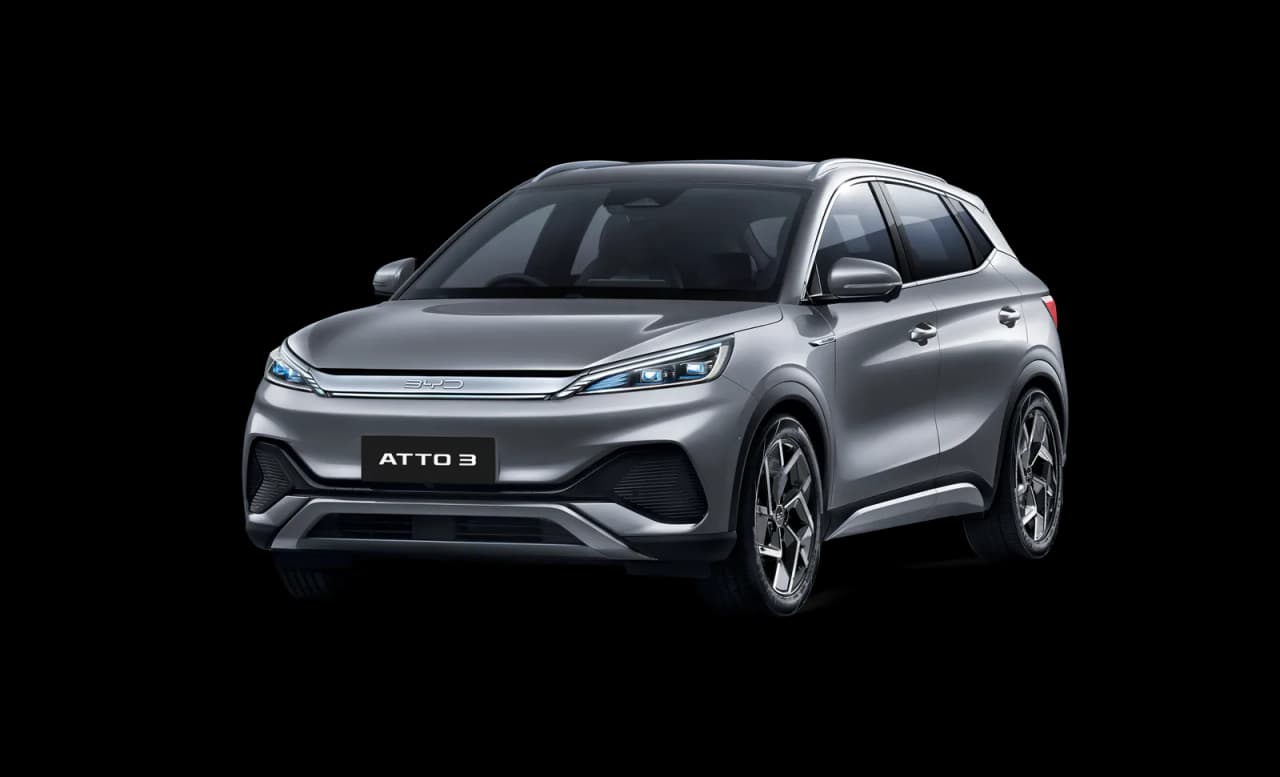
Looks and design differences
These two do not look like cousins, and that is useful. The Atto 3 goes for a more sculpted, playful cabin and a rounded crossover stance. Its gym-themed interior, 15.6-inch rotating screen and flat rear floor make it feel designed from the inside out. It also gets a panoramic sunroof, 18-inch alloys and six exterior colours, including Iris Blue.
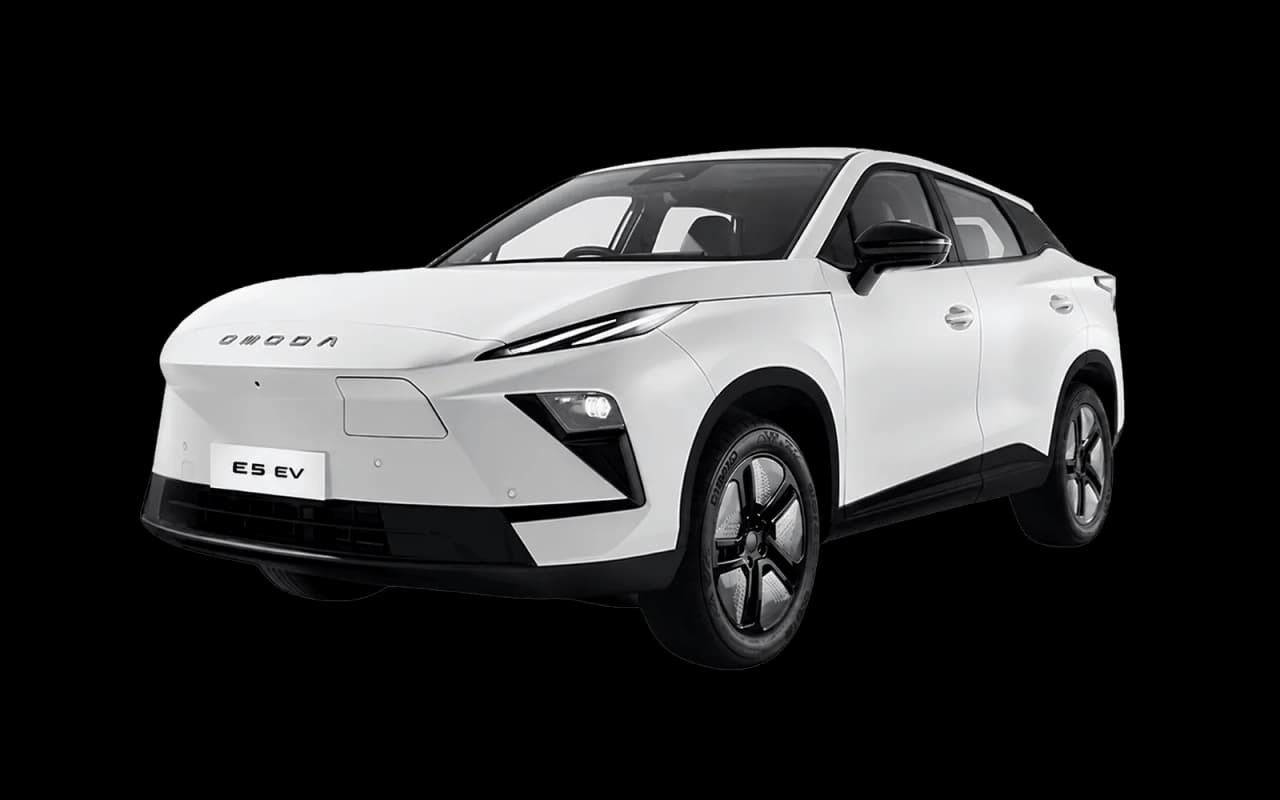
The E5 is cleaner and more conventional. It has a more SUV-like shape, an electric tailgate, 18-inch alloy wheels and a panoramic sunroof. The Dual Tone adds a contrasting roof treatment for buyers who want more visual drama. It looks less quirky than the Atto 3, and that may help in Nepal, where many buyers still prefer a more familiar premium-SUV face.
Inside, the E5 feels more loaded on comfort hardware. Driver seat ventilation, lumbar support and a relaxing massage function stand out, and the front passenger seat also gets ventilation. The Atto 3 counters with its airy, modern cabin layout and simpler ergonomics. It feels more design-led. The E5 feels more equipment-led.
Features and equipment differences
This is where the shopping gets interesting. Both cars bring the basics a Nepali family now expects at this price: automatic climate control, keyless entry, touchscreen infotainment, 360-degree camera support, ADAS, V2L and automatic transmission.
The Atto 3 Advanced and Superior share the same core cabin and convenience kit. Both get a 15.6-inch intelligent rotating touchscreen, digital instrument panel, Apple CarPlay via USB, Android Auto wireless, synthetic leather upholstery, 6-way power adjustment for the driver, 4-way adjustment for the passenger, automatic air-conditioning with CN95 and PM2.5 filtration, heat pump, keyless entry and a portable card key. Both also have a tyre repair kit rather than a full spare. That matters on rougher routes.
The E5's kit list is broader in a few places. It gets an electric tailgate, acoustic front glass, front and rear parking sensors, a 50W wireless charger, a 15.6-inch central screen, an 8.88-inch cluster, an intelligent voice assistant and an 8-speaker audio setup. The front seats go further too, with ventilation on both sides and a massage function for the driver.
The Atto 3's counter is more about the feel of the system than the sheer number of items. Its rotating screen, flat rear floor and V2L function give it a clever, usable character. The E5's equipment is more obviously rich. For buyers who judge a car by the number of comfort features in the showroom, the Omoda is the showier product.
Safety also tilts in different ways. The Atto 3 gives you 7 airbags and a 360-degree camera as standard, plus ADAS. The E5 also has ADAS, front dual airbags, front side airbags and side curtain airbags, plus a 540-degree panoramic view camera and a long list of active safety functions that runs deep into lane, blind-spot and rear-cross-traffic assistance. The Omoda looks the more heavily loaded car on paper here.
Warranty and after-sales support
Ownership support is one of the clearest separators. The Atto 3 has the larger retail and workshop footprint, and that will matter to buyers outside the capital and the main urban corridors. More showrooms and more service centers reduce friction in a country where travel to the dealer can be a real part of ownership.
The E5's warranty structure is also strong. Battery coverage runs 8 years / 180,000 km, while the motor is covered for 8 years / 160,000 km. The extended programme pushes battery cover to 11 years / 240,000 km and motor cover to 11 years / 200,000 km, subject to the stated conditions. That is a serious ownership proposition.
The Atto 3's principal support advantage is less about the wording of its warranty and more about the scale of the network behind it. For many Nepali buyers, that is the more practical comfort. A long warranty is good. A service point you can actually reach is better.
Engine, motor and performance differences

On paper, the E5 is the quicker car. It uses a single front motor making 99 kW and 288 Nm, and it is claimed to do 0-100 km/h in 7.2 seconds. The Atto 3 uses a single front motor rated at 100 kW and 310 Nm, with a claimed 0-100 km/h time of 10.1 seconds.

That makes the Atto 3 the stronger-torque car, but not the faster one. The E5's claimed acceleration figure is much brisker, and that will be felt in city gaps and short overtakes. The Atto 3 is more relaxed and less eager.
Both are front-wheel drive automatics with single-motor layouts. Neither gives Nepali buyers AWD or a performance angle. The choice is not about sportiness. It is about whether you want calm, steady progress or a more lively response.
Ride, handling and comfort differences
The Atto 3 should appeal to buyers who like a planted, slightly mature setup. It uses MacPherson struts up front and a multi-link rear suspension, with EPAS and regenerative braking. Ground clearance is 160 mm on the Advanced and 175 mm on the Superior, while wheelbase is 2,720 mm. That long wheelbase usually helps settled highway manners and rear-seat space.
The E5 also uses a MacPherson strut front and multi-link independent rear suspension, but it sits taller in this comparison. Ground clearance is 191 mm, which is the sort of number Nepali buyers notice quickly. Rough access roads, broken lanes and speed breakers are part of daily life. That extra clearance gives the E5 a clearer advantage in real-world confidence.
Comfort is where the E5 pulls ahead again. Its front seat ventilation, massage function and acoustic glass give it a more cushioned feel on long runs. The Atto 3 feels more neatly arranged and easier to live with, but the E5 reads as the more comfort-heavy cabin.
Practicality and running costs
Both cars are proper five-seaters. The Atto 3 has a 440-litre boot, while the E5 carries 442 litres. That is close enough to call them even for day-to-day family use.
The Atto 3 offers a 49.92 kWh battery in the Advanced with a claimed 345 km WLTP range, and a 60.48 kWh battery in the Superior with a claimed 420 km WLTP range. The E5 uses a 58.9 kWh battery with a claimed 430 km WLTP range. Because the range cycles are matched here, the E5 edges the Atto 3 Superior by a small margin on quoted WLTP range, and it clearly beats the Atto 3 Advanced. The E5 also has the larger battery among the two cars when comparing the mid-point figures.
Charging is a mixed picture. The Atto 3 supports up to 80 kW DC fast charging and is quoted at 42 minutes for 10-80% on the Advanced, while the Superior is quoted at 50 minutes. The E5 supports up to 110 kW DC charging, so it has the higher charging ceiling. AC charging is 6.6 kW on the E5. That should help on long trips and quick top-ups if the charger is available.
A simple energy-use estimate from the quoted numbers points in a useful direction. On WLTP figures, the Atto 3 Advanced works out to roughly 0.145 kWh per km from a 49.92 kWh battery and 345 km range. The Atto 3 Superior is roughly 0.144 kWh per km from 60.48 kWh and 420 km. The E5 is about 0.137 kWh per km from 58.9 kWh and 430 km. The Omoda is the more efficient of the three quoted figures on this basis.
Which one suits which buyer
- Pick the BYD Atto 3 Advanced if you want the entry point into BYD ownership, value the bigger dealer-and-service footprint, and are happy with the 345 km WLTP battery setup.
- Pick the BYD Atto 3 Superior if you want the Atto 3 cabin and network support, but need the 420 km WLTP version for longer use.
- Pick the Omoda E5 if you want the stronger value case, the lower starting price, the 430 km WLTP claim and the broader comfort kit.
- Pick the Omoda E5 Dual Tone if style matters and you want the most visually distinct trim without leaving the E5 family.
A Nepali family that keeps cars for years and worries about service access will lean toward the Atto 3. A buyer who cares more about what the car gives for the money, wants more quoted range for less cash and likes a richer comfort list will usually land on the E5.
Verdict
The Omoda E5 is the sharper buy on value, range and comfort equipment. The BYD Atto 3 is the safer ownership bet because of its larger network and stronger brand familiarity in the market.
If I were buying with my own money and I lived in the main dealer corridors, I would take the E5. If I lived farther from the core cities and wanted the easier ownership path, I would still give the Atto 3 the nod. For most Nepali buyers, the smarter emotional choice is the E5. The smarter conservative choice is the Atto 3.
Explore full specifications, variants & ownership context
Compare the exact variants
Specifications, features & ownership context
Choose a variant for each vehicle. The facts below follow that exact trim; the article explains the trade-offs.
Latest catalog and directory records supplement the original analysis. Figures may have changed since publication; individual specification and price-check dates appear below.
BYD Atto 3
Rs 78 lakh ex-showroom · source checked 26 Oct 2026
Omoda E5
Rs 57.39 lakh ex-showroom · source checked 26 Oct 2026
Battery & charging
| Specification / feature | BYD Atto 3 | Omoda E5 |
|---|---|---|
| Battery | 60.48 kWhResearched · confirm · 25 Sept 2026 | 61 kWhResearched · confirm · 6 Sept 2026 |
| Claimed range | 420 km (WLTP)Researched · confirm · 25 Sept 2026 | 430 km (WLTP)Researched · confirm · 6 Sept 2026 |
Safety & driver assistance
| Specification / feature | BYD Atto 3 | Omoda E5 |
|---|---|---|
| Airbags | 7 airbagsResearched · confirm · 6 Sept 2026 | — |
Dimensions & weight
| Specification / feature | BYD Atto 3 | Omoda E5 |
|---|---|---|
| Ground clearance | 175 mmResearched · confirm · 25 Sept 2026 | 185 mmVerified specification · 20 Aug 2026 |
Claimed range uses the stated test cycle. Different cycles are not a like-for-like range comparison; actual range depends on roads, load, speed and weather.
BYD Atto 3
Showroom & service support
Distributor: Cimex Inc. Pvt. Ltd.
72 listed brand showrooms · 43 listed brand service locations
Listed cities include Anamnagar, Banepa, Bhairahawa, Bhaktapur, Bharatpur, Biratnagar and 11 more.
Brand-wide directory coverage. Confirm that your nearest workshop supports this exact model, powertrain and warranty work; ask about parts availability and booking time.
Market buzz & buyer priorities
Compiled discussion, including buyer reactions and ownership reports; this is not a verified owner survey or a reliability score. Research dated 14 Oct 2026.
What people like
- best bang for the buck EV
- Premium interior quality and unique cabin design
Concerns to investigate
- high price compared to other markets
- Soft suspension causing body roll and underbody scraping on steep ramps
- ADAS features not well-calibrated for local road markings
What buyers ask for
- Real-world range for highway travel (e.g., Kathmandu-Pokhara)
- Ground clearance for local road conditions
- Availability of service centers and spare parts
Nepal ownership context
- The Atto 3 is widely considered a benchmark for EV reliability in Nepal, though newer competitors are challenging its value proposition.
- Service network is extensive compared to many other EV brands, though parts availability outside the Kathmandu valley remains a common point of friction.
- Resale value is relatively stable compared to other EVs, with depreciation tracking around 12-18% annually.
More feedback
- Ground clearance is a frequent concern for owners navigating steep ramps or rough terrain in hilly regions.
- Financing for the vehicle is widely supported by Nepali banks, making it accessible for middle-to-high income earners.
- Its 175 mm ground clearance is adequate for normal Nepali city roads, highways and moderate rough-road use, but it is not intended for serious off-roading.
- Nepal buyers pay close attention to authorised service access, spare-part availability outside Kathmandu and the effect of EV price changes on resale value.
Omoda E5
Showroom & service support
Distributor: SPG Automobiles Pvt. Ltd. (Omoda Jaecoo Nepal Pvt. Ltd.)
51 listed brand showrooms · 19 listed brand service locations
Listed cities include Banepa, Bardibas, Bhairahawa, Bhaktapur, Bharatpur, Biratnagar and 18 more.
Brand-wide directory coverage. Confirm that your nearest workshop supports this exact model, powertrain and warranty work; ask about parts availability and booking time.
Market buzz & buyer priorities
Compiled discussion, including buyer reactions and ownership reports; this is not a verified owner survey or a reliability score.
No substantive market-feedback summary is recorded yet. Ask recent owners about their usage, service experience and recurring costs.
Explore Omoda E5 market buzz ↗Use these facts alongside the article’s full analysis. Check the final quotation, warranty terms and exact equipment before booking.
Evidence & next steps
Check the details before you buy
Use this guide to build a shortlist. Ask for a written quotation for your chosen variant, including registration, taxes, insurance, finance charges and any charger installation. Confirm the nearest authorised workshop supports that model.
Price sources and dates
These are the recorded distributor-source checks for the selected overview trims. They are separate from the article update and catalog read dates; they do not mean every trim was rechecked today. Confirm the final price with the distributor.
Overview photos come from the corresponding model records; additional article photos carry their own credits. Running costs depend on usage, energy prices, maintenance, insurance and resale value.