Where This Pulsar Fits In Nepal's Busiest Bike Segment
Nepal's 150cc commuter class is arguably the most fought-over price band in the entire two-wheeler market, and the Pulsar N150 arrives here with a very specific job: give buyers who cannot quite stretch to the Pulsar N160 a bike that still feels current, still looks the part, and doesn't ask them to compromise on comfort. With HH Bajaj bringing it in at an ex-showroom range of Rs 3.77 lakh to Rs 3.93 lakh across its two variants, it sits just below its more powerful sibling and squarely against a clutch of Japanese and Indian rivals that Nepali commuters cross-shop constantly. This is not a bike built to impress on a spec sheet. It's built to be lived with every single day, and that distinction matters a great deal once you actually spend time with it.
A Familiar Pulsar Face, Built With Noticeably Better Materials
The N150 borrows its aggressive fascia from the N160 and the N250, which means it doesn't look like the entry point of the range even though it is. The muscular tank shrouds, sharp LED headlamp housing and sporty stance give it a road presence that punches above its price. What stands out more, though, is the fit and finish — the fiber panels and metal components feel noticeably better put together than what Bajaj offered on this platform previously. Panel gaps are tight, switchgear feels solid under the thumb, and there's little of the creakiness that budget commuters sometimes develop within the first year of Nepali roads and monsoons. It reads as a bike that's sporty enough for younger riders without ever feeling like it's trying too hard, which is exactly the middle ground a family commuter needs to occupy.
Only Two Colours, But Both Suit The Bike's Character
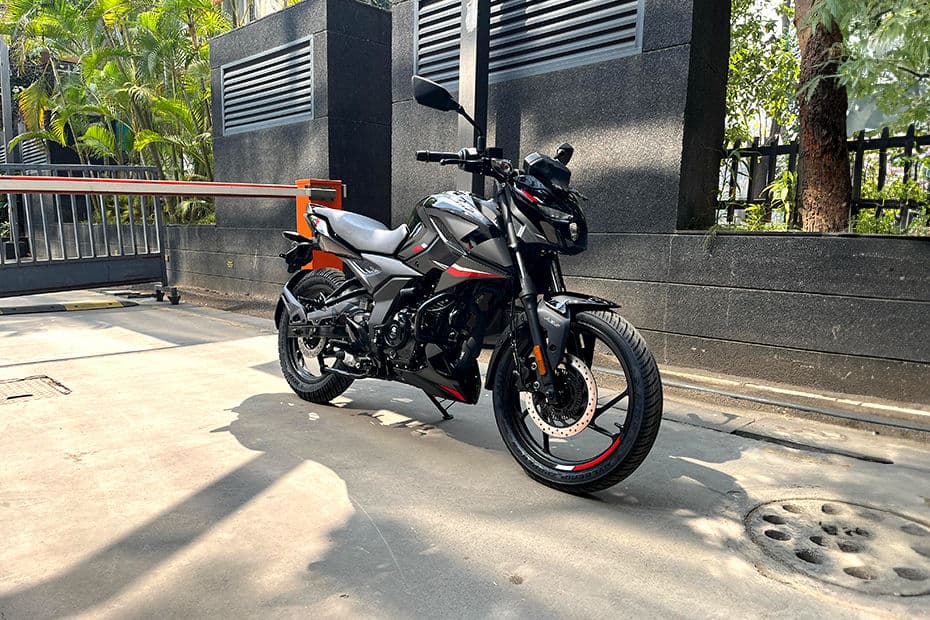
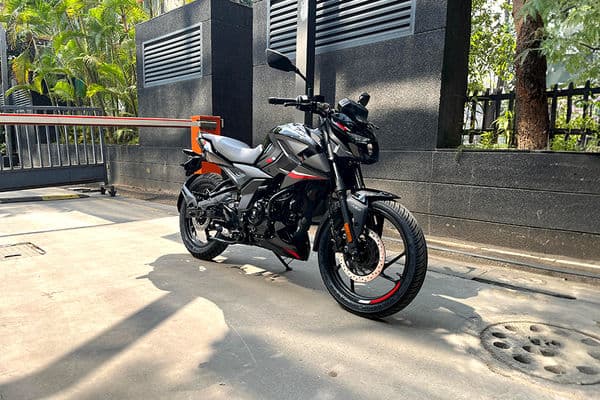
Buyers get a choice between Ebony Black and Pearl Metallic White. The black, the version most commonly seen doing the rounds at showrooms, leans into the bike's sportier lines and hides road grime well — a real consideration on Nepal's dustier stretches. The white is the more eye-catching option and tends to show off the tank's sculpting better in daylight. Neither is a wild departure from what Bajaj typically offers, but both are well-judged for a bike positioned as smart rather than flashy.
The Digital Console And Connectivity Bajaj Finally Brought Down To This Price
The biggest functional upgrade on the N150 is the instrument cluster. It replaces the older semi-digital unit with a fully digital display that carries a gear position indicator, and it pairs with a phone over Bluetooth for call and message alerts — features that, until recently, buyers had to pay considerably more to get. There's also a USB charging port positioned conveniently near the handlebar, useful for anyone using phone-based navigation on longer rides, though it's worth noting the port itself isn't something the distributor formally lists as a spec, so treat it as a welcome extra rather than a guaranteed fitment across every unit. The LED projector headlamp is genuinely bright and makes a visible difference riding after dark on unlit roads, which is still much of Nepal outside the main cities.
An Engine That's Smooth But Runs Out Of Breath Low Down
Under the tank sits a 149.68cc, single-cylinder, air-cooled, fuel-injected engine producing 14.5 PS at 8500 rpm and 13.5 Nm of torque at 6000 rpm, run through a 5-speed gearbox. On paper this looks like every other 150cc commuter engine in Nepal, but the way it behaves is where the character shows. It stays impressively smooth and free of vibration right up towards its top end, with a sporty, throaty exhaust note that feels a cut above the usual flat commuter drone. Overtaking on open, flat stretches in top gear is genuinely easy, and the motor doesn't feel strained doing it.
The flip side is low-end torque, or the lack of it. Try to labour up a steep bridge climb in third gear without rolling on the throttle and the engine will stall rather than pull through — a trait that's been consistently flagged and lines up with what the torque figure suggests. It simply doesn't have the low-rev shove that the N160 offers, so riders will need to keep the gearbox busier in slow traffic and on inclines than they might expect from a 150.
Comfortable Over Bad Roads, Clumsy In Tight Turns
Where the N150 wins riders over is ride quality. The suspension soaks up potholes with a plushness that belies the price point, and the bike stays composed and planted even past 90 km/h, which matters given how many Nepali highways now allow that kind of cruising speed. It's a genuinely relaxed motorcycle at pace.
The compromise shows up at low speed. The turning radius is wide enough that U-turns on narrow Kathmandu lanes or tight parking maneuvers demand more effort and more space than most riders will expect from a 150cc commuter. Part of that comes down to the 90-section front tyre, narrower than the one fitted to the N160, which also has a bearing on outright grip feel when pushed. For a bike so clearly built around daily, stop-start city use, the turning circle is the one dynamic trait that occasionally works against its own brief.
Seat, Stance And A Kerb Weight That Suits Nervous Riders
This is where the N150 quietly does its best work. The single-piece seat is genuinely comfortable for both rider and pillion, with cushioning that holds up over longer commutes rather than flattening out. A 790mm seat height keeps it accessible to shorter riders, and the tubular handlebar promotes an upright, unstrained riding posture rather than anything committed or sporty. At a kerb weight of 145 kg, it's light enough to filter through Kathmandu traffic, paddle around at walking pace, and manage confidently for less experienced riders or those new to bigger bikes. Combined with the plush suspension, the whole package feels engineered around comfort first.
Braking That Does The Job, With One Obvious Shortcut
Braking comes from a 260mm front disc paired with a 130mm rear drum, backed by single-channel ABS that includes Rear Wheel Lift Protection to guard against the rear end lifting under hard braking. Bite from the front disc is good and progressive, and the ABS calibration inspires confidence in wet or loose conditions. The shortcut is obvious, though: this remains a front-disc, rear-drum setup with single-channel ABS, while the N160 moves to dual-channel ABS. For most daily riding this configuration is perfectly adequate, but it is the one area where the N150 visibly draws a line under how much bike your money buys.
A 14-Litre Tank And Ground Clearance That Actually Suits Nepali Roads
The 14-litre fuel tank is generous for the segment and, combined with the engine's efficiency, translates into a long riding range between fill-ups — useful given how thin fuel station coverage still is outside major towns. The bike is also built to run on E20 ethanol-blend fuel, a detail that will matter increasingly as Nepal's fuel supply chain shifts. At 165mm, ground clearance comfortably clears the speed bumps and uneven patches that define most Nepali streets without requiring the rider to slow to a crawl.
Why The Fuel Bill Matters More Than The Purchase Price Here
Running costs are where the N150 makes its strongest argument. Fuel efficiency in the 50-55 kmpl range is excellent for a petrol commuter of any size, and over a few years of ownership that gap compounds into real savings against thirstier rivals. The one caution worth flagging is after-sales experience — Bajaj's sheer sales volume in Nepal means its service centres can get crowded, and buyers should factor in wait times when budgeting for scheduled servicing rather than assuming walk-in convenience.
Which Of The Two Variants Actually Makes Sense
The lineup is simple: the Pulsar N 150 at Rs 3,92,900 and the BS6 variant at Rs 3,76,900, both sharing the identical 149.68cc engine. With no difference in displacement between them, the case for spending the extra roughly Rs 16,000 comes down entirely to trim and equipment preference rather than performance, so buyers should ask their dealer directly what separates the two before paying the premium. For most commuters prioritising value, the lower-priced BS6 variant is the sensible starting point unless a specific feature on the pricier trim is a must-have.
The Bajaj Pulsar N160 Is The Obvious Step-Up, At A Price
The N160 is the N150's closest relative and its toughest internal rival. It brings more power, dual-channel ABS and upside-down front forks, all genuine upgrades in outright capability. What it doesn't have is a kick starter, and it costs meaningfully more. For buyers who want that extra performance margin and don't mind paying for it, the N160 is the logical upgrade path. For anyone prioritising value and the reassurance of a kick starter as backup, the N150 remains the more rational buy.
The Yamaha FZ-S V4 Looks Bigger But Feels Cheaper In The Hand
The Yamaha FZ-S V4 is the other name that inevitably comes up in this segment. It has a bulkier, more muscular street-fighter stance that appeals to a certain buyer, but the plastic quality on its panels doesn't match what Bajaj has managed on the N150. Riders cross-shopping the two on showroom floors consistently notice the difference in perceived build quality, even before getting to the spec sheets.
The Honda SP160 Is The Steady Daily-Commute Alternative
The Honda SP160 rounds out the trio of bikes Nepali buyers in this bracket routinely compare. It's positioned as a straightforward daily commuter in the same vein as the N150, and the choice between the two often comes down to brand loyalty, service network preference, and which showroom a buyer trusts more for long-term ownership — rather than any dramatic difference in what each bike delivers day to day.
The Verdict: A Practical, Comfortable Commuter For Riders Who Value Ease Over Excitement
The Bajaj Pulsar N150 is not trying to be the quickest or most feature-loaded bike in its class, and it's better for knowing that. It's a comfortable, refined, fuel-efficient commuter that looks sharper than its price suggests and rides more plushly than most rivals at this level. The weak low-end torque and wide turning radius are real, noticeable compromises, and the single-channel ABS with rear drum brake will matter to buyers chasing outright safety kit. But for family riders, daily commuters, and anyone who wants a stylish 150cc motorcycle with the reassurance of a kick starter and genuinely low running costs, this is one of the most sensible options currently on sale in Nepal.
Writes on vehicle pricing, taxation and the Nepali auto market from ongoing tracking of distributor price lists. Editorial policy.