Where This Motorcycle Actually Fits In Nepal's Showrooms
Royal Enfield's Nepal line-up has, for years, had an awkward gap between its retro roadsters and the properly capable Himalayan 450. The Scram 440 is Alpha Automotive's answer to that gap — an adventure-styled motorcycle that costs meaningfully less than the Himalayan, stands lower, weighs less on paper, feels less even if not on the scale, and asks a lot less of a first-time big-bike buyer. Launched in Nepal for 2026 with ex-showroom prices between Rs 6.89 lakh and Rs 6.99 lakh, it slots in as the practical, budget-conscious way to get Royal Enfield's newer 443cc platform without stepping up to the Himalayan's price and complexity.
This is not a niche motorcycle aimed only at off-road enthusiasts. Given Kathmandu's traffic and the state of roads once you leave the Ring Road, a machine that is easy to filter through jams, shrugs off potholes, and can still be loaded up for a Mustang or Rara trip has an obvious audience here. The Scram 440 is built for exactly that crowd — riders who want one motorcycle that does city duty on weekdays and covers rough tarmac and gravel on weekends, without the financial commitment the Himalayan 450 demands.
Retro Scrambler Looks With A Few Genuine Upgrades
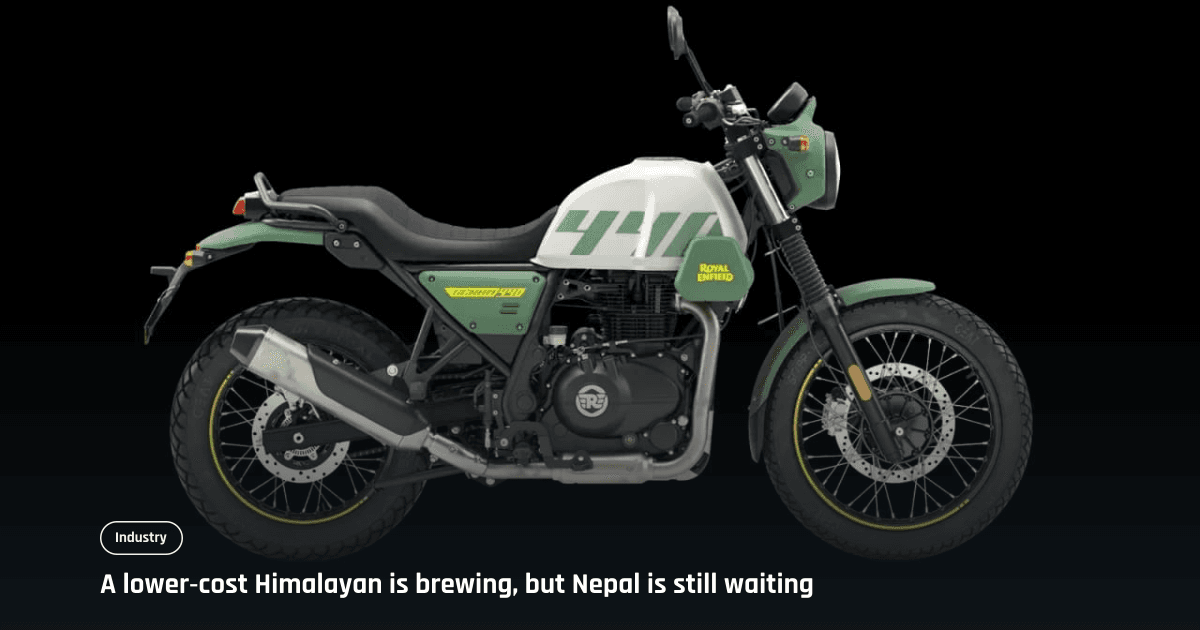
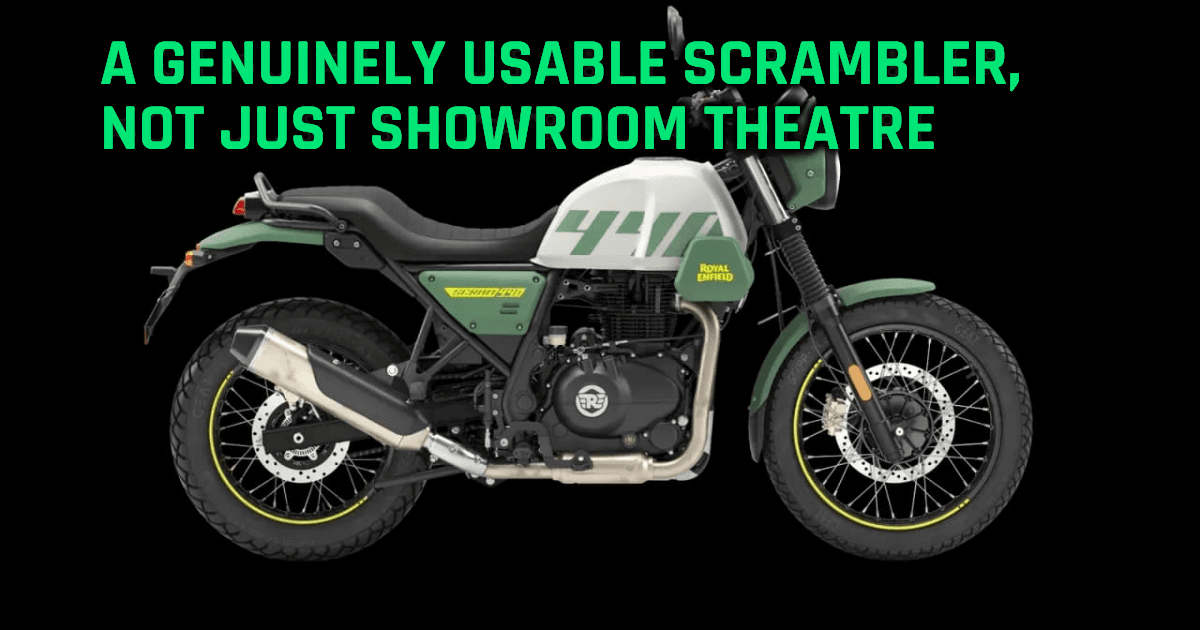
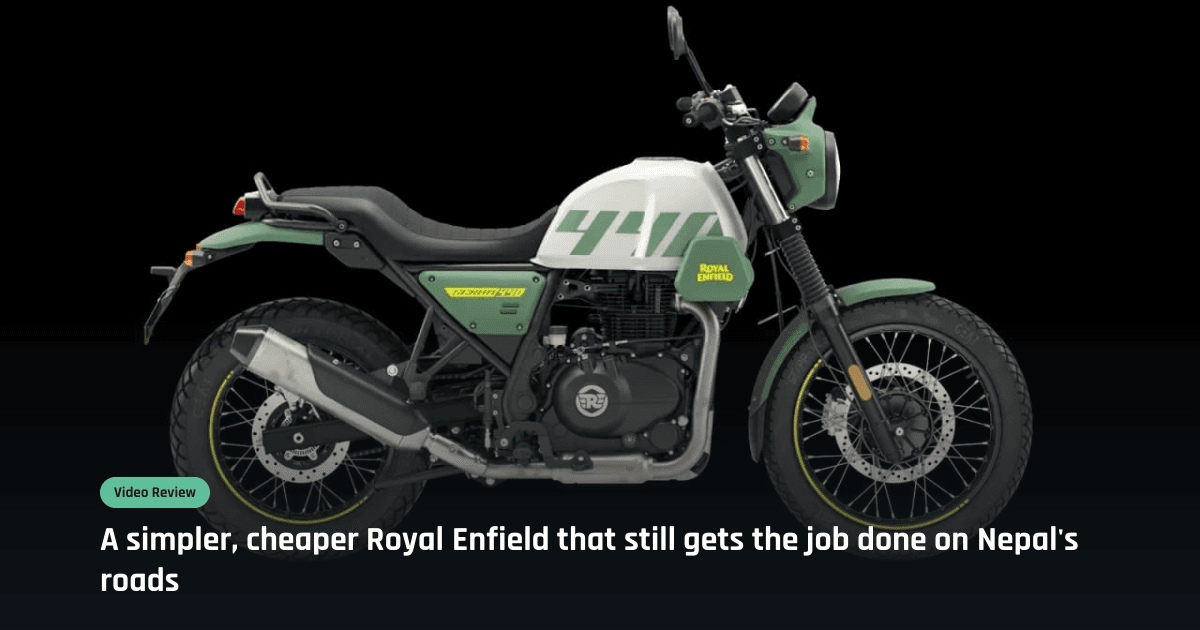
The Scram 440 keeps the classic scrambler silhouette that made the previous 411-based Scram popular: a round headlight up front, fork gaiters protecting the 41mm telescopic forks, and a single-piece ribbed seat that runs the length of the bike. The side panels carry bold 'SCRAM 440' branding, leaving no doubt about which model this is, and the fuel tank gets a dual-tone paint treatment with graphics that give it more visual presence than the plainer old 411. The upswept exhaust canister, finished in black with a silver tip, remains one of the better-looking touches on the bike and reinforces the scrambler theme.
Build quality follows familiar Royal Enfield practice — nothing feels flimsy, but nothing feels premium either. It's a motorcycle designed to be functional and rugged rather than showroom-polished, which suits its intended use. The stiffened frame underneath is the one change buyers won't see but will appreciate: it now allows a top box to be mounted, something the older Scram 411 platform couldn't handle. For anyone planning to actually tour on this motorcycle, that's a small but genuinely useful upgrade.

Colour Options Worth Knowing Before You Order
Nepal's allocation includes a new 'Force Teal' colourway alongside more familiar earthy and matte tones, giving buyers a bit more choice than the outgoing model offered. Showroom units we've seen locally have also come in a matte green-grey finish set off with orange and yellow accents — a scheme that leans into the scrambler identity rather than trying to look like a conventional road bike. Buyers choosing between the Trail and Force variants should check current colour availability with Alpha Automotive, as graphics and paint options tend to be tied to specific trims.
A Round Digital-Analog Cluster And Not Much Else
Equipment on the Scram 440 is deliberately minimal. The instrument cluster is a round, offset digital-analog unit that displays the essentials — speed, gear position, fuel level, and trip data — without trying to be a full-colour touchscreen. It works fine and suits the bike's honest, no-frills character, but buyers coming from more feature-loaded 300–450cc motorcycles will notice the absence of navigation, connectivity, or ride modes.
The headlamp has been upgraded to an LED unit, a genuine improvement over the halogen setup on the older Scram, and one that matters given how many Nepali riders are still on the road after dark navigating unlit stretches outside the city. Switchgear is standard Royal Enfield fare, including the brand's familiar rotary starter switch rather than a conventional push-button starter — something new riders adjust to quickly but is worth knowing about beforehand. Overall, this is a bare-bones package by design. There's no switchable ABS, no traction control, no ride-by-wire modes — just the essentials needed to ride the bike.
The 443cc Engine Trades Polish For Usable Mid-Range
The headline mechanical change is the bump from the old 411cc engine to a proper 443cc air-cooled, fuel-injected single, with a bore and stroke of 81 x 86mm and a 9.5:1 compression ratio. Output stands at 25.4 bhp at 6,250 rpm and 34 Nm of torque at 4,000 rpm — a modest gain of roughly 1 bhp and 2 Nm over the outgoing motor, but the numbers understate how much of a difference the accompanying gearbox change makes. The Scram 440 finally gets a 6-speed gearbox in place of the old 5-speed unit, paired with a wet multi-plate clutch and electronic fuel injection.
That sixth gear is the single most talked-about mechanical improvement, and for good reason: it allows the engine to settle into a genuinely relaxed cruise at 100 km/h on the highway, something the old 411-based Scram couldn't manage without feeling stressed. The engine retains Royal Enfield's familiar long-stroke character — strong, torquey response in the low and middle of the rev range, which suits Nepali riding conditions where you're constantly rolling on and off the throttle rather than holding high revs. Push it hard toward the top of the rev range, though, and the refinement drops off noticeably, with vibration through the pegs and bars becoming apparent. This isn't an engine that rewards revving; it's an engine that rewards short-shifting and letting the torque do the work.
Manageable In Traffic, Composed On Broken Roads
The switch to a 19-inch front wheel, down from the Himalayan-style 21-inch, is the change that most directly affects everyday riding. It makes the Scram 440 noticeably easier to flick through slow traffic and tip into turns without the slightly vague, top-heavy feeling a bigger front wheel can bring at low speed. For riders doing most of their kilometres in Kathmandu, Pokhara, or other congested towns, this is a real, tangible benefit rather than a spec-sheet footnote.
Away from traffic, the long-travel suspension — 190mm at the front and 180mm at the rear via the monoshock — absorbs broken tarmac and potholes without drama, and 200mm of ground clearance means speed bumps, rough patches, and light off-road stretches don't require the caution they would on a lower-riding street bike. At 196 kg kerb weight, the Scram 440 isn't light, but the compact stance and 795mm seat height (per our Nepal-spec data) make it feel far more manageable than that figure suggests, especially compared to taller adventure motorcycles. It's worth being clear-eyed about the ceiling here, though: this isn't a sharp-handling machine and was never meant to be. It prioritises stability and comfort over outright cornering precision, which is the right call for its intended buyer but worth knowing if you're coming from a more committed sport-oriented bike.
A Seat And Riding Position Built For Long Days, Not Long Standing
The riding position is upright, with a wide handlebar that keeps wrist and shoulder strain low on longer rides — a genuine plus for anyone planning multi-day touring. The lower seat height compared to the Himalayan 450 makes it far more approachable for shorter riders, a demographic that matters a great deal in Nepal where average rider height skews lower than in many other adventure-bike markets. Combined with the smaller overall dimensions (2,165mm long, 840mm wide per our Nepal-spec figures), it's a bike most riders can put both feet down on comfortably at a stop, which builds confidence in traffic and on loose surfaces alike.
Where it comes up short is off-road ergonomics. Standing on the footpegs — a fairly essential position for tackling anything genuinely rough — doesn't feel entirely natural on this bike, whether due to bar height, peg placement, or tank shape. It's not a dealbreaker for the occasional gravel detour, but riders planning serious off-road use should manage expectations accordingly.
Braking That's Better Than Before, If Still Basic
Disc brakes front and rear come as standard across the range, and braking performance has been improved over the outgoing model — a welcome update, since stopping power is one area where budget adventure motorcycles can't afford to compromise given Nepal's mix of steep descents and unpredictable traffic. There's no mention of switchable dual-channel ABS or more advanced electronic safety aids, so this remains a straightforward, mechanically sound braking package rather than a technologically advanced one.
Why Tubeless Tyres Matter More In Nepal Than The Spec Sheet Suggests
One of the most practically significant upgrades on the Scram 440 is easy to overlook: tubeless tyres on alloy wheels, replacing the spoked, tube-type setup common on cheaper adventure motorcycles. For anyone touring through the hills or the Tarai, this is a real difference — a puncture on a tubeless tyre can often be plugged roadside in minutes, whereas a tube-type puncture on a spoked wheel usually means removing the wheel entirely. Combined with the stiffened frame's new-found ability to carry a top box, the Scram 440 is meaningfully more tour-ready than its predecessor, even if the touring capability it offers is still a notch below a dedicated adventure tourer.
Around town, the nimbler steering and manageable dimensions already discussed make daily commuting straightforward, and the 15-litre fuel tank should give most riders a comfortable range between fill-ups given the engine's naturally efficient long-stroke design, even though we don't have an official mileage figure to quote for the Nepal-spec bike.
What It Costs To Keep On The Road
Royal Enfield hasn't published official mileage figures for the Nepal-spec Scram 440, so we won't guess at a number, but the fundamental engine architecture — a low-revving, long-stroke air-cooled single — has traditionally been on the frugal side of the segment, and there's no reason to expect a dramatic change here. Maintenance costs should track closely with other Royal Enfield 440-platform motorcycles now sold in Nepal, meaning parts and service familiarity at Alpha Automotive's network works in the Scram's favour compared to less-established adventure brands.
Picking Between The Scram 440, Trail And Force
Alpha Automotive Nepal offers the Scram 440 in three variants: the base Scram 440 at Rs 6,94,900, the Trail at Rs 6,89,900, and the Force at Rs 6,99,900 — a tight Rs 10,000 spread across the entire range that makes this less about budget stretching and more about which colour and graphics package appeals most. Both the Trail and Force carry the 443cc engine, and given how close the pricing sits, we'd steer most buyers toward whichever variant's paint scheme they actually prefer, since the mechanical package doesn't meaningfully change between them at this price gap. For buyers who want the widest colour choice, including the newer Force Teal scheme, it's worth checking current stock at the showroom before committing, as availability can vary variant to variant.
The Royal Enfield Himalayan 450 Costs More But Does More
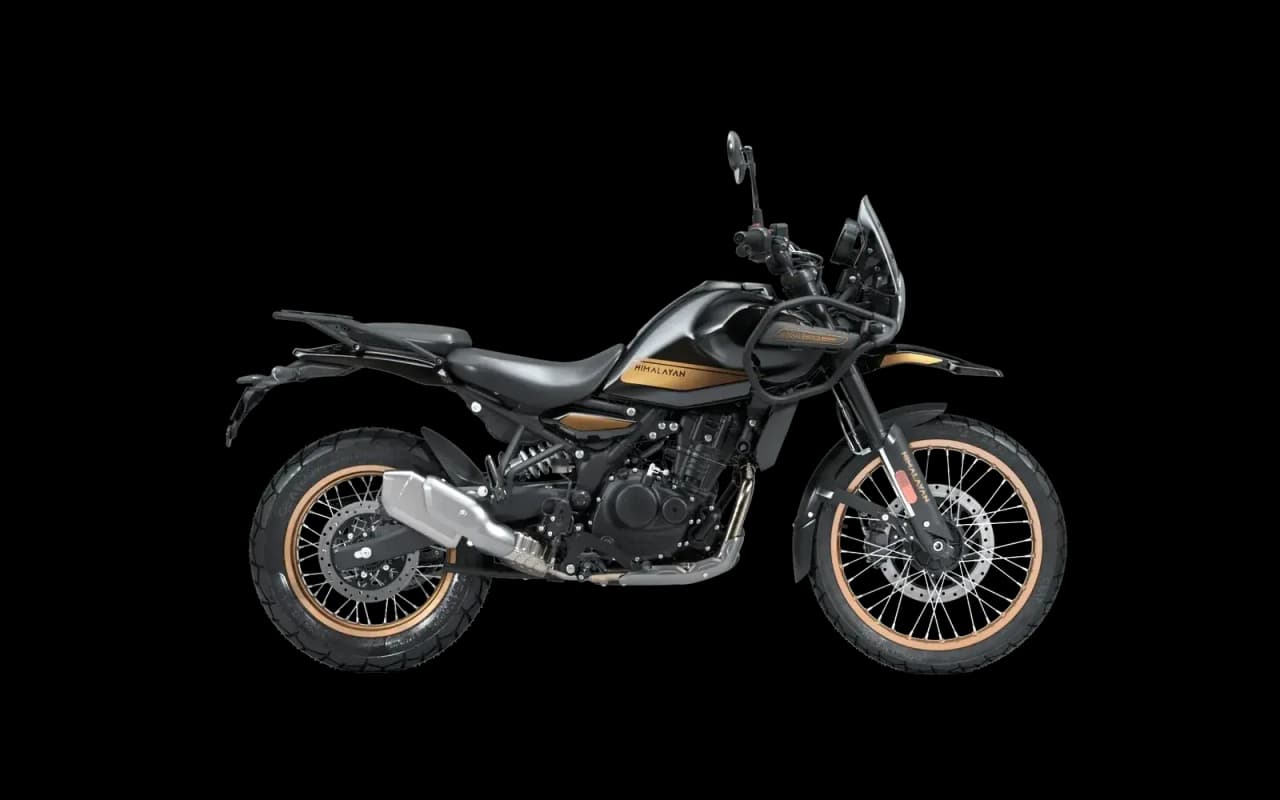
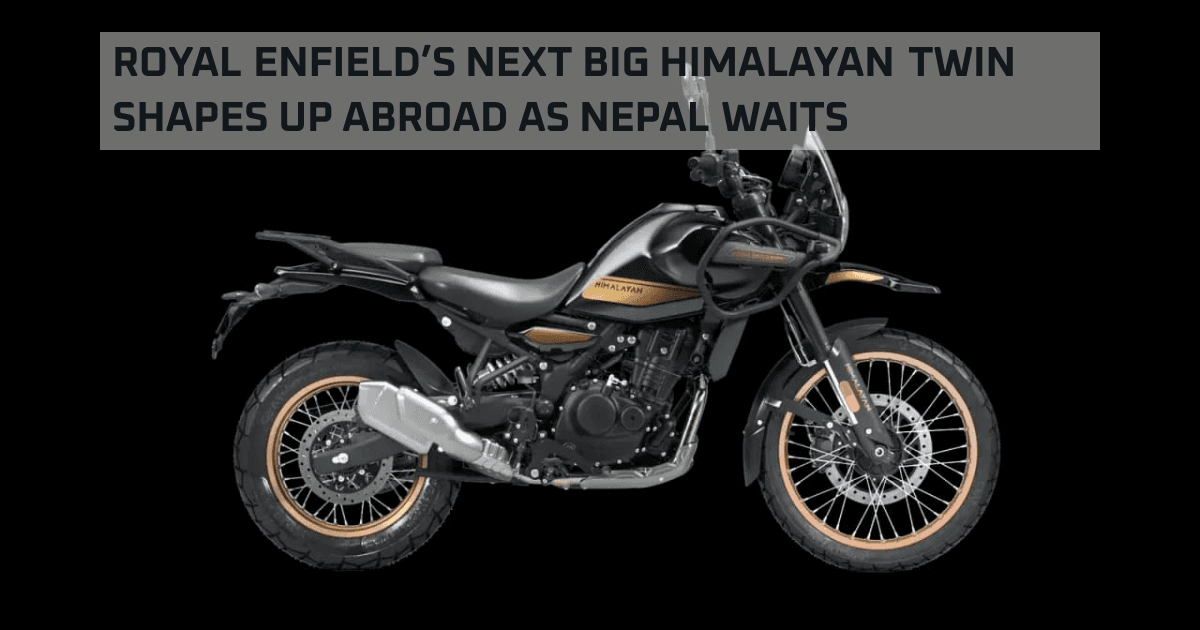
The obvious internal comparison is the Himalayan 450, and Royal Enfield has deliberately built the Scram 440 to sit beneath it rather than compete with it directly. The Himalayan 450 brings a larger 21-inch front wheel for serious off-road capability, a taller and more spacious riding position, and a more sophisticated overall package — but it also costs nearly a lakh more on-road, stands taller, and is a heavier, more demanding motorcycle for shorter riders or those without prior big-bike experience. The Scram 440's 19-inch front wheel and lower seat height make it the easier bike to live with day to day, even though the Himalayan 450 remains the more capable machine the moment the terrain gets genuinely difficult. For buyers who found the Himalayan 450 intimidating on price, height, or complexity, the Scram 440 is precisely the alternative Royal Enfield built it to be.
The Royal Enfield Meteor 350 Is The Easier, Cheaper Cruiser Alternative
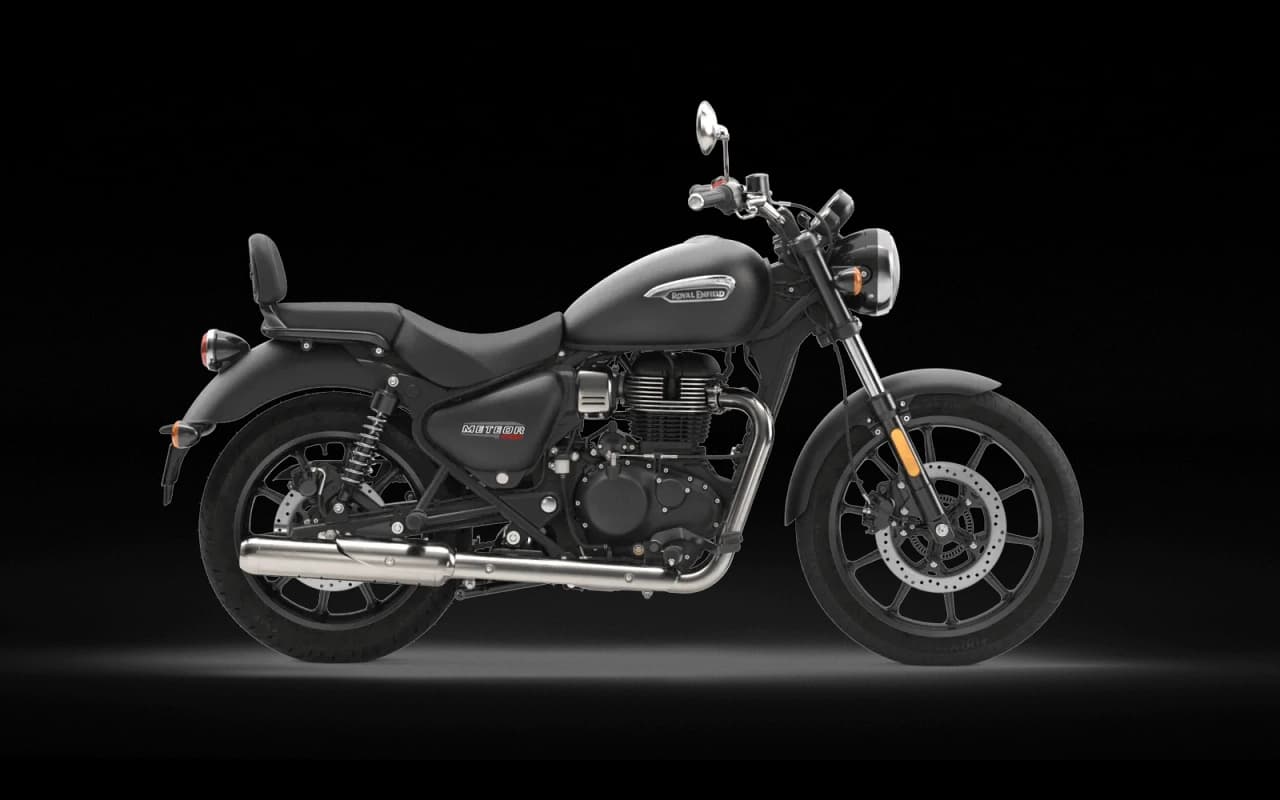
Buyers cross-shopping within Royal Enfield's Nepal range sometimes also look at the Meteor 350, a more road-focused cruiser rather than an adventure-styled machine. The Meteor 350 is generally priced lower and easier still to manage for absolute beginners, but it lacks the ground clearance, suspension travel, and touring-oriented frame stiffening that make the Scram 440 genuinely usable off the beaten path. Anyone whose riding plans include gravel roads, hill sections, or rough tracks between towns will find the Scram 440's larger engine and adventure-tuned chassis a better long-term fit, while the Meteor 350 remains the better choice for riders who know they'll stick almost entirely to paved roads.
Our Verdict: An Honest, Accessible Way Into Bigger Motorcycling

The Scram 440 doesn't pretend to be something it isn't. It's not the most refined engine in its class, the clutch lever demands more effort than it should in stop-start traffic, and the electronics package is bare by current standards. But none of that undermines what the bike is actually trying to do: give Nepali riders an accessible, honestly priced route into Royal Enfield's newer 440-platform engine, wrapped in a chassis that's easy to live with in the city and capable enough to handle a proper touring trip on weekends.
At Rs 6.89 lakh to Rs 6.99 lakh ex-showroom, it undercuts the Himalayan 450 by a significant margin while retaining most of what actually matters for real-world riding — decent ground clearance, long-travel suspension, a sixth gear for highway comfort, and now, tubeless tyres and a frame that can carry a top box. It suits riders who want one motorcycle to handle both daily commuting and long-distance travel without the size, weight, and cost of a full-sized adventure tourer, and it's a particularly sensible option for shorter riders or first-time big-bike buyers who found the Himalayan 450 a step too far. It won't impress anyone chasing outright performance or a loaded feature list, but as a practical, dependable everyday companion that can double as a tourer, it earns its place in Nepal's Royal Enfield line-up.
Writes on vehicle pricing, taxation and the Nepali auto market from ongoing tracking of distributor price lists. Editorial policy.