Where This Bajaj Sits In Nepal's Crowded 125cc Class
The 125cc commuter segment in Nepal has quietly become one of the most competitive corners of the market. The Pulsar N125 arrives here in 2026 through HH Bajaj as the brand's answer to buyers who want something more engaging than a basic runabout but are not ready to stretch to a 150. It is priced between Rs 2.98 lakh and Rs 3.17 lakh ex-showroom across its three variants. That puts it in premium 125 territory, a bracket reshaped in recent years by bikes promising sportier styling, better tech, and a more spirited ride than the traditional 125cc workhorse.
This is not a bike for someone who only wants the cheapest commute. It is aimed at buyers who want the Pulsar name, the Pulsar attitude, and a motorcycle that feels alive under them even in bumper-to-bumper city traffic.
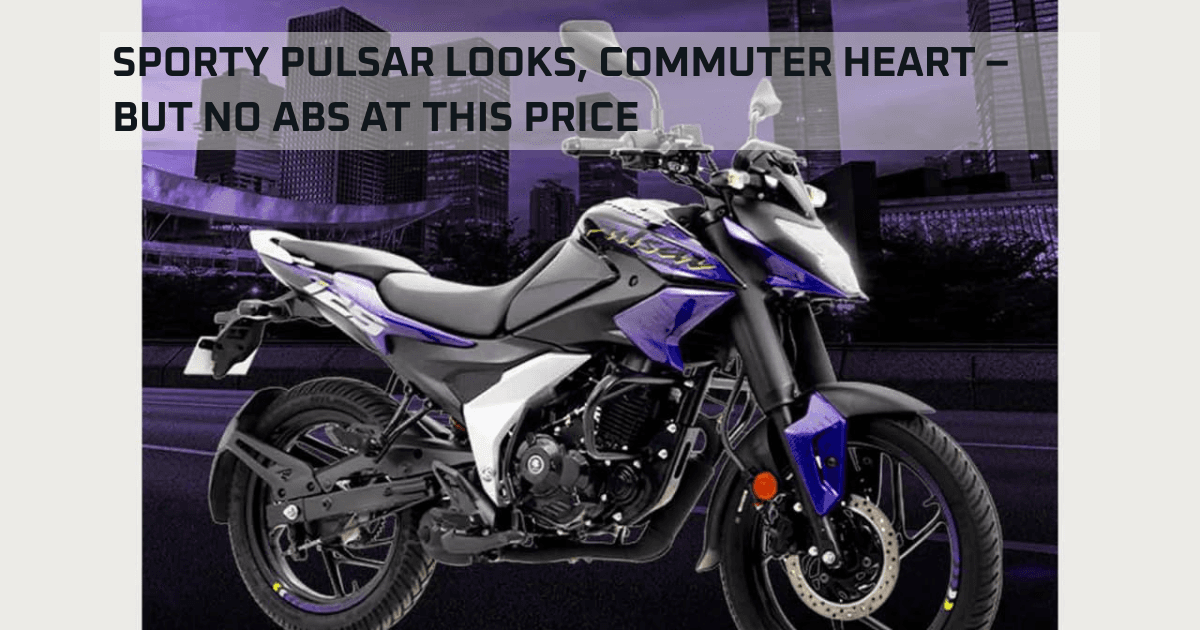
Sharp Shrouds, Spindly Forks, And A Stance That Grows On You
The N125's design did not win us over instantly, and it may not win over every showroom browser either. But it is the kind of styling that improves with familiarity.
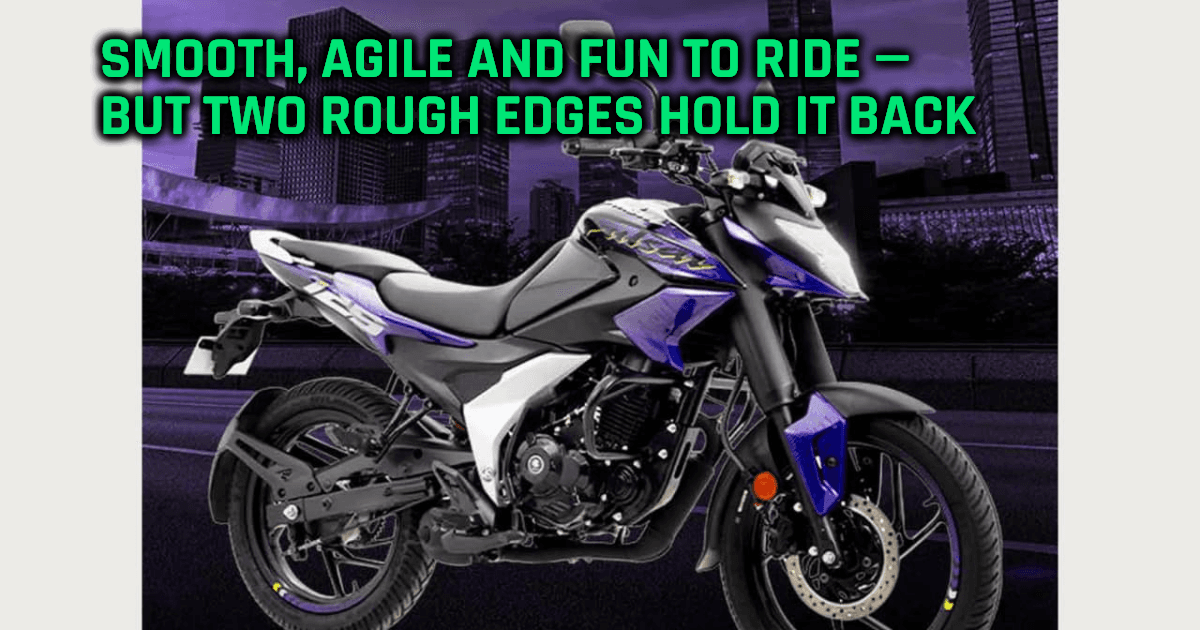
The tank shrouds are sharp and angular, giving the bike a sporty, aggressive stance from most angles, and the headlight design has a modern, faceted look that echoes what other manufacturers have done with their small-displacement streetfighters. It photographs well. Outside a college or office, it looks purposeful.
The front end is where the design falls short. The telescopic forks are genuinely slim, and Bajaj has wrapped them in cosmetic plastic sleeves to make them look thicker. It is a cheap trick that does not fully work. The sleeves look like what they are, and they make it impossible to do a quick visual check of the fork seals for oil leaks, something any owner or mechanic would want to do periodically on a bike that will spend its life in Kathmandu traffic and monsoon roads. Build quality otherwise feels tight, with no rattling or looseness worth flagging on a new model.
Only One Real Colour Story On Test
The unit we examined at dealer level wears a black and purple scheme, finished off with '125' graphics on the rear cowl. It leans into the sporty positioning rather than a plain-commuter palette.
It is a strong combination that suits the aggressive shroud design. Buyers should check with HH Bajaj showrooms on the full colour spread across variants, as availability can vary by trim and batch.
A Feature Set That Feels Borrowed, Not Bespoke
The instrument cluster is a big monochrome LCD with Bluetooth connectivity on the higher trims, bringing call accept/reject and missed-call and SMS notifications to the dash. Useful, modern conveniences for a bike in this price band.
The catch is that this display is a parts-bin unit shared across several other Bajaj models, so it does not feel like anything designed specifically for the N125's sportier character. The base LED Disc variant drops Bluetooth altogether and runs a smaller LCD instead. That matters if connected features are a priority.
Switchgear is functional day to day, though we would flag that the 'M' button on the left cluster, used to cycle display functions, proved fragile enough to break internally and fall into its own housing on an early test unit. That is the kind of early-production niggle worth watching for as more units land in Nepal. It may well be sorted in later batches, but it is not a reassuring first impression on a switch a rider uses constantly.
The headlight is genuinely bright enough for real-world night riding. That matters more to most buyers than any of the above.
The Engine Is The Best Reason To Buy This Bike
This is where the N125 earns its keep. The 124.58cc air-cooled, fuel-injected single makes a modest 12 PS at 8,500 rpm and 11 Nm at 6,000 rpm on paper, but the number that matters is how it delivers that power: with almost no vibration through the bars, pegs or seat all the way up to 95 km/h.
For a small-displacement single, that is a remarkable achievement. It changes the character of the whole bike. This does not feel like a cheap commuter engine turned up a notch. It feels genuinely refined.
It is also happy to sit at 85 km/h on the highway without feeling strained, running quietly enough that sustained cruising does not become a chore, which is more than can be said for most 125s that start to buzz and protest past 70. The clutch is light, and the five-speed gearbox shifts with a slick, positive action that suits both stop-start city riding and longer stretches. The counter-balancer clearly earns its place in the spec sheet.
It is not flawless. At very low speeds, rolling the throttle on and off can feel slightly jerky, an odd trait on an otherwise silky engine. There is also a step in the mid-range torque delivery that can trick a rider into thinking they need to downshift when they do not. Sporty riders chasing that step may end up hunting gears unnecessarily.
Neither issue is a dealbreaker. They are worth knowing before you ride one.
Handling That Feels Genuinely Sporty, Not Just Styled That Way
The suspension setup uses telescopic forks with 125mm of stroke up front and a preload-adjustable monoshock at the rear, also with 125mm of travel. It is tuned nicely for Nepali roads. Small bumps and broken patches disappear underneath the bike with a plushness that belies the price point, and larger hits are controlled well enough that the bike does not crash through or bottom out easily.
What stands out most, though, is how alert and light the chassis feels. This is a brand-new frame, and it shows in how quickly the bike reacts to rider input. It is genuinely fun to flick through traffic gaps or tip into a corner, in a way that basic 125cc commuters simply are not built to be. The claimed best-in-class power-to-weight figure of 96 PS per ton backs up what the seat of the pants tells you.
Tyres are 80/100-17 up front and either 110/80-17 or 100/90-17 at the rear depending on variant. They grip well in dry conditions. We have not been able to assess wet-weather behaviour, so treat that as an open question for monsoon riders.
The Seat Is The One Thing Almost Every Rider Will Notice
At 795mm, the seat height is low and unintimidating, which will suit shorter riders and anyone new to biking. That is a genuine practical plus in a market where inseam variety is high.
Unfortunately, that is where the good news about the seat ends. The foam is very stiff, which should mean it lasts well over the years but also means it needs somewhere between 1,000 and 2,000 km of use before it softens into something comfortable. That is a long break-in period to ask of a new owner.
More problematic is the shape. The seat slopes forward, locking the rider into a single riding position with little room to shift around, and its convex profile concentrates pressure right in the middle of the glutes. In practice, that translates to real discomfort after roughly 20 minutes in the saddle. It is fine for short commutes across town. For longer weekend rides out of the valley, it is a real limitation.
Braking Is Strong, But The Missing Safety Net Matters
The 240mm front disc brake is a highlight. It offers strong stopping power with good feedback at the lever, giving riders confidence in Kathmandu's unpredictable traffic. Both variants get this disc as standard, paired with a 130mm rear drum under CBS.
What is conspicuously absent is single-channel ABS on either variant. For a motorcycle positioned as the sporty, engaging option in its class, that is a harder omission to defend in 2026 than it might have been a few years ago, especially as rival offerings in the same price bracket increasingly treat ABS as a given rather than a premium extra. It does not make the N125 unsafe, but it does mean cautious buyers, or those riding two-up regularly on wet or gravelly roads, should weigh this seriously.
Living With It Day To Day
Where the N125 is unambiguously good is as a daily companion for city riding. The light weight, easy low-speed manners and quick reflexes make weaving through Kathmandu or Pokhara traffic genuinely stress-free rather than a chore, and the 9.5-litre tank should support long stretches between fuel stops for most commuters.
The one practicality miss is the grab rail, which has a central weight-saving cutout that looks good on a spec sheet but makes securing a bag or tiffin box with a bungee cord needlessly fiddly. A second mounting point would have cost Bajaj almost nothing and solved the problem entirely.
Which Variant Actually Makes Sense To Buy
Of the three listed variants, the LED Disc at Rs 2.97 lakh is the sensible entry point, giving you the same 124.58cc engine and front disc brake as the rest of the range, just without Bluetooth and with the smaller LCD display. Stepping up to the LED Disc BT or the N 125, both at Rs 3.16,900, buys you Bluetooth connectivity, the bigger monochrome LCD with call and SMS alerts, and, on the top trim, a wider rear tyre for a bit more contact patch and stability.
Given the roughly Rs 19,000 gap, we would lean toward the BT variant for most buyers. The connected features and larger display feel worth the difference. The base bike remains a legitimate budget-conscious choice for anyone who genuinely does not care about Bluetooth.
The Hero Xtreme 125R Undercuts It On Safety
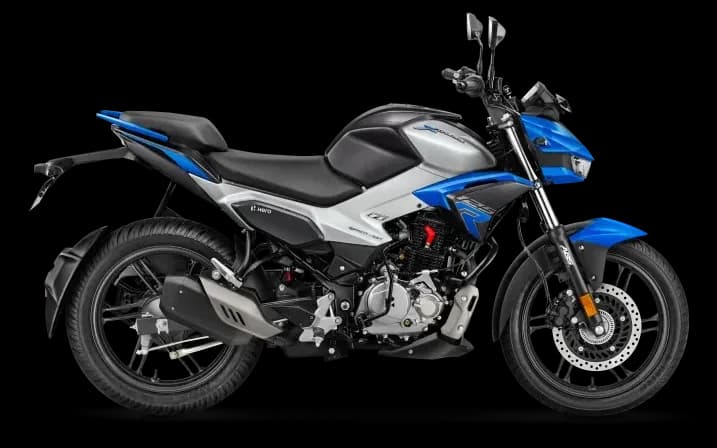
The most direct threat to the N125 in Nepal is the Hero Xtreme 125R, and the comparison is not flattering for Bajaj on one specific point: the Xtreme 125R offers single-channel ABS, which the entire Pulsar N125 range goes without. For buyers who treat ABS as non-negotiable, that single difference could decide the purchase regardless of how the two bikes otherwise compare on engine character or handling.
The TVS Raider Created The Segment This Bike Is Chasing
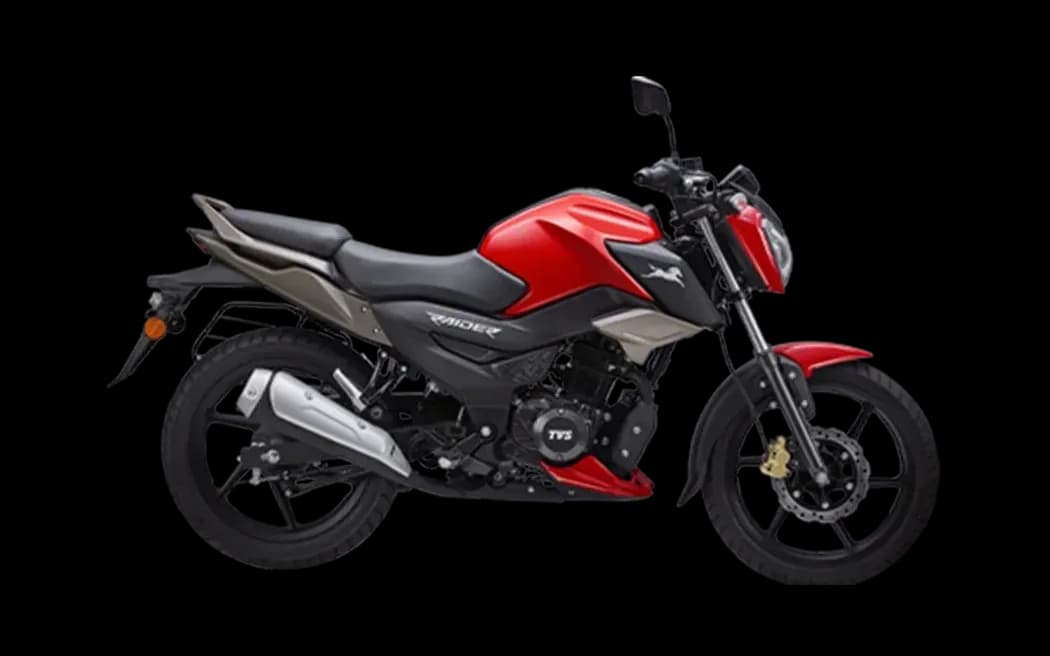
It is worth remembering that the TVS Raider is the bike that effectively established this "125cc but sportier than a commuter" category in the first place, and it remains a benchmark for feel-good performance and youthful styling in the segment. The N125 does not copy the Raider, but it is clearly playing in the space the Raider opened up.
Shoppers cross-referencing one should test-ride the other.
The Honda Shine Trades Excitement For Simplicity And Weight
At the more basic end of the 125cc spectrum sits the Honda Shine, a straightforward commuter that is about 10 kg lighter than the N125 and prioritises simplicity over sportiness. If you want the lowest-fuss ownership experience and do not care about a sporty riding feel, the Shine remains the safer, simpler choice.
It cannot match the N125 for outright riding enjoyment or road presence.
Our Verdict: A Genuinely Fun 125 With Two Fixable Flaws
The Bajaj Pulsar N125 is, at its core, an excellent motorcycle to actually ride. The engine is smoother than anything else we would expect at this price, the chassis is light and eager, and the suspension strikes a rare balance between comfort and control for a 125cc machine. Those three things alone make it a genuinely enjoyable daily companion in Nepali traffic.
But it asks buyers to look past a seat that will bother anyone on rides longer than twenty minutes, cosmetic fork sleeves that compromise basic maintenance checks, and, most seriously, the absence of ABS in a market where that safety feature is becoming standard expectation rather than a luxury. For the rider who prioritises ride quality and character above all else and is comfortable trading away that safety net, the N125 is a strong, likeable machine.
For anyone who wants ABS as a baseline, the Hero Xtreme 125R remains the more cautious recommendation.
Writes on vehicle pricing, taxation and the Nepali auto market from ongoing tracking of distributor price lists. Editorial policy.