Start with the numbers
The model, at a glance
Available variants, with prices in Nepalese rupees.
| Vehicle | Ex-showroom price | Fuel | Selected variant |
|---|---|---|---|
| 01Bajaj Discover 125 | Rs 2.57 lakh | Petrol | Discover 125 Drum |
Ex-showroom prices exclude registration, road tax and insurance. Specifications can vary by trim. See individual source-check dates ↓
Where The Discover 125 Fits In Nepal's Commuter Lineup
Bajaj's Discover 125 has been sold in Nepal since 2018 through Hansraj Hulaschand & Co. Pvt. Ltd., known locally as HH Bajaj. It sits in the crowded 125cc commuter segment, the class of bike most Nepali households actually buy: something that handles a daily office run, tolerates broken rural tarmac, and doesn't eat into the monthly budget at the pump. At Rs 2.57 lakh ex-showroom for the Discover 125 Drum, it's priced to compete directly with other sub-125cc workhorses rather than anything styled as premium.
This review covers the Discover 125 Drum, the only variant HH Bajaj currently offers in Nepal. There is no disc-brake trim listed here, so every spec and every recommendation below applies specifically to the Drum.
- 68 km/l claimed mileage cuts daily fuel spend
- CBS links front and rear drum brakes against skids
- 165 mm ground clearance shrugs off speed bumps
- Nitrox rear shock tuned for rough rural roads
- Small 8-litre fuel tank means frequent fuel stops
- Halogen headlamp lacks the LED units rivals now fit
- Engine vibration sets in once past 60-65 kmph
Looks That Lean On Graphics, Not Gadgetry
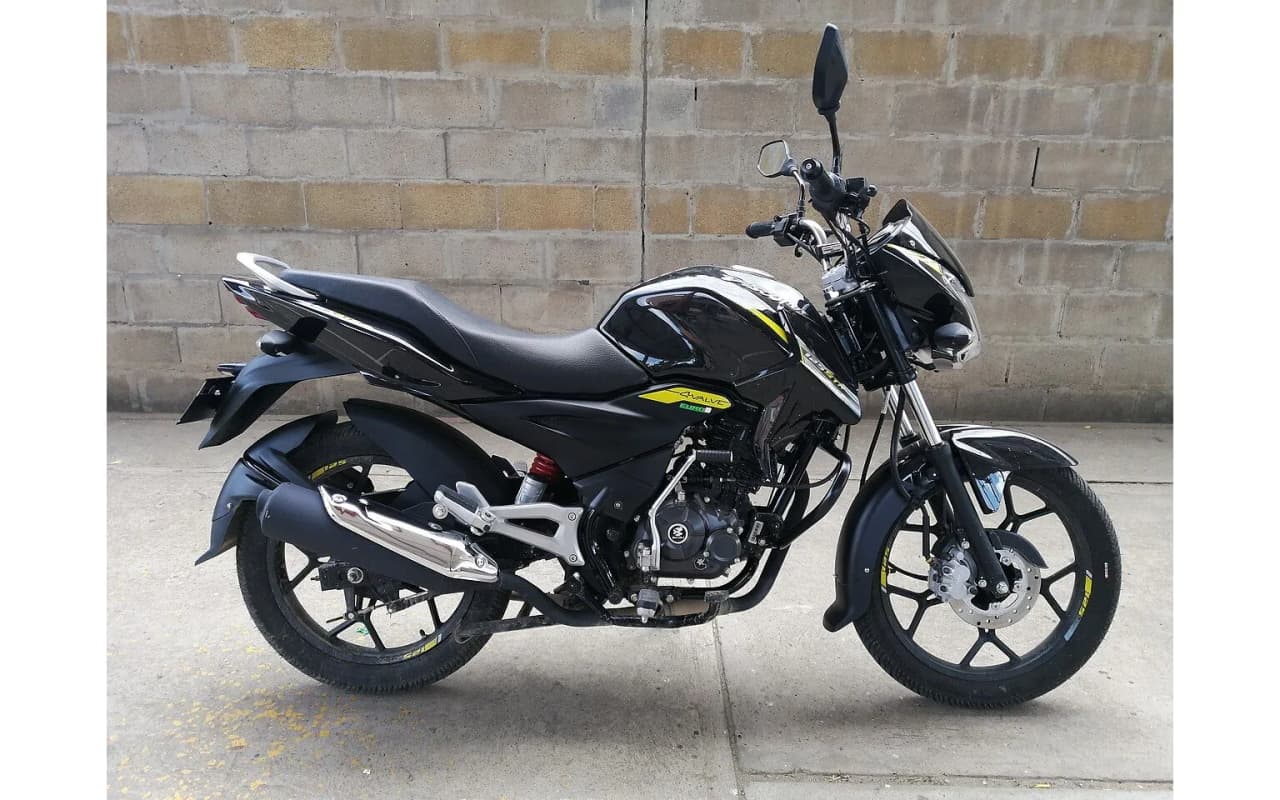
The Discover 125 doesn't try to look like anything other than what it is: a practical commuter with just enough visual flourish to not feel basic. The fuel tank and side panels carry bold graphic decals, and the bike we'd point buyers toward wears a black body with red and silver detailing, giving it a sportier edge than the plain single-tone commuters it competes against.
The 17-inch black alloy wheels are a genuine styling win at this price point, and the tail light's three-step bezel design does a convincing job of mimicking a proper LED cluster even though the actual lighting elsewhere is still halogen. A matte black rear grab rail ties the rear end together and adds a bit of visual weight without looking bolted-on. Build quality across the panels and welds feels appropriate for the segment: nothing flashy, nothing that feels cut-rate either.
A Semi-Digital Cockpit With One Clever Lighting Trick
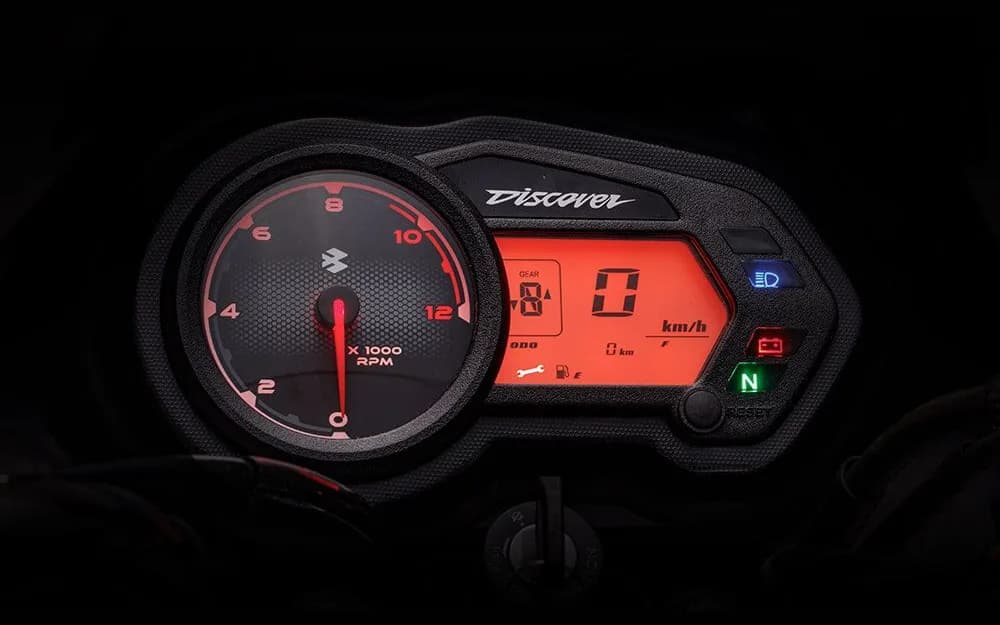
The instrument cluster mixes an analog tachometer with a digital screen that handles speed, fuel level, odometer and trip meter. It's a sensible split: riders who want to watch revs get a real needle, and the digital half keeps the rest legible and uncluttered. Tell-tale lamps cover neutral, battery charge status, high beam and turn signals, so nothing critical is buried in a menu.
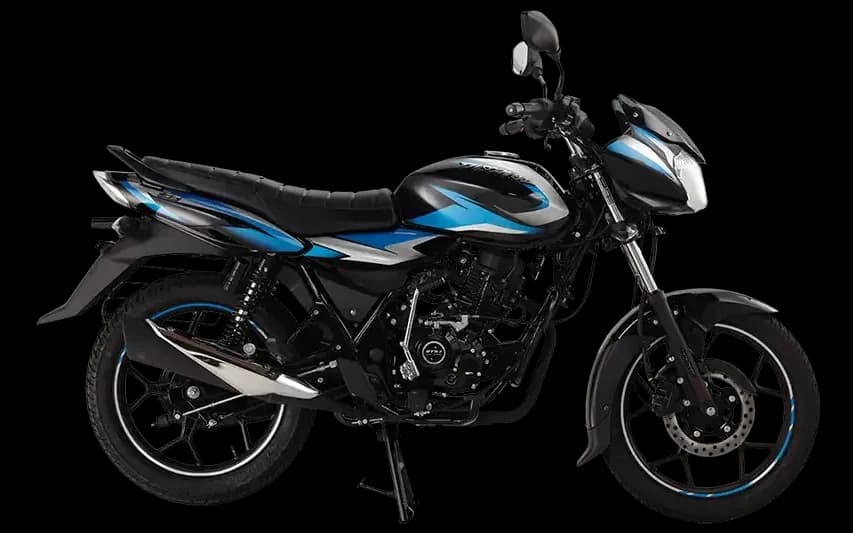
The genuinely useful piece of engineering here is the DC headlight setup. Because it runs off direct current rather than drawing straight from the alternator output like many budget commuters, it doesn't flicker at idle or low revs, a problem older Discover owners will recognise from AC-headlamp bikes. LED daytime running lights sit alongside the halogen main beam and operate independently, so the bike announces itself in daylight without draining extra load off the main headlight circuit. It is still a halogen bulb doing the night-time work though, and that is the one piece of the equipment list that reads dated against newer 125cc launches.
On the handlebar, a dedicated headlight ON/OFF switch is a small but genuinely practical inclusion for riders who want to save the battery on short daylight trips, and bar-end weights help damp vibration transferred up from the engine.
The DTS-i Engine: Efficient First, Quick Second
Power comes from a 124.5cc single-cylinder, air-cooled engine running Bajaj's DTS-i twin-spark technology, putting out 11 PS at 7,500 rpm and 11 Nm of torque at 5,500 rpm. These aren't numbers built to impress on paper, and they're not meant to. The DTS-i system exists to get cleaner, more complete combustion out of a small engine, and that shows up less in outright performance and more in the fuel bill.
A 5-speed gearbox uses the familiar 1-down, 4-up pattern, and both electric start and kick-start are fitted, which matters in Nepal where cold mornings and the occasional flat battery still make a kick-start a genuine backup rather than a redundant afterthought. Low and mid-range power delivery is smooth and usable up to around 60-65 kmph, which covers the bulk of city and highway commuting speeds. Push beyond that and the engine starts to vibrate noticeably through the pegs and bars, a trait common to small-capacity air-cooled singles but one that buyers planning longer highway stretches should factor in. This is not a bike built to be ridden flat out; it's built to be ridden efficiently.
Suspension Tuned For Rural Roads, Not Smooth Tarmac
Up front, 140 mm of telescopic fork travel handles the initial hit from potholes and broken edges reasonably well. At the rear, a Nitrox gas-charged shock with 120 mm of travel is the more interesting piece of engineering, offering notably longer travel than many rivals in this class manage, which translates into fewer harsh jolts through the seat on rutted rural roads.
Ground clearance of 165 mm is generous for the segment and means speed bumps, half-built road edges and uneven monsoon patches rarely bottom the bike out, a real consideration anywhere outside the Ring Road. Rearview mirrors are sharply shaped and give a genuinely wide field of vision behind, which matters more than it sounds on narrow Nepali lanes where overtaking traffic appears fast. Overall the chassis and suspension package reads as built for exactly the kind of mixed city-and-rural use that dominates Nepali ownership, rather than tuned for fast, smooth highway stretches.
A Seat Built For Long Days, Not Short Riders Only
The riding position is upright and relaxed, with handlebar geometry that doesn't force a crouch or a stretch. The single-piece seat is long and well-cushioned, giving both rider and pillion genuine room rather than a token perch at the back. At 805 mm, seat height is low enough that most riders can get both feet flat on the ground at a stop, which matters for nervous or shorter riders navigating traffic.
A heel-and-toe gear shifter is a small but genuinely appreciated touch for daily riders, since it protects shoes from the scuffing that a standard toe-only lever causes over months of commuting. Switchgear quality on the handlebar itself is only average, not bad, but not the tightest-feeling control stalks in the segment either.
Braking Comes With CBS, Not With A Disc
Braking on the Discover 125 Drum relies on a 130 mm rear drum brake and a front drum brake, linked by Bajaj's Anti-Skid Braking System, essentially a combined braking system (CBS) using dual mechanical cables rather than hydraulics. The point of this setup is to reduce the chance of wheel lockup under hard or panicked braking, applying both front and rear brakes together instead of leaving the rider to balance them manually. For a commuter bike that will spend plenty of time in stop-start city traffic, that's a meaningful safety net, and it's one of the most consistently praised parts of the package.
It's worth being clear that this is the Drum variant: there's no disc brake on the model sold in Nepal today, and tyres are tube-type rather than tubeless, a cost-saving choice that keeps the price down but means punctures take longer to fix roadside. Front and rear tyre sizes are 80/100-17 and 100/90-17 respectively.
Living With An 8-Litre Tank
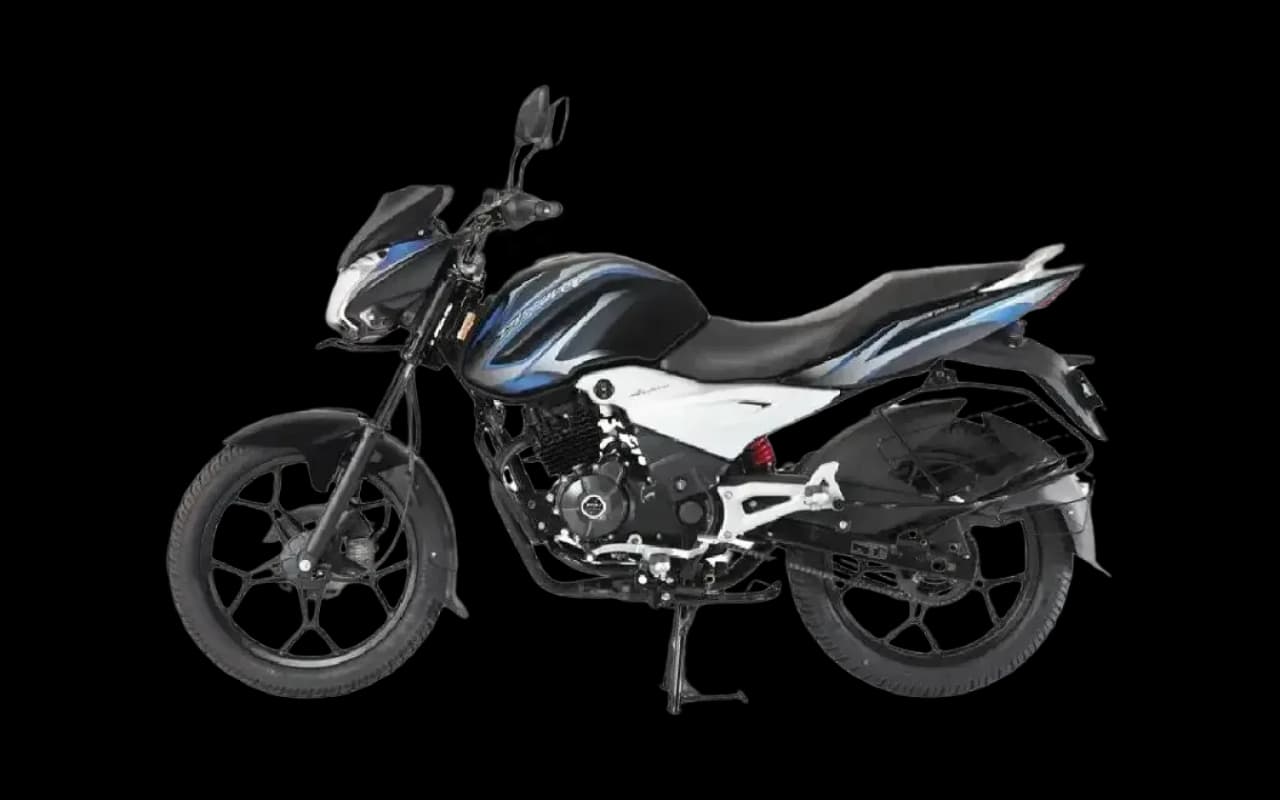
The single biggest practical compromise on this bike is tank size. At 8 litres, it's smaller than many direct 125cc rivals, which commonly carry 10 litres or more, and it means more frequent stops on longer trips even with strong fuel economy working in its favour. Riders doing regular intercity runs will feel this more than city-only commuters will.
Fixed-type turn indicators are another small but real annoyance: unlike flexible stalk-mounted indicators on some rivals, these are more prone to cracking if the bike is dropped or bumped in tight parking. Neither issue is a dealbreaker, but both are the kind of detail that shows where Bajaj has trimmed cost to hold the price down.
What It Actually Costs To Run
This is where the Discover 125 earns its keep. Claimed mileage sits at 68 km/l, and real-world figures commonly reported by owners run in the 60-65 km/l range, both of which are strong numbers for the class and translate directly into lower weekly fuel spend, a genuine consideration with Nepal's fuel prices. Buyers consistently rank fuel economy as their top priority in this segment, and the Discover 125 delivers on exactly that metric.
Spare parts are cheap and widely stocked, and HH Bajaj's service network is considered one of the more dependable options for riders outside the Kathmandu valley, which matters enormously for a bike aimed at rural and semi-urban buyers. Bajaj's two-wheeler network nationally runs to 171 showrooms and 149 service centres, spread across cities including Kathmandu, Lalitpur, Pokhara, Bharatpur, Biratnagar, Birgunj, Butwal and Janakpur for sales, with service coverage reaching smaller towns like Birtamode, Dhangadhi, Inaruwa and Barabise. For a buyer worried about finding a mechanic outside the valley, that reach counts for a lot.
Resale on the Discover 125 also holds up well against other 125cc competitors in the used market. Our own used-price model estimates a 3-year-old bike in good condition with a single owner and typical mileage retaining roughly Rs 1.37 lakh to Rs 1.67 lakh, around 59% of its confirmed entry price. That estimate is built from 12 comparable listings and should be read as a guide, not a guarantee, but it's a healthy figure for the class.
The Only Variant On Sale, And Why It's The One To Buy
There is just one trim available in Nepal right now: the Discover 125 Drum at Rs 2.57 lakh ex-showroom. It comes with the 124.5cc DTS-i engine producing 11 PS and 11 Nm, CBS braking across front and rear drums, 165 mm ground clearance, and a kerb weight of around 121 kg. There's no disc-brake alternative or higher-spec trim sold locally to step up to, so the buying decision here isn't about which variant, it's simply whether this bike suits your use case at all.
For buyers who want a 125cc commuter with strong fuel economy, genuinely low running costs, and a service network that reaches well beyond the main cities, the Discover 125 Drum is a straightforward, sensible buy at its price.
The Hero Super Splendor Brings A Near-Identical Engine
The Hero Super Splendor is arguably the most direct rival on paper, running a 124.7cc engine against the Discover's 124.5cc, essentially the same displacement class with a different badge. Pricing between the two hasn't been confirmed on our side for a clean comparison, so we won't rank them on cost. What we can say is that the Super Splendor has built its reputation on the same pillars the Discover leans on: low maintenance, dependable long-distance mileage, and wide parts availability. Buyers cross-shopping these two are really choosing between two very similar value propositions and should let dealer proximity and service experience in their own district settle it.
The Hero Super Splendor Xtec Adds Kit At An Unconfirmed Premium
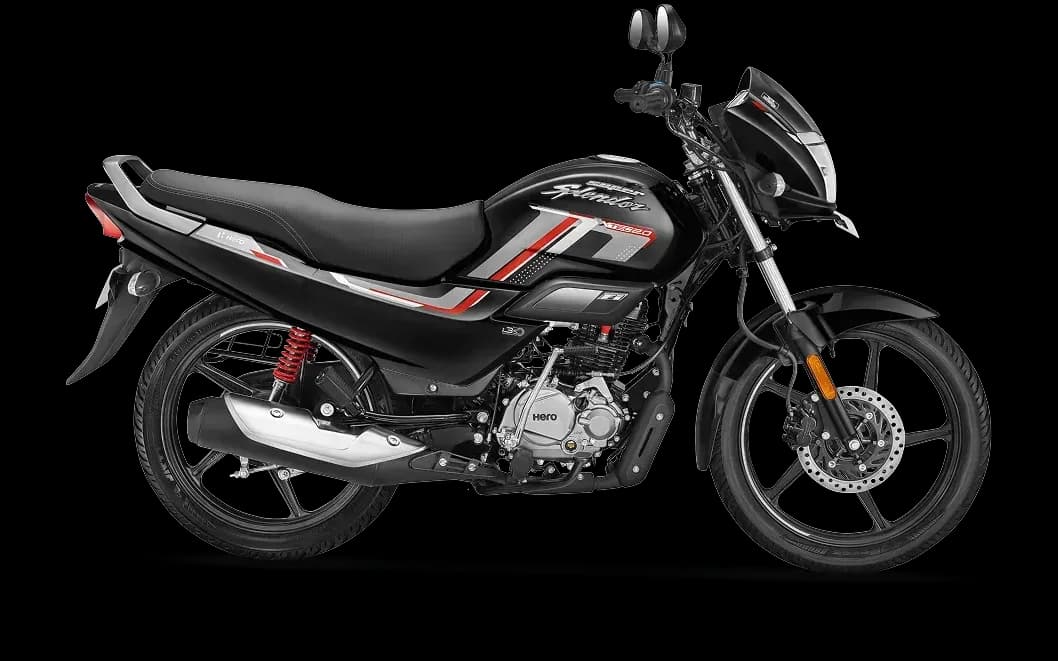
Stepping up within Hero's own range, the Hero Super Splendor Xtec carries the same 124.7cc engine but adds a more modern features list, typically including a bigger digital display and connectivity touches that the standard Super Splendor skips. Price comparison against the Discover 125 isn't confirmed in our data, so we can't say definitively which costs more locally, but buyers who want their 125cc commuter to feel a little more contemporary inside the cockpit should at least cross-check the Xtec before settling on the Discover's semi-digital cluster.
The TVS Max 125 Matches It Almost Spec For Spec
The TVS Max 125 is the closest displacement match of the three rivals, running the identical 124.5cc figure as the Discover 125. TVS has built the Max 125 around a similar brief: a durable commuter rather than a performance machine, with an emphasis on load-carrying and everyday reliability rather than outright speed. Again, price comparison isn't confirmed between the two models in our data, so the deciding factor for most buyers will come down to showroom experience, local parts availability, and which brand's service network is stronger in their specific district.
Verdict: Who Should Actually Buy This
The Bajaj Discover 125 is not trying to be exciting, and that's rather the point. It's built around one core promise: low cost of ownership, delivered through strong fuel economy, cheap parts, and a service network that genuinely reaches rural Nepal. CBS braking, generous ground clearance and a comfortable long-haul seat back up that promise with real substance, not just marketing.
The honest limitations are the small 8-litre tank, a halogen headlamp that feels behind the curve, and engine vibration that shows up once speeds climb past 60-65 kmph. None of these are dealbreakers for a bike built around city and rural commuting rather than highway touring, but buyers planning frequent long intercity rides should weigh the tank size carefully.
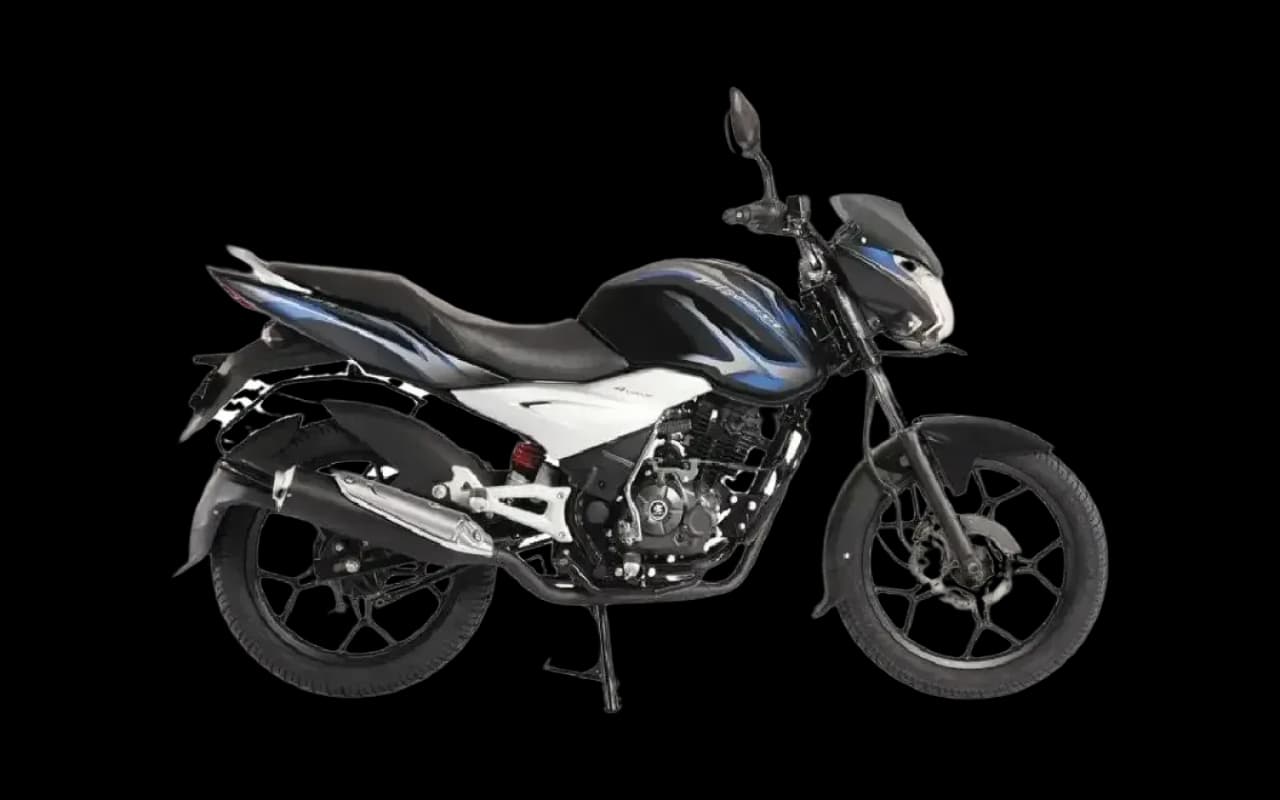
If daily running cost and dependable after-sales support matter more to you than a feature sheet or outright refinement, the Discover 125 Drum remains a genuinely sound choice, and one of the more sensible ways to spend Rs 2.57 lakh in this segment.
For the current variant-wise figures, see our Bajaj Discover 125 price in Nepal page — it is updated whenever the distributor changes a price.
Frequently asked questions
What is the mileage of a Bajaj Discover 125cc? Bajaj claims 68 km/l for the Discover 125. This is the official claimed figure; actual mileage will vary with riding style and road conditions.
Is the Bajaj Discover 125 discontinued? Our data shows the Discover 125 Drum is currently listed by HH Bajaj in Nepal at Rs 2.57 lakh ex-showroom, with no indication in our records of discontinuation.
What is the reserve capacity of Discover 125? Our verified data does not disclose a separate reserve fuel capacity figure for the Discover 125.
Bajaj Discover 125 new model 2026? Our data does not show a new or updated Discover 125 model for 2026; the current Nepal lineup remains the Discover 125 Drum.
Discover 125 ST mileage per liter? Our verified data for the Discover 125 sold in Nepal lists a claimed mileage of 68 km/l; we do not have separate figures for an ST variant.
Real buyers, real ownership
What owners are saying
Compiled owner and buyer discussion for this vehicle — likes, complaints and the questions buyers ask.
Explore full specifications, variants & ownership context
Know the product
Key specifications, features & ownership context
Choose a variant to see its recorded specifications and features. Equipment and prices can change across trims.
Latest catalog and directory records supplement the original analysis. Figures may have changed since publication; individual specification and price-check dates appear below.
Rs 2.57 lakh ex-showroom · source checked 15 Nov 2026
Engine & performance
| Specification / feature | Discover 125 Drum |
|---|---|
| Engine displacement | 124.5 ccVerified specification · 11 Nov 2026 |
| Max power | 11 PSVerified specification · 11 Nov 2026 |
Brakes, tyres & suspension
| Specification / feature | Discover 125 Drum |
|---|---|
| ABS | CBSVerified specification · 11 Nov 2026 |
Dimensions & weight
| Specification / feature | Discover 125 Drum |
|---|---|
| Ground clearance | 165 mmVerified specification · 11 Nov 2026 |
Showroom & service support
Distributor: Hansraj Hulaschand & Co. Pvt. Ltd. (HH Bajaj)
Bajaj showrooms in Kathmandu (171 showrooms nationwide) · Bajaj service centers in Kathmandu (149 service locations nationwide)
Listed cities include Aanbu Khaireni, Attariya, Baglung, Banepa, Banepa New, Banganga and 88 more.
Brand-wide directory coverage. Confirm that your nearest workshop supports this exact model, powertrain and warranty work; ask about parts availability and booking time.
Market buzz & buyer priorities
Compiled discussion, including buyer reactions and ownership reports; this is not a verified owner survey or a reliability score. Research dated 1 Oct 2026.
What people like
- Excellent fuel economy suitable for long-distance daily commuting
- Widely available and affordable spare parts in all districts of Nepal
- High resale value compared to other 125cc competitors
More feedback
- Comfortable seating position for both rider and pillion on city roads
Concerns to investigate
- need for better features like LED lights
- Noticable engine vibrations once the speed exceeds 60 kmph
- Outdated halogen headlight design compared to newer LED-equipped models
More feedback
- Suspension can feel stiff when navigating large potholes or unpaved sections
- The Discover 125 receives less enthusiasm for styling and modern appeal than newer 125cc motorcycles.
What buyers ask for
- Maximum mileage per liter of petrol
- Ease of finding a mechanic in small towns
- Durability of the metal body and components
More feedback
- Low initial cost and affordable monthly servicing
Nepal ownership context
- HH Bajaj's service network is considered the most reliable for maintenance in rural Nepal
- The 125cc engine is preferred over the 150cc segment by Nepali buyers looking to balance power with high fuel prices
- Commonly used as a utility bike for small business deliveries due to its durability
More feedback
- Nepali buyers compare the Discover 125 mainly on mileage, routine maintenance cost, spare-parts access, resale value, and performance on uneven urban roads.
- Its 125cc displacement keeps it in a practical commuter category for Nepal, while buyers seeking stronger uphill performance may compare it with larger-capacity motorcycles.
- On-road cost is higher than ex-showroom price because registration, insurance, road-related charges, and other local fees vary by province and buyer circumstances.
Use these facts alongside the article’s full analysis. Check the final quotation, warranty terms and exact equipment before booking.
Evidence & next steps
Check the details before you buy
Use this guide to build a shortlist. Ask for a written quotation for your chosen variant, including registration, taxes, insurance and finance charges. Confirm the nearest authorised workshop supports that model.
Price sources and dates
These are the recorded distributor-source checks for the selected overview trims. They are separate from the article update and catalog read dates; they do not mean every trim was rechecked today. Confirm the final price with the distributor.
Overview photos come from the corresponding model records; additional article photos carry their own credits. Running costs depend on usage, energy prices, maintenance, insurance and resale value.