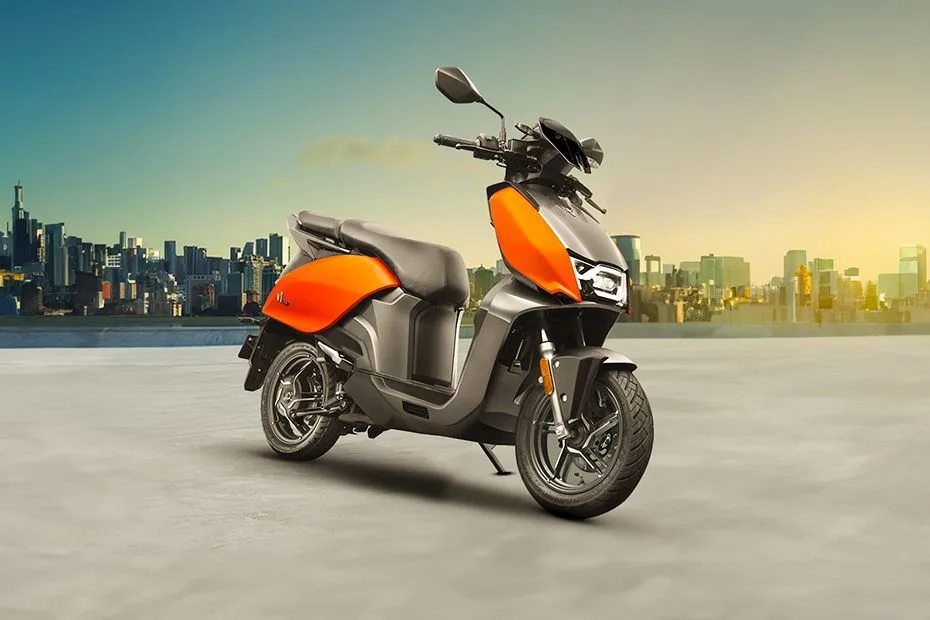
About the Hero VIDA V1 EV
Hero’s VIDA V1 Pro arrives in Nepal as a modern, tech‑laden electric scooter positioned at the premium end of the EV two‑wheeler market, aimed at buyers who usually consider compact cars or high‑quality petrol scooters. With a strong claimed range, fast acceleration and a rich feature set, it offers an urban-friendly alternative to rising fuel costs and congested city traffic while still feeling like a serious, full‑size machine rather than a compromise commuter.
Design & styling
The VIDA V1 Pro has been styled to look like a contemporary, full‑bodied scooter rather than a quirky science project, which helps it appeal to car buyers who are used to mature, cohesive design. Its clean body panels, integrated LED lighting and distinctive front fascia give it a modern, slightly futuristic look that stands out in Kathmandu traffic without appearing overly flamboyant. The proportions are comparable to mainstream 110–125 cc scooters, so it does not feel toy‑like, and the flat floorboard plus practical rear section make it look ready for daily work and family duties. Color options on the Pro variant are more extensive than the Plus, including bright shades like matte orange alongside more sober whites, reds and blacks, allowing buyers to choose either an understated or expressive visual character.
Engine & performance
Instead of a petrol engine, the VIDA V1 Pro uses a permanent magnet synchronous electric motor with a peak output of about 6 kW, giving performance in the ballpark of a mid‑range 125 cc scooter in city use. Hero claims a top speed of around 80 km/h, which is sufficient for ring roads and short highway hops while keeping the focus on urban commuting rather than high‑speed touring. The Pro variant pairs this motor with a larger 3.94 kWh lithium‑ion battery, delivering a claimed 165 km IDC range on a full charge, so typical mixed city riding should comfortably cover a busy working day without range anxiety. Acceleration is brisk for an EV scooter, with a 0–40 km/h claim of about 3.2 seconds on the Pro, helped by the instant torque characteristic of electric drive and selectable riding modes such as Eco, Ride and Sport to tailor response to traffic and battery priorities.
Features, comfort & practicality
For a car‑buyer audience, the star attraction on the VIDA V1 Pro is its 7‑inch TFT touchscreen instrument cluster with Bluetooth, 4G connectivity, turn‑by‑turn navigation, Wi‑Fi and app integration, bringing a level of digital sophistication more familiar from modern cars than budget two‑wheelers. The scooter offers keyless operation, cruise control and a two‑way throttle system, which together make stop‑start urban riding and tight manoeuvres less stressful, particularly for those new to two‑wheelers. Safety and connectivity features such as GPS tracking, anti‑theft alerts and an SOS function add peace of mind when parking in crowded Nepali city areas or sending younger family members on errands. Practical elements like a flat floorboard, under‑seat storage and the ability to remove the battery on this platform are designed to suit everyday tasks such as carrying groceries and charging from typical household sockets, with home charging from 0–80% taking around 5–6 hours as per manufacturer claims.
Ownership in Nepal — price positioning, running cost & who it suits
In Nepal, the VIDA V1 range is positioned as a premium electric scooter line, with the VIDA V1 Plus listed at Rs 3,45,000 and the VIDA V1 Pro at Rs 3,95,000 ex‑showroom in your catalog, placing it above most conventional 125 cc petrol scooters and alongside other high‑spec EV rivals. That pricing targets urban buyers who might otherwise consider an entry‑level car or a high‑quality Japanese or Indian scooter, but are now weighing long‑term fuel savings and environmental benefits against the higher upfront cost. With electricity generally cheaper per kilometre than petrol, and Hero advertising strong range figures plus multi‑year warranty coverage on the vehicle and battery in India, the running‑cost proposition is particularly attractive for dense daily city use. In Nepal, the VIDA V1 Pro suits commuters in Kathmandu, Pokhara and other major cities who have predictable routes, access to home or workplace charging and value technology, refinement and brand backing from Hero more than bare‑bones low purchase price; the Plus variant at Rs 3,45,000 offers a slightly more affordable entry point with a smaller battery and lower claimed range but the same basic motor and architecture.
Verdict
For Nepali car buyers curious about downsizing to two wheels without sacrificing modern tech and a sense of quality, the VIDA V1 Pro presents as one of the more convincing electric scooter options from a mainstream brand. Its combination of usable performance, serious claimed range and a feature set that includes connected touchscreen instrumentation, cruise control and safety‑oriented telematics sets it apart from more basic EVs and many petrol scooters in the same price band. The higher purchase price versus conventional scooters means it is not a budget choice, but for owners who do significant urban mileage and can charge conveniently, the lower running costs and quieter, cleaner operation can offset that over time. As Nepal’s charging infrastructure and EV acceptance continue to grow, the VIDA V1, especially the Pro variant, is well positioned as an upmarket, future‑ready city tool that can realistically replace a second car or complement it for everyday commuting.
Editorial overview compiled from official specs and Nepali/Indian auto sources · as of 26 Jul 2026.
| Variant | Ex-showroom price |
|---|---|
| VIDA V1 Plus | रु 3,45,000 |
| VIDA V1 Pro | रु 3,95,000 |
Ex-showroom prices researched from official CG Motors Pvt. Ltd. sources.
Hero VIDA V1 EV rivals in Nepal
Other two-wheelers in Nepal priced close to the Hero VIDA V1 EV.
| Ex-showroom price (VIDA V1 Plus) | रु 3,45,000 |
| First-year road tax (351 – 1000 W) | रु 2,300 |
| Third-party insurance (Middle wattage band) | रु 1,931 |
| Estimated on-road price | रु 3,49,231 |
Engine/motor size isn't officially disclosed for this variant, so this uses a typical 400W figure for the band — enter your exact W above for a precise number. Electric two-wheeler insurance bands have no published wattage cut-offs, so the middle band is assumed — confirm the exact premium with your insurer. Third-party insurance is compulsory; comprehensive cover is optional — see the full insurance calculator or tax calculator for more detail.
Work out your exact figures: insurance calculator · EMI calculator. Bank lending rates vary (Asar 2083 (June/July 2026)); insurance figures follow the NIA motor tariff.
Variants differ in: Battery & Range, Motor, Power & Drivetrain, Wheelbase & Ground Clearance, Dimensions, Cargo, Comfort & Interior, Infotainment & Convenience, Safety, Design & Exterior — highlighted below.
| Category | VIDA V1 Plus | VIDA V1 Pro |
|---|---|---|
| Battery & Rangevaries by variant |
| Not disclosed officially |
| Motor, Power & Drivetrainvaries by variant |
| Not disclosed officially |
| Wheelbase & Ground Clearancevaries by variant |
| Not disclosed officially |
| Dimensionsvaries by variant |
| Not disclosed officially |
| Cargovaries by variant |
| Not disclosed officially |
| Comfort & Interiorvaries by variant |
| Not disclosed officially |
| Infotainment & Conveniencevaries by variant |
| Not disclosed officially |
| Safetyvaries by variant |
| Not disclosed officially |
| Design & Exteriorvaries by variant |
| Not disclosed officially |
| Sales & Imports |
| Not disclosed officially |
| Value for Money Verdict |
| Not disclosed officially |
| Pros |
| Not disclosed officially |
| Cons |
| Not disclosed officially |
Specs researched from official sources and Nepali auto portals; see full comparison with rival models.
- Smooth performance over 2 years
- Great suspension and power
- Looks lavish
- Strong performance and pickup compared to many local EV scooters
- Modern features like connected dashboard and riding modes are appreciated
- Good build quality relative to some cheaper Chinese-import scooters
- Removable battery enhances charging convenience
- Comfortable ride quality
- Limp home mode issues
- Brakes wear out quickly
- Expensive compared to expectations
- Limited range of 80-85 km
- High on-road price in Nepal compared to petrol scooters and some Chinese EVs
- Limited charging and service network outside Kathmandu and a few major cities
- Range in real Nepali conditions (hills, traffic) is lower than brochure claims
- Concerns about long‑term battery replacement cost and resale value
- Buyers are very price‑sensitive and compare Vida V1 to cheaper Chinese EV scooters and 125cc petrol scooters on total cost of ownership
- Ground clearance and performance on hilly, broken roads are key concerns; some buyers doubt brochure range figures for Kathmandu–Pokhara or daily hill commutes
- Charging access is a major factor: inside Kathmandu some private/home charging is fine, but outside valley public fast charging and Hero-authorised support are thin
- Resale value of EV scooters is still uncertain in Nepal; buyers worry whether they can sell a Vida V1 easily after 3–5 years
- Spare parts and service outside Hero’s existing motorcycle network are a concern, especially for EV‑specific parts
- Charging infrastructure in Nepal is still developing, making removable batteries advantageous
- Potential challenges in accessing authorized service centers and spare parts
- Price may be higher due to import taxes and duties
What is the price of Hero Vida V1 in Nepal?
Recent Nepali dealer and media mentions say the Vida V1’s on‑road price is much higher than mainstream 125cc petrol scooters and above many Chinese EV scooters, and exact NPR figures differ by dealer and time, so buyers usually call Hero Nepal showrooms for the latest quotation instead of relying on Indian prices.
“Smooth since 2 years not a single issue with my pro and services provided by hero is excellent” — YouTube
“Limp home mode issues never resolve.” — YouTube
“the problem is that it is expensive” — YouTube
“100km range nahi dega..80-85km man ke chalo..” — YouTube
“Vida V1 looks solid but for this price in Nepal I’d rather buy a normal 125 bike or a cheaper Chinese EV; charging and service outside KTM are still a headache.” — Facebook
“Specs say big range, but on our hills and traffic it won’t give what the brochure shows; for city office ride it’s fine though.” — YouTube
AI-compiled from public online discussion (Reddit, Quora, YouTube comments, Nepali auto groups & forums) · confidence: medium · as of 26 Jul 2026. Quotes are paraphrased summaries of common opinions, not verbatim. Sources: youtube.com, youtube.com, youtube.com, youtube.com, reddit.com, youtube.com
No customer reviews yet. Owned or driven the Hero VIDA V1 EV? Be the first to review it.
Frequently asked questions
What is the price of Hero VIDA V1 EV in Nepal?
As of July 2026, the Hero VIDA V1 EV costs Rs 3.45 lakh to Rs 3.95 lakh (ex-showroom) in Nepal across 2 variants.
Which variants of the Hero VIDA V1 EV are available in Nepal?
2 variants are listed: VIDA V1 Plus (Rs 3.45 lakh), VIDA V1 Pro (Rs 3.95 lakh).
Who is the official distributor of Hero in Nepal?
CG Motors Pvt. Ltd. is the authorized distributor of Hero bikes in Nepal.
Where can I buy the Hero VIDA V1 EV in Nepal?
Hero has authorized showrooms in Baglung, Banepa, Banganga, Bhairahawa, Bhaktapur, Bharatpur, Biratnagar, Birgunj and more cities. Showroom addresses and phone numbers are listed on this page.
What is the expected price range for the Hero VIDA V1 in Nepal?
Comments from Nepali riders and dealers put the expected price around 2.5 to 3.5 lakh.
Are there any significant issues reported with the vehicle?
Yes, riders have reported limp home mode kicking in and issues with the brakes.
Is Vida EV scooter good?
Among Nepali riders who have tried it, Vida V1 is seen as a strong‑performing, feature‑rich EV scooter, but its high price and limited charging and service network make it more practical for Kathmandu‑based users than for buyers outside major cities.
What is the cost of Vida EV scooter battery in Nepal?
Hero has not clearly shared a battery replacement price for Nepal, and local discussions say buyers should expect a substantial cost, so most people focus on getting written battery‑warranty terms from the Nepali distributor instead of hoping for a cheap replacement.
What is the EMI for the Hero VIDA V1 EV in Nepal?
With banks financing up to 60% of the price (NRB cap) at an indicative 7.5% p.a. over 36 months, the Hero VIDA V1 EV base variant (Rs 3.45 lakh) works out to roughly रु 6,439 per month after a 40% down payment. Actual rates vary by bank (Asar 2083 (June/July 2026)).