Start with the numbers
Compare at a glance
Top available variants, with prices in Nepalese rupees. Expand details to choose another variant.
| At a glance | Hero Xtreme 125R | TVS Apache RTR 160 2V | TVS Apache RTR 160 4V |
|---|---|---|---|
| Ex-showroom price | Rs 3.28 lakh | Rs 3.65 lakh | Rs 4.3 lakh |
| Fuel | Petrol | Petrol | Petrol |
| Selected variant | ABS OBD II | FI | USD |
Ex-showroom prices exclude registration, road tax and insurance. Specifications can vary by trim. See individual source-check dates ↓
TVS Apache RTR 160 and Hero Xtreme 125R sit in different engine classes, but in Nepal they often end up on the same shortlist. Buyers weighing performance against mileage, tech and price keep cross-checking these two.
This comparison looks at the variants Nepali distributors actually sell, the kit they bring, and how they fit real-world use.
Where each sits in the Nepali market
TVS Apache RTR 160 is a 160cc sporty motorcycle sold through TVS Nepal (Jagdamba Motors Pvt. Ltd.). It is priced higher and clearly targets riders who care about performance and sharp dynamics.
- Apache RTR 160 2V BT: Rs 3.50 lakh ex-showroom
- Apache RTR 160 4V ABS RTFI SE: Rs 3.89 lakh ex-showroom
TVS has a wide footprint: 281 showrooms and 54 service centers across Nepal. That reach makes the Apache an easy choice for buyers outside the core cities who need nearby sales and workshop support.
Hero Xtreme 125R is a premium 125cc motorcycle, distributed by CG Motors Pvt. Ltd. It sits in the tech-heavy commuter band: smaller engine, lower tax bracket, higher claimed mileage, but loaded with electronics.
Variant prices:
- Xtreme 125R IBS: Rs 2.99 lakh
- Xtreme 125R CBS: Rs 2.99 lakh
- Xtreme 125R ABS: Rs 3.19 lakh
- Xtreme 125R ABS OBD I: Rs 3.19 lakh
- Xtreme 125R ABS OBD II: Rs 3.28 lakh
Hero's footprint is smaller: 92 showrooms and 14 service centers. Coverage is decent in major cities like Baglung, Banepa, Bhairahawa, Bharatpur and the valley, but rural reach lags TVS.
So in pure positioning, Apache RTR 160 is the higher-performance 160cc option with stronger national reach, while Xtreme 125R is a tech-loaded 125cc commuter pitched at buyers who value features and mileage over outright punch.
Looks and design differences
TVS Apache RTR 160 2V BT keeps the older Apache silhouette that many riders recognise.
- Single-piece saddle and clip-on handlebars give it a classic street-sport stance.
- LED headlamp with LED DRLs and racing-inspired carbon-fibre-style graphics lift the look.
- Tyre sizes are 90/90-17 front and 110/80-17 rear, both tubeless.
It looks purposeful but more traditional. Riders who like the older Apache design usually lean here.
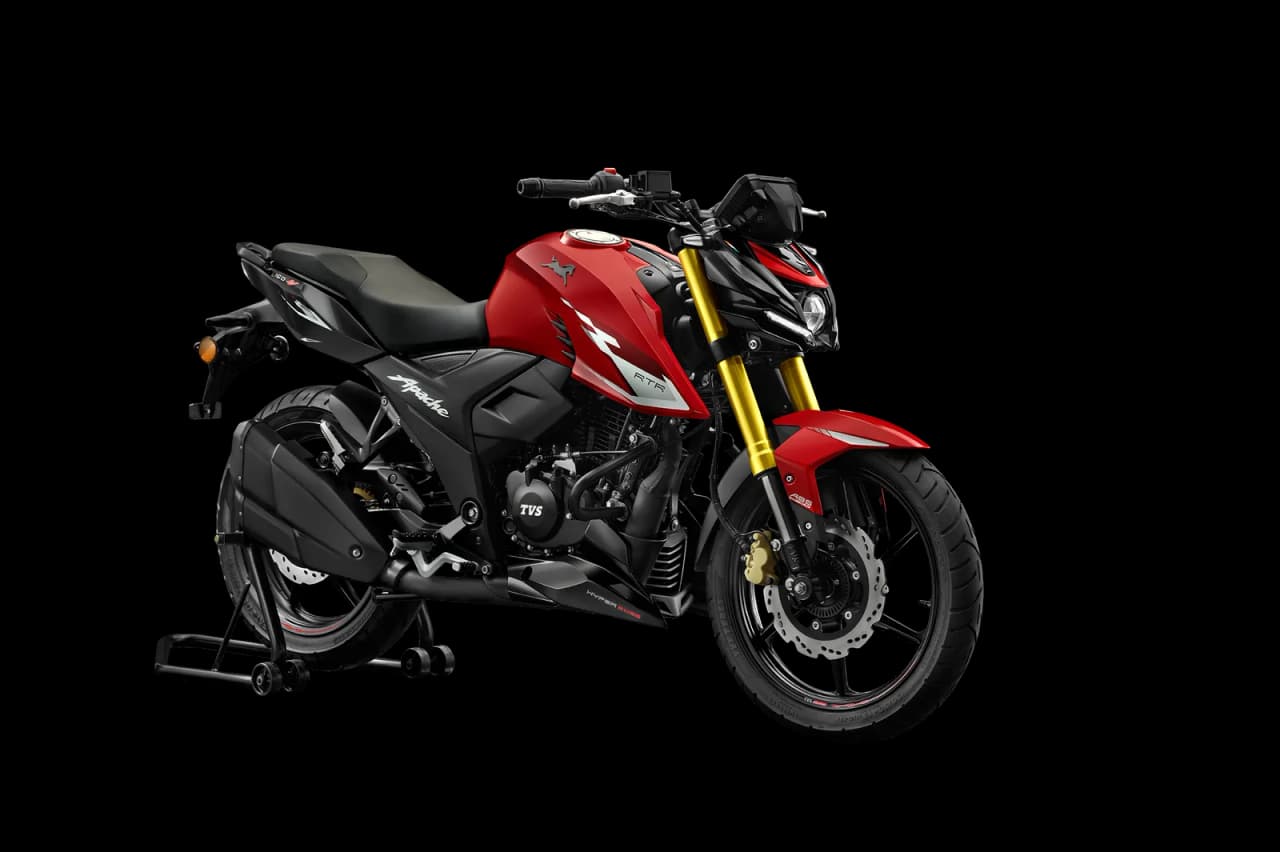
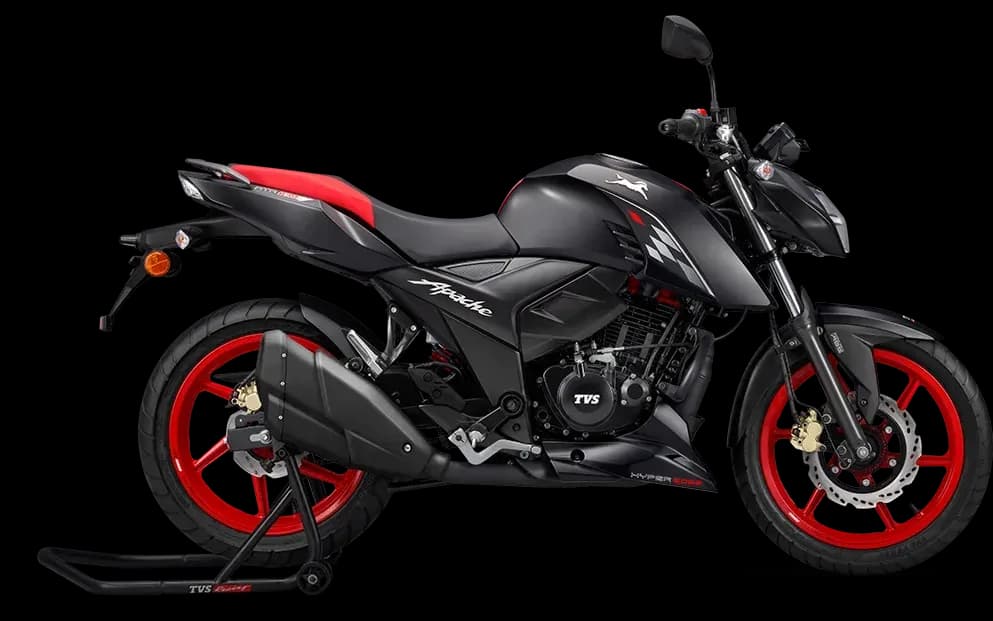
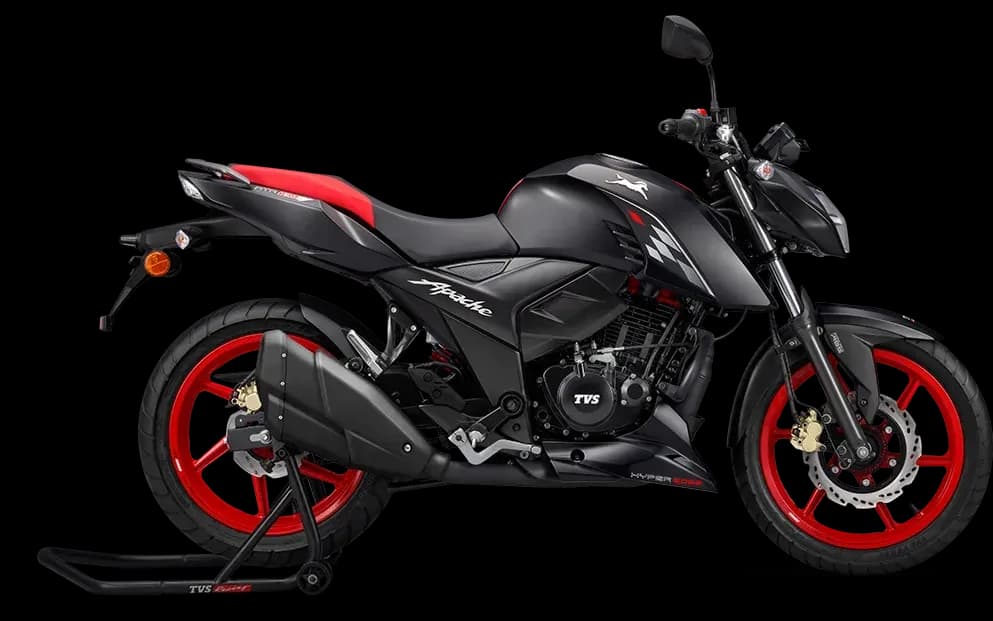
TVS Apache RTR 160 4V ABS RTFI SE looks more modern and aggressive.
- Has a racing seat with dual-tone texture and a one-piece handlebar.
- LED headlamp with signature DRL, matte black paint and red alloy wheels give a sharper, premium visual feel.
- Rear tyre is a 130/70-17 radial, which fills out the tail nicely and signals performance.
There is also a special exhaust note on this Special Edition. Visually, it feels like a proper 160cc sport commuter.
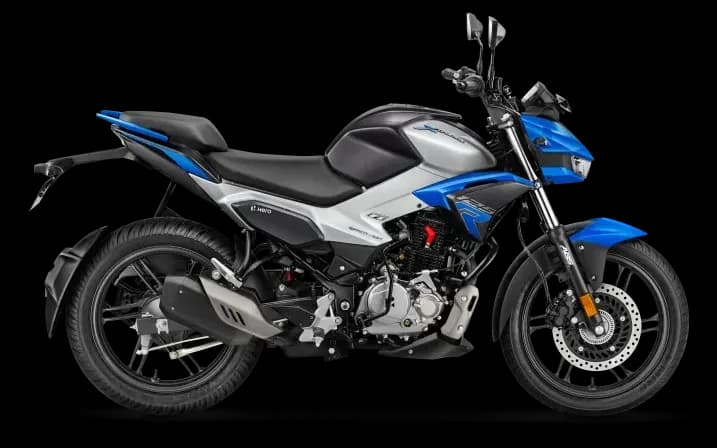
Hero Xtreme 125R carries a sporty-commuter design, aiming to look bigger than a typical 125.
- Projector headlamp, LED lighting and three colour options: Firestorm Red, Cobalt Blue and Stallion Black.
- All variants use alloy wheels and 90/90-17 front, 120/80-17 rear tubeless tyres.
- Split seat and sportier stance on the higher variants help it stand out among 125s.
In short, Apache RTR 160 4V looks like a true performance bike, the 2V BT is a familiar sporty commuter, and Xtreme 125R is a sharp-looking 125 that visually punches above its displacement but still reads as a commuter first.
Features and equipment differences
Instrument cluster and connectivity
TVS Apache RTR 160 2V BT
- Fully digital instrument cluster.
- TVS SmartXonnect Bluetooth connectivity.
- Features include turn-by-turn navigation and call/SMS alerts.
- Has riding modes: Rain, Urban and Sport.
TVS Apache RTR 160 4V ABS RTFI SE
- Also a fully digital cluster with SmartXonnect and Bluetooth.
- Riding modes: Urban, Rain and Sport.
- The Special Edition branding is reinforced with the unique exhaust note.
Hero Xtreme 125R (all variants)
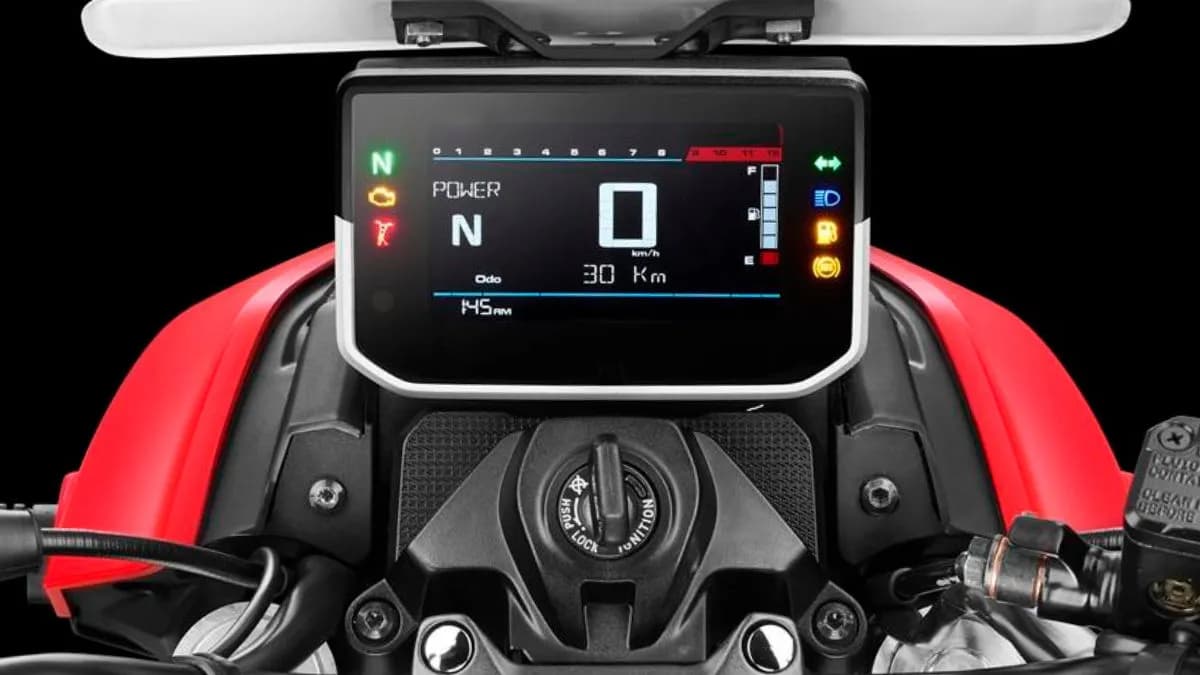
- 4.2" multicolour LCD instrument cluster with adaptive brightness.
- Full-digital display; higher trims commonly offer Bluetooth navigation and connected features in market discussion.
- All variants list three ride modes: City, Rain and Sport.
On cluster tech, Xtreme 125R feels more premium with the multicolour screen and adaptive brightness, especially if a buyer values a modern cockpit. Apache's SmartXonnect is still strong, though, and the navigation/call alerts are practically useful.
Rider aids and electronics
TVS Apache RTR 160 2V BT and 4V SE
- Riding modes on both variants.
- Structured specs list traction control: Yes for each variant.
Hero Xtreme 125R
- Ride-by-wire throttle (ETB) and three ride modes on all variants.
- Some structured entries list traction control: Yes for CBS, ABS OBD I and ABS OBD II.
- Several variants also highlight cruise control, a rare feature at this price.
Within the 125cc space, Xtreme 125R's ride-by-wire and cruise control stand out more than similar features do in the Apache's 160cc band. Apache counters with stronger performance and riding modes aimed at spirited use.
Brakes and safety
TVS Apache RTR 160 2V BT
- Single-channel ABS.
- Front: 270 mm petal disc.
- Rear: 130 mm drum.
TVS Apache RTR 160 4V ABS RTFI SE
- Single-channel ABS.
- Front: 270 mm petal disc.
- Rear: 200 mm petal disc.
The 4V SE's rear disc is a clear functional upgrade over the 2V BT's drum for riders who brake hard or ride loaded.
Hero Xtreme 125R
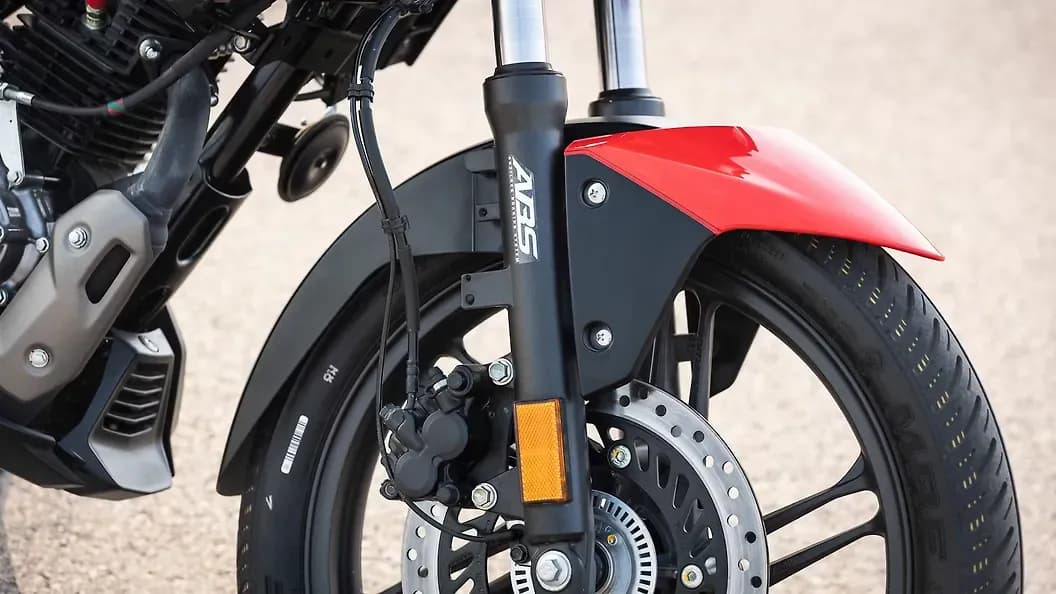
The detailed safety block describes dual-channel ABS with 276 mm front disc and 220 mm rear disc, but structured facts set all variants under "ABS: IBS". IBS here reflects an integrated braking system label; the important takeaway is that:
- Every variant has front disc and rear disc with tubeless tyres.
- Panic brake alert and dual-channel ABS hardware are highlighted in variant descriptions.
In practice, Xtreme 125R gives stronger rear-brake hardware than the Apache 2V BT, and a safety pitch focused on ABS and alert features. Apache 4V SE narrows this gap with its rear disc but remains single-channel.
Warranty and after-sales support
TVS Apache RTR 160 2V BT and 4V SE
- 5 years or 60,000 km warranty on motorcycles, whichever comes first.
This is a long, clear warranty term for a performance-oriented bike, helpful for riders clocking more highway kilometres.
Hero Xtreme 125R (all variants)
- Hero mentions up to 5 years of warranty coverage on vehicles, but not tied to specific components in the trim descriptions.
Both brands appear to offer up to five years of support coverage, but TVS states a kilometre limit (60,000 km), which gives buyers a more concrete expectation, especially if they ride more than the average commuter.
On workshops, TVS has far more outlets. For buyers in smaller towns, the Apache's backing network is a significant practical edge. For either brand, it is still worth asking the dealer which exact workshop handles this model and has spares on hand.
Engine and performance differences
Displacement and output
TVS Apache RTR 160 2V BT
- Engine displacement: 159.7 cc, SI, 4-stroke, air-cooled.
- Max power: 16.04 PS @ 8750 rpm.
- Max torque: 13.85 Nm @ 7000 rpm.
- 5-speed manual gearbox.
TVS Apache RTR 160 4V ABS RTFI SE
- Engine displacement: 159.7 cc, SI, 4-stroke, 4-valve, oil-cooled.
- Max power: 17.55 PS @ 9250 rpm.
- Max torque: 14.73 Nm @ 7250 rpm.
- 5-speed manual gearbox.
The 4V SE clearly makes more power and torque than the 2V BT, and its 4-valve, oil-cooled setup is aimed at higher-rev performance and better sustained output. Riders wanting brisk overtakes and more top-end should look here.
Hero Xtreme 125R (all variants)
- Engine displacement: 124.7 cc air-cooled 4-stroke.
- Max power: 11.4 PS @ 8250 rpm.
- Max torque: 10.5 Nm @ 6500 rpm.
- 5-speed constant mesh gearbox with wet multi-plate clutch.
The Apache, especially the 4V SE, sits well above the Xtreme 125R on power and torque. That difference is felt every time the bike is loaded or asked to climb long hills.
Claimed mileage and fuel tank
For a fair mileage comparison, we would need both figures on the same test cycle. Here, neither brand's cycle is specified, so mileage is best treated as indicative.
TVS Apache RTR 160
- 2V BT: 45 km/l claimed mileage, 12 L fuel tank.
- 4V SE: 40–45 km/l claimed mileage, 12 L fuel tank.
Hero Xtreme 125R
- All variants: 66 km/l claimed mileage, 10 L fuel tank.
The Xtreme 125R has a smaller tank but a higher claimed mileage figure. In market discussion, many riders report real-world mileage in the mid-50s to low-60s km/l if ridden sensibly, which aligns with the claimed figure for a 125.
Apache riders often mention lower real-world mileage when riding hard, closer to 35–40 km/l in mixed use. That is consistent with a more powerful 160cc engine used briskly. The cycles are not stated, so these figures are not directly comparable in lab terms, but they give a clear sense of fuel cost: Xtreme 125R is the more economical choice.
Ride, handling and comfort
TVS Apache RTR 160 2V BT
- Suspension: telescopic front fork, Monotube Inverted Gas-filled shox (MIG) at rear.
- Rear shocks are 5-step adjustable, useful for tuning preload with a pillion or luggage.
- Clip-on handlebars, single-piece seat, 1300 mm wheelbase, 180 mm ground clearance.
- Kerb weight: 138 kg, seat height 790 mm.
Light weight and short wheelbase make this variant nimble in city traffic. The adjustable rear suspension helps manage comfort on bad roads or under load.
TVS Apache RTR 160 4V ABS RTFI SE
- Suspension: telescopic front, Showa monoshock at rear.
- 1357 mm wheelbase, 180 mm ground clearance.
- Kerb weight 146 kg, seat height 800 mm.
The longer wheelbase, radial rear tyre and Showa monoshock give more planted handling, especially at speed and in corners. It feels more stable on the ring road or highways, at the cost of a bit more weight and a slightly taller seat.
Hero Xtreme 125R (all variants)
- Front suspension: 37 mm conventional fork.
- Rear suspension: 7-step adjustable monoshock.
- Wheelbase 1319 mm, ground clearance 180 mm, trail 89.2 mm.
- Kerb weight 137 kg, seat height 794 mm.
This setup targets comfort and composed commuting. The adjustable monoshock is a strong plus on rough urban roads and village gravel, allowing the bike to be softened or firmed up depending on load.
For shorter riders, Xtreme 125R's 794 mm seat and Apache 2V's 790 mm seat are easier to manage than the Apache 4V's 800 mm. Taller riders usually find the 4V's seat height acceptable and appreciate its highway stability.
Practicality and running costs
Everyday practicality
TVS Apache RTR 160
- 12 L tank supports longer stints between fuel stops.
- 180 mm ground clearance on both variants helps with speed breakers and rough village roads.
- 2V BT is lighter and more nimble for dense city use.
- 4V SE's radial rear tyre and better brakes suit mixed city-highway riding.
Hero Xtreme 125R
- 10 L fuel tank is smaller but paired with higher claimed mileage.
- 180 mm ground clearance and 1319 mm wheelbase make it stable without feeling heavy.
- Ride-by-wire, riding modes and cruise control support relaxed, efficient commuting.
Underseat storage is not highlighted for either model, so riders relying heavily on storage may still prefer scooters in the same price band.
Fuel and running cost
We cannot give a precise running cost per km without a common test cycle and local fuel price assumption. Still, the displacement and claimed mileage pattern is clear.
Apache RTR 160's 159.7 cc engine and lower claimed mileage mean it will burn more fuel than a 124.7 cc Xtreme 125R ridden in the same way. Riders prioritising fuel spend over the years will find the Hero easier on the wallet, especially in city commutes.
Beyond fuel, TVS's broader workshop network reduces travel cost and downtime for service, while Hero's local assembly for some Xtreme 125R variants supports parts availability for those trims. It is still good practice to verify with the dealer that the nearest workshop is familiar with this exact model.
Variant-level differences
TVS Apache RTR 160
- Apache RTR 160 2V BT (Rs 3.50 lakh)
- Air-cooled 159.7 cc engine.
- 16.04 PS, 13.85 Nm.
- Rear drum brake.
- 138 kg kerb, 790 mm seat height.
- 45 km/l claimed mileage, 12 L tank.
- Clip-on bars, MIG rear shocks, SmartXonnect with navigation.
- Apache RTR 160 4V ABS RTFI SE (Rs 3.89 lakh)
- 4-valve, oil-cooled 159.7 cc engine.
- 17.55 PS, 14.73 Nm.
- Front and rear petal disc, single-channel ABS.
- 146 kg kerb, 800 mm seat.
- 45 km/l claimed mileage, 12 L tank.
- Showa monoshock, radial rear tyre, special edition exhaust note, adjustable brake and clutch levers.
The price jump from 2V BT to 4V SE buys more performance, better braking, more premium hardware and a sharper look.
Hero Xtreme 125R
Across all Xtreme 125R variants, engine and core chassis remain constant: 124.7 cc, 11.4 PS, 10.5 Nm, 180 mm ground clearance, 1319 mm wheelbase, 794 mm seat height, 10 L tank, 66 km/l claimed mileage.
The main differentiators are braking labels, OBD level and feature pitch, plus small price steps.
- IBS (Rs 2.95 lakh)
- Entry trim for those who want the styling and electronics but are fine without the full ABS pitch.
- Front and rear disc, ride modes, full-digital cluster.
- CBS (Rs 2.99 lakh)
- Braking system pitched around combined braking.
- Structured spec lists traction control and riding modes.
- Slightly higher price for additional safety and electronics.
- ABS (Rs 3.17 lakh)
- Safety-focused 125cc option.
- Buyers pay more for an ABS-labelled variant and full feature set.
- ABS OBD I (Rs 3.19 lakh)
- Adds OBD I capability while keeping ABS-focused pitch.
- ABS OBD II (Rs 3.28 lakh)
- Top-tier Xtreme 125R, with dual-channel ABS headline and OBD II update.
- Aimed at safety-conscious riders willing to pay the most for tech.
In practice, Xtreme 125R buyers pick between affordability (IBS), mid-level safety (CBS/ABS/OBD I) and the full ABS OBD II spec.
Which wins for which kind of buyer
Pick TVS Apache RTR 160 if:
- You want strong performance. The 159.7 cc engine with up to 17.55 PS and 14.73 Nm is clearly ahead of the Xtreme 125R's 11.4 PS, 10.5 Nm.
- You ride on highways, hilly routes or carry a pillion often and need confident acceleration for overtakes.
- You value TVS's 281 showrooms and 54 service centers, especially outside the big cities.
- You are happy to trade some fuel efficiency for feel and speed.
Within Apache, choose:
- 2V BT if you want the lower price, proven engine, lighter weight and still appreciate Bluetooth and riding modes.
- 4V ABS RTFI SE if you want the best performance, radial rear tyre, rear disc, Showa monoshock and special-edition feel, and are ready to spend closer to Rs 3.85 lakh.
Pick Hero Xtreme 125R if:
- You are a commuter first, and want strong mileage plus modern tech.
- You ride mostly in city and peri-urban routes, where 124.7 cc with 11.4 PS is enough.
- You value features like ride-by-wire, three riding modes, cruise control and a multicolour LCD cluster.
- You want higher claimed mileage (66 km/l) and real-world reports in the mid-50s to low-60s km/l.
Within Xtreme 125R, choose:
- IBS or CBS if you are budget-conscious but still want tech and disc brakes front and rear.
- ABS or ABS OBD I if you want better braking confidence and are okay paying a bit more.
- ABS OBD II if you are willing to pay up for the full safety pitch with dual-channel ABS hardware and the latest OBD level.
Verdict
TVS Apache RTR 160 is the right choice for riders who prioritise performance and handling, are comfortable with higher fuel use, and want strong nationwide support. The 4V ABS RTFI SE in particular offers one of the most powerful 160cc packages in its price band, backed by a clear 5-year/60,000 km warranty and better braking and suspension than the 2V BT.
Hero Xtreme 125R suits buyers who put mileage, features and comfort ahead of outright speed. Its 124.7 cc engine, high claimed mileage, ride-by-wire, cruise control and multicolour LCD cluster make it one of the most tech-rich 125cc commuters in Nepal. The trade-off is lower performance and, at the upper ABS/OBD II end, pricing that nudges close to basic 160cc options.
For a Nepali buyer choosing between these two, the simple split is this: if your daily ride and long-term plan can justify the extra fuel and higher price for a more capable 160cc, the Apache RTR 160 is the better bet. If you want a modern, feature-heavy commuter with strong mileage and are comfortable at 125cc performance levels, the Hero Xtreme 125R is the smarter, more efficient partner.
Compare TVS Apache RTR 160 vs Hero Xtreme 125R variant by variant
Explore full specifications, variants & ownership context
Compare the exact variants
Specifications, features & ownership context
Choose a variant for each vehicle. The facts below follow that exact trim; the article explains the trade-offs.
Latest catalog and directory records supplement the original analysis. Figures may have changed since publication; individual specification and price-check dates appear below.
Hero Xtreme 125R
Rs 3.28 lakh ex-showroom · source checked 29 Oct 2026
TVS Apache RTR 160 2V
Rs 3.65 lakh ex-showroom · source checked 30 Oct 2026
TVS Apache RTR 160 4V
Rs 4.3 lakh ex-showroom · source checked 30 Oct 2026
Engine & performance
| Specification / feature | Hero Xtreme 125R | TVS Apache RTR 160 2V | TVS Apache RTR 160 4V |
|---|---|---|---|
| Engine displacement | 124.7 ccResearched · confirm · 22 Sept 2026 | 159.7 ccResearched · confirm · 6 Oct 2026 | 159.7 ccVerified specification · 24 Oct 2026 |
| Max power | 11.4 PSVerified specification · 30 Jul 2026 | 16.04 PSVerified specification · 24 Oct 2026 | 17.55 PSVerified specification · 25 Oct 2026 |
Brakes, tyres & suspension
| Specification / feature | Hero Xtreme 125R | TVS Apache RTR 160 2V | TVS Apache RTR 160 4V |
|---|---|---|---|
| ABS | IBSVerified specification · 30 Jul 2026 | Single-channel ABSResearched · confirm · 24 Oct 2026 | ABSVerified specification · 21 Oct 2026 |
Dimensions & weight
| Specification / feature | Hero Xtreme 125R | TVS Apache RTR 160 2V | TVS Apache RTR 160 4V |
|---|---|---|---|
| Ground clearance | 180 mmVerified specification · 30 Jul 2026 | 180 mmVerified specification · 24 Oct 2026 | 180 mmVerified specification · 21 Oct 2026 |
Hero Xtreme 125R
Showroom & service support
Distributor: CG Motors Pvt. Ltd.
Hero showrooms in Birtamode (83 showrooms nationwide) · Hero service centers in Kathmandu (38 service locations nationwide)
Listed cities include Baglung, Banepa, Banganga, Bhairahawa, Bhaktapur, Bharatpur and 41 more.
Brand-wide directory coverage. Confirm that your nearest workshop supports this exact model, powertrain and warranty work; ask about parts availability and booking time.
Market buzz & buyer priorities
Compiled discussion, including buyer reactions and ownership reports; this is not a verified owner survey or a reliability score. Research dated 18 Oct 2026.
What people like
- good decision based on ride experience
Concerns to investigate
- concerns about power and mileage in hilly areas
What buyers ask for
- availability of features like dual disc and ABS
TVS Apache RTR 160 2V
Showroom & service support
Distributor: Jagdamba Motors Pvt. Ltd. (TVS Nepal)
TVS showrooms in Kathmandu (262 showrooms nationwide) · TVS service centers in Kathmandu (55 service locations nationwide)
Listed cities include Attariya, Baglung, Balkumari, BALKUMARI, Banepa, Bansgadhi and 110 more.
Brand-wide directory coverage. Confirm that your nearest workshop supports this exact model, powertrain and warranty work; ask about parts availability and booking time.
Market buzz & buyer priorities
Compiled discussion, including buyer reactions and ownership reports; this is not a verified owner survey or a reliability score. Research dated 30 Oct 2026.
What people like
- Excellent low-end torque making it ideal for Kathmandu's stop-and-go traffic
- High resale value compared to other 160cc commuters in the Nepali market
- Wide availability of affordable spare parts across all provinces
Concerns to investigate
- Significant engine vibrations felt at higher RPMs and speeds above 70 kmph
- Outdated halogen headlamp brightness is insufficient for unlit Nepali highways
- Stiff rear suspension can be uncomfortable on uneven or gravel roads
More feedback
- Design feels dated compared to the newer 4V models
- Nepal-specific owner complaints about a single recurring mechanical fault are not prominent in recent public discussions.
What buyers ask for
- Fuel economy in heavy city traffic
- Initial pickup and 'grunt' for overtaking
- Resale value after 2-3 years of use
More feedback
- Availability of local mechanics who can service the bike without specialized tools
Nepal ownership context
- Jagdamba Motors' extensive service network ensures maintenance is possible even in remote districts
- The 2V model remains more popular than the 4V in some rural areas due to simpler mechanical maintenance
- Ground clearance is generally sufficient for urban speed breakers but requires caution with a pillion on off-road sections
More feedback
- Nepal buyers compare the motorcycle’s price with the Pulsar, Yamaha FZ and other 150–160cc models before choosing a variant.
- Service-centre quality and spare-parts availability can vary by city, so buyers outside major urban areas check local TVS support before purchasing.
- The motorcycle’s ground clearance and upright street-bike format suit broken urban roads and occasional trips beyond Kathmandu, although suspension comfort remains important on rough surfaces.
TVS Apache RTR 160 4V
Showroom & service support
Distributor: Jagdamba Motors Pvt. Ltd. (TVS Nepal)
TVS showrooms in Kathmandu (262 showrooms nationwide) · TVS service centers in Kathmandu (55 service locations nationwide)
Listed cities include Attariya, Baglung, Balkumari, BALKUMARI, Banepa, Bansgadhi and 110 more.
Brand-wide directory coverage. Confirm that your nearest workshop supports this exact model, powertrain and warranty work; ask about parts availability and booking time.
Market buzz & buyer priorities
Compiled discussion, including buyer reactions and ownership reports; this is not a verified owner survey or a reliability score. Research dated 30 Oct 2026.
What people like
- Segment-leading power and acceleration for a 160cc motorcycle
- Advanced features like SmartXonnect Bluetooth connectivity and turn-by-turn navigation
- Availability of three ride modes (Sport, Urban, Rain) which is unique in this price segment
More feedback
- Excellent braking performance on the FI ABS variants
- Refined engine with minimal vibrations compared to older Apache models
Concerns to investigate
- features not useful for daily use
- Stiff gear shifting reported by some users during the initial break-in period
- High maintenance and spare parts costs compared to 2-valve competitors
More feedback
- Rear seat comfort is considered inadequate for long-distance pillion riding
- Ground clearance can be a concern on heavily damaged rural Nepali roads when fully loaded
- The official service quality at some Jagdamba Motors dealerships is inconsistent
What buyers ask for
- Fuel efficiency (mileage) in heavy Kathmandu traffic
- Technology and 'smart' features like mobile pairing
- Braking safety specifically looking for ABS options
Nepal ownership context
- Resale value remains strong in the Nepali market, though slightly behind the Pulsar 150 series
- The FI (Fuel Injection) system performs reliably even at higher altitudes like Nagarkot or Mustang
- Wide availability of service centers across major cities like Kathmandu, Pokhara, and Butwal through the Jagdamba Motors network
More feedback
- Road tax and registration costs in Nepal add significantly to the ex-showroom price
- Popular choice among young professionals and students for city commuting
- The FI and ABS versions cost more than the basic versions, while the USD variant sits at the top of the Nepal price range.
- The final on-road cost is higher than ex-showroom price because registration, insurance, road tax and dealer charges vary by province and location.
Use these facts alongside the article’s full analysis. Check the final quotation, warranty terms and exact equipment before booking.
Evidence & next steps
Check the details before you buy
Use this guide to build a shortlist. Ask for a written quotation for your chosen variant, including registration, taxes, insurance and finance charges. Confirm the nearest authorised workshop supports that model.
Price sources and dates
These are the recorded distributor-source checks for the selected overview trims. They are separate from the article update and catalog read dates; they do not mean every trim was rechecked today. Confirm the final price with the distributor.
Overview photos come from the corresponding model records; additional article photos carry their own credits. Running costs depend on usage, energy prices, maintenance, insurance and resale value.