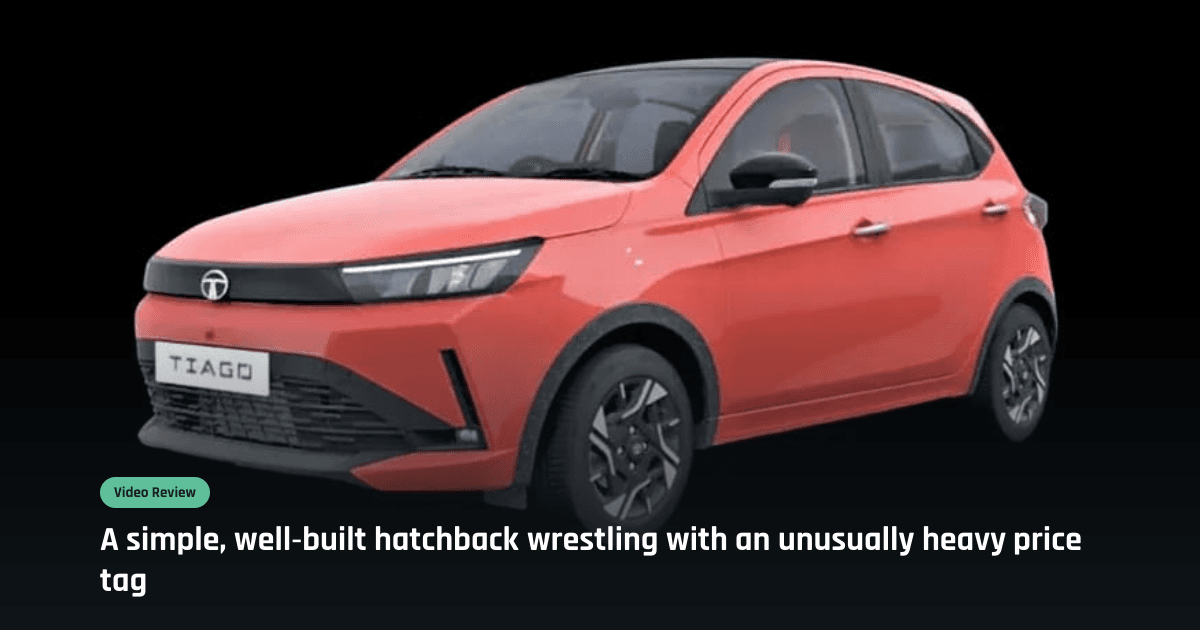
Where The Tiago Actually Fits In Nepal's Showrooms
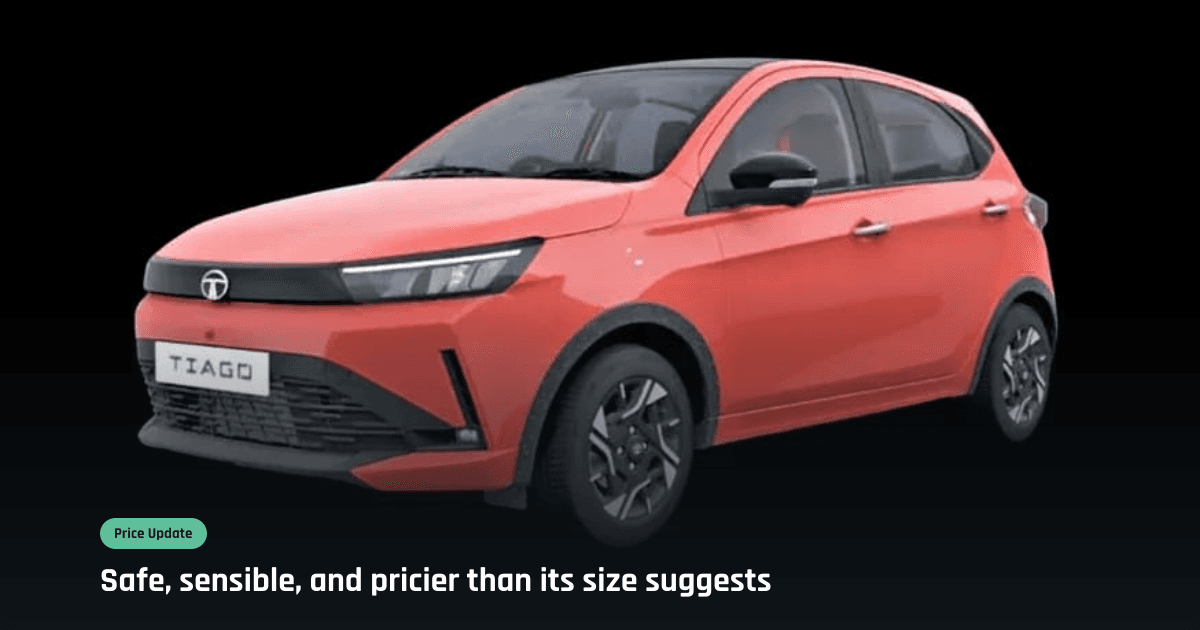
The Tata Tiago has been a familiar name in South Asian hatchback conversations for years, but its arrival in Nepal through Sipradi Trading Pvt. Ltd. in 2026 puts it in an unusual spot. Globally and regionally, the Tiago has always been sold as an accessible, entry-level small car. In Nepal, with an ex-showroom band of Rs 24.99 lakh to Rs 36.99 lakh across eight variants, it lands closer to mid-size hatchback and even compact-SUV money once you factor in how Nepali taxation reshapes small-car pricing. Buyers walking into a Sipradi showroom need to mentally reset what "budget hatchback" means here — this is not a cut-price runabout in the Nepali context, even though its underlying engineering says otherwise.
That contrast is really the lens through which the whole car should be judged for this market. The Tiago's actual footprint — its mechanical layout, its cabin, its overall size — is built for buyers who want an easy, no-drama first or second car. Nepal's pricing structure means it will instead be cross-shopped against better-equipped rivals that, elsewhere, would sit a class above it on paper. That's the tension we'll keep returning to through this review.
Simple Sheet-Metal, Honest Proportions
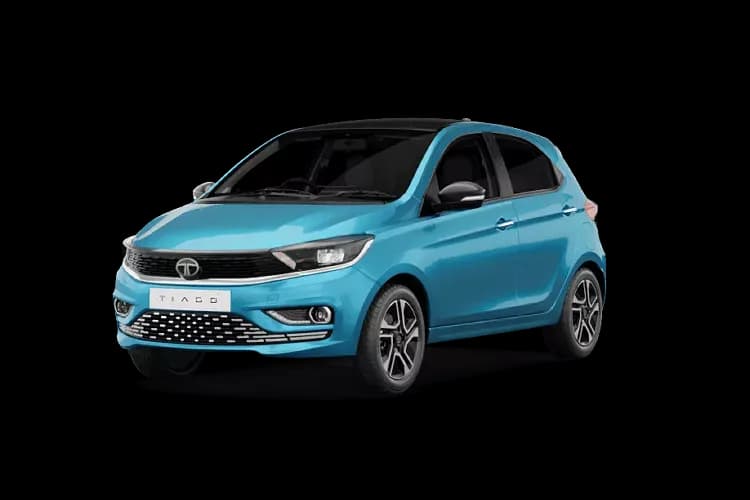
The Tiago's design has never chased attention, and that holds true for the version reaching Nepal. At 3765mm long, 1677mm wide and 1535mm tall, it reads as a compact, upright hatchback with no aggressive creases or oversized grille work — a shape that ages sensibly rather than dramatically. The proportions are tidy rather than striking: a short front overhang, a simple greenhouse, and a tail that doesn't try too hard. For buyers who want a car that won't look dated in five years because it never chased a trend in the first place, that restraint works in its favour.
Build quality on Tata's Revotron-generation cars has matured considerably from the brand's earlier reputation, and the Tiago's panel gaps and general fit have generally held up well in comparable markets. What Nepali buyers should specifically check for at the showroom is how the higher trims — the XZ+ and XZA — differentiate themselves visually from the XE and XT variants, since Tata's variant walk on this model has historically been more about equipment than sheet-metal changes.
What Colours And Cabin Finishes Buyers Can Expect
Our verified data doesn't specify the exact colour palette Sipradi will offer in Nepal, so we'd encourage buyers to confirm current stock colours directly at the showroom before finalising a booking, rather than assume every shade sold in other markets will be available here.
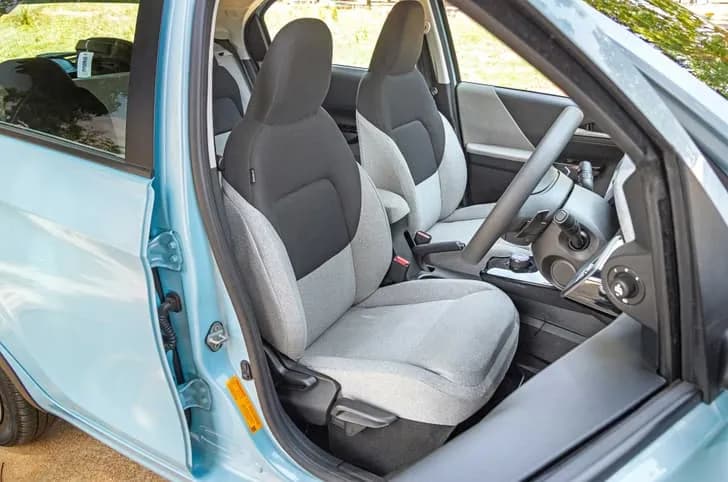
Inside, the cabin uses a dual-tone theme with premium full-fabric seats, which lifts what could otherwise be a fairly plain interior. It's a sensible choice for Nepali climate and usage patterns — fabric that's easy to keep looking fresh, without the heat retention of an all-black cabin under strong sun.
The Small Details That Make Daily Use Easier
The Tiago's cabin is where Tata has quietly packed in a lot of everyday usefulness rather than headline tech. There's a cooled glove box with tablet storage space, bottle and cup holders built into the front console, door pockets sized for bottles, and a front power outlet — all small things, but the sort that matter on long Nepali highway drives to Pokhara or Chitwan when everyone in the car needs somewhere to put a phone, a bottle and a snack.
Practical ergonomic touches continue with tilt-adjustable steering, electric power steering for lighter low-speed manoeuvring, a driver footrest, and collapsible grab handles for rear passengers. Power windows front and rear come standard from the XT trim upward, along with a vanity mirror on the co-driver's side and a one-shot-down function on the driver's window — a genuinely convenient feature at toll booths and parking barriers that many cars in this price range still omit.
On the instrumentation side, the Tiago sticks to a segmented Digital Instrument Cluster with a 6.35cm display, showing a digital clock, gear shift indicator and dual trip meters. This is a straightforward, no-touchscreen-dependent setup — useful for buyers who'd rather have clearly legible analogue-style read-outs than wrestle with a glossy screen in direct Nepali sunlight, though it does mean the car skips the larger infotainment displays that rivals in this price bracket increasingly offer.
Climate control is handled by a manual air-conditioner with heater rather than an automatic climate control unit, which keeps things simple and easy to service but is a noticeably basic inclusion at the Rs 30-lakh-plus end of this range.
The 1.2-Litre Revotron: Straightforward, Not Quick
Every Tiago variant sold in Nepal is expected to run the same 1.2-litre Revotron petrol engine — a 1199cc, three-cylinder unit producing 86 PS at 6000rpm and 113 Nm of torque at 3300rpm, paired exclusively with a 5-speed manual gearbox. There's no automatic or AMT option listed among the eight variants, which will matter to buyers in Kathmandu's stop-start traffic who've grown used to clutch-free driving in this segment.
The Revotron three-cylinder has built a reputation over the years for being unfussy and easy to maintain rather than outright quick, and the numbers here support that read: this is a car tuned for smooth, predictable low-and-mid-range response rather than outright performance. With front-wheel drive and a relatively light kerb weight of 935–982 kg depending on variant, the power-to-weight balance should feel adequate for city use and confident enough on the open highway, without ever feeling particularly urgent.
The 35-litre fuel tank is a genuine strength for Nepali use patterns, where long intercity stretches without a fuel station aren't unusual. Combined with the naturally efficient nature of a small-capacity three-cylinder engine, this should translate into fewer fuel stops on trips out of the valley.
Ride Comfort Built Around Nepal's Broken Roads
The Tiago's suspension setup — an independent lower wishbone McPherson strut arrangement up front and a twist-beam with coil springs at the rear, mounted on hydraulic shock absorbers — is a conventional but sensible layout for the kind of surfaces Nepali buyers actually drive on. The 170mm ground clearance is a particularly relevant figure here: it's enough to handle speed bumps, broken tarmac edges and moderately rough unpaved stretches without the constant scraping anxiety that afflicts lower-slung hatchbacks.
The 2400mm wheelbase, shared right across the petrol line-up, is on the shorter side for the segment, which should help manoeuvrability in Kathmandu's narrow lanes and tight parking situations, though it will naturally translate into a slightly busier ride over expansion joints and larger potholes compared with longer-wheelbase rivals. This is a car built around city usability first, highway settling second — a reasonable set of priorities for how most Nepali hatchback buyers actually use their cars.
A Cabin That Prioritises Comfort Over Flash
Front seats trimmed in full fabric with a dual-tone finish, adjustable head rests, and an integrated rear neck rest for back-seat passengers all point to Tata prioritising day-to-day comfort over showroom drama. The tilt-adjustable steering column helps most drivers find a workable position, though buyers used to reach adjustment on pricier cars should note it isn't offered here.
Rear-seat passengers get a genuinely useful cooled glove box up front and tinted glass all around, which helps cabin temperature management during Terai summers. The overall sense is of a car designed by people thinking about who actually sits in it every day, rather than one built primarily to photograph well in a brochure.
Braking, Stability And What's Confirmed On The Safety Sheet
Our verified specification set for this Nepal-market Tiago doesn't detail the specific braking hardware or the full active-safety suite fitted to each variant. Buyers should ask their Sipradi showroom directly for confirmed ABS, airbag count and stability control provisions on the exact trim they're considering, particularly given how much variants can differ on safety equipment even within the same model generation elsewhere in the region.
Everyday Practicality In A Compact Footprint
At 3765mm long with a 2400mm wheelbase, the Tiago is built to be an easy car to live with in dense urban settings — short enough to slot into tight parking, manoeuvrable enough for narrow lanes, yet not so small that it feels cramped for a small family. The tablet storage in the glove box, parcel shelf, and multiple bottle holders throughout the cabin reflect a design brief focused on real usage rather than showroom spec-sheet padding.
Running Costs Favour The Simple Approach
With a 35-litre tank and a modestly powered, low-displacement three-cylinder engine, running costs should stay on the sensible side of this segment, particularly for buyers doing a mix of city commuting and highway trips. The absence of turbocharging or complex hybrid hardware also keeps long-term maintenance more straightforward — a genuine consideration in a market where specialised service parts can take time to source outside Kathmandu.
Picking A Variant: Where The Rs 12-Lakh Spread Goes
The eight-variant spread is unusually wide for this model, running from the XE BS4 at Rs 24.99 lakh up to the range-topping XZA at Rs 36.99 lakh. The XE BS4, sitting at the base, carries an older emission-compliant engine specification and should be approached with that in mind — it's the cheapest way into Tiago ownership, but buyers should confirm exactly what that BS4 designation means for long-term compliance and resale in Nepal.
For most buyers, the XT and XT(O) trims, priced at Rs 32,99,000 and Rs 32,49,000 respectively, look like the sensible middle ground — they bring front and rear power windows and the improved trim finish over the base XM, without pushing into XZ+ or XZA territory. The XZ+ at Rs 35,99,000 and XZA at Rs 36,99,000 sit close enough together, and close enough to the Tiago XT MT at Rs 35,99,000, that shoppers should compare the equipment lists closely rather than assume a clean, one-way step-up in value as price rises.
The Maruti Suzuki Swift Undercuts It On Sheer Value
The Maruti Suzuki Swift remains the benchmark this segment gets measured against in Nepal, and it does so with a badge that carries deep service-network trust and generally stronger fuel efficiency expectations among Nepali buyers. Where the Tiago leans on cabin comfort touches and a simple, honest engine, the Swift has traditionally leaned on outright driving engagement and a wider, more established resale market. Buyers who prioritise long-term ownership costs and parts availability outside the Kathmandu Valley will want to cross-check pricing on the Swift carefully against the Tiago's variant-by-variant numbers before deciding.
The Hyundai Grand i10 Nios Offers A Different Cabin Philosophy
The Hyundai Grand i10 Nios is the other name that inevitably comes up in this conversation, typically pitched as offering a more contemporary cabin layout and touchscreen-led infotainment compared with the Tiago's simpler, more analogue approach. For buyers who weigh cabin tech and infotainment heavily in their decision, the Grand i10 Nios deserves a showroom look; for those who'd rather have straightforward physical controls and manual air-conditioning that's simple to service, the Tiago holds its own ground.
Verdict: A Sound Car Asking Nepali Buyers To See Past Its Price Tag
The Tata Tiago's underlying engineering — the Revotron 1.2-litre engine, the sensible suspension tune, the thoughtfully detailed cabin — is exactly what has made this nameplate a dependable choice in other markets. What Nepali buyers have to reconcile is that Rs 24.99–36.99 lakh ex-showroom pricing puts it in direct competition with rivals that, at similar money, sometimes offer more visible technology or a stronger badge-driven resale story.
This is a car best suited to buyers who value mechanical simplicity, ground clearance suited to Nepali roads, and a genuinely comfortable, well-thought-out cabin over outright feature count or badge prestige. Anyone cross-shopping purely on price-to-feature ratio should walk into the Sipradi showroom having already driven the Maruti Suzuki Swift and the Hyundai Grand i10 Nios, so the Tiago's real strengths — and its real price gap — are clear before signing anything.
Writes on vehicle pricing, taxation and the Nepali auto market from ongoing tracking of distributor price lists. Editorial policy.