Start with the numbers
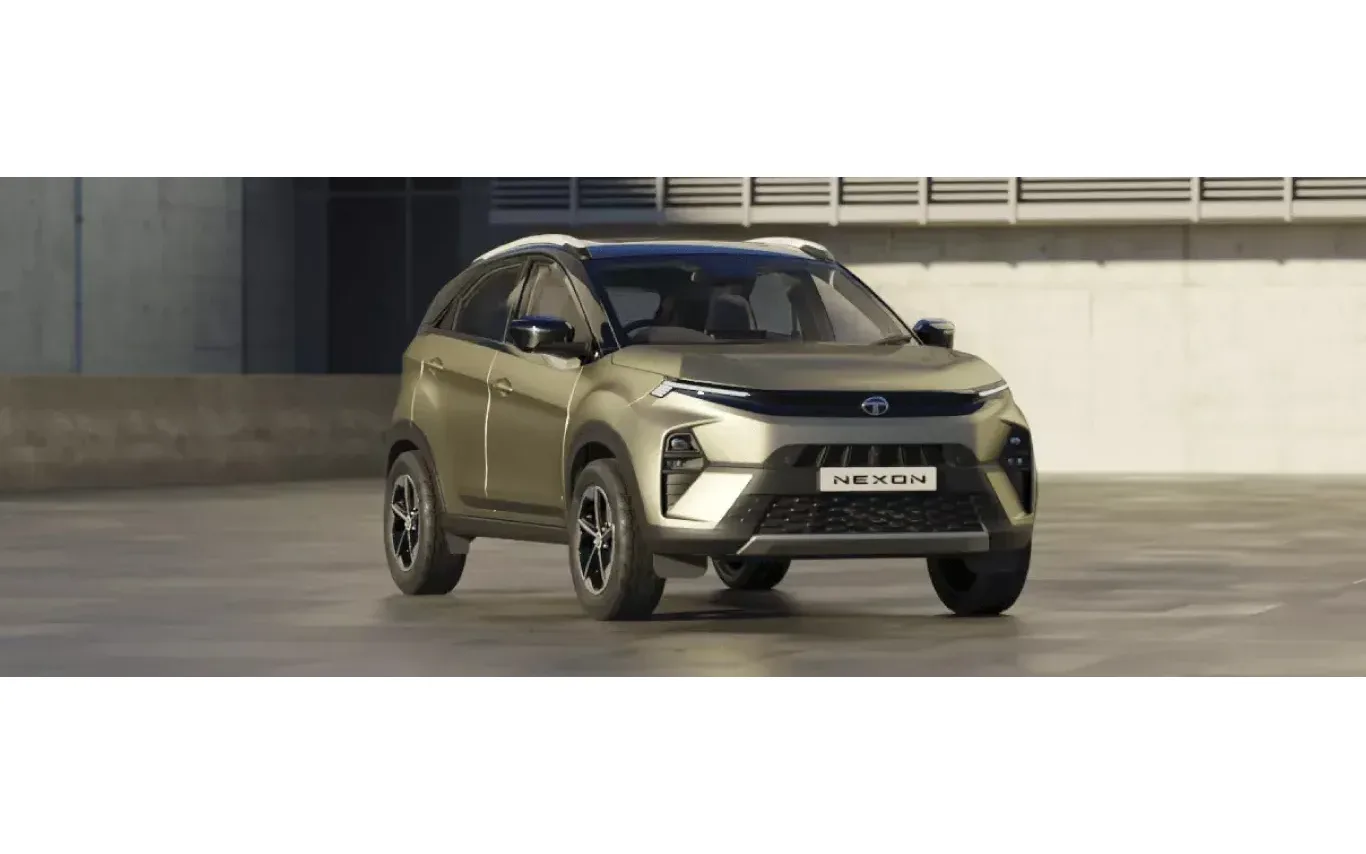
The model, at a glance
Top available variants, with prices in Nepalese rupees. Expand details to choose another variant.
| Vehicle | Ex-showroom price | Fuel | Selected variant |
|---|---|---|---|
| 01Tata Nexon | Rs 59.99 lakh | Petrol | Nexon Creative +S MT |
Ex-showroom prices exclude registration, road tax and insurance. Specifications can vary by trim. See individual source-check dates ↓
Where The Nexon Sits In Kathmandu's Crowded Compact SUV Shelf
Since Sipradi Trading brought the Tata Nexon to Nepal in 2021, it has occupied an interesting spot in the compact SUV segment — priced from Rs 50.99 lakh for the Smart MT up to Rs 59.99 lakh for the Creative +S MT, all three variants sold here in petrol-manual form. That puts it squarely in competition with a clutch of Korean and Japanese-badged rivals that Nepali buyers cross-shop obsessively, and the Nexon's answer to that competition has never really been about outright numbers. It's about how much kit Tata packs in relative to the price tag, and on showroom floors that argument tends to land well.
What's worth setting straight upfront: Tata sells far more powertrain and transmission combinations for the Nexon in other markets — diesel engines, automatic gearboxes, sunroof-equipped special editions — than what's actually on offer through the Nepali distributor. The three variants available here are all petrol, all manual. Buyers researching this car online will run into diesel-automatic content constantly; none of that applies to what you can actually drive home from a Sipradi showroom in Nepal, and we've kept this review strictly to what's sold here.
The Styling Hasn't Changed, And That's Not A Bad Thing
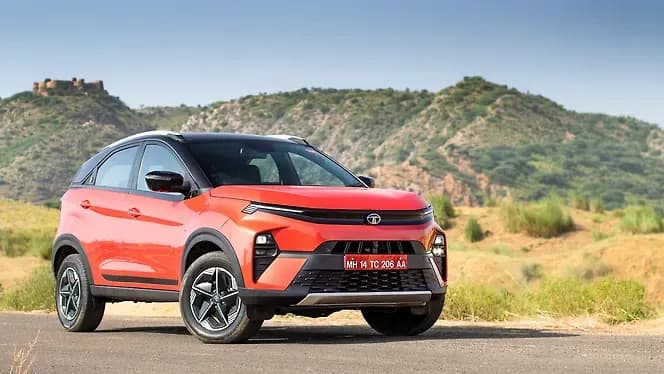
The Nexon's exterior treatment is built around a piano black front grille carrying the Tata logo, paired with a blacked-out front bumper finished with silver skid plate inserts. LED daytime running lights and LED headlights sit up front, giving the nose a reasonably premium look after dark, though buyers should note there are no fog lamps fitted — a genuine omission on a vehicle at this price, and one that's been flagged consistently by anyone who's spent real time with the car.
The 16-inch alloy wheels carry a distinctive multi-spoke design that gives the side profile some visual weight, and around the back you get LED tail lights, a roof-mounted spoiler, and a wiper-washer setup for the rear glass that's tucked away rather than sitting exposed. None of this is new for this generation — the body panels and overall silhouette are shared with the standard Nexon facelift that's been around for a few years now — but the detailing still reads as tidy rather than dated when parked next to newer entrants.
Colour Choice Comes Down To One Practical Question
The dual-tone treatment — silver body paired with a black roof — is the look most associated with the Nexon in the market, and it does a reasonable job of masking the compact proportions by visually lowering the roofline. Buyers walking into a Sipradi showroom should ask specifically which body colours are being stocked for the Smart MT, Pure +S MT and Creative +S MT trims, since colour and trim availability can vary month to month and isn't something we'd assume carries over uniformly across the range.
What You Actually Get For Rs 50.99 Lakh And Up
This is where the Nexon earns its keep. Even setting aside content built around higher trims not sold in Nepal, the equipment story on offer here is strong for the segment. Buyers get a two-spoke steering wheel with an illuminated Tata logo, cruise control and integrated media controls, automatic headlights and rain-sensing wipers on the higher trim, and a touch-based automatic climate control panel on the centre console rather than a bank of physical buttons.
The standout, though, is the safety and visibility tech: a 360-degree camera system that also feeds a blind-spot view the moment you flick an indicator — genuinely useful on Kathmandu's narrow lane-splitting traffic where a mirror check alone often isn't enough warning. Drive modes — City, Eco and Sport — are selected via a rotary dial rather than a button, which feels a notch more deliberate than most rivals bother with at this price. What we can't confirm officially is the exact infotainment screen size or connectivity suite fitted to the Nepal-spec cars, since the distributor hasn't published those details — a gap we'd like to see closed, because it's exactly the kind of detail that decides a sale in this segment.
A Manual-Only Petrol Range, With The Details That Matter Left Unconfirmed
All three Nepali variants run on petrol power with a manual gearbox — there is no automatic or diesel option sold here, regardless of what global Nexon content suggests. Beyond that, we're not in a position to publish engine displacement, power or torque figures, because the distributor hasn't disclosed them for the Nepal-spec car, and we won't repeat numbers that belong to other markets or other powertrains as if they applied here. What we can say is that the drivetrain is front-wheel-drive only, confirmed directly by the distributor, which rules out any all-wheel-drive variant reaching Nepal.
Ground Clearance And Ride Quality Remain An Open Question
Here again, official figures are thin. Neither the wheelbase nor the ground clearance for the Nepal-spec Nexon has been disclosed, so we're deliberately not quoting numbers that circulate for other markets — buyers who need a confirmed ground clearance figure for monsoon-season or rural driving should ask the dealership directly rather than relying on generic specification sheets found online. What we can note, based on wider market experience with this platform, is that ride quality on 16-inch wheels tends to stay composed over broken surfaces without feeling harsh, though we'd urge a proper test drive on Kathmandu Valley's patchier stretches before signing anything.
Five Seats, Real Legroom, And A Cabin Built For Function Over Feel
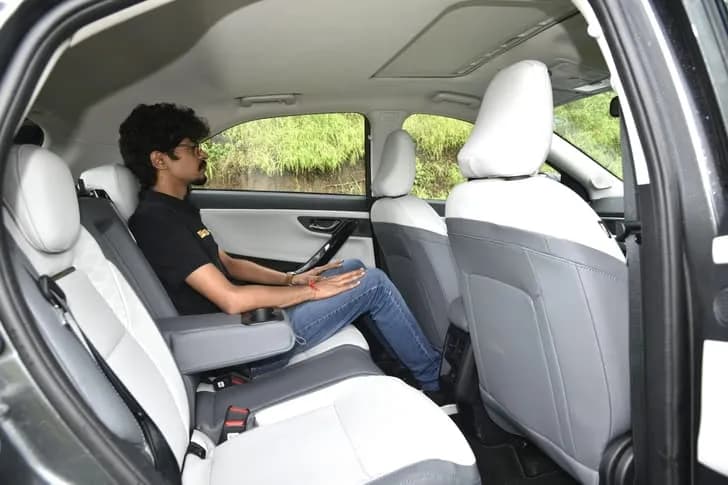
The Nexon is laid out as a straightforward 5-seat SUV, and the packaging does its job. Rear passengers get dedicated AC vents and height-adjustable headrests, both of which matter more on longer highway runs to Pokhara or Chitwan than they do in city traffic, and legroom is genuinely good enough to seat three adults across the back without anyone feeling shortchanged.
Where the cabin lets itself down is in material quality. The door panels are entirely hard plastic with no soft-touch treatment, which stands out the moment you rest an elbow on one, and the front armrest — while finished in a soft-touch fabric — doesn't extend, an odd omission for buyers used to sliding-and-locking armrests in this class. The front seats themselves are bucket-type units with dual-tone fabric finishing and genuinely useful extended thigh support, and the driver's seat gets height adjustment as standard, which is not something every rival in this price bracket bothers to include.
Six Airbags Standard, But The Rear Brakes Are A Reminder Of Where Costs Were Trimmed
Safety is arguably the strongest single argument for the Nexon in this segment: six airbags come standard across the range, a figure many rivals still treat as a top-trim-only feature. Combined with the 360-degree camera and blind-spot monitoring described earlier, this is a car that takes visibility and crash protection more seriously than its badge might suggest to a first-time buyer.
The braking setup is a more conventional story — disc brakes at the front, drum brakes at the rear — which is standard fare for the segment rather than a shortcoming unique to the Nexon, but worth knowing if you're comparing spec sheets line by line against rivals that have moved to all-disc setups.
Boot Space And Everyday Usability Hold Up Well
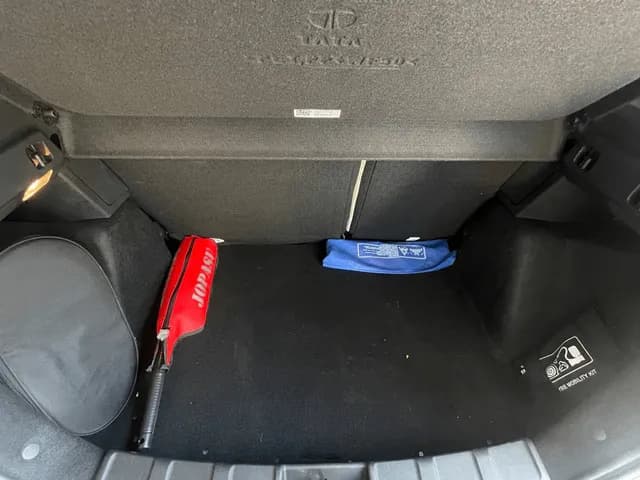
Practicality is a genuine Nexon strength. Boot space comes in at a healthy 382 litres, with a luggage lamp and utility hooks rated to hold up to 3 kg built into the boot area — small details, but ones that matter when you're loading groceries or hauling gear for a weekend trip. The rear seats do fold down to expand cargo space, but only as a single bench rather than a 60:40 split, which limits flexibility if you need to carry long items while still seating two rear passengers.
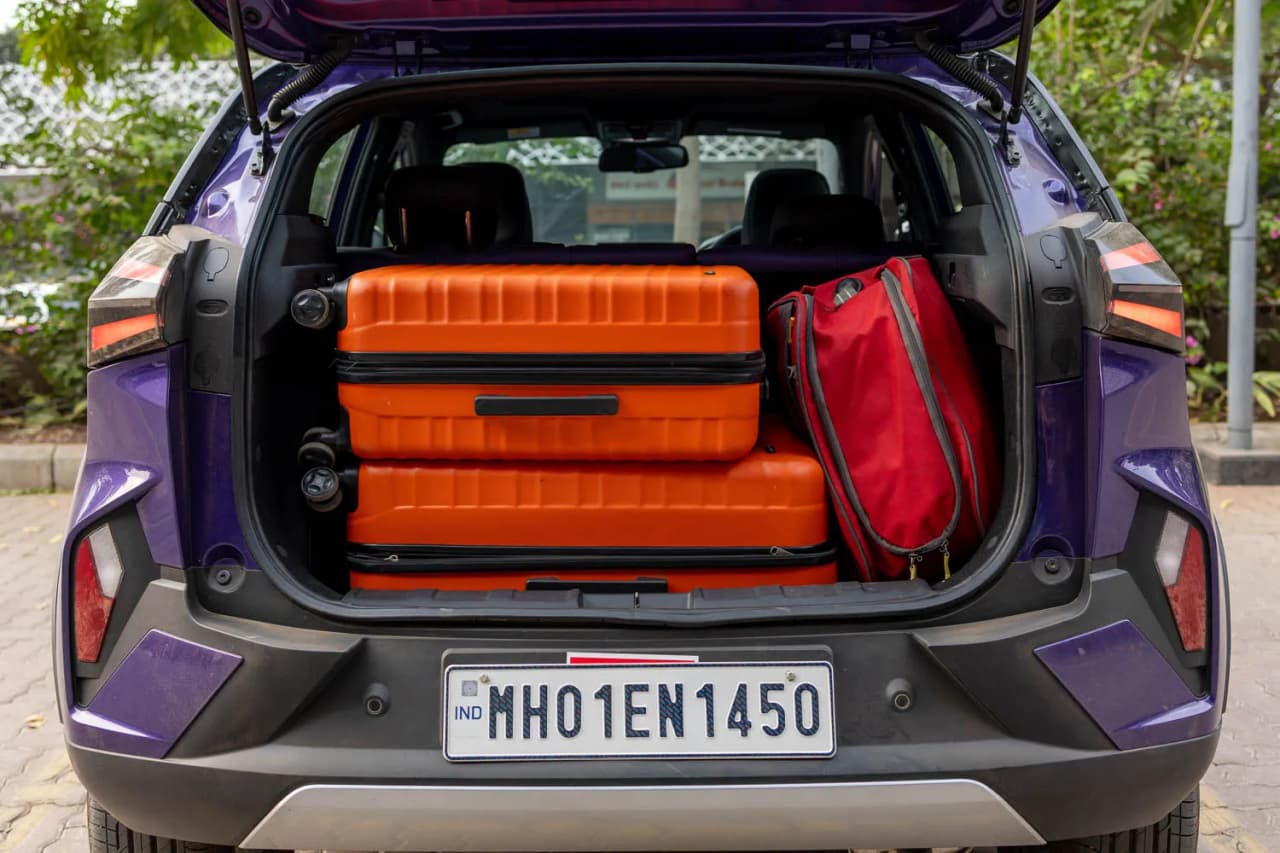
One detail that consistently gets singled out in the field, and rightly so: the doors open to a full 90 degrees, which makes getting in and out — especially for older passengers or anyone loading a child seat — noticeably easier than the more restricted door swing you get on several rivals.
Picking Between The Smart, Pure +S And Creative +S
The spread from Rs 50.99 lakh to Rs 59.99 lakh across the Smart MT, Pure +S MT and Creative +S MT gives buyers a genuine step-up structure rather than trim badges with marginal differences. The Smart MT is the sensible entry point if six airbags and the camera-and-safety package matter more to you than convenience features. The Pure +S MT, at Rs 54.99 lakh, is where we'd expect most buyers to land, striking a reasonable middle ground on equipment without stretching to the top of the range.
The Creative +S MT at Rs 59.99 lakh is the one to pick if the fuller convenience package — automatic headlights, rain-sensing wipers and the more complete feature set associated with the top trim — genuinely matters to your daily use rather than being a nice-to-have. Given the roughly Rs 5 lakh gap between each step, we'd encourage buyers to sit in all three physically at a Sipradi showroom before deciding, since the equipment differences are real enough to justify the price jump for some but not for others.
The Hyundai Venue Plays The Same Game With A Different Badge
The Hyundai Venue is the most obvious cross-shop for anyone looking at the Nexon in Nepal, and it competes on very similar ground — a compact SUV footprint with a strong emphasis on features and cabin tech rather than outright size. Where the Venue tends to win conversations is brand perception and resale confidence, both of which matter in Nepal's used-car market more than buyers often admit upfront. The Nexon's counter is its safety kit — six airbags as standard is not something every Venue variant matches — and the 360-degree camera system, which remains a genuine point of difference.
The Kia Sonet Undercuts It On Style, Not Necessarily On Substance
The Kia Sonet has built a strong following in Nepal on the strength of its styling and dealer network, and it's a legitimate alternative for buyers who prioritise showroom appeal. But the comparison flips once you get to the safety sheet and the practicality numbers: the Nexon's boot space and airbag count are genuine advantages that don't show up in a five-minute showroom walk-around, and buyers doing a proper side-by-side would do well to look past first impressions on both cars.
The Maruti Suzuki Brezza Wins On Running Costs, Not On Features
The Maruti Suzuki Brezza remains the safe, low-drama choice in this segment, built on Maruti's reputation for straightforward ownership and strong parts availability across Nepal, which matters enormously outside the Kathmandu Valley. It doesn't match the Nexon on camera tech or on the sheer breadth of convenience features packed into the Creative +S MT, but for buyers whose priority is minimising running costs and service anxiety over a long ownership period, the Brezza remains a genuine consideration.
Our Verdict: A Feature-Led Choice For Buyers Who Value Safety Kit Over Badge Prestige
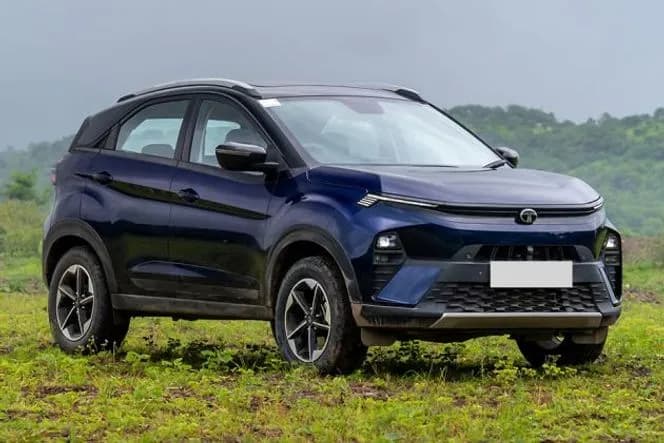
The Tata Nexon's case in Nepal rests on a simple proposition: for buyers who want six airbags, a genuinely useful 360-degree camera with blind-spot monitoring, strong boot space and easy-entry doors, it delivers more of that at this price bracket than several rivals manage. The trade-offs — no fog lamps, hard door plastics, a non-split rear bench, a fixed front armrest — are real but not deal-breaking for most buyers, and they're consistent enough across the range that we'd call them known quantities rather than surprises waiting at delivery.
Where we'd urge caution is around the unconfirmed specification gaps — dimensions, ground clearance, exact infotainment size — that the distributor simply hasn't published yet. Buyers who need those numbers locked down before committing should ask directly at the Sipradi showroom rather than trusting generic spec sheets circulating online. For everyone else, comparing safety kit and cabin practicality against price, the Nexon remains one of the stronger arguments in its bracket for buyers who'd rather have the equipment than the badge.
Explore full specifications, variants & ownership context
Know the product
Key specifications, features & ownership context
Choose a variant to see its recorded specifications and features. Equipment and prices can change across trims.
Latest catalog and directory records supplement the original analysis. Figures may have changed since publication; individual specification and price-check dates appear below.
Rs 59.99 lakh ex-showroom · source checked 15 Oct 2026
Engine & performance
| Specification / feature | Nexon Creative +S MT |
|---|---|
| Engine displacement | 1199 ccResearched · confirm · 23 Sept 2026 |
Safety & driver assistance
| Specification / feature | Nexon Creative +S MT |
|---|---|
| Airbags | 6 airbagsResearched · confirm · 16 Sept 2026 |
Dimensions & weight
| Specification / feature | Nexon Creative +S MT |
|---|---|
| Ground clearance | 209 mmResearched · confirm · 22 Sept 2026 |
| Boot space | 382 LResearched · confirm · 26 Sept 2026 |
Showroom & service support
Distributor: Sipradi Trading Pvt. Ltd.
208 listed brand showrooms · 49 listed brand service locations
Listed cities include Baglung, Banepa, Bhairahawa, Bhaktapur, Bharatpur, Biratnagar and 34 more.
Brand-wide directory coverage. Confirm that your nearest workshop supports this exact model, powertrain and warranty work; ask about parts availability and booking time.
Market buzz & buyer priorities
Compiled discussion, including buyer reactions and ownership reports; this is not a verified owner survey or a reliability score. Research dated 12 Oct 2026.
Concerns to investigate
- Advertised range is more than actual range
Use these facts alongside the article’s full analysis. Check the final quotation, warranty terms and exact equipment before booking.
Evidence & next steps
Check the details before you buy
Use this guide to build a shortlist. Ask for a written quotation for your chosen variant, including registration, taxes, insurance and finance charges. Confirm the nearest authorised workshop supports that model.
Price sources and dates
These are the recorded distributor-source checks for the selected overview trims. They are separate from the article update and catalog read dates; they do not mean every trim was rechecked today. Confirm the final price with the distributor.
Overview photos come from the corresponding model records; additional article photos carry their own credits. Running costs depend on usage, energy prices, maintenance, insurance and resale value.