JSW MG Motor India has announced a new vehicle platform called ADAPT (Advanced Drive Architecture Platform Technology), developed only for electrified powertrains. According to the company, future vehicles on this architecture will not use pure petrol or diesel engines and will rely on different levels of electrification.
What ADAPT will support
MG says the ADAPT platform can accommodate four types of powertrain technologies:
- Battery electric (EV) – fully electric vehicles with zero tailpipe emissions.
- Plug-in hybrid (PHEV) – vehicles that combine an engine and motor and can be charged from an external power source.
- Range-extender – EVs where a small engine mainly works as a generator to charge the battery when needed.
- Strong hybrid – vehicles that can run on both engine and electric motor, with the system able to drive the wheels in different modes.
The company has clearly stated that no pure petrol or diesel models will be developed on ADAPT. The platform is aimed at lower emissions and better fuel efficiency in its future products.
New high-efficiency petrol engine for hybrids
For strong hybrid models based on ADAPT, MG has announced development of a new naturally aspirated petrol engine. The company claims this engine can reach up to 43% thermal efficiency, while typical petrol engines are usually around 20–35%.
Higher thermal efficiency means:
- Less fuel consumption for the same power output.
- More of the fuel’s energy converted into useful motion, instead of being lost as heat.
MG says this engine will be paired with a direct hybrid transmission. Detailed figures like engine capacity, cylinder count and power output are not yet disclosed.
Four driving modes
Vehicles built on the ADAPT platform are expected to offer four drive modes, switching between engine and electric motor in different ways:
- Parallel mode – both petrol engine and electric motor supply power to the wheels together.
- Series mode – the petrol engine only works as a generator to charge the battery, and the electric motor alone drives the car.
- Engine direct mode – the engine directly drives the wheels while the electric motor stays inactive.
- Pure electric mode – the engine remains off, and the car runs only on battery power and electric motor, giving zero tailpipe emissions and quieter operation.
For urban users in cities like Kathmandu, the pure electric and strong hybrid modes could help cut fuel costs and local air pollution, provided these models are introduced in Nepal.
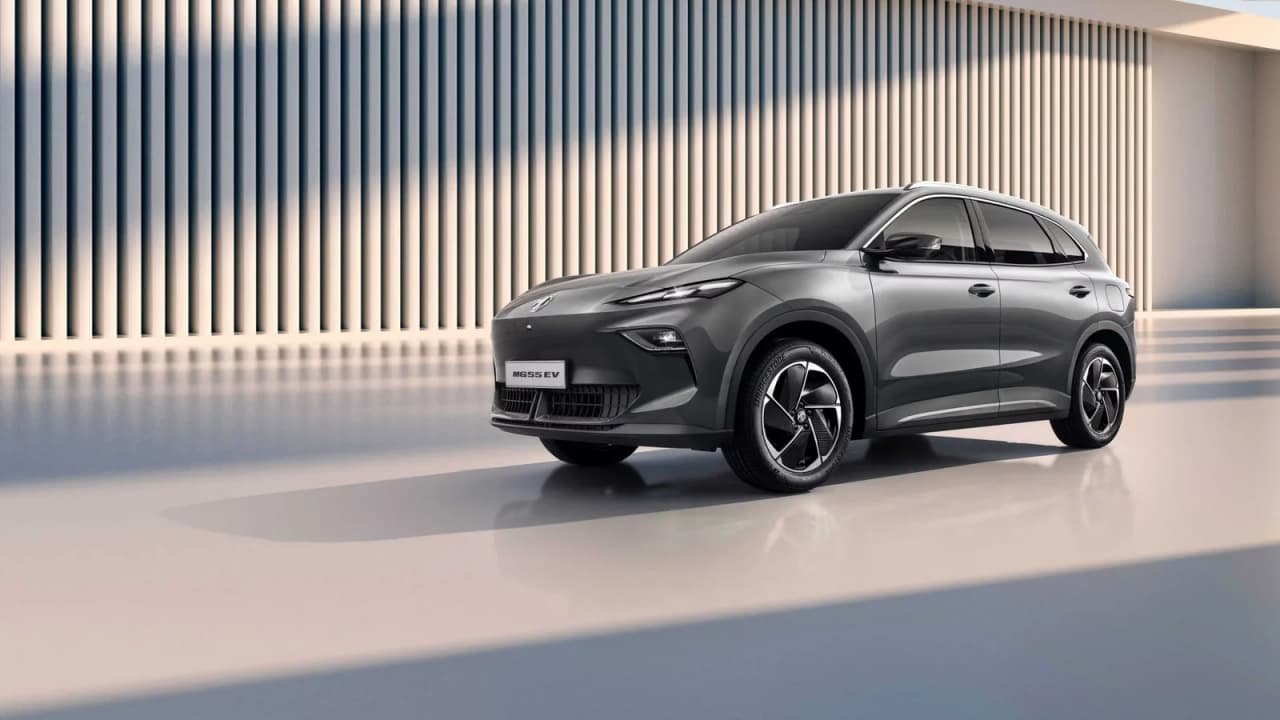
Electromagnetic e-clutch hybrid transmission
Along with the ADAPT platform, MG has also presented what it calls the world’s first direct hybrid transmission with an electromagnetic e-clutch, according to the announcement.
Key points highlighted by MG:
- The electromagnetic e-clutch is claimed to respond up to four times faster than a conventional mechanical clutch system.
- The system is described as more advanced and complex than the usual e-CVT gearboxes commonly found in hybrid cars.
Faster response from the clutch and transmission should, in theory, help with smoother power delivery and better efficiency, especially when the vehicle frequently switches between engine and motor.
What it means for Nepali buyers
MG has not yet announced specific ADAPT-based models, prices or launch timelines for Nepal.
However:
- The focus on EVs and strong hybrids suggests MG is preparing technology that could fit future emission and tax policies in Nepal, where electric vehicles already enjoy lower taxes.
- If ADAPT-based hybrids achieve the claimed 43% thermal efficiency, they could offer better mileage and lower running costs than current conventional petrol cars.
For now, Nepali buyers can see ADAPT as an early look at MG’s next generation of electrified vehicles. More concrete details will come only once specific models and regional launch plans are announced.
Writes on vehicle pricing, taxation and the Nepali auto market from ongoing tracking of distributor price lists. Editorial policy.