Start with the numbers
The model, at a glance
Top available variants, with prices in Nepalese rupees. Expand details to choose another variant.
| Vehicle | Ex-showroom price | Fuel | Selected variant |
|---|---|---|---|
| 01MG Hector | Rs 89.99 lakh | Petrol | Plus 7 Savvy Pro CVT |
Ex-showroom prices exclude registration, road tax and insurance. Specifications can vary by trim. See individual source-check dates ↓
Where The Hector Sits In Nepal's Rs 60-Lakh SUV Fight
The MG Hector arrives in Nepal in 2026 through Paramount Motors and G.O Automobiles, pricing out from Rs 59.99 lakh for the base Shine manual to Rs 78.25 lakh for the range-topping Sharp CVT. That is six variants spanning nearly Rs 19 lakh, which tells its own story: this isn't a single-spec halo product, it's a car MG wants parked across a wide band of buyers who all want an SUV with genuine road presence but arrive at very different budgets.
At this price, the Hector is competing directly with some of the best-known mid-size SUVs sold in Nepal, and it does so with a specific pitch: more screen, more feature list, more back-seat space than most rivals offer at similar money. Whether that pitch survives contact with Nepali roads, tight urban parking and long highway runs to Pokhara or Chitwan is what the rest of this review works through.
The Aura Hex Grille And A Design That Reads Bigger Than It Is
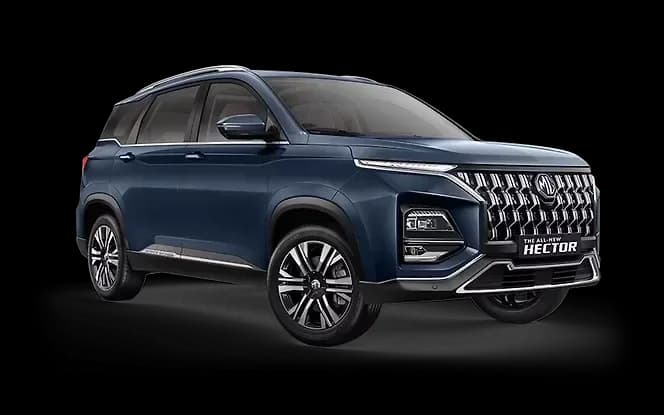
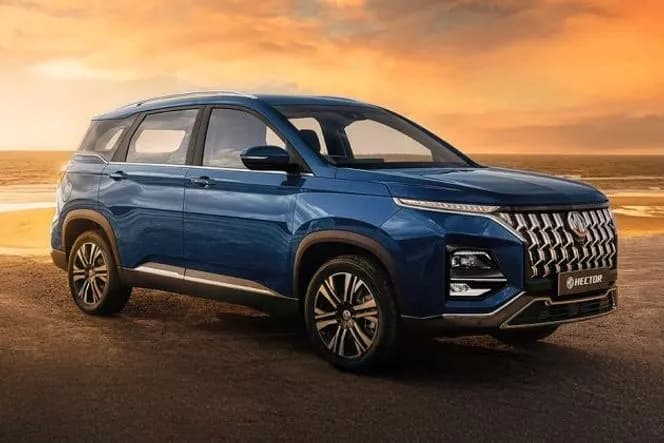
MG has given the Hector a genuine visual refresh rather than a token update. The front end now wears what MG calls the Aura Hex grille, a reworked mesh pattern that changes the car's face more than a simple badge swap would. Both bumpers, front and rear, have been redesigned to match, and the overall effect is a car that looks more resolved and less generic than the outgoing shape.
The LED headlamp setup is worth a specific mention: the low beam sits on the outside of each cluster, with the high beam positioned on the inside, a layout choice that also shapes the daytime running light signature. Around the back, the LED tail lamp bar runs the width of the boot lid and includes sequential turn indicators, a detail that has become something of a status marker in this segment and one the Hector uses well.
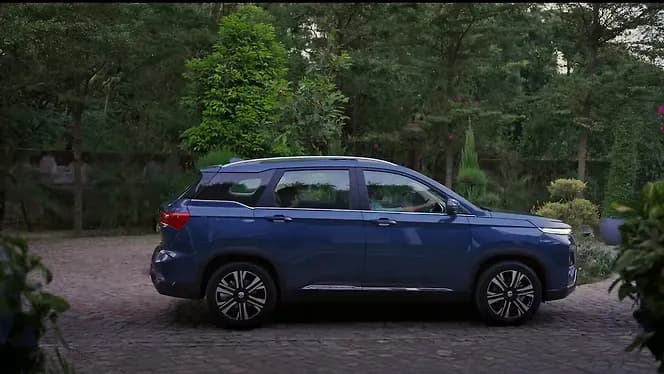
The new 18-inch Aura Bolt alloy wheels round off the exterior changes. At 4,699mm long, 1,835mm wide and 1,760mm tall, riding on a 2,750mm wheelbase, the Hector's footprint is properly mid-size, and kerb weight of 1,515kg suggests a car built with some heft rather than a hollowed-out lightweight shell.
Celadon Blue Outside, Ice Grey Or Dune Brown Within
The exterior palette includes a Celadon Blue that stands out on the Hector's larger surfaces, giving the redesigned grille and bumpers room to read properly in daylight. Inside, the 5-seater Hector gets an Ice Grey cabin theme, a lighter treatment that suits the glass-heavy dashboard and helps the cabin feel airier than a dark-themed interior would. The 7-seat Hector Plus, where offered, switches to a Dune Brown interior instead, a warmer, more traditional finish that some buyers will prefer for a family-hauler.
A 14-Inch Screen That Actually Earns Its Size
The single feature every buyer will notice first is the 14-inch vertical touchscreen, and it's not there just to look impressive on a spec sheet. It runs smoothly enough to support wireless Android Auto and Apple CarPlay without hesitation, and the added processing power behind it means menus and camera feeds load without the lag that has plagued earlier MG infotainment units.
What sets the Hector apart from most rivals at this price is the gesture control system layered on top. Two-finger and three-finger swipes let the driver adjust AC temperature, fan speed and volume without hunting through touchscreen menus, and the accuracy of these gestures is genuinely good rather than a gimmick that works once and gets ignored. Paired with a voice assistant recognising over 100 commands in Hinglish, the Hector lets a driver keep both hands on the wheel and eyes on the road for most routine adjustments, which matters more on Kathmandu's crowded streets than on an empty highway.
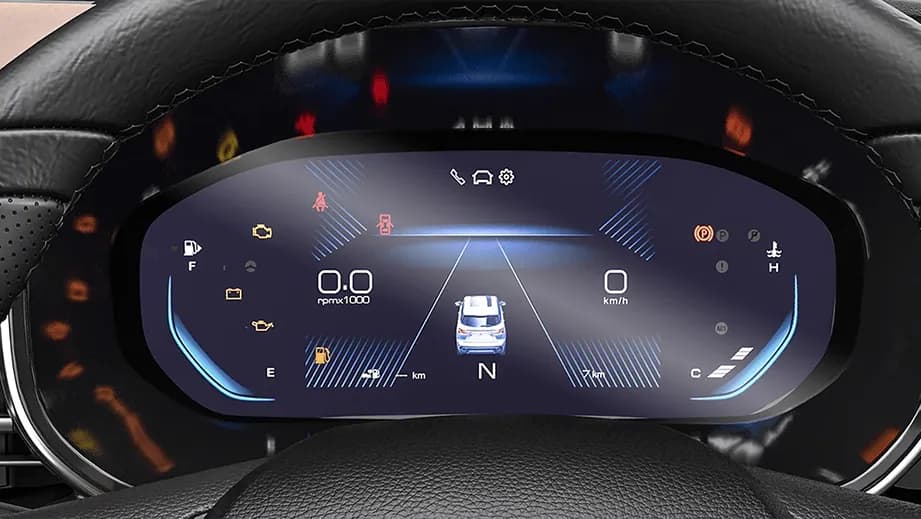
The 7-inch digital instrument cluster carries trip data, speed, RPM and, notably, individual tyre pressures, a feature not every SUV in this bracket bothers to display so clearly. An 8-colour ambient lighting system with a continuous transition mode, an auto-dimming rearview mirror, a panoramic sunroof with voice control, and a PM 2.5 cabin air filter round out a long features list. Six airbags, ABS with EBD, Level-2 ADAS, a 360-degree camera with a wheel view mode, hill hold and traction control complete the safety and driver-assist package.
The 1.5-Litre Turbo-Petrol And Its CVT Trade-Off
Under the bonnet sits a 1.5-litre turbo-petrol producing 141bhp at 5,000rpm and 250Nm of torque, sent through either a 6-speed manual or a CVT automatic to the front wheels. Top speed is rated at 195km/h, numbers that put the Hector ahead of several rivals on paper in outright power.
In practice, the turbo-petrol feels genuinely punchy once revs build, particularly in Sport mode, where throttle response sharpens noticeably. The CVT itself deserves credit: MG has tuned out much of the rubbery, delayed feel that CVTs are usually criticised for, and it holds gear ratios in a way that feels closer to a conventional automatic under moderate throttle. The catch is that there are no paddle shifters, so drivers who want manual control over gear behaviour are stuck with the lever alone. Push the engine hard and it gets noisy, with a noticeable whine that undercuts what is otherwise a well-refined power delivery at cruising speeds. Fuel efficiency is rated at 13.79km/l for one configuration and 12.34km/l for another, figures that matter given petrol prices in Nepal and worth checking against the specific variant on the buyer's shortlist.
Confident On The Highway, Firm Around Town
The suspension tune favours stability at speed. On the highway, the Hector settles into a composed, planted feel that makes long hauls comfortable, and lane changes are handled with reassuringly little body roll for a car this size. The tyres grip well through sudden manoeuvres, giving the driver confidence that the chassis won't be caught out by a sudden swerve around a stray animal or pothole.
The one recurring complaint concerns the steering wheel itself, which feels thin in hand compared to what buyers at this price expect. It doesn't affect how the car steers, but it changes how the car feels to hold, and drivers used to a chunkier rim will notice the difference immediately.
Rear Seats Built For Nepali Family Trips
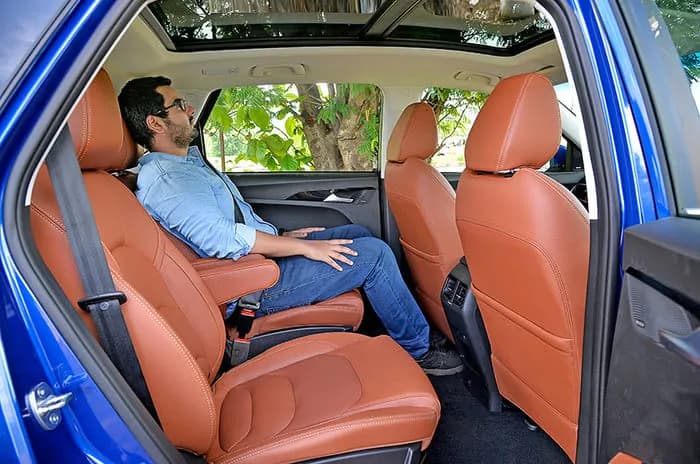
This is where the Hector makes its strongest case. Rear legroom is exceptional, with 8 to 10 inches of knee clearance reported for a passenger of 5'10", alongside generous headroom that makes the back seat genuinely usable for adults on long journeys, not just a place to put children. The rear backrests recline to adjustable angles, a detail that turns a Kathmandu-to-Pokhara run into something closer to business class than economy.
Rear passengers get their own AC vents, a USB port, and a centre armrest with cup holders, while up front both driver and co-driver get ventilated seats with electrical adjustment. For a market where extended families often travel together on weekends and during Dashain, this is the kind of cabin planning that actually gets used rather than admired once and forgotten.
Braking That Backs Up The Safety Sheet
All four wheels get disc brakes, and stopping power is strong and reassuring rather than merely adequate. Front parking sensors come with their own mute button, a small but genuinely useful touch for anyone who's been annoyed by constant beeping in slow traffic. Traction control and an electronic parking brake with auto-hold round out a safety package that, combined with the six airbags and Level-2 ADAS mentioned earlier, puts the Hector ahead of several rivals on paper.
A 587-Litre Boot That Folds Completely Flat
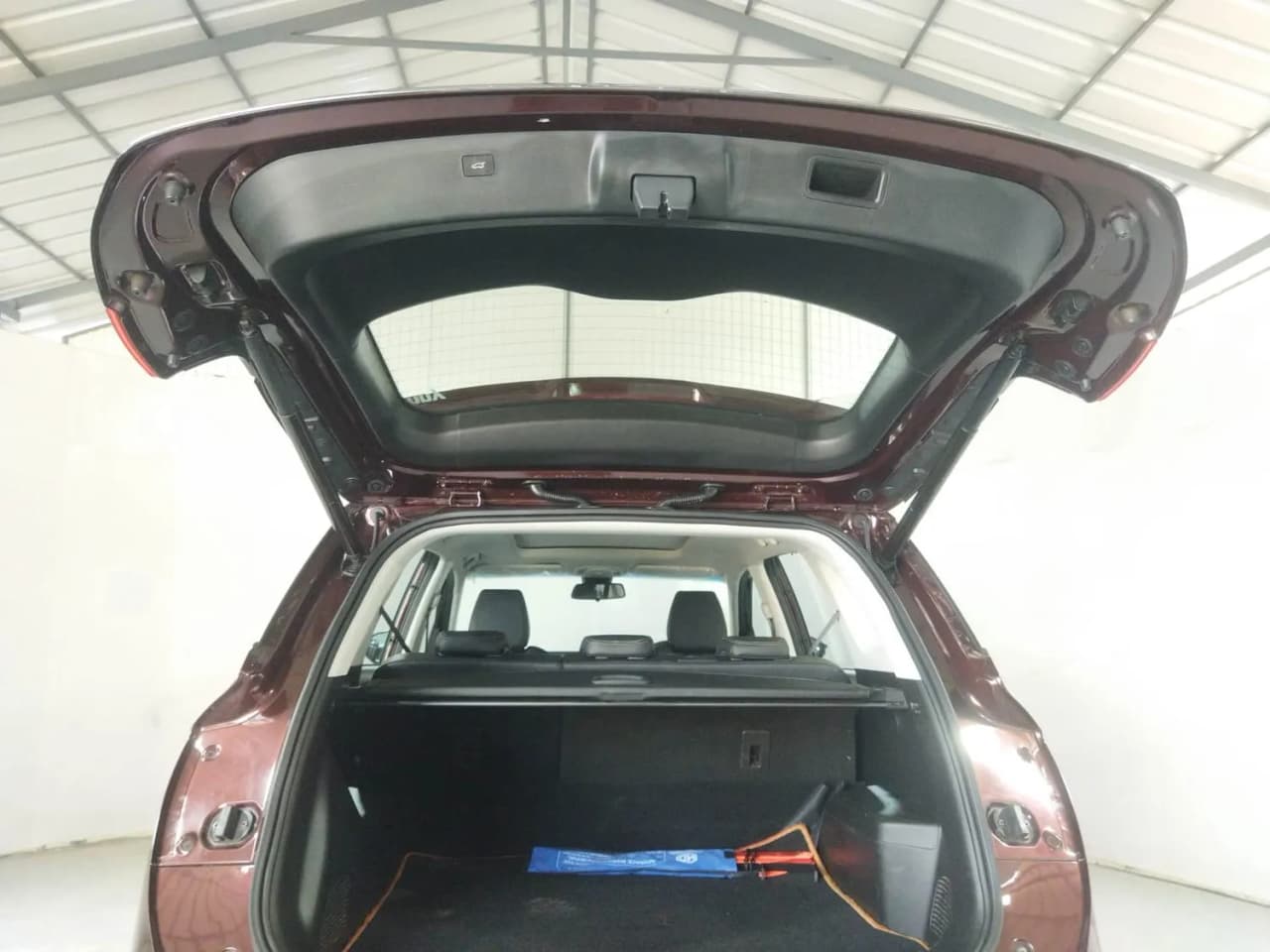
Boot space stands at 587 litres with a flat loading lip, already generous for the segment, and the rear seats fold completely flat rather than leaving a step or slope. That makes the Hector genuinely useful for carrying furniture, camping gear, or anything else that needs a flat floor rather than an angled one. The spare wheel is mounted externally underneath the boot floor rather than eating into cargo space, and a powered tailgate takes the effort out of loading when hands are full.
Six Variants, Rs 19 Lakh Apart: Picking The Right One
The range runs from the Shine manual at Rs 59.99 lakh, through the Hector Shine CVT at Rs 64.99 lakh, Smart manual at Rs 67.99 lakh and Smart CVT at Rs 70.60 lakh, up to the Sharp manual at Rs 73.99 lakh and Sharp CVT at Rs 78.25 lakh. Displacement varies slightly across the range, with the Shine and Sharp CVT running the 1451cc unit and the Smart and Sharp manual variants at 1500cc.
For most buyers, the Smart CVT at Rs 70.60 lakh looks like the sensible middle ground: enough of the feature list to feel like the full Hector experience, without stretching to the Sharp trim's near-Rs 78 lakh ask. Buyers chasing the full technology suite, including the largest expression of the ADAS and camera package, should look at the Sharp variants, accepting that the CVT version crosses the Rs 78 lakh mark before any taxes or accessories.
The Hyundai Creta Still Wins On Dealer Network And Familiarity
The Hyundai Creta remains the default cross-shop for anyone looking at a mid-size SUV in Nepal, and it will still out-sell the Hector on brand familiarity and service network reach alone. Where the Hector pulls ahead is cabin space and outright feature count: the Creta doesn't offer anything close to a 14-inch touchscreen or gesture controls at a comparable price point, and rear seat room isn't in the same league either.
The Honda Elevate Feels Tighter Inside By Comparison
The Honda Elevate has built a reputation on Honda's usual reliability halo, but next to the Hector its cabin feels noticeably tighter, especially in the rear. Buyers prioritising back-seat comfort for family trips will find the Hector's extra legroom and reclining rear seats a real, tangible advantage rather than a marginal one.
The Skoda Kushaq Counters With Sharper Handling
The Skoda Kushaq brings a more European feel to its steering and body control, and drivers who prioritise handling sharpness over outright cabin space may still prefer it. But the Kushaq doesn't match the Hector's screen size, gesture controls, or outright practicality, and for buyers who value technology and boot space over last-mile steering precision, the Hector remains the stronger case.
The Verdict
The MG Hector's case in Nepal rests on doing more with the cabin than most rivals bother to attempt: a 14-inch screen that actually works well, gesture controls that aren't gimmicks, a boot that folds genuinely flat, and rear seats built for adults rather than an afterthought. The 1.5-litre turbo-petrol backs that up with real performance, even if the CVT gets vocal under hard acceleration and the steering wheel feels thinner than expected in hand. At Rs 59.99 lakh to Rs 78.25 lakh, it isn't the cheapest way into this segment, but for buyers who want the most cabin and the most technology for the money, it's hard to find a direct rival offering the same combination in Nepal today.
Explore full specifications, variants & ownership context
Know the product
Key specifications, features & ownership context
Choose a variant to see its recorded specifications and features. Equipment and prices can change across trims.
Latest catalog and directory records supplement the original analysis. Figures may have changed since publication; individual specification and price-check dates appear below.
Rs 89.99 lakh ex-showroom · source checked 27 Oct 2026
The structured feature sheet for this variant is not available yet. The full article and model page may contain additional researched information.
Showroom & service support
Distributor: Paramount Motors and G.O Automobiles Pvt. Ltd.
59 listed brand showrooms · 29 listed brand service locations
Listed cities include Bhairahawa, Bhaktapur, Bharatpur, Biratnagar, Birgunj, Birtamode and 9 more.
Brand-wide directory coverage. Confirm that your nearest workshop supports this exact model, powertrain and warranty work; ask about parts availability and booking time.
Market buzz & buyer priorities
Compiled discussion, including buyer reactions and ownership reports; this is not a verified owner survey or a reliability score. Research dated 19 Oct 2026.
What people like
- Premium cabin feel and high-quality interior materials
- Extensive feature list including panoramic sunroof and 360-degree camera
- Smooth petrol engine performance suitable for highway cruising
More feedback
- Strong road presence and bold exterior styling
Concerns to investigate
- Too expensive compared to Wuling Eksion
- Same car as Wuling Eksion but more expensive
- Price is not justified for the base variant
More feedback
- Reliability concerns compared to Wuling Eksion
- Occasional lag in the iSmart infotainment system
- Modest fuel efficiency, particularly in city traffic
- Limited after-sales service and spare parts availability outside the Kathmandu Valley
What buyers ask for
- Cabin space and comfort for family travel
- Ground clearance for varied road conditions
- Availability of genuine spare parts and service centers
More feedback
- Fuel economy in urban driving conditions
Nepal ownership context
- Official distribution is managed by G.O. Automobiles with a growing network of service centers across major cities like Pokhara, Butwal, and Biratnagar.
- While Kathmandu has robust support, owners in remote areas report longer wait times for specific spare parts.
- The vehicle is widely considered a luxury-oriented family SUV rather than a rugged off-roader for extreme Nepali terrain.
More feedback
- Resale value is perceived as average compared to established Japanese competitors in the segment.
Use these facts alongside the article’s full analysis. Check the final quotation, warranty terms and exact equipment before booking.
Evidence & next steps
Check the details before you buy
Use this guide to build a shortlist. Ask for a written quotation for your chosen variant, including registration, taxes, insurance and finance charges. Confirm the nearest authorised workshop supports that model.
Price sources and dates
These are the recorded distributor-source checks for the selected overview trims. They are separate from the article update and catalog read dates; they do not mean every trim was rechecked today. Confirm the final price with the distributor.
Overview photos come from the corresponding model records; additional article photos carry their own credits. Running costs depend on usage, energy prices, maintenance, insurance and resale value.