Where They Sit in the Nepali EV Market
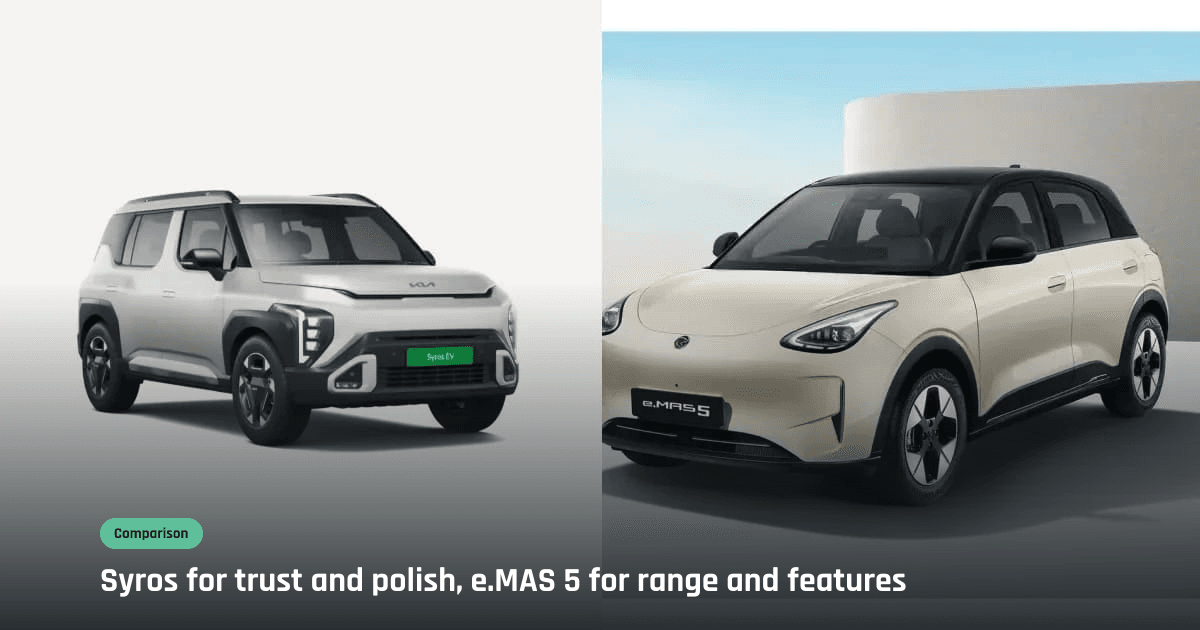
Under Rs 40 lakh, Nepali EV buyers are now spoilt for choice. The **Kia Syros EV and Proton e.MAS 5** sit right at the heart of this space, both pitched as compact, city-friendly electric crossovers with SUV stance and hatchback-like ease of use.
- **Kia Syros EV: Single variant at Rs 37.9 lakh** ex-showroom, distributed by Continental Trading Enterprises (Kia Nepal). It is positioned as a compact, India-made electric crossover with urban practicality and a more established brand image.
- **Proton e.MAS 5: Two variants — Prime at Rs 32.83 lakh and Premium at Rs 36.83 lakh** ex-showroom, distributed by Jagdamba Motors. It aims to deliver strong range and modern features while staying under the Rs 40 lakh threshold.
The Syros EV leans on Kia’s reputation, broader network footprint (34 showrooms, 29 service centers), and perceived reliability. The e.MAS 5 leans on hard numbers: WLTP ranges of 225 km (Prime) and 325 km (Premium), rear-wheel drive and a generally richer features list, especially in the Premium variant.
Design, Size and Road Presence
Both cars are compact crossovers, but they speak slightly different design languages and will appeal to different buyers visually.
Kia Syros EV
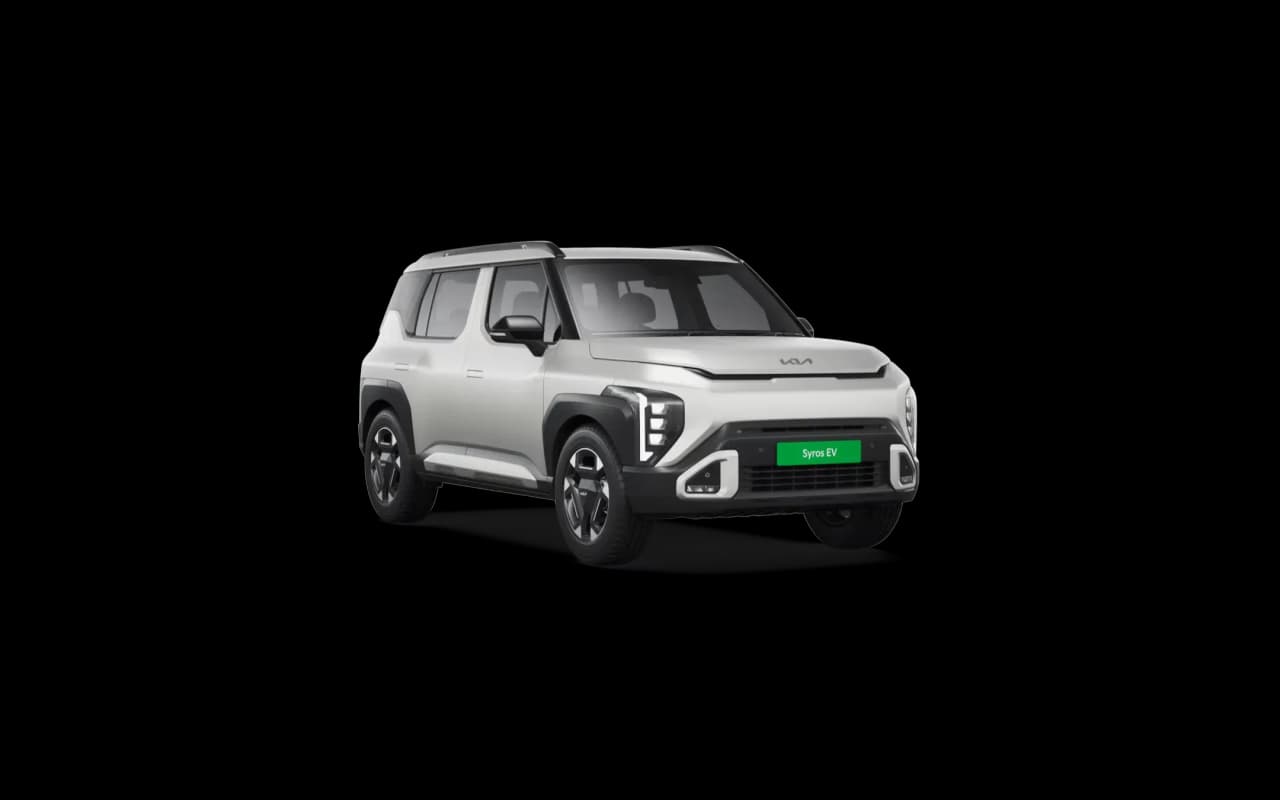
The Syros EV is described as a compact crossover tailored to narrow Nepali city roads. It aims for an SUV-like stance without being bulky, which should help on tight urban streets, parking areas and older city cores where full-size SUVs can feel cumbersome.
The editorial impression from showroom observation is of a refined cabin and build for the price, with better perceived material quality than many lower-cost budget EVs. The overall look is more conservative and familiar, which can reassure buyers migrating from petrol crossovers.
Proton e.MAS 5
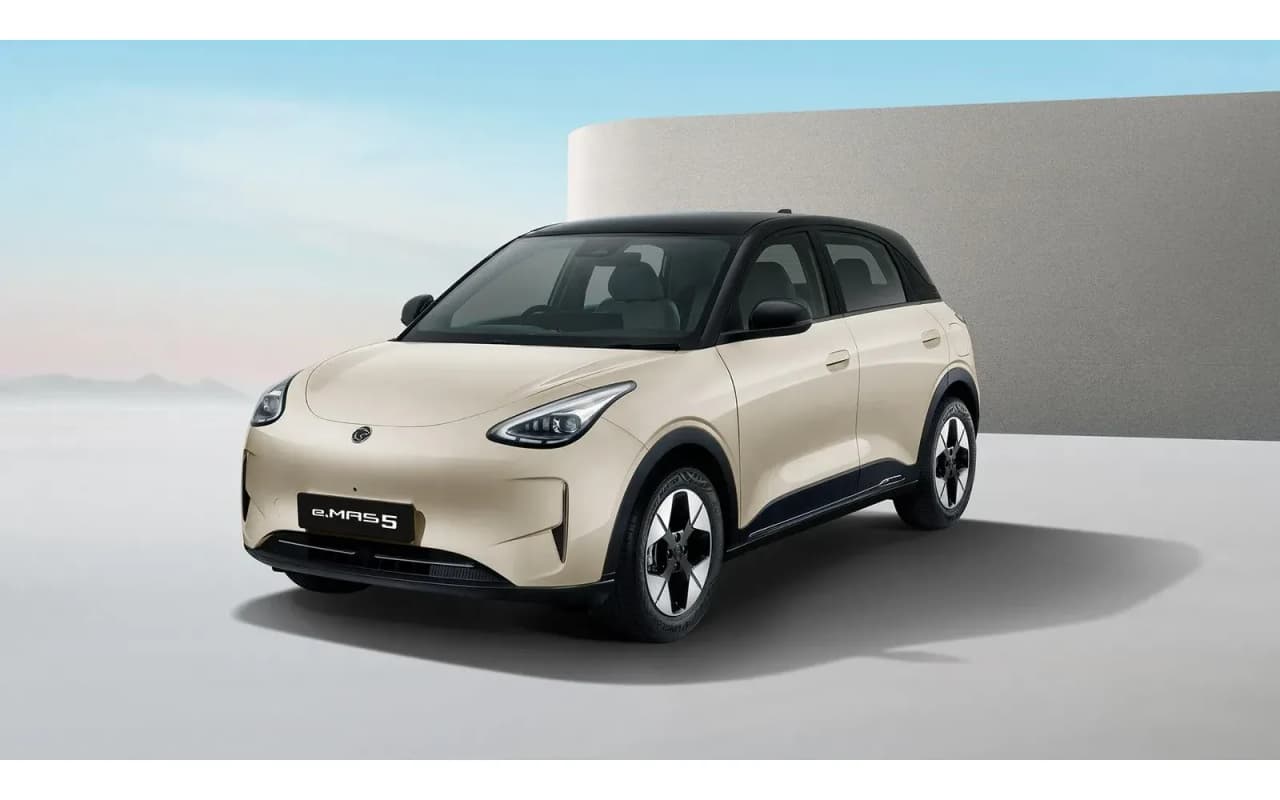
The e.MAS 5 is more overtly tech-forward and youthful. Both Prime and Premium share the same basic footprint:
- Length × Width × Height: 4135 × 1805 × 1580 mm
- Wheelbase: 2650 mm
This gives it a squat, planted stance, closer to a modern urban crossover than a traditional hatchback. Variant highlights:
- Prime: 205/65 R15 tyres, halogen headlamps, follow-me-home lights, LED-lit frunk with pneumatic rods. Multiple exterior colours including Jade Green, Marble Cream, Quartz Rose, Moonstone White, Graphite Silver and Slate Grey.
- Premium: 16-inch alloy rims, LED aerodynamic headlights and a powered tailgate, which together create a more upscale, high-tech look.
In pure styling terms, the e.MAS 5 Premium will appeal more to buyers who want their EV to look obviously modern. The Syros EV will suit those who prefer a more restrained, familiar crossover design and put more weight on perceived brand maturity.
Cabin, Features and Equipment
This is where the Proton e.MAS 5 pulls away clearly, especially in Premium trim, because Kia has yet to fully disclose detailed variant-level feature lists for the Syros EV in Nepal.
Kia Syros EV: What We Know
Confirmed specifics on exact features for the Nepal-spec Syros EV remain limited. The car is noted for:
- A refined cabin and build compared with many lower-cost EV rivals.
- Smooth and quiet urban performance suited to daily commuting.
However, there are still gaps:
- Variant-wise feature differences are not yet clearly laid out for Nepali buyers.
- No official list of infotainment screen size, ADAS level, seat materials or connected features has been shared at the same level of detail as the e.MAS 5 dataset.
In practice, this means buyers are leaning more on showroom interactions and brand trust than on published spec comparisons when judging the Syros EV’s equipment level.
Proton e.MAS 5 Prime
The Prime is the value-oriented variant, but the feature list is still quite strong:
- Comfort & Interior:
- Leatherette seats
- Infotainment & Convenience:
- 14.6-inch FHD central display — unusually large for this price band
- Safety:
- 6 airbags, a notable plus given that some budget EVs limit airbag count
Design and exterior touches like halogen headlamps, 205/65 R15 tyres and the LED-lit frunk make it feel contemporary, though not premium.
Proton e.MAS 5 Premium
The Premium backs up its higher price with clearly richer equipment:
- Comfort & Interior:
- Leatherette seats
- Two-tone leatherette steering wheel
- 28L rear under-seat storage compartments
- Intelligent keyless entry and start
- Interior colour options including Alabaster White and Flint Grey
- Infotainment & Connectivity:
- 14.6-inch FHD central display
- 8.8-inch LCD instrument cluster
- 6 speakers
- 2 Type-A + 1 Type-C USB ports
- Apple CarPlay / Android Auto
- 4G and Wi-Fi connectivity
- Online navigation
- Powered tailgate
- Safety & Driver Assistance:
- 360-degree camera
- Intelligent driver assist functions (an ADAS-lite suite, though not the most advanced in the segment)
Overall, the Proton e.MAS 5 Premium delivers a clearly tech-rich, connected, convenience-heavy cabin that will appeal strongly to gadget-oriented buyers and younger families.
Battery, Range and Performance
This is one of the biggest differentiators between the two.
Kia Syros EV
The Syros EV’s exact battery capacity, motor output and certified range have not yet been officially disclosed for Nepal. What is clear is that the car is positioned as a city-focused EV:
- Emphasis on urban practicality and commuting.
- Editorial expectation that the range is tuned more for daily city use than frequent long highway runs.
This does not mean poor range, but it does mean buyers who prioritize concrete numbers for regular intercity trips will find the Proton dataset more reassuring.
Proton e.MAS 5 Prime and Premium
The e.MAS 5 backs its pitch with clear WLTP figures and battery specs.
- Prime:
- Battery: 30.12 kWh CATL LFP
- WLTP range: 225 km
- Rear-wheel drive, rear multi-link suspension
- Premium:
- Battery: 40.16 kWh CATL LFP
- WLTP range: 325 km
- Rear-wheel drive with a more powerful 85 kW rear motor
- 0–50 km/h in 3.9 seconds
The use of LFP (Lithium Iron Phosphate) chemistry typically suggests good cycle life and thermal stability, which is appealing for Nepali conditions with mixed temperatures and charging habits.
In practice:
- The Prime is comfortably suited to most daily city commutes plus occasional short highway runs.
- The Premium offers genuinely usable intercity range under Rs 40 lakh, making it attractive for buyers who frequently drive between major cities.
On pure range/performance numbers, the Proton e.MAS 5 Premium clearly outperforms the Syros EV’s current, not-yet-disclosed specs. The Prime also offers more transparent range data than Kia at this stage.
Ride, Handling and Comfort Impressions
Without instrumented back-to-back road testing, this section necessarily leans on layout and equipment rather than driving impressions.
Kia Syros EV
The Syros EV is framed as offering:
- Smooth, quiet urban performance
- Compact footprint suitable for tight city roads
Buyers can reasonably expect a comfort-biased setup, typical of compact crossovers aimed at family and commuting use rather than sporty driving. It is not pitched as an enthusiast’s EV, which aligns with its market positioning.
Proton e.MAS 5
The e.MAS 5 brings some hardware advantages that tend to support more composed dynamics:
- Rear-wheel drive on both Prime and Premium
- Rear multi-link suspension on Prime (and implied on the platform more broadly)
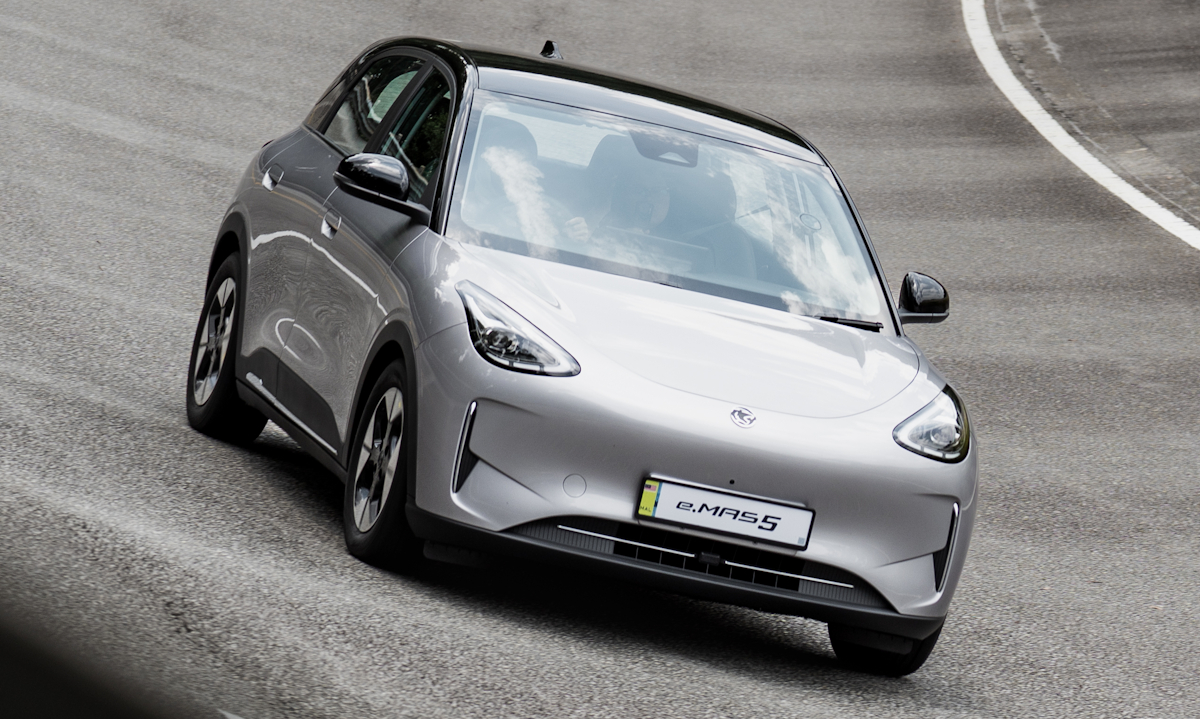
RWD is still rare in this price band, and usually brings a more balanced feel under acceleration and cornering. Combined with its wheelbase of 2650 mm and relatively compact footprint, the e.MAS 5 should feel stable yet nimble.
Comfort-wise, both variants use leatherette seats, with the Premium adding extra storage and a more premium steering wheel. Together with its large screens and connectivity, the cabin will feel more modern and plush than many basic EVs.
For buyers who care about driving character, the RWD layout and 85 kW motor of the Premium make the e.MAS 5 the more engaging option on paper.
Practicality, Space and Running Costs
Space and Everyday Usability
Kia Syros EV:
- The compact crossover size is a plus for crowded city use.
- However, rear seat and boot space are expected to feel tight for larger families.
- It targets buyers who prioritize ease of use and maneuverability over outright space.
Proton e.MAS 5:
- Shared dimensions across Prime and Premium (4135 mm length, 1805 mm width, 1580 mm height) and a 2650 mm wheelbase suggest decent cabin room for a compact car.
- Prime offers a 70L frunk, handy for storing charging cables, small bags or groceries.
- Premium adds a powered tailgate and under-seat storage (28L), improving practicality for families and frequent travellers.
Overall, the e.MAS 5 Premium looks more thoughtfully packaged for day-to-day family use and load carrying, while the Syros EV is more about compact footprint and easy city driving.
Running Costs and Ownership Confidence
Running costs for both will be dominated by electricity rates and maintenance. Pure energy costs should be similar for comparable usage, given both are small to mid-size EVs.
The bigger difference is in after-sales network and brand assurance:
- Kia Syros EV benefits from Kia’s broader network: 34 showrooms and 29 service centers. This scale matters a lot in Nepal, where service accessibility outside Kathmandu and major hubs can be a deciding factor.
- Proton e.MAS 5 has 24 showrooms but only 3 service centers listed. This is a clear disadvantage for buyers far from those centers or concerned about long-term support.
For buyers prioritizing minimal hassle and quick access to service, Kia has the stronger story. Proton counters with a modern product and compelling spec sheet, but the service network is still relatively lean.
Price and Variants Side by Side
Here is how the variants line up on price in Nepal:
| Model & Variant | Ex-showroom Price (NPR) | Key Range/Power Highlights |
|---|---|---|
| Kia Syros EV (Single) | Rs 37.9 lakh | Battery, range, motor not yet disclosed |
| Proton e.MAS 5 Prime | Rs 32.83 lakh | 225 km WLTP, 30.12 kWh LFP |
| Proton e.MAS 5 Premium | Rs 36.83 lakh | 325 km WLTP, 40.16 kWh LFP, 85 kW motor |
Proton has also run introductory offers:
- Prime: Rs 29.99 lakh for the first 100 customers (now regular price Rs 32.99 lakh).
- Premium: Rs 34.99 lakh for the first 100 customers (now regular price Rs 36.99 lakh).
From a pure value perspective:
- The Prime is the most affordable entry point and still offers 225 km WLTP range, 6 airbags, a 14.6-inch display and RWD.
- The Premium undercuts the Syros EV slightly on price while delivering significantly more disclosed range and features.
- The Syros EV asks a small premium over the e.MAS 5 Prime and similar money to the Premium, but trades concrete range figures and feature richness for brand trust, network reach and perceived cabin refinement.
Which Wins for Which Kind of Buyer?
Choose Kia Syros EV if:
- You value brand strength and service network above all else.
- You live outside major urban centers and want better access to workshops.
- You prefer a more familiar crossover design with a refined cabin rather than a tech-heavy aesthetic.
- Your driving is largely city-focused, with modest daily distances.
Choose Proton e.MAS 5 Prime if:
- You want the lowest entry price into a modern EV under Rs 35 lakh.
- Your use is primarily urban and peri-urban, where 225 km WLTP range is sufficient.
- You appreciate having 6 airbags, RWD and a large 14.6-inch screen even on the base variant.
- You are willing to accept a sparser feature set versus the Premium in exchange for savings.
Choose Proton e.MAS 5 Premium if:
- You regularly travel intercity and want a clear 325 km WLTP range on paper.
- You value connected tech: large dual screens, CarPlay/Android Auto, online navigation, 4G and Wi-Fi.
- You want stronger performance with an 85 kW rear motor and quick 0–50 km/h acceleration.
- You like premium touches such as a 360-degree camera, powered tailgate, keyless entry and richer interior detailing.
In simple terms:
- For range and features per rupee, the Proton e.MAS 5 Premium is the standout.
- For peace-of-mind ownership and nationwide support, the Kia Syros EV keeps a strong edge.
Editorial Verdict
For Nepali buyers under Rs 40 lakh, this is a classic trade-off between product strength and brand/network strength.
- The Proton e.MAS 5, especially in Premium trim, is the more compelling EV on paper. It offers clear WLTP ranges, RWD dynamics, a bigger battery option, strong performance, rich infotainment and convenience features, and thoughtful practicality touches like under-seat storage and a powered tailgate. The Prime variant broadens access with a lower price while still delivering a respectable range and safety kit.
- The Kia Syros EV counters with trust: a more established badge, far more extensive service network and a refined crossover package tailored to urban Nepal. For many buyers, particularly outside Kathmandu or those prioritizing hassle-free ownership, this combination will outweigh the Proton’s spec advantages. The main limitation is the lack of fully disclosed battery and range data, which makes it harder for range-focused buyers to compare objectively.
Our view is:
- If your priority is maximum range, modern tech and engaging RWD character for the money, the Proton e.MAS 5 Premium is the better buy between these two.
- If your priority is long-term service confidence, brand familiarity and a polished yet simple urban EV, the Kia Syros EV remains a very sensible choice, even if its spec sheet looks modest beside Proton’s.
The gap between them is narrow enough that your decision should be driven by where you live, how far you drive in a day, and how much weight you put on features versus network support.
Writes on vehicle pricing, taxation and the Nepali auto market from ongoing tracking of distributor price lists. Every price in this piece is read live from the Nepal AutoMart catalog — how we verify prices.